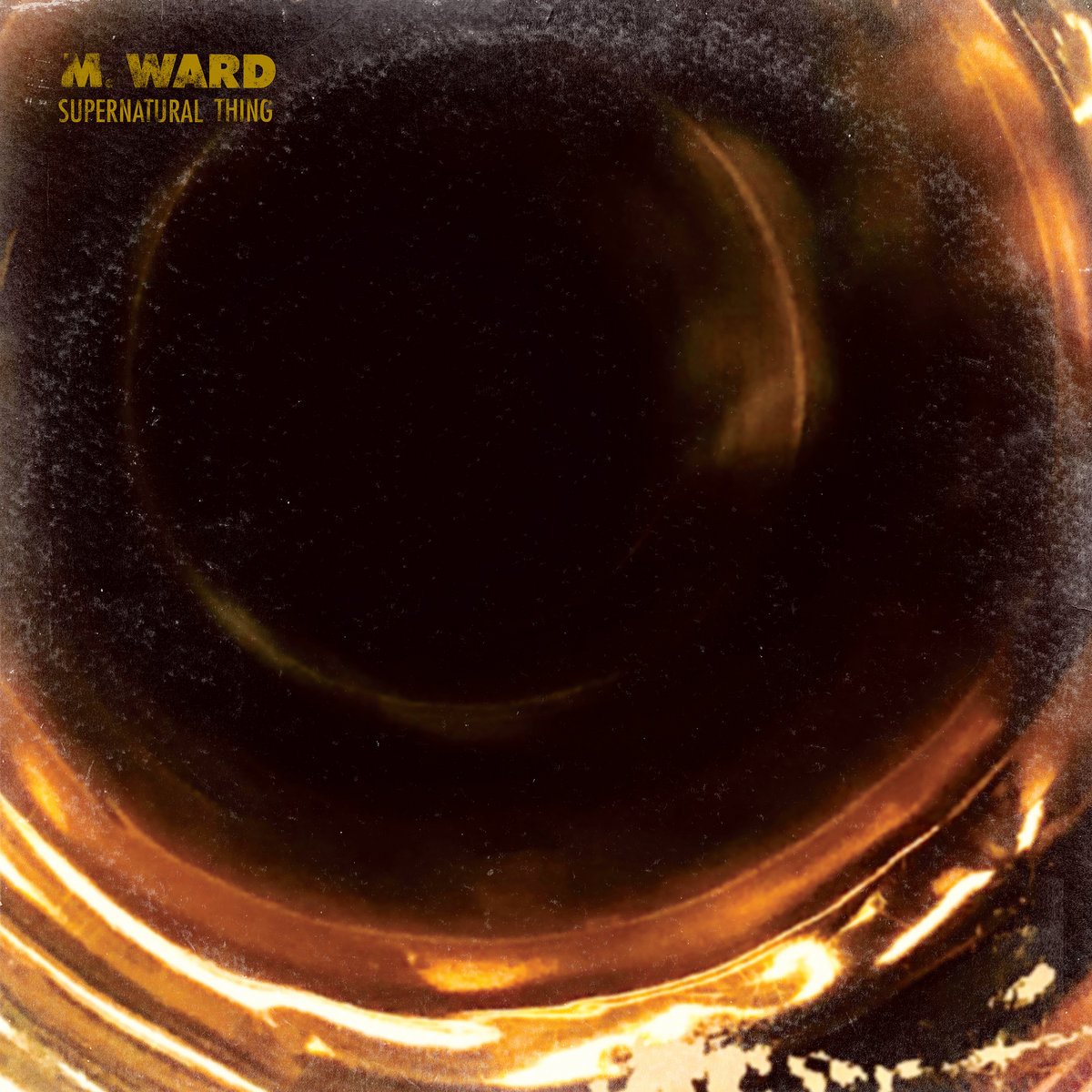
Portland singer-songwriter Matthew Ward is not yet 50, yet he has already racked up 12 solo albums in a prolific musical career. These are alongside his work as part of She & Him (with Zooey Deschanel), not to mention his Monsters Of Folk project.
The spirit of collaboration is prominent here too, for Supernatural Thing includes two tracks made with Swedish sister duo First Aid Kit, and a track each with Scott McMicken, Neko Case and Gabriel Kahane, Jim James and Kelly Pratt, and last but not least Shovels and Rope).
The album title is inspired by a childhood thought that radio airwaves are also used by messages from the supernatural – with music caught up in the crossfire. Ultimately the radio element is the crucial factor, celebrated here.
What’sthemusiclike?
Winsome. Ward puts his listener at ease right from the amiable guitar strumming of Lifeline, the mood enhanced by his sotto voce delivery.
That’s not to say there is a lack of emotion here, however, and in the collaborations especially he finds poignant lyrical couplets and yearning harmonies. The husk of his tone fuses rather beautifully with First Aid Kit’s sharper insights, and in Too Young To Die they have made a song to stop the listener in their tracks. The more upbeat Engine 5 taps into the album’s theme, entreating the listener to “stay with me on the radio”.
Jim James and Kelly Pratt join for a late Bowie cover, I Can’t Give Everything Away taken from the Blackstar album, and fashioned with an appropriately doleful saxophone solo. Meanwhile Scott McMicken joins for a breezy, upbeat New Kerrang. Dedication Hour, with Neko Case and Gabriel Kahane, is enjoyably woozy.
It’s easy to sing along with or harmonise the solo songs, too, with the title track a prime example. Story Of An Artist, with which the album closes, is a reflective, softly voiced crooner.
Does it all work?
It does – the album hangs together really well, and its changing perspectives give it the feel of a radio program, which was almost certainly the intention.
Is it recommended?
It is. M. Ward’s output is remarkably consistent, and this is a strong addition to the discography. A breezy summer album, too!
Reviewed by Ben Hogwood Photos (c) Benjamin Ealovega
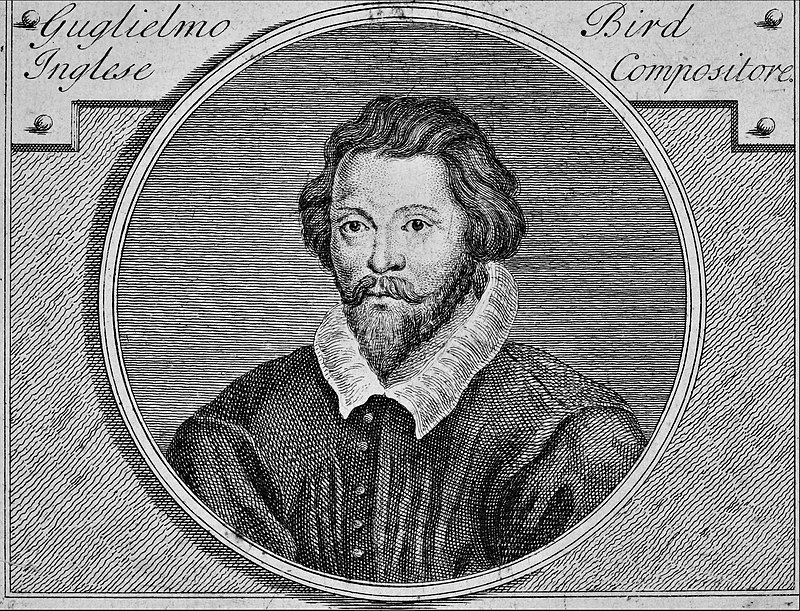
This week we have been marking the 400th anniversary of the death of William Byrd, one of the founding fathers of English classical music as we know it today.
One of the key events on Tuesday, the day itself, was a trio of concerts at the Wigmore Hall from the Cardinall’s Musick choir and their conductor Andrew Carwood. Together they have recorded all of Byrd’s choral music for the Gaudeamus and Hyperion labels, but on this occasion the focus was the composer’s three Mass settings.
Context for these unique works is vital, and it was given by an extremely helpful and thorough note from Katherine Butler, bolstered by musical insight, and also from Carwood himself in well-chosen asides to the audience. Both illustrated vividly how perilous Byrd’s own position as a composer was, for as a Catholic he was compelled to write settings of the mass, despite knowing public airings of the music would be against the demands of his monarch, Elizabeth I, for whom he was royal composer. If discovered, these performances could bring about imprisonment and even death. Because of this, the works lay undiscovered in their largely anonymous packaging, used for very private occasions presided over by a priest who would even have his own bolthole, should the ceremony be discovered.
Byrd Mass for 4 voices (c1592-3), with the Propers for the Feast of Easter Day
The Cardinall’s Musick [Patrick Craig, Matthew Venner (altos), William Balkwill, Mark Dobell (tenors), Richard Bannan, Robert Rice (baritones), Edward Grint, Nathan Harrison (basses)] / Andrew Carwood
The three Cardinall’s Musick concerts began with a lunchtime account of the Mass for Four Voices, dating from around 1592-3, and given context by in performance by Byrd’s settings of the Propers for Easter, completed in 1607. These began with a celebratory Introit, with its busy acclamation of the resurrection, with the mood changing for a solemn, weighty Kyrie from the Mass. This was given plenty of room by Carwood, with superb control from the singers in their sustaining of the notes. A fulsome Gloria followed, notable for its clarity of line and rhythm. Carwood was judicious in harnessing the ten voices available to him, reducing the forces to five for the Gradual & Alleluia. Here, the portrayal of ‘Mors et vita duello conflixere mirando’ (death and life have fought a huge battle)’ was vividly conveyed, before ‘et gloriam vidi resurgentis’ (‘and I saw the glory of the rising’) reached impressive heights.
The substantial Credo was paced just right, with a holding back from the ‘descendit’, with controlled lower notes to complement. A busy Offertory and graceful Sanctus were beautifully sung, the music gradually unfolding. The Communion (Pascha nostrum) was slow, appropriately reverent and pure, before the moving Agnus Dei had as its end a final chant and response telling us the Mass had finished.
Byrd Mass for 3 voices (c1593-4), with the Propers for the Feast of Corpus Christi
The Cardinall’s Musick [Julie Cooper, Laura Oldfield (sopranos), Patrick Craig, Matthew Venner (altos), William Balkwill, Mark Dobell (tenors), Nathan Harrison (bass)] / Andrew Carwood
As Andrew Carwood explained, we heard some of the richest music in the first concert, then some of the most intimate in the second. This was music of the recusant house rather than the big church or cathedral, and Carwood invited us to imagine we were in a building no bigger than a sitting room. With Catholics shrouded in secrecy, he gave an idea of just how risky this music making was.
We heard the Mass For Three Voices, with a noticeable reduction in texture from the lunchtime concert, as well as less movement within the parts. That said, there was an air of restrained celebration all the same. A quick Kyrie & more florid Gloria was sung with two to a part, and while the single parts could be left exposed they were very secure in these hands, notably the tricky entries from on high. The Propers on this occasion were for the feast of Corpus Christi and were published in 1605. They featured a ‘risky’ Gradual, before a six-piece Credo found a lovely peak on the words ‘Et ascendit in caelum (and ascended into heaven)’ and a beautiful confluence at the end. There was a suitably thoughtful start to the Sanctus, which became more florid in its ‘Hosanna’ exultations. The Communion was outwardly expressive, retreating to a sombre Agnus Dei and a solemn final chant.
Byrd Mass for 5 voices (c1594-5), with the Propers for the Feast of All Saints
The Cardinall’s Musick [Julie Cooper, Laura Oldfield (sopranos), Patrick Craig, Matthew Venner (altos), Ben Alden, William Balkwill, Mark Dobell (tenors), Edward Grint, Robert Rice (bass)] / Andrew Carwood
Finally the evening concert gave the Mass for Five voices with the Propers for the Feast of All Saints of 1605 – an effervescent celebration but becoming more meditative as the music proceeded. Carwood, revelling in the occasion, conducted with great sensitivity once again, presiding over a busy Introit with the rejoicing angels. The layered Kyrie of the Mass itself was ideally weighted, making the most of the chromatic possibilities, before a relatively restrained Gloria. The five voices, with increasingly complex writing, were nonetheless easy to follow, their rhythmic lightness suggesting a dance at the end of the Gradual – Carwood referring to the repartee between the voices.
He then referenced the intensity of Byrd’s writing, the declamation in the Credo and its extraordinary harmony, fusing of madrigal techniques into the mass. It was helpful to have these insights on top of the booklet notes, for Carwood setting Byrd apart as a composer even from the likes of Palestrina. The full ten-voice Credo explored deeply felt power and resonance, an incredibly expressive movement, while the purity of the sopranos shone through in the Offertory. A slow Sanctus gradually gathered pace with more complex writing, before the Communion – making explicit reference to the persecution Byrd felt, gave an appropriate stress to the words ‘propter iustitiam (for righteousness’ sake)’ and showed some well-handled dissonances. Finally an Agnus Dei of solemn, minor key angst found peace at last, capped by the closing sentence.
The choir and their conductor received a deservedly rapturous reception, for their beautiful and controlled singing had given Byrd the best possible remembrance, marking the death of this musical martyr in appropriate style. The Cardinall’s Musick and the Wigmore Hall should be applauded for such a well-conceived and executed trio of concerts, which are highly recommended for online viewing!
You can listen to the Cardinall’s Musick recordings of the Byrd Masses, dating from 2000, on the Spotify link below:
On this day, 400 years ago, the composer William Byrd died. He is regarded as one of the most important composers of the Renaissance, and certainly deserves the reputation as one of the founding composers of English music as we know it today.
There are a number of celebrations taking place to mark this anniversary, notably BBC Radio 3 including Byrd as its Composer of the Week, and The Cardinall’s Musick under Andrew Carwoodperforming the three Masses at the Wigmore Hall. For now, though, here is The Bells, a remarkable piece for harpsichord:
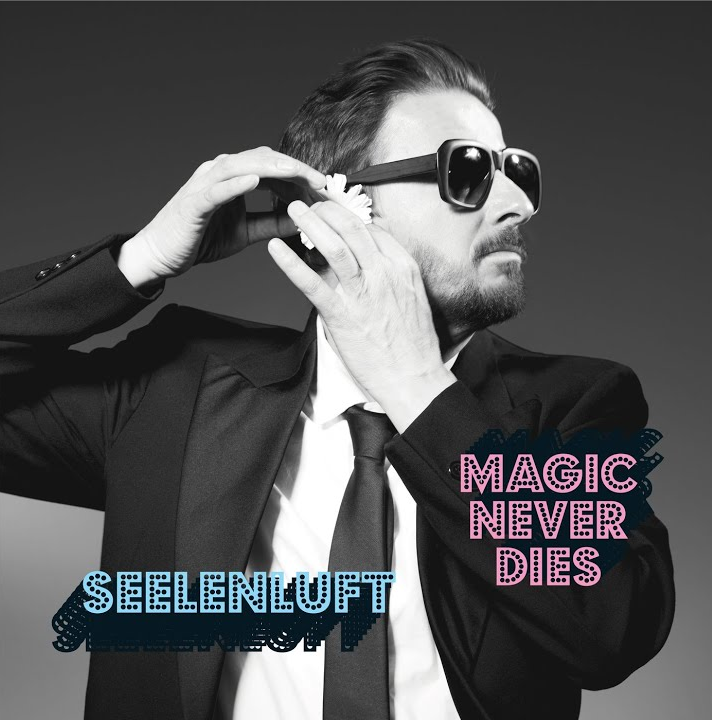
Seelenluft is the name by which the Swiss producer Beat Solèr is known to legions of electronic music listeners. The Zurich-born artist has a discography tracing back to the 1990s.
Solèr’s piano is the instrument taking centre stage for Magic Never Dies, though he is keen to surround it with a rich production of analogue instruments as well as electronics. With that in mind he has revisited his film music legacy and sourced string arrangements with the SIF309 Symphony Orchestra of Sofia.
What’sthemusiclike?
Warm and inviting. The opening strains of the title track beckon the listener in, the live arrangements giving extra life to the subtle grooves teased out by Solèr. There are persuasive piano lines, mellow flute textures and curvy string figures – all in accompaniment to Lou Vahou’s vocal.
Vahou shares vocals with Komi Togbonou, who brings sonorous layered harmonies to Come Holy Spirit, a smoky cut with its roots in the jazz club. Toys Toys Toys is another story entirely, Togbonou flexing his vocals over a springy piano riff. The instrumental tracks are if anything even more appealing. Why Is Everybody So Full Of Love is beautifully arranged, textures seemingly glinting in the late sunshine – but Ride The Pram and Nest suggest that Solèr has been listening to and enjoying the music of Debussy, but adding his own slant to things. Homecoming has a lovely, slightly nostalgic feel for signing off.
Does it all work?
Mostly. The vocals might be an acquired taste for some, but Solèr’s arrangements are consistently fresh and rewarding, and invite the mind to wander.
Is it recommended?
Yes – something different for a summer evening’s listening.
The Bartered Bride (Prodaná nevěsta) (1866) Comic opera in Three Acts – music by Bedřich Smetana; Libretto by Karel Sabina Sung in Czech with English surtitles.
Mařenka – Pumeza Matshikiza (soprano), Jeník – Oliver Johnston (tenor), Kecal – David Ireland (bass), Vašek – John Findon (tenor), Ludmila – Yvonne Howard (soprano), Krušina – William Dazeley (baritone), Mícha – John Savournin (bass), Háta – Louise Winter (mezzo-soprano), Ringmaster – Jeffrey Lloyd-Roberts (tenor), Esmeralda – Isabelle Peters (soprano)
Rosie Purdie (director), Kevin Knight (designer), Howard Hudson (lighting), Darren Royston (choreographer)
Circus Troupe, Garsington OperaChorus, Philharmonia Orchestra / Jac van Steen
Garsington Opera, Wormsley Friday 30 June 2023
review by Richard Whitehouse Photos by (c) Alice Pennefather
Smetana may have played down its status in the context of his output, but The Bartered Bride remains the foundation of Czech opera and is much the most performed work stemming from that tradition, making this revival of Garsington Opera’s 2019 production the more welcome.
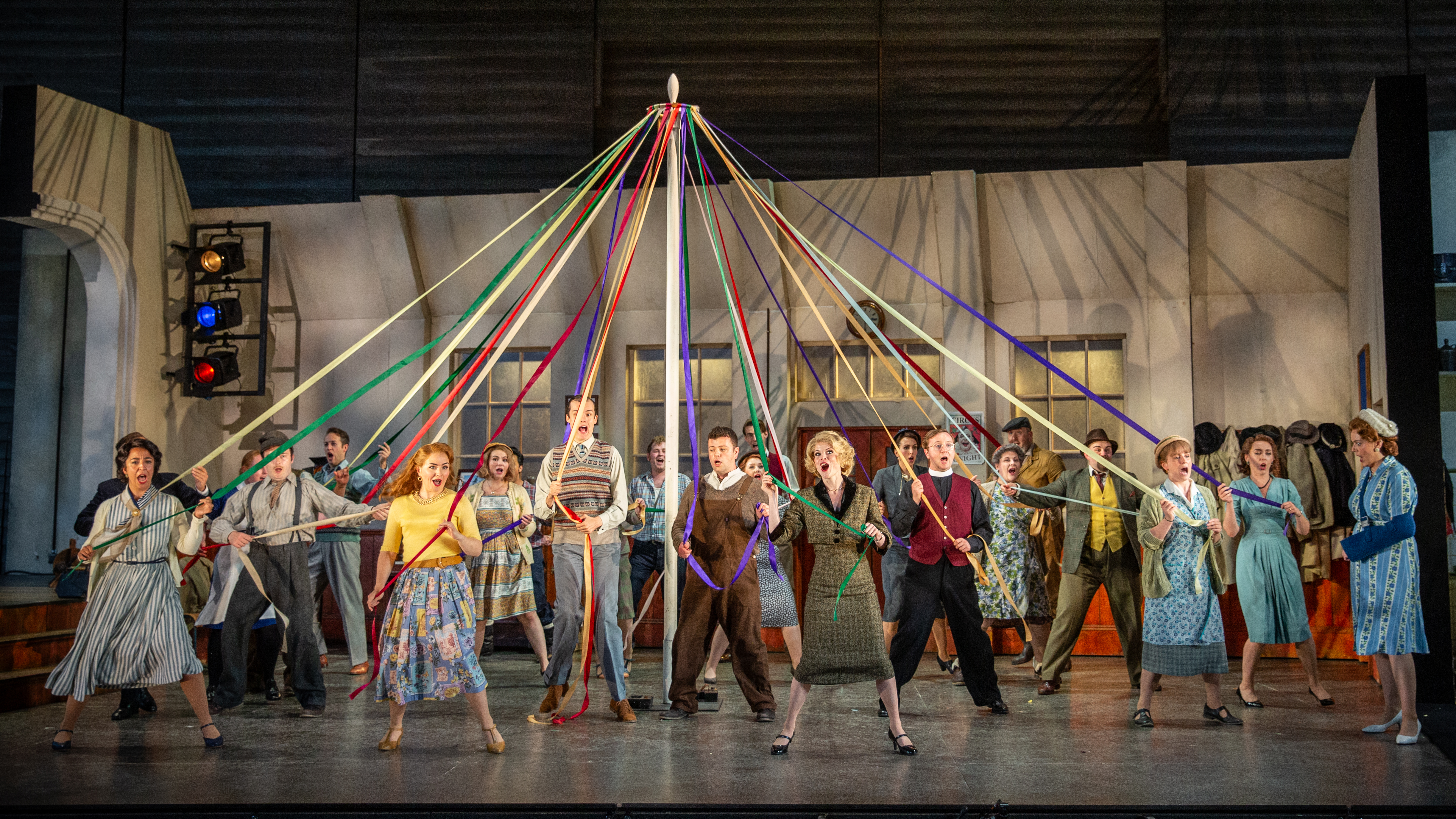
Rosie Purdie’s direction accorded wholly with Paul Curran’s original conception, transferring the scenario to a 1950s Britain where class restrictions and petty-mindedness were as much a given as in Bohemia a century before, yet the socio-political facet seemed as astutely handled as the cultural trappings of that first teenage generation were underlined without detriment to what was played out on stage. Kevin Knight’s designs clarified this setting most effectively, and Howard Hudson’s lighting was vivid without ever being garish. Most especially, Darren Royston’s choreography afforded communal togetherness during the crowd scenes while also ensuring that the circus troupe’s routines at the beginning of the third act came alive without any sense of their being a mere ‘add on’ to this production, and hence of the opera as a whole.
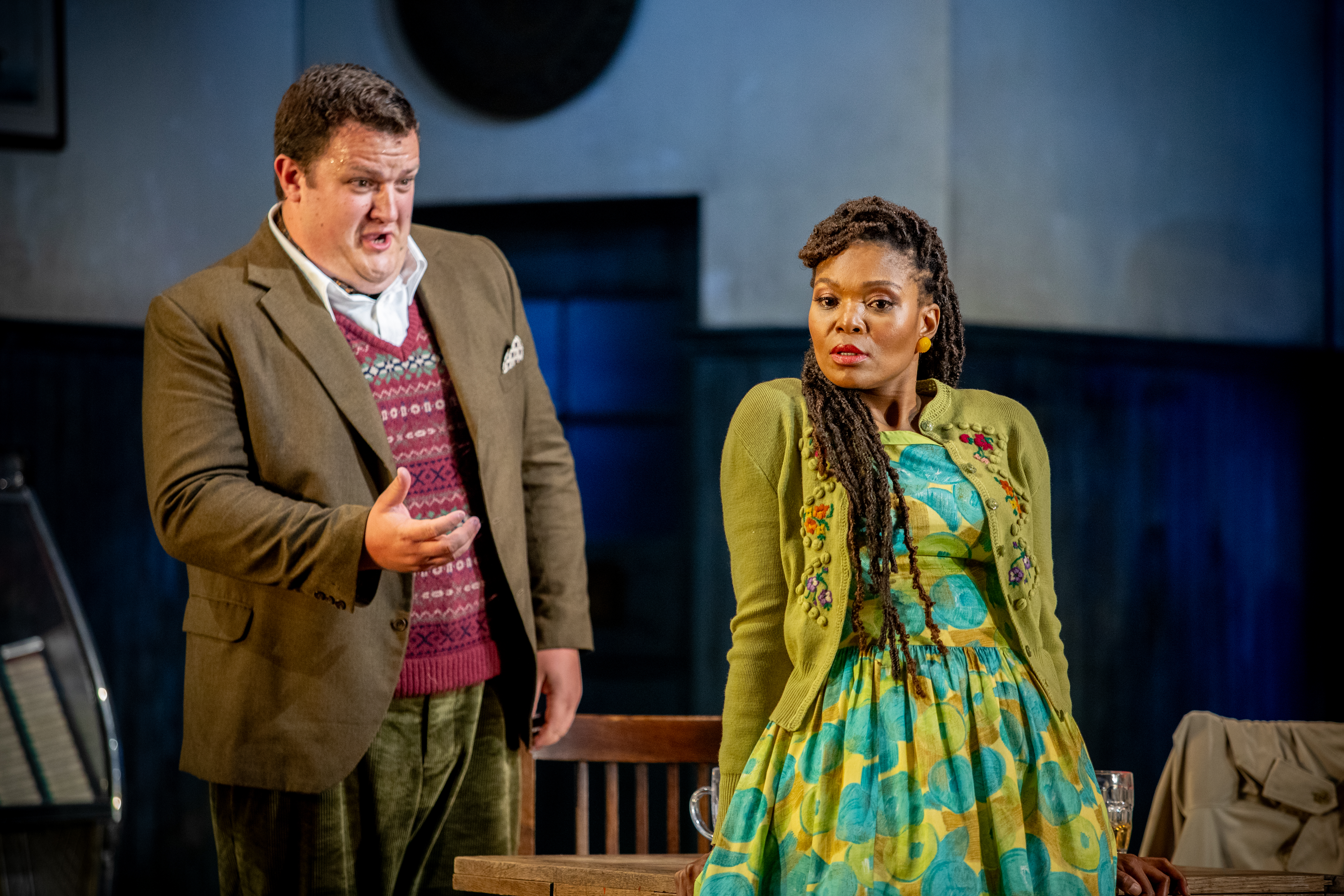
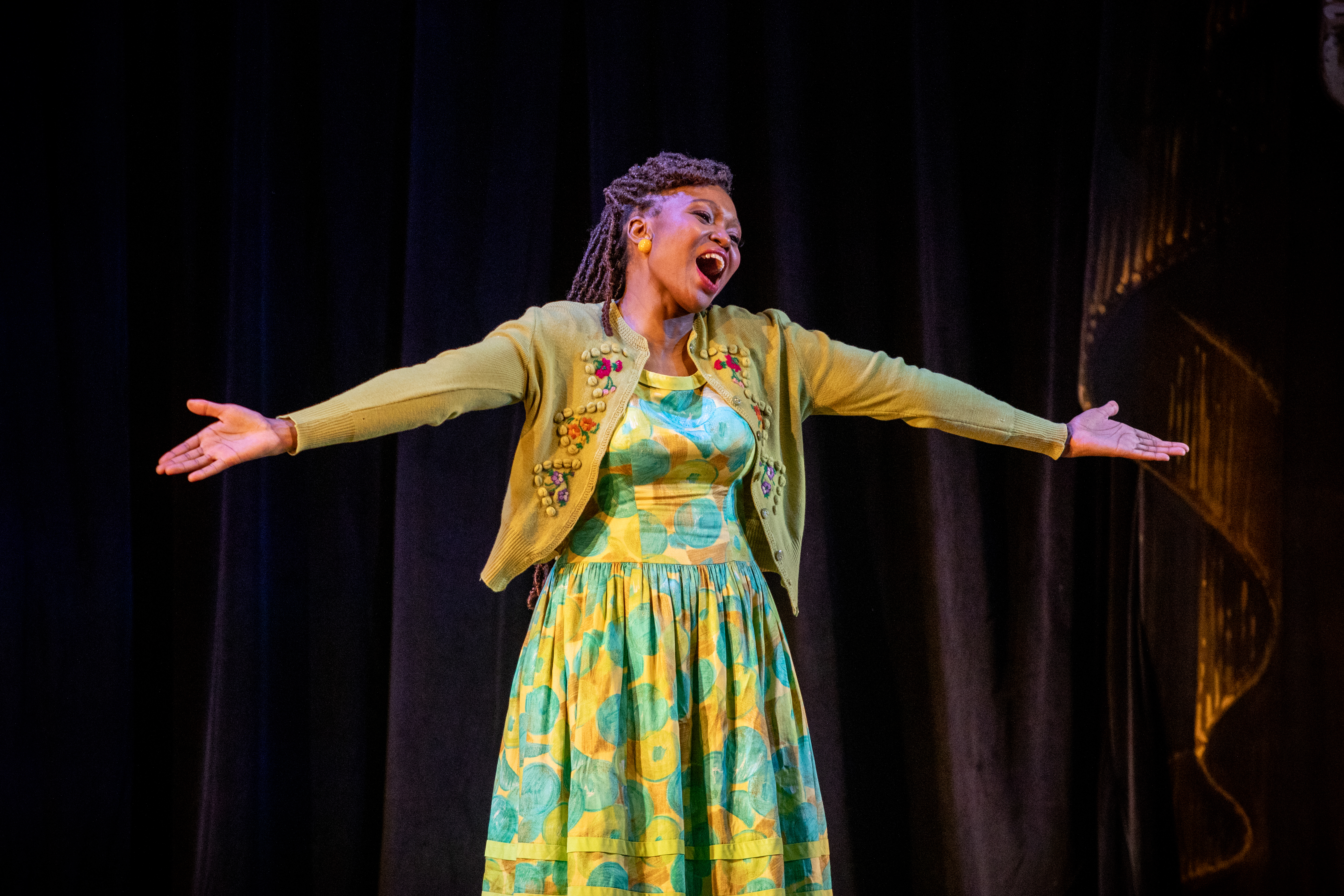
The casting could hardly have been bettered. Among the most wide-ranging role of any 19th-century opera, Mařenka was superbly taken by Pumeza Matshikiza (above) who conveyed pathos and real integrity of character to substantialize those comic capers unfolding on stage in what was an assumption to savour. Not comparable musically, that of Jeník is a notable role that Oliver Johnston rendered with verve and audible eloquence – such that his ostensibly hard-headed decisions could only be the outcome of an essentially sincere as well as selfless motivation.
Notwithstanding that the secondary roles provide relatively little in terms of characterization, John Findon drew a degree of sympathy for the hapless Vašek, William Dazeley and Yvonne Howard were well matched as the warmly uncomprehending Kružina and Lumilla, while the scheming couple of Mícha and Háta saw a suitable response from John Savournin and Louise Winter, abetted in this respect by David Ireland’s roguish Kecal. Jeffrey Lloyd-Roberts was magnetic as the Ringmaster, and Isabelle Peters provided an entrancing cameo as Esmerelda.
The latter characters are part of a Circus Troupe that, fronted by Jennifer Robinson, brought the stage to life just after the dinner interval. Elsewhere, the hard-working Garsington Opera Chorus offered a reminder this is an opera second to none in terms of its choral contribution, while the Philharmonia sounded in its collective element under the assured direction of Jac van Steen, familiar in the UK through his extensive work with the BBC National Orchestra of Wales and Ulster Orchestra. In particular, the overture and set-pieces in each act had the requisite vigour and effervescence as has made them at least as familiar in the concert hall, and it remains a testament both to Smetana’s immersion in and understanding of his native music that only the ‘Furiant’ at the start of the second act derives from a traditional source.
The Bartered Bride has enjoyed numerous UK productions during recent decades – among which, this Garsington revival can rank with the finest in terms of musical immediacy and visual allure. Those not able to see it four years ago should certainly do so this time around.



 Arcana.fm