Oslo-based producer Simon Field has shown a versatility in several dance music forms, based on house music – which, as he says, ‘is a feeling’.
To that end he delivers the packed album Need No Music, exploring deep, disco-infused house music that puts the beats first.
What’sthemusiclike?
Field knows how to work his house music, using a tried and tested ‘less is more’ technique to get maximum dancefloor movement.
The vocals are well chosen too – the likes of Gack Gack (Get Down) are also refreshingly raw, bringing in the essence of early Chicago house to contemporary beats in a way Paul Johnson used to achieve, while Calling reaches for the roof with percussion in tow. The rolling undercarriage of A Thing works a treat, the bass of Diamond cuts deep while Es Vedra brings the heat, panning out to see the haze on the horizon.
There is also an excellent collaboration with Blichfeldt, 10 Minutes.
Does it all work?
It does. Field plays to his crowd, giving them the beats, riffs and good times they want – consistently hitting the spot.
Is it recommended?
It is – Simon Field’s album will keep party season going long into September and beyond.
Listen & Buy
You can explore options for Need No Music on Amazon music
Hopkins ATHOS (arr. Jules Buckley) (BBC Commission, world premiere) Feel First Life (arr. Peter Riley & Leo Abrahams) The Wider Sun (arr. Sam Gale) Singularity (arr. Simon Dobson) Music for Psychedelic Therapy – excerpt (arr. Peter Riley) Form by Firelight (arr. Peter Riley) Luna Moth (arr. Sam Gale) Collider (arr. Simon Dobson) Abandon Window (arr. Tom Trapp) Recovery
Jon Hopkins (piano, programming), Leo Abrahams (guitar), BBC Singers, BBC Symphony Chorus (chorus master David Young), BBC Symphony Orchestra / Jules Buckley
Royal Albert Hall, London Tuesday 29 August 2023
by Ben Hogwood photos by Mark Allan / BBC
Electronic and orchestral music are more closely related than you might think, with Jon Hopkins a classic case in point. For 15 years, the pianist and producer has been carefully sculpting his music either as a contributor for other artists (King Creosote, Coldplay and Brian Eno to name just three) or making his own, weather-beaten albums. Starting with Opalescent and Insides, these have developed into immersive meditations (Singularity and the most recent long player Music for Psychedelic Therapy) by way of more full-bodied rave music (2013’s Immunity). How, then, does this music hold up in a packed and expectant Royal Albert Hall?
Extremely well as it turns out. In order to achieve what he described beforehand as ‘a meditation for 5,000 people’, Hopkins has to temporarily turn his back on beat-driven, post-rave landmarks such as Collider or Form By Firelight. When such material appears, its percussive impact is modified so that the main job is done by the timeless, meditative chorale echoing around the hall.
Hopkins’ music is repetitive, but as with the best exponents of minimalism – Steve Reich, Philip Glass and John Adams, for instance – the material under repetition rewards the investment made. The mind is eased, enjoying the upfront melodies but also taking up the option of picking out new threads beneath the surface, like examining a tartan pattern under a magnifying glass.
The tartan analogy is purposeful, for Hopkins’ earlier music has a distinctive Celtic edge furthered by his work with King Creosote. The Wider Sun, from 2009 album Insides, has an authentic left of centre tuning, is slow but packs emotional heft, beautifully arranged by Sam Gale and masterfully weighted by Jules Buckley and the BBC Symphony Orchestra strings.
Before that we hear a new piece, the 25-minute ATHOS demonstrating Hopkins’ control of larger structures. This is a natural direction for his music to be taking after Music for Psychedelic Therapy, for it is effectively an album ‘A’ side of several interwoven tracks. The profile and material of ATHOS sits closely to composers such as Arvo Pärt, and in particular his Credo, but Hopkins has up his sleeve a number of heart-shifting modulations. Accentuated by the Royal Albert Hall organ, these are once heard, never forgotten moments.
So, too, are the choral passages, thanks to pinpoint interpretations from the BBC Singers and BBC Symphony Chorus, whose lines float effortlessly above the orchestral forces. Their vocal control is masterful and effortless, ensuring the sustained notes keep their emotional impact without wavering. Lesser singers would have tailed off long before these ones even think of blinking!
The sequence of music, running for approximately 75 minutes, is well chosen. Only on occasion does the source material become oversimplified, and as it turns out these moments serve as natural pauses for breath in the musical tapestry.
Guitarist Leo Abrahams, appearing for the last two numbers, makes a critical contribution (above). A good friend and established collaborator with Hopkins and Eno, he brings a sharper timbre to the shredded distortion of Recovery, which is – as throughout – complemented by imaginative and sympathetic lighting.
This was a multisensory Prom, containing a different sort of symphony to which the Royal Albert Hall is normally accustomed. Hopkins has proved his credentials in mastering larger structures, and his development in this field will be worth watching for sure. For now, the afterglow remains.
This is the first album Laura Groves has released under her own name. Previously known as Blue Roses, the singer-songwriter marked her move to the Bella Union label with a fresh album of songs recorded with multi-instrumentalist Ben Reed.
The album’s name derives from the two radio transmitting towers near where Groves’s studio is based. The track titles and lyrical content take communication as their theme, providing helpful metaphors for relationship-fuelled feelings with those close by while also noting the interference threatening those connections.
What’sthemusiclike?
There are some beautifully written songs here. The first thing to note is the vocal delivery, for Groves has a naturally appealing voice. To use an old cliché, she could sing the phone book and hold an audience – but when the lyrical content is laden with emotion, as it is here, then the songs are even more meaningful.
Sky At Night sets an airy scene, starlit but with a lingering darkness behind the upward looking melody, which explores the very top of Groves’ range. Good Intention is similarly descriptive, with bittersweet tales of love and vulnerability that extend through the album. This track and D 4 N feature the complementary tones of Sampha, whose rounded timbre is an ideal foil, the latter a lush duet.
At times Groves bursts with positivity, but there is an undercurrent of frustration too, with missed opportunities and misunderstandings. “Can we just get on with it, I’ve got a lot to give!” she sings on I’m Not Crying. There is a strong pull to the yearning Sarah, missing its subject with the line “I hope you’re doing fine”. Time, is irresistible, its winsome melody softly delivered, while in Silver Lining the album has a dreamy coda with underlying resolve.
Does it all work?
It does. The careful shading of the production on this record gives the vocals the ideal platform from which to make maximum expression – which brings parallels with the much-loved Scottish band The Blue Nile to mind. As with them, less is most definitely more.
Is it recommended?
Yes – provided you give it time, Radio Red will have you under its spell by the third listen.
Yesterday we learned of the sad and unexpected passing of Brian McBride, one half of the influential ambient duo Stars of the Lid.
Together with band mate Adam Wiltzie, McBride made subtly mesmerising music that left a lasting impression on its listeners. Influenced by but not restricted to modern classical music, the pair set about creating a unique sound, predominantly drone-based but carefully and beautifully constructed. Much of their best work was realised on the Kranky label, who revealed the news of McBride’s unexpectedly early passing.
This tribute on Pitchfork tells a fuller story, but in order to fully appreciate McBride’s genius, here are two listening links – one to the landmark Stars of the Lid album and their Refinement of the Decline, and one to McBride’s solo album When The Detail Lost Its Freedom
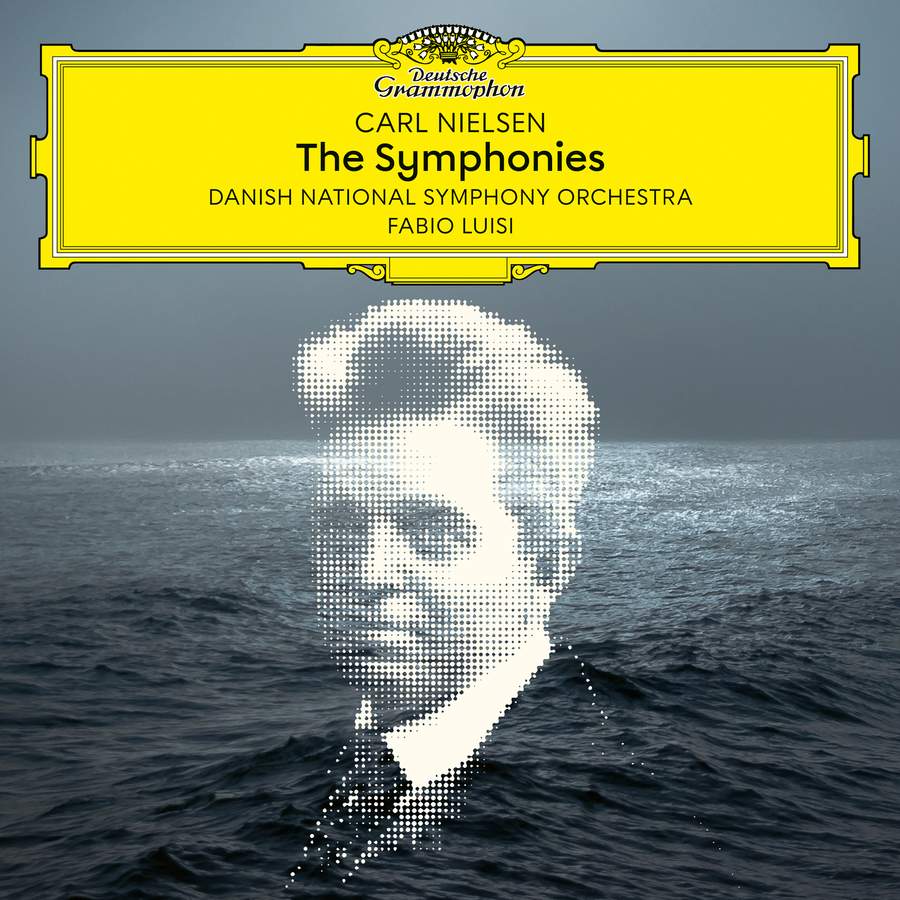
Danish National Symphony Orchestra / Fabio Luisi with Fatma Said (soprano), Palle Knudsen (baritone) (Symphony no.3)
Nielsen Symphonies: no.1 in G minor FS16a; no.2 FS29 ‘The Four Temperaments’b no.3 FS60 ‘Sinfonia espansiva’c; no.4 FS76 ‘The Inextinguishable’d; no.5 FS97e; no.6 FS116 ‘Sinfonia semplice’f
Deutsche Grammophon 4863471 [3 hours 36 minutes] Producer Bernhard Güttler; Engineers Mikkel Nymand, Christoph Stickel
Recorded in live performances at Koncertsalen, DR Koncerthuset, Copenhagen: 1 February (no.4), 3 February (no.2), 3 June (no.6), 17 June (no.1), 26 November (no.3), 28 November (no.5)
Written by Richard Whitehouse
What’s the story?
Deutsche Grammophon continues its latest generation of symphonic cycles (following those first-time traversals of Franz Schmidt and Charles Ives) with that from Carl Nielsen, performed by the Danish National Symphony Orchestra and its incumbent principal conductor Fabio Luisi.
Almost 50 years after the first integral recording of these symphonies (Ole Schmidt with the London Symphony Orchestra on Unicorn/Alto), there are at least 20 such cycles available so that any newcomer needs to bring a fresh perspective on Nielsen’s always distinctive though increasingly unpredictable fusion of innovation with tradition. This pairing of orchestra and conductor is intriguing insofar that the DNSO has been associated with these works from the outset, while Luisi is a musician of broad sympathies with cycles of symphonies by Schmidt (Querstand) and Schumann (Orfeo) plus an incomplete one of tone poems by Strauss (Sony). The result is a Nielsen cycle at times impressive in its conviction if at others dismaying in its inconsistency, and not always in those works or for those reasons one might have expected.
What’s the music like?
Luisi makes his intentions plain at the start of the First Symphony, its initial Allegro launched via an emphatic C major whose impetus is sustained through an impetuous development, with a remorseless acceleration into the implacable coda. Even finer is an Andante by turns elegant and eloquent, strings coming into their own, while only a marginal hesitancy as to the elision between scherzo and intermezzo affects its successor’s stealthy progress. Taut if not inflexible, the final Allegro has innate buoyancy capped with the uninhibited verve generated at its close.
If the Second Symphony is less successful, this is because Luisi does not transcend its status as a symphonic suite. The ‘choleric’ element of the opening Allegro verges on the histrionic, with the humour of the following intermezzo deadpan rather than ‘phlegmatic’. The Andante, though, is superbly sustained over its airily pastoral interlude towards an intensified recall of its ‘melancholic’ opening and coda of fatalistic poise. The ‘sanguine’ trait of the final Allegro is deftly undercut by musing uncertainty, but this yields a slightly tepid resolution in its coda.
Nothing comparable affects the Third Symphony, the ‘expansiveness’ of its opening Allegro abetted by visceral drive in its outer paragraphs and nuanced subtlety in its more speculative passages. The Andante’s interplay of the pastoral and emotional sees a rapturous apotheosis, soprano and baritone vocalises beguilingly intertwined, then the scherzo generates no mean energy prior to its restive ending. Luisi’s steady overall tempo for the final Allegro avoids sluggishness, and not least a coda the more conclusive for its eschewal of wanton triumph.
Despite a properly blazing start to the Fourth Symphony, its opening Allegro emerges as no more than the sum of some admittedly fine parts, with the charm of the ensuing intermezzo just a little too ‘knowing’. The highlight here is a slow movement of real fervency, its dense textures clearly articulated and a transition of simmering intensity into the finale’s headlong fugato on strings. Tension here is ably maintained, but Luisi’s holding back in its peroration replaces that striving onwards Nielsen surely intended with a more generalized affirmation.
This take on the Fifth Symphony is very much a tale of two parts. Luisi audibly locates the ‘tempo giusto’ for the first movement’s opening half – its increasingly ominous expectancy fulfilled in an Adagio of great pathos, albeit with a side-drum cadenza overly reined-in both texturally and emotionally. Too stolid a tempo for the second movement’s initial Allegro is exacerbated by its inhibited Presto, and though Luisi renders its Andante with compassion, his broadening towards the close of the final Allegro is too self-conscious to be convincing.
Is it surprising that the Sixth Symphony rounds off this cycle so perceptively? The complex array of emotions found in its opening movement yields the right ‘innocence to experience’ trajectory, with both the sardonic humour of its Humoreske and the fractured eloquence of its Proposta seria palpably conveyed. Above all, the finale’s outwardly fractious variations unfold with a seamlessness and an inevitability that makes of the coda a culmination whose outcome is held in check until the last bar. A still disputed masterpiece is hereby vindicated.
Does it all work?
Swings and roundabouts. There could be no doubt as to the seriousness with which Luisi has taken on this project, nor of the overall excellence of the DNSO’s playing. Where this cycle falls down is in a lack of focus across the whole, to the extent that there could have been two or even three conductors involved here. Moreover the orchestral sound, warm and immediate but often lacking definition or a consistent balance, feels appreciably different from what this ensemble produces in its home venue – leading one to suspect a modicum of post-production.
For CD adherents the fold-out triple pack is eminently stylish and straightforward, while Jens Cornelius’ note sets the scene adequately enough. The cycle is also available as three separate couplings of Nos. 4 and 5, Nos. 2 and 6 then Nos. 1 and 3 – with the three concertos to follow.
Is it recommended?
Yes, with qualifications. Prospective purchasers are advised to sample the cycle via streaming then proceed accordingly. Certainly, the Third and Sixth Symphonies rank with the finest now available, and listeners should form their own judgement as to the merits of this cycle overall.




 Arcana.fm