In Concert: Louis Lortie @ Wigmore Hall – Schubert & Rachmaninoff Moments Musicaux

Louis Lortie (piano)

Schubert 6 Moments musicaux D780 (1823-28)
Rachmaninoff Moments musicaux Op.16 (1896)

Wigmore Hall, Monday 25 September 2023

by Ben Hogwood

The term ‘moment musical’ has been seldom used in classical music, with only two significant sets of these ambiguously named piano pieces coming to mind. Yet as Canadian pianist Louis Lortie showed us, in this stimulating BBC Radio 3 Lunchtime Concert at the Wigmore Hall, they are far from insignificant works.

Schubert’s publisher was the first to coin the term, describing his set of six ‘easier’ pieces thus when they were published in 1828. In spite of their sporadic composition period – no.3 was the first written five years earlier – they make a satisfying collection when performed in order. As a common factor they find Schubert alternating between major and minor keys, a tension Lortie was keen to bring forward.

He began with a quizzical account of the first piece in C major, played with more pedal than might normally be the case but with persuasive phrasing. The second piece in A flat major was notable for its touching intimacy, in spite of a troubled middle section where a shadow fell over the music. Schubert’s third piece, a Danse Russe, anticipates Tchaikovsky’s Danse des Cygnes from Swan Lake.  Lortie played it beautifully, with a touch of humour, before the Chopin-esque fourth piece contrasted the darker hues of C# minor with an elegant section in the major key. The fifth piece strode forward with a determined gait, ending in a major key but not shaking off its feeling of inner strife, before a lovingly delivered sixth piece (subtitled A troubadou’s lament) returned to A flat major seemingly lost in thought.

Rachmaninoff’s cycle of six Moments Musicaux, published in 1896, prove rather more challenging for the performer, his aim for professional pianists with a similarly wide span across the hands. He would appear to have known about the Schubert set – that much is implied by the title – but the volume is noticeably louder for these passionate pieces. The opening nocturne in B flat minor started simply enough but soon a cold wind swirled about, Lortie mastering the technical demands with impressive control. This was a feature of his Rachmaninov playing, especially in the third piece, the emotional centrepiece of the cycle with strong, yearning characteristics. Around this we rocked to the turbulence of the second piece in E flat minor and the fourth in E minor, both with a steely glint at the edges and the latter with more bluster. Lortie drew back for a soulful fifth piece, saving the most impressive pianism for the final flourish, a brilliantly played peal of bells bringing us full circle to C major.

This was a fascinating and superbly played programme, the inner thoughts of Schubert complemented by Rachmaninoff’s overt passion, both brought into the open by Louis Lortie for us to fully appreciate. As a parting gesture he acknowledged the piano itself, a Bösendorfer instrument whose tone was ideal for this music.

For livestreamed concerts from the Wigmore Hall, click here

New music – Moritz von Oswald: Infinito (Tresor)

Berlin label Tresor Records have announced that Moritz von Oswald, one of their longest-serving artists, will be releasing new album Silencio on 10 November.

Its outline is intriguing, with von Oswald looking to explore the differences between human and artificial sound, particularly using the voice. To do this he will be referring to a lineage of works from composers such as Varèse, Ligeti and Xenakis, in the company of Vocalconsort Berlin. Here is a short teaser for the album:

There is also a sizeable excerpt in the form of Infinito, the first single from the album. It is an intriguing and eerie meeting point between synthesizers and voices, music that carries very little weight in the form of bass but a good deal of intensity as it slowly unfolds. The synthesizers carry a short motif of five notes that underpins the hypnotic vocals:

Silencio will be released by Tresor Records on 10 November, while the new single Infinito will be followed by Colpo (6 October) and Opaco (20 October). For buying options and more information, head to the Bandcamp page below:

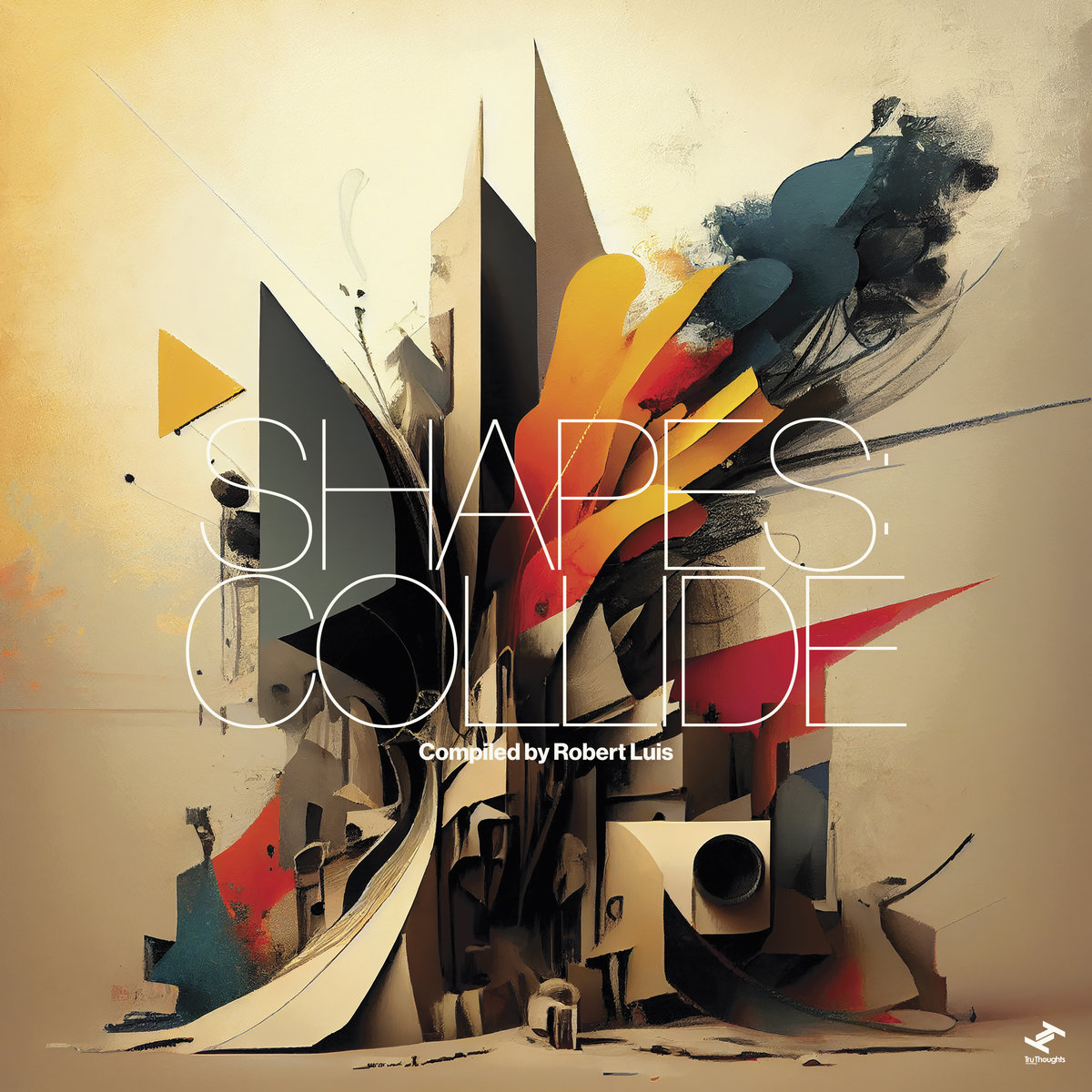
Switched On: Various Artists – Shapes: Collide (Tru Thoughts)

by Ben Hogwood

What’s the story?

The ‘Shapes’ compilation series has been an integral part of Tru Thoughts’ make-up throughout their 24-year history. Robert Luis’ label continues to bring a wide variety of music to the table, and this is the ideal platform on which to showcase it – whether soulful, song-based, cosmopolitan or beat-driven, a flavour of the label is here.

Luis curates the selection, bringing a healthy mixture of label staples, remixes and a few rarities to spice things up.

What’s the music like?

Eclectic and open-minded, as the label themselves describe.

Among the many highlights are a couple of sassy numbers in MELONYX’s Melanin Queens, which is soul music with an edge, and The Sindecut & Ijeoma, whose club mix of Stand Tall is firmly uplifting. The combination hit the jackpot a second time with Different, where multilayered vocals combine with a big screen backdrop.

Meanwhile Running Loving Something contribute the breezy I Love The Feeling, while there are two rather special remixes of Anchorsong – the Salamanda take on Windmills and the Azido 88 Remix of Common Ground, which makes a play of the wordless vocal and broken beat.

Label stalwart Rhi impresses with the close-up intimacy of Craving Your Love, while Luman Child – via the North Street West Vocal Remix – sing out a gospel house treat with Robert Gee in Grateful. Sunny climes are explored by STR4TA in an excellent remix of Anushka’s Bad Weather, while once the sun goes down Bruk Rogers impresses with the nocturnal LDN 313.

Does it all work?

Pretty much. There is such a wide variety of music on show here there is something for everyone – and to be honest there are many more hits than misses.

Is it recommended?

It’s a no-brainer – 2 hours and 40 minutes of the best of a wide-ranging label, available for the cost of a pint of beer. What’s not to love?

Listen

Buy

Switched On: Speaker Music – Techxodus (Planet Mu)

by Ben Hogwood

What’s the story?

Speaker Music is the work of writer and producer DeForrest Brown Jr., who describes his work as “abstracting Blackness through information overload” or, in the first track, “Black music that sounds technological, rather than music made with technology.” He does this through a combination of live and pre-edited music.

Techxodus is designed as an epilogue to Brown’s book Assembling A Black Counter Culture, or – as he describes it again – as “an extension of the Drexciya Mythos; researching  and reimagining the artefacts and stories of Drexciya with new maps, ideas and music, in particular reflecting on the ‘Seven Storms’, seven albums that came out in quick succession around the death of Drexciya member James Stinson, which seemed to herald Drexciyans in the attack mode.”

What’s the music like?

Brown Jr. sets out the principles behind the album over a single, thickly textured chord – an oceanic drone, if you like, and the ideal way into the album. Gradually the wholeness starts to break up, with muted trumpet and flickering percussion that carries into Techno-Vernacular Phreak. The percussion cuts loose, the harmonies start to wander, and a certain tension is introduced.

The treble lines have a piercing, acidic qualities that Brown offsets with these lovely, deep-dive drones such as the one that starts Holosonic Rebellion. This track grows into a depiction of an uprising, thrilling on one hand but disconcerting on the other. The intensity grows through Dr Rock’s PowerNomics Vision, threatening to spill over as the drumming becomes more insistent and the vocals edgier. Jes Grew brings this to a peak, with thrilling walls of sound from the brass that sound like insistent train horns, broken up by the frenetic drumming. Our Starship To Ociya Syndor returns to the rich drone-based approach, with wordless voices borne on the airwaves beneath shrill sonic signals. The intensity subsides – but only a little – before the scattergun drumming and distortion combine to bring Feenin’ to a coruscating peak. Finally Astro-Black Consciousness returns us to the mood of the opening, journey complete but with the wailing of gospel voices in the middle ground.

Does it all work?

It does – because Speaker Music has a style all of his own, a fascinating intersection of experimental jazz and techno that proves difficult to break down. New technology provides part of the thrill, but also a hidden menace.

Is it recommended?

It is indeed. Techxodus is a powerful and highly emotive listening experience, which only grows in stature the more you hear it.

Listen

Buy

In concert – Thomas Trotter, CBSO / Pierre Bleuse: Saint-Saëns ‘Organ’ Symphony; Ravel, Poulenc & Holmès

Thomas Trotter (organ, above), City of Birmingham Symphony Orchestra / Pierre Bleuse

Ravel Le Tombeau de Couperin (1914-17, orch. 1919)
Poulenc Organ Concerto in G minor FP93 (1934-8)
Holmès La Nuit et l’Amour (1888)
Saint-Saëns Symphony no.3 in C minor Op.78 ‘Organ’ (1885-6)

Symphony Hall, Birmingham
Wednesday 20 September 2023 (2.15pm)

Reviewed by Richard Whitehouse

It hardly seems 40 years since Thomas Trotter took on the post of Birmingham City Organist in succession to the venerable George Thalben-Ball, and it was good to see his local orchestra marking the occasion with a programme which featured two staples from the organ repertoire.

Some 85 years on and it might be hard to imagine just how radical (or, better still, subversive) Poulenc’s Organ Concerto was through its juxtaposing elements both serious and populist in a continuous sequence that comes together precisely because of this stylistic incongruity. Not that Trotter betrayed any such doubts in what proved a tautly cumulative reading; aspects of the Baroque and Classical colliding with a sombre if never wantonly earnest Romanticism in which strings melded seamlessly with the soloist while timpani underpinned climactic points. Pierre Bleuse ensured a steady gathering of tension over the lengthy central span of slow(ish) music, with the final stages making the most of that music-hall element as makes the fateful ensuing recessional then baleful closing cadence more decisive in its stark emotional impact.

Organ transcription of Ravel’s Le Tombeau de Couperin is not unknown, but this afternoon’s performance was of the composer’s familiar orchestral version. Bleuse (below) conveyed the reticent elation of the Prélude, and while his expressive emphases made the Forlane overly studied in its knowingness, the wistful elegance of the Minuet sounded as disarming as was Yurie Aramaki’s oboe playing. Nor was any lack of poise in the central sections of the Rigaudon, even if Bleuse’s slightly stolid tempo in those either side sacrificed some of the music’s elan.

Composer, artist and feminist Augusta Holmès left a substantial output whose ambition may outstrip its attainment but includes such gems as La Nuit et l’Amour. Originally an interlude in her symphonic ode Ludus pro patria, it had established itself as an autonomous item well before becoming a staple of late-night music programmes – its canny amalgam of sensuous harmonies and heady lyricism recalling such contemporaries as Massenet and Godard, albeit with her engagingly personal twist which communicated itself readily in this performance.

Saint-Saëns was guarded with his assessment of Holmès, but his remark on her ‘flamboyant orchestration’ feels no less applicable to the Organ Symphony such as constitutes his greatest orchestral achievement and of which the City of Birmingham Symphony has given numerous memorable outings. While not among these, this account still left little to be desired – Bleuse launching the first part with keen expectancy before steering a purposeful if slightly dogged course through the ensuing Allegro. Seated up high at the organ console (rather than adjacent to the orchestra as with the Poulenc), Trotter made the most of the Adagio’s luminous timbral registrations which complemented the similarly burnished orchestration, while there was no lack of vigour or vivacity in the ‘scherzo’ section that bursts in at the start of the second part.

It is easy to make the ‘finale’ overbearing in its grandiloquence, but Trotter resisted any such temptation – he and Bleuse conveying the impetus and excitement of this music as it headed through passages of chorale and fugue toward a peroration as satisfying as it was irresistible.

You can read all about the 2023/24 season and book tickets at the CBSO website. Click on the artist names for more information on organist Thomas Trotter and conductor Pierre Bleuse