There’s Always Next Year has a very English feel to its title, though its roots lie more accurately in shattered sports fantasies. It is, says Sean La’Brooy, ‘a tribute to the misguided hopes and dreams of a sports fan. Field recordings and commentary from a range of codes weave between silky saxophone lines and piano chords in what is a textbook showcase of the classic Analogue Attic downtempo and early evening sound we’ve come to know.’
It is La’Brooy’s second solo release, a complement to his work in tandem with Alex Albrecht as one half of Albrecht La’Brooy.
What’sthemusiclike?
One of those silky saxophone lines can be heard early on in Offseason Getaway, courtesy of Greg Carleton – who allows the instrument to wander above active yet sensitive drumming from Leo Yucht.
The music has a wider, outdoor span thanks to La’Brooy’s roomy production – and that comes into its own for the beautiful scenes painted by Curse and 3rd and 28, where the commentary field recordings only heighten the ambience. Carleton returns for a delightfully lazy contribution to the atmospheric 140 to the Pin, where the pace quickens and the style switches to deep house. There it stays for the much busier Let, with bell-like melodic loops and urgent beats.
Finally we return to a trio with Carleton and Yucht for the regret-laden title track, with airy consolation found from keyboards too.
Does it all work?
It does. Consolation for sports fans is close at hand!
Is it recommended?
Very much so – if you’ve been following La’Brooy or Albrecht, you will find much to enjoy here. It is music to slow the pace and soothe the fevered brow of modern life.
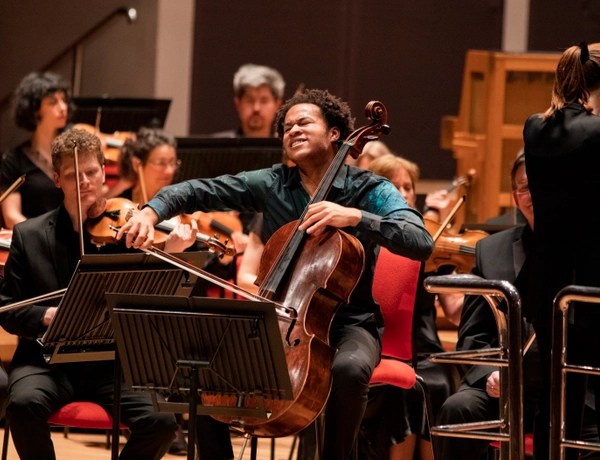
Sheku Kanneh-Mason (cello), City of Birmingham Symphony Orchestra / Kazuki Yamada
Beethoven Leonore Overture no.1 Op. 138 (1807) Shostakovich Cello Concerto no.1 in E flat major Op.107 (1959) Walton Symphony no.1 in B flat minor (1932-5)
Symphony Hall, Birmingham Saturday 16 September 2023
Reviewed by Richard Whitehouse
Having opened the City of Birmingham Symphony Orchestra’s season two days earlier with Verdi’s Requiem, Kazuki Yamada returned for a judicious programme comprising three ‘No. 1’s’ – two mid-20th century masterpieces and an overlooked gem from the previous century.
Beethoven’s First Leonore Overture is in fact the third such piece written in conjunction with his eponymous opera, being intended for a Prague production that never materialized. Shorter in duration and simpler in design than its two ‘successors’, it sets the scene without attempting an overview of Leonore’s dramatic essence. Yamada duly made the most of an introduction as speculative as it was searching, then steered a lively course over the main Allegro – not least a surging crescendo into the coda such as Rossini had taken to heart before the decade was out.
It was with Shostakovich’s First Cello Concerto that Sheku Kanneh-Mason won BBC Young Musician of the Year in 2016 and thus launched a career that shows no signs of stalling. In the meantime, his take on this piece has deepened and at times darkened – the opening Allegretto exuding keen irony abetted by the incisive response from an orchestra whose single horn and double woodwind are thrown into sharp relief against modest strings. If the ensuing Moderato seemed a little measured, its stark intimacy was eloquently sustained to a yearning climax then mesmeric interplay of cello harmonics with celesta in the coda. The third-movement Cadenza emerged with real cumulative impetus, and not even the hiatus while Kanneh-Mason replaced a broken string could stem the final Allegro’s sardonic course to its decisive closing flourish.
A work that has latterly regained (at least in the UK) the reputation it enjoyed decades earlier, Walton’s First Symphony has had regular performances from the CBSO (and a recording with Simon Rattle), and this reading did not lack for commitment. Not least an opening movement such as built methodically and remorsefully from initial expectancy, through a central span of brooding stasis, to a pulverizing culmination; the only proviso being the frequent inaudibility of its underlying pulse in lower strings during the climactic stages. The scherzo seemed even finer in its tense amalgam of spite and barbed humour, its treacherous syncopation dextrously handled, while the slow movement unfolded from a wistful flute melody (affectingly rendered by Marie-Christine Zupancic) to its climax of baleful intensity subsiding into numbed regret.
The finale still tends to be seen as surrender to well-tried symphonic precedent yet, as Yamada presented it, did not eschew formal or emotional obligations. The resolute introduction, agile fugal writing and irresistible build-up to the timely appearance of extra percussion all became part of a conception vindicated by the elegiac trumpet theme (ably conveyed by Jason Lewis); leading to a peroration in which Yamada’s urging his players onward briefly risked unanimity of response while still resulting in the sheer affirmation of those thunderous closing chords.
Overall, an engrossing performance which augurs well for the CBSO’s first full season with Yamada. Next week places the spotlight on Thomas Trotter who, having done forty years as City Organist in Birmingham, takes the loft for repertoire staples by Poulenc and Saint-Saëns.
You can read all about the 2023/24 season and book tickets at the CBSO website. Click on the artist names for more information on cellist Sheku Kanneh-Mason and conductor Kazuki Yamada
Chouchane Siranossian (violin), Leonardo Garcia Alarcón (harpsichord), Balázs Máté (cello)
J.S. Bach Violin Sonata in G minor BWV1021 (1732-5) Farina Sonata quinta detta ‘La Farina’ (pub. 1626) J.S. Bach Violin Sonata in C minor BWV1024: Adagio; Fugue in G minor BWV1026 (before 1712) Walther Passacaglia from Sonata no.7 (pub. 1688) Krikor Naregatsi Improvisation on Havun Havun Locatelli Sonata in D minor for solo violin Op.6/12 (pub. 1737) Schmelzer Violin Sonata ‘Victori der Christen’ (c1683-4)
Wigmore Hall, Monday 5 June 2023 1pm
by Ben Hogwood
This attractive programme of works for wind ensemble began with a rarity.
September is a prominent line in the sand in the course of the classical music year. The Proms ends, everyone else gears up for the start of an Autumn season, and a fresh wave of creativity begins.
The resumption of the BBC Radio 3 Lunchtime Concert on Mondays at the Wigmore Hall is always a prominent part of the changing of the guard, and the choice to begin the new season with violinist Chouchane Siranossian, harpsichordist Leonardo Garcia Alarcón (both above) and cellist Balázs Máté was an inspired one.
The trio gave a recital based on their Bach Before Bach album of November 2021, bringing forward some of the master’s work for violin and harpsichord but putting it in the context of contemporaries Walther and Schmelzer, as well as some inspired earlier choices.
Bach himself began the programme, the Violin Sonata in G major BWV1021 featuring some effortlessly stylish playing. Siranossian has a particularly beautiful tone and a sense of ornamentation that fits this music instinctively. The same can be said for the fluent harpsichordist Alarcón, an expressive player of exceptional balance, complemented by the burnished tones of cellist Máté. A songful Adagio gave way to an enormously enjoyable, quickfire Vivace, which itself led to a tasteful, florid Largo, led by legato harpsichord. An attractive Presto finished an uplifting account.
We then had a rare opportunity to hear the music of Carlo Farina, whose work is not often heard in concert. With performances like these he deserves much better, for the Sonata quinta detta featured lively passagework and darker colours, the music glinting at the edges as the violin became prone to passionate outbursts over rich harmonies. Siranossian selected a shorter bow for this music, playing to the snappy, playful interjections.
Two Bach movements followed, cleverly linked – a deeply profound Adagio, given great depth and character by the violinist, then a virtuosic Fugue, a very tricky proposition given Bach’s writing but brilliantly played. Walther’s Passacaglia, meanwhile, was a fiery complement, setting out the main theme in relatively polite tones but then liable to explosive outbursts of virtuosity.
After all this activity came the brilliantly timed Improvisation on Havun, Havun, from 10th century Armenian monk Krikor Naregatsi. This introduced a remarkable stillness to the concert, time standing still as the violin turned ornamental phrases over a drone from the cello’s open A and D strings. Siranossian segued straight into the Locatelli, a solo sonata with daring feats of virtuosity here but retaining some of the bird-like qualities found in the Naregatsi. Her impeccable intonation and bow control were striking, but the music reached a truly exalted level in the fifth movement Capriccio ‘prova dell’intonazione’, the sky truly the limit for the violin’s highest register!
There was also a bold opening to Schmelzer‘s pictorial sonata Victori der Christen, with multiple stopping and very descriptive writing, especially in the slow and sorrowful sections. To complement the drama of the Schmelzer, Siranossian introduced the first movement of the Sonata in D major from Georg Muffat. This was another excerpt from the trio’s disc, but one whose sunny countenance was the perfect foil – and which put the seal on a remarkable concert with playing of an exceptional standard.
You can listen to Bach Before Bach via Spotify below:
For more livestreamed concerts from the Wigmore Hall, click here
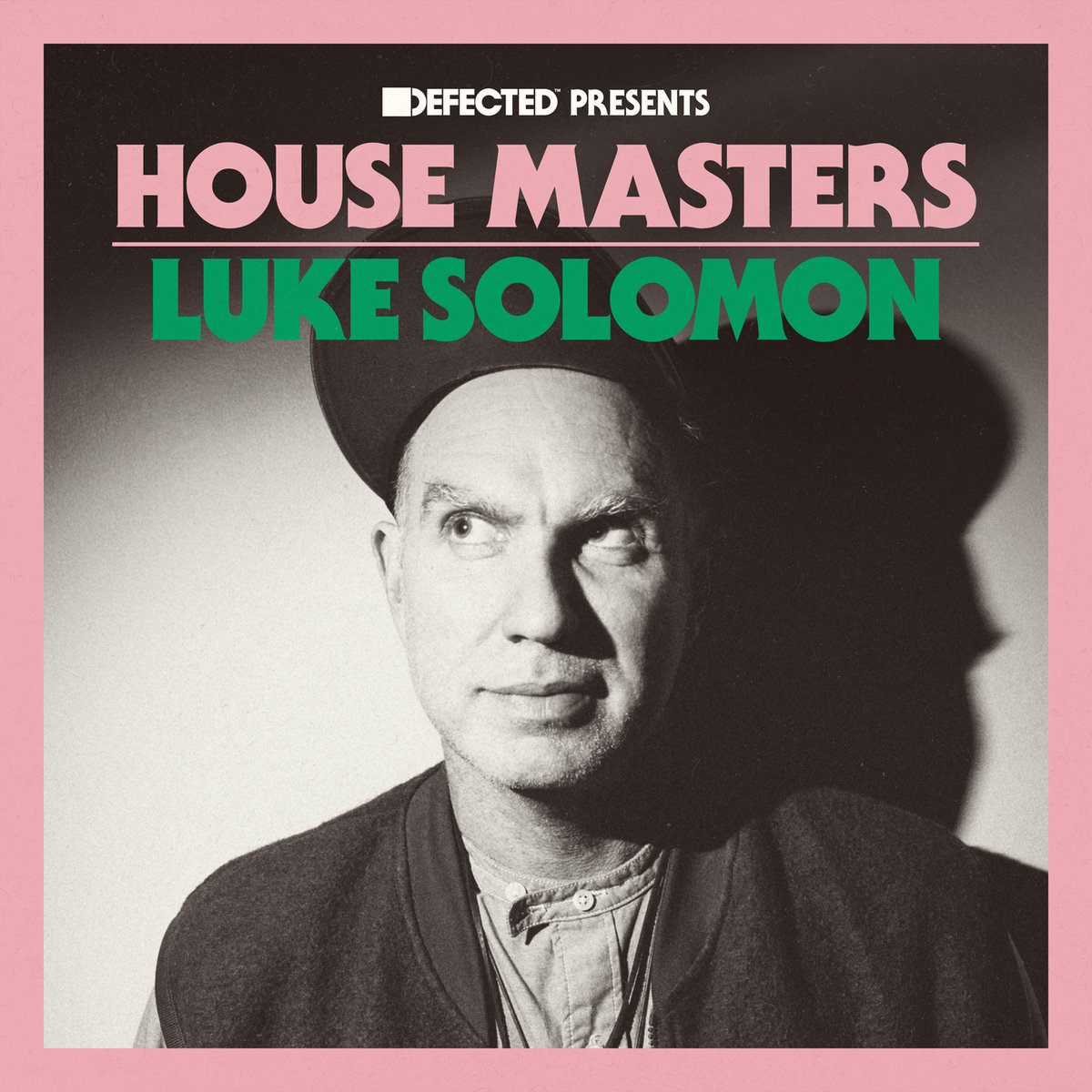
Luke Solomon has been making house music for getting on 25 years, and for much of that time has been running the Classic label with Derrick Carter. With their concern now more intertwined with Defected, it is great to see him added to their House Masters roster – which has built up a formidable collection of US heavyweights and label-honed talent.
Recently Solomon has contributed to albums by Beyoncé and Honey Dijon, while honing his craft as a remixer – and this 35-track strong compilation brings that discipline together with original tracks.
What’s the music like?
Excellent – very danceable and a lot of fun. Solomon has been a consistent source of good time house music since he started making it, and this selection of tunes show just how versatile he is, too.
The ability to make listeners and dancers alike smile frequently is clear throughout, his sense of humour bubbling just below or above the surface a lot of the time. Highlights include a brilliant take on Powerdance‘s A Safe And Happy Place, and two mixes of Isolée’s Beau Mot Plage – that show off two fresh strings to his bow. There is a lovely disco infusion on Freesoul‘s Sane/Eyes and a super low slung groove for Horse Meat Disco and Kathy Sledge‘s Jump Into The Light. Light You Up – featuring Queen Rose and Amy Douglas – will put a smile on anyone’s face, with its uplifting lyrics, as will the Amp Fiddler-fronted Come On Over and Jon Marsh-featuring Lonely Dancer.
Does it all work?
It does indeed. Defected have pulled together the ideal career retrospective, but at the same time have been keen to emphasise that Solomon is still very much at the top of his game.
Is it recommended?
Enthusiastically. Luke Solomon has been at the forefront of UK house music for the last three decades, and his contribution to its excellence is heartily applauded here. He makes house music in a consistently inventive way while keeping to first principles, making it fun and entertaining. Go forth and purchase!
Intriguing news from Sony Classical tells us that next month they will release a collaboration between composer James Newton Howard and director M. Night Shyamalan. The record label take up the story:
Included on Night After Night are highlights from Howard’s haunting scores that became part of the identity of eight of Shyamalan’s eerie, mind-bending thrillers – The Sixth Sense (1999), Unbreakable (2000), Signs (2002), The Village (2004), Lady in the Water (2006), The Happening (2008), The Last Airbender (2010) and After Earth (2013).
For this album, James Newton Howard created eight suites that are piano-centric and include new and original material. Pianist Jean-Yves Thibaudet performs throughout the recording. Violinist Hilary Hahn recreates her contributions to the soundtrack recording of the score for The Village and cellist Maya Beiser reprises her performance of An Event from The Happening soundtrack. Gavin Greenaway conducts the orchestra and chorus in Howard’s new arrangements.
When Howard came onboard during the post-production phase to score ‘The Sixth Sense’, Shyamalan said he “felt potential and excitement” in their work together. In their mutual candour, each discovered a trusting creative partner in finding the right musical expression for Shyamalan’s supernatural thrillers.
You can listen to Morning from The Village below, with the haunting solo Hahn brought to the foreground:




 Arcana.fm