
Elgar Overture ‘Cockaigne’ (In London Town) Op.40 (1901)
Holst Hammersmith (Prelude and Scherzo) Op.52 (1930)
Stanford Songs of Faith Op. 97 (1906): no.4 (To the Soul), no.5 (Tears), no.6 (Joy, ship-mate, joy); An Irish Idyll in Six Miniatures Op.72 (1901): no.2 (The Fairy Lough)
Vaughan Williams A London Symphony (Symphony no.2) (1912-13, rev. 1918-20)
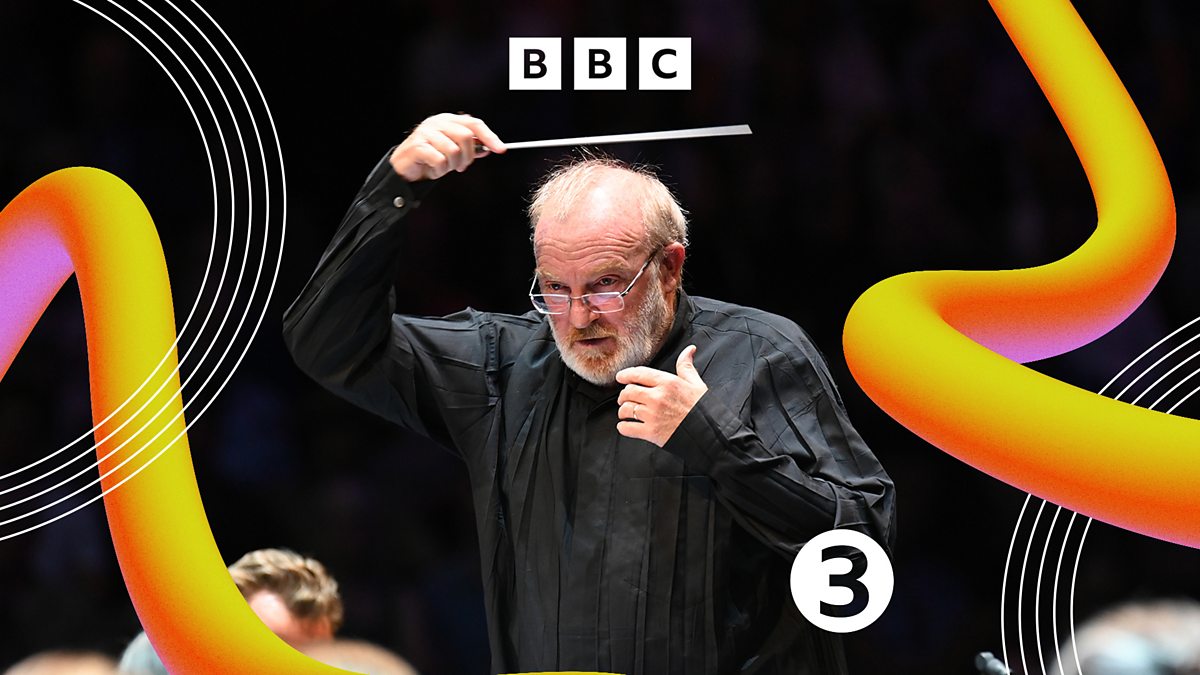
Christopher Maltman (baritone), BBC Symphony Orchestra / Martyn Brabbins
Royal Albert Hall, London
Friday 9 August 2024, 6pm
reviewed by Richard Whitehouse
Concerts devoted to British music are by no means an unknown quantity at the Proms, but to have one as judiciously planned as that featuring Martyn Brabbins with the BBC Symphony Orchestra, on the conductor’s 65th birthday, was as unexpected as its realization ‘on the night’ proved consistently impressive.
Whether or not this account of Elgar’s Cockaigne ranked among the best of the previous 70 or so hearings at these concerts, it assuredly did the piece justice. Not its least attraction was Brabbins integrating this evocation of London on the cusp of Victorian and Edwardian eras with due perception of its ingenious sonata design, resulting in a reading as characterful as it was cohesive. Such as the emergence of the marching band at its centre and final peroration (Richard Pearce making his presence felt at the organ console) were the highpoints intended.
Whereas Elgar conveys London in its midst, Holst renders Hammersmith at a remove – his Prelude and Scherzo evoking those sights and sounds where the latter long made his home with a poise and precision no less involving for its objectivity. The orchestral version might be less often revived than its wind-band original but it yields little, if anything, in terms of expressive immediacy; not least with Brabbins mindful to underline how its two sections do not just succeed each other but are juxtaposed, even superimposed, prior to the rapt ending.
In the centenary of Stanford’s death, this selection of songs provided a welcome reminder of its composer’s prowess in the genre. The final three Songs of Faith denote an appreciation of Walt Whitman comparable to that of the next generation – whether in the eloquent musing of To the Soul, surging anguish of Tears or effervescence of Joy, shipmate, joy. Christopher Maltman then brought his burnished tone and clarity of diction to an affecting take on Moira O’Neill’s The Fairy Lough – proof Stanford could do ‘lightness of touch’ where necessary.
Whereas Stanford’s songs have barely featured here for almost a century, Vaughan Williams’s A London Symphony has accrued 36 performances, but what might be thought its ‘intermediate version’ had not been heard in nine decades. Actually, this is much closer formally to the final version of 1933 than the original – its main differences centring on those more extensive codas in the Lento and finale which, by aligning them more audibly with the introduction to the first movement, arguably ensures a more thematically close-knit trajectory across the work overall.
The performance was very much in accord with Brabbins’ recording (Hyperion). An unforced traversal of the opening Allegro, impetuous in its outer sections and affecting in that rapturous passage for solo strings at its centre, then a slow movement whose brooding introspection did not omit a sustained fervency at its climax. Nor did the Scherzo lack those ambivalent asides that find focus in its sombre close, while the nominally discursive finale built purposefully to a seismic culmination then an epilogue which drew solace from the aftermath of catastrophe.
‘‘The river passes – London passes – England passes’’. Whether the closing words from H.G. Wells’ Tono-Bungay determined or even influenced it, a sense of renewal was palpable as the music faded towards silence at the end of this persuasive performance and memorable concert.
For more on this year’s festival, visit the BBC Proms website – and to read more on the artists involved, click on the names: baritone Christopher Maltman, conductor Martyn Brabbins and the BBC Symphony Orchestra. Click on the name for more on The Stanford Society
Published post no.2,270 – Wednesday 14 August 2024
 Arcana.fm