
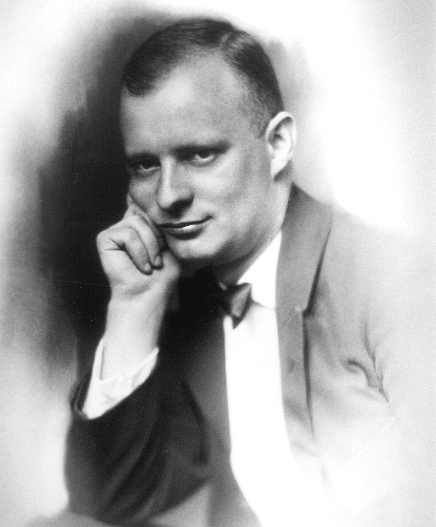
published by Ben Hogwood. Photo of Hindemith in 1923 courtesy of the Hindemith-Institut als Rechteinhaber / Wikipedia
Two days ago we marked 90 years since the world premiere of Paul Hindemith‘s three-movement concerto for viola and orchestra, Der Schwanendreher (The Swan Turner). Now Arcana mark 130 years to the day since the birth of the composer himself. Back in 2013 I penned an appreciation of his music for the blog I was running – and would like to recycle it here:
“Hindemith’s absence from the concert hall is frequently baffling, because only a small proportion of his works fulfil the dull, academic caricature that insists on following him around. It is true that there are some pieces that are dry and more difficult to get on with, but doesn’t every composer have their weaker moments? For each of those there is one that sparkles with wit, invention and originality.
With this in mind, I wanted to share why Hindemith is one of my favourite composers, to explore on the surface some new recordings and to suggest some works it would be good to know better.
Hindemith’s orchestral output, for starters, is full of colourful scores. The most played of these tend to be the symphony constructed from his opera Mathis der Maler, the ballet Nobilissima Visione, the Symphonic Metamorphoses on themes of Weber and the Konzertmusik for strings and brass.
Three of these can be heard together on a fine disc from the BBC Scottish Symphony Orchestra and Martyn Brabbins, released on Hyperion. The strings and brass shine on the latter piece, whose bold writing really blows away the cobwebs. In Brabbins’ hands the Mathis der Maler Symphony is shown off as the masterpiece it is, with broad melodies that often have a softer centre, as well as powerful orchestral tuttis that have an enchanted air, thanks to Hindemith’s frequently inventive orchestration. Finally the Symphonic Metamorphoses on themes of Weber are great fun, energetic and witty.
Nobilissima Visione is my personal Hindemith choice. In the suite it has a March and Pastorale of silvery beauty, and a noble Passacaglia that builds to a powerful and blazing conclusion. This is quintessential Hindemith, with a theme that moves in directions often contrary to the listener’s expectations while somehow making complete sense.
By way of contrast I would recommend the Piano Concerto, The Four Temperaments, a theme and four variations for piano and strings that finds Hindemith at his most mischievous but also has revealing and intimate asides. It bursts with melodic content, and its combination of humour and poignancy would make it an ideal concert piece. While that is sadly not likely to happen soon there are a number of good recordings – one of which was recently released by ECM, with Anna Gourari and the Orchestra della Svizzera Italiana conducted by Markus Poschner
Hindemith wrote for such colourful characters as Benny Goodman and Dennis Brain. His Concerto for clarinet and orchestra is a charming piece with a beautifully written solo part, while the Horn Concerto, a challenging work technically, is also extremely rewarding.
Hindemith wrote a lot of music, which is possibly part of the problem in getting it recognised though he showed what an extraordinarily resourceful composer he was by writing sonatas for tuba, trombone and cor anglais among others. My first encounter with him was through three short but surprisingly baleful pieces for cello and piano, the Three Easy Pieces – the first of which was a Grade 3 piece.
In 2013, Hindemith’s anniversary year, Hyperion issued fine discs of the complete Violin Sonatas, ably performed by Tanja Becker-Bender and Péter Nagy, and the Piano Sonatas, impressively deconstructed by Markus Becker. Among the chamber music my choice would have to be the Kleine Kammermusik, a spiky piece for wind quintet with some good tunes, spicy harmonies and fine writing for woodwind.
Finally another aspect of Hindemith’s output that should be noted is his vocal music, and there is an excellent disc from the Hänssler label of his Mass and Six Chansons. The Mass in particular is a substantial piece, difficult to sing but rewarding to listen to in a recording as open as this.
I would urge you, then, to discover the music of a composer whose greatness has often been lauded in the same breath as Stravinsky, Schoenberg and Bartók, but whose music no longer enjoys anything like their profile. I wager you won’t be disappointed!
Published post no.2,720 – Sunday 16 November 2025
 Arcana.fm