
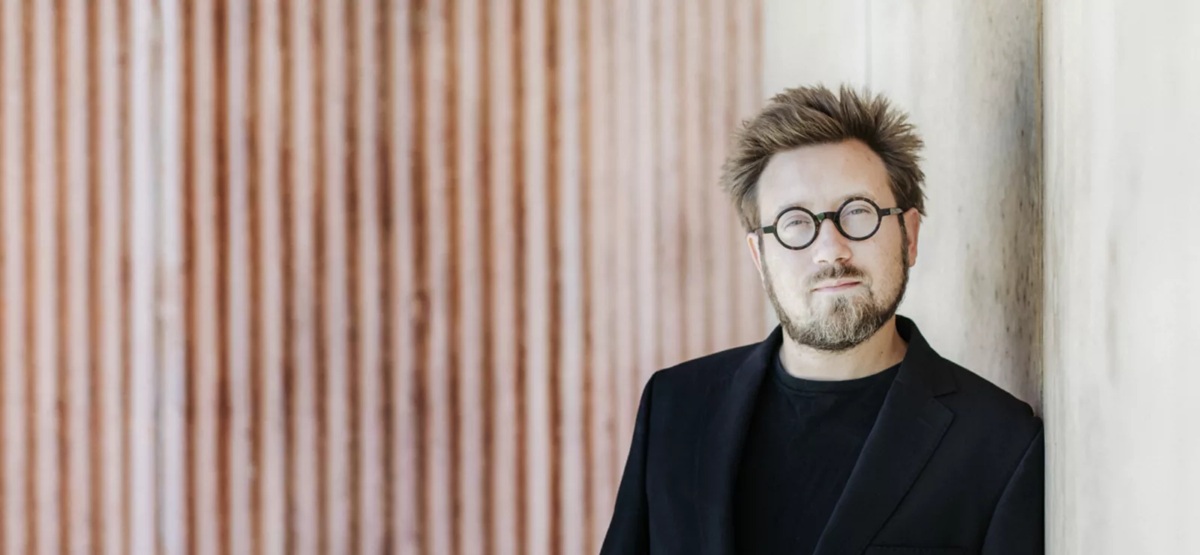
Ariel Lanyi (piano, below), London Firebird Orchestra / George Jackson (above)
Mendelssohn Overture: A Midsummer Night’s Dream Op.21 (1826)
Beethoven Piano Concerto no.4 in G major Op.58 (1805-06)
Puccini Crisantemi (1890)
Haydn Symphony no.96 in D major ‘The Miracle’ (1791)
St John’s Church, Waterloo, London
Sunday 8 March 2026 [6pm]
Reviewed by Richard Whitehouse Picture of George Jackson (c) Short Eared Dog Photography; Picture of Ariel Lanyi (c) Kaupo Kikkas
Having appeared at London Chamber Music Society on four previous occasions, the London Firebird Orchestra tonight made its debut at the organization’s new home, St John’s Waterloo, with a programme largely focussing on music from the late Classical and early Romantic eras.
Mendelssohn’s overture A Midsummer Night’s Dream seldom disappoints as a concert-opener, and conductor George Jackson duly ensured a characterful reading at its best in those passages when the composer allows his imaginative response to Shakespeare’s drama free rein – which is not to suggest a lack of animation or impetus elsewhere. Incidentally the prominent part for ophicleide was taken by bass trombone, though the programme listed both instruments while, with the piano lid already raised, it was by no means easy to tell which one was being played.
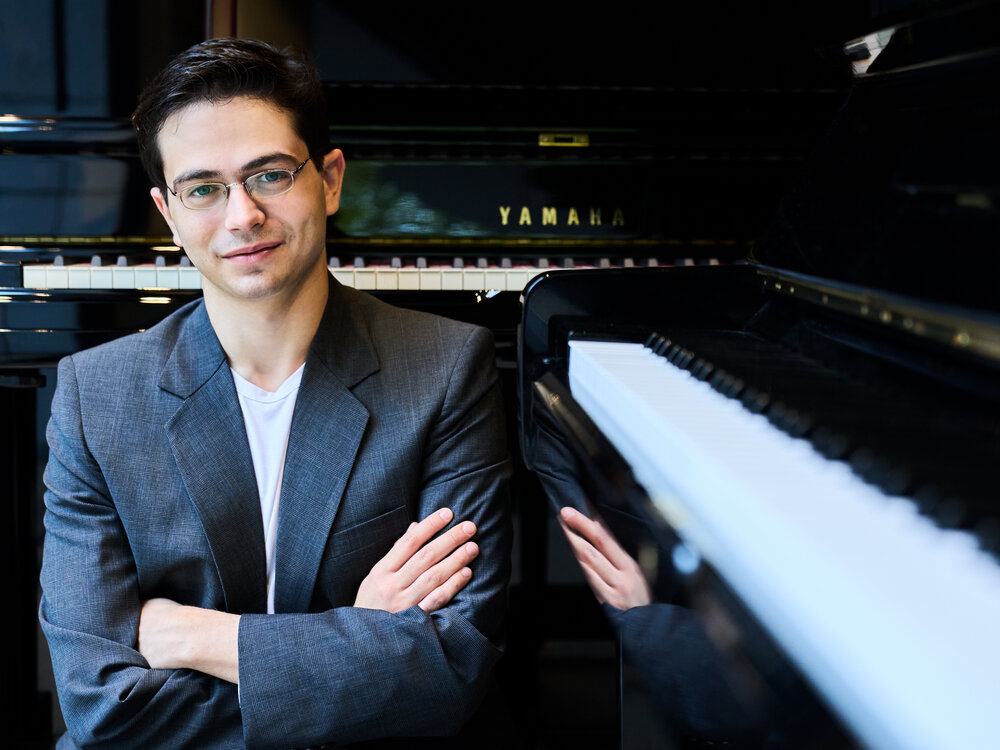
That piano came to the fore during Beethoven’s Fourth Concerto, and a work clearly playing to the strengths of Israeli pianist (currently residing in London) Ariel Lanyi. Speculative and often capricious in its solo writing, the opening movement had expressive breadth if without losing focus during its intricate development, and Lanyi made a persuasive case for the less often heard of the composer’s own cadenzas – the granitic power of its culmination making the orchestra’s re-entry more poetic. Soloist and orchestra drew the requisite contrasts from the Andante, before such opposition was resolved in a coda of melting pathos, then the final Rondo exuded boisterous good humour without neglecting those more graceful elements as increasingly come to the fore and hence make its hectic closing bars the more exhilarating.
Lanyi acknowledged the (rightly) enthusiastic reception with an unexpected yet appealing encore of a Notturno (fourth from a set of six pieces) that Respighi wrote around 1904. Its raptness made an admirable foil to the more conventional while affecting elegy Crisantemi that Puccini wrote in memory of Amadeo I, his brief tenure as Spanish king pre-dating his final years in Turin where he befriended the Italian composer. Conceived for string quartet, its never cloying sentiment felt even more in evidence heard with a larger group of strings.
The nicknames appended to many Haydn symphonies are often approximate and none more so than with No. 96, the ‘miracle’ of the falling chandelier which caused no injuries almost certainly taking place during the premiere of No. 102. The earlier work is not quite its equal, but Jackson made the most of its attractions with a winning take on a first movement whose imposing Adagio prepares for an agile Allegro in almost constant development. The Andante has a cadenza-like lead in to its coda – leader Calyssa Davidson and violinist Victoria Marsh relishing the spotlight as audibly as did oboist Polly Bartlett her winsome contribution in the Menuetto. The final Vivace finds Haydn at his most laconic, as he nimbly alternates its main themes on route to a coda which brings the whole symphony to a suitably effervescent close.
It also brought to an end a well-planned and thoroughly enjoyable concert that played to the strengths of both orchestra and conductor. LCMS continues on March 22nd with the Sacconi Quartet in what looks to be a no less enticing programme of Haydn, Boccherini and Dvořák.
Click on the highlighted names to read more on the London Chamber Music Society season for 2025-26, the London Firebird Orchestra, conductor George Jackson and pianist Ariel Lanyi
Published post no.2,826 – Wednesday 11 March 2026
 Arcana.fm