Unknown's avatar

About Arcana

My name is Ben Hogwood, editor of the Arcana music site (arcana.fm)

In Concert – PRS Presents – Classical Edition: Manchester Collective @ LSO St Luke’s

Manchester Collective [names not given in the programme but assumed to be Rakhi Singh (violin, director), Jonathan Martindale (violin), Alex Mitchell (viola), Christian Elliott (cello)]

Mason Muttos from Sardinian Songbook
Finnis String Quartet no.2
Wallen Five Postcards
Campbell 3AM
Mason Eki Attar from Tuvan Songbook
Tabakova Insight
Hamilton In Beautiful May
Glass String Quartet no.4 ‘Buczak’ (2nd movement)
Meredith Tuggemo

Wigmore Hall, London
Wednesday 25 September 2024

Reviewed by Ben Hogwood

This inspiring concert, the first in a series presented by the enterprising team at the Performing Rights Society (PRS), revealed the innovation afoot even in the most traditional classical music forms. The string quartet has been an established medium for close on 300 years, but the four players assembled by the Manchester Collective showed where future possibilities lie.

Christian Mason’s work reproduces throat singing for the medium, often with vocal contributions from the players themselves – and the Collective’s performances of Muttos and Eki Attar were gripping and rhythmically vital.

Grabbing the attention in a very different way were quieter works by Edmund Finnis and Jocelyn Campbell. The former’s String Quartet no.2 inhabited the rarefied atmosphere that Finnis seems able to conjure at will, with interlocking phrases and melodies given an unexpectedly tender accent. The Manchester Collective played with beautiful sonority, enhanced by microphones – which in the case of Jocelyn Campbell’s 3AM was an asset, portraying the streets of London in the hour of the day where they are at their most deserted. The slights of hand, the nocturnal rustlings, the shadows we couldn’t quite make out – all were beautifully rendered and sculpted by a composer whose painting in sound is uncommonly vivid.

This was before the elephant in the room – Andrew Hamilton’s In Beautiful May – was dealt with. A piece for solo violin and electronics, it was delivered with great virtuosity by Rakhi Singh, who warned us ahead of the performance that it would be a ‘marmite’ piece. She was absolutely right, playing music that was definitely not for everyone’s enjoyment – and certainly not this reviewer. Hamilton’s collage of jarring violin phrases and pop song snippets meant we jumped between Singh and snatches of Shalamar’s I Can Make You Feel Good, Take That’s Back For Good and Will Young’s Evergreen. The short attention span of the music was infuriating, its cut and paste approach chopping the music into small bits and spitting it against an unforgiving wall. Yet personal feelings should be qualified, as Hamilton’s piece got one of the strongest reactions of the night!

Perhaps surprisingly the second movement from Philip Glass’s String Quartet no.4, Buczak, provided some much-needed balm, with an elegance not normally associated with the American composer. The Manchester Collective gave a beautiful legato performance allowing time for reflection.

Meanwhile Dobrinka Tabakova’s Insight made a strong impression, its folk melodies and rhythms winningly played and melded into an extremely convincing whole, offering further proof of the Bulgarian composer’s assured and compelling writing for strings in particular.

Errollyn Wallen’s Five Postcards, for violin and viola, were given a brilliant performance by Singh and Alex Mitchell. These were a lot of fun, ranging from bluesy musical chats to intimate asides, and a reminder that the combination of violin and viola – used so effectively by Mozart but surprisingly few composers since – is well worth revisiting.

Finishing the concert was Tuggemo by Anna Meredith, using the old English word for a swarm of birds or flies. It made for a suitably hedonistic note on which to finish the concert, with its driving four to the floor beat and jagged quartet riffing. While meant to be loud, the beat swamped the quartet on this occasion, its ultimate destination the middle of a dancefloor before the piece broke off and left us hanging.

This was, however, another example of Manchester Collective’s remarkable virtuosity and further evidence of their clever programming. Both elements combined to make this a memorable and highly stimulating concert.

Published post no.2,313 – 26 September 2024

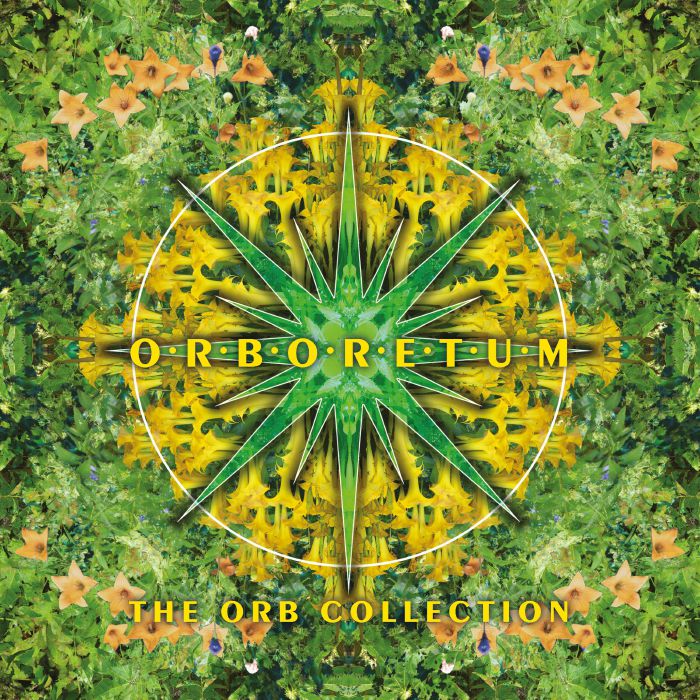
New music – Orboretum: The Orb Collection (Cooking Vinyl)

published by Ben Hogwood, with text appropriated from the press release

Flanked by a large colourful cast of ‘characters’ and an even bigger, persistently prolific output, despite adversity, after 30 years Alex Paterson continues to draw from his infinite well of creativity and drive. He’s constantly in the studio or on-stage as The Orb (and an ever-growing list of side projects too), and it’s especially for this reason that a new ‘Best-Of’ is apt.

Released 25th October via Cooking Vinyl, Orboretum: The Orb Collection is a career-spanning, 2CD & limited-edition quadruple vinyl octagonal set including new and rare mixes, compiled by Paterson himself. It goes way back, but also focusses on recent highlights from albums such as Abolition Of The Royal Familia (2020) and Prism (2023) – which were cited by the media as some of their greatest work – up there with the bonafide gold of yesteryear. “I don’t want The Orb to end up milking it like Roxy Music, who were always cranking out another best-of, although we did release the ‘History Of The Future’ best-of in 2013, and its part 2 in 2015 to be fair”, says Paterson. “We have such a gigantic catalogue though, that sometimes even I need a reminder of what I’ve done, especially these days. This is a sort of director’s cut, reframing our output, making new neuro pathways, and new juxtapositions. Some of these tracks are 30 years apart, but there are clear through lines, a continuum.”

Put simply; this is The Orb: Stop and pause to think about what that means to the culture. Alex is a living legend who’s travelled a clear path through one of the most important journeys of music in recent times; starting with punk, heavily influenced by Jamaican / Windrush generation UK dub and reggae, growing with acid house, inventing chill out, topping the charts, then becoming one of the first arena-sized live electronic acts. This national treasure deserves to be celebrated. With his boundless appetite for recording and collaboration, The Orb is happening right now, still new, still striving; not resting on past laurels or dining out on the Dad rave nostalgia circuit, instead seeing from the stage multi-generational crowds losing their minds, from fresh faced teenagers to war-torn rave fossils, and everyone in between.

Orboretum will be available on colour vinyl, in an octagonal 4LP set, with sleeve notes by Kris Needs. Each side of vinyl is pressed on a transparent colour green, lilac, orange and blue, grouped by Alex to represent the 4 seasons, hence its botanical title. The comp’s “roots and more recent shoots” traverses their work for Universal across discs A and B, whilst discs C and D explore their music for indie labels Cooking Vinyl, Kompakt, Malicious Damage, and Liquid Sound Design. In addition, Orboretum will also be available on 2CD and digitally.

You can pre-order Orboretum from The Orb’s official site

Published post no.2,311 – 25 September 2024

On Record – Laurence Pike – The Undreamt-of Centre (The Leaf Label)

by Ben Hogwood

What’s the story?

The idea of composing a requiem for voices, drums and electronics has sat with Australian percussionist Laurence Pike for some time. Having explored the ‘processes and ecstatic outcomes of rituals’ on the Holy Spring album of 2019, he became more and more interested in applying contemporary instrumentation to an ancient religious form.

The death of his father-in-law in July 2021, in the middle of another Covid lockdown in Sydney, brought a prolonged period of sombre reflection for Pike, along with the well-documented environmental disasters in his homeland. With a new-found appreciation for nature, inspired by his wife’s late father, Pike resolved to write the requiem. For inspiration on the text he turned from the Latin text usually associated with requiem to the poetry of Rainer Maria Rilke, and in particular his Sonnets to Orpheus – inspired by the classical Greek myth.

What’s the music like?

Both striking and moving. Pike has always shown great invention in his writing, whether in a solo capacity or as a third of the excellent Szun Waves, but here he goes above and beyond.

In his use of percussion the listener can link to Japanese ambient music, while the choral writing is a blend of the ancient – Allegri’s Miserere, perhaps, heard most explicitly in the apex of the Introit – and more modern and rarefied Estonian works for choir.

All these come together on the thrilling Mountains Of The Heart section, a remarkable sequence of energetic drumming and high, held notes from the choir that take the music to the air. This is music of immense power and energy, but it is balanced with thoughtful asides and reflective moments that give the listener space. Universal Forces and All Is Distance are two such sections, intense meditations where Pike also uses the mysterious effect of quarter tones.

Eurydice is a profound, piano-led instrumental, laced with percussive counterpoint and field recordings that complement rather than intrude. This leads to the Requiem Aeternam itself, a combination of stasis (the wordless choir) and movement (percussion), with electronics also intoning a melody of ancient origin. It is an intense song without words.

Does it all work?

It does – and an immense amount of credit should go to the performers, not least the Vox Sydney Philharmonia Choir, the twelve singers who take on any challenge thrown at them. Pike’s drumming has immense power at times

Is it recommended?

Yes, enthusiastically. Laurence Pike has made something very special here, a piece of music that contrasts moments of great energy and contemplation. The Undreamt-of Centre is very much an album for our times.

For fans of… Tonu Korvits, Arvo Pärt, John Tavener, Philip Glass

Listen and Buy

Published post no.2,311 – Tuesday 24 September 2024

On Record – Erland Cooper: Carve The Runes Then Be Content With Silence (Mercury KX)

by Ben Hogwood

What’s the story?

This is no ordinary album. In 2021, having made a recording of his new extended work for violin and string orchestra, Erland Cooper destroyed all digital evidence of its existence, then buried the sole surviving analogue tape in the Orkney soil. The significance of his decision to return the recording to earth lay in its subject matter, for Carve The Runes was written to mark the centenary of Orcadian poet George Mackay Brown. Cooper grew up near Brown’s house, and his voice could be heard on the new recording, giving it a keen sense of time and location.

In 2022, the surviving tape was found, exhumed and restored, the surviving recording transferred – warts and all – to digital. Bearing the indelible imprint of the Orkney soil, it was now a historical relic, and we hear the very earth on the retouched recording, carefully restored and timed for the September equinox.

What’s the music like?

Cooper’s most substantial piece yet is effectively a concerto, beautifully essayed by violinist Daniel Pioro, with support from the Studio Collective. It is bisected by timely interventions from Mackay Brown, his profound verses matched by the intensity of the writing for strings. Pioro commands the piece, which is based on small, folk-based motifs, but grows to become a work of intense meaning.

The earth makes its contribution too, though the music is actually incredibly well preserved. When there are layers of distortion, or the music becomes muffled, the effect is akin to hearing a piece of old vinyl, and creates moments of charm and ruffled appeal.

This is open air music, the violin on the wing for much of the half-hour duration, while the strings – often earthbound – provided an anchor of musical surety and poise.

Does it all work?

It does. Cooper has the measure of this work’s structure, and it peaks at just the right spot – with a phrase whose telling melodic turn burns into the consciousness. It is an ambitious piece, but one that works..

Is it recommended?

It certainly is. Carve The Runes…is a remarkable document of time and place, and with Mackay Brown’s verses it has a great deal of profound meaning within its confines. It is Erland Cooper’s finest work to date, offering further evidence of his ability to communicate through pictorial music – in the way the best classical music can.

For fans of… Max Richter, Olafur Arnalds, Hauschka, Thomas Newman

Listen and Buy

You can explore purchase options at the Mercury KX shop, and you can listen on Tidal below:

Published post no.2,310 – Monday 23 September 2024

In Concert – Leila Josefowicz & John Novacek @ Wigmore Hall: Debussy, Szymanowski, Bray & Stravinsky

Leila Josefowicz (violin, above), John Novacek (piano, below)

Debussy Violin Sonata in G minor L140 (1916-17)
Szymanowski 3 Myths Op.30 (1915)
Bray Mriya (2023) [Wigmore Hall commission: World premiere]
Stravinsky Divertimento from Le Baiser de la fée (1928, arr. 1934, rev. 1949)

Wigmore Hall, London
Saturday 21 September 2024

Reviewed by Richard Whitehouse

Long among the more adventurous violinists from her generation, this latest Wigmore recital found Leila Josefowicz focussing on music traversing the boundary between Impressionism and neo-Classicism, together with a recent piece such as conveyed a meaningful relevance.

It might not be such a good idea to launch a recital with Debussy’s Violin Sonata, as this last and conceptually most fluid of its composer’s late chamber works is essentially a culmination rather than starting-point. Having rather harried its opening Allegro, Josefowicz brought keen imagination to its Intermède which none the less lacked that fantasy and lightness intended. Most convincing was its finale, the headlong succession of ideas deftly propelled to a payoff not merely decisive but of all-round conclusiveness – whatever Debussy may have intended.

Whereas this piece was admired but initially found relatively few exponents, Szymanowski’s Myths was early recognized as a milestone in its medium and has latterly regained that initial eminence. Josefowicz duly recognized these innovative qualities with an impulsive yet never wayward take on La fontaine d’Arethuse, its capriciousness finding an ideal complement in the simmering emotion and alluring poise of Narcisse – self-aware rather self-regarding as to expression – or increasingly recalcitrant playfulness of Dryades et Pan with its teasingly delayed – even almost avoided – close. Just occasionally, Josefowicz’s snatching at a rhythmic gesture denied the music its high-flown eloquence but, overall, this proved a perceptive and involving account where her interaction with John Novacek’s attentive pianism was absolute.

Those who hear the Szymanowski as a ‘sonata malgré-lui’ might feel likewise about Mriya by Charlotte Bray, which tonight had its first hearing. Its Ukrainian title variously implying ‘dream, vision, ambition and vow’, this four-movement work charted a course of terror but also resolve. The first of these infused its disparate while distinctive ideas with a momentum as merged directly into the feline capering of its successor; after which, a slower movement offered a measure of sustained if hardly serene calm, before the finale once again marshalled its disjunct gestures towards a culmination which was pointedly withheld. A symbol, perhaps, of the Ukrainian people’s struggle as is far from reaching closure let alone victory? Whatever the case, this is absorbing and deeply felt music that received a suitably committed response.

From here to Stravinsky’s Divertimento from The Fairy’s Kiss was some conceptual leap. One of several such adaptations its composer made during its career as a duo-recitalist with Samuel Dushkin, this takes in most of the ballet’s initial two-thirds – the Sinfonia by turns pensive and restive, while the rumbustious Danses suisses was irresistibly despatched. The Scherzo exuded a capering charm and the Pas de Deux moved effortlessly from its soulful Adagio, via nimble Variation, to an initially dextrous then increasingly uproarious Coda.

This recital ended in a wholly different aesthetic world from which it began, but Josefowicz’s acuity could not be gainsaid. ‘Uproarious’ was also the watchword of the encore – Novacek’s Intoxication Rag, arranged by Itzhak Perlman no less and rendered with appropriate abandon.

For more on the Autumn season visit the Wigmore Hall website – and for more on the artists, click on the names Leila Josefowicz and John Novacek

Published post no.2,309 – Sunday 22 September 2024