If you search for Barber‘s Serenade for Strings on YouTube, the search facility thinks you want to hear the Adagio. This is not a surprise, given the popularity of Barber’s most famous music – but there is indeed a Serenade for Strings, the first published material from the American composer.
Like the Adagio, it was originally written for string quartet but transcribes effortlessly for bigger forces – as here, with the Royal Scottish National Orchestra under Marin Alsop. Lasting just over 10 minutes, it is in three movements:
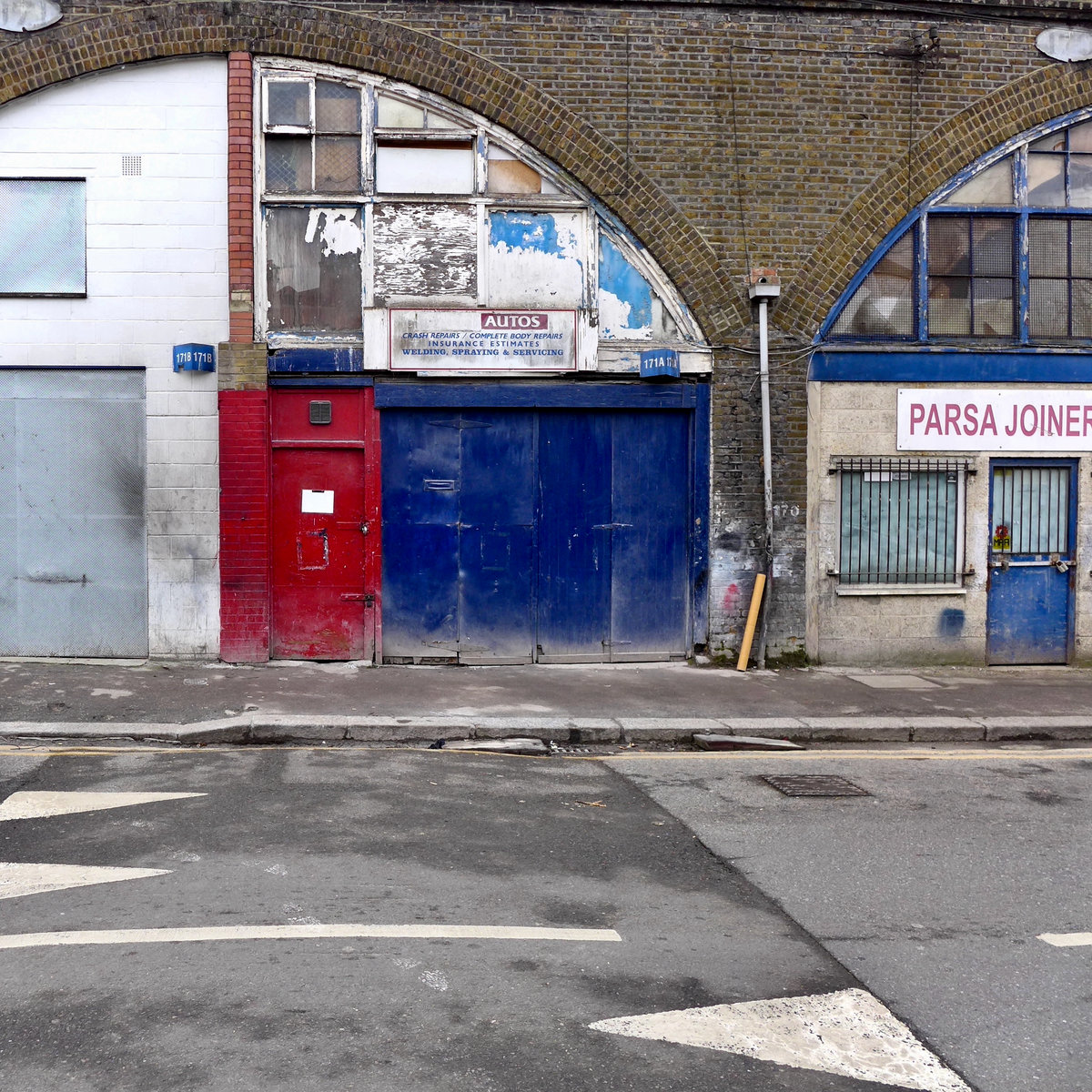
Wil Bolton’s interpretation of Courier Sound’s ’23 musical ideas in 23 minutes’ takes its inspiration from a series of walks he made during the year 2023 in East London.
Bolton takes up the story in the press release for the album. “For these walks, I would follow the London Overground railway arches around Leyton, Walthamstow and Forest Gate, fascinated by the mixture and contrast of old and new businesses located beneath the train lines, from mechanics and scrap merchants to micro breweries and artisanal bakeries.
During these walks I also took a set of 23 photographs of these arches and made occasional field recordings on my iPhone. Back in my studio, I combined these lo-fi field recordings of forklift trucks, drilling, welding, pigeons, freight trains, traffic, muffled conversation and birdsong with modular synthesizer sequences and drones, looped Mellotron melodies and effects pedals.”
What’s the music like?
A thoroughly enjoyable listen. Bolton’s musical postcards are varied, colourful and very descriptive of the area in which he walks, and on headphones the listener can get a real sense of perspective – not just from the music but from a few ‘scene setters’ – the opening Freight, the sound of a reversing vehicle on Hazards, the outdoors of the city brought to life.
Elsewhere Bolton uses melodic nuggets or brightly voiced chords to portray his subjects, sometimes in dreamy interludes (Arches) or in fuzzy profiles (Bakers Arms, or the gorgeously voiced Overgrown) These are countered by cautionary asides, or busy electronic activity (Padlocks). There are brief interludes (Hazards, Unauthorised) or slightly extended thoughts such as Boarded Up, where distinctive mottos are introduced.
Does it all work?
It does. The only regret is that some of these pictures and moods are not extended further, as Bolton has a most appealing style, easy on the ear and always creating.
Is it recommended?
Yes. 23 is a colourful, meaningful portrait of an urban borough, but with the relief of natural beauty – all accurately painted in sound.
For fans of… Bibio, Boards of Canada, Future Sound of London, Biosphere
Pepe Deluxé like their albums to tell a story, and Comix Sonix is certainly no exception – and extends through to the bare bones of the album’s construction, where an ‘extraordinary array of devices’ are used, each with a unique back story.
For instance, the duo (Paul Malmström and James Spectrum) plundered the ‘Instrumentarium’ collection of Bart Hopkin, not to mention sourcing instruments such as the American Airlines 747 flying coach lounge Wurlitzer, the world’s oldest known musical instrument (a 40,000 BC mammoth bone flute), a 19th-century lithophone ‘once cherished by Queen Victoria herself’, and the piano of the Hindenburg – restored with modern technology.
The credits are long and detailed, extending back to original band member DJ Slow, who brings old school hip hop to the table. Lyrical inspiration is similarly broad, taking in a wide range of cultures, and – in the band’s words – utter nonsense!
What’s the music like?
As eventful as the back story suggests it will be! In fact this is a great example where you can judge a book by its cover, for the colourful and chaotic riot of the Comix Sonix artwork is most definitely a representation of what lies beneath. The signs ‘Weird & vintage’ and ‘Trash & treasures’ are particularly revealing, for the musical inspirations for their work runs a long way.
The book of influences for this album could be large, but in all reality the duo harness their musical loves to make something original. That said, there is definitely a ring of Frank Zappa, The Avalanches and Parliament – George Clinton certainly brings his presence to the chorus of Freedom Flag. Meanwhile the melodramatic Wise Monkeys And The Devil brings opera and Sparks to the table, brilliantly virtuosic and inventive.
While there is a danger that the music might take second place to the novelty value of the stories described above, but thankfully Pepe Deluxé ensure that doesn’t happen, with a fast moving album that peaks with moments like the wistful chorus of Saddle The Wind, and the fairground beats and brass of Earth Boys Are Easy. As with a good deal of their music there is an underwater feel to the sound, felt on tracks like Sweet Baby Sun. The final Le Petit Voyage (Homo Sapiens), however, is suitably epic.
Does it all work?
Not always – there is sometimes too much going on! – but that’s Pepe Deluxé all over, and nobody could emerge from an encounter with Comix Sonix feeling short changed.
Is it recommended?
It certainly is – a lot of fun. Comix Sonix is a dizzying ride through recent pop history, from musical minds who are incredibly clever but also able to pool their resources, making a punchy record with loads of hooks to hang your musical coat on. It will certainly brighten up your summer!
For fans of… The Avalanches, The Go Team, Parliament, Mr Scruff
published by Ben Hogwood, with text appropriated from the press release
Released on Ninja Tune, Expander cuts a slice of unmistakable Bonobo, deftly weaving organic vocals and instrumentation with peak-time dance-floor sensibilities that set it up to become one of the songs of the summer. Following his recent roadblock set on Glastonbury’s LEVELS stage, numerous clips of the unreleased track begin circulating online, with fans clamouring for an ID.
The track is already a staple at his legendary OUTLIER sets, an event series curated by Bonobo which shows his continued influence as a DJ and also the reverence a new generation of artists hold for his own releases. Joining him on DJ line ups over the last year have included Barry Can’t Swim, DJ Koze, Sofia Kourtesis, salute, Kelly Lee Owens, Mall Grab, DJ Tennis, Dixon, TSHA, SG Lewis, Young Marco, Kerri Chandler, Carlita, Elkka, HAAi, John Talabot, Paula Tape amongst others. The 15,000 capacity event at Drumsheds in London was the fastest selling event of the season. Bonobo also recently played “Expander’ when going b2b with Disclosure at their Friends & Family pop-up in LA.
Expander sees Bonobo continue his stellar run of heavier, club-inspired tracks released in between albums. Following, as it does, his 2022 singles Defender and ATK, the subsequent single Fold — a collaboration with Jacques Green — and 2020’s anthemic NYC disco-inspired Heartbreak 12” with Totally Enormous Extinct Dinosaurs.
Elgar Overture ‘Cockaigne’ (In London Town) Op.40 (1901) Holst Hammersmith (Prelude and Scherzo) Op.52 (1930) Stanford Songs of Faith Op. 97 (1906): no.4 (To the Soul), no.5 (Tears), no.6 (Joy, ship-mate, joy); An Irish Idyll in Six Miniatures Op.72 (1901): no.2 (The Fairy Lough) Vaughan Williams A London Symphony (Symphony no.2) (1912-13, rev. 1918-20)
Christopher Maltman (baritone), BBC Symphony Orchestra / Martyn Brabbins
Royal Albert Hall, London Friday 9 August 2024, 6pm
reviewed by Richard Whitehouse
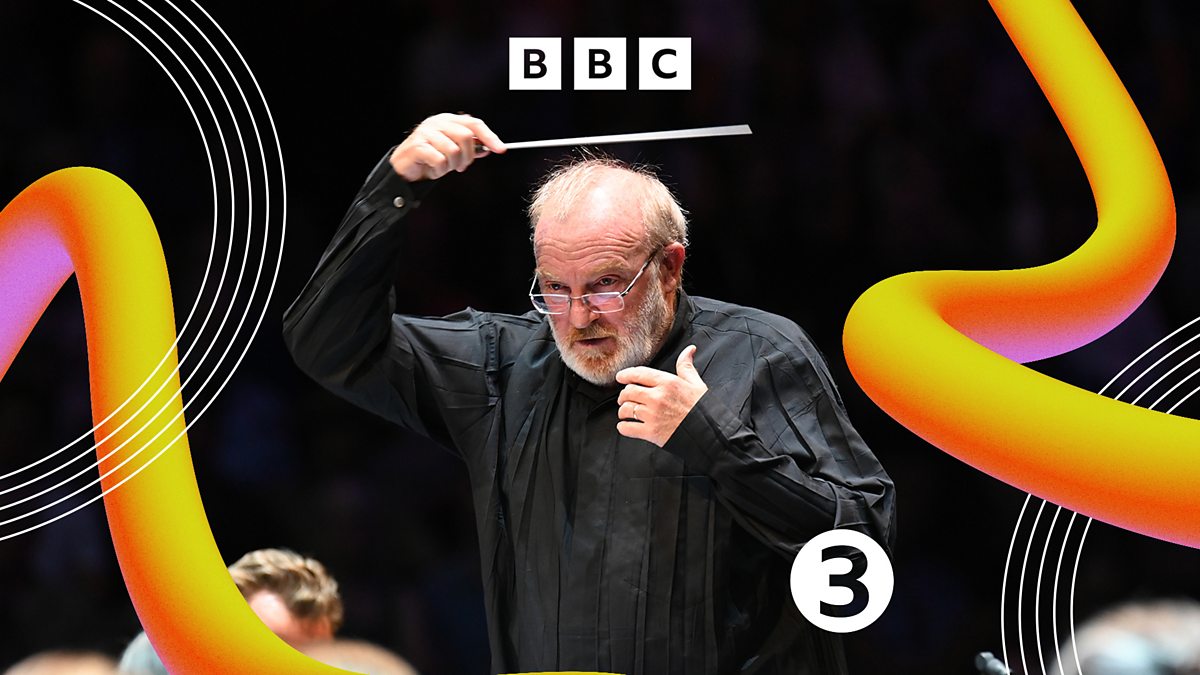
Concerts devoted to British music are by no means an unknown quantity at the Proms, but to have one as judiciously planned as that featuring Martyn Brabbins with the BBC Symphony Orchestra, on the conductor’s 65th birthday, was as unexpected as its realization ‘on the night’ proved consistently impressive.
Whether or not this account of Elgar’s Cockaigne ranked among the best of the previous 70 or so hearings at these concerts, it assuredly did the piece justice. Not its least attraction was Brabbins integrating this evocation of London on the cusp of Victorian and Edwardian eras with due perception of its ingenious sonata design, resulting in a reading as characterful as it was cohesive. Such as the emergence of the marching band at its centre and final peroration (Richard Pearce making his presence felt at the organ console) were the highpoints intended.
Whereas Elgar conveys London in its midst, Holst renders Hammersmith at a remove – his Prelude and Scherzo evoking those sights and sounds where the latter long made his home with a poise and precision no less involving for its objectivity. The orchestral version might be less often revived than its wind-band original but it yields little, if anything, in terms of expressive immediacy; not least with Brabbins mindful to underline how its two sections do not just succeed each other but are juxtaposed, even superimposed, prior to the rapt ending.
In the centenary of Stanford’s death, this selection of songs provided a welcome reminder of its composer’s prowess in the genre. The final three Songs of Faith denote an appreciation of Walt Whitman comparable to that of the next generation – whether in the eloquent musing of To the Soul, surging anguish of Tears or effervescence of Joy, shipmate, joy. Christopher Maltman then brought his burnished tone and clarity of diction to an affecting take on Moira O’Neill’s The Fairy Lough – proof Stanford could do ‘lightness of touch’ where necessary.
Whereas Stanford’s songs have barely featured here for almost a century, Vaughan Williams’s A London Symphony has accrued 36 performances, but what might be thought its ‘intermediate version’ had not been heard in nine decades. Actually, this is much closer formally to the final version of 1933 than the original – its main differences centring on those more extensive codas in the Lento and finale which, by aligning them more audibly with the introduction to the first movement, arguably ensures a more thematically close-knit trajectory across the work overall.
The performance was very much in accord with Brabbins’ recording (Hyperion). An unforced traversal of the opening Allegro, impetuous in its outer sections and affecting in that rapturous passage for solo strings at its centre, then a slow movement whose brooding introspection did not omit a sustained fervency at its climax. Nor did the Scherzo lack those ambivalent asides that find focus in its sombre close, while the nominally discursive finale built purposefully to a seismic culmination then an epilogue which drew solace from the aftermath of catastrophe.
‘‘The river passes – London passes – England passes’’. Whether the closing words from H.G. Wells’ Tono-Bungay determined or even influenced it, a sense of renewal was palpable as the music faded towards silence at the end of this persuasive performance and memorable concert.



 Arcana.fm