Unknown's avatar

About Arcana

My name is Ben Hogwood, editor of the Arcana music site (arcana.fm)

In concert – Maria Dueñas, CBSO / Kazuki Yamada: Beethoven Violin Concerto & Elgar ‘Enigma’ Variations

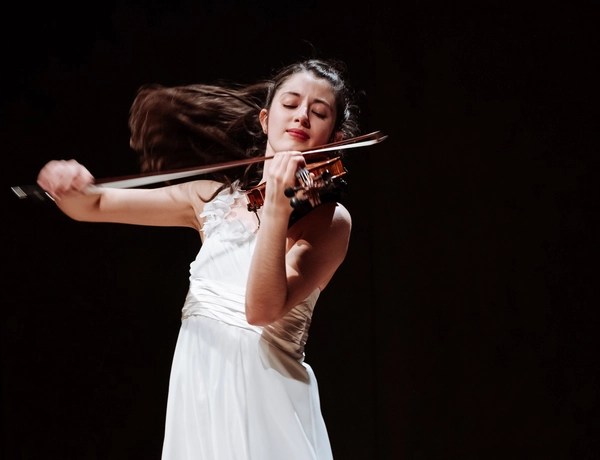
Maria Dueñas (violin, above), City of Birmingham Symphony Orchestra / Kazuki Yamada (below)

Beethoven Violin Concerto in D major Op. 61 (1806)
Elgar Variations on an Original Theme, ‘Enigma’, Op. 36 (1898-9)

Symphony Hall, Birmingham
Thursday 22 February 2024

Reviewed by Richard Whitehouse Picture (c) Tam Lan Truong

Having given its ‘first part’ yesterday evening, Kazuki Yamada and the City of Birmingham Symphony Orchestra moved on to ‘Elgar & Beethoven: Part 2’ this evening, with an astute coupling of the latter’s Violin Concerto being followed by the former’s ‘Enigma’ Variations.

Anyone having heard Maria Dueñas in Lalo’s Symphonie espagnole at last year’s Proms will know she is a violinist destined for great things, as was reinforced her take on the Beethoven. Admittedly she and Yamada were not consistently as one in its lengthy first movement – the soloist’s tendency to rhapsodize and to tease out expressive nuance jarring, however slightly, with the conductor’s forthright assertiveness in tuttis. Yet there was no absence of insight on either part, such undeniable eloquence continuing through a central Larghetto that was more adagio as Dueñas conceived it, though which still conveyed a rapt inwardness. The ensuing Rondo lifted this mood appreciably, its impulsive main theme and whimsical episodes deftly eliding into a purposeful traversal of a finale whose conclusion was nothing if not decisive.

As with her recent recording of this concerto, Dueñas played her own cadenzas. That for the first movement had Bach-like deliberation and a harmonic astringency which readily held the attention; if that connecting the latter two movements seemed a little too protracted, and that towards the close of the finale rather offset its overall momentum, there could be no doubting her underlying conviction. She duly acknowledged the considerable applause with a suitably serene, never cloying arrangement for violin and strings of Fauré’s early song Après un rêve.

In his initial remarks, Yamada recalled conducting a Japanese brass band in the First Pomp and Circumstance March as his first experience with Elgar, and this account of the ‘Enigma Variations amply reaffirmed his identity with the composer. Not that this was an integrated or seamless account – Yamada’s halting, even ambivalent take on the Theme intensified in the first variation and, while the swifter variations had no lack of character or impetus, it was in such as the fifth variation’s suffused earnestness with whimsy that this reading left its mark.

On one level the Enigma is a forerunner of the ‘concerto for orchestra’ with its emphasizing various soloists – not least viola in the sixth variation, dextrously negotiated by Adam Römer, or cello in the 12th where Eduardo Vassallo was at his ruminative best. Initially a little stolid, Nimrod built to a culmination of real pathos, and even finer was Yamada’s take on the 10th variation for an intermezzo of unfailing poise and deftness. A tangible atmosphere pervaded the 13th variation – uncertainty as to its dedicatee just part of its fascination, with those veiled allusions to Mendelssohn elegantly rendered by Oliver Janes. From here to the final variation in all its confidence and anticipation was to be recall the impact this music made at the end of the 19th century, Yamada steering it with unforced rightness towards a resounding peroration. Overall, a performance full of insight and one hopes that Yamada will be continuing his Elgar exploration in future seasons. Next week, though, brings two concerts for which former music director Sakari Oramo will be returning to this orchestra for the first time in some 15 years.

Click on the link to read more on the current CBSO concert season, and on the names for more on violinist Maria Dueñas and conductor Kazuki Yamada. Arcana’s Listening to Beethoven series will reach the Violin Concerto soon!

Published post no.2,101 – Tuesday 27 February 2024

Online review – BBC Radio 2’s Piano Room: Pet Shop Boys

by Ben Hogwood

If you’ve been keeping an eye on Arcana lately you will know that we in turn have been keeping a close eye on the month of largely superb music we’ve enjoyed from the BBC Radio 2 Piano Room.

Having watched Bruce Hornsby, and recommended a further five ‘best’ songs from the month, I finally got round to watching the Pet Shop Boys‘ trio of tracks from the Maida Vale studios and the BBC Concert Orchestra. Neil Tennant and Chris Lowe are no strangers to the orchestra, with a Proms performance and a ballet score under their belts – so this was an obvious and welcome choice to close a season that has shown – again – how pop and orchestral music can complement each other so well in the right environment.

They started with the most obvious candidate – Left To My Own Devices, probably the most orchestral of their hits to date. Now fully realised with the BBC forces, it sounded wonderful, and I always wish someone would make a remix based around the chord they reach where Neil sings about setting “Che Guavara and Debussy to a disco beat”. This was a joyous performance.

The next was a likely candidate too, the most recent single Loneliness, transposed down a tone but still sounding mighty fine to these ears. Neil Tennant’s voice still has the purity it had in the 1980s but on a song like Loneliness the aching emotion in the song felt clearer, with excellent support from the backing singers and the exquisitely voiced BBC Concert Orchestra, piquant woodwind to the fore.

The big surprise was saved until last. Mott The Hoople‘s All The Young Dudes was completely reinvented in this performance. I have to be honest and say I’m still not sure about the final version – but that’s on me, not Tennant or Lowe! The reason for my lack of wholesome praise at this point is because the original is so well known, and this cover is a more or less complete reinvention – making you hear the song in a whole new light. Tennant obviously loves the track and his vocal was powerful and on point, while the electronic / acoustic balance was thick and fuzzy but in a way that looks set to suit the chromatic harmony. An effective cover version for sure…and hopefully one to grow into!

You can watch the whole Pet Shop Boys piano room session on the BBC iPlayer

Published post no.2,100 – Monday 26 February 2024

On Record – Laetitia Sadier: Rooting For Love (Drag City)

by Ben Hogwood

What’s the story?

Laetitia Sadier is best known as the frontwoman of Stereolab, the band who have carved a wholly distinct niche for themselves in pop music over the last 35 years. Yet now and then she delves into some interesting side projects, including the band Monade – or her own solo work. Rooting For Love is her first such album in seven years.

On it, Sadier’s quest is to provide for the listener a way out from the state of the world today, looking for an end to suffering and moving towards healing of the traumas the human race has been suffering of late.

What’s the music like?

With such ambitious aims, the worry would be that Sadier’s work would be regarded as pretentious or having ideas way above its station. Happily neither is the case, for this is a deeply felt set of songs that really do go some way towards making their listener feel more empowered and less downtrodden.

Typically, Sadier sings some of the album in French and some in English, and it is easy for the listener to follow. Musically, however, the language is some of the most exploratory we have yet heard from her. There are still plenty of references to the pop, funk or bossa nova that frequently seeps into her work with Stereolab, but here the results are even less constrained, totally in response to the lyrical material.

As the album progresses, so the intensity heightens. While first song Who + What shows how much instrumental colour she has at her disposal, it also sets the scene for what lies ahead. La Nageuse Nue (The Naked Swimmer) has a starry backdrop, while sonically The Inner Smile makes a very strong impact, not just through Sadier’s resonant voice but the block organ chords surrounding it.

Yet the peak of intensity comes with the last song, Cloud 6. Here the rich brass and fuzzy atmospherics provide a backdrop to a strong vocal motif that gains in power, rather like a Philip Glass offshoot, and lyrics that culminate in Sadier’s striking pronouncement that “I’m not fucking around, you’re halfway dead.” With that the music suddenly cuts off, leaving silence in its wake.

Does it all work?

It does – and the way the intensity builds as the album progresses is rather striking. Sadier has much to say, and does so with poise and no little power.

Is it recommended?

It is. A mandatory purchase for Stereolab followers, but a great standalone purchase too. Laetitia Sadier remains at the peak of her powers.

Listen and Buy

Published post no.2,098 – Sunday 25 February 2024

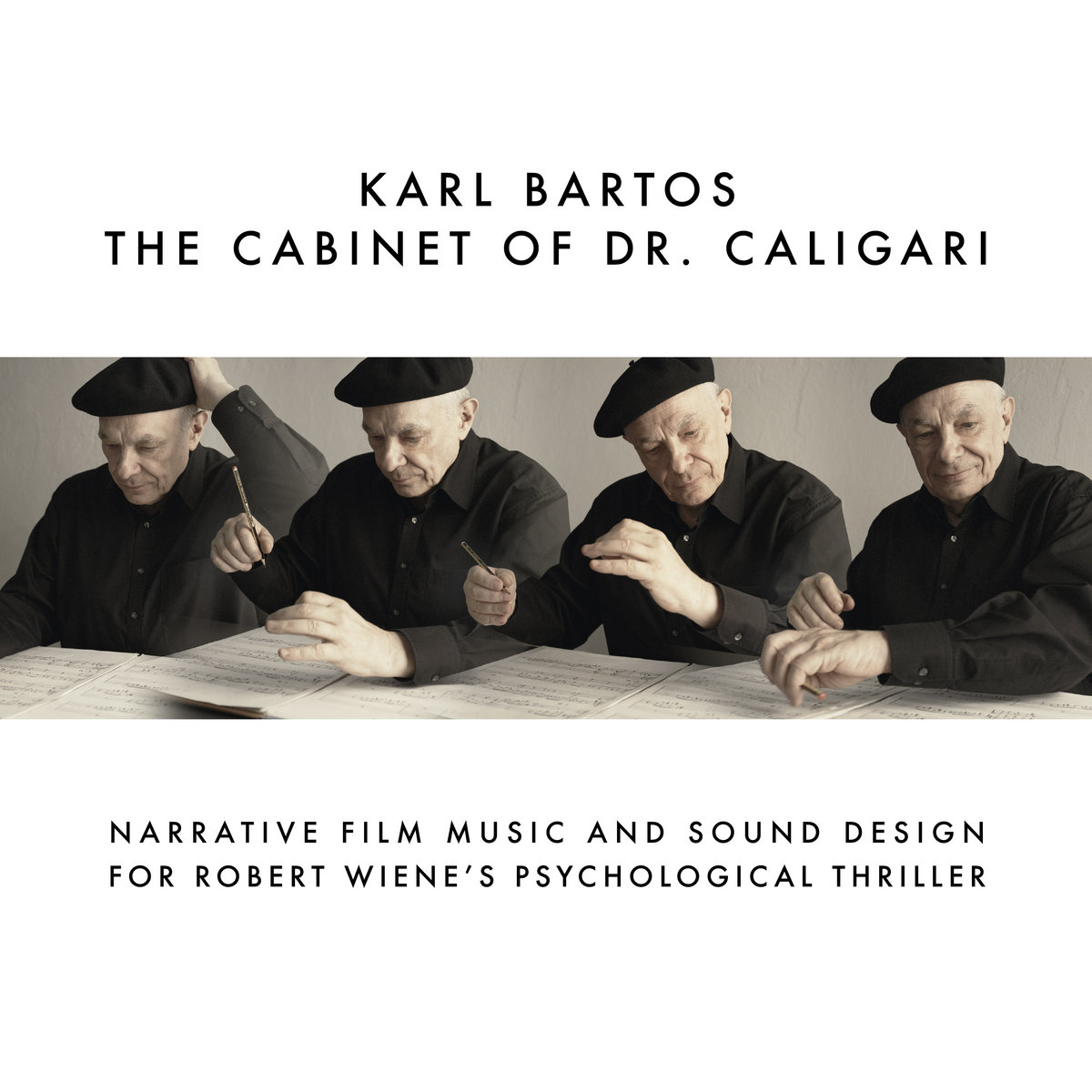
Switched On – Karl Bartos: The Cabinet Of Dr. Caligari (Bureau B)

by Ben Hogwood

What’s the story?

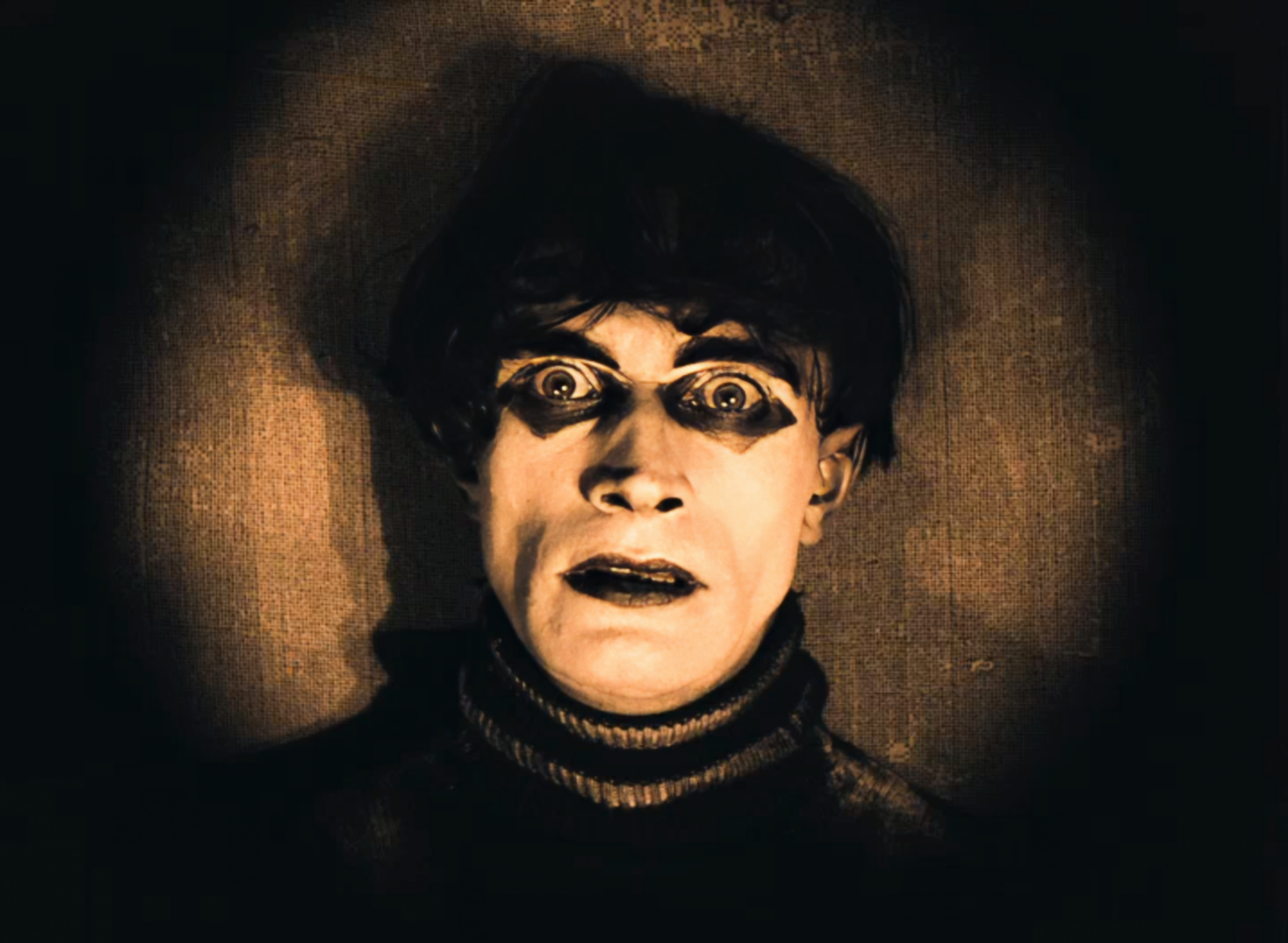
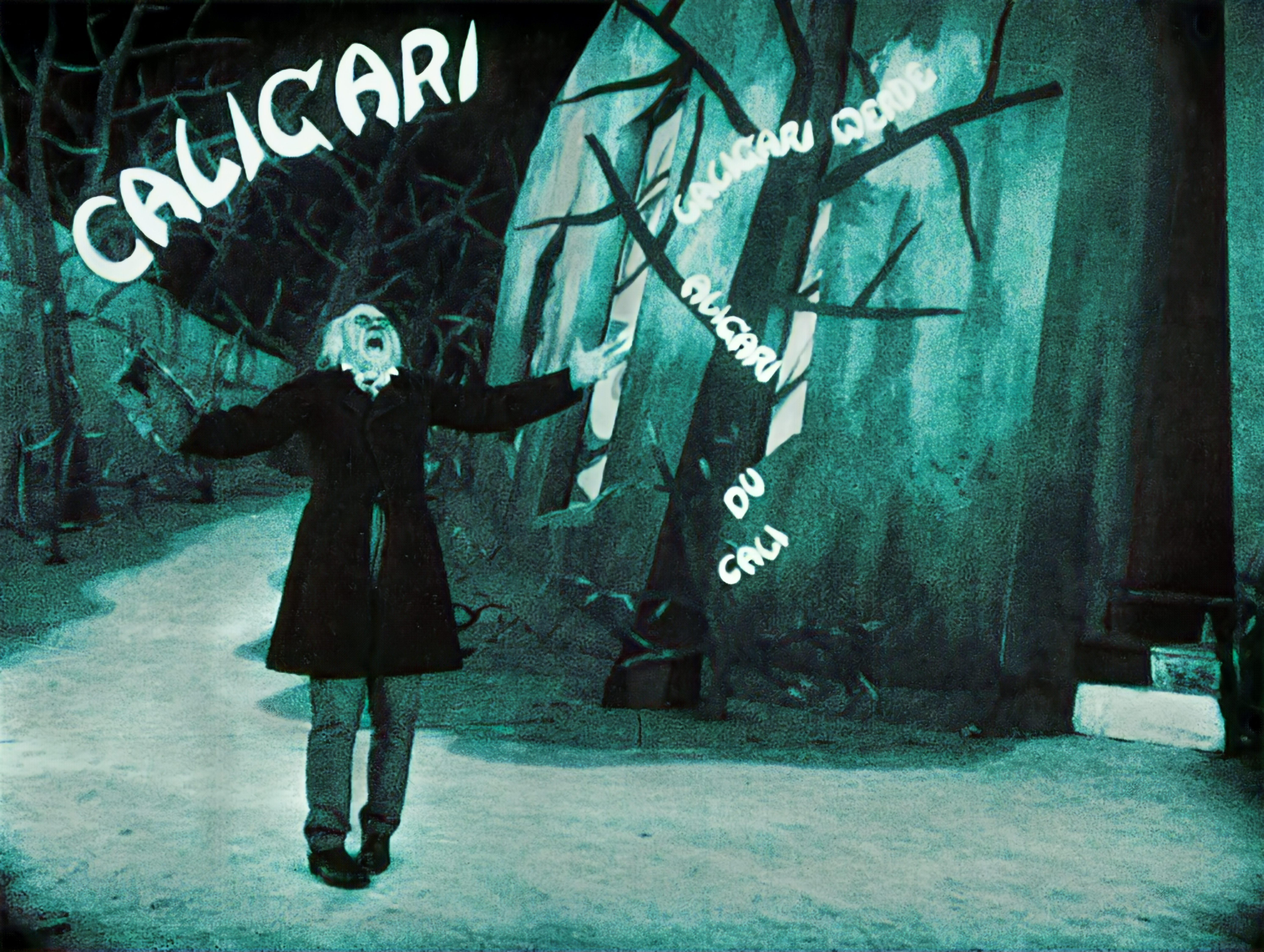
This is described as ‘narrative film music and sound design for Robert Wiene’s classic 1920s psychological thriller’.

It is, in effect, Karl Bartos retracing some of his steps back to when he was in Kraftwerk. Then, he helped to create Metropolis, inspired by Fritz Lang’s 1927 film, but now he goes several steps further to create a whole new soundtrack for Wiene’s picture.

To do it he pulled together a wide array of material from his musical archive, finding snippets that range from classical and Baroque to atonal and musique concrete – in short, creating a musical melting pot to bring the film to life in a musical sense.

What’s the music like?

Enormously entertaining and full of character. Bartos’s love of the film is immediately clear, and no stone is left unturned as he seizes the opportunity to create a fun and colourful score, one that portrays the characters and events in great detail.

There is a dizzying range of colour and styles, showing just how many areas of music Bartos has covered in his musical education and what a grasp he still holds on classical as well as more recent electronic work. The imposing organ of the Prologue sets the tone for scenes that are full of colour and imagination. As we move through the scenes Bartos brings amusement, dread, wittiness, and a macabre madness that gives his jagged motifs a refreshing unpredictability. Sometimes the music sounds like a barrel organ, as on the brilliant scene At The Funfair, which is brilliantly done.

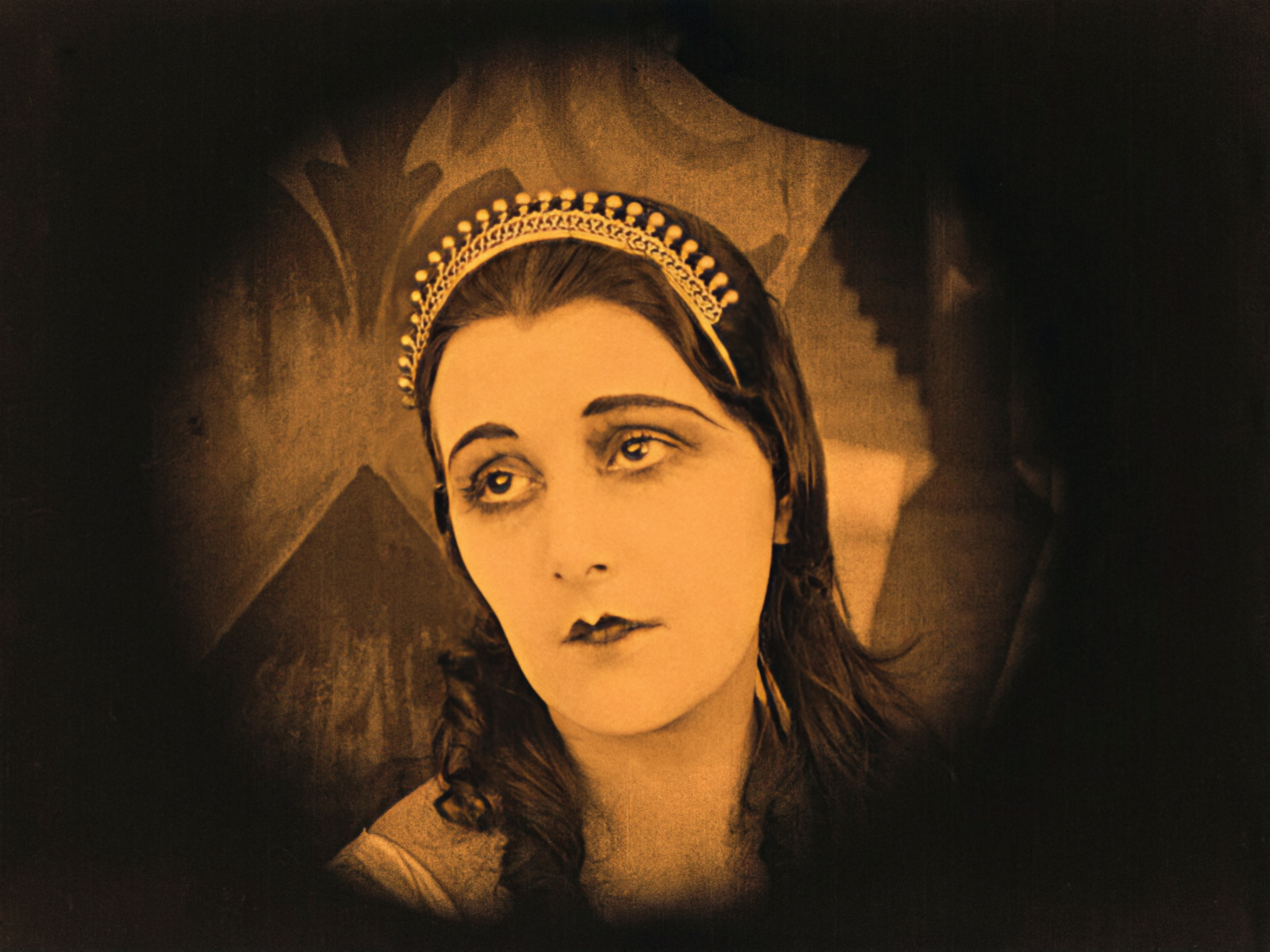
Jane’s Theme introduces a much more tender mood, in contrast to the playful Caligari’s Theme 2 or the brittle piano theme used to depict Caligari’s Deception.

Bartos uses the waltz to really good effect in his portrayal of the different scenes, and the dances of the 1920s are always close at hand. Lunatic Asylum is suitably edgy, the music hanging on the edge, but In Search Of The Truth is the big number where everything comes to a head, Bartos marshalling his forces brilliantly.

Does it all work?

Not always as a listening experience, for some of the scenes are very short and would obviously benefit from the visuals. This is in no way the fault of Bartos, though, who delivers a masterclass of scene setting throughout.

Is it recommended?

Wholeheartedly. It would be interesting now to see if Karl Bartos feels inclined to take his clear aptitude for modern classical music any further, or if he wants to go down more electronic avenues. Either way he has made a colourful, vibrant soundtrack to accompany The Cabinet of Dr. Caligari, and can be proud of the extent to which he brings the mood and characters of the 1920s to life.

For fans of… Kraftwerk, Kurt Weill, Eisler,

Listen & Buy

Published post no.2,098 – Saturday 24 February 2024

Online review – BBC Radio 2’s Piano Room: Five of the best

by Ben Hogwood

Today (23 February) saw the conclusion of BBC Radio 2’s Piano Room month, which has been taking place every weekday for the last month.

For anyone new to the concept, it consists of a well-known pop artist delivering three songs in the company of a piano and the BBC Concert Orchestra. Generally they follow the format of something old, something new and something borrowed (which may of course be blue!) in the form of a cover version. We began with Bruce Hornsby on Monday 31 January (a performance already appraised by Arcana) and ended today with Pet Shop Boys.

The Piano Room has proved to be an enormously uplifting spectacle over the last few years, and a fascinating one too – the equivalent of watching a famous actor appearing on the West End stage. There are two things that often shine through in the course of a session. One is obvious, being the artistry of the main act in question, and their ability to breathe new life into their songs or well-chosen covers. The other is not so immediate, being the quality of the orchestral arrangements and the sheer ability of the BBC Concert Orchestra, who deliver their lines with incredible poise and great expression.

Here, then, are five top performances Arcana has had the pleasure to hear this month, in addition to the Bruce Hornsby already reviewed…bearing in mind that as I type this I haven’t yet heard Pet Shop Boys doing Left To My Own Devices!

Rick Astley – Never Gonna Give You Up

The sign of a song with ultimate staying power is its versatility – and when it can be sung like this, in a version that bears very little resemblance to the original, you realise again just what a brilliant song this is. Somehow the arrangers and Rick have worked in a pizzicato part for the violins that comes from Ed Sheeran’s Shape Of You – a very different love song, but one that fits this template hand in glove.

It also shows how Rick Astley has grown as a vocalist, making music that matches his experience but also his youthful approach:

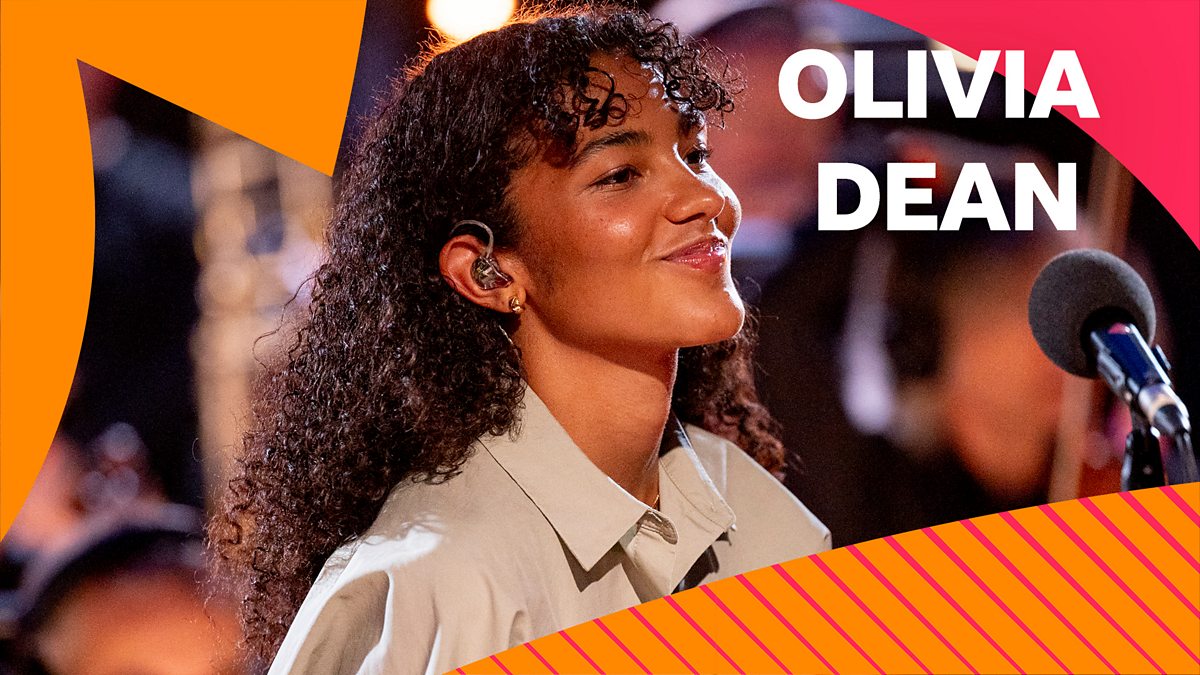
Olivia Dean – Suzanne (Leonard Cohen cover)

This is an extraordinary cover version from Olivia Dean. Sumptuous strings begin and end the arrangement (made by Sam Gale) and Dean sings in a way that recognizes Leonard Cohen’s ability to wring great emotion from relative simplicity. She intones the verse and brings a swell to the chorus, giving the song a deep resonance. This is capped by the fragility of the closing violin solo, a moment of pure but devastating clarity (played – I am almost sure – by Charles Mutter). I haven’t been able to keep a dry eye watching it yet!

Jess Glynne – Everywhere (Fleetwood Mac cover)

This was a very pleasant surprise. I find I respect Jess Glynne rather than connecting directly with her music, though her Rather Be collaboration with Clean Bandit and her own Don’t Be So Hard On Yourself have shown their staying course, and Hold My Hand is on a TV advert several times a day. I wasn’t prepared for how much I would warm to this cover – sensitively done, a lovely ‘less is more’ vocal sung with evident affection, and some great work from the band (especially bass player Dishan Abrahams). Casting aside a well played but rather unnecessary reference to David Bowie’s Under Pressure towards the end, this is a beautifully made cover, which you can view from 16’50” on this link

Crowded House – Four Seasons In One Day

This short song gains an unexpectedly emotive orchestral prelude, made possible through a broad cello solo to set the scene before the song comes in. Neil and Tim Finn’s evocative songwriting makes an effortless leap from intimate voice and guitar to band and orchestra, telling the story in just as much detail as before – yet boosted by a beautiful string arrangement. You can view from the start of this link

Gabrielle – A Place In Your Heart

How does Gabrielle do it?! For 30 years now she has held the keys to an increasing array of radio friendly songs, and under the guise of an orchestra they blossom into even fuller colours. This, her most recent single, is a beauty – and touchingly sung, too, in an arrangement that adds a great deal of depth to the song. You can view from 7’23” on this link

And finally…what a lovely tribute the orchestra gave to Radio 2 DJ Steve Wright, playing his Big Show jingle in tribute to the DJ who died unexpectedly on 13 February:

You can watch the full set of Bruce Hornsby in the Radio 2 Piano Room by clicking here

Published post no.2,097 – Friday 23 February 2024