Unknown's avatar

About Arcana

My name is Ben Hogwood, editor of the Arcana music site (arcana.fm)

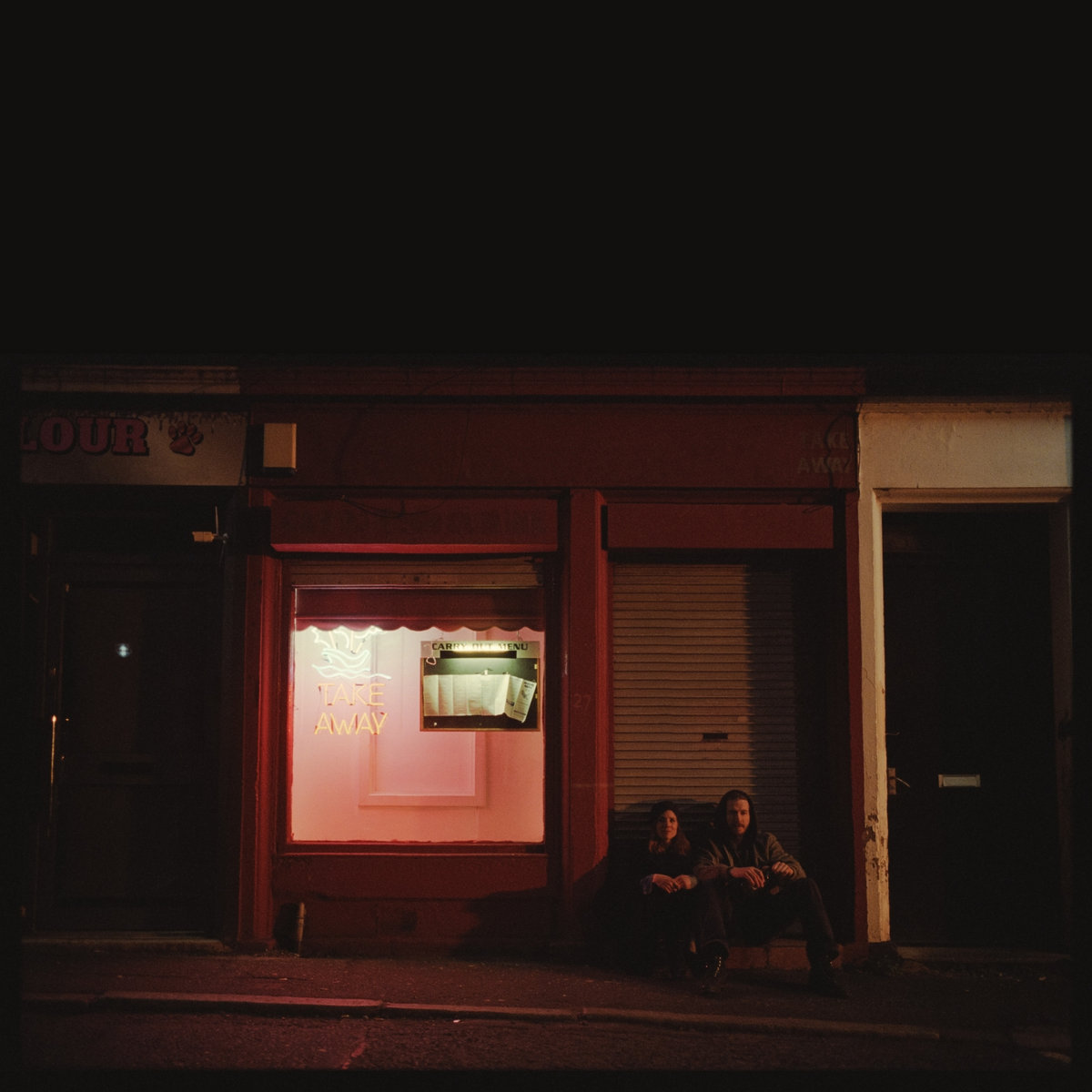
Switched On – Eric Hilton: Sound Vagabond (Montserrat House)

by Ben Hogwood

What’s the story?

Eric Hilton, a founder member of the much-loved Thievery Corporation duo with Rob Garza, has continued to mine a rich vein of musical inspiration in his solo work.

The Thievery tradition has been retained, using largely down tempo beats as backing for music sourced from around the world, while simultaneously looking back through the decades. For Sound Vagabond Hilton used a public domain sample library, removing the problems of copyright clearance at one fell swoop, but in tandem with that he took inspiration from his travels.

The album, then, becomes what its creator describes as a ‘sonic travelogue’.

What’s the music like?

If the verdict is that it sounds like Thievery Corporation, then that is meant as a compliment for Eric Hilton’s music. The preparation is meticulous, and yet there is plenty of room for manoeuvre, a chance for the listener to enjoy all the sounds and sights of their destination.

Inspiration for the work runs far and wide – Cerro Allegre, for instance, was inspired by time in Valparaíso in Chile, while Mumbai Hustle takes a pinch of that city and blends it in with Detroit, upping the pace as it does so. Hilton orchestrates his source material so beautifully, with the harp that laces Endless Affair and Lumi a beautifully poised instrument, and the strings that dress Nico delivered with typical grace.

Midnight Milan is a suave nocturnal affair, the harp again forward in the mix, while the shuffling beat to The Violet Hour sits behind an exotic cast of strings, keys and languid guitar. The title track takes influences from North Africa, and you can feel the heat in its lazy woodwind and spacious keyboards. Similarly The Mirror Inside, a sultry number with a typically persuasive beat.

Does it all work?

It does. Hilton knows exactly what buttons to press, a skill he has honed over time, but that doesn’t make the music formulaic in every way. Each scene is exquisitely prepared.

Is it recommended?

It is. This is music to dress any cocktail bar, softly lit lounge or lazy poolside. Eric Hilton delivers a beauty.

For fans of… Thievery Corporation, Kruder & Dorfmeister, Nightmares On Wax, FC Kahuna

Listen & Buy

Published post no.2,103 – Thursday 29 February 2024

On Record – Sheherazaad: Qasr (Erased Tapes)

by Ben Hogwood

What’s the story?

This is the first music on Erased Tapes from American artist Sheherazaad, a native to the Bay Area who brought together a number of musicians in New York to record this mini-album.

Sheher has North and South Indian heritage, and became disorientated by moving between the two and America, though when she settled in New York for study she discovered the city’s South Asian arts community and an electronic culture emanating from the UK, which brought her into contact with Arooj Aftab – who produced this record. Singing in Urdu, she was joined by musicians including Basma Edrees (Egypt), Gilbert Mansour (Lebanon), and Firas Zreik (Palestine). The result, Qasr, translates to ‘castle’, or ‘fortress’, and is a deeply personal document of Sheherazaad’s own unique origins.

What’s the music like?

Compelling. There is an outdoor feel to this music, as though recorded barefoot in the very places Sheher sings about.

The first song, Mashoor, features the guitar of Ria Modak – and it proves the ideal foil for the voice, both low in pitch but conversing intimately. Dhund Lo Mujhe brings a burst of energy, though not necessarily positive, for the outbursts of the fiddle are there to help portray ‘a very specific insanity, that of the immigrant experience’. Sheher’s inflections and the pizzicato play off against each other before the voice soars, its vibrato inspiring the fiddle to greater heights.

Koshish (Try) is conversational, the reverberant acoustic capturing the Californian heat, while Khatam (Finished) travels back through time to the accompaniment of rich improvisation on the sustained piano. The final Lehya, the most substantial of the five songs, takes us to a mythical city, its nocturnal beginning the basis for growth to all sorts of colourful shades, before the closing chant, a soft but moving call for freedom.

Does it all work?

It does – though the levels of intensity mean that for full appreciation you need to listen in an environment where you can give Sheherazaad’s music the level of attention it deserves.

Is it recommended?

Yes. This is an artist with a huge amount to say, and the feeling is that on this mini album she is just dipping her toe in the water. There is a whole lot more to come from this explosive and original talent.

For fans of… Khruangbin, William Onyeabor, Shida Shahabi

Listen and Buy

Published post no.2,094 – Sunday 25 February 2024

Switched On – Austra: Swan Song (Original Score) (Domino)

by Ben Hogwood

What’s the story?

It comes as no surprise to learn that Katie ‘Austra’ Stelmanis had her first experience performing in the orchestra pit for Tchaikovsky’s The Nutcracker, performed by the National Ballet of Canada in 1990.

Since then her distinctive voice has been one of the standout elements in the music of her band, Austra, who have made a name for their distinctive electronica, a satisfying mix of pop and 80s-inspired electronica.

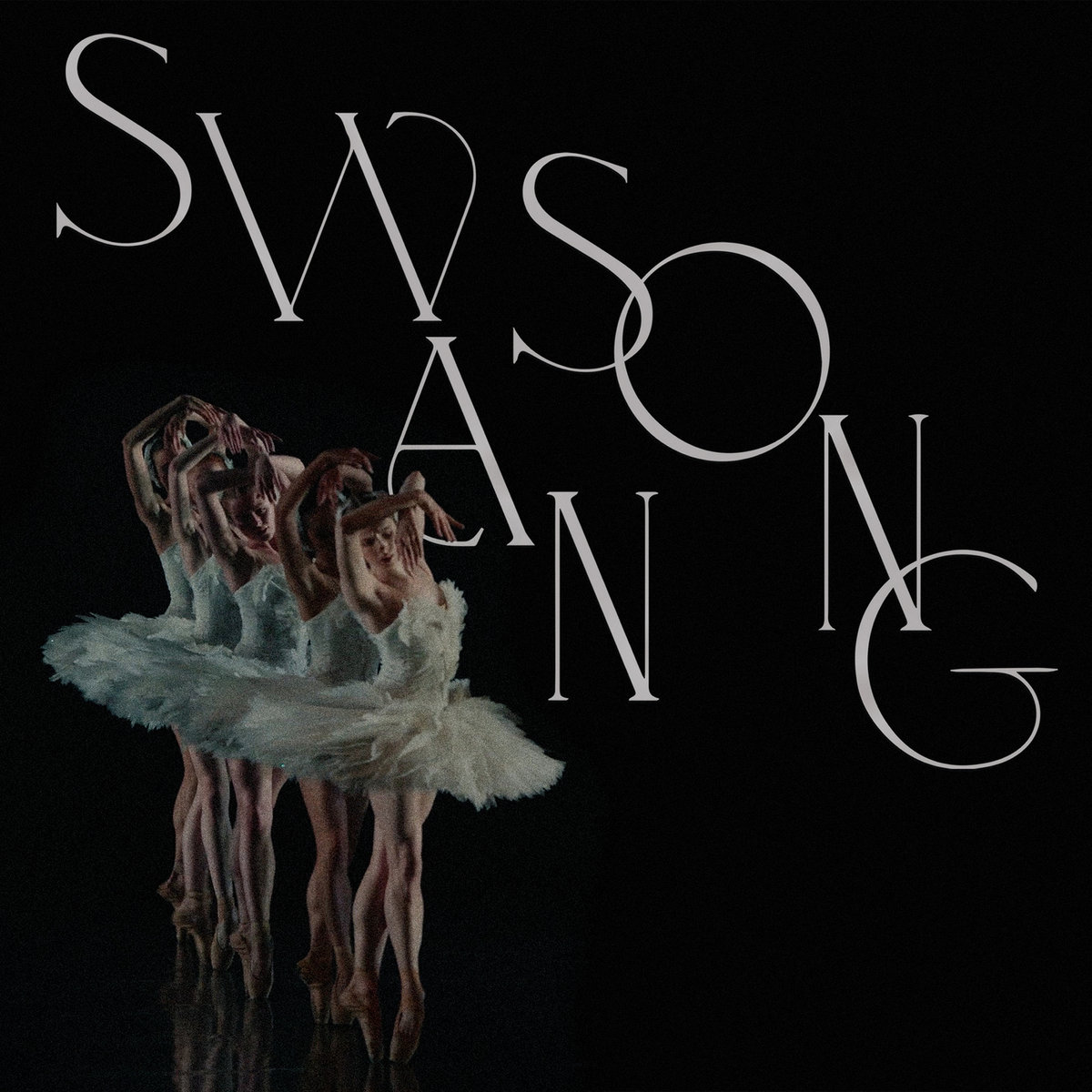
Now, though, she turns her attention to solo concerns with a lo-fi set-up. Tasked with setting the musical scene to Swan Song, a feature documentary immersing viewers inside The National Ballet of Canada in its new production of Tchaikovsky’s Swan Lake, she decided to use a single synth, a mellotron and – of course – her voice.

What’s the music like?

‘Ethereal’ is an overused word in writing about music, but it really does apply to Katie Stelmanis and her voice, which she uses to great effect here. It floats on the air in the opening Karen’s Theme, accompanied by the graceful synth lines, responding to the ebb and flow of the dancers. The themes are beautifully characterised, and Stelmanis often uses softly voiced arpeggios on the synth (a Juno-106) to depict the rise and fall of the dancers.

Genevieve’s Theme and Shae’s Theme are relatively muffled but attractively scored, while Siphe’s Theme has a lovely mottled presentation. Robart gives contrast, with gurgling electronics, as do Move To The Theatre and Curtain Call, each dressed with a beautiful vocalise.

The mellotron comes into its own for Corps de Ballet, and with its twisting line gives a good representation of a dancer maintaining their poise. The main number is Bow, whose minimal ideas and probing motif are subtly moving.

Stelmanis’ use of the Tchaikovsky themes is subtle and very clever, leaving an original score whose inspiration sits beneath the surface but has a lasting impact.

Does it all work?

It does. By their nature these soundtracks can be quite fragmented but the sequence here is very satisfying, with some lovely sounds and colours.

Is it recommended?

It is. If you like Austra as a band you won’t need any persuading, though you might be surprised at the extent to which Katie Stelmanis allows her imagination to blossom in what is a striking piece of work.

For fans of… Gazelle Twin, Julia Holter, Laurel Halo

Listen & Buy

Published post no.2,103 – Thursday 29 February 2024
New music – Jon Hopkins & Ben Lukas Boysen: Falling Into Place (Erased Tapes)

by Ben Hogwood

Some exciting news from Erased Tapes… who have announced they will be releasing the soundtrack to forthcoming film Falling Into Place, a collaboration between Jon Hopkins and Ben Lukas Boysen, featuring performances by pianist Lisa Morgenstern and cellist Anne Müller.

He takes up the story: “The film in general, and therefore the score, deals a lot with reflecting on needs and the feeling of belonging. Each piece of the score is devoted to one of the many stations our protagonists visit on their journey and Some Kind Of Pattern represents an early and careful approach towards their feelings and who they want to be, for themselves and also for each other.”

Some Kind Of Pattern is the early taster of what the soundtrack will be like, a contemplative but assured piece of work whose descriptive powers are evident. It has a compelling stillness that bodes well for the album.

The score to Falling Into Place will be released on Erased Tapes on 28 March, in conjunction with Piano Day 2024.

Published post no.2,102 – Wednesday 28 February 2024

In concert – Maria Dueñas, CBSO / Kazuki Yamada: Beethoven Violin Concerto & Elgar ‘Enigma’ Variations

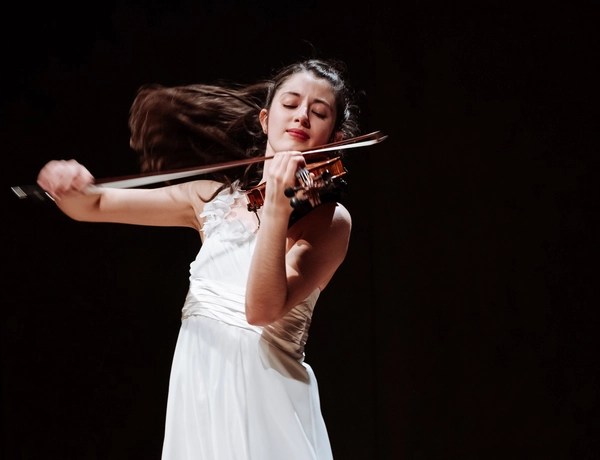
Maria Dueñas (violin, above), City of Birmingham Symphony Orchestra / Kazuki Yamada (below)

Beethoven Violin Concerto in D major Op. 61 (1806)
Elgar Variations on an Original Theme, ‘Enigma’, Op. 36 (1898-9)

Symphony Hall, Birmingham
Thursday 22 February 2024

Reviewed by Richard Whitehouse Picture (c) Tam Lan Truong

Having given its ‘first part’ yesterday evening, Kazuki Yamada and the City of Birmingham Symphony Orchestra moved on to ‘Elgar & Beethoven: Part 2’ this evening, with an astute coupling of the latter’s Violin Concerto being followed by the former’s ‘Enigma’ Variations.

Anyone having heard Maria Dueñas in Lalo’s Symphonie espagnole at last year’s Proms will know she is a violinist destined for great things, as was reinforced her take on the Beethoven. Admittedly she and Yamada were not consistently as one in its lengthy first movement – the soloist’s tendency to rhapsodize and to tease out expressive nuance jarring, however slightly, with the conductor’s forthright assertiveness in tuttis. Yet there was no absence of insight on either part, such undeniable eloquence continuing through a central Larghetto that was more adagio as Dueñas conceived it, though which still conveyed a rapt inwardness. The ensuing Rondo lifted this mood appreciably, its impulsive main theme and whimsical episodes deftly eliding into a purposeful traversal of a finale whose conclusion was nothing if not decisive.

As with her recent recording of this concerto, Dueñas played her own cadenzas. That for the first movement had Bach-like deliberation and a harmonic astringency which readily held the attention; if that connecting the latter two movements seemed a little too protracted, and that towards the close of the finale rather offset its overall momentum, there could be no doubting her underlying conviction. She duly acknowledged the considerable applause with a suitably serene, never cloying arrangement for violin and strings of Fauré’s early song Après un rêve.

In his initial remarks, Yamada recalled conducting a Japanese brass band in the First Pomp and Circumstance March as his first experience with Elgar, and this account of the ‘Enigma Variations amply reaffirmed his identity with the composer. Not that this was an integrated or seamless account – Yamada’s halting, even ambivalent take on the Theme intensified in the first variation and, while the swifter variations had no lack of character or impetus, it was in such as the fifth variation’s suffused earnestness with whimsy that this reading left its mark.

On one level the Enigma is a forerunner of the ‘concerto for orchestra’ with its emphasizing various soloists – not least viola in the sixth variation, dextrously negotiated by Adam Römer, or cello in the 12th where Eduardo Vassallo was at his ruminative best. Initially a little stolid, Nimrod built to a culmination of real pathos, and even finer was Yamada’s take on the 10th variation for an intermezzo of unfailing poise and deftness. A tangible atmosphere pervaded the 13th variation – uncertainty as to its dedicatee just part of its fascination, with those veiled allusions to Mendelssohn elegantly rendered by Oliver Janes. From here to the final variation in all its confidence and anticipation was to be recall the impact this music made at the end of the 19th century, Yamada steering it with unforced rightness towards a resounding peroration. Overall, a performance full of insight and one hopes that Yamada will be continuing his Elgar exploration in future seasons. Next week, though, brings two concerts for which former music director Sakari Oramo will be returning to this orchestra for the first time in some 15 years.

Click on the link to read more on the current CBSO concert season, and on the names for more on violinist Maria Dueñas and conductor Kazuki Yamada. Arcana’s Listening to Beethoven series will reach the Violin Concerto soon!

Published post no.2,101 – Tuesday 27 February 2024