Mike Sheridan returned to the long playing game in late November 2023 with his first album since 2012. It had been a while in the making, evolving over three years, with the Danish producer taking his time in comparison to his first album I Syv Sind, released in 2008 at the age of 17.
Sheridan has had a good deal of life experience since then, and Atmospherics was planned as a quiet release, almost devoid of melodies. The title refers to electrical disturbances, such as those that occur during a thunderstorm and tamper with wireless signals. Rather than being devoid of melodies, he adds to them with vocal guest slots for Agnes Aldén and Indra-Rios Moore.
What’s the music like?
Very…atmospheric. Sheridan writes in a compelling style however, so while the music works in an ambient context the events on each track do combine to pull the listener in.
He operates in a widescreen environment, established early on with the instrumental Impulse, but there is a lot of detail in the foreground, too. On occasion the dark colours and textures hint at an industrial setting, the listener placed up the end of a large structure while mechanical processes work their way out in a largely ambient way. The interference he speaks about is generally easy on the ear, aiding the ambience rather than interfering with it, but there are moments of unexpected beauty where brief string loops (Impulse, CME), vocals or gentle guitar lines (Strata) make themselves known.
The beats are effective, too, slower patterns that walk forward at an easy pace, but generate a kind of subtle urgency. The vocals are well chosen and ideally spaced, headed by the two contributions from Swedish singer Agnes Aldén – whose turn on the urgent Minds I is particularly good. BYLJA appears on the unexpectedly uptempo Subspace, where the audio scenery suddenly goes past at a quicker rate.
Everything comes together to great effect on the finale. Universal Automation, made with Janus Rasmussen, is a superb piece of work where the beats flick around the edges of a broad sonic canvas like the flames of a candle, before taking over emphatically.
Does it all work?
It does. Sheridan is an impressive composer who writes with no padding – everything is there for a reason, no matter how the ambience is created. This is especially rewarding on headphones when the layers of detail can be fully appreciated.
Is it recommended?
Yes. Mike Sheridan’s brand of electronics may be ambient, but it proves a stimulating listen too.
For fans of… Dave Gahan solo, Trentemøller, Jon Hopkins, The Black Dog
Listen
Buy
Published post no.2,060 – Thursday 18 January 2024
The conductor talks to Ben Hogwood about his forthcoming debut at Garsington Opera, where he will conduct Rameau‘s Platée – a work in which he has also sung the title role. Agnew talks about Rameau but also Handel, considering why now is a good time for British audiences to embrace the music of the French Baroque.
On a dark, dank winter’s day there is something incredibly heartening in having a discussion about the prospect of a summer opera season. Arcana has teamed up with conductor (and former tenor) Paul Agnew to do exactly that, and he is in optimistic mood. “It will arrive quickly, with the spring and the daffodils, and then we’ll find ourselves in Garsington!” he says. It will be his first visit to Wormsley Park, and to the festival. “I’m really looking forward to it. It’s one of those very original places, and it isn’t a dark theatre. It has windows, and so each production has to take into account that you’re going to have a part of that show in the light. I’ve never done that sort of thing, and the team is very nice. We had the model showing so we’ve seen the set, and the concepts, and it looks great. It will be a lot of fun, which it should be – but with that hint of tragedy, which is always lurking in Platée.”
He is talking about Rameau’s comic-tragic opera, which he will lead with a new team of soloists and The English Concert. It is the first excursion for Garsington into the world of French Baroque opera, but Agnew is returning to a piece he knows well. Indeed, he first encountered Platée as a singer. “I didn’t sing Platée – I sang Thespis in the Prologue. I was quite a young thing, and it was a production with the Opera de Paris. It’s a really hard role, extremely high – and obviously you go on at the top of the show. It’s a bit nervy. Then almost immediately I took on the role of Platée in that same production in Japan. That was released on DVD, which had a lot of success.”
He explains why. “Laurent Pelly did a genius job – and they found just the right balance in order that when we get to the end, where the audience have been cheerleading with the rest of the chorus and these horrible characters, and they find themselves in fact implicated in this terrible humiliation. I think he just found the right click. There was a gasp from the audience when they understood quite what a terrible thing this is. I wouldn’t want to exaggerate, but there is something political about it, and within the operas of Rameau – Les Indes galantes and certainly Les Boréades. They tend to have slightly monarchical reflections, and there’s a sense – if you know the film Ridicule – about how close you can get to the king but then you know you made a mistake, you didn’t use the right wig and so on, and you get sent straight back to the back of the queue. There’s a sense of that in Platée and the ridicule, as you would expect Jupiter – who essentially is Louis XIV – to be the hero. In fact, he’s the villain! It’s not exactly dangerous, but not politic either – Louis XV by then.”
Agnew has enjoyed a close affinity with Rameau throughout his career. “The very first thing I did in France, with William Christie and Les Arts Florissants, was record the Rameau Grands Motets. They’re relatively youthful pieces compared with the operas, which he didn’t start until he was about 50 years old. I love Les Grands Motets, partly because it’s surprising to find such incredibly sensual music for the church. They just seemed to suit my voice, and in fact it was one of the very first French Baroque things I did at all. You know you have those lucky things in in a long career where you ‘meet’ a music and you think, “Oh, my goodness, I’m really made for this!” I love the sentimentality of it, in the best sense of the term, I love the melody and I love the sensuality of the harmonies. That leads you through the line and tells you where you’re going constantly, so you can make the music into such a strong experience.”
Things moved quickly. “Almost immediately we started on the operas in the Opera de Paris, so we did Hippolyte et Aricie, then various roles in Les Indes galantes, and then we did Platée, which was with Marc Minkowski and Les Musiciens du Louvre. Then we did Les Boréades, the last opera, which was never staged in his lifetime – he was 80 when he wrote it. It’s amazing to think he lived to 80, but happily he did! It’s an astonishing journey, very much like Platée but in a much more heroic way – he’s a real prince. So I did all those operas, and I’ve sung others – Castor et Pollux for instance – in concert. I’ve done a lot of the ballets, too. I’m a big fan, as you would expect! It’s the most extreme the Baroque gets, even more complicated in some ways than Bach. He was an amazing technician, and he’s stating things relatively clearly, whereas there’s a complexity of emotions in Rameau which really predate going into Gluck and then early Mozart. He didn’t die until 1764, so Mozart has already composed his first piece before Rameau dies. There is a big influence on Gluck, and everything that he says about the reform operas is what Rameau has been trying to do for years.”
Performing the operas as both a singer and a conductor has given Agnew a unique perspective. “It’s very helpful”, he agrees, “for the singers too. I’m naturally a singer’s conductor, as I want them to be able to breathe and recover and so on, because that’s the best for us. I’m not going to push them into a tempo which they can’t do, so we want to find the right tempo for the singer. If you’re a singer you understand that more clearly. It’s a good place to have been, whatever the music – I’ve sung a lot of Handel and Purcell, and now I conduct a lot of Handel and Purcell too. Having sung Platée itself, it makes me smile and I’m not in the least bit jealous about being on stage. I wouldn’t want to sing it again or go through that experience. It’s a long evening, and you’re on stage a lot. There’s a lot to sing, it’s quite hard, and it’s quite physical because it’s a comedy. There’s a lot of running around, and jumping – if you’re a frog! – and I’m happy to leave that to other people. I still absolutely love the piece, and to have that long association is very useful.”
Visitors to Platée’s page on the Garsington Opera website are presented with the image of a flamingo and a beachball (above), an immediately appealing prospect in the depths of winter. “I think it’s going to be a lot of fun. I really like the way it’s being approached. We’re quite used to women playing men – that’s been around in Handel‘s Rinaldo, for instance, but the other way round is very much rarer. The only way in which the piece works is if she’s just a woman, you just get over it. I think Rameau’s idea was to define the strangeness to that person. It’s not about sexual politics, but not a woman as the gods would know – maybe asexual thing rather than being particularly transvestite or drag. I think we’re in the right direction in this production, where we just need to forget that the singer is a man, and just accept that this is a strange woman. She’s a nymph from the marshlands – we don’t know really what she is, a creature from the blue lagoon.”
It is the first time Agnew has encountered the work of director Louisa Miller and designer Christopher Oram. “I’m not sure they’ve done much Baroque before, so I wouldn’t have encountered them as that’s more or less my world. I like them very much. It’s not a very easy piece to approach dry – just to get your head around what Rameau could possibly be thinking about is quite hard. Right from the very first meetings we were clearly on the same page, and Louisa clearly knows the piece, which is very reassuring. As a singer you often get to the first rehearsal and find out the director doesn’t really know the piece very well, and you find yourself having to subtly guide the director through towards a good solution. That’s definitely not the case here! Chris’s designs are very good, it’s funny and relevant and they work throughout the piece. Sometimes at a first rehearsal you think, “This will work great in Act One, and Act Three, but Acts Two and Four will be a disaster because it just simply won’t work in this concept. This concept will work the whole way through, so I’m really encouraged. We’ve got a lovely cast, and also decided at the beginning we would take a cast where nobody had sung it before. Nobody arrives with preconceptions about how their role is, or how they would like to play it.”
There is a sense of great excitement that this is Garsington’s first foray into Rameau’s output. “Yes, and they’ve chosen well!” he says enthusiastically. “We’ve got a great band in the English Concert. I sang with them in my 20s, with Trevor Pinnock, and what an honour it is to direct them.” He expands on the repertoire at hand. “I’ve done French Baroque music with English bands before, and it is quite tricky. They’re technically such fantastic players, but it has a tricky accent, and you can’t get it just by reading the books. Again, it’s useful to be a singer in those situations because you can sing the sensuality of the line much more easily than you can describe it. I always end up singing quite a lot of rehearsals because it’s a visceral, physical reaction to what you hear, which makes it much easier. It will be a challenge for the band to get that accent right, but they’re eminently capable, and I’m massively looking forward to working with them.”
They are complemented by a strong team of soloists, who have equivalent challenges. “Equally, the singers are all English, so we need to get that right – and that’s not just question of pronunciation. There are all sorts of things about how the phrases are constructed, and how the ornamentation helps the grammar of the music. We will have time and we have a good cast, so that doesn’t worry me. You have to go quite deep into these pieces, especially doing this repertoire for the very first time in an opera house. It’s very rare to hear Rameau at all in the UK. I think Platée is the only piece that has been properly staged in the past, and that was a long time ago with the Royal Opera House. It’s very exciting, and there is a lot of interest from the public in French baroque music, so I look forward to that encounter! It is very complicated to put on, you need a ballet, an orchestra that knows their beans, and a cast willing to take risks with the ornamentation. It’s a courageous choice, but not an impossible one.”
Is the boundless supply of great music by Handel (below) in some ways to blame for the relative lack of French baroque music in the UK? Agnew smiles. “Handel’s an interesting one, because he would say, “You do get French Baroque – because if you look at the dances in Alcina, the overtures – you’re not missing out, I’ve written it myself!” In some ways, yes – but you could never say Handel’s at fault, because a house without Handel would be a disaster. You have to think as well that if Purcell had lived longer than the whole history of English music would have been very different. He died in 1695, and then they had a few abortive attempts to create English opera. Then there was an extraordinary moment where Handel arrives, and he creates this strange bastard form of Italian opera for English people, written by a German! You think it’s never going to work but he has this immense success, at least until the early 1740s.”
He goes into more detail behind Handel’s successful formula. “He is much more straightforward, he has the advantage – and I don’t mean to be disrespectful – that what you see on the page is what you get. Twenty to thirty years earlier, the ‘affect’ is everything. Once you start an aria you stay in that in that emotion until the end of the aria, and then a recitative will tell you what kind of emotion you’re going to go to in the next one. With Rameau it’s much, much more fluid than that, because things are changing very fast, and he goes towards complications where the likes of Pergolesi go towards simplicity. You get that break that comes around the time of French Revolution, a time of an immense social and cultural change. Handel is a chancer, isn’t he?! He’s in Italy, and then he knows that George of Hanover is going to be the next king of England, so he immediately goes up and gets a job in Hanover. The first thing the Hanoverians say is go to England, as a sort of spy-come-diplomat or equerry.”
The rest – as they say – is history, and Agnew relishes recounting the events. “And then, of course, George I turns up and it’s all set up for him to have this contact with the nobility, and the prestigious arrival of the king at his operas and so on. He’s bright, and gets it sorted right at the start! The other thing is he turns up in Italy, and produces these works that are effectively for the Catholic nobility and cardinals, and he is a straight, up and up Protestant Lutheran. And yet – business is business, you do what you want! He produces something for a public that don’t know anything about anything. Rameau can produce something much more technically difficult and also psychologically complex, because he’s simply joining the train. We’ve had Lully, Charpentier, Campra, and all the rest – and Handel arrives and takes all that on board, that melange between the original French style – which wasn’t French anyway, because Lully wasn’t French – and then he puts this new Italian virtuosity in. He’s joining this great movement, and dominates England completely!”
We move on from Agnew’s fascinating dissection of Handel and Rameau to talk about one of his mentors and accomplices, conductor William Christie (above). “He’s a theatre man, he wants to pick up the music and shake it and I love that. When you’re a singer, you absolutely want that because you don’t want someone saying, “Careful with the D sharp”, you want someone saying, “Come on, tell me the story!” I always much prefer those people – and John Eliot Gardiner as well – who pick up the music and shake it, and have enough courage to say this music needs interpreters. The composer wants you to take it and make a show of it. That’s what Bill does, and absolutely what I try to do now as a conductor. You should take risks with it! These people were pragmatists, so if you’ve got someone who can sing this note but not that one, go with it. If you look at the history of Handel’s operas, or Messiah – there’s no definitive Messiah. He changed all the time, because he wanted to get the best out of who he had. It wasn’t saying, “This is my definitive work of art, have some respect and do it correctly”, it was, “Today it’s going to be like this, tomorrow it’s going to be different again, because I need to get the best that you have! I need to get great performance out of you. And that’s why it changes constantly. We don’t quite have that variance, but nonetheless you still have to have that attitude that you have to make a show. That goes straight through to Mozart – he is a show man. You want to start Cosi fan tutte with the overture thinking that you are making a show, not a homage. It’s an entertainment. You should laugh and cry and be frightened and happy, and all those things!”
Turning to Rameau again, he considers the composer’s standing. “He can be very funny, in the likes of Les indes galantes – and Platée is genuinely funny too. Rameau is always known as a surly bugger, when you read about him he is not at all a nice person – but he is really genuinely funny. To do comedy, as everyone knows, it’s much harder than just telling a joke – you have to have that special talent. He has that. It doesn’t mean that Boreades or Hippolyte aren’t amazing pieces, but when he wants to be funny he can be very funny.”
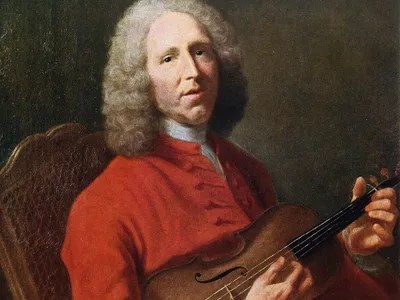
Rameau (above) is a colourful composer, too. “Everything is about colour”, agrees Agnew, “and he’s the first to really properly orchestrate, not just saying to the flutes to play the same as the violins. This is music just for flutes, just for the oboe, and then we’re just going to hear the strings coming in when when we need harmony. And then of course we’ll have a big string moment. It’s the beginning of colour in its best sense, not only harmonic colour but audible colour. The players suddenly find themselves pretty exposed in Rameau, particularly the bassoon parts. He’s a genius of the bassoon writing, and you get these incredible melodies, in Dardanus for example, with these sombre, reedy, mournful qualities. Some amazing colours.”
There is more, too. “And then he’s a great dancer! I think he has to be the best dance composer before Stravinsky. He has this incredible variety, within the ‘stock’ dances. Everyone knows straight away if it’s a Galliard or a Bourree, but they are so incredibly different. It’s a joy when the band understand it, too. I did Platée with the Dresden Staatskapelle, and a more serious orchestra you could not find – but once they got the idea that you could have fun and you could play out and take risks, they really went for it and it ended up great fun. There was a sort of trigger moment where we were doing a dance, and I kept on trying to get them to bow shorter, because they do hugely long bows, with fabulous, resonant instruments – nothing like the English Concert will play in Platée. I was trying to get them to play shorter and closer to the bridge, get a slightly sharper sound out of it. The shorter they got with the bow, the more they understood it and wanted to play out. It took off! Legato is a kind of aberration in this opera, everything else is short – so we charmed them out of certain – very good – habits.”
We bid farewell with one thing clear – Platée is in very good hands and a highly entertaining night is in prospect. “The main thing to say is that it’s a fun evening. You don’t need to worry if you don’t know much about French, or Baroque, or history. Just come and have a ball, it’s a fun evening, a fun piece with some very sharp twists!”
You can read more about the forthcoming production, and book tickets, at the Garsington Opera website
Kodály Budavári Te Deum (1936) Psalmus Hungaricus Op.13 (1923) Bartók Transylvanian Dances (Erdély táncok) Sz. 96 (1931) Cantata Profana Sz. 94 (1930)
Luiza Fatyol (soprano, Te Deum), Roxana Constantinescu (mezzo-soprano, Te Deum), Marius Vlad (tenor, Te Deum and Psalmus Hungaricus), Ioan Hotea (tenor, Cantata Profana), Bogdan Baciu (baritone, Te Deum and Cantata Profana), Junior VIP, Children’s Choir (Psalmus Hungaricus), Transylvanian State Philharmonic Choir & Orchestra / Lawrence Foster
Pentatone PTC 5187071 [64’14”] Texts and English translations included
Executive & Recording Producer Job Maarse Balance Engineer & Editing Erdo Groot Engineer Lauran Jurrius Recorded May 2022, Radio Studio of Radio Cluj, Romania
Written by Ben Hogwood
What’s the story?
Here is a chance to gain an insight into the choral music of two 20th century Hungarian composers known predominantly for their orchestral works. Bartók and Kodály were born just a year apart, and while their music is fiercely proud of their heritage their musical trajectories extend well beyond Hungary. Kodály stayed largely within Europe but brought back influences from Paris, while Bartók reluctantly emigrated to the US in late 1940.
Psalmus Hungaricus was Kodály’s first major post-war composition, in 1923. It is a landmark in his output, using for its text a Hungarian paraphrase of Psalm 55. Kodály uses a tenor soloist for the central dramatic role, the choir taking up their position as commentators. The Budavári Te Deum, completed 13 years later, marks the 250th anniversary of the liberation of Buda Castle from the Turks. While referencing Gregorian chant, Kodály incorporates references to Hungarian melodies and ornamentations in a dramatic setting.
In 1930 Bartók completed his first major work for chorus and orchestra. Cantata profana has Transylvanian roots, and Oana Andreica’s booklet note gives the context of its libretto, starting from two Romanian ‘colinde’ – ballads sung during the Christmas season but with a wide range of subjects well beyond the birth of Christ. Such is the case here, Bartók dramatising a myth of nine sons turned into stags. The cantata charts their fate and their father’s conflicting emotions, expressed by a baritone soloists. The Transylvanian Dances are a complementary addition, a short trio of works for small orchestra containing five traditional songs.
What’s the music like?
The Budavári Te Deum is a thrilling start to the album. This is red-blooded choral writing, Kodály diving in headlong to a high octane first section. He challenges choir’s higher sections, who respond admirably to the loud dynamic, retaining impressive clarity in the part writing. The work’s climactic points are notable for their power and passion.
This performance of the Psalmus Hungaricus has the authentic inflections to the melody, its bracing start turning to contemplation. Tenor soloist Marius Vlad inhabits the full tone and strong line demanded by Kodály, and sung so memorably by Ernst Haefliger in the legendary recording with Ferenc Fricsay. This makes for a fine digital alternative, with the choral response both full-bodied and unified. The meaningful counterpoint between Vlad and the Transylvanian woodwind in the middle section (Te azért lelkem) is especially memorable.
Bartók’s Cantata profana starts ominously, with an underlying menace that grows steadily as the hunt in the story progresses. Again the choral passages are well drilled, especially when in league with the percussion. The passionate tenor solo (Ioan Hotea) and fulsome bass (Bogdan Baciu) prove to be ideal foils, alighting on some spicy chords. There is little consolation at the end, in spite of the relative calm this performance leaves.
The Transylvanian Dances are over in a flash but leave a charming impression, with rustic themes. The recording is much closer, taking the action indoors to the tavern rather than outside in the wilds.
Does it all work?
Very much so. There is an adjustment to be made for the Transylvanian Dances, with the smaller ensemble and closer recording, but the performances justify the means. The choral works are a resounding success, brilliantly performed and with electric singing from the Transylvania State Philharmonic Choir, especially in the high passages. The orchestra match them under Lawrence Foster, who secures incisive rhythms and impressive clarity from such large forces.
Is it recommended?
It certainly is. This is an enterprising and very accessible coupling of three thrilling choral works, revealing fresh insights into the Hungarian composers.
Listen
Buy
For more information on this release and for purchase options, visit the Pentatone website
Weinberg String Quartet no. 2 in G major Op. 3/145 (1939-40, rev. 1986) Weinberg String Quartet no. 3 in D minor Op. 14 (1944, rev. 1987) Shostakovich String Quartet no. 3 in F major Op. 73 (1946)
Wigmore Hall, London Friday 12 January 2024
by Richard Whitehouse Photo (c) Marco Borggreve
Commenced anew last November, after having been abandoned in the wake of the pandemic, the Quatuor Danel’s cycle of string quartets by Shostakovich and Weinberg at Wigmore Hall continued this evening with formative works from the latter and a masterpiece by the former.
Hopefully it will not be long before Weinberg’s Second String Quartet (1940) has entered the repertoire. Written during his two years in Minsk (after having fled a Poland overrun by Nazi forces), its ‘back to basics’ outlook is evident in the initial Allegro’s textural clarity and easy lyricism, but also a compositional flair asserting itself in the movement’s tensile development and combative coda. Revision saw the Andante become a more complex and imposing entity, its fraught central section intensifying the sombre expression either side, along with an extra movement. This taciturn yet wistfully elegant Intermezzo makes for an admirable foil to the Finale, its rondo format energetically traversed through to a curtly decisive close. The Danel was palpably in command of music which transcends any apprenticeship quality with ease.
Shorter and more concentrated, Weinberg’s Third Quartet exudes an overarching emotional intensity. The Danel was mindful to observe those attacca markings such as give the overall design its unity within diversity – the uninhibited energy of the opening Presto by no means offset with the bittersweet poise of the central Andante, its taciturn unease being continued in a final Allegretto as affords only the most tenuous of closes and one which arguably feels too provisional, even in this insightful a reading. One reason, perhaps, the composer overhauled this piece when recasting it more than three decades later as his Second Chamber Symphony, when a completely new and more ‘conclusive’ finale was substituted for the original. Which is not to deny the fascination of this music from a crucial stage in his mastery of the medium.
A mastery as Shostakovich achieved with his own Third Quartet, its five movements drawing on those formal and expressive possibilities of his wartime Eighth and Ninth Symphonies, so the opening movement unfolds almost as a revisiting of that from the latter piece. The Danel undeniably had the measure of its playful capriciousness and brought out the ominous unease of the intermezzo, then headlong aggression of the scherzo which follow. Shostakovich’s first recourse to a passacaglia in his quartets, the slow movement exuded acute eloquence and this ensemble timed to perfection its cumulative approach to the finale’s searing apex. From here, the gradual dissipation of accumulated tension was palpably conveyed through to the numbed fatalism of a conclusion in which Shostakovich seems intent on bowing before the inevitable.
At this stage in the Danel’s traversal one might have expected either or both of Weinberg’s standalone Aria and Capriccio (written 1942-3) to have been given as encores. Instead, the players opted for repeating the finale from his Second Quartet, which at least provided the necessary uplift after the close of the Shostakovich. Hopefully those two pieces will be heard after the next instalment of this cycle, the Fourth Quartets of both composers being followed with the Fifth Quartet of Shostakovich: truly a ‘concert and a half’ as regards string quartets.
You can hear the music from the concert below, in recordings made by Quatuor Danel:
Schumann Papillons Op.2 (1830-1) Nachtstücke Op.23 (1839-40) Faschingsschwank aus Wien Op.26 (1839-40)
Wigmore Hall, London Friday 12 January 2024 (1pm)
by Ben Hogwood
After extensive examinations of the piano output of Beethoven and Schubert, Llŷr Williams has turned his attention to Robert Schumann. This lunchtime concert at the Wigmore Hall celebrated the release of a double album on Signum Classics starting a series devoted to the composer’s piano works. On this evidence there will be some revelations in store.
That Williams loves Schumann’s music was evident from with the languid introductory chords to Papillons. This early work from the 21-year-old composer is a masked ball, a chance not just to enjoy his love of butterflies but to present a closely connected set of miniature portraits for piano. In a good performance they capture the listener’s imagination, and under Williams’ fingers the music took flight. The clarity of his phrasing was immediately notable, revealing the exquisite details of Schumann’s melodic creations and taking time to let them breathe. With the improvisatory seventh piece (marked Semplice) the ink felt barely dry on the page, while the mood ranged from a relatively stern third piece to a playful eleventh, enjoying the brisk fanfares. Best of all was the Finale, where clever use of the sustain pedal left us with a marching band whose bright melodies hung on the air, the drone of the horns left for the listener to savour.
The Nachtstücke are lesser-known pieces, but Williams revealed just why they should be heard more often. He also revealed something of the turbulent period in which they were composed, with Schumann aware of the imminent death of his brother Eduard and travelling to Vienna in an attempt to alleviate his family’s precarious financial position. Because of this, the nocturnal dreams we might expect from other composers is trumped by active and often troubled thoughts, flitting quickly between moods and contrasting emotions. Williams, though, untangled the knots of Schumann’s musical thoughts. The solemn tread of the first piece, a funeral march, had forward purpose, while the second was a flurry of activity, thoughts running almost out of control until checked by a relatively dreamy central section. At all times Williams was in control of his characterisations, so much so that it was easy to forget the technical demands of this music. This was certainly the case in the outpouring of the third piece, before the chorale and related solos of the fourth were beautifully judged and complemented.
Finally we heard Faschingsschwank aus Wien, companion pieces to the Nachtstücke also written during the ultimately unsuccessful visit to the Austrian capital. These present a different side to Schumann, with Williams enjoying the humour of the first piece, with its catchy motif and cheeky reference to La Marseillaise. This vigorous start contrasted with a heartfelt Romance and a deeper, flowing Intermezzo – between which the Scherzino reasserted the prevailing mischievous mood. So too, did the Finale, where the virtuosity was again beyond question, the helter-skelter figures once again used for poetic purpose rather than display. Williams proved a revelation in Schumann, bringing even his most complex character pieces to life – and maintaining a remarkable clarity of line as he did so. If he keeps this up, there are many treats in store as he journeys further into Schumann’s poetic and deeply personal world.
You can hear Llŷr Williams’ new recording on Spotify below:





 Arcana.fm