Unknown's avatar

About Arcana

My name is Ben Hogwood, editor of the Arcana music site (arcana.fm)

In concert – Sebastian Rochford & Kit Downes @ Kings Place

Sebastian Rochford (drums), Kit Downes (piano)

Kings Place, London, 11 January 2024

by John Earls. Photo credit (c) John Earls

In January 2023 Sebastian Rochford (drums) and Kit Downes (piano) released A Short Diary, a profound and moving musical expression of loss for Rochford’s father, the poet and academic Gerard Rochford.

A year on, this concert consisted mainly of a performance of that album and was equally touching, not least because Rochford gave a little commentary between tunes, his voice as soft as his brush strokes and no less affecting.

Both Rochford and Downes have been involved in many different collaborations, but this is a particularly satisfying partnership. It is articulate, sensitive and compelling. It is also beautifully expressive, Downes through the keyboard and Rochford with drums and a mix of drumsticks, brushes, mallets, pedal, hands and fingers. The engagement between them and their listening to each other was something to behold.

The set opened, as does the album, with This Tune Your Ears Will Never Hear where the portentous music and heart-rending title set the tone. Communal Decisions is an astute musical illustration of competing demands with Rochford referring to the experience of balancing familial dynamics at the time of his father’s death (he has two brothers and seven sisters).

The more whimsical Love You Grampa was inspired by the notes Rochford’s niece used to leave for his father around the house. The melodic Silver Light was delicate and wistful. In a slight change of tone, the latter part of Ten of Us (remember all those brothers and sisters?) was played with an energy and passion which saw Rochford and Downes at their most animated.

The final number of the set was the only tune not composed by Rochford. Even Now I Think of Her was composed by his father, who sung it into his phone and sent it to Rochford, who passed it on to Downes’ phone for him to transcribe. It’s as endearing as the story behind it.

There were two new pieces performed. The Energy of Light, played midway in the set, is a rhythmic affair with Rochford and Downes both getting into the tempo. To the Country I Was Born was played as an encore and is a tribute to Rochford’s birthplace of Scotland – a fitting choice as this was the opening concert of Kings Place’s Scotland Unwrapped series which runs throughout the year. It was a tuneful and fitting end to this most personal of musical evenings.

John Earls is Director of Research at Unite the Union and tweets / updates his ‘X’ content at @john_earls

For more information on the album head to the ECM website – and click on the names for websites devoted to the music of Seb Rochford and Kit Downes
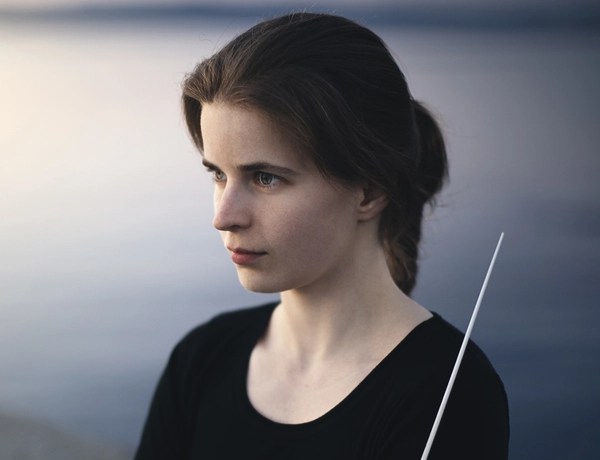
In concert – Paul Lewis, CBSO / Tabita Berglund: Sibelius, Grieg & Tchaikovsky

Paul Lewis (piano), City of Birmingham Symphony Orchestra / Tabita Berglund

Sibelius Pohjola’s Daughter Op.49 (1906)
Grieg Piano Concerto in A minor Op.16 (1868)
Tchaikovsky Symphony no.5 in E minor Op.64 (1888)

Symphony Hall, Birmingham
Thursday 11th January 2024 [2.15pm]

Reviewed by Richard Whitehouse

Entering 2024 with this attractive programme, the City of Birmingham Symphony Orchestra was conducted by Tabita Berglund – the Norwegian who, though unrelated to the late, great Paavo, seems certain to become one of the most significant conductors from her generation.

It was with Sibelius that the programme commenced, Pohjola’s Daughter lying on the cusp between its composer’s nationalistically inclined Romanticism and the relative Classicism that ensued. Pointedly so given the composer derived his inspiration from the Kalevala, in which its totemic figure Väinämöinen is outwitted by the ‘daughter of the North’, as the basis for a symphonic fantasia which critiques as surely as it remodels its underlying sonata design. Other interpreters have ensured a more seamless cohesion, but the acute characterization that Berglund brought to each episode, then the emotional frisson when those main motifs come together for a powerful apotheosis, compelled admiration – as did the closing pages in which Sibelius cannily fragments form and texture so all that remains is an all-enveloping silence.

Its ubiquity across 150 years should not distract attention from the innovative qualities found in Grieg’s Piano Concerto, and if his was not a consciously recreative approach, Paul Lewis gave a performance as appealing as it was insightful. Not least in an opening Allegro whose melodic directness was always balanced by a tangible sense of where this music was headed, and culminating in a take on the lengthy cadenza that infused its rhetoric with an inevitability worthy of Beethoven. There was expressive light and shade aplenty in the central Adagio, as too an unforced progress to the heartfelt restatement of its main theme. The outer sections of the final Allegro had no lack of impetus, as if to emphasize contrast with its rapt flute melody that closes the work in a thrilling peroration where soloist and conductor were rightly as one.

After the interval, Tchaikovsky’s Fifth Symphony emerged as a forceful and combative piece with its occasional longueurs convincingly held in check. Not least in an opening movement, the simmering expectancy of whose introduction intensified throughout what followed. Any short-windedness of phrasing was absent in the Andante cantabile, its indelible horn melody serenely intoned by Elspeth Dutch then its interplay between slow-burning eloquence and violent interjections of the ‘fate’ theme astutely judged on route to a warmly resigned coda.

Ostensibly an interlude, the Valse has a charm and, in its central trio, insouciance as belies its formal ingenuity that Berglund conveyed in full measure. Nor was there any sense of overkill as the Finale pursued a purposeful but never headlong course – its initial restatement of the main theme exuding an expressive focus matched by that of its climactic reappearance, here without risk of bathos in what brought the performance to a decisive and affirmative close. Certainly, the composer’s doubts as to any ‘insincerity’ proved unfounded on this occasion. It also confirmed a rapport between Berglund and the CBSO which will hopefully continue. Next week, however, brings the return of Kazuki Yamada for a wide-ranging programme of Berlioz, Walton and the world premiere of a newly commissioned work from Dai Fujikura.

Click on the link to read more on the current CBSO concert season, and on the artist names for more on Tabita Berglund and Paul Lewis

Published post no.2,054 – Friday 12 January 2024

New music – Manu Delago feat. Mad About Lemon – Slo-Mo Moving River (One Little Independent)

by Ben Hogwood

Manu Delago is closing in on the release of his new album Snow From Yesterday, due on 2 February. Here is another substantial taster from it, a piece written by Manu in tribute to his late step-father.

As his label’s press release described last year, “the Austrian composer, innovator, Grammy nominee and acclaimed percussionist has teamed up with vocal ensemble Mad About Lemon to craft a profound and distinct new concept piece. Manu has become a leading name in his field, touring with the likes of Björk, most recently on her celebrated Cornucopia tour. His trademark handpan virtuosity is the rhythmic lifeforce of Snow From Yesterday, creating majestic, emotive sounds, often with a tender delicacy, for Mad About Lemon’s folksy harmonies to pour over.

Those words capture the mood of the new single – and bode well for the new album, which Arcana will of course review.

Published post no.2,053 – Thursday 11 January 2024

Switched On – Four Tet: Loved (Bandcamp)

What’s the story?

Four Tet has an album ‘coming soon’, as announced on his Instagram page today (10 January) The first track released from it is Loved, presenting his first new original material in eight months. As regular followers will know this is a relatively long period of inactivity for the producer – real name Kieran Hebden – but suggests the start of a busy year.

What’s the music like?

Languid – and enjoyably so. This is a contented side to Four Tet that picks up where previous track Three Drums left off, though this time there is a leaner texture and even more dreaminess. Both pieces of music suggest he is in a better place where music is concerned, a year and a half after his legal wranglings with former label Domino were resolved.

A slow beat, borne of hip hop and not far from the likes of early DJ Shadow, sets a relaxed backing over which cool and airy keys spin their magic. It is a blissful listen.

Does it all work…and is it recommended?

Yes indeed. Hebden is known for his consistency while always forging ahead or taking interesting paths – and this is no exception. Loved bodes well for the new album.

Listen and Buy

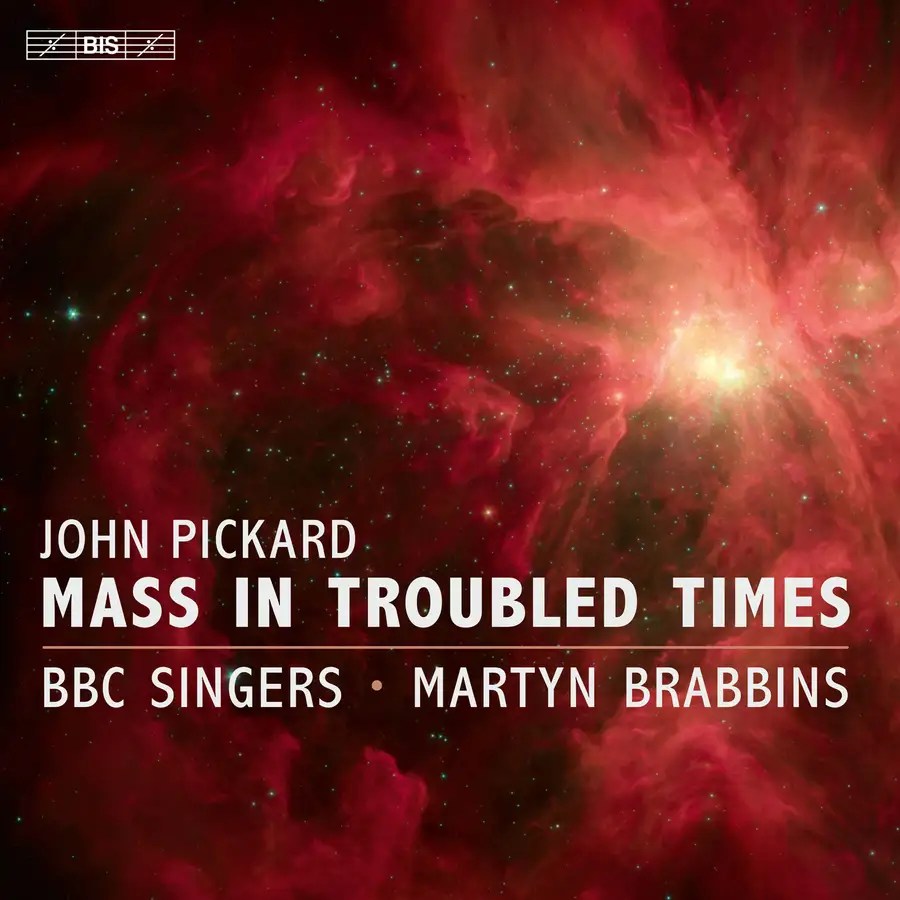
On Record – BBC Singers / Martyn Brabbins – John Pickard: Mass in Troubled Times (BIS)

John Pickard
Three Latin Motets (1983-7)
O magnum mysterium (2015)
Orion (2004)
Ave Maris Stella (1992)
Ozymandias (1983)
Tesserae (2009)
Mass in Troubled Times (2018)

BBC Singers / Martyn Brabbins with Chloë Abbott (trumpet/flugelhorn, Orion); David Goode (organ, Orion and Tesserae)

BIS 2651 [74’30’’] Texts and English translations included

Producer Adrian Peacock Engineer Pete Smith
Recorded 13 & 14 October, St Jude-on-the-Hill, Hampstead, London

Written by Richard Whitehouse

What’s the story?

Although known primarily for his substantial orchestral and chamber output, John Pickard has written several notable choral pieces. This latest release from BIS to be devoted to his music brings most of them together, and in the company of two major instrumental works.

What’s the music like?

Ranging across 35 years of his music, the collection features Pickard’s earliest acknowledged work – a teenage setting of Shelley’s Ozymandias that elicits a response both imaginative and impassioned. Already assured, his choral writing was further honed and refined in Three Latin Motets where limpid renderings of O nata lux and Ubi caritas et amor frame a melting Te lucis ante terminum for female voices. A rapturous Ave Maris stella and touchingly restrained O magnum mysterium duly reinforce Pickard’s confident handling of the a-cappella medium.

The two non-choral items indicate their composer’s abiding fascination with astronomy and antiquity. Scored for trumpet and organ, Orion strikingly evokes said constellation from the vantage of increasing energy in Nebula, an alternating lyricism (courtesy of the flugelhorn) and impetus in Alnitak, then incisive rhythmic interplay of Betelgeuse with its distanced close. Its title indicating those ‘tiles’ used in a mosaic, Tesserae builds cohesion via a steadily accumulating momentum such as tellingly underlies this showpiece with substance for organ.

For 18 unaccompanied voices (in six groups), Mass in Troubled Times is not a setting of the Mass, but a text assembled by the author Gavin D’Costa – lines from T. S. Eliot, Edith Sitwell and Matthew Arnold heard alongside extracts from the Syriac Orthodox Liturgy, the Shahada and the Qur’an. The key is a Turkish Twitter-hashtag from 2015, “Humanity washed ashore”, relating the flight from Aleppo then the drowning of Ayesha – her tragedy an emotional focus over six sections whose expressive intensity seems the greater for their formal concentration.

An Introitus precedes the customary sections of the Mass – reaching a dramatic apex at the climax of the Gloria while carrying the accrued intensity through those that follow; ending with the juxtaposition of lines from William Blake and thrice-repeated Agnus Dei that, next to an evocation of the child’s body off Palermo, has a poignancy shorn of sentiment thanks to Pickard’s acute eloquence. With its wide range of vocal techniques and demanding tessitura, Mass in Troubled Times is a rewarding challenge which all enterprising choirs should tackle.

Does it all work?

It does, not only through the quality of this music but also of these performances – the BBC Singers conveying the immediacy or pathos of Pickard’s response with unstinting clarity and precision. If a demonstration of this choir’s continued existence were needed, this surely is it – Martyn Brabbins (late of English National Opera) directing with his customary conviction. Nor are Chloë Abbott and David Goode to be found wanting in their pieces, rounding out a collection enhanced with vividly analytical recording and the composer’s informative notes.

Is it recommended?

It is, and not merely to those who have been following this invaluable series, which is set to continue with a coupling of Pickard’s Second and Sixth Symphonies. Certainly, the Mass in Troubled Times must feature in any representative selection of works from the 21st century.

For purchase options and more information on this release, visit the BIS website. Click on the names for more on composer John Pickard, the BBC Singers and conductor Martyn Brabbins, trumpeter Chloë Abbott and organist David Goode