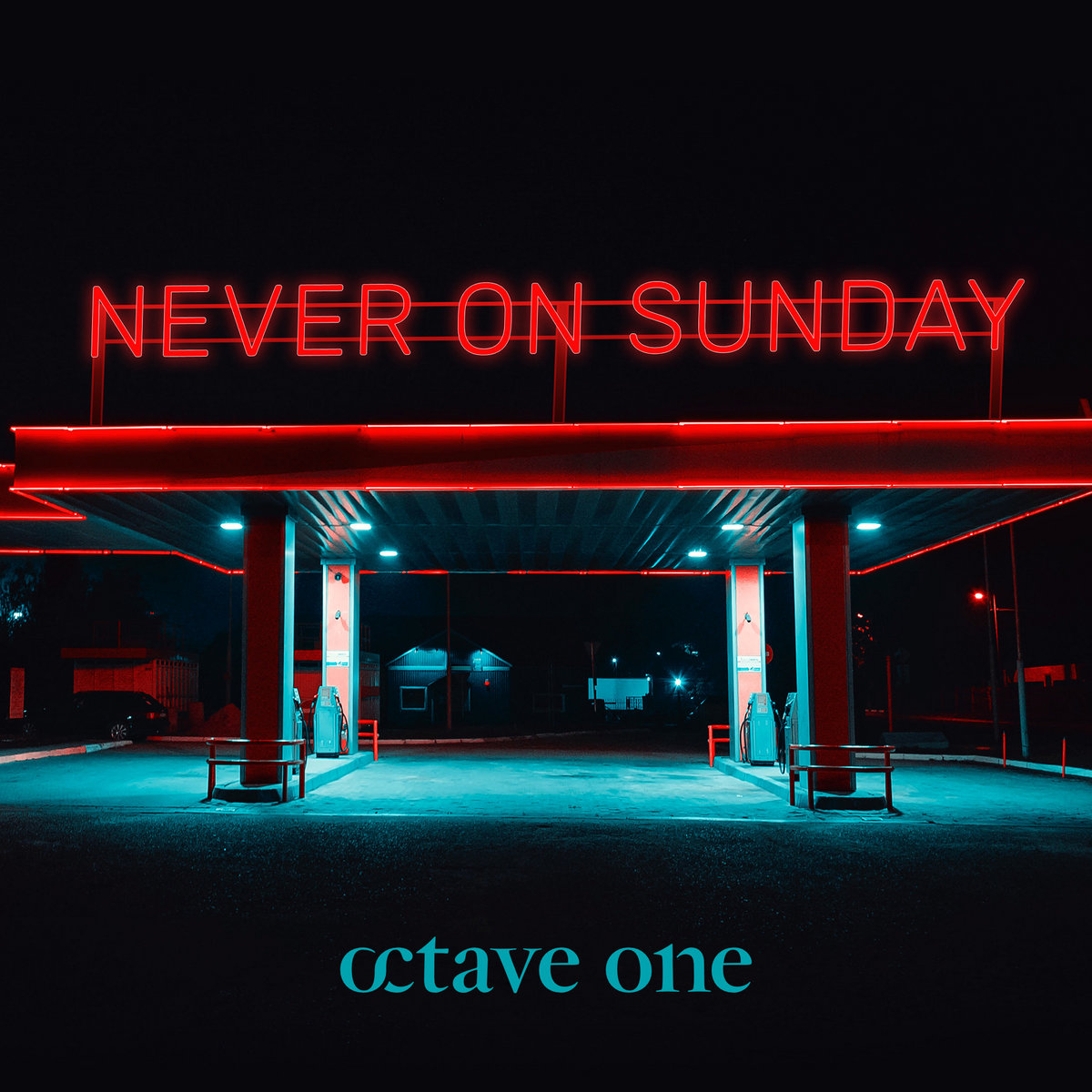
Never On Sunday started as an EP in 2021, headed by the single Contemplate which Octave One recorded with vocalist Karina Mia. Gradually it expanded, with new productions and a clutch of video productions which the brothers are now able to release as an album.
These are the brothers Lenny and Lawrence Burden, who formed Octave One in their Detroit base and have been releasing music for over three decades. Never On Sunday is their first long player in five years.
What’sthemusiclike?
The rolling beats and Karina Mia’s introspective vocal are a good match on Contemplate, and Mia makes a strong contribution to similarly moody cuts The Bearer, where a powerful rhythm gets to the centre of the dancefloor, and Price We Pay, an expansive number.
Lifelike is an evocative instrumental, with metallic glints at the edges, while Tiers gets down to four-to-the-floor business, opening out into a widescreen panorama. Soon After carries a more mysterious profile, as does Mona, while A Moment Of Truth has a relatively coarse string sound, bringing tension to its otherwise foursquare rhythmic profile and building to a powerful finish.
There is a noticeable scene change for Metal Forest, where a serene, fluorescent loop passes between the imaginary trees. Soon a distorted rhythm sets a slow pace, and the area teems with life.
Does it all work?
Pretty much. There is a satisfying ebb and flow in the tempo variations, and also in the blend between instrumentals and vocals, and a an attractive set of bonus tracks which include instrumental versions of the vocal tracks, plus a bruising Skream remix of The Bearer.
Is it recommended?
It is – the Detroit legacy continues to stretch onwards, and Octave One are an outfit right at the forefront of its growth.
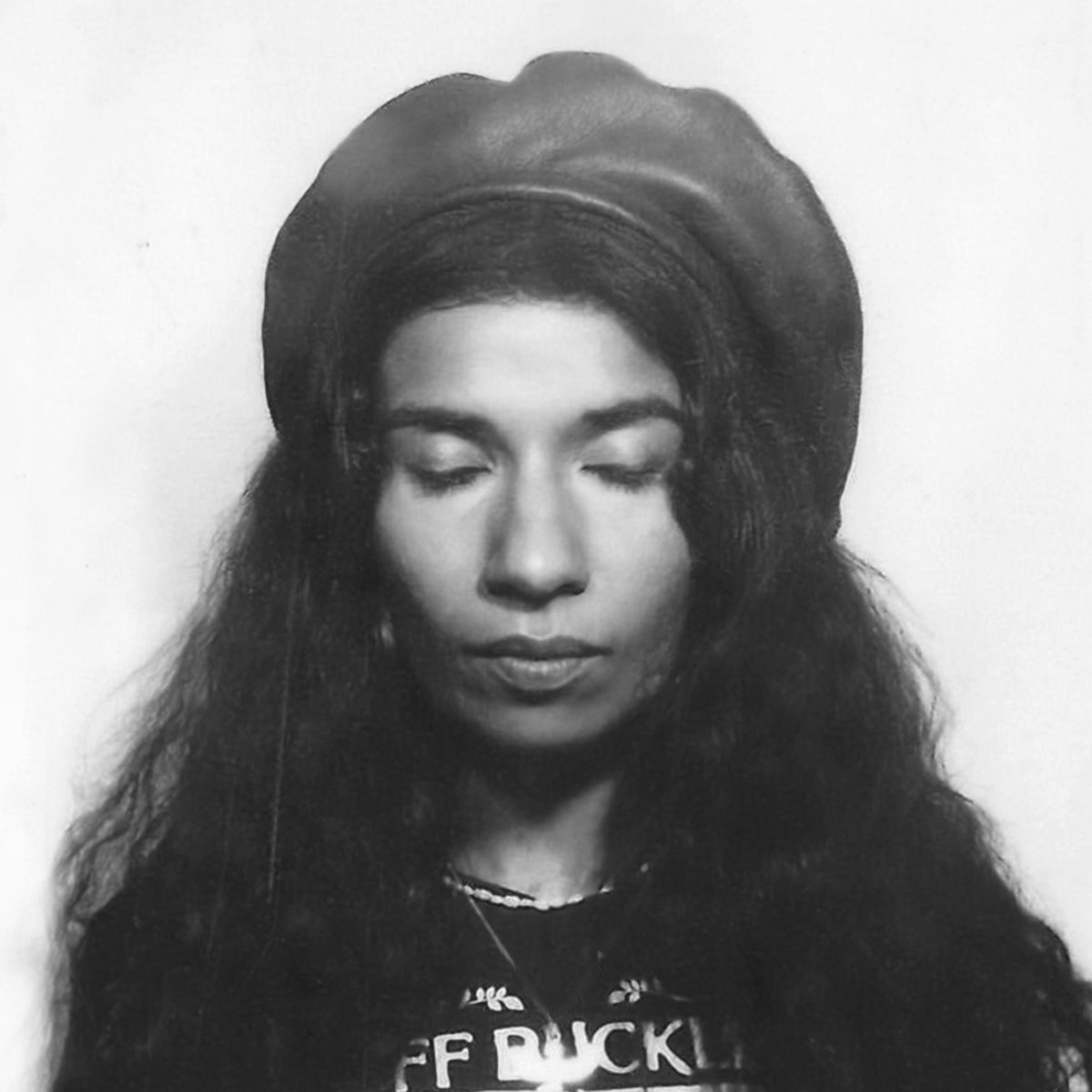
DREAMER, Nabihah Iqbal’s follow-up album to her debut Weighing Of The Heart, stands as a story of resolve in the face of considerable hardship.
In early 2020, just as the pandemic was beginning to take hold, Iqbal’s studio was burgled and all her work lost – including the album on which she was working. By this time she was suffering from extreme fatigue and had sustained a broken hand, but worse was to come as her grandfather suffered a brain haemorrhage, and she had to travel to Pakistan to be with the family.
The relocation was unexpectedly beneficial for her music, as she returned to basics away from the electronic trappings, using an acoustic guitar and harmonium to make much of her music. Although the genesis of DREAMER was changed with her experiences, Iqbal found inner strength and power for her music, adding new colours and shades to her sound.
What’sthemusiclike?
Having read the story behind the music you might expect a morose, navel-gazing album – but nothing could be further from the truth. Instead what we have here is music full of rich colours, resolve and positivity, finding an inner strength and power.
The shimmering textures of In Light set the scene, brighly coloured and soaked in heat. This is a theme continued by the sweet melancholy of Dreamer, but which reaches a peak on Sunflower, a heady rush akin to being in the middle of a dancefloor breakdown in the mid 90s. “Count the steps of the sun, comfort me sweet golden one”, speaks Iqbal poetically.
As the album progresses so more acoustic themes are revealed. The descriptive Lilac Twilight presents a rich acoustic picture, while the final three tracks, of a more thoughtful persuasion, offer an aside to self over largely non-digital sound pictures. By contrast, Gentle Heart presents a sumptuous deep house landscape, while Aky River reaches even more vividly for the light, with a strong beat in tow.
Does it all work?
It does. Iqbal’s music casts an unusual light, in a good way – and the lyrical content, while relatively sparse on occasion, is always meaningful. The balance of instrumental and vocal is just right too,
Is it recommended?
It is – this is a rather special album, and responds well to being played at volume!
Kirk Degiorgio has been a musical explorer throughout his long career, and Modal Forces / Percussive Forces finds him turning down a new road. This is an album that turns its head back towards the 1970s, looking to recreate the format of a library music album.
This sort of album could be made by top notch musicians but with their eyes squarely on composing music specially for television or advertisements, providing incidental music or smaller, jingle-sized clips. In making this record Degiorgio set himself some strict criteria, giving himself a maximum of two minutes for the majority of the tracks.
The 16 recordings zip by in the album format, setting scenes and providing a rich tableau of jazz-laced grooves.
What’sthemusiclike?
Authentic. Degiorgio’s grounding in jazz, funk and techno serves him very well here, for he has a great instinct of how to introduce his melodic lines – whether in treble or bass – and how to set them to a rich library of percussion, played live by session drummer Chris Whitten.
They clearly had a lot of fun if these recordings are anything to go by, from the easy disposition of Amurru, a bass-driven number in triple time, to the grit in the groove of Baltimore. There are some really good grooves in Chicago Shift, likewise the percussive Cincinnati Sunrise and Harlem – but by contrast The Oakland Feel is smoother. All are written with an eye on the dancefloor, but they satisfy all sorts of scene-setting criteria too. It’s easy to imagine a few detectives flexing their muscles and cocking their weapons to this music!
Does it all work?
It does. The only regret is that some of the tracks are good enough to run on for at least double the length, and make a few people very happy on a dancefloor somewhere! Maybe Degiorgio has longer edits that might be made available in time?
Is it recommended?
It is. An excellent, fun album – and another musical discipline that Kirk Degiorgio has successfully mastered!
Orsino Ensemble [Adam Walker (flute), Nicholas Daniel (oboe), Matthew Hunt (clarinet), Amy Harman (bassoon), Alec Frank-Gemmill (horn), Peter Sparks (bass clarinet)]
Britten Movement for wind sextet (1930) Reicha Wind Quintet in E flat major Op.88/2 (1811) Janáček Mládí (1924)
Wigmore Hall, Monday 5 June 2023 1pm
by Ben Hogwood
This attractive programme of works for wind ensemble began with a rarity.
Benjamin Britten seldom wrote for wind – a shame, since his writing for the instrumental family as soloists or in an orchestral context is remarkably assured. The Movement for Wind Sextet performed here by the Orsino Ensemble is thought to have been a response to Janáček’s Mládí – and is scored for the same forces. This account was shady and elusive to begin with, reflecting its elusive melodic and harmonic figures. There was beautiful control from Nicholas Daniel’s oboe solo before a quicker section featured some lovely ‘burbling’ sounds from the clarinets, oboe and flute pushing for the higher reaches. Ultimately this piece remains beyond reach, an intriguing if slightly frustrating sign of what might have been had Britten committed more wholeheartedly to the wind ensemble.
It made a welcome change to hear the music of Anton Reicha. Born in Bohemia in 1770, Reicha – a flautist – soon found himself leading the court orchestra in Bonn, where his musicians included a certain viola player named Beethoven. Moving on to Paris, Reicha taught at the Conservatoire, where his pupils included Berlioz, Franck and Liszt. In spite of these big-name links, his own music is not heard as often as it should be. He did however write prolifically for wind ensemble, completing 24 accomplished quintets, which are among his most-heard compositions.
The Wind Quintet in E flat major is a particularly attractive example, and received the ideal performance here. The Orsino Ensemble began with a brightly voiced Lento, with the added plus of Amy Harman’s characterful bassoon in the lower register as the ensuing Allegro began. This provided the impetus for the ensemble to exchange attractive melodies, enjoying the beautiful sonorities a wind ensemble can create. The Menuetto had a lovely lilt to its triple time, with busy inner parts to support the genial melody. The third movement also had a winsome lilt to its rhythmic profile, albeit a good deal slower – and with lovely operatic solos from oboe and clarinet. The perky last movement added humour to the mix, with some thoroughly enjoyable interplay, delivered here with virtuosity and style.
Janáček’s sound world is immediately different to those around it – as is the case with the intriguing wind sextet Mladi. Written as a ‘memoir of youth’, and composed around the same time as his masterpiece The Cunning Little Vixen, the work looks back to a childhood in Hukvaldy. Premiered in Brno in 1924, it was first performed in Britain – at the Wigmore Hall in front of the composer – in 1926.
The conflicting accounts of youth, refracted through the mind of a 70 year-old composer, are fascinating to the ear, with joyful moments tempered by unexpected, melancholic asides. There is however an underlying positivity running through the music.
The Orsino Ensemble enjoyed the raucous folk-based tunes along with the doleful asides that are such a characteristic of his work. The rich shades of colour were ideally exploited. Shadows lengthened over the second movement, depicting the composer and his mother parting at a train station. The third movement had the vigour of youth, with some sparky themes, while there was a motoric element to the last theme, generated by the horn – before more complementing aspects of joy and melancholy.
This was a very fine concert, with an encore dedicated to the recently passed Kaija Saariaho. Nicholas Daniel introduced the second of Oliver Knussen’s 3 fantasies for wind quintet, preceded by the poem How Sweet To Be A Cloud, part of the composer’s Hums and Songs of Winnie-the-Pooh. The sonorities we heard here were unexpectedly true to Saariaho’s sound world, and formed a characteristically striking memorial.
For more livestreamed concerts from the Wigmore Hall, click here
At the age of 87, one of Britain’s national musical treasures continues her 21st century renaissance. Folk music queen Shirley Collins lost the use of her voice to the condition of dysphonia for 37 years, haunted by the end of her marriage to Ashley Hutchings.
In the last eight years her recovery has been crowned by the release of two fine albums for the Domino label – Lodestar and Heart’s Ease – and renewed interest in her writing. She has literally rediscovered her voice – and Archangel Hill continues that convalescence as a love letter to her home county of Sussex.
What’sthemusiclike?
This is folk music as it is meant to function – simple yet deeply moving, music that tells the story of a deep-rooted tradition. Collins is a reverent custodian of the music she has chosen here, and even the new compositions sound as if they have been around for a long time.
As a vocalist, she is in her best shape ever. Collins’ voice is like a beautifully aged tree, proud to show its age and revealing all the different layers of a life which, while difficult, can still be said to have been well-lived.
Along the way she pays tribute to her late sister Dolly, with a profound rendition of Fare Thee Well My Dearest Dear and Lost In A Wood. Her storytelling is peerless, able to shade the pictures exquisitely as she moves from the outward looking The Captain With The Whiskers to the relative darkness of Oakham Poachers.
Along the way she has sterling support from her regular troupe of musical collaborators, who have the chance to come into their own for the sparky instrumentals June Apple and Swaggering Boney. Offering a contrast to these are some moments of deeply strange and enchanting music, such as those found in High And Away, a new song telling the story of Collins’ meeting with Arkansas singer Almeda Riddle.
Does it all work?
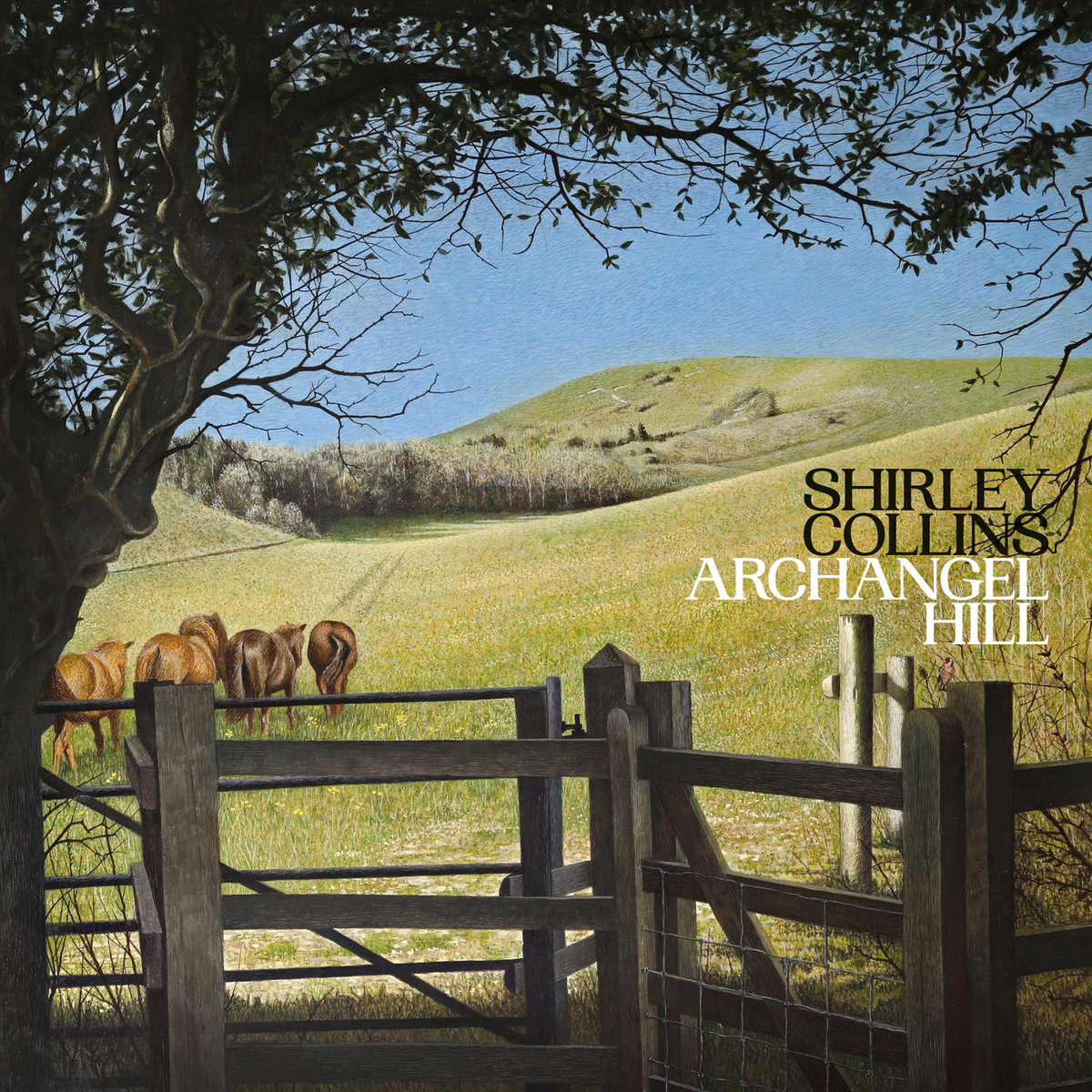
It does. Collins sings with great instinct and subtle power, bringing her message across with great clarity. The cover picture, a painting of the local landmark Archangel Hill – otherwise known as Caburn – is the icing on the cake.
Is it recommended?
Yes, wholeheartedly. Shirley Collins is an artist we should treasure, one who holds the key to some incredibly important British musical traditions. The glint she still has in her eye would suggest that even now she has more to give.
Listen
Buy
You can listen to clips from Archangel Hill and explore purchase options on the Domino website