Unknown's avatar

About Arcana

My name is Ben Hogwood, editor of the Arcana music site (arcana.fm)

Switched On – Akusmi: Fleeting Future (Tonal Union)

reviewed by Ben Hogwood

What’s the story?

Fleeting Future may be the title, but the debut album from Akusmi – aka multi-instrumentalist Pascal Bideau – was actually recorded between 2017 and 2019 in North London.

You would also be hard-pressed to guess the location of the recording, for Akusmi’s music falls heavily under the influence of gamelan writing. For his colourful scores, Bideau linked up with Berlin to include contributions from saxophonist Ruth Jelten, trombone player Florian Juncker and drummer / percussionist Daniel Brandt, of Brandt Brauer Frick.

As well as taking on gamelan principles, Fleeting Future draws on Japanese culture and art for its inspiration. Neo Tokyo is a reference to Katsuhiro Otomo’s Akira, set in a futuristic metropolis, while Yurikamome is an imaginary visit to Japan. Throughout, Bideau brings the worlds of fantasy and future reality into close alignment, writing in a style that suggests the influence of so-called ‘minimalist’ composers.

What’s the music like?

To call this music minimalist would do it a disservice, however – for there is a lot going on here, with bright colours and strong motifs blending in together.

There is also a genuine feeling of excitement coursing through this music, with the spirit of discovery at every turn. The pocket-sized melodies of the title track, placed first, are maximal rather than minimal, with a very strong forward momentum driven by the saxophone and trombone lines. Here Bideau evokes the shorter works of composers such as Michael Torke.

The multilayered Sarinbuana is more complicated, with a taught rhythm section under the watchful eyes of Daniel Brandt and long phrases from the saxophone stretching over the top. Divine Moments of Truth is guitar-based, its counterpoint expanding into more electronic guises, while Neo Tokyo begins with stop-start phrases, quickly picking up potential energy in the manner of a rapidly accelerating train. Longing For Tomorrow brings the rasp of the trombone to the front, while Cogito does the same with a cheery saxophone riff. Concrescence shows off some lovely colours, powered by marimbas but blossoming with rich woodwind.

Does it all work?

It works incredibly well. Bideau’s music has a vitality and verve about it that is all too often lacking with instrumental music, and the jazzy touches around the edges – which sometimes come to the fore – show that he can be relied upon to deliver improvisations of the highest quality too.

Is it recommended?

Yes. One of the freshest albums I have heard in a long time, with a great deal of infectious, positive energy.

Listen

Buy

Switched On – James Alexander Bright: Float (!K7)

reviewed by Ben Hogwood

What’s the story?

A second album for James Alexander Bright, recorded in the Hampshire countryside over the past year. It is a team effort, with guest slots from the vocalist Fink, drummer Feiertag, vocalist Kerry Leathem and a number of close contacts, including manager Benjamin Smith, who plays bass on the longer closing track to the album, Be Strong.

What’s the music like?

If ever an album sang “SUMMER” at you, then it’s this one. Bright has a lovely voice, creamy in tone and warm in its delivery, not a million miles from Yannis Philippakis of Foals. Sometimes the rhythms he uses are not far from that band either, especially the edgy, tripped up beats of Soul.

Yet those similarities are coincidental, for Bright secures a very different mood, blissful in its countenance. This is poolside listening of the best kind, with songs that are dreamy but well written, lovingly crafted guitar lines seeing them on their way.

The rhythms are fresh and inventive, with a kind of light bossa nova accompanying Drink This Water. Warmth courses through the whole set of songs, with even a title such as Ice Cold bathing in lovely warm keyboard sounds.

The instrumentals reinforce the hot temperatures. Grow presents a lovely warm weather image of the ebbing of a tide, or the distant sound of bells, through its intricate synth work.Shepherd has a woozy, drowsy feel to it, with an absent minded guitar adding contented comments to a firmer beat almost of deep house origins.

Perhaps the best moment is a collaboration with Fink, the two voice types complementing each other for Sundown, and its vocal couplet “I can see it working out”. It is complemented by the closing Be Strong, an extended piece that is simultaneously urgent (rhythm) and extremely chilled (keys)

Does it all work?

It does – and Float has the ideal proportions and mood structure to boot.

Is it recommended?

Yes. The current hot spell in James’s home country is to his distinct advantage, for Float works a treat with the doors and windows thrown open, or accompanying a poolside reverie. Add it to your collection!

Listen

Buy

Switched on – new music from Stereolab

Arcana bring good news to fans of Stereolab – having just announced a new album, the band are going back on a European tour in the Autumn.

The album first – and it’s the fifth in the popular ‘Switched On’ series that Warp Records have been exploring. Pulse of the Early Brain [Switched On Volume 5] will be released on September 2, via Warp Records and Duophonic UHF Disks. It will include some intriguing and desirable miscellany from the band, with its lead track, Robot Riot, a previously unavailable piece of music which was written for a Charles Long sculpture:

Also on the tracklisting for Pulse of the Early Brain are two Nurse With Wound collaborations from 1997, a second commission for a Charles Long sculpture, Unity Purity Occasional, and two tracks, Spool of Collusion and Forensic Itch, that made up a rare black vinyl 7” with the Chemical Chords LP in 2008.

This release includes both old and new, however, going back to the Low Fi EP, released on Too Pure in 1992, for four tracks (Low Fi, [Varoom!], Laisser-Faire and Elektro [he held the world in his iron grip].

And so it continues – for a total of 16 tracks. For full details visit the Stereolab Bandcamp site…and for a review of the album when it drops make sure you check back to Arcana!

In concert – Soloists, University of Birmingham Voices & CBSO / Martyn Brabbins: Stanford: Requiem

stanford-requiem

Stanford Requiem Op.63 (1896)

Carolyn Sampson (soprano), Marta Fontanals-Simmons (mezzo-soprano), James Way (tenor), Ross Ramgobin (baritone), University of Birmingham Voices, City of Birmingham Symphony Orchestra / Martyn Brabbins

Symphony Hall, Birmingham
Saturday 25 July 2022

Written by Richard Whitehouse

Its official season may have ended over a week before, but the City of Birmingham Symphony Orchestra was heard this evening in a rare revival of a work whose premiere it gave 125 years ago at the Birmingham Triennial Festival – that of the Requiem by Charles Villiers Stanford.

As historian Paul Rodmell recounted in his programme note, this Festival saw the launching of a host of major choral works during its 128 years of existence – notably Mendelssohn’s Elijah in 1846 and Elgar’s The Dream of Gerontius in 1900. That the latter piece was soon regarded as trailblazing despite a largely unsuccessful premiere might be thought ironic given that, just three years earlier, Stanford’s Requiem had been received with some acclaim only to fall into obscurity along with the greater part of his sizable output in the wake of the First World War.

Not unexpectedly, Brahms instead of Berlioz or Verdi is the main presence – thus the Introit with its understated opening theme that recurs often in the work, while its distinction between sombre choral and aspiring vocal music is further emphasized by those expressive contrasts in the Kyrie. The vocalists come into their own in a Gradual whose orchestral textures find this composer at his most felicitous. A telling foil, moreover, to the Sequence with its menacing Dies irae or proclamatory Tuba mirum, then what follows bringing the soloists into individual focus: hence the heightened fervour of Carolyn Sampson, the more circumspect eloquence of Marta Fontanals-Simmons, slightly hectoring impulsiveness of James Way, and the brooding power of Ross Ramgobin; though the sequence overall exudes an almost symphonic cohesion.

Arguably the finest portion, however, comprises the final three movements. The Offertorium makes much of the contrast between warmly martial and intensively fugal sections, while the Sanctus has an ethereal radiance which carries through the ruminative Benedictus and into deftly resounding Hosannas. The funereal orchestral music preceding the Agnus Dei affords the darkest emotion of the whole work, but this only enhances the ensuing Lux aeterna with its serene fatalism that Frederic Leighton – artist and friend of Stanford, whose death early in 1896 was the catalyst – would doubtless have appreciated. Throughout this performance, the University of Birmingham Voices responded with alacrity to choral writing whose poise and translucency were always in evidence – not least in the most earnestly contrapuntal passages.

Special praise for Martyn Brabbins who, whether or not he considers it a masterpiece, directed this work with unwavering conviction. The balance between soloists or chorus and orchestra might largely take care of itself, but orchestral textures need astute handling if these are not to risk uniformity or even monotony and Brabbins drew a committed response from the CBSO such that the autumnal hues of Stanford’s writing came through unimpeded. Good to hear this performance is being released commercially, as it did full justice to a largely neglected work.

A last thought. One of Stanford’s earlier choral pieces is The Resurrection, a setting of the ode by Friedrich Klopstock. Maybe when the CBSO performs Mahler’s Second Symphony in a future season, it would be worth programming these assuredly very different works together?

For more information on the CBSO visit their website. For more information on Charles Stanford, meanwhile, visit the website of The Stanford Society

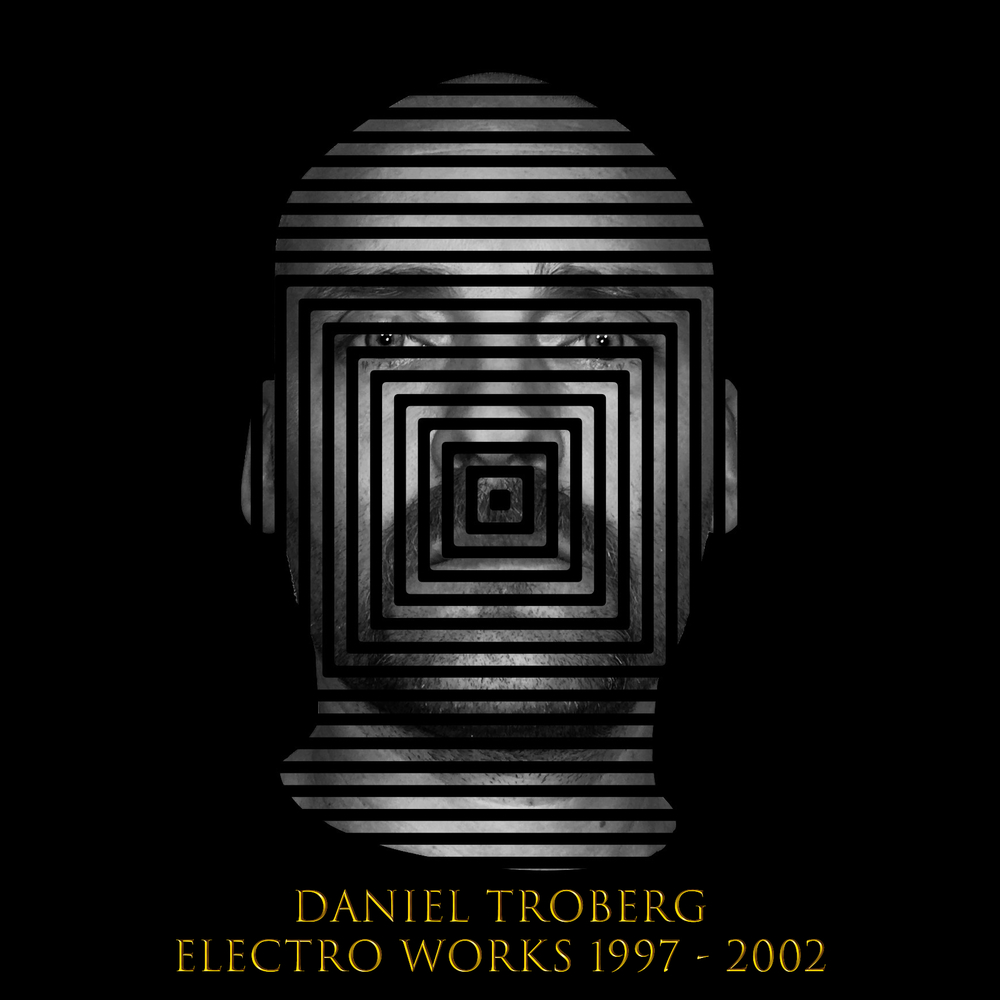
Switched On – Daniel Troberg: Electro Works 1997-2002 (Sonidosys)

reviewed by Ben Hogwood

What’s the story?

A trip down memory lane for Daniel Troberg, the Finnish DJ and producer now located in Los Angeles  where he is resident for Transition @ Dublab. A lot has changed for him musically since 2002, but this collection brings together his solo output from the turn of the century.

What’s the music like?

Troberg explores a mixture of approaches. At times his music feels very minimal, and certainly is in the melodic department, but the variations in texture and clumps of activity behind the front line means there is actually a lot going on.

Some of these tracks are more experimental, and pull at the outer reaches of rhythm and melody. The cinematic Bad Dream is one of these, setting a weird and at times unsettling scene with its unusual harmonies. The slower Abyss looks down similar avenues.

On the other side, Zzz proves its worth as one of the best tracks with a combination of driving rhythms, friendly chatter in the midrange and a backdrop of cool keys. The more minimal Talkback gives off a rich array of colours from its dancing synth lines, while the propulsive Epax is a chunky piece of electro, again with minimal melody but punching its weight comfortably. Intruder is cut from similar cloth, while OBX2 is notable for a distinctive, thick chord that recurs at regular intervals.

Does it all work?

Largely. Troberg’s electro tracks are well crafted and impeccably scored. They generate a good deal of kinetic energy, if not always getting beyond a darker and minimal melodic approach.

Is it recommended?

Yes. It’s easy to see why figures such as Laurent Garnier, The Hacker and Marcel Dettmann have expressed support for Troberg’s collection, as fans of those artists will find much to appreciate here.

Listen & Buy

Electro Works 1997 – 2002 will be released on July 15 on Sonidosys. In the meantime, visit Daniel Troberg’s Soundcloud page for more tracks