Unknown's avatar

About Arcana

My name is Ben Hogwood, editor of the Arcana music site (arcana.fm)

BBC Proms – Steven Isserlis, LPO / Jurowski: Stravinsky, Bach, Walton & Hindemith

jurowski-proms

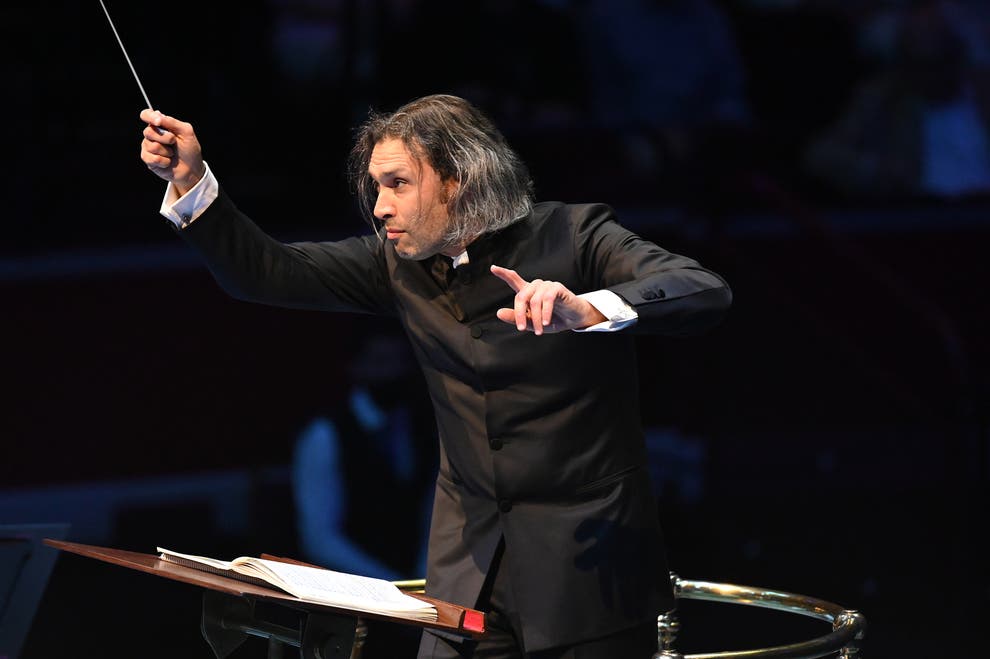
Steven Isserlis (cello, below), London Philharmonic Orchestra / Vladimir Jurowski (above)

Stravinsky Jeu de cartes (1935-6)
Walton
Cello Concerto (1955-6)
Bach (arr. Goldmann)
14 ‘Goldberg’ Canons BWV1087 (1742-4 arr. 1977)
Hindemith
Symphony ‘Mathis der Maler’ (1933-4)

Royal Albert Hall, London
Thursday 12 August 2021

Written by Richard Whitehouse; pictures (c) Chris Christodoulou

Vladimir Jurowski this evening concluded his highly impressive 14-year tenure as Principal Conductor of the London Philharmonic Orchestra with a thoughtfully conceived and well-proportioned programme; one which typically played to this orchestra’s strengths as much as to his own.

Although it can seem something of an ‘also-ran’ in the context of his compositions from the period, Stravinsky’s Jeu de cartes lacks for little in terms of that rhythmic effervescence as was engagingly evident in this performance – Jurowski pointing up the humour and even occasional glimmers of pathos that inform what can easily seem music written on autopilot. The LPO responded with a trenchancy and alacrity as held good throughout this ‘ballet in three deals’, the tonal punning of whose culmination at least ensures a humorous outcome.
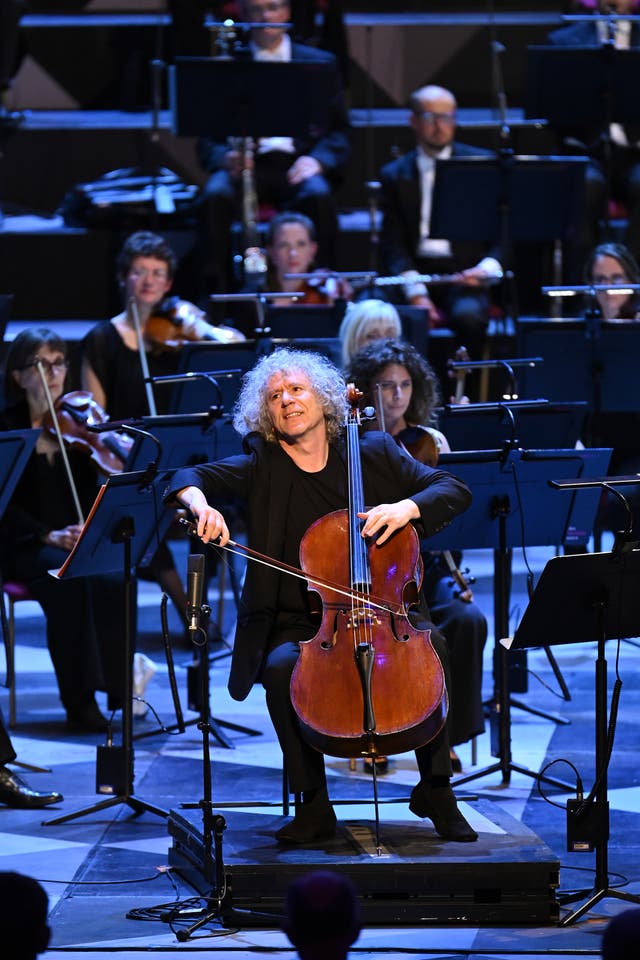
Walton’s Cello Concerto used to be regarded with even less favour than Stravinsky’s ballet, but this piece (written by its composer at much the same age) is now seen as more than the enervated recycling of past success. Steven Isserlis (above) has long advocated its cause, and there was little doubting his commitment in a reading of perceptiveness and finesse. At times his spare and even fragile tone tended to recede into even so restrained and transparent as this, Jurowski mindful to rein in those brief climactic moments of the outer movements, but the artful interplay of the central scherzo did not lack for incisiveness or irony. Nor, after the second of the solo variations in the finale, was there any absence of rapture as soloist and orchestra are reconciled in drawing the music through to its close of fatalistic acceptance.

After the interval, a novelty in an arrangement by composer-conductor Friedrich Goldmann (1941-2009) of the 14 canons latterly identified from Bach’s printed copy of his Goldberg Variations. Arranged for a Stravinskian post-classical orchestra, these intricate and arcane studies in canonic dexterity emerge from gentle aridity to luminous elaboration with spare, methodical elegance such as intrigues and disengages in equal measure. Hardly something one expected to hear at such an occasion or this venue, though worth hearing all the same.

In its reiterating the values of Enlightenment humanism, moreover, this prepared admirably for Hindemith’s Symphony ‘Mathis der Maler’; premiered on the cusp of Germany’s descent into barbarous self-destruction, and a plea from the committed – however reluctantly – artist for a rational response as might be worth emulating today. The alternately radiant and tensile unfolding of Concert of Angels was perfectly judged, as too the plaintive resignation of the brief if affecting Entombment. The Temptation of St Anthony then made for an elaborate finale, but Jurowski paced it superbly – the plangent central interlude thrown into relief by the impassioned episodes on either side, then its anguished introduction by an apotheosis whose ultimate wresting of triumph from adversity remains thrilling as a statement of artistic intent.

A performance to savour, then, not least as John Gilhooly presented Jurowski with the Gold Medal of the Royal Philharmonic Society in recognition of services to music – an accolade with an illustrious history, which can rarely have been more deserved than on this occasion.

You can find more information on the BBC Proms at the festival’s homepage
New music: Poppy Ackroyd

One Little Independent have today announced the return of Poppy Ackroyd with new music for piano. Her fourth album Pause, set to be released in November, is a collection of ten pieces for the keyboard which, in the label’s words, ‘utilize the full instrument, with a mixture of inside piano strumming and playing the keys’.

Evidence of this can be seen in the new track Seedling, and its accompanying video directed by Jola Kudela. She collected small pieces of plants and leaves, submerged them in water and put them in her freezer, then observed the process of defrosting, filming it in time-lapse. The second part of the video was filmed with infrared camera. “I was trying to imagine the process of nature waking up, beginning with a seed, that then slowly transforms itself into a seedling”, says Kudela. “So, we begin with a frozen environment that encapsulates the seed – it seems trapped and immobilised by the icy world. Then gradually it starts to warm up and defrost, fighting with the power that has been holding it frozen.”

Poppy gave some background to Pause. “For previous albums almost as much of the creative process was spent editing and manipulating recordings as it was composing at the piano, however after having my son, I struggled to spend time sat in front of a computer. The only thing I wanted to do while he was still small, if I wasn’t with him, was to play the piano. In fact, much of the album was written with him asleep on me in a sling as I used any quiet moment to compose.

It therefore made sense that this album should be a solo piano album. I used extended technique – playing with sounds from inside the instrument – like I do in my multi-tracked recordings, however it was important to me that every track on the album could be entirely performed with just two hands on the piano.”

Watch and enjoy below…while looking forward to Poppy’s full-length return.

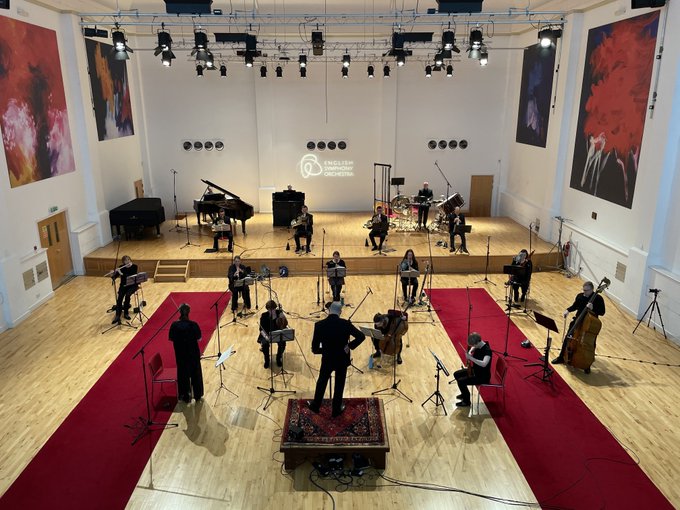
Live review – April Fredrick, David Stout, English Symphony Orchestra / Kenneth Woods: Bartók – Bluebeard’s Castle

mahler-9-woods

April Fredrick (soprano, Judith), David Stout [baritone (Bluebeard) / speaker (Prologue)], English Symphony Orchestra / Kenneth Woods

Bartók arr. van Tuinen / Karcher-Young Bluebeard’s Castle (1911/12)

Wyastone Concert Hall, Monmouth
Recorded June 16-17 2021 for online broadcast, premieres 13 August 2021

Written by Richard Whitehouse

The English Symphony Orchestra’s season of online concerts drew to its close tonight with a performance of Duke Bluebeard’s Castle, the only opera by Bartók and seminal work on the cusp between the late-Romanticism and nascent Modernism from the early twentieth century.

While its libretto by Béla Balázs is susceptible to interpretation, that concerning the ultimate impossibility of meaningful human communication is surely the decisive factor for Bartók’s setting of what became his longest work and his most explicitly personal statement. Yet this emotional scope never results in a lack of formal cohesion or expressive focus, ensuring that the duo-drama unfolds both inevitably and inexorably towards a fateful denouement that – by no means coincidentally – brings the piece full circle in terms of its underlying introspection.

A piece, then, of epic sweep but whose climactic moments only rarely dominate music that is (surprisingly?) well suited to reduction of a kind undertaken here by Christopher van Tuinen and revised by Michael Karcher-Young. The 25-strong ESO copes ably with those undulating contrasts in mood and texture that underpin the traversal of the protagonists through the castle and its environs, through to a culmination whose outcome feels no less tragic for having been ordained almost from the outset – a fable of disillusion whose impact comes across unscathed.

Of course, such considerations are relative to the success of the two singers in conveying the range of their respective roles. Whether or not she had previously sung that of Judith, April Fredrick has its full measure as she moves from confidence, via wariness and imploration, to reluctant acceptance of the part she must play in the completion of a journey that other wives have undergone before her. Rendered with vibrancy but no lack of finesse, this is a perceptive assumption, and one which Fredrick will hopefully be able to repeat on stage before too long.

Not that David Stout is necessarily upstaged in his portrayal of Bluebeard – emerging here as no misogynist, still less a murderer, than a conflicted figure whose avowals of love can never outweigh those inherent failings of self that have led to his repeating the same pattern of loss as before. Having previously taken on the spoken Prologue with thoughtful anticipation, Stout projects the role with no mean impetus as well as a keen eloquence that comes to the fore in those fateful later episodes when the sixth and seventh doors have almost to be prized open.

Otherwise, the ESO plays to its customary high standards throughout a score which, if never as radical as works of this period by Schoenberg or Stravinsky, remains a testing assignment with the integration of overtly expressionist tendencies into music of a Straussian opulence. This reduction loses little in either respect, due notably to a piano part as achieves more than textural filling-in then a harmonium part adding substance and atmosphere in equal measure. Kenneth Woods paces these 65 minutes with an acute sense of where the drama is headed.

Indeed, the only real proviso is the end-credits being accompanying by music from earlier in the opera. Surely it would be possible to have silence for the one minute it takes for these to ‘roll’? Otherwise, this is an excellent conclusion to a worthwhile season of online concerts.

You can watch the concert on the English Symphony Orchestra website here

For further information on future English Symphony Orchestra concerts, click here. ‘Fiddles, Forests and Fowl Fables’ is now available from the English Symphony Orchestra Website.

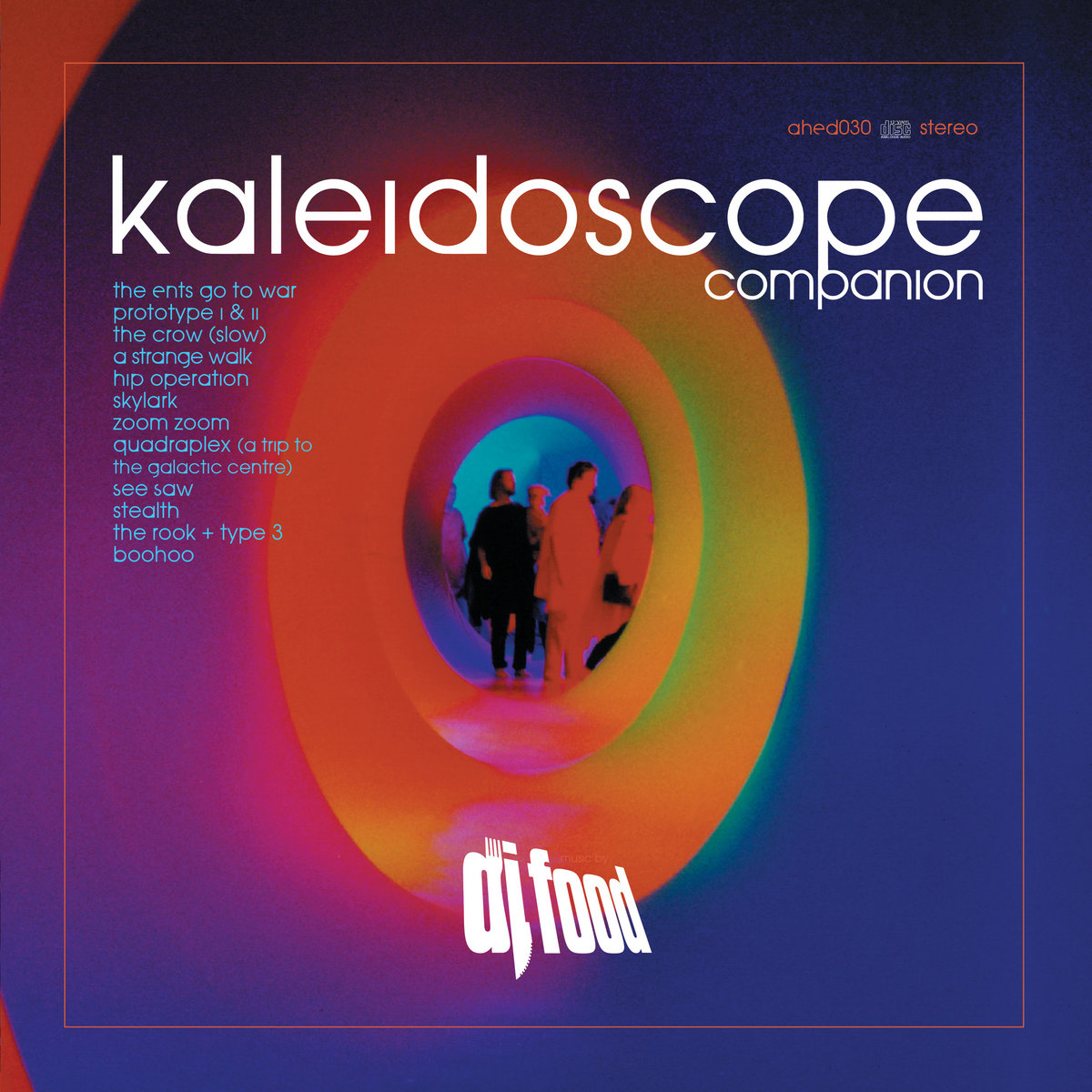
Switched On – DJ Food: Kaleidoscope Companion (Ninja Tune)

dj-food-kaleidoscope

reviewed by Ben Hogwood

What’s the story?

Strictly Kev and PC, the men behind DJ Food, can reveal just how productively they spent last year’s lockdown. Aware that it marked two decades since the release of Kaleidoscope, when DJ Food was a mysterious incarnation conceived by Ninja Tune founders Coldcut, the two rounded up music from their archives of the recording sessions. To their surprise the volume and quality of the material was such that Kaleidoscope Companion became possible. It is a collection of unreleased tracks, remixes and alternate versions, all closely related to the album but structured in such a way that a whole new opus has been created. Kev explains it best, as ‘not a new DJ Food album’, more ‘an old one that never was’.

What’s the music like?

Given that this electronic music is essentially 20 years old, Kaleidoscope Companion could have been written yesterday. That says much for the staying power of DJ Food, and how inventive the beats and sound pictures were in the year they were released. Here the quality of the compositions is immediately evident.

Take Skylark, exposed as a mini-masterpiece. With the crackling of the outdoors effectively evoked, an elastic bass line is established before a stringed instrument climbs through the textures and floats on the air effortlessly.

The Crow (Slow) is one of the welcome alternate versions, stretching its material into a gorgeous panoramic view that could easily last double the length it is given here. See Saw also offers reassuringly thick textures of an ambient persuasion, as does the closing Boohoo, with a serene string line that segues into softly humourous pitch bends at the end.

There are elements of spatial jazz here. Hip Operation (great title!) is an active story, building with white noise beats and detective-drama trumpets. Stealth, an alternative version of the Gentle Cruelty remix of The Ageing Young Rebel, is a nocturnal scene with a mellow but quite mournful flute tone. Its spoken word vocal, telling of self-obsession, is remarkably prescient for today’s times. The Rook + Type 3 takes a more cinematic turn, with another flexible bass and brief figures from strings and clarinet, while offbeat percussion flickers and flares in the background.

The collection’s centrepiece is Quadraplex (A Trip to the Galactic Centre), which starts without beats but then wanders seemingly into the middle of a clearing and a meditation in full swing, with thrumming percussion and a series of spatial effects. Blended from several different takes, it is a mesmerising piece of work.

Does it all work?

It does. The structure of Kaleidoscope Companion has been carefully thought through, and the positioning of Quadraplex in the middle splits the collection into three parts, with a meditative quarter of an hour at its heart.

The analogue clicks and crackles around the edges of many of the tracks are welcome, and the refusal of the music to comply to stricter digital confines serves it well too.

Is it recommended?

Yes. If you listened to this without knowing the author, you would bookmark it as a talent to keep an eye on, a source of new and exciting electronica. The fact that it is a companion to an already excellent and revered album only heightens the appeal, showing just how durable electronic music has proved to be. Fans of the Ninja Tune label will love it.

Stream

Buy


Listening to Beethoven #180 – Silvio, amante disperato, WoO 99/12

beethoven-fragment

Peanuts comic strip, drawn by Charles M. Schulz (c)PNTS

Silvio, amante disperato WoO 99/120 for soprano, alto, tenor and bass (1801-02, Beethoven aged 31)

Text Metastasio
Duration 10″

Listen

You can hear this fragment on the excellent site The Unheard Beethoven

Background and Critical Reception

This entry is more of a placeholder for a short song (26 bars) written by Beethoven as a product of his studies with Salieri. There seems to be some contention on when it would have been written – the IMSLP list of works, which this study has been using, says 1801-02 while the Unheard Beethoven resource speculates at 1795.

Thoughts

Although there is very little to listen to here, the existence of this piece is well worth noting, as we have had very little music for unaccompanied voices from Beethoven up to this time. From this fragment the mood seems downcast.

Recordings used

None as yet, other than the fragment heard from Unheard Beethoven – this link will download the small file

Also written in 1802 Zeller Sammlung kleiner Balladen und Lieder Z123

Next up 7 Bagatelles Op.33