Unknown's avatar

About Arcana

My name is Ben Hogwood, editor of the Arcana music site (arcana.fm)

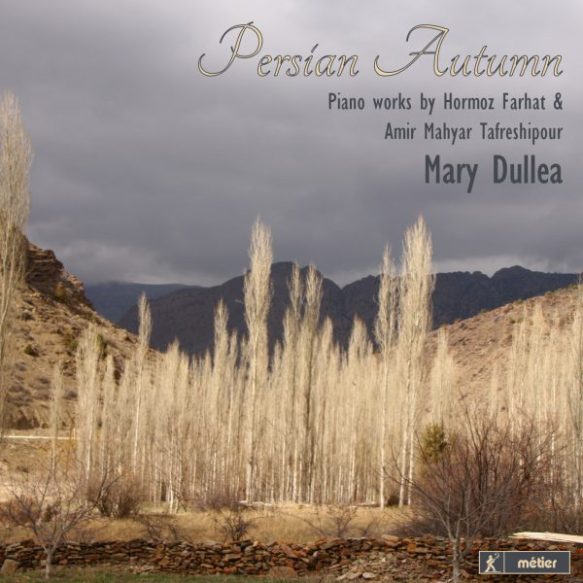
On record – Persian Autumn: Mary Dullea plays piano music by Farhat and Tafreshipour (Métier)

Mary Dullea (piano)

Farhat
Toccata (1952)
Piano Sonata no.1 (1955-7)
Piano Sonata no.2 (2010)
Tafreshipour
Yasna (1999)
Pendar (2013)
Shabahang (2017)
Celebration at Pasargadae (2006)

Métier MSV28610  [72’32”]

Producers Adaq Khan, Amir Mahyar Tafreshipour

Recorded 20-21 December 2019 at Menuhin Hall, Cobham

Written by Richard Whitehouse

What’s the story?

The always enterprising Mary Dullea releases an album of piano music by Iranian composers of the older and middle generations, both having been acclaimed on either side of the Atlantic for their highly contrasted yet equally imaginative amalgam of Eastern and Western sources.

What’s the music like?

Hormoz Farhat (b1928) received his musical education in the USA and has resided in Ireland over four decades. Composing in all the main genres, he has also researched extensively into the Persian modal system, whose influence is evident throughout those works of his maturity.

Premiered by pianist and composer Alexander Tcherepnin, Toccata is among Farhat’s earliest acknowledged works – its alternating declamatory and ruminative manner resulting in music whose virtuosity gained widespread attention. Farhat was fortunate in his exponents, the First Piano Sonata being premiered and advocated by his teacher Lukas Foss – doubtless attracted by its formal rigour and tensile emotional trajectory. A restive opening Allegretto is followed by a subdued if hardly serene Adagio then a Moderato that quizzically elides between scherzo and intermezzo, before the final Rondo draws on motivic elements from earlier movements in its oblique while purposeful course toward the peremptory close. Coming over a half-century later, the Second Piano Sonata is more expansive but never unfocussed in its conception. The initial Allegretto outlines without articulating a sonata design, in what feels closer to a freely unfolding fantasia, then the central Largo yields an improvisatory and often confessional aura, countered by the final Animato in waves of tension and release on the way to a pensive close.

Having pursued musical studies in Esbjerg and London, Amir Mahyar Tafreshipour (b1974) has written a significant amount of chamber and instrumental music – as well as the first harp concerto by an Iranian composer. Recently, he has turned his attention to the operatic domain.

The four pieces recorded here attest to their composer’s acute sense of evocation and formal cohesion. Yasna refers to the Zoroastrian act of worship over an intensifying span as is both hieratic and incantatory, while Pendar – a term implying ‘thought’ and which is also the title of a series of pieces for solo instruments – unfolds as though a stream of consciousness that plays on listeners’ expectations in numerous and intriguing ways. Its title meaning ‘nocturne’, Shabahang was inspired by the crashing of waves against the coasts of the west of Ireland as also the south-east of Iran; its encroaching remoteness finding contrast with the often festive spirit, tempered by more contemplative aspects, of Celebration at Pasargadae – whose outer sections finding this composer at his most emotionally outgoing and uninhibitedly virtuosic.

Does it all work?

Yes, given the highly differentiated yet inherently personal manner by which both composers channel aspects of their heritage via overtly if never inflexibly European means. It helps that Dullea is so attuned to the musical idioms of these composers as also their technical demands.

Is it recommended?

Indeed. Sound is a little hard in more forceful or energetic passages, while remaining clear and well balanced throughout. Notes on each of these pieces are succinct but informative, and this is music which inquiring listeners and pianists alike should certainly find worth investigation.

Listen & Buy

You can get more information on the disc at the Divine Art website, where you can also purchase the recording. Meanwhile for more information on Amir Mahyar Tafreshipour, head to the composer’s website. For more on Mary Dullea click here

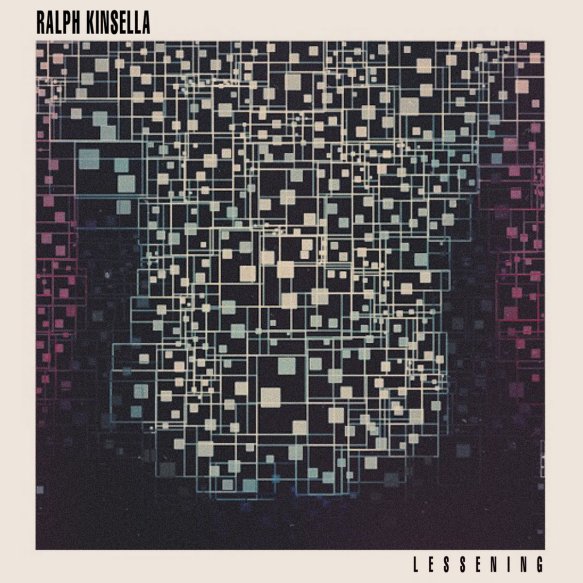
Switched On – Ralph Kinsella: Lessening (8D Industries)

reviewed by Ben Hogwood

What’s the story?

If you are a home producer you will immediately relate to the thoughts behind Ralph Kinsella’s debut album Lessening. Kinsella refers to ‘the poetics of the bedroom’, capturing the intimacy of our most private room for listening to and creating music.

The confined space is the stimulus for the ten tracks of Lessening, all recorded through lockdown in Kinsella’s Dumfries and Galloway. He talks of ‘the boondocks, interspersed with fragments of debris and flickering housing scheme street lights.’

What’s the music like?

Lessening is a set of ten tableaus with varying degrees of ambience and animation. Kinsella’s guitar is the main instrument, but he uses it sensitively among more ambient effects that often give a much bigger sound picture.

The subtly varied guitar sounds provide close up attention to detail or far off wisps of colour, and when the two elements come together, as they do in The Angel Of Raasay, the listener has the feeling of becoming airborne, especially with the ambient surrounds on headphones. That feeling is heightened on In The In-Between Light, where the music soars overhead on a bank of slowly changing effects, panning out to even wider vistas.

On the darker side the slow moving Suffuse has a similarly wide picture to go with its brooding harmonic backdrop, while the expansive Lung Noise, the album’s emotional centre, is similarly introspective but has a lovely mixture of cloudy keyboards to complement the bowed instrument in the foreground.

The layers of white noise laced around T(h)reads work as a comforting blanket, an explicit suggestion of shoegaze acts such as Slowdive, while Born On The Cusp works well with widescreen reverberation. Conversely the studied ambience of Gallows Hill has beautiful details for the ear to focus in on, with intricately picked guitar and woozy atmospherics working together.

Does it all work?

It does, because the structure of Lessening is ideal, giving the music a natural ebb and flow. Kinsella creates a winning mixture of blurred forms and much more studied portraits, portraying both the intimacy of the bedroom where the music will have been made but also the Dumfries and Galloway vistas outside.

Is it recommended?

Very much so. Any lovers of 1990s shoegaze will find much to dive into here, but so will those admiring more recent, post-classical efforts from the likes of Nils Frahm or A Winged Victory For The Sullen. It will be interesting to see what Kinsella turns his guitar to next, for his form of localized ambience creates memorable images of both time and place.

Stream

Buy

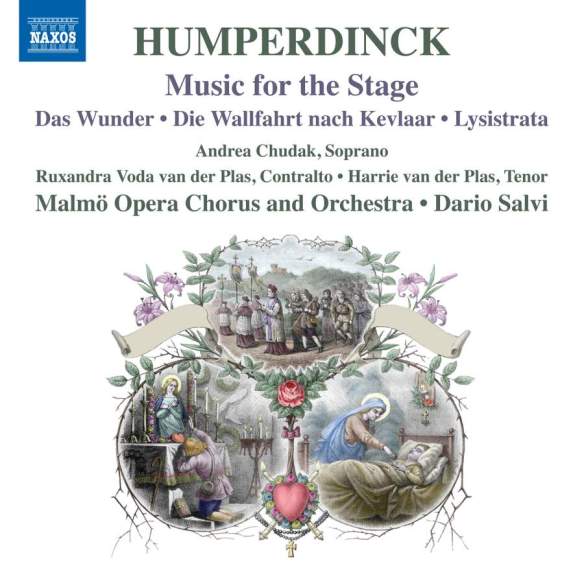
On record – Dario Salvi conducts Humperdinck: Music for the Stage (Naxos)

a Andrea Chudak (soprano); b Ruxandra Voda van der Plas (contralto); c Harrie van der Plas (tenor); d Robert Bennesh (organ); Malmö Opera Chorus and Orchestra / Dario Salvi

Humperdinck
Die Heirat wider Willen (1905) – Prelude to Act Two
Der Kaufmann von Venedig (1905) – Incidental Music (abce)
Das Wunder (1912) – Suite (arr. Lotter) (d)
Die Wallfahrt nach Kevlaar (1878) (acd)
Lysistrata (1908) – Incidental Music (e)

Naxos 8.574177 [73’27”] German texts can be found here: http://www.naxos.com/libretti/574177.htm

Producer / Engineer Sean Lewis

Recorded 13-17 August 2019 at Bengt Hall-salen, Malmö, Sweden

Written by Richard Whitehouse

What’s the story?

Naxos continues its exploration into late-Romantic byways with this selection of theatre and choral works by Engelbert Humperdinck, presented so as to confirm a composer whose music more than makes up for what it might lack in overall individuality with expressive generosity.

What’s the music like?

The recent appearance of William Melton’s biography (Toccata Press) was of great value in conveying Humperdinck as a figure both selfless and humane; and a composer whose output reflects these qualities so that a personable and appealing musical idiom is always to the fore.

The selection gets underway with the Prelude to the second act of The Forced Marriage, after Alexandre Dumas, and the most likely among Humperdinck’s ‘forgotten’ operas to be worthy of revival. At least, the glowering intensity of this music set in the Bastille suggests as much.

Humperdinck contributed music to several productions by Max Reinhardt, with that for The Merchant of Venice running the gamut from very brief vocal or instrumental cues to such as a lilting Sarabande and a Procession of Masks which exude an engaging verve. The Casket Song draws a winsome response from female soloists and chorus, while the most extended item is an orchestral commentary on the text In such a night whose (not unduly) Wagnerian overtones and gently emergent rapture ought to secure more regular hearings in its own right.

Despite a lavish ‘multi-media’ premiere at Covent Garden, the sanctimonious scenario of the film The Miracle sealed its fate. Adolf Lotter’s suite deserves better – the evocative Prelude for organ leading into the lively Procession and Children’s Dance, then a festive ‘Banquet Scene’ finds contrast with the chaste Dance of the Nuns. A whimsical March of the Army is itself juxtaposed with the plangent Death Motif, before the Christmas Scene bestows a typically glowing atmosphere which the Finale to Act One builds to an eloquent apotheosis.

Much the earliest work, the cantata after Heine’s ballad The Pilgrimage to Kevlaar established Humperdinck’s reputation and is still occasionally revived – though not in the original version recorded here. If those swirling textures of the first section remind one that Humperdinck was soon to prove an invaluable amanuensis for Wagner, the central section renders the brunt of the narrative with considerable fervency, before the final section tempers the ostensibly tragic turn of events with a forceful reaffirmation of belief prior to its warmly consoling conclusion.

Finally, to incidental music for Aristophanes’ Lysistrata – comprising a perky Entr’acte for brass and woodwind, a vaunting Festal Procession that juxtaposes then combines male and female voices, then a Closing Song that elaborates its woodwind melodies to piquant effect.

Does it all work?

Yes, bearing in mind that Humperdinck never sought to impress his personality on the task at hand. Within its self-imposed limits, the theatre music is always suited to what is portrayed on stage, with the Heine setting among the most persuasive instances of a much-maligned genre.

Is it recommended?

Indeed. The various vocal and choral contributions have all the requisite limpidity and poise, while the Malmö Opera forces acquit themselves with verve and elegance under the capable guidance of Dario Salvi – whose efforts in raising the profile of this music compels respect.

Listen & Buy

You can get more information on the disc at the Capriccio website, or purchase from Naxos Direct. Meanwhile for more information on the recent Toccata Press book on Humperdinck, you can head to their website

Switched On – Twinkle3: Minor Planets (Marionette)

reviewed by Ben Hogwood

What’s the story?

Minor Planets completes a trilogy spanning 15 years from Twinkle 3. The trio – Richard Scott, David Ross and Clive Bell – have a very open musical approach, which on this album allows influences from diverse sources such as Lee ‘Scratch’ Perry and Stockhausen to be taken in, via some sounds of the Far East evoked by Bell’s shakuhachi. The press release for Minor Planets tells a vivid story, promising ‘aleatoric analogue sequencing, chamber-like acoustic improvisation and dub treatments’…which ‘become distilled into a district and emotive narrative that takes us on an exilharating hyperspace cruise to the outer reaches.’

What’s the music like?

Fluid, instinctive and never less than intriguing. Minor Planets captures the sense of emptiness outer space portrays, but also the elements of strangeness, discovery and wonder. From the strange ticking and slightly acidic electronics of Opik 2099 to the mysterious Ziziyu 26946, the textures constantly evolve and the dubby beats provide both comfort and on occasion edginess. The shanachi sounds rather wonderful when used on Soma 2815 and on Kallope 22, taking the listener far away.

Does it all work?

Yes, it does, though headphones are recommended to get the best sonic perspective. Minor Planets does indeed take the listener far from home on its nine very different excursions.

Is it recommended?

Definitely. Those with a mind for ambient music should seek this out, especially if they like a bit of exploration and experimentation at the same time.

Stream & Buy

Jorge E. López (XXX-XI-MCMLV) – A 65th Birthday Tribute

by Richard Whitehouse

Early in 2002, anyone who acquired Hänssler Classic’s collection marking the 75th birthday of Michael Gielen (now mostly incorporated into SWR Music’s multi-volume archival series) might have been surprised to read about this conductor’s ‘‘view of the works of music history from Johann Sebastian Bach to George Lopez’’. Could this statement merely be identifying a convenient endpoint, at the turn of the new millennium, from which retrospectively to survey the 250-year heyday of Western musical culture, or is it something more closely akin to fact?

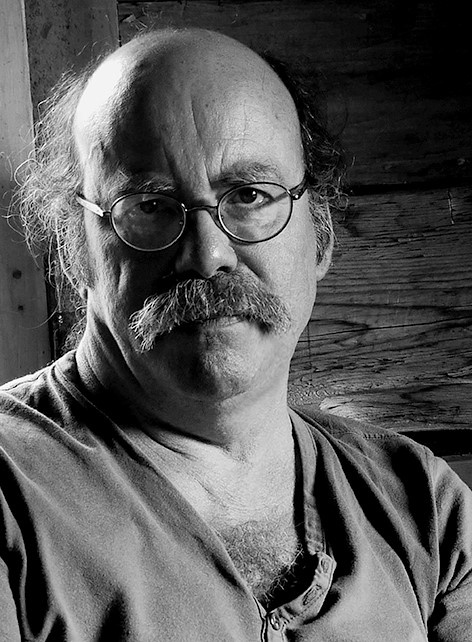
Jorge E. López (he now prefers the original Spanish version of his name), whose 65th birthday falls this Monday, can look back over four decades of creativity which has resulted in a select catalogue of mainly large-scale works which has provoked and intrigued listeners throughout Western Europe. A composer, then, who has taken the path less trod to recognition, yet whose music has few equals among that of his contemporaries in the scope of its ambition and range of expression. Not that López was an early starter. Born in Havana, he emigrated to the United States in 1960, growing up in New York and Chicago prior to studying at California Institute for the Arts. Of greatest benefit here was his exploration of the Second Viennese School with Leonard Stein, while the distinctive surrealist aesthetic of the Australian artist and film-maker Don Levy was to have decisive consequences. López sketched without completing any major works when living at Portland and Seattle in the later 1970s, while his frequent and extensive excursions into the nearby mountain ranges were in themselves a potent source of inspiration.

It was one of those pieces López went on to write that established him as a composer. In the autumn of 1981, he sent several pages from the still-unfinished Landscape with Martyrdom to Michael Gielen, then principal conductor of the Cincinnati Symphony Orchestra – whose positive response encouraged him to proceed with its realization. Having taken on the SWR Symphony Orchestra in Baden, Gielen oversaw its premiere in Donaueschingen in October 1987: a performance that, commercially issued five years later, gained widespread attention.

For composers nearing thirty can have produced an Opus 1 as represents a creative blueprint for all that followed, but Landscape is one such piece. Its title taken from a canvas by Pieter Breughel, these 35 minutes unfold a narrative engendered by, in López’s words, ‘‘the stream of sound which is in a state of incessant transformation’’. That such an eventful and intricate process is realized at what might be termed an ‘aural remove’ is just the most striking aspect of music whose emotional intensity operates as if in inverse proportion to its dynamic impact. Close listening, however, confirms an evolution at least methodical and at most symphonic in its highly personal mode of developing variation; one which subsumes what López terms the ‘‘three poles … of inanimate nature, of the individual and of the individual in violent conflict with society’’. Multiple parallels could be drawn across various art-forms – though, at least in musical terms, a synthesis drawn from the idioms of Ives, Varèse and Schoenberg is brought to a fruition that others in the later twentieth century had often attempted but seldom attained.

The outcome of this premiere was twofold: López remained in Europe (first in Germany and, since 1992, in Austria) where subsequent performances have almost all taken place; while the association with Gielen was continued with first hearings for the large-scale orchestral works Breath-Hammer-Lightening in its revised version, and Dome Peak in its original and revised versions. These both build on the potential of ‘Landscape’, albeit with a more visceral impact and, in the latter piece, a spatial element built into the discourse as was to take on increasing significance over the next decade. There were also intricately wrought ensemble pieces such as Blue Cliffs and Das Auge des Schweigens (its title taken from Max Ernst, whose art-work has been a recurring point of reference), and Tagebucheintragungen 1975-79 – whose rather matter-of-fact title, while accurate in indicating the use of material from that time, belies the intense power and pathos as well as sheer sense of emotional space in what ranks among the most poetic and also affecting orchestral statements from the final quarter of the last century.

The remainder of the 1990s saw several works as confront the conventions and artificialities of concert presentation head-on. Chief among these are Schatten vergessener Ahnen, with a scenic element of primal oppression and its apparent overcoming, or Strada degli Eroi where conductor and organist are locked in a remorseless conflict for supremacy over the orchestra. That neither piece risks indulgence or hubris says much about López’s control of long-term formal and expressive tension; with a serious point made as to listeners’ essentially passive expectations. Nor is this seriousness at the expense of a certain sardonic humour – hence the earthy onomatopoeia of the William Burroughs-inspired Gonzales the Earth Eater with its distinctive use of Wagner Tuba, increasingly a key component of López’s musical armoury.

The culmination of this phase is Gebirgskriegsprojekt, where the natural environment of the Austrian Alps finds contrast with activities of the Italian army on the Alpine front. Archival footage, the filming of which during the First World War itself constituted an act of heroism, is duly integrated with a pre-recorded ensemble such that sound and visuals are brought into inextricable accord; natural and human phenomena imbued with an awe both inspiring and alarming. Comparable interplay of opposing sources is evident in the earlier ensemble work Kampfhandlungen/Traumhandlungen, which yet adopts a more systematic trajectory akin to Xenakis’s arborescence processes, while also anticipating the personal accommodation with symphonic thinking which has become predominant in López’s output over the past 15 years.
Following the orchestral Disparates, with its evocation of Goya’s ‘black’ canvasses as well as allusions to Beethoven’s contemporaneous Op. 126 Bagatelles for a sequence that exudes unnervingly ominous humour, came Symphonie Fleuve whose two movements constitute a horn concerto like no other. Here, soloist and orchestra are drawn into a musical flow where confrontational and dreamlike aspects undergo evolution itself rationalized by development and reprise, albeit with no sense of a coming together in those darkly annihilistic final stages.

That López was directed thus comes as no surprise for one who, from his earliest years, was drawn to the radical avant-garde but also the alternative symphonism exemplified by such as Havergal Brian and Allan Pettersson. As he himself hears it, ‘‘symphonic composition is for me honesty and self-realization’’, and there could have been no more explicit demonstration of this than in the four so-designated works which followed. That the initial two of these are scored for relatively modest ensembles does not detract in any sense from their overall scope.

In four continuous movements, the First (Chamber) Symphony finds its motivic components in a continual state of flux – an underlying momentum emerging in spite (or maybe because) of those sharply defined ideas whose mutability overrides sectional divisions before reaching fulfilment, albeit oblique, in the final movement (which the composer has since extended, this yet un-heard definitive version likely proving more conclusive). Its subtitle ‘The Last Spring’ derived from Hungarian poet Endre Ady, the Second (Chamber) Symphony unfolds over five movements that might suggest a Mahlerian trajectory – though, once again, it is the long-term potential of seemingly casual motifs which afford continuity and cohesion in the face of more disjunct gestures; with a conclusion the more inevitable for seeming to emerge out of nothing.

López’s subsequent symphonies both project their formal and expressive concerns onto larger orchestral canvases. Beethoven’s final piano sonata has been cited as precedent, to which the Third Symphony’s trajectory is not beholden in any overt sense; rather – several other pieces resonate to a greater or lesser degree for what becomes a process of transformation from one movement to the other, so that the persistence of memory plays a more than usually decisive role in determining the ultimate outcome. Such is also true of the Fourth Symphony, but here the three movements proceed as a 45-minute continuity which has been likened to ‘morphed Bruckner’ in its overall scale and grandeur. If this also suggests a reaching across musical or cultural epochs, any such desire towards integration hardly equates with that ‘going back’ in much recent symphonic writing. It is still tempting to recall Elliott Carter as saying the most provocative act a living composer could make would be to write a Brahms Fourth Symphony for the present. Whether or not this were López’s intention, it might just be his achievement.

Since the premiere of that latter work, López has composed a Concerto for Bass Trumpet and written most of a First Orchestral Set which will incorporate orchestrations of Alkan and Ives along with original material. He is currently finishing a Fifth Symphony, the second of its two movements featuring extracts from the novel Juliette by Marquis de Sade, as well as planning a stage-work on the last evening in the life of the Transylvanian mathematician János Bolyai – a visionary whose musical successors have had a major role in determining López’s outlook.

Meanwhile, López’s works continue to be championed by such conductors as Peter Eötvös, Ilan Volkov or Marin Alsop; and by organizations as the Vienna Radio Symphony Orchestra or Klangforum Wien. The presentation of his works in the UK, however, remains an ongoing concern: music of this overarching ambition and unequivocal impact might seem logistically problematic and, more to the point, aesthetically unfashionable, though this does not lessen the need for first-hand and authoritative appraisal such as only live performance can provide.

Select Discography

Landscape with Martyrdom – Intercord INT860.918

Gebirgskriegsprojekt – Wergo DVD WER2061-5

Symphonie Fleuve / Symphony No. 3 – NEOS 11425

Gonzales the Earth Eater – Wergo WER6864-2

Kampfhandlungen/Traumhandlungen / (Chamber) Symphony No. 2 – NEOS 11912

Numerous other compositions can be heard online:

https://www.youtube.com/playlist?list=PLAQZOrY73zxWSsgtMBsjBQkKBbnBZZF-v

Further information about Jorge E. López can be found at the following websites:

https://db.musicaustria.at/en/node/59294

https://www.ricordi.com/en-US/Composers/L/Lopez-Jorge-E.aspx

https://www.baerenreiter.com/en/catalogue/20th21st-century-music/jorge-e-lopez/biography/

https://en.schott-music.com/shop/autoren/jorge-e-lopez

https://neos-music.com/?language=english&page=output.php%3Fcontent%3DKuenstler/ Lopez_Jorge_E.php