Unknown's avatar

About Arcana

My name is Ben Hogwood, editor of the Arcana music site (arcana.fm)

Listening to Beethoven #90 – 12 German Dances (piano version)

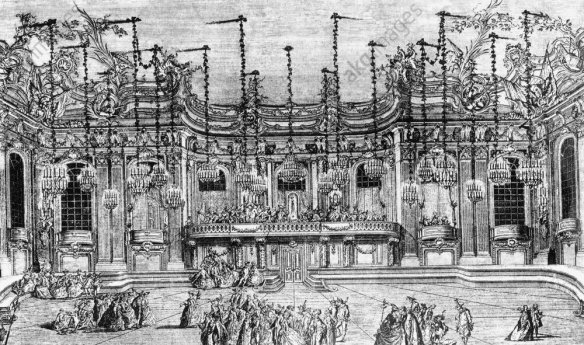
Masked Ball in the Großen Redouten-saal, Hofburg (by Markus Weinmann, 1748)

12 German Dances, WoO 8 for piano (1795, Beethoven aged 24)

no.1 in C major
no.2 in A major
no.3 in F major
no.4 in B flat major
no.5 in E flat major
no.6 in G major
no.7 in G major
no.8 in C major
no.9 in A major
no.10 in F major
no.11 in G major
no.12 and Coda in C major

Dedication Vienna Artists’ Pension Society
Duration 20′

Listen

Background and Critical Reception

This is the piano version of the German Dances Beethoven wrote for the Redoutensaal ball of November 1795 in Vienna.

Thoughts

The dances work really well for piano, ad while they may not be as colourful as the orchestral version the keyboard brings out the crisp nature of the composer’s dance rhythms.

Recordings used and Spotify links

Jenő Jandó (Naxos)

Jandó plays with a nice lilt to the rhythms, showing how the dances are clearly for communal use. Having one follow the other so immediately works well in an energetic account. The final dance tails off rather movingly at the end.

You can chart the Arcana Beethoven playlist as it grows, with one recommended version of each piece we listen to. Catch up here!


Also written in 1795 Gyrowetz Three Flute Quartets Op.11

Next up 12 Variations on ‘Menuet a la Vigano’ WoO 68

Listening to Beethoven #89 – La Partenza WoO 124


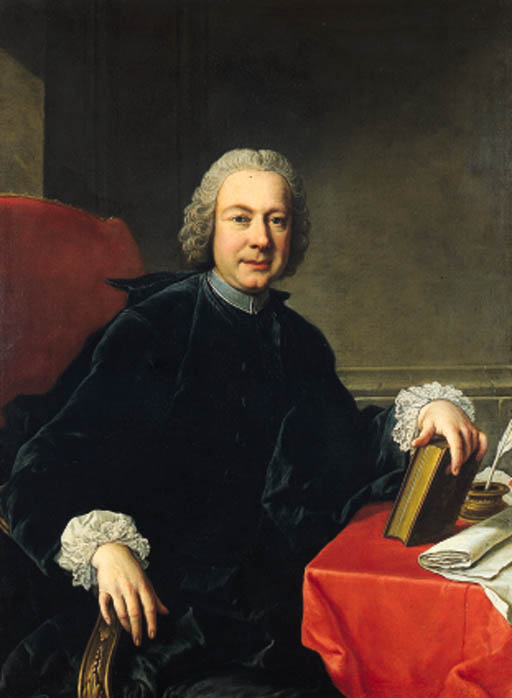
Portrait of Italian poet Pietro Metastasio (1698-1782) Image used courtesy of Wikipedia

La partenza WoO 124 for voice and piano (1795, Beethoven aged 24)

Dedication not known
Text Pietro Metastasio
Duration 1’10”

Listen

Background and Critical Reception

Beethoven joined a prestigious list of composers in setting Pietro Metastasio’s canzonetta from 1749. Paisiello and Mozart had already taken the text as inspiration, but now Beethoven – setting Italian again – took the plunge. This would appear to be a result of his continuing training with Salieri, who was encouraging the setting of songs in his native language.

Thoughts

Beethoven shifts from the G major of previous song Zärtliche Liebe to A flat major, a tonal centre that would inspire some of his best and most contemplative music over the years. It is a shift in mood, too – the previous song a declaration of love, this one (translating as The Departure) sat in the cloud of departure and loss.

It is a relatively simple setting, and a short one too at just over a minute. A flowing piano is the bedrock for a smooth, mid-range melody, but the overriding mood is sombre and relatively downcast.

Recordings used and Spotify links

Dietrich Fischer-Dieskau, Hartmut Höll (Warner Classics)

Hermann Prey, Leonard Hokanson (Capriccio)

Cecilia Bartoli, Andras Schiff (Decca)

Both Fischer-Dieskau and Prey give this song a good deal of gravitas, their pianists providing solid support. However the bright tones of Cecilia Bartoli and the light-fingered accompaniment of András Schiff give the song a new lease of life.

Also written in 1795 Salieri “Armonia per un tempio della notte” in E flat major for 2 oboes, 2 clarinets, 2 bassoons and 2 horns

Next up 12 German Dances WoO8 (piano version)

Listening to Beethoven #88 – Zärtliche Liebe WoO 123


Peanuts comic strip, drawn by Charles M. Schulz (c)PNTS

Zärtliche Liebe WoO 123 for voice and piano (1795, Beethoven aged 24)

Dedication not known
Text Karl Friedrich Herrosee
Duration 2’20”

Listen

Background and Critical Reception

The seemingly uncredited booklet-writer for Beethoven’s complete songs as released on the Capriccio label is unequivocal in their praise for this song for higher voice and piano. They describe it in the company of two others as “masterpieces in the restrained use of musical means, a particular feature applicable to more than merely a few of Beethoven’s songs for voice and piano. This characteristic is not easily incorporated in the prevalent image of Beethoven, but it is nonetheless indispensable if the full scope of Beethoven’s art is to be appreciated.”

Leslie Orrey, writing in The Beethoven Companion, sits firmly on the other side of the fence. “There could hardly be…a much less ardent protestation of love than Ich liebe dich…” which he describes with a number of other songs as “looking over their shoulders to another age, to the artificial Arcadian poetry of nymphs and shepherdesses”.

Thoughts

Less is indeed more where this song is concerned. The singer has the first note, an upbeat to a graceful song that proceeds smoothly and largely without incident. There is room to accommodate both the views above, though my thoughts fall with the ‘restraint saying more’ than the Orrey view that Beethoven’s version of love is completely removed.

The gently undulating piano as the singer grows more ardent helps the restrained approach, but does enhance the emphasis on the words and stepwise melody.

Recordings used and Spotify links

Dietrich Fischer-Dieskau, Jörg Demus (Warner Classics)

Ian Bostridge, Julius Drake (Warner Classics)

Fritz Wunderlich, Hubert Giesen (Deutsche Grammophon)

Fritz Wunderlich is the tenderest of the three male singers chosen here, his smooth line beautifully phrased. Dietrich Fischer-Dieskau sings down a tone and with characteristic strength of feeling. Ian Bostridge has a leaner tone but shapes the phrasing affectionately. All three are convincing advocates of a song dividing opinion.

Also written in 1795 Salieri Palmira

Next up La Partenza (Der Abschied)

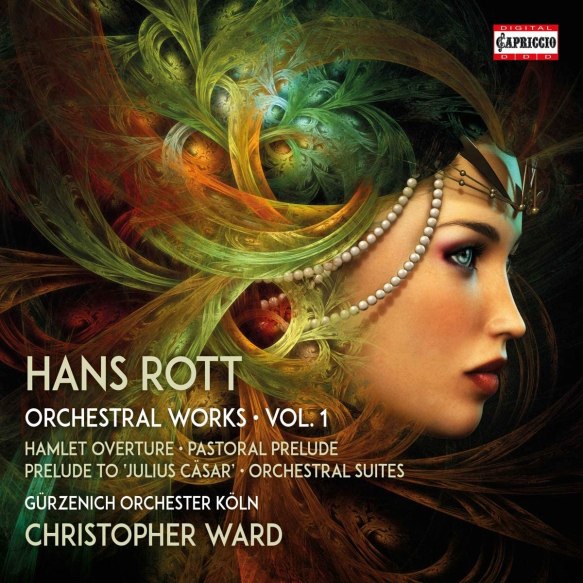
On record – Christopher Ward conducts Rott: Orchestral Works Vol.1 (Capriccio)

Gürzenich Orchester Köln / Christopher Ward

Rott
Overture to Hamlet (1876, compl. Schmidt)
Suite in E major (1878)
Prelude to Julius Cäsar (1877)
Prelude in E major (1876)
Suite in B flat major (1877)
Pastoral Prelude in F major (1877-80)

Capriccio C5408 [51’44”]

Producers Wolfram Nehls, Johannes Kernmayer
Engineer Thomas Bössl

Recorded 23-25 January 2020 at Studio Stolberger Strasse, Cologne

Written by Richard Whitehouse

What’s the story?

Capriccio issues the first in what is (presumably) a two-volume survey of orchestral music by Hans Rott (1858-84), gathering up the extant or realizable shorter pieces from his regrettably brief yet highly eventful composing career, in what are assured and idiomatic performances.

What’s the music like?

The one premiere recording is of the Hamlet Overture, its orchestration broken off after some 35 bars yet with the overall draft sufficiently advanced to enable this completion by Johannes Volker Schmidt. The manuscript’s designation Prelude suggests this as the introduction to an operatic or choral work, but the absence of more concrete information makes it uncertain how far this piece shadows events in Shakespeare’s drama. As a concert overture, it unfolds purposefully enough and much the same might be said of the Julius Cäsar Prelude, given its anxious pivoting between the majestic and the intimate; informed by a Wagnerian approach to harmony and sonority no doubt occasioned by Rott’s attending the first Bayreuth Festival.

Most of these other items were composition exercises while Rott was studying at the Vienna Conservatoire, with the concise Prelude in E evincing no mean emotional fervour. The brace of movements in each of the suites find the composer in more relaxed mood. Those of the E major feature a Prelude of eloquent restraint then a Finale whose rather greater variety of mood and dramatic culmination are altogether more prophetic. Those of the B flat feature a Scherzo whose capering motion and deft irony are rather more personable than a Finale that seems intent on building a fugal peroration, only to call time on its progress with an all too perfunctory closing cadence – as to suggest the composer was losing interest as he went on.

Last but emphatically not least, the Pastoral Prelude in F is by far the longest work and the clearest indicator of where Rott might have been headed during that fateful year of 1880. Its subtitle, A Prelude to Elsbeth, again suggests theatrical connotations that were most likely abandoned during the three years over which this piece took shape. The initial stages, with their avian evocations and horn calls, afford a distinctive take on late-Romantic archetypes, while the discursive yet never unfocussed progress towards a powerful apotheosis confirms its composer’s fugal proficiency. It may have had to wait 120 years for its first hearing but this, along with his Symphony, makes clear just what was lost with Rott’s untimely demise.

Does it all work?

Yes, though it needs to be stressed that nothing quite equals the vaunting if reckless ambition evident from the Symphony in E, the defining work (however unintentional) of Rott’s output. It would be fascinating to have heard Mahler’s attempts at orchestral music from this period, while Hugo Wolf’s early orchestral pieces exude rather greater individuality. What cannot be denied is the seriousness with which Rott applies himself, or the commitment with which the Gürzenich forces realize his intentions under the sympathetic guidance of Christopher Ward.

Is it recommended?

Indeed. These pieces have almost always appeared as fill-ups for Rott’s Symphony, making their collation here the more welcome. Excellent sound, decent annotations, and a release to be investigated in advance of the second instalment – already announced for early next year.

Listen & Buy

You can get more information on the disc at the Capriccio website, or purchase from Presto. Meanwhile for more information on Hans Rott, you can head to a dedicated website

On record – Eckart Runge plays Kapustin & Schnittke (Capriccio)

Eckart Runge (cello), Rundfunk-Sinfonieorchester Berlin / Frank Strobel

Kapustin
Cello Concerto no.1 Op.85 (1997)
Schnittke
Cello Concerto no.1 (1985/6)

Capriccio C5362 [69’52”]

Producer / Engineer  Wolfram Nehls Henri Thaon

Recorded 9-10 March 2018 (Kapustin), 30 September – 2 October 2019 at RBB Haus des Rundfunk, Berlin

Written by Richard Whitehouse

What’s the story?

Eckart Runge continues his distinctive – not to say idiosyncratic – recorded odyssey with this pertinent coupling of Russian cello concertos, written a decade apart by composers who were near contemporaries while pursuing radically different paths in terms of career and aesthetic.

What’s the music like?

His First Cello Concerto sees Nikolai Kapustin intent on opening-out his jazz-inflected idiom as centred on the piano over the previous two decades. With its stealthy emergence towards a ‘big band’ summons, the initial Allegro forges a flexible accommodation between soloist and orchestra – the former given its head in brief yet decisive passages, with the two engaging in animated and essentially good-natured banter elsewhere. Kapustin’s take on jazz is beholden to no time or place, but the central Largo evokes that of America’s immediate post-war era in its rhythmic clarity that belies a subdued and often taciturn lyrism; at length accelerating into the final Allegro which, with its incisive interplay and tensile bravura, finds this composer at his most characteristic. How surprising that, given the worldwide interest in Kapustin during his final quarter-century, this piece should have gone unheard until just two years before his death. Runge is audibly intent on making up for that neglect, bringing an impetus and elan to the music as should go some way towards establishing its presence in the modern repertoire.

At almost twice its length, Alfred Schnittke’s First Cello Concerto is evidently the weightier proposition as is proven with this last in a sequence of imposing concertante works – having been preceded by those for violin (No. 4), viola and choir. The initial Moderato unfolds as a soliloquy alternately heightened and threatened by orchestra, its essential pathos continually reasserting itself against the forces of negation. From the ashes of this ultimate confrontation, a Largo emerges fitfully before it takes on an eloquence by no means devoid of anxiety; this latter quality to the fore in an ensuing Allegro as impulsive as it is concentrated. The first of several debilitating strokes suffered soon after starting work on this piece radically altered its concept – the final Largo building in a crescendo of intensity to the radiant apotheosis, before winding down to a serenity whose closure is more real for having been so hard-won. A tough work to make cohere over its lengthy spans of mainly slow music, yet Runge undoubtedly has its measure through his sustaining of these emotional peaks and troughs with such conviction.

Does it all work?

Yes, albeit in terms of those stylistic goals the composers set themselves. Runge currently has no competition for the Kapustin, where his fusion of incisiveness and suavity will be a tough act to follow. His take on the Schnittke is more durable than most of its predecessors, though dedicate Natalia Gutman finds greater intensity in her first recording (Regis/Alto), while the late Alexander Ivashkin teases greater subtlety from more inward passages (Chandos). Frank Strobel with the Berlin Radio Symphony Orchestra offer alert and idiomatic support in both instances.

Is it recommended?

Indeed, not least in its underlining the diversity of music as came out of Russia during those ‘transitional’ years either side of the USSR’s demise. Informative notes by Christian Heindl and Runge, who will hopefully record the second concertos of both composers for this label.

Listen & Buy

You can get more information on the disc at the Capriccio website, or purchase from Presto. Meanwhile for more information on the artists, Eckart Runge can be found here and Frank Strobel here