Unknown's avatar

About Arcana

My name is Ben Hogwood, editor of the Arcana music site (arcana.fm)

Let’s Dance – Detroit Love 4 mixed by Mirko Loko (Detroit Love / !K7)

by Ben Hogwood

What’s the story?

Carl Craig’s Detroit Love mix series moves onto a fourth instalment under the watchful eye of Mirko Loko, who Craig recruited for the Detroit Electronic Music Festival back in 2001. With such a longstanding attachment to the city and its techno heritage, the Swiss DJ is a natural choice and takes the chance to say thank you to Detroit and its cultural legacy. He does so in the form of a 22-track mix including homegrown talent but also casting an eye further afield to show off the influence of the city.

What’s the music like?

This is a really fine set, mixed with impressive fluidity by Mirko Loko. From the start he creates a good deal of space, Fred P’s Vision In Osaka setting the scene beautifully before Loko’s own excellent Detroit Love Mix of It’s Like, with persuasive vocals from Ursula Rucker. As the mix proceeds Loko moves between quite minimal tracks and bigger, expansive moments like Chaos In The CBD’s Comfort Zone, or the blissful Aos Si of Takuya Yamashita.

However the real high point comes with Derrick May’s appearance on Loko’s Mentors Heritage, a mix made especially for the compilation. The booming voice and percussion are an ideal match, especially when segueing into the bare bones of the piano in Laurent Garnier’s mix of Gilb’R’s Pressure.

From then the mix rolls on, taking in the propulsive Madness of Temo Howard before an excellent finish from Mirko Loko and Stacey Pullen with Tronic Illusion – another exclusive mix – and Lady B’s Cruising Around Motor City.

Does it all work?

It does indeed. Well paced, structured and full of subtly euphoric moments uniting past and present in an effortless blend.

Is it recommended?

Yes – a very strong addition to what is proving to be an extremely collectable series.

Stream

Buy

Listening to Beethoven #84 – Im Arm der Liebe ruht sich’s wohl WoO 159


Beethoven’s Eyeglass. Photo (c) Beethoven-Haus, Bonn

Im Arm der Liebe ruht sich’s wohl WoO 159, canon for three voices (1795, Beethoven aged 24)

Dedication not known
Text Hermann Wilhelm Franz Ueltzen
Duration 1’20”

Listen

Background and Critical Reception

First, a reminder that a canon is a melody assigned to more than one part / singer – and the melody of that part / singer follows the original at a set distance. Beethoven used the technique for a number of short pieces, both for instruments and for voices, honing his craft from his early twenties in Vienna.

This example for three voices, setting a text by Hermann Wilhelm Franz Ueltzen, is only just over a minute but works several repetitions of what proves to be a catchy melody. The text, interpreted by the Unheard Beethoven website, translates as the following:

In the arm of love one rests well,
In the bowels of the earth one rests well,
Wherever it may be, for the tired it is all the same

Thoughts

These short pieces are fascinating when set against Beethoven’s longer works. They feel like small building blocks of a much bigger construction, illustrating the composer’s ability to quickly establish a tune and even its development in the shortest space of time. As a result even a piece this short is not entirely throwaway, and is quite profound.

Recordings used and Spotify links

Kammerchor der Berliner Singakademie / Dietrich Knothe (Brilliant)

Ensemble Tamanial (Naxos)

Ensemble Tamanial state the whole theme first, then proceed with Beethoven’s working into a canon. Meanwhile the Kammerchor der Berliner Singakademie under Dietrich Knothe add a generous helping of vibrato.

Also written in 1795 Haydn 150 Scottish Songs, Hob.XXXIa:1–150

Next up 6 Minuets WoO9

Listening to Beethoven #83 – Canon in C major

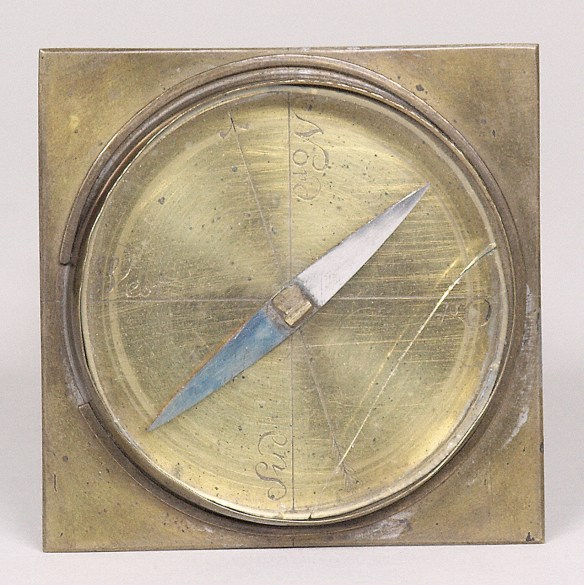
Beethoven’s compass © Beethoven-Haus Bonn

Canon in C major Hess 248 for four voices (1795, Beethoven aged 24)

Dedication not known
Duration 1’10”

Listen

Background and Critical Reception

This short canon is for four ‘voices’ – as in four separate parts. It is the second canon of Beethoven’s we have heard to date, but as we listen to more of his music this aspect of his output will be more fully revealed.

Thoughts

A bold, confidently written piece – with a motif whose repetitions become a little trying after a while! It is however a good example of Beethoven’s rigorous training and ability to work with an ever-increasing number of techniques.

Recording used and Spotify link

Benjamin Lichtenegger, Lara Kusztrich, Luka Kusztrich, Dominik Hellsberg (violins) (Naxos)

An attractively performed and brightly lit version.

You can chart the Arcana Beethoven playlist as it grows, with one recommended version of each piece we listen to. Catch up here!

Also written in 1795 Hyacinthe Jadin 3 String Quartets Op.1

Next up Im Arm der Liebe ruht sich’s wohl

In concert – ORF Vienna Radio SO / Marin Alsop: Musikprotokoll 2020 – Hidden Sounds

Joonas Ahonen (piano), ORF Vienna Radio Symphony Orchestra / Marin Alsop

Saariaho Chimera (2019) Austrian premiere
Maintz Piano Concerto (2014) Austrian premiere
López Disparates (2004-06) Austrian premiere

Helmut List Halle, Graz
Friday 9 October (review of the online broadcast)

Written by Richard Whitehouse

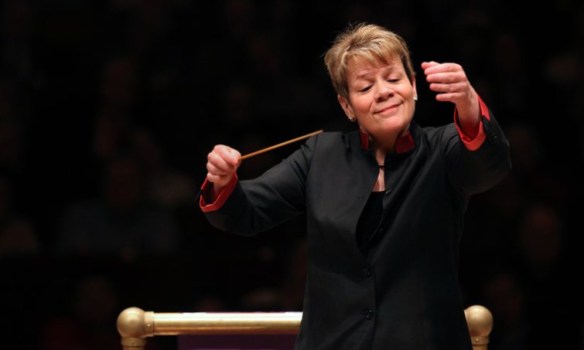
Now into its 53rd season, the Musikprotokoll festival in Graz has long been synonymous with some of Austria’s most innovative music-making, with this evening’s concert from the ORF Vienna Radio Symphony Orchestra and its current chief conductor Marin Alsop being no exception. Notable too was the sizable audience – notwithstanding the needs of social distancing – and its enthusiasm for a programme, as concise as it was uncompromising, which contained music by a younger Austrian composer and one who has been resident in that country over the past three decades.

First, though, a curtain-raiser by Kaija Saariaho – the Finnish composer who has long resided in Paris, whose output features harmonic subtlety and timbral finesse as its hallmarks. Both of these were present in Chimera – an oblique homage to Beethoven in the 250th anniversary of his birth, in which material from her earlier orchestral piece Orion was (almost) book-ended by the beginning and ending of that composer’s Second Symphony. The result was diverting if insubstantial, redolent of Berio’s re-imaginings while assuredly not outstaying its welcome.

Among the leading Austrian composers of his generation, Philipp Maintz (b1977) evidently wrote or at least began several piano concertos prior to completing the one heard tonight. He has spoken of admiration for the Ligeti and Lutosławski concertos, as well as his nonplussed regard for the Schoenberg; yet this latter soon came to mind in a piece whose four continuous movements take in a gradual accumulation of energy, followed by two contrasting intermezzi then a further and more rapid gathering of momentum toward the emphatic close. Connecting the whole are brief recitative-like passages as cede the foreground to a soloist whose dextrous pianism is otherwise embedded into the overall texture. Joonas Ahonen was an alert and agile soloist in music that requires, and received, acute coordination with orchestra and conductor.

Championed by such conductors as Michael Gielen, Peter Eötvös and Ilan Volkov, Jorge E. López (above) eschews both the gnomic intricacies of new-complexity and ironic self-regard of post-modernism in drawing resourcefully on the past for a provocative challenge to the future; not least those symphonic works as dominate his recent output. Leading into them is Disparates, described as a ‘Goya / Beethoven homage’ that draws parallels between the artist’s desolate late sketches with the composer’s equally gnomic Six Bagatelles from much the same time.

The sequence is no mere orchestration or paraphrase of piano originals. Its sepulchral textures thrown into relief by glassy asides from Stroh violin, the first piece merges reluctantly into the militaristic march-past of its successor, then on to those stark pathos and disjunctive contrasts of the two that follow. Fusing aspects of the final two bagatelles, the fifth piece veers between fraught eloquence and glowering recessional as it lurches on to an ending bereft of meaningful closure: Goya’s ominous imagery and Beethoven’s flights of fancy united in unwitting accord.

An engrossing and disquieting sequence, which yet offers a direct way into López’s singular musical ethos. The VRSO responded with verve and no little virtuosity to Alsop’s animated prompting, so rounding off what was an intriguing fixture in this always enterprising festival.

This concert can be seen and heard at the Musikprotokoll website

Listening to Beethoven #82 – 2 Arias for Die schöne Schusterin oder Die pücefarbenen Schuhe

Engraved portrait of Gottlieb Stephanie dem Jüngeren

2 Arias for Umlauf’s Singspiel Die schöne Schusterin oder Die pücefarbenen Schuhe for tenor, soprano and orchestra (1795, Beethoven aged 24)

1 O welch ein Leben (tenor)
2. Soll ein Schuh nicht drücken (soprano)

Dedication Ignaz Umlauf
Text Gottlieb Stephanie dem Jüngeren
Duration 9′

Listen

Background and Critical Reception

These two songs were written for Ignaz Umlauf’s Singspiel Die schöne Schusterin oder Die pücefarbenen Schuhe (The Beautiful Shoemaker’s Wife or The Puce-Coloured Shoes). They were completed in 1795 for the composer Umlauf, who sadly died the following year. Beethoven provided an aria each for tenor and soprano, the singers accompanied by a small orchestra of woodwind and strings.

Andrew Stewart, in his sleeve notes for a recent recording of the second aria by Chen Reiss, gives a helpful overview of the story. “Die schöne Schusterin revolves around Lehne, a shoemaker’s wife, subject of a prank played on her husband, the aptly named Sock, by the boisterous yet good-natured Baron von Pikourt. Beethoven’s interpolations complement the work’s genial humour: Sollein Schuh celebrates the pleasures of a pair of fine new shoes, even if they demand the pain of do-it-yourself chiropody.”

Reiss herself describes the soprano Magdalena Willmann, for whom the second aria was written – and with whom Beethoven was briefly infatuated: “She was famous for her unusually deep low register, which may explain the many low passages in both arias.”

Thoughts

The two arias are a contrast. The tenor aria, O welch ein Leben, ein ganzes Meer von Lust (‘Oh! What a life, a whole ocean of pleasure’) proceeds in a relatively straightforward manner, with Beethoven’s control of the vocal line and orchestra interaction resembling Mozart. The approach is an elegant one, with a hint of playfulness.

Soll ein Schuh nicht drücken (‘For shoes not to pinch’) is a different story. After an extended orchestral introduction the soprano really gets a chance to let herself loose in a wide-ranging aria. Beethoven moves from the depths to the heights, asking his singer to really extend herself. The bravura takes her centre stage, the orchestra supplying the punctuation.

Recordings used

Chen Reiss (soprano), Academy of Ancient Music / Richard Egarr (Onyx Classics)
Dan Karlström (tenor), Reetta Haavisto (soprano), Turku Philharmonic Orchestra / Leif Segerstam (Naxos)
Nicolai Gedda (tenor), Anneliese Rothenberger (soprano), Convivium Musicum München / Erich Keller (Deutsche Grammophon)

On a new recording for Naxos, with the Turku Philharmonic Orchestra sensitively conducted by Leif Segerstam, Dan Karlström sings with great clarity, while Reetta Haavisto gives her aria plenty of gusto in the higher passages.

Nicolai Gedda and Anneliese Rothenberger are both very good in a recording that shows its age a little. Chen Reiss gives a wonderful account of Soll ein Schuh with the Academy of Ancient Music and Richard Egarr, supplying the brio and full dose of passion that this aria really needs. The high notes are sensational.

Spotify links

This playlist collects the available versions mentioned above:

You can chart the Arcana Beethoven playlist as it grows, with one recommended version of each piece we listen to. Catch up here!

Also written in 1792 Salieri – Palmira

Next up Canon in G major Hess 248