Seufzer eines Ungeliebten und Gegenliebe WoO 118 for voice and piano (1794-5, Beethoven aged 24)
Dedication not known Text Gottfried August Bürger Duration 6’30”
Listen
Background and Critical Reception
This is one of Beethoven’s biggest solo vocal works to date, setting a pair of poems by Gottfried August Bürger. The first, Seufzer eines Ungeliebten (Plaint of a Loveless Man), is set out as an operatic recitative, while the second, Gegenliebe (Requited Love) is more of an aria with a broad, flowing profile. Commentators immediately noted the similarity of the melody in the second poem not just to the Choral Fantasy Op.80 but to the Ode to Joy from the Choral Symphony.
Susan Youens, writing for the recording made by Roderick Williams and Iain Burnside for Signum Classics, notes that ‘if the prosody leaves something to be desired, it is nonetheless fascinating that this melodic idea was brewing in Beethoven’s brain literally for decades and that the song’s impulse gave rise to the mighty symphony’.
Amanda Glauert, in The Cambridge Companion to Beethoven, draws a strong parallel with the forthcoming concert aria Ah, Perfido! For her Beethoven ‘chose to adopt an exaggeratedly operatic idiom for his setting of the first poem’, concluding that ‘the gracious triple-meter melodies in E flat into which both song and aria resolve are so similar in contour that one can sense how Beethoven must have borrowed the style from his teacher (Salieri) or other Italianate models. In Gegenliebe, ‘the awkward text setting…when heard in context…becomes the natural consequence of the voice being pushed forwards by the piano’s rhythmic intensity.’
Meanwhile in The Beethoven Companion, Leslie Orrey finds the piano writing ‘suggests a transcription of an orchestral score.’
Thoughts
Just as his studies with Albrechtsberger have been blooming, so Beethoven’s education with Salieri appears to be bearing bigger and greater fruit. The songs we are hearing now are more substantial and adventurous, and this two-parter is one borne of the stage rather than the recital room.
From the first notes it is clear this is substantial and meaningful vocal work for Beethoven. There is an immediate sense of drama, maybe exaggerated a bit but ideally suited to the male singer. Tension surrounds the music from the off, but is resolved beautifully into the Requited Love, where we first hear the memorable theme. Its similarity to the Ode To Joy is uncanny, and as Susan Youens says it must have meant a lot to the composer, a melody whose profile stayed at the front of his thoughts for decades.
Once heard it is the tune that dominates, and the aria finishes in a resilient and triumphant mood.
Recordings used
Dietrich Fischer-Dieskau (baritone), Jörg Demus (piano) (Deutsche Grammophon) Hermann Prey (baritone), Leonard Hokanson (piano) (Capriccio)
Peter Schreier (tenor), Walter Olbertz (piano)
Anne Sofie von Otter (mezzo-soprano), Melvyn Tan (fortepiano) (Archiv)
An imperious performance from the great baritone Fischer-Dieskau, with a dramatic introduction and ideal phrasing on the big tune. Hermann Prey and Leonard Hokanson are even more expansive, clocking in at nearly seven minutes. Peter Schreier moves the music up in pitch (in C minor rather than B flat minor) but his version also carries a sense of occasion. Anne Sofie von Otter does too, though not quite as full bodied in tone. Melvyn Tan’s fortepiano provides ideal support.
Spotify links
Dietrich Fischer-Dieskau, Jörg Demus
Hermann Prey, Leonard Hokanson
Peter Schreier & Werner Olbertz
Anne Sofie von Otter, Melvyn Tan
You can chart the Arcana Beethoven playlist as it grows, with one recommended version of each piece we listen to. Catch up here!
Also written in 1795 Reicha – Concerto Concertant Op.3
Bishopsgate Institute, London
Friday 9 October, 1pm (review of the online broadcast)
Written by Richard Whitehouse
Hindemith Nine English Songs (1942-4): no.2, Echo; no.7, Sing on there in the Swamp Varèse Un grand sommeil noir (1906) Schoen Sechs Gedichte von Fritx Heinle (1932) Szymanowski Before Bedtime Op.49/1 (1922-3) Schoen Sechs Lieder für Kinder (1927) Malipiero Omaggi (1920) – no.1, A un papagallo Casella X-Berceuse Op.35/11 (1920) Tyrwhitt-Wilson Trois petites marches funèbres (1916) – no.1, Pour un homme d’état; no.2, Pour un canari Schoen Das Anti-Hitler Lied (1941); Das Heimkehrlied (c1940) Spoliansky Das Lila Lied (1920) Schoenberg Brettl-Lieder (1901) – no.1, Galathea
The recently returned lunchtime series at Bishopsgate promises an extensive range of music and artists. This afternoon’s recital was no exception in focussing on songs by Ernst Schoen (1894-1960), the German composer and radio pioneer who for some years resided in London.
Their programme divided into four complementary parts, Lotte Betts-Dean and Joseph Havlat began with ‘Music for Friends’ – two gently laconic settings by Hindemith of Thomas Moore and Walt Whitman being followed by the sombre rumination as drawn by Varèse from Paul Verlaine’s poem in almost the only extant piece of this composer’s earlier years. The settings of Fritz Henle (whose life was terminated by his own hand at the outbreak of the First World War) reveal Schoen having absorbed the expressionism of Schoenberg’s Book of the Hanging Gardens cycle in songs that, elusive and unaffected by turns, were perceptively rendered here.
The second part centred on ‘Music for Children’, with the first of Szymanowski’s enchanting Children’s Rhymes followed by a set from Schoen. Here the inspiration lay in those nonsense rhymes after Russian texts which Stravinsky had penned the previous decade, albeit with an ironic edge rather more akin to Schulhoff’s songs and piano miniatures from the early 1920s.
The third part brought ‘Music for Dance and the Stage’ in the guise of pieces danced by Henri Châtin Hofmann (1900-1961) to Dadaist choreography (recently recreated when this selection was presented in Warsaw) which fairly typified the decadence and provocation of the Weimar Republic’s heyday. Insouciant miniatures by Malipiero and Casella were thus juxtaposed with two of the funeral pieces by Lord Berners, whose Satie-esque whimsy was shot through with an ominousness which Havlat (replacing an indisposed Samuel Draper) realized accordingly.
The fourth and final part focussed upon ‘Music for Politics’, Schoen’s pointed castigation of Hitler and his fervent contemplation on ‘coming home’ followed with a sardonic number by Mischa Spoliansky such as persisted as a Gay Rights anthem long after it had been created. Betts-Dean and Havlat upped the emotional ante in these latter songs, bringing the advertised programme to a close. Time, though, for two more of Schoen’s children’s songs and the first of Schoenberg’s Brettl-Lieder – the soprano’s coyness making up for any lack of sensuality.
An arresting recital by artists who will hopefully perform this and similar music again soon.
Weinberg arr. Henry Koch
Wir Gratulieren! (Congratulations! orig. Mazl tov!) Op.111 (1975)
Beylya – Olivia Saragosa (contralto), Reb Alter – Jeff Martin (tenor) Khaim – Robert Elibay-Hartog (baritone) Fradl – Anna Gütter (soprano) Madame – Katia Guedes (soprano), Kammerakademie Potsdam / Vladimir Stoupel
Producer Hein Laabs Engineer Henri Thaon
Recorded 23 September 2012, Werner-Otto-Saal, Konzerthaus, Berlin
Oehms Classics OC990 [two discs, 80’23”]
Reviewed by Richard Whitehouse
What’s the story?
Oehms Classics issues this first recording of a one-act opera by Mieczysław Weinberg, taken from a live performance in Berlin to the German translation by Ulrike Patow, as adapted by the composer from the drama by Sholom Aleichem (indirectly of Fiddler on the Roof fame).
What’s the music like?
Those having heard Weinberg’s first opera, the powerfully dramatic The Passenger (Neos or ArtHaus), or his last, the darkly inward The Idiot (Pan Classics) will find Mazl tov! something different again.
By the mid-1970s, the composer felt able to pen an intrinsically Jewish opera with recourse to the song and dance idioms familiar from the Yiddish theatre of his Warsaw youth, and a decidedly sardonic tone not far removed from the interwar stage works of Weill or Eisler. Any risk of provoking Soviet officialdom was offset by a vein of Socialist optimism in the ‘masters versus servants’ scenario, culminating in a ‘things will be different’ outcome. Divided into two acts (55 and 25 minutes), the narrative allows for incremental though subtle development of the four protagonists as they move as if pre-destined to their double wedding.
Does it all work?
Yes, inasmuch that this music, played in an adept reduction for chamber orchestra by Henry Koch, is itself characterful as well as ideally suited to the domestic tragicomedy at hand. Each of the four main singers is allotted their share of the limelight, without these soliloquys either detracting from or impeding the onward flow of the drama, and those familiar with Weinberg will detect various motifs or phrases that re-emerge in the symphonies and string quartets he was to write across the next decade – making for a work as central to his output as any other.
As to the cast, Olivia Saragosa brings no mean pathos to the cook Beylya, recently widowed and in thrall to an ungrateful mistress, while Jeff Martin evinces humour and no little stealth as Reb Alter, the travelling bookseller whose radical thinking motivates all those around him. Robert Elibay-Hartog is no less persuasive in the role of Khaim, servant from a neighbouring estate whose charm and panache gradually win over the maid Fradl, whose initial monologue summons the most affecting music of the entire opera and who arguably emerges as the most liberated by the close. Katia Guedes is equally arresting as Madame, her cameo appearances galvanizing the drama not least in the final scene as she is faced down by her moral superiors. Note that Weinberg’s alternative, more expressively ambivalent ending is used at this point.
Is it recommended?
Indeed. Vladimir Stoupel secures a vibrant response from the musicians of Kammerakademie Potsdam, heard to advantage within the confines of the chamber hall at Berlin’s Konzerthaus, even if those demands of a live performance mean balance with the singers is not consistent. The booklet is attractively produced with full artist biographies and production sketches, but Arno Lücker’s introductory note is only adequate and the German-only libretto has numerous entries printed under the wrong singer. An English translation is available online (see below).
Hopefully, an alternative recording or production of Mazl tov! – preferably with the original orchestration and in Russian – will emerge in due course. For now, however, this lively and capable production should engage and amuse listeners as audibly as it did its Berlin audience.
Listen
Buy
For further information, audio clips and purchase information visit the Presto website
Fugue in D minor, Hess 245 for string quartet (1794-5, Beethoven aged 24)
Dedication not known Duration 0’45”
Listen
Background and Critical Reception
A ‘fragmentary fugue’ is not necessarily a phrase to get the musical pulse racing, but since we are trying to cover everything Beethoven wrote, even the snippets are worth a listen.
This short excerpt also hails from Beethoven’s lessons with Albrechtsberger.
Thoughts
We return to the key of D minor, a popular selection for output from these lessons – but when the excerpt starts it feels like we have walked into a performance half way through.
Even at the end, in spite of the busy part writing, there is no resolution – so this is very much a scrap from the cutting room floor rather than something you would expect to see included in a concert.
Recordings used
Fine Arts Quartet (Naxos)
A very well played version – though it is far from complete, so difficult to judge.
Spotify links
Fine Arts Quartet
You can chart the Arcana Beethoven playlist as it grows, with one recommended version of each piece we listen to. Catch up here!
Also written in 1795Hyacinth Jadin – 3 Piano Sonatas Op.4
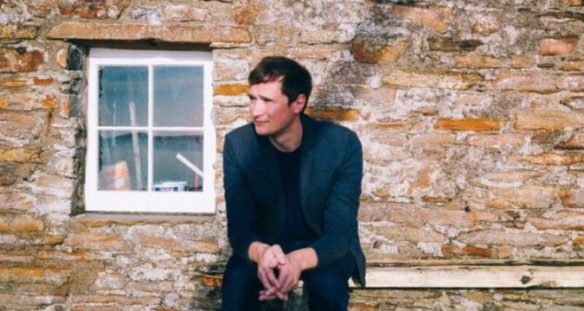
Erland Cooper is very much a ‘glass half-full’ musician. If anything, the glass is often full to overflowing as he has kept busy with creative projects through lockdown, up to and including a chance to finally realise the Barbican show he had planned for June.
Although he resides a long way from his native Orkney, both on a physical and spiritual level, Cooper finds solace and inspiration in his Hoxton studio. “It’s been an absolute safe haven”, he says gratefully. “When lockdown was very acute, I would still come over at 6-7am, before anyone was up, and not meet a soul. It’s obviously a bit different now, but it’s just been great, and I’ve been able to get under the fingernails of a few projects that I would perhaps not have had time for before.”
His third album, Hether Blether – the concluding part of an Orcadian trilogy begun by Solan Goose and continued by Sule Skerry – was released at the end of May. This was just as it was dawning that the UK tour, scheduled for September, was going to become a casualty of the restrictions brought about by the Coronavirus pandemic. He remains philosophical, however. “Live performance isn’t the be all and end all for me, it’s part of the journey, and literally part of the transportation to Orkney, when you’re up and down the country – in the Barbican Hall for instance. At the end of last year it came into realisation that there is a whole new enjoyment to bringing to the audience a room, a space, a ferry that takes you up to the North Sea and back again. That became a real process, but I’ve forgotten about it to a point. We were starting to put that into place, but that tour wasn’t until September anyway. Live music takes a lot out of me, and I tend to put it to the back of my mind until I’m ready to give it everything, so I hadn’t thought about it a great deal.”
In terms of the record, Erland had already let it out into the wider world. “You know a record is truly done when I play it to my close friends”, he says. “That’s when I feel like something’s done, and finished, but it’s taking it that bit further when you actually give it out to the world, and all of a sudden it’s getting reviewed – good or bad, it doesn’t matter – and it’s getting listened to. I got a message from someone who said they were trying to introduce music to my daughters, and trying to get them to sleep, a little bit earlier. Every night, about 15 minutes before they go to bed, they play one of my records back to back, and they said it sets the tone but it also gets them asking questions about classical music and electronic music. I just thought, you couldn’t plan that! There’s nothing you could try and do to plan that. So it really feels finished when it goes out the door.”
As with Solan Goose (air) and Sule Skerry (water), Hether Blether (land) is a deeply personal piece of work. “It finds some of the themes that we’re all feeling here during lockdown – those of community, ‘alone’ spaces, the people we spend our time with. Those are all feelings that are very much in this final record for me, personally. It is certainly a zeitgeist of it feeling like a good time to reflect and think about transportation, real or imagined. In a nutshell it was definitely surreal, but I also felt like it was important to just get it out. That was a good thing. Like a gannet!”
We agree on the importance of new music at this time, a source of positive energy. “I’ve really been enjoying the new records from Ghostpoet and Nadine Shah”, he says, “along with some classical releases, and going back to things I perhaps hadn’t heard before – Peter Gregson’s work, for example – and just going into things. Everyday when I come into the studio I listen to a new record, whether it’s a score by Alex Somers, or Julianna Barwick. It’s a constant, it’s a great thing.”
He was careful to control the noise around Hether Blether’s release in light of the pandemic, and found new positives from the experience. “When I was thinking about promoting the album I thought it was important not to shout about it, and just to have a break for a month or so. I think that was absolutely the right thing to do, and that’s the only thing I probably would have changed about the behind the scenes process. I quite enjoyed looking at it in a different way. It has been a great time for music, hasn’t it?”
We move on to discuss a mutual love, the Wigmore Hall – and its success in streaming live concerts, giving an indication of the live music we all miss. “That hall is very important to me”, he gushes. “I can’t wait to go back. I should take a little hip flask the next time I’m back there. I’ll do it very respectfully!”
Talk turns to a much wider space, and the video accompanying Skreevar, second single from Hether Blether. In it, Cooper dashes along the street in Orkney before jumping, fully clothed, into the North Sea. “I had a lot of e-mails from people saying ‘did you jump?’ and I had to say, ‘Did you watch the video to the end? Do you think a wee record label can afford to fake that?!’ We did one take, and that was it! I don’t know if I told you but when we did it I ran up to the edge three times. The first time was to judge how long it would take, the second time was so that Alex (Kozobolis), who was videoing could test running behind me, bearing in mind he had to do that with a camera and not fall in the sea as well, and then the third time.”
The shoot created quite a stir. “A couple of days before we did it we had to plan the tide, so we had that right. When we were practicing we had to stop traffic several times, and then there was a whole group of local folk who effectively started to egg me on, and then a bunch of tourists who were shouting like this sort of thing happens every day! Then, this really young couple were on the peer to the left, and they were oblivious to what was happening. They sat down where George Mackay Brown and I like to sit and reflect, and they must have sat down to have their supper and a glass of wine or something, after the second take. They got the fright of their lives when this six foot three, gangly bloke in a nice jacket jumps off the peer! They were just like, what? That was a highlight. It was very cold by the way, it didn’t look like it but it was!”
Watching it from the seclusion of a locked down living room is strangely liberating. “It was a great memory. I was saying to the guys at the time, I did it when I was 16-25, I’ll do it again when I’m middle aged, and then again when I’m 70. I’m only doing it once though, to get it right! It was only about a metre deep, so you would have reached the bottom. I’ll tell you what though, I’ll never forget that as long as I live! How often can you say that to yourself, really truly? That was what it was for, to create an adult memory as strong as a childhood one.”
Erland has already performed at the Barbican in a sense this year, taking over the Centre’s Instagram page for a week and projecting films made by Alex Kozobolis to his own albums across the estate. “That was so interesting for me. I don’t know if you ever used to develop film, where you effectively learn the virtue of patience – even just posting it off to the chemist. You don’t know what 35-40 pictures you’re going to get back, and there’s something about projecting digital footage that had come all the way from Orkney onto something as iconic as the Barbican Brutalist architecture. It felt like a slow development of film, and I really enjoyed that. I felt that Margaret Tait, the Orcadian experimental film maker, would be proud of that. Using the technology we have now, a portable projector, we were reframing work done by hand as a reference for true escapism. I know the question has come up for a lot of people, asking themselves where they truly want to live in the future, because of how limiting it is living in the city.” The duo enjoyed their endeavours. “It was really good for Alex as well, he really enjoyed the process, and I got to enjoy the process of curating some of his photos of the Barbican which again was a joy.”
Lockdown has brought with it a deep appreciation of the natural world for many people, and this is a key element of Erland’s music and life. “I think noticing that everyday joy and magic from nature has been so prominent up until now because of less noise pollution. It shouldn’t take a pandemic for people to value the great outdoors, but I’m glad people are taking notice. I think it’s like anything in life, if you take away the liberty, that’s when you truly value it. It’s very sad really. I hope it’s a wake-up call, a consistent driver for people.”
He has remained in close contact with his home island. “It’s been lovely. My folks were down in England, believe it or not, on a very rare potential holiday to Spain. I really feel for them, because they don’t really go away that much, and they’re both now retired so were really looking forward to it. There’s something about that generation when the pandemic first hit which was quite cavalier, which very swiftly changed because they’re very intelligent people! We agreed that going back to Orkney made sense, and so they drove through the night and got to the ferry crossing just before they closed – it was the last one for the night and before they closed for lockdown!”
Now their existence is completely independent from the mainland. “My dad said that lockdown for them isn’t much different from daily life. They have a cup of tea with the sunrise, and go for a walk or two a day. For them it was really good to get home. I’ve become friends with a few other people posting on Instagram, and I’ve been drawn to them. I’ve found it a great joy. I have one friend who is a wonderful artist, she sent me a little Orkney rescue package, some food, pieces of fudge and bits of art. I must admit I ate everything the day it arrived! I feel very connected with it. Also, you know very well that these records that I have been making are ultimately a tool for someone who isn’t there, and would go off with their books and tape recorders, and take snippets back with them, to try and capture an essence of it.”
Cooper has a number of musical irons in the fire. “I am using a different approach for the ambient ‘sister’ to Hether Blether, for as you know there has been an ambient companion to each of the albums so far, Sea Change and Murmuration. The final record that will be a companion to Hether Blether is called Landform. I’ve shared my work with Marta Salogni, the Italian producer. She’s a great lover of analogue production and recording, using tape machines as an instrument, which I enjoy too. Instead of throwing ideas around I thought I might put into three folders, titled, air, sea and land, and just put sounds into them, a whole collection of tones out of Hether Blether, drop them into the three folders and say there you go. It’s a bit like pick a card, any card – pick a few, and then break up the elements of the final record. It is about the community but it pulls together elements from the first two albums as well, so just putting the tones into three folders and asking her to pick what she wants when she wants, at no pace, and no urgency. That’s something I’ve started. I also have something else which is quite ambitious, but I will say no more at this stage!”
It was perhaps inevitable that Cooper would be busy, given his work ethic. “I think when you give something away, I just have this hunger to keep exploring the things that excited me the most during the process of creating and honing in on that. You’ll probably get a sense of what I mean. It’s a culmination of learning, developing and writing wrapped up together, so I’m working on that. “
The calm of the studio is helping creativity. “It is, and I’m very fortunate to have it. The lockdown is the only time I’ve ventured into watching movies there. I tend to just work in the studio but I’ve had a few 18-19 hour days in there. It’s not just a working environment, sometimes it can become like a cinema! I tell myself that I can only watch a film in there if it has an exceptional score.”
Erland Cooper performs with members of the London Contemporary Orchestra at the Barbican on Saturday 10 October, with images and video content from Alex Kozobolis. The concert can be seen either in person or online, with tickets available from the Barbican website.





 Interviewed by
 Cooper has a number of musical irons in the fire. “I am using a different approach for the ambient ‘sister’ to Hether Blether, for as you know there has been an ambient companion to each of the albums so far, Sea Change and Murmuration. The final record that will be a companion to Hether Blether is called Landform. I’ve shared my work with Marta Salogni, the Italian producer. She’s a great lover of analogue production and recording, using tape machines as an instrument, which I enjoy too. Instead of throwing ideas around I thought I might put into three folders, titled, air, sea and land, and just put sounds into them, a whole collection of tones out of Hether Blether, drop them into the three folders and say there you go. It’s a bit like pick a card, any card – pick a few, and then break up the elements of the final record. It is about the community but it pulls together elements from the first two albums as well, so just putting the tones into three folders and asking her to pick what she wants when she wants, at no pace, and no urgency. That’s something I’ve started. I also have something else which is quite ambitious, but I will say no more at this stage!”

