A fascinating challenge lies behind this album. Recently Courier Sound released an album of 23 tracks in 23 minutes by their artist Alien (aka Alastair Johnson), and it was so successful that label head Stuart Bowditch decided to set the same challenge for Eumig, aka Nick Dawson.
Given Dawson’s preference for working with drawn out structures, this needed a change of approach – akin to asking Schoenberg to write wearing Webern’s hat. He has responded with a set of musical postcards that meet the brief and create a very concentrated piece of work.
What’s the music like?
Fascinating and extremely varied. Dawson has in effect created a single work by taking the small cells and knitting them together. The music moves between the ideas logically, and flits between intimate asides and much bigger textures, the camera panning out to take in enormous vistas.
Each minute has its own important part to play, but highlights include the distinctive sighing motif of Law Of Diminishing Returns, then the glitchy pair of Electronic Communication and Audio Lingual Acquisition, introducing a sharper edge to proceedings. Worship Of Heavely Bodies is appropriately stellar, while the friendly signals of Primary Colours are nicely placed. Pteroylmonoglutamic Acid (easy for you to say!) has a big presence, like a large assembly of machinery grinding into action.
Does it all work?
Yes. There are some extremely concentrated ideas here, many of which could easily run for much longer and carry the same intensity. The tapestry is woven in a compelling fashion however, Eumig’s thoughts logical to follow but also taking a few unexpected turns.
Is it recommended?
Yes. 23 is a great idea for a challenge to throw down to a composer, and for someone used to composing in much longer forms Nick Dawson handles the shorter form with aplomb. It will be interesting to see what effect this form of working has on his output in the future.
Richard Norris has kept himself busy during lockdown. As well as running the excellent Group Mind resource on Facebook (do join if you have an interest in any sort of ambient music!) he has been making music to help ease the stress created by the COVID-19 pandemic, confinement and worrisome news headlines – to name just a few of our bugbears in recent months.
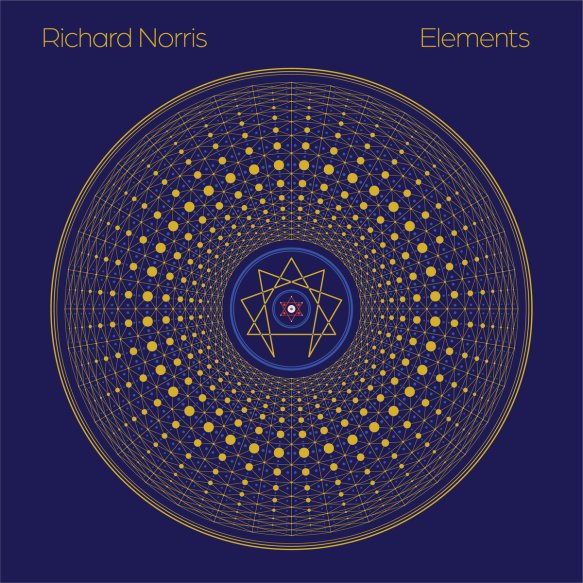
Having released a series of Music for Healing tracks, Norris now heads into album territory with meditations on the five Chinese elements. He is helped by vocalist Bishi (who appears on Water) and some wonderful artwork by Mark Golding and Andy Ball, and a striking front cover image designed by Lyndon Pike.
What’s the music like?
Although his music with The Grid and Beyond The Wizards Sleeve is largely beat-driven, Norris has always shown a talent for creating musical textures that can soothe or comfort, and Elements is a fruitful use of that resource.
He uses appealing, analogue-driven sounds twinned with sequencers, making consonant musical motifs and – where required – well-crafted beats. Earth sets a solid base, its loops unfolding at a naturally relaxed pace, while Water is a more expansive structure, contrasting immersive vocals from Bishi with gentle instrumental oscillations.
Norris’s interpretation of Fire brings to mind the vision of flames lazily flickering in the half-light, with glowing embers that leave a lasting warmth. This eases us into the lovely stillness of Air, which could easily go on for longer than five minutes and not outstay its welcome, after which Space is appropriately remote, with lights twinkling in the distance.
Does it all work?
Yes. Elements is ideal for either end of the day, soothing the fevered brow but also working the brain nicely with its loops and well-constructed melodies. The music is always on the move, but the mind can choose the intensity with which it follows the designs.
Is it recommended?
Very much so. If the cover hasn’t already drawn you in then the music will. For best results the LP is strongly recommended, but anything linked to headphones will do the job. Norris offers a half hour of escapism, something we can all do with right now!
Peanuts comic strip, drawn by Charles M. Schulz (c)PNTS
Opferlied WoO 126 for voice and piano (1795, Beethoven aged 24)
Dedication not known
Text Friedrich von Matthisson
Duration 3′
Listen
Background and Critical Reception
Beethoven set the text to Freidrich von Matthisson‘s Opferlied on no fewer than four occasions, and there are signs that he became somewhat obsessed with its text. The ChoralWiki entry for the piece – which was eventually set in a choral version – details how Beethoven included the statement Das Schöne zu dem Guten! (“The beautiful to the good”), in his late manuscripts.
The entry goes on to describe how ‘Matthisson’s text depicts a young man in a oak grove offering a sacrifice to Zeus. The man asks Zeus to be the protector of liberty, and to give him, both now and in his old age, beautiful things, because he is good’.
This first version remained unpublished – but by the time of the fourth version Beethoven was writing for a four-part chorus and orchestra, indicating perhaps how the importance of the text had amplified.
Thoughts
The Opferlied is an invitation to the baritone to sound forth, Beethoven assigning his singer a strong melody which is doubled by the piano almost throughout.
The song is a passionate one, with long notes for the singer that make it sound rather like a hymn – and the the piano responds in reverential kind.
Recordings used
Dietrich Fischer-Dieskau (baritone), Jörg Demus (piano) (Deutsche Grammophon) Hermann Prey (baritone), Leonard Hokanson (piano) (Capriccio) Peter Schreier (tenor), Walter Obertz (piano) (Brilliant Classics)
The two baritone versions are very fine indeed, though Fischer-Dieskau’s tones are perhaps a little more luxurious. The tenor version from Peter Schreier takes the key up into F major (the baritone versions are in D) and his ringing tone is suitably dramatic.
Spotify links
Dietrich Fischer-Dieskau, Jörg Demus
Hermann Prey, Leonard Hokanson
Peter Schreier, Walter Obertz
You can chart the Arcana Beethoven playlist as it grows, with one recommended version of each piece we listen to. Catch up here!
Also written in 1795 Viotti – Violin Concerto no.24 in B minor
Next upTrio for 2 oboes and cor anglais in C major Op.87
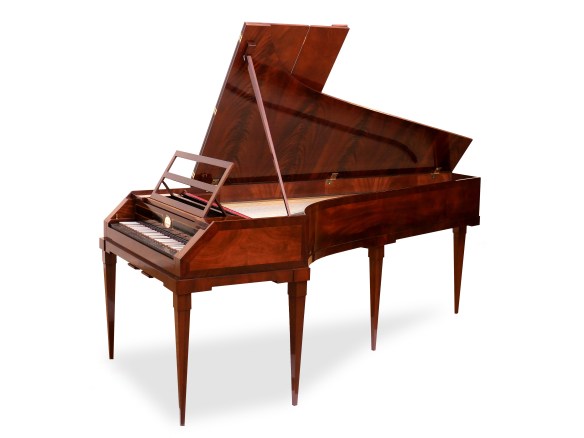
A piano of Aaron Walter, similar to the one Beethoven used after his arrival in Vienna in 1792.
Written by Ben Hogwood
If you’re a regular visitor to these pages – first of all, thank you! – you will have noticed Arcana’s Beethoven project has been picking up some momentum of late. So far it has covered 55 pieces from early on in his careers in Bonn, and has now followed him to Vienna and his first official publications, the three Piano Trios Op.1. That means one very significant body of work is coming into view – the Piano Sonatas.
One of the main attractions to this project was to attempt to fully appreciate this cycle of 32 works, long considered one of the finest achievements in Western music. It means that writing about these amazing pieces is potentially quite intimidating, given the body of work that already exists – and yet the appeal of the music is that anyone at any level can fully enjoy the fruit of Beethoven’s labours.
Amateur pianists – such as yours truly! – can enjoy them too. A couple of the works published as Op.49 are what I would call ‘entry level’, and I had the pleasure of playing one at university, post-Grade 5. Some famous passages are within scope, too – the slow movement of the Moonlight sonata (not the fast one!), the Pathétique (again the slow movement!) and isolated passages of some other works.
There are many, many recorded versions of the sonatas. Most complete cycles – curiously – are by male pianists, so it gives me great pleasure to have interviewed Angela Hewitt about these works, a piece I will publish soon on the site. She has nearly crossed their line with her own cycle, and we will enjoy her versions on the Hyperion label. Other guides I have chosen are ‘classic’ sets from Emil Gilels, Claudio Arrau, Stephen Kovacevich and Alfred Brendel, an older set from Wilhelm Kempff, and one of the newest of all from Igor Levit, released just last year on Sony Classical.
I also felt it important to include a cycle on pianos of Beethoven’s time, so have opted for Paul Badura-Skoda on the Arcana label, ironically, performed on now fewer than seven different fortepianos.
The cycle will start shortly with the three works published as Op.2 and dedicated to Haydn in 1795. It will then set us down in a heap with the final utterance, the C minor sonata Op.111, finished in 1822. By that point we will know an awful lot more about Beethoven, and just how these extraordinary pieces came to be. Hope you can join us for the ride!
You can chart the Arcana Beethoven playlist as it grows, with one recommended version of each piece we listen to. Catch up here:
Beethoven’s first substantial piece for strings alone was not a string quartet. This seems to have been a deliberate plan on his part – just as it was to begin his published output with three piano trios. By doing this he was utilising forms not already comprehensively updated by Haydn and Mozart, giving himself some room for innovation and relieving some of the pressure he undoubtedly experienced on moving to Vienna.
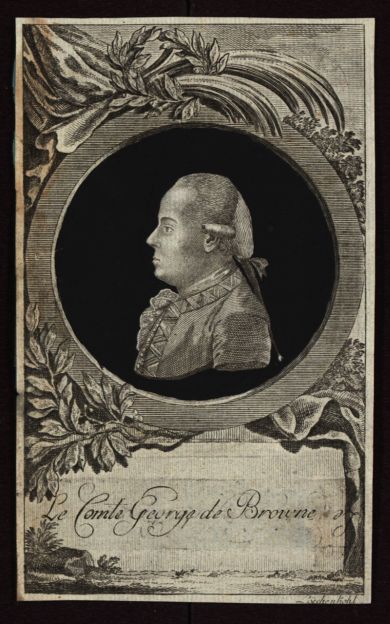
The first of five works for string trio has its roots in Bonn, and appears to have been commissioned for a string quartet, but other than that very little is known or written about its origins. The completion date is also uncertain but has been narrowed down to 1795 – with the certain publication date of 1797 in Vienna. It was dedicated to the Countess of Browne, wife of his patron Count Johann Georg von Browne.
Although Mozart barely used the string trio, his one major work, the Divertimento in E flat major K563, an acknowledged masterpiece, is the stimulus for this piece. Aside from residing in the same key of E flat major, Beethoven’s work also has six movements, with dance forms used, ‘of the serenade type’, as Daniel Heartz notes – not to mention a slow movement in the key of A flat major, again following Mozart’s lead. Beethoven’s innovation is to push the trio’s capabilities even further, with full bodied writing often taking the piece beyond three and even four parts with the use of double stopping (the players using more than one string simultaneously).
Thoughts
Beethoven’s first piece for stringed instruments shows signs of his ever-expanding thinking when it comes to writing major pieces. His structures are getting ever bigger, with the six movements of this piece lasting over 40 minutes.
The parallels to Mozart’s Divertimento, outlined above, are used as a base for Beethoven’s own wholly original writing. The first movement, marked ‘con brio’, tears out of the blocks quickly, its urgency maintained through energetic treatment of its main theme. The second movement is marked Andante but could be interpreted as a slow dance in triple time, the cello setting out the roots of the dance steps while violin and viola shadow each other in their melodies. The third movement is a winsome Minuet built on a minimal theme, Beethoven showing how a very simple two-note motif can power an entire, light hearted dance.
The fourth movement, the slow movement, is charming and quite minimal, not as ‘heavenly’ as Mozart’s but nonetheless suspending thought and providing a sublime eight minutes of music. Just occasionally a hint of a shadow passes over the music towards the end, but Beethoven reaches a serene close. There is a glint in the eye of the fifth movement, another Minuet, before the last movement sets off confidently.
Beethoven’s use of silence is starting to become noticeable here, and the theme feels like it has a couple of notes missing – but this is all part of the personality and slight humour. The virtuosity is more obvious in the string writing, before we reach a sprightly conclusion.
There may be three instruments but with double stopping and close harmonies Beethoven makes the music sound as though there are at least four, projecting well beyond expectations.
This is a wonderful piece for night-time listening, with tunes aplenty, good humoured exchanges and affecting moments of tenderness. In short, it is chamber music using its first principles.
Recordings used and Spotify links
L’Archibudelli (Vera Beths (violin), Juergen Kussmaul (viola), Anner Bylsma (cello) The Grumiaux Trio (Arthur Grumiaux (violin), Georges Janzer (viola), Eva Czako (cello) (Philips) Anne-Sophie Mutter, Bruno Giuranna and Mstislav Rostropovich (Deutsche Grammophon) Leopold String Trio Isabelle Van Keulen (violin), Lawrence Power (viola), Kate Gould (cello) (Hyperion) Trio Zimmermann (Christian Tetzlaff (violin), Antoine Tamestit (viola), Christian Poltéra (cello) (BIS)
You can listen to the versions from L’Archibudelli, the Grumiaux Trio and the Mutter-Giuranna-Rostropovich trio on this playlist:
There are many fine recordings of the Beethoven String Trios. Some are made by starry trios, such as the group of Anne-Sophie Mutter, Bruno Giuranna and Mstislav Rostropovich. Perhaps inevitably these groups play like soloists rather than established group, and these three soloists go for a more luxurious approach.
The recommendations are more group-based, including period instrument group L’Archibudelli, who have an attractive, slightly grainy sound. The Grumiaux Trio have a very roomy recorded sound but the sweetest of tones from lead violinist Arthur Grumiaux, with plenty of warmth and charm on display. The Leopold String Trio on Hyperion give a finely balanced account, but the Trio Zimmermann on BIS are recommended by a nose for their brilliant, highly musical playing.
You can chart the Arcana Beethoven playlist as it grows, with one recommended version of each piece we listen to. Catch up here!
Also written in 1795 Haydn Symphony no.103 in E flat major ‘Drumroll’