Matt and Rich Cawte’s Octavcat project has yielded some very fine electronic music to date, and with Ailurophobia they deliver their second album for the VLSI label.
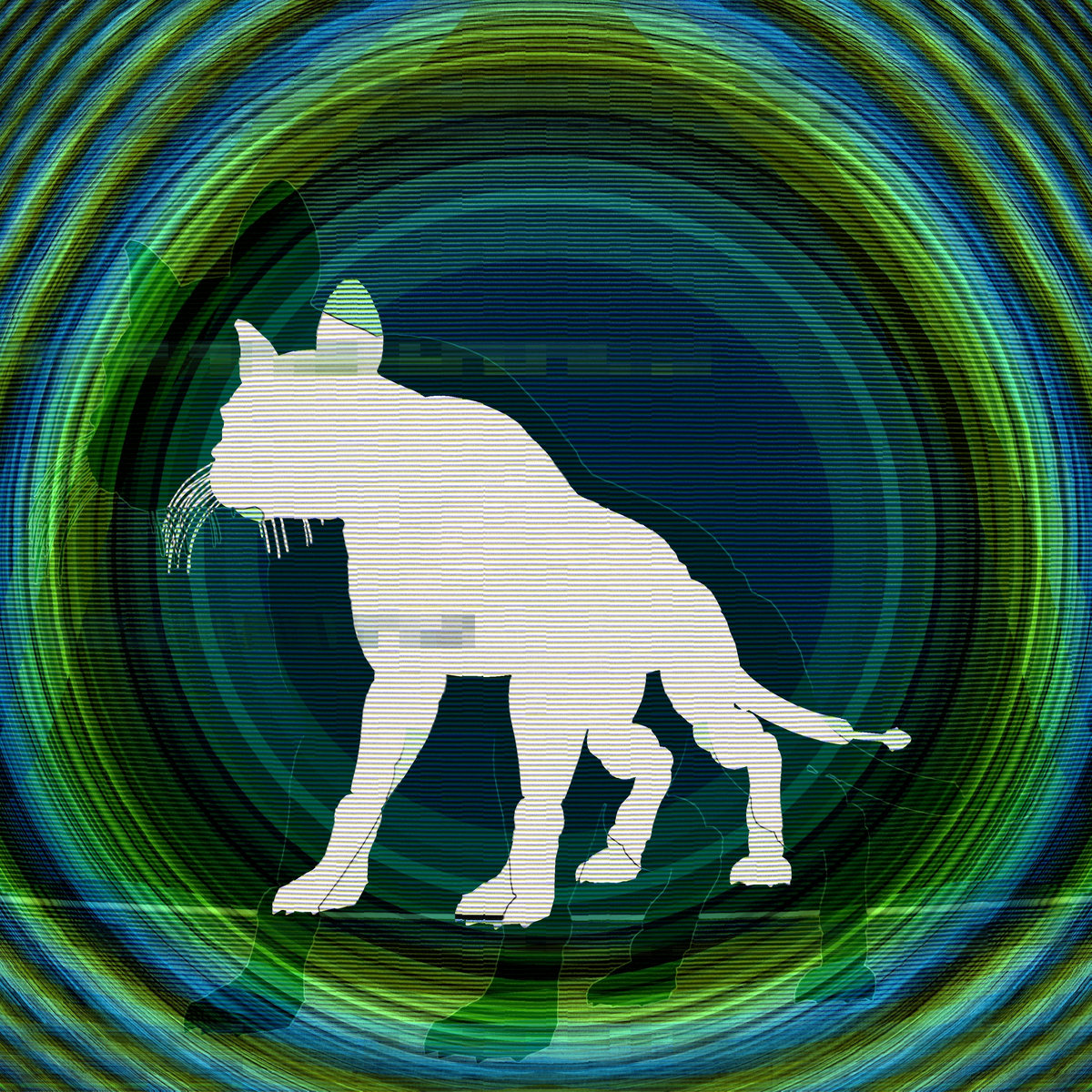
Ailurophobia is ‘an intense, irrational and persistent fear of cats’ – a title that was almost certainly applied to this album in jest. That would fit with the subtle sense of humour that Cawte have brought to their music, and also the feline that graces the cover! Here it is described as “a ten-track selection of woozy, playful electronic music, precision hewn from the finest hardware synthesizers.”
What’s the music like?
What it says on the tin! An entertaining selection of beats and electronic activity from the duo that is consistently engaging and full of good ideas.
Beats ricochet across their steadily evolving pictures, which are often descriptive and carried out on several speed levels. CV Behaviour, for instance, is an amiable collision of early techno percussion and nuggets, with broader thoughts spanning greater distances.
Some of the music has a slightly sinister edge, with the dubby trudge of Skjærgård especially strong. Set 22b is an appealing, easy jam, while the closing Wrong Gravity is really excellent, from the glowering depths of the bass to some seriously big vistas that open out beautifully on headphones.
Arguably the pick of the bunch is the strongly evocative Gibbous, upping the tempo with strong, busy beats and acidic riffs but with a majestic breakdown that seems to represent the night sky itself.
Does it all work?
It does – and repeated listening reveals extra layers within those you’ve already heard.
Is it recommended?
Enthusiastically – an electronic tapestry whose colourful secrets are revealed with imagination and flair. No need to fear Octavcat on this evidence!
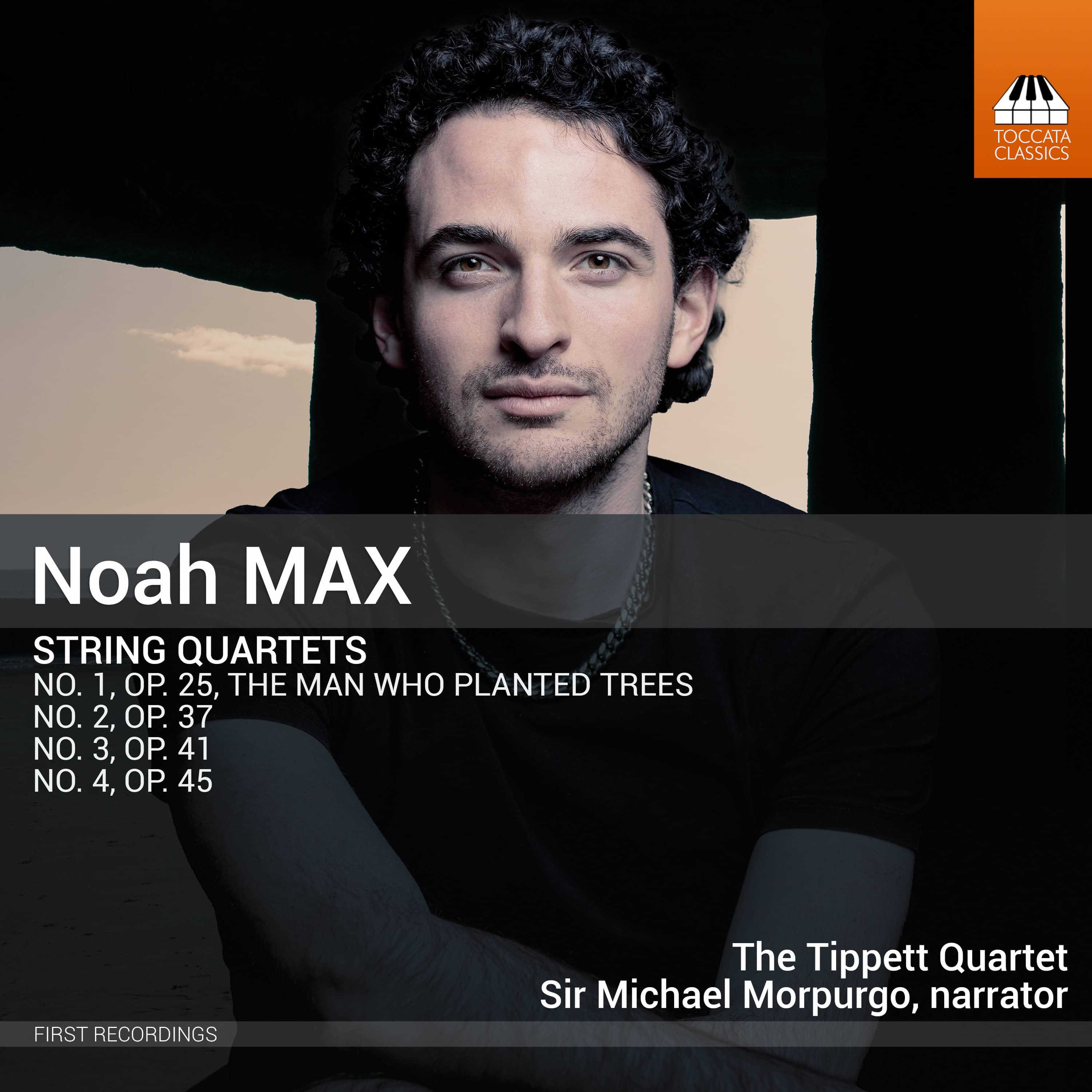
Tippett Quartet [John Mills, Jeremy Isaac (violins), Lydia Lowndes-Northcott (viola), Božidar Vukotić (cello)], Michael Morpurgo, narrator (‘The Man Who Planted Trees)
Noah Max String Quartet no.1 Op.25 ‘The Man Who Planted Trees’ (2020) String Quartet no.2 Op.37 (2021-22) String Quartet no.3 Op.41 (2022) String Quartet no.4 Op. 45 (2022-23)
Toccata Classics TOCC0749 [68’46”] Producer Andrew Keener Engineer Oscar Torres
Recorded 16 August 2023 at St Silas Church, Kentish Town, London (‘The Man Who Planyed Trees’), 29-31 January 2024 at SJE Arts, Oxford
Reviewed by Richard Whitehouse
What’s the story?
Toccata Classics issues a second volume of music by Noah Max – devoted to his four string quartets which emerged at pace during the early years of this decade, and rendered here with conviction by the Tippett Quartet as part of its ongoing commitment to contemporary music.
What’s the music like?
As is emphasized in Martin Anderson’s introductory note, Max is nothing if not versatile for a creative figure still in his late twenties. Other than composition, he has been equally active as a cellist and conductor while also being a poet, film-maker and visual artist. Listeners are most likely to have encountered his music via the chamber opera A Child in Striped Pyjamas, after the novel by John Boyne, which premiered to considerable acclaim in London just over three years back and is an acknowledged influence on what he has composed subsequently.
Not just inspired by Jean Giono’s fable The Man Who Planted Trees, Max’s First Quartet also incorporates this text – eloquently narrated by Michael Morpurgo – across its three movements that chart a course from speculative uncertainty, via rapt inwardness, to dynamic resolution. It may also have three movements, but the Second Quartet is otherwise its antithesis. The initial subtitle, ‘The Ladder of Escape’ (after Joan Miró), affords real insight into its unfolding from fractured and sometimes fractious indecision, via an impulsiveness which ultimately turns in on itself, to a gradual accumulation of sound that yet leaves its overall formal and expressive trajectory in abeyance. One reason, perhaps, why this piece has been placed out of sequence at the close of the programme, as if in anticipation of a response which has yet to be written.
As the composer himself notes, the Third Quartet is designed around the number ‘three’ that imparts instability to almost every aspect; not least a volatile interplay between its harmonic density and a clearly defined chorale as comes into focus in a visceral if (almost inevitably) self-destructive climax – made the more plangent by down-tuning the lowest string on each instrument such that darkness overcomes the ensemble. Likewise cast in a single movement, the Fourth Quartet draws on aspects of Max’s aforementioned opera – but this is only made concrete by the emergence of Jewish liturgical chant during its anguished final stages. Max further draws attention to a conclusion whose demonstrably provisional manner makes the writing of a ‘fifth quartet’ to conclude this putative trilogy a likely and intriguing prospect.
Does it all work?
Pretty much throughout. What becomes evident, above all, is the ease with which Max moves between differing styles and aesthetics so as to result in an approach beholden to none. While this may seem relevant to the work at hand rather than establishing consistency across these quartets as a whole, it should not be taken as failure of intent but rather as an indication that he is still in the formative stages of a composing career which will doubtless throw up more than its fair share of surprises and circuities before one can speak of a definable ‘Max idiom’.
Is it recommended?
Yes it is – not least as these readings have a conviction expected from the always enterprising Tippett Quartet, along with an almost ideal ‘quartet sound’. Those who have Toccata’s earlier anthology of Max’s chamber music (TOCC0638) need not hesitate to acquire this follow-up.
Ailish Tynan (soprano), Paula Murrihy (mezzo-soprano), Robin Tritschler (tenor), Iain Burnside (piano)
Boyle A soft day, thank God (1912); Looking Back: Carrowdore (1961-6); The Joy of Earth (1914); 2 Christmas Songs: Blyssid be the Tyme (1923-4); Himself and his Fiddle (1929); Have you news of my boy Jack (1916); Looking Back: O ghost, that has gone Vaughan Williams Orpheus with his Lute (1925) Boyle Looking Back: The mill-water Vaughan Williams The Water Mill (c1922) Maconchy Sun, Moon and Stars from Sun, Moon and Stars (1977) Boyle Spring goeth all in white (1924); A Song of Enchantment (1921-2) Wood The blackberry blossom (1897) Boyle Roses (1909) Wood Oh! Skylark, for thy wing! (1884) Boyle All Souls’ Flower (1928) Wood Darest thou now, O Soul (1897) Boyle The Last Invocation (1913)
Wigmore Hall, London Tuesday 9 March, 1pm
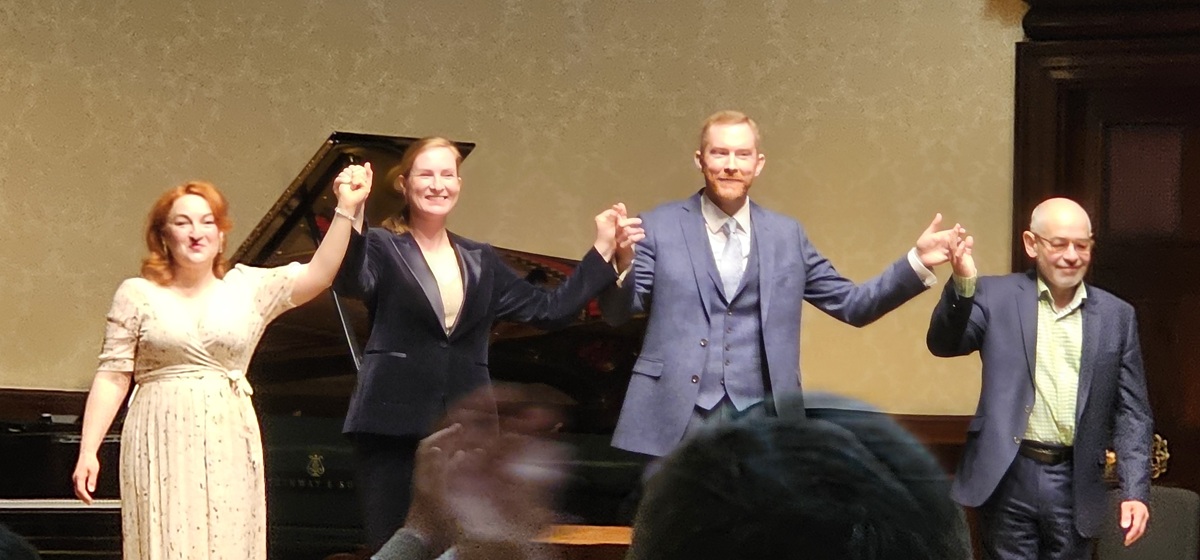
Reviewed by Ben Hogwood Photo (c) Ben Hogwood
“I think it is most courageous of you to go on with such little recognition,” wrote Vaughan Williams to his pupil, Irish composer Ina Boyle. “The only thing to say is that it does come finally.”
This Wigmore Hall concert gave the strongest possible proof of recognition at last for Boyle’s work, her songs brought to life by a starry cast of singers with pianist Iain Burnside. The program helpfully complemented her work with that of teacher Vaughan Williams, cousin by marriage Charles Wood, and good friend Elizabeth Maconchy.
The texts reflected a love of the outdoors, surely gained during her relative seclusion in home territory at County Wicklow, and also celebrated the season of spring, evident to all arriving at the Wigmore Hall for this lunchtime recital.
The brightly voiced A soft day, thank God, took us outdoors immediately, the ‘scent of drenching leaves’ and the rain that ‘drips, drips, drips from the leaves’ brought to life from Winifred M Letts’ words. They were sung with clarity by Robin Tritschler in the first verse and a brightly voiced Ailish Tynan in the second. Boyle’s songwriting is simple – not a criticism – and direct in its communication, reflecting the shy disposition of its composer but growing in assurance as her style developed.
This was evident in the selections from the song cycle Looking Back, with Carrowdore lost in thought through Paula Murrihy’s thoughtful account. The elusive and more playful O ghost, was laced with humour by Tritschler, while Murrihy’s full-bodied vocal was complemented by the flowing current of Burnside’s piano in The Mill Water.
The Joy Of Earth was noticeably more demonstrative, while Blyssid be the Tyme benefitted from both Tynan’s effortless projection and Boyle’s clean melodic line. Murrihy did extremely well with the wordy Himself and his Fiddle, accentuating the song’s folksy triple time with Burnside, while the brief but bright Robert Bridges setting, Spring goeth all in white, was beautifully phrased by Tynan.
Boyle’s inwardly facing songs were the most moving, notably A Song of Enchantment, a setting of De la Mare given mysterious light and shade from Tritschler, who held the stillness of twilight exquisitely as the shadows advanced. The tenor also kept the inner questions of Roses in a confidential tone, while Burnside’s wandering right hand line aided the wonder of All Souls’ Flower, where the three singers took a verse each. Most affecting of all Boyle’s songs here was a setting of Rudyard Kipling’s First World War poem, Have you news of my boy Jack?, Murrihy and Tritschler playing a tense scene of anxious questions, with answers that a mother dreaded to hear.
Vaughan Williams was represented by a beautifully sung account of Orpheus with his Lute from Tynan, then a vividly pictorial account of The Water Mill from Tritschler, where Burnside’s characterisations of the roaring waters, the ticking of the mill clock and the miller’s tabby cat were exquisite.
The composer Charles Wood, Boyle’s cousin by marriage, is known primarily for Anglican church music rather than exploits in the concert hall, so it was satisfying that the centenary of his death this year was marked with three characterful songs. Paula Murrihy worked wonders with another wordy composition, the frivolous The blackberry blossom, and with the serious tones of Whitman setting Darest thou now, O Soul. Tynan was in her element for the soft tones of Oh! Skylark, for thy wing!, Burnside allowing her room to spread her wings.
Elizabeth Maconchy nearly stole the show with Sun, Moon and Stars, a modern song of striking musical language reflecting the ‘new and strange’ of its first line. The top notes reached for celestial highs, and were found unerringly in an exceptional performance by Tynan.
Wrapping up a memorable hour of music was Boyle’s The Last Invocation, an impassioned setting of Whitman throwing open the doors with the strongest possible advocacy from Robin Tritschler. It completed a concert where the songwriting craft of Ina Boyle was confirmed beyond doubt, her voice at last projecting further afield.
You can listen to the music from this concert in a Tidal playlist, including songs by Ina Boyle recorded by the artists at the Wigmore Hall for Delphian in 2020.
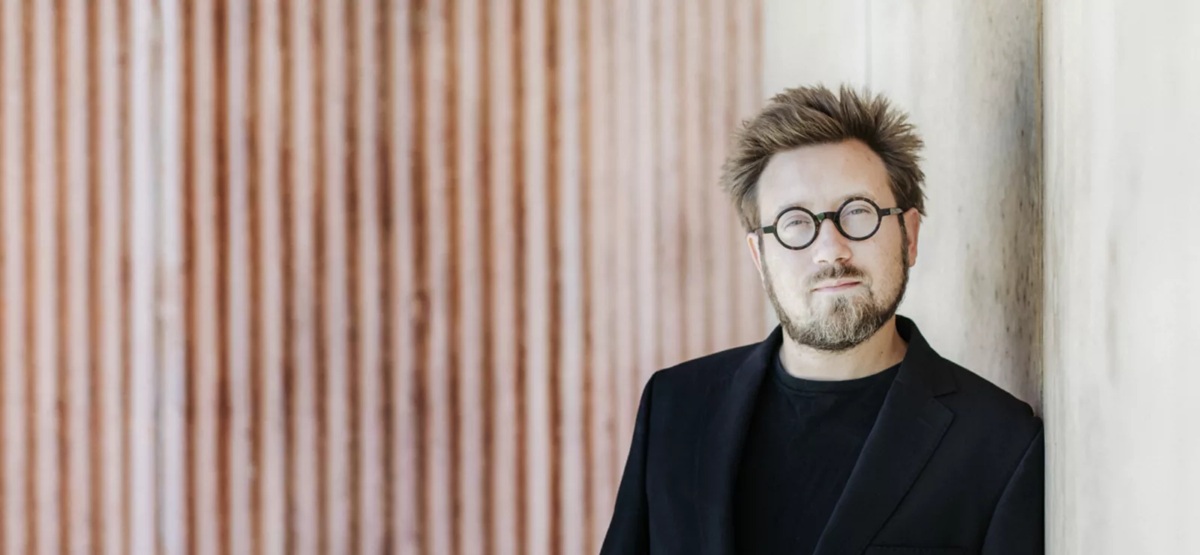
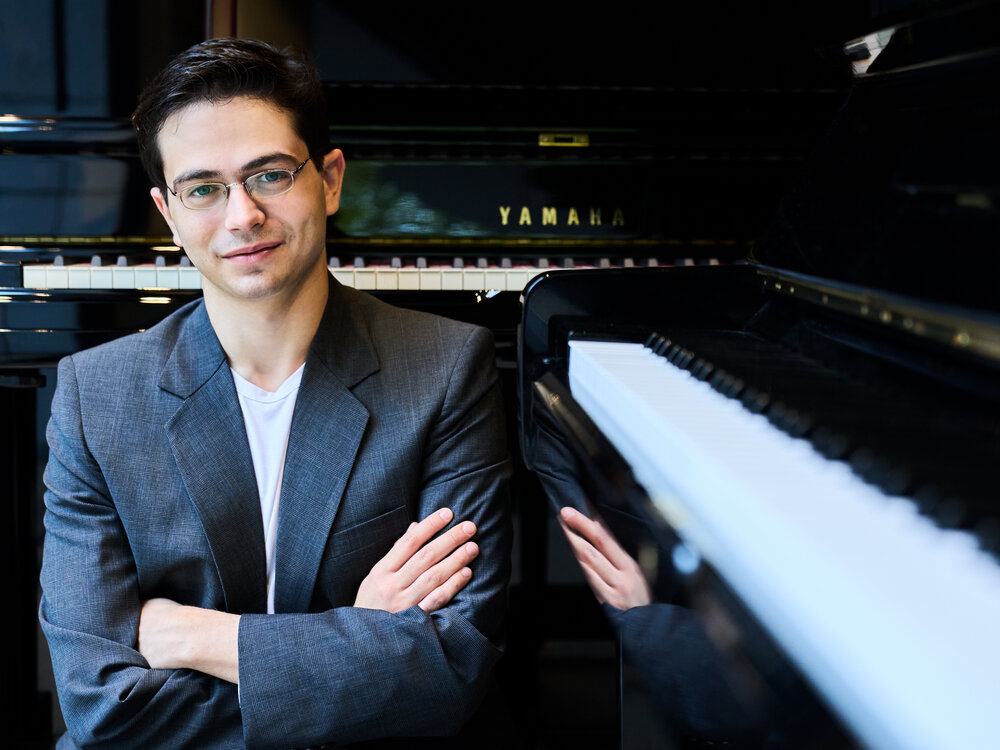
Ariel Lanyi (piano, below), London Firebird Orchestra / George Jackson (above)
Mendelssohn Overture: A Midsummer Night’s Dream Op.21 (1826) Beethoven Piano Concerto no.4 in G major Op.58 (1805-06) Puccini Crisantemi (1890) Haydn Symphony no.96 in D major ‘The Miracle’ (1791)
St John’s Church, Waterloo, London Sunday 8 March 2026 [6pm]
Reviewed by Richard Whitehouse Picture of George Jackson (c) Short Eared Dog Photography; Picture of Ariel Lanyi (c) Kaupo Kikkas
Having appeared at London Chamber Music Society on four previous occasions, the London Firebird Orchestra tonight made its debut at the organization’s new home, St John’s Waterloo, with a programme largely focussing on music from the late Classical and early Romantic eras.
Mendelssohn’s overture A Midsummer Night’s Dream seldom disappoints as a concert-opener, and conductor George Jackson duly ensured a characterful reading at its best in those passages when the composer allows his imaginative response to Shakespeare’s drama free rein – which is not to suggest a lack of animation or impetus elsewhere. Incidentally the prominent part for ophicleide was taken by bass trombone, though the programme listed both instruments while, with the piano lid already raised, it was by no means easy to tell which one was being played.
That piano came to the fore during Beethoven’s Fourth Concerto, and a work clearly playing to the strengths of Israeli pianist (currently residing in London) Ariel Lanyi. Speculative and often capricious in its solo writing, the opening movement had expressive breadth if without losing focus during its intricate development, and Lanyi made a persuasive case for the less often heard of the composer’s own cadenzas – the granitic power of its culmination making the orchestra’s re-entry more poetic. Soloist and orchestra drew the requisite contrasts from the Andante, before such opposition was resolved in a coda of melting pathos, then the final Rondo exuded boisterous good humour without neglecting those more graceful elements as increasingly come to the fore and hence make its hectic closing bars the more exhilarating.
Lanyi acknowledged the (rightly) enthusiastic reception with an unexpected yet appealing encore of a Notturno (fourth from a set of six pieces) that Respighi wrote around 1904. Its raptness made an admirable foil to the more conventional while affecting elegy Crisantemi that Puccini wrote in memory of Amadeo I, his brief tenure as Spanish king pre-dating his final years in Turin where he befriended the Italian composer. Conceived for string quartet, its never cloying sentiment felt even more in evidence heard with a larger group of strings.
The nicknames appended to many Haydn symphonies are often approximate and none more so than with No. 96, the ‘miracle’ of the falling chandelier which caused no injuries almost certainly taking place during the premiere of No. 102. The earlier work is not quite its equal, but Jackson made the most of its attractions with a winning take on a first movement whose imposing Adagio prepares for an agile Allegro in almost constant development. The Andante has a cadenza-like lead in to its coda – leader Calyssa Davidson and violinist Victoria Marsh relishing the spotlight as audibly as did oboist Polly Bartlett her winsome contribution in the Menuetto. The final Vivace finds Haydn at his most laconic, as he nimbly alternates its main themes on route to a coda which brings the whole symphony to a suitably effervescent close.
It also brought to an end a well-planned and thoroughly enjoyable concert that played to the strengths of both orchestra and conductor. LCMS continues on March 22nd with the Sacconi Quartet in what looks to be a no less enticing programme of Haydn, Boccherini and Dvořák.
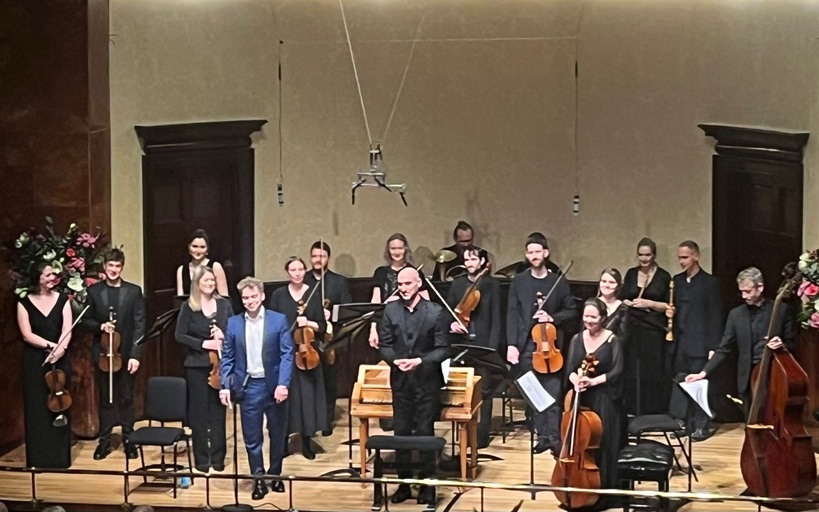
Programme including pieces by Mozart, Gluck, Johann Christian Bach, Johann Christian Fischer, Tommaso Giordani and Thomas Arne. Full repertoire list at the bottom of this review
Wigmore Hall, London, 9 March 2026
by John Earls. Photo credits John Earls
Giusto Ferdinando Tenducci (c. 1735-90) may not be a name on many people’s lips but he was something of a superstar in his day (his portrait was painted by Gainsborough twice). The Siena-born soprano castrato (who were the pop stars of their time) was not just a successful singer but his celebrity also featured a colourful life that included spells in a debtors’ prison and a scandal involving him marrying his teenage singing pupil Dorothea (Dora) Maunsell – the couple met in Dublin in Ireland but eloped to Cork, where he was also jailed for a time (the marriage was later annulled).
This concert explored the world and music of Tenducci and his time in Ireland (he spent the early part of his career touring Italian and German cities and came to prominence in London and Ireland in the late 1750s and early 1760s). The Irish Baroque Orchestra released the album The Trials of Tenducci: A Castrato in Ireland (Linn Records) in 2021 and a number of its pieces featured tonight, although there were some compositions too. On the album the singer is Irish mezzo-soprano Tara Erraught. Tonight’s singer was British countertenor Hugh Cutting, a BBC New Generation Artist (2022–24) and the first countertenor to win the Kathleen Ferrier Award. Cutting impressed me as Arsace in English National Opera’s recent surrealist production of Handel’s Partenope, and he made a very strong impact in this performance.
In a nice scene setter, the concert began with Mozart’s Symphony no. 1 which the composer wrote when he was just eight years old, about the time when Tenducci met him in England in 1764. The first set also included two arias from Mozart’s third opera Mitridate: re di Ponto: Già dagli occhi and Venga pur Minacci (which closed the first half) seeing Cutting give rein to his strong stage presence and in the latter, an, at times, literally pointed delivery.
The rest of the first set featured Thomas Arne’s Vengeance, O come inspire me! from Alfred (a forceful opener from Cutting with lively, bright accompaniment from the orchestra) and Water parted from the sea from Artaxerxes (which ran for some 33 performances in Dublin in 1765-66), delivered with clarity by Cutting (not so much the audience member who coughed loudly at the end).
Another first set highlight was the orchestra’s performance of Johann Christian Fischer’s Gramachree Molly with variations from the Oboe Concerto No. 7 which spotlighted some gorgeously expressive and fluent oboe playing by Emma Black.
The young Mozart’s Symphony no. 4 opened the second half followed by three pieces from Gluck’s opera Orfeo ed Euridice. Here the orchestra was in full command for Dance of the Furies with the two horn players holding their instrument’s bells upright for maximum impact. Cutting’s singing on Ahimè! dove trascorsi! and Che farò senza Euridice? was clear and passionate.
There then followed a piece where the orchestra absolutely shined. Tommaso Giordani’s The Celebrated Overture and Irish Medley to The Island of Saints saw Emma Black working oboe magic again, beautifully accompanied by plucked strings, for Shepherds I Have Lost My Love. The Irish Medley was given a joyous performance of its selection of Irish folk melodies featuring some fantastic fiddle playing. It was rewarded with rapturous applause – a perfect early Saint Patrick’s Day celebration. There was more Giordani of a different sort next with Caro mio ben, with Cutting’s vocals hanging confidently and elegantly.
Johann Christian Bach’s Vo solcando un mar crudele from Artaserse W.G 1 was a crisp, rousing finale giving full expression to Cutting’s virtuosity. A repeat of Caro mio ben served as an encore and was even more glorious than the first time round.
This was a mesmerising evening with a wonderful programme that highlighted that baroque music in Ireland goes further than the celebrated premiere of Handel’s Messiah in Dublin in 1742. Hugh Cutting and the Irish Baroque Orchestra are an outstanding combination. I hope there is more to come.
Hugh Cutting and the Irish Baroque Orchestra performed the following repertoire:
Mozart Symphony No. 1 in E flat major K16 Arne Vengeance, O come inspire me! from Alfred Mozart Già dagli occhi from Mitridate, re di Ponto Johann Christian Fischer Gramachree Molly with variations from Oboe Concerto No. 7 Arne Water parted from the sea from Artaxerxes Mozart Venga pur Minacci from Mitridate, re di Ponto; Symphony No. 4 in D major K19 Gluck Dance of the Furies; Ahimè! dove trascorsi!; Che farò senza Euridice? from Orfeo ed Euridice Giordani The Celebrated Overture and Irish Medley to The Island of Saints; Caro mio ben; Johann Christian Bach Vo solcando un mar crudele from Artaserse W.G 1