Unknown's avatar

About Arcana

My name is Ben Hogwood, editor of the Arcana music site (arcana.fm)

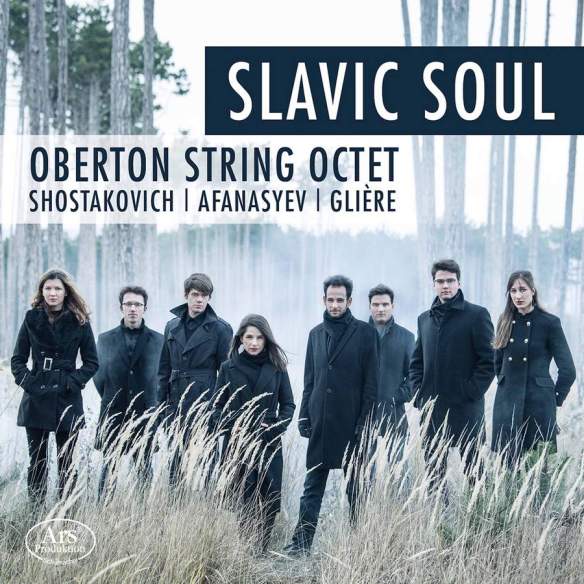
On record – Oberton String Octet – Slavic Soul (ARS Produktion)

Oberton String Octet [Jevgēnijs Čepoveckis, Veronika Brecelj, Andrii Uhrak and Alberto Stiffoni (violins), Serhii Zhuravlov and Hanga Fehér (violas) Floris Fortin and Dorottya Standi (cellos)]

Shostakovich Two Pieces for String Octet Op.11 (1924/5)
Afanasyev Double Quartet in D major ‘Housewarming ‘(1872)
Glière String Octet in D major Op.5 (1902)

Ars ProduktionARS38305 [59’26”]

Producer Anette Schumacher
Engineer Daniel Comploi

Recorded 19-21 December 2019, Florentinersaal, University of Arts, Graz

Written by Richard Whitehouse

What’s the story?

The debut release from this ‘purpose built’ string ensemble which intends to encompass the repertoire for octet and double quartet, examples of both being featured here together with music by a composer whose ‘enfant terrible’ phase proved as reckless as it was short-lived.

What’s the music like?

Long since a footnote in musical history, Nikolay Afanasyev (1821-98) became a pioneer in Russian opera and chamber music, likely composing this Double Quartet for the inauguration of the St Petersburg Society for Chamber Music. Taking his cue from those four pieces with which Spohr had intended to launch a new medium, it follows an outwardly classical format while being permeated by aspects of Russian folk music. Best are an animated Scherzo with its stately trio, then an Andante of suffused pathos. Both outer movements betray a degree of formal uncertainty, a reminder that Afanasyev (as with Glinka before him) was essentially an autodidact, yet their energy and charm override such failings. Certainly, the Oberton sounds captivated by the qualities of this ‘Housewarming’ which it is (rightly) intent on championing.

Whereas Afanasyev writes for four parts, Glière writes for eight voices in his Octet. One of several works for string ensembles from the outset of his career, this follows audibly in the lineage of Mendelssohn with its emphasis on intensive dialogue and textural richness, even if both its formal layout and tempo indications indicate knowledge of his Russian forebear. Here, too, the middle movements – the second poised between scherzo and intermezzo, and the third an eloquent ‘song without words’ – are highlights, though the initial Allegro yields telling understatement while the finale builds a cumulative momentum that carries all before it. The Oberton are unfailingly alive to its contrapuntal energy and often orchestral sonority, adding another piece to the roster of Octets such as marked their composers ‘coming of age’.

As curtain-raiser, Shostakovich’s Two Pieces duly launches the programme in unequivocal fashion. Written either side of his seminal First Symphony, the ‘Prelude’ fairly abounds in volatile emotion while the ‘Scherzo’ evinces a coursing energy and caustic dissonance that points unerringly to those works immediately following it. What a pity the intended fugue never progressed beyond the sketch stage, though the work as stands remains testament to the ‘confidence of youth’ and the Oberton’s charged reading assuredly takes no prisoners.

Does it all work?

As a programme, undoubtedly. The repertoire for string octet and double string quartet is a select yet significant one, and the Oberton is evidently on a mission to convey this in both performance and recording. Hopefully, this release will be the start of a project as could do worse than to couple each double quartet by Spohr with those octets of Mendelssohn, Gade, Svendsen and Enescu. Moreover, the logistics involved in bringing together eight musicians based around Western and Central Europe will hopefully not limit their live music-making.

Is it recommended?

Very much so. The SACD sound has exemplary definition if almost too great an immediacy in more demonstrative passages, while the booklet notes are succinctly informative. Strongly recommended, with the hope further releases from this ensemble will not be long in coming.

Listen

Buy

You can listen to clips from the recording and purchase, either in physical or digital form, at the Presto website

Read

You can read more about the Oberton String Quartet at their website

On record – Han Chen plays Thomas Adès: Piano Works (Naxos)

Han Chen (piano)

Thomas Adès
Concert Paraphrase on Powder Her Face (2009)
Still Sorrowing (1992)
Darknesse Visible (1992)
Blanca Variations (2015)
Traced Overhead (1996)
Three Mazurkas (2009)
Souvenir (2018)

Naxos 8.574109 [69’43”]

Producer Han Chen
Engineer Ryan Streber

Recorded 5-7 April 2019, Oktaven Audio, Mount Vernon, New York

Written by Richard Whitehouse

What’s the story?

Taiwanese-born and American-based pianist Han Chen releases his third album for Naxos, bringing together almost all the works for solo piano by Thomas Adès (b1971) in readings that depart – sometimes markedly – from earlier practice and are the more impressive for it.

What’s the music like?

Adès’s piano music falls into three well defined phases. Premiered at the London recital that launched his wider career, Still Sorrowing draws on Dowland in a sustained rumination with ingenious use of the keyboard (is Blue-Tack still being used to dampen the middle register?). Darknesse Visible is more directly a Dowland paraphrase, its pianism highly demonstrative in its range of textures and dynamics. An early culmination is marked by Traced Overhead – its three (progressively longer) sections heading from the spiralling upward motion of Sursum, via the animation of Aetheria, to the gradual ascent of Chori whose heightened eloquence is fatefully undermined by its plunging descent near the close. Understandable that Adès then eschewed the piano medium (and largely avoided public performance) for more than a decade.

His return came from a typically unexpected angle. Among the most significant operas this past quarter-century, Powder Her Face might not have obvious pianistic potential, but Adès proved otherwise with a Concert Paraphrase which realigns several musical highlights into a four-part sequence given continuity by the ingenuity with which underlying dance measures merge into and out of each other. Those for whom its theatricality is all may be nonplussed, yet the essentially tragic essence behind the opera’s glittering façade is conveyed even more keenly through such abstract terms. No less ingenious, the Three Mazurkas refashion a genre most associated with Chopin and Szymanowski into music that recalls the études of Ligeti in their technical finesse and those expressive slights of hand capricious and affecting by turns.

Equally modest in their formal dimensions, the most recent two pieces could hardly be more contrasted in content. A test-piece for the 2016 Clara Haskill Competition, Blanca Variations takes a brief piece from Adès’s opera The Exterminating Angel as basis for a study in highly intricate and dextrous pianism. Taken from his score for the film Colette, where it provides a haunting backdrop to the end-credits, Souvenir emerges as a discreet if potent homage to the tradition of French piano music through its slow waltz motion where inference becomes all.

Does it all work?

Yes, even though there are occasions when Adès’s consummate technique risks becoming its own justification. All credit, then to Han Chen (already with excellent releases of Liszt and Rubenstein on Naxos) for ensuring that surface allure is always at the service of an engaged and engaging musical expression. Most of these works have been recorded by the composer, several by numerous other pianists, but Chen clearly has an approach which enables him to render the music very much his own way – extending and enriching its potential accordingly.

Is it recommended?

Indeed. Sound has clarity and definition without seeming clinical, and there are informative booklet notes by Paul Conway. One recent short piece (Berceuse from The Exterminating Angel) has not been included, but it hardly detracts from the qualities of this release overall.

Listen

Buy

You can listen to clips from the recording and purchase, either in physical or digital form, at the Naxos website

Read

For further information on Thomas Adès visit the composer’s website

On record – Penderecki: Horn Concerto, Adagio, Violin Concerto no.1, Threnody (LPO)

Radovan Vlatković (horn); Barnabás Kelemen (violin), London Philharmonic Orchestra / Krzysztof Penderecki (Horn Concerto, Adagio, Threnody), Michał Dworzyński (Violin Concerto no.1)

Penderecki
Horn Concerto ‘Winterreise’ (2008)
Adagio for Strings (1995/2013)
Violin Concerto no.1 (1977)
Threnody for the Victims of Hiroshima (1960)c)

London Philharmonic Orchestra LPO0116 [78’32”]

Producers Nicholas Parker(Horn Concerto, Adagio, Threnody), Matthew Dilley (Violin Concerto no.1)
Engineer Mike Hatch (Horn Concerto, Adagio, Threnody), Richard Bland (Violin Concerto no.1)

Recorded 27 November 2013 (Horn COncerto, Adagio, Threnody), 14 October 2015 (Violin Concerto no.1), Royal Festival Hall, Southbank Centre, London

Written by Richard Whitehouse

What’s the story?

Although this release on the London Philharmonic Orchestra’s in-house label was clearly not intended as a commemorative issue, the death of Krzysztof Penderecki on 29th March (at the age of 87) makes it such – not least as its content ranges across almost 50 years of his output.

What’s the music like?

The Horn Concerto is wholly representative of Penderecki’s latter-day music, with its subtitle Winterreise indicative of the evocative soundscape through which the soloist ventures. The composer has said that Schubert’s eponymous masterwork had no influence on his piece, yet its presence often feels hard to ignore – not least at the very opening when, over glacial lower strings, brass then woodwind set up an arresting backdrop for the soloist’s initial appearance. From this point on the music alternates between animated dialogue, frequently with a martial undertow from wind and percussion, and sombre soliloquy with strings to the fore. The terse coda wraps up matters in fatefully decisive terms. As might be expected of one who gave the premiere, Radovan Vlatković is finely attuned to this work’s often disjunctive mood-swings.

Of the shorter pieces, the Adagio is a transcription for strings of the central (third) movement from Penderecki’s Third Symphony – so giving a new lease of life to music whose pathos is accentuated by evocative soloistic writing. It was Threnody to the Victims of Hiroshima that brought Penderecki to international attention and if its claims to embody emotional extremis have been exaggerated (not least by the composer), the calculated impact of those dynamic and textural contrasts still brooks no compromise – at least when assessed on its own terms.

In concert, these pieces were heard either side of the Horn Concerto; here, they frame a rather more significant piece. When it appeared, the First Violin Concerto felt intent on confirming Penderecki’s renouncing of avant-garde credentials in favour of the neo-Romantic idiom that, with modifications, he pursued thereafter. Rehearing the work points up just how much of his earlier language was retained. The concerto unfolds as a single movement in which a sonata-form outline is expanded by interpolating slow movement and scherzo, for all that the overall tempo is predominantly slow. Barnabás Kelemen integrates the solo part into the orchestra to a degree that is formally and expressively cohesive, the finesse and eloquence of his playing confirmed by a lengthy cadenza that encapsulate thematic content prior to the sombre coda.

Does it all work?

Yes, so long as one accepts that Penderecki is a composer liable to repeat himself within and between works. His conducting is dependable without being overly insightful, while Michał Dworzyński draws a tensile and alert response from the London Philharmonic as to reinforce the sense that the First Violin Concerto is ready for re-evaluation. That Penderecki arguably spent the intervening decades trying and largely failing to achieve a comparable formal and expressive synthesis has not lessened its importance in the context of music from this period.

Is it recommended?

Yes, given the (relative) stylistic range of the works featured and, moreover, the excellence of the LPO’s playing. Those interested should acquire it primarily for the First Violin Concerto which, among Penderecki’s larger orchestral works, seems likely to prove the most enduring.

Listen

Buy
You can listen to clips from the recording and purchase, either in physical or digital form, at the London Philharmonic Orchestra website

‘Devs’ and the power of music

by Ben Hogwood

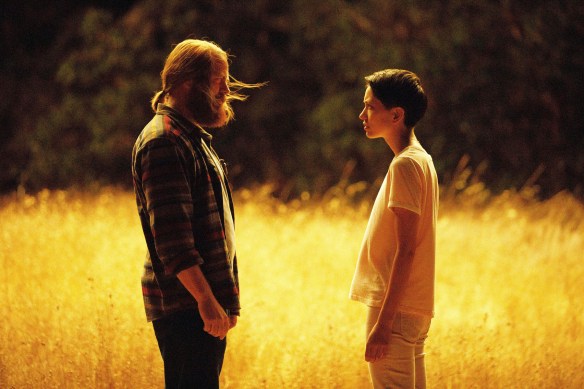
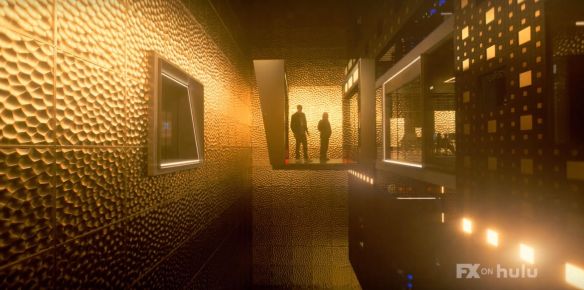
I have just finished watching Alex Garland’s new TV series Devs, a mind-bending look at the placement of humankind in history. I won’t say any more so that no spoilers are revealed, but I wanted to note the remarkable music that appears at important points in each episode.

The main ‘soundtrack’ is composed by Geoff Barrow (of Portishead fame) and Ben Salisbury, two regular collaborators with whom Garland has worked before on Ex Machina and Annihilation. If you watched and enjoyed those films then you will have to see this:

Barrow and Salisbury write music that ranges from deep, almost comforting ambience to sudden, sharp shocks that are heavily laden with menace. Around them sits a remarkable variety of music, which like the theme of the series travels between the deep and distant and recordings made just a year ago. Not many soundtracks can claim to use ancient chant, Free and Billie Eilish in the same breath!

The most striking appearance comes in the first episode from a groundbreaking album of 1994 which, like Devs, transcends time. The Hilliard Ensemble sing the ancient chant Regnantem sempiterna, which is remarkable enough, were it not for the saxophone of Jan Garbarek, soaring over the top. Garbarek improvises with pinpoint accuracy and incredible intensity. When heard with the clarity and visual craft of the pictures, the effect is almost overwhelming:

Meanwhile the music of Steve Reich comes to the fore at the beginning of the seventh episode, and not in the way you might expect. This is Come Out, the composer’s first published work from 1966. Based entirely on a four-second tape loop, it was recorded as part of a benefit event for the Harlem Six, and has one of the boys involved in the riot demonstrating how he worked to convince police he had been beaten while in jail. When Reich has finished with it, a rather disturbing work remains:

While Garland’s musical choices in Devs are key, the use of silence is also hugely important, either heightening the tension or giving the viewer room for context. In this way he makes the reappearance of music all the more meaningful. Far too many Hollywood directors feel the need to use music at every turn, but the likes of Alien have proved in the past how silence can be an asset too.

This means that when a song appears in Devs the instinct on the listener’s part is to seek it out immediately. When Guinnevere by Crosby Stills and Nash is used in the sixth episode, it works exquisitely at just the right point in the plot, heightened by the fact it was written in the same state – California – in which Devs is set:
Fifty years on, and the music of Billie Eilish carries the same understated impact. Her song ocean eyes has a remote beauty completely in keeping with some of Devs’ more clinical moments. The same illustrations can be made for contributions from Broken Bells, Patrick Cowley and especially Low, whose Congregation makes a standout appearance in the first episode.

Devs, then, comes with the strongest possible recommendation. It is thought provoking to a level that actually warps your mind, and I have to confess to some incredibly vivid dreams after watching it. Yet it is the clever and thoughtful use of music at every turn that elevates it to an even higher level.

Spotify

This playlist, created by Simon Berthel, collects the music used so effectively in Devs. The score written by Barrow and Salisbury does not appear to be available yet, but I will be snapping it up when it is!

Lynn Harrell – A Tribute

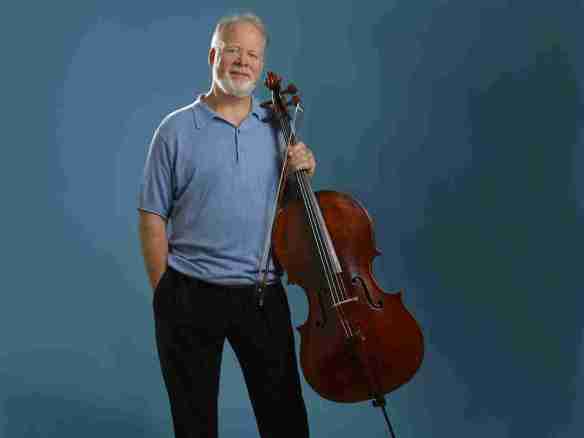
Last night we learned the sad news that the great American cellist Lynn Harrell has died at the age of 76.

This article from Washington’s NPR gives a good overview of his career, which began with a stint leading the cellos of the Cleveland Orchestra under George Szell in the 1960s and 1970s.

This gave him the springboard to become a solo artist, and he made many live appearances with leading conductors and orchestras, as well as forming a formidable partnership to play piano trios with violinist Itzhak Perlman and pianist Vladimir Ashkenazy.

Harrell’s discography is defined largely by his recordings made for Decca, with whom he had a close relationship, but outside of these he recorded Beethoven and Tchakovsky as part of his trio, a disc of the latter’s Piano Trio in A minor winning a Grammy in 1981.

My own personal interactions with Harrell’s work centre around Bach’s Solo Cello Suites, which he recorded for Decca between 1982 and 1984, and where his excellent recordings opened the door to a lifetime’s supply of musical treasures.

The playlist below offers a glimpse into Harrell’s career, headed by Bach’s Solo Cello Suite no.3 and concluding with the tumultuous Tchaikovsky disc mentioned above. In between we get recordings of Rachmaninov and Dutilleux’s wonderful Cello Concerto Tout un monde lontain, recorded with Charles Dutoit and the Orchestre National de France. There is a Ravel duo with Nigel Kennedy and a rarity, Harrell championing the cause of fellow American Victor Herbert with his Cello Concerto no.2. You also have the chance to hear the cellist in his previous role as section leader in the Cleveland Orchestra, joining Robert Casadesus in a solo role as part of Liszt‘s Piano Concerto no.2.

With thanks for some wonderful music making…