Unknown's avatar

About Arcana

My name is Ben Hogwood, editor of the Arcana music site (arcana.fm)

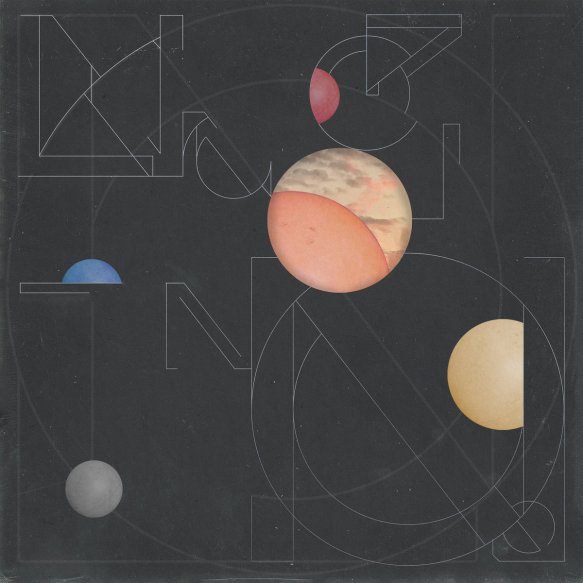
Switched On – Steve Hauschildt: Nonlin (Ghostly International)

reviewed by Ben Hogwood

What’s the story?

Chicago-based Steve Hauschildt is in a rich vein of musical form at the moment, and follows up last year’s Dissolvi album with Nonlin, his second for the Ghostly label. The ex-Emeralds member has been recording while on tour, drawing from varied climates and cultural hubs such as Chicago, Los Angeles, New York, Tbilisi and Brussels.

Hauschildt’s Bandcamp page describes his integration of ‘modular and granular synthesis’, and a technique of recording that plots grid-like backdrops, with subtle melodic loops, and treble lines that are relatively free to improvise.

What’s the music like?

This combination of a relatively rigid order for the background and free melodic presence in the foreground is effective throughout Nonlin, which manages to be both relaxing and stimulating at the same time.

Hauschildt eases us in with the soft and slightly moody outlook of Cloudloss and Subtractive Skies, which pulse with shimmering loops while evoking the bigger spaces their titles imply.

As the album progresses so we hear more the beats and the sharper edges of the producer’s analogue gear. Attractor B has depth to its beats while Nonlin itself is machine like, with busy patterns and noises. Reverse Culture Music has a nice poise, Hauschildt using twinkling motifs up top and broad notes and sounds to create the space below. The last two tracks, The Spring in Chartreuse and American Spiral, are more obviously techno-based, the latter starting serenely but gradually twisting its lines.

Does it all work?

Yes. Hauschildt is a reliable source of quality, easy to listen to but never standing still either.

Is it recommended?

Yes, for the point above. Hauschildt’s body of work has no duds – and Nonlin is another extremely solid addition to the canon.

Stream

Buy

Switched On – Space Dimension Controller: Love Beyond The Intersect (R&S Records)

reviewed by Ben Hogwood

What’s the story?

Love Beyond The Intersect is the second album from Belfast-based Space Dimension Controller, aka Jack Hamill. Like its predecessor, 2016’s Orange Melamine, which drew from old VHS tapes, this one has an analogue and organic feel to it.

For the storyline Hamill goes back further to the 2013 debut Welcome to Mikrosector-50, renewing an acquaintance with its protagonist Mr 8040. In a refreshing break with the norm, the entire press release sets out the story.

It tells that Mr 8040 has crash landed on a strange planet, following a ‘space dust and vecta grog fuelled burnout’, and he is looking to escape in any way he can. The album follows his trials, tribulations and encounters, which become more emotional than he probably anticipated, and resolves with a neat twist that wouldn’t have been obvious at the beginning.

What’s the music like?

Deep orange may have been the colour last time out, but this time it’s deep purple – in colour only mind, not musical style! If anything Love Beyond The Intersect does reflect that colour though, being dark but more spaced out than its predecessor. There is still a good deal going on musically, but Hammill pans out to take in the surroundings, using expansive textures to complement the close-up, dub inflected places to which the music goes.

These include PVLN, where fragments of deep spoken word can be quite unnerving, recalling some of the work of Jimmy Edgar. Voices Lost To Empty Space, which is quicker and quite minimal with a busy bass line, portrays our subject’s desire to get a move on. He comes to a halt in Intersect Encounter though, where the planet’s heavy atmosphere has a sluggish effect on our subject.

The funk quotient definitely increases as the album progresses, with Early Steps adding a bit of disco and Sundown On Memory Point tripping along nicely. Alone In An Unknown Sector is cool – with those deep vocals back again – and has a nice loping beat and fuzzy backdrop, capturing weird lights and vapour trails. It’s quite a delicate approach to funk that reveals more with each listen, capped nicely by the title track, which chugs along in slow disco fashion.

Does it all work?

Yes. It’s fun to be able to approach the music of Love Beyond The Intersect on two levels. The concept album, as vividly brought to life by Hamill, fires the imagination – or you can just enjoy the album as a well-planned series of excellent, atmospheric tracks that make a really satisfying whole.

There is a pleasing urban grit to Hamill’s approach, and a decent amount of funk too. Parallels with The Orb would be valid at this point, but with less bonkers humour and a more subtle, endearing approach.

Is it recommended?

Yes, because there is more to Love Beyond The Intersect than initially meets the ear. What is never in doubt is Hamill’s clever storytelling, imagination and subtle electronic flair.

Stream and Buy

Watch

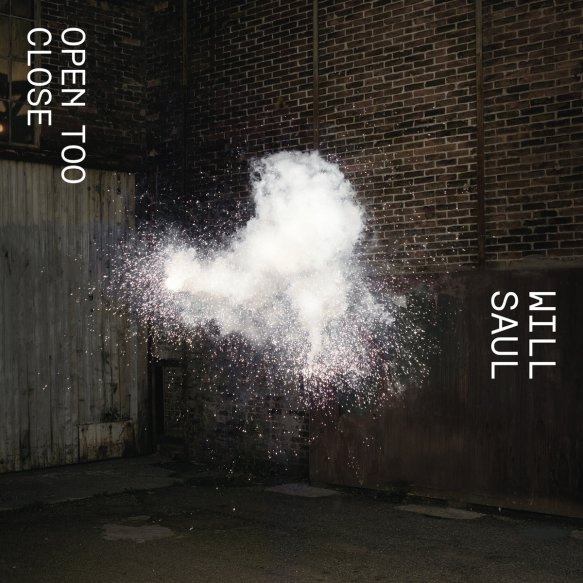
Switched On – Will Saul: Open Too Close (Aus Music)

reviewed by Ben Hogwood

What’s the story?

Will Saul is a seasoned dance music producer, but in the last decade or so his preference has been to operate behind the scenes. That still makes for a busy life of music, with the highly regarded Aus Music to run, an excellent contribution to the DJ Kicks! series and a good deal of DJ work.

Open Too Close sees him return to the album format for the first time in 13 years, and employs his structural thinking of a DJ, condensing ‘what I play in a club if an eight hour set was condensed into ten tracks’.

What’s the music like?

Saul’s approach is a good one on several levels, for it allows him to show off his musical versatility while giving the listener value for money in the variety stakes.

It proves easy to relocate Open Too Close to the club, for in Freya’s Theme we have the perfect warm-up, a shuffling beat supporting cool keyboards that is reminiscent of earlier Matthew Herbert. It successfully captures that moment in a club where you know it’s where you want to be for the rest of the night, and a few hours’ dancing at the very least lie ahead.

Capitalizing on that, Room 9 and Visions up the tempo successively, the latter given a brilliant vocal hook as its beat harks back to 1980s funk. Openings and Moorings are bouncy numbers, Saul hinting at urban garage with the offbeat vocals, before Pingalatu breaks cover, driving forward with a sound that is pleasingly rough round the edges, a bit of pure club music.

Through the album Saul puts his music in the context of stuff he really likes and the artists and DJs he works with and around, meaning the style is never restricted beyond something you would definitely dance to. My Left Sock shows this off brilliantly, an energetic piece of break beat, countered by the warm weather specials Submerge and One For Rex, with its clattering beat. Get Back Up signs off with a nod in the direction of Detroit, spacious chords complementing the robotic vocals.

Does it all work?

Yes. Saul appears to have deliberately given himself the maximum time of an hour to fulfil his brief, and the ten tracks described above form part of a longer-reaching structure like a DJ set, just as he wanted them to.

It means the music always feels like it’s heading somewhere, and with a good number of earworms there is no chance of Saul outstaying his welcome.

Is it recommended?

Yes. Great to have him back as a creator of music as well as a DJ. He’s too good not to do both!

Stream

Buy

Switched On – Lindstrøm: On A Clear Day I Can See You Forever (Smalltown Supersound)

reviewed by Ben Hogwood

What’s the story?

Just the four tracks for Lindstrøm‘s sixth album, in which he makes an album from hardware instead of computer plug-ins for the very first time. His inspirations behind the release range from Barbra Streisand – whose musical On A Clear Day You Can See Forever inspires the title – to Robert Wyatt, whose solo albums, capped by Matching Mole, made an impact for their freedom and fearless approach.

The raw material for On A Clear Day is drawn from the autumn of 2018 and a piece Lindstrøm was commissioned to write by the Henie Onstad Kunstsenter, a museum near Oslo. He gave three performances at the arts centre, and the sketches he composed formed the basis of this album, which is almost completely without beats.

What’s the music like?

Free as a bird, as Lindstrøm implied it would be, with each of the four minute tracks clocking in around the 10-minute mark.

The title track has no percussion at all, so the sonorous keyboard tones are free to work at their own pace in a sprawling structure that brings the music towards Jean Michel Jarre at times, while retaining Lindstrøm’s own distinctive language. Often it is composed of just one line, thoughts passed to the listener in musical sentences that have a similar rhythm to everyday conversations.

Really Deep Snow continues the hypnotic effect established in the title track, but more on the front immediately, bubbling synths leading and a kick drum that sounds ready to cut in but not quite. With a wobbly organ contribution and some lovely held string pads it is a stronger track.

The brilliantly named Swing Low Sweet LFO is next, the free bird analogy especially evident here as the glittering synthesizer figures soar and swoop over a weightless texture. Freedom is most definitely the name of the game here, even when a solemn chorale-like figure takes over towards the end.

Finally As If No One Is Here introduces ticking percussion, which creates a surprising amount of tension that is released by stealth into meandering lower range thoughts.

Does it all work?

Yes, as long as the listener bears in mind that this is music for the backdrop of a culture centre. It is much less driven than Lindstrøm’s work with beats, but the freedom apparent throughout the album is contagious and far reaching. As ambient music it fulfills its function easily.

Is it recommended?

It is, though with a concession to Lindstrøm fans that On A Clear Day I Can See You Forever does not contain any of the producer’s barnstorming modern disco numbers.

For now that is the style of music he is best known and loved for, and there are a few moments on this album where the listener inevitably pines for a new piece of beat-infused brilliance.

Instead, On A Clear Day I Can See You Forever uplifts and calms the mind in a more subtle way, and makes us anticipate his next move even more keenly.

Stream

Buy

Wigmore Mondays – The Cardinall’s Musick / Andrew Carwood: The Gunpowder plot

The Cardinall’s Musick (above) / Andrew Carwood (below)

Wigmore Hall, Monday 4 November 2019 (lunchtime)

You can listen to this concert on the BBC Sounds app here (opens in a new window)

Review and guide by Ben Hogwood

The year is 2420. London’s concert hall in the City is celebrating its 200th anniversary with a concert of music devoted to Brexit. There are songs and instrumental pieces looking to recreate the chaos of the time.

Sound fanciful? Not entirely – especially when you cast an eye over this fascinating concert from the Cardinall’s Musick and Andrew Carwood, which was all about the attempt to end the reign of King James I by Guy Fawkes and his associates in 1605.

Carwood assembled an intriguing programme of music from well-known composers of the day – Gibbons, Byrd, Tomkins and Weelkes – and those not so well known in Thomas Greaves, John Hilton, Michael East and Richard Allison. The ensemble performed groups of sacred and secular music from the time by the composers, ranging from big eight-part masterpieces by Byrd and Gibbons to miniature odes to tobacco from Michael East.

There were some unexpectedly poignant moments as the concert progressed, and funny ones too, but the group began with one of the best-known anthems from the era in Orlando GibbonsO clap your hands (2:20). The interweaving parts were beautifully realised under Carwood’s clear direction.

The conductor (above) then gave the first of several informative and entertaining guides to both the historical period and the repertoire. Thomas Greaves’ five-part welcome song in honour of James, England receive the rightful king (9:55) led to Thomas Tomkins’ thoughtful O God, the proud are risen against me (11:59). Written in eight parts, this was a barely concealed railing against the leaders of the plot to overthrow the king and government, with some spicy dissonances clearly inflected by the sopranos.
John Hilton’s As there be three blue beans (15:39) was unexpectedly mischievous, a three-part round brilliantly sung by altos Patrick Craig and David Gould, and tenor Benjamin Durrant. It finished by marking the existence of three universities in England – Cambridge, Oxford and James.

Also in this group was William Byrd’s majestic The eagle’s force (17:44), which benefited from the clarity of the altos’ singing, and Michael East’s ode O metaphysical tobacco (20:07). King James I hated tobacco – and eventually had its ambassador Sir Walter Raleigh executed to appease Spain – but many in society loved this new discovery (as they do 415 years on!) There was no evidence of gravelly voices in this performance!

A piece of really impressive heft followed, Byrd’s anthem Deus venerunt gentes (24:03), described by Carwood as ‘symphonic’. A setting of Psalm 78, it is said to be the psalm martyrs would say on their approach to death, to receive forgiveness – and was used by the composer here as a lament for his fellow composer Thomas Campion. By nature it is a serious piece, and its stately progression was ideally paced by the group here, offering time for reflection during its 13 minutes. The lower registers of Byrd’s writing, especially around the 30:25 mark, were immaculately observed and set the downbeat mood, which followed the text impeccably.


King James I

The next selection of music looked at England in the aftermath of the Guy Fawkes plot. After another helpful introduction from Carwood we heard a prayer for the posterity of the king, Richard Allison’s O Lord bow down, a reverential number (39:37), followed by Thomas Tomkins’ request to the Lord for protection, The hills stand about Jerusalem (43:43), where the two sopranos and tenor dovetailed exquisitely. Following the same theme, Thomas Weelkes’ sobering O Lord God Almighty had explicit mentions for the royal family and their security (46:08), once again showing how little has changed in the preceding 400 years.

Finally another great Byrd piece in the shape of the eight-part wonder Ad Dominum cum tribularer (50:36), one with a stark message not just for the country post-gunpowder plot but for the world today: “I speak peace to them and they clamour for war”. A setting of Psalm 120, it is unsurprisingly a work of sombre beginnings, with a couple of spicy dissonances, but it grew in strength and conviction in this performance, which was ideally paced and realised.

Repertoire

The Cardinall’s Musick are the following singers, conducted by Andrew Carwood:

Laura Oldfield, Cecilia Osmond (sopranos), Patrick Craig, David Gould (altos), Benjamin Durrant, Nicholas Todd (tenors), Robert Evans, James Birchall (basses)

This concert contained the following music (with timings on the BBC Sounds broadcast in brackets):

Gibbons O clap your hands (2:20)
Greaves England receive the rightful king (9:55)
Tomkins O God, the proud are risen against me (11:59)
Hilton As there be three blue beans (15:39)
Byrd The eagle’s force (17:44)
East O metaphysical tobacco (20:07)
Byrd Deus venerunt gentes (24:03)
Allison O Lord bow down (39:37)
Tomkins The hills stand about Jerusalem (43:43)
Weelkes O Lord God Almighty (46:08)
Byrd Ad Dominum cum tribularer (50:36)

Further listening

Unfortunately some of the music heard in this concert is not available on Spotify, but the below playlist contains the music that could be found in available versions:

The Cardinall’s Musick have made a number of highly acclaimed recordings of the music of William Byrd. Two are available to hear on Spotify, recorded in the 1990s for the ASV label and featuring the eight part works heard in the concert. They are the Cantiones Sacrae

…and the Propers for the Nativity

On a completely different tip is this playlist of music suitable for fireworks! It includes works by Stravinsky and Debussy, but begins with the perennial Handel favourite Music for the Royal Fireworks, conducted by the recently departed Raymond Leppard: