Unknown's avatar

About Arcana

My name is Ben Hogwood, editor of the Arcana music site (arcana.fm)

In concert – Ryedale Festival: Timothy Ridout, Orchestra of Opera North / Tom Fetherstonhaugh – Bliss: Viola Concerto first performance; Vaughan Williams, Coleridge-Taylor & Elgar

Timothy Ridout (viola), Orchestra of Opera North / Tom Fetherstonhaugh

Vaughan Williams The Wasps – Overture (1909)
Bliss (orch. Wilby) Viola Concerto, B68a (1933, orch. 2023)
Coleridge-Taylor Solemn Prelude in B minor, Op. 40 (1899)
Elgar Variations on an Original Theme, Op. 36 ‘Enigma’ (1898-99)

Ripon Cathedral
Saturday 19 July 2025

Reviewed by Richard Whitehouse Photos (c) Jonas Cradock

With a variety of activities throughout its region, the Ryedale Festival is now well established among the most wide-ranging of such events 45 years since its inauguration and this evening’s concert showcased the Orchestra of Opera North in the impressive setting of Ripon Cathedral.

The all-British programme centred on the first hearing for a Viola Concerto that Arthur Bliss had always intended to create out of his sonata for that instrument, but has only recently been carried out by Philip Wilby. A former professor of composition at Leeds University, Wilby is best known for his choral and organ music but as was duly confirmed, is an able orchestrator with a keen appreciation of Bliss’ idiom. Hence the successful launch of a piece that deserves to assume its place within the still-limited repertoire of concertante works for this instrument.

That it exists at all was no doubt through the prompting of Lionel Tertis, for whom Bliss wrote his Viola Sonata some 20 years after a single-movement Violin Sonata (never played publicly during his lifetime) as was his only other such duo. Formally it is among his most innovative pieces, the skewed sonata design of its initial Moderato exuding a restive and even impulsive eloquence as responded well to an orchestration which resembles more the intimacy of Bliss’ late Cello Concerto than the full-blooded fervour of his earlier such works for piano or violin.

The ensuing Andante is Bliss at his most personal – its darkly ruminative progress building to an anguished culmination made the more so in this context, before subsiding into the fugitive unease from which it had emerged. There follows a propulsive Molto allegro modelled on the rhythmic syncopation of the Furiant, a scherzo-cum-finale climaxing with a powerful cadenza here forcefully partnered by timpani. After which, the Coda poignantly surveys all that went before in a sustained Andante maestoso as brings about an apotheosis of plangent resignation.

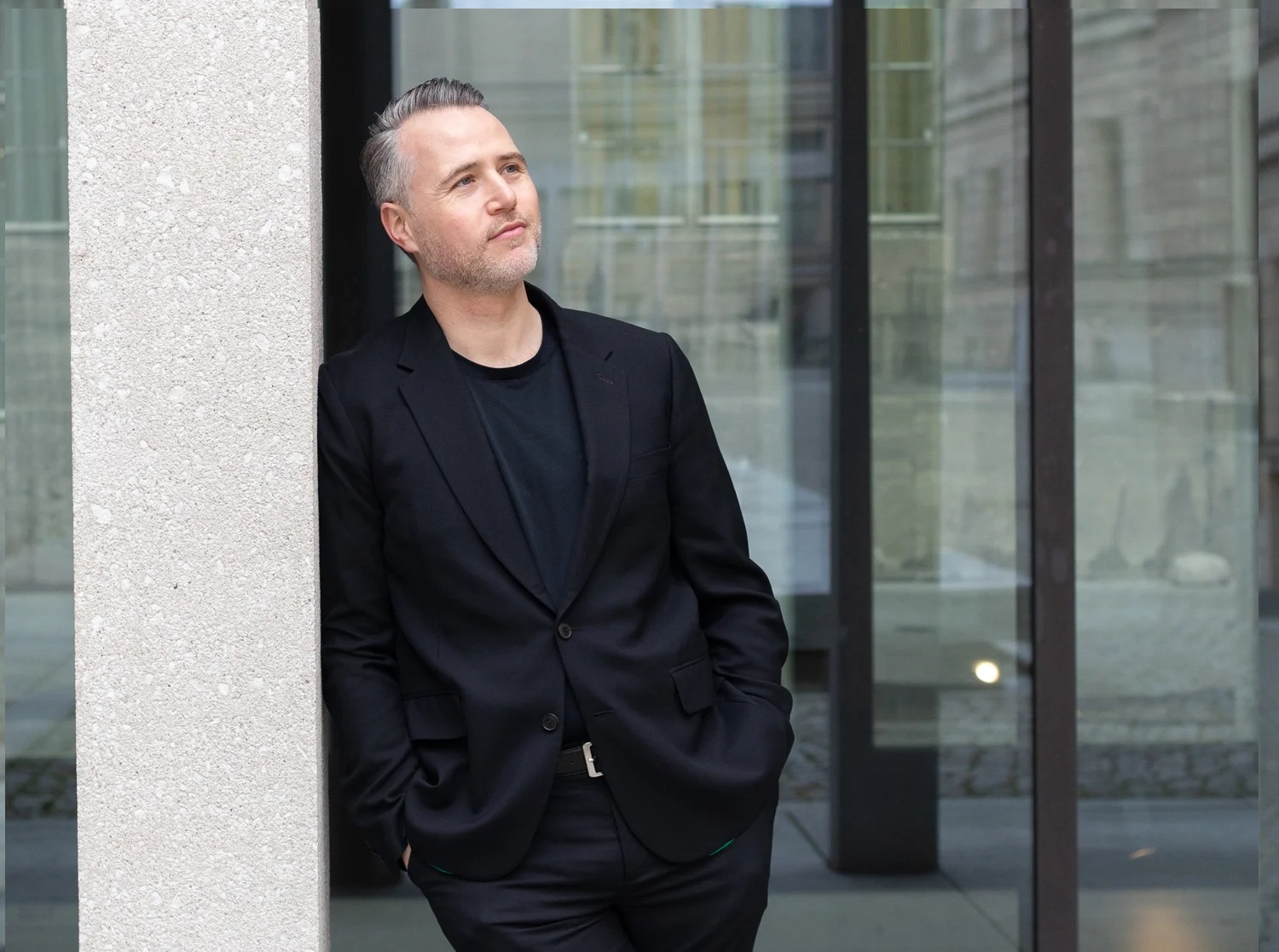
At around 27 minutes, Bliss’s Viola Concerto is equal in its scale as in its expressive reach to comparable works by Hindemith and Walton, so credit to Timothy Ridout (above, among the leading younger violists) that its essence was so tangibly conveyed. Nor was the OON found wanting under the assured direction of Tom Fetherstonhaugh, heard here in an ambience where detail lacked only the final degree of definition. Hopefully a recording will follow of what is likely to be the most important performance scheduled in this 50th anniversary-year of Bliss’ death.

The first half had begun in sparking fashion with the overture Vaughan Williams wrote as part of incidental music for a Cambridge University production of Aristophanes’ satire The Wasps, its incisiveness not precluding an open-hearted response to the ineffable melody at its centre.

A very different proposition duly launched the second half. Solemn Prelude is a characteristic statement by Samuel Coleridge-Taylor that did not merit the total neglect after its premiere at Worcester Cathedral; further hearings only made possible with the score’s belated relocation at the British Library so new parts could be made. Fusing Elgarian nobility with Brucknerian grandeur, any risk of portentousness was countered with an expressive immediacy abetted by Fetherstonhaugh’s flexible control over pace so that a welcome spontaneity came to the fore.

It certainly made an ideal entrée into the ‘Enigma’ Variations. Performances of Elgar’s earliest masterpiece now seem more frequent than ever, and tonight’s had much to commend it. Never fazed by the expansiveness of this acoustic, Fetherstonhaugh opted for mainly swift tempi as might easily have caused blurring in those faster variations had it not been for his scrupulous balance of detail. Elsewhere there was no lack of emotional input, not least during variations VIII-X with the wistfulness of ‘W.N.’ then deftness of ‘Dorabella’ framing a ‘Nimrod’ whose fervour was the greater for its relative urgency. Nor was the ‘E.D.U.’ finale lacking in panache as it brought the whole sequence to a conclusion of ringing affirmation, though it was maybe a pity that this building’s impressive organ could not have been utilized for the closing bars.

What was hardly in doubt was the response that this account received from the near-capacity audience, making one anticipate more such events at Ripon Cathedral in future editions of the Ryedale Festival, as it continues assiduously to promote the cultural life of North Yorkshire.

For more on the festival, visit the Ryedale Festival website, and click on the artist names to read more about violist Timothy Ridout, the Orchestra of Opera North and their conductor Tom Fetherstonhaugh. Meanwhile click to read more on the Arthur Bliss Society and the Samuel Coleridge-Taylor Foundation

Published post no.2,602 – Monday 21 July 2025

In concert – Gina Birch @ Rough Trade East

L-R Jenny Green, Gina Birch, Helen McCookerybook, Marie Merlet

Rough Trade East, London, 16 July 2025

by John Earls. Photo credits (c) John Earls

Gina Birch was a founding member of legendary post-punk band The Raincoats, but it took her until 2023 to release her first solo album. This concert at London’s Rough Trade East was to promote her just released and excellent second solo album Trouble.

“Many of these songs have never been played live before. So it’s an exciting moment for you and a very exciting and scary moment for us” says Birch as she takes the stage with her live band The Unreasonables (Jenny Green and Marie Merlet).

The opening Don’t Fight Your Friends provides a tentative start but pretty soon it’s clear this is going to be something special.

Happiness is a warm and welcoming second number before Birch tells us “now you’re going to wake up again” and launches into Causing Trouble Again, a stirring celebration and shout out (literally) to iconic feminists “and all the other trouble makers I’ve forgotten” that sees Birch playing a high neck bass line melody and some deft solo work from Green on electric guitar.

Doom Monger follows with some funky reggae riffs before the band are joined on stage by “very special guest” Helen McCookerybook who adds vocals to an affecting Hey Hey with its sparse drums and a powerful I Thought I’d Live Forever.

The set finishes with two songs from Birch’s first solo album. I Play My Bass Loud, with its Raincoats’ No One’s Little Girl undertones, sees all of the band playing basses in wonderful solidarity. Feminist Song is a terrific and potent closer to the show with Birch exclaiming:

“I’m a fighter, I’m a believer
I’m a mother, I’m a cleaner
I’m an artist and I’m yours”.

A wonderful evening and a demonstration of Gina Birch’s enduring power to inspire and bring joy.

John Earls is Director of Research at Unite the Union and posts at @johnearls.bsky.social on Bluesky and @john_earls on X. You can subscribe (free) to his Hanging Out a Window Substack column here: https://johnearls.substack.com/

Published post no.2,601 – Sunday 20 July 2025

New music – Guy Johnston’s British cello odyssey

from the press release, edited by Ben Hogwood

With his 1692 ‘Segelman, ex hart’ Stradivarius Cello, loaned to him from a private sponsor through the Beare’s International Violin Society, Guy Johnston embarks on a British cello odyssey, including the world premiere of a new cello concerto by Joseph Phibbs in January 2026.

To mark Bliss’ 50th anniversary, Johnston’s recording of Arthur BlissCello Concerto with the Royal Liverpool Philharmonic Orchestra conducted by Andrew Manze is released digitally on 25 July, 2025 on Onyx Classics. It will form a later album release with the Britten Cello Symphony.

Following a performance at the 2025 Hatfield Music Festival on 12 October 2025, Johnston will record The Protecting Veil with the Britten Sinfonia directed and led by Thomas Gould in live concerts on 28 and 29 October, 2025 at St. Sophia’s Greek Orthodox Church in London. The album will be released on Signum in the summer of 2026.

Completed in 1988, Tavener’s The Protecting Veil was begun in response to a request from cellist Steven Isserlis for a short piece. It developed into a more substantial work, and was subsequently commissioned by the BBC for the 1989 Proms season. Like many of Tavener’s compositions, this work reflects the composer’s Orthodox religious faith. The inspiration for the piece comes from the Orthodox feast of the Protecting Veil of the Mother of God, which commemorates the apparition of Mary the Theotokos in the early 10th century at the Blachernae Palace church in Constantinople in grave danger from a Saracen invasion.

As Tavener explained, “the cello representers the Mother of God and never stops singing throughout. One can think of the stings as a gigantic extension of her unending song…the first and last sections relate to her cosmic beauty and power over a shattered world.”

Johnston met Tavener on a number of occasions and was touched to be asked by Britten Sinfonia to perform The Protecting Veil last year on the occasion of what would have been the composer’s 80th anniversary. Johnston was keen to record The Protecting Veil at St Sophia’s, where Tavener used to attend mass.

On 16 January 2026, Johnston will give the world premiere of Joseph PhibbsCello Concerto at the Barbican with the BBC Symphony Orchestra conducted by Clemens Schuldt. In 2021, Johnston previously premiered Joseph Phibbs’ Cello Sonata, partly based on an Elizabethan pavane found in the archive of Hatfield House.

Phibbs, who is a huge admirer of Britten, commented,

“The main focus of this concerto is on melody, and how this might be explored in various ways over the uniquely wide range of the cello. The work is symphonic in structure, adopting a multi-movement form as opposed to the traditional three, and ends with a short ‘Vocalise’ (song) for cello and strings which soars to the very top of the cello’s high register. Elsewhere, a dramatic opposition between soloist and orchestra is emphasized. At the forefront of my mind while composing this work has been the wonderfully varied facets of Guy’s playing, which I have admired for many years. It’s been a huge privilege and excitement to write for such a special performer”

In September 2026, Johnston will record Britten’s Cello Symphony with the RLPO conducted by Andrew Manze for Onyx Classics to coincide with the composer’s 50th anniversary (Britten d. on 4 December 1976). The album will include the Bliss Cello Concerto (previously released digitally).

The 2025-2026 season coincides with Johnston’s returns to the Royal Academy of Music as a Professor of Cello. This role will see him offer bespoke tuition to cello students throughout the year. Johnston started out as a professor at the Academy in 2011, later becoming visiting professor. The appointment follows Johnston’s recent relocation back to the UK following his tenure at the Eastman School of Music in Rochester, NY, from 2018 to 2024.

Johnston commented,

“I’m thrilled to have returned last year to the UK with my family for this exciting series of recordings, commissions and performances.”

Published post no.2,600 – Saturday 19 July 2025

Switched On – Rival Consoles: Landscape From Memory (Erased Tapes)

by Ben Hogwood

What’s the story?

After an extended time out, Ryan Lee West – the man behind Rival Consoles – returns with his ninth album.

Having fallen out of favour with the creative process, West retreated and started composition by way of an audio scrapbook, where past clippings and musical sketches were transformed into fully fledged tracks.

What’s the music like?

There is a fresh, revitalized feel to Rival Consoles on this album. In fact West seems to be falling over an abundance of ideas, but has found the best way to get them all together and make an album that is consistently rewarding, colourful and durable.

There are many highlights, such as Coda and Drum Song, where percussive work and melodic craft work well hand in hand. Yet at times the music is at its most effective without a drum track, as on the start of Nocturne, or the reverie Tape Loop. 2 Forms brings both together intriguingly, starting in an ambient mood but with a sudden burst of acidic, quasi-industrial noise.

Gaivotas, meanwhile, is a great illustration of the colour West brings through from the studio, a rich and dazzling array of textures.

Does it all work?

It does – and the album only gets better and more rewarding with repeated listening.

Is it recommended?

Yes. If you’re a Rival Consoles fan then you will need no persuasion, but if you are new to his music then Landscape From Memory is a great place to start.

Listen / Buy

Published post no.2,599 – Thursday 18 July 2025

On Record – Clare O’Connell: Light Flowing (NMC Recordings)

by Ben Hogwood

What’s the story?

Cellist Clare O’Connell releases the Light Flowing album, which, in the words of the press release, is “inspired and tied together conceptually by ideas of light, depth, simplicity, the search for a perfect line, and capturing an otherworldly beauty that these carefully chosen composers represent within their different sound worlds.”

She looked for an ‘introverted introspective simplicity’, which is found through new compositions from five composers.

What’s the music like?

The music here is rather bewitching, in the best examples drawing the listener into a spell, with O’Connell playing beautifully.

Edmund Finnis contributes two examples, beginning with the Three Solos, expressive miniatures that O’Connell inhabits easily, especially the playful second solo with its pizzicato. Finnis allows for expansive thought in the outer two movements.

Meanwhile Emilie Levienaise-Farrouch contributes the imaginative four-part suite Opened, its movements based on the pitch of each of the cello’s four strings. Although it starts from the lowest ‘C’ string and works up, the pitches are closely linked and longer, sustained drones are used. The colours are subtly shaded, the musical motifs rich in thought and execution.

Natalie Klouda’s Uhteare is an excellent piece, packing a strong emotional punch but also falling naturally under the scope of the instrument, with a terrific end – O’Connell’s tone in the high register as sure and pure as it could be.

Emily Hall’s You Sail To The Sky is a meditative space, while Nick Martin’s two Vocalises find a hypnotic and compelling train of thought. The first floats down with delicate harmonics like a feather falling slowly through the sky, while the second floats most attractively, O’Connell’s cello ideal for its songlike profile. Prayerful, and lost in thought towards the end in contemplation, it disappears beyond the horizon.

Zenith introduces a timely change of sonorities, introducing the harp of Eleanor Turner, which has a more Japanese feel. An engaging discourse between the two instruments, it grabs the listener especially towards the end where O’Connell’s cello climbs higher. Then the sound descends to the depths as Marianne Schofield’s grainy double bass winds through a shadowy encounter as the first of three Figures Of Eight, Finnis writing a slight but compelling second movement drawing in the listener’s ear. The two instruments circle each other with pizzicato figures that get more insistent but stay largely quiet in the second movement, while the third has a richer, mellow sound

Does it all work?

It does, a thoughtfully planned recital executed with no little technical expertise.

Is it recommended?

Yes. The literature for solo cello is a rich body of work, right back to Bach in the 18th century, but this wide range of works illustrates how, with imagination, it is still possible for composers to explore new paths. Clare O’Connell proves a compelling communicator in bringing the pieces to life.

Listen / Buy

Published post no.2,597 – Thursday 17 July 2025