Unknown's avatar

About Arcana

My name is Ben Hogwood, editor of the Arcana music site (arcana.fm)

In concert – Steven Isserlis and Friends – Fauré at the Wigmore Hall (2)

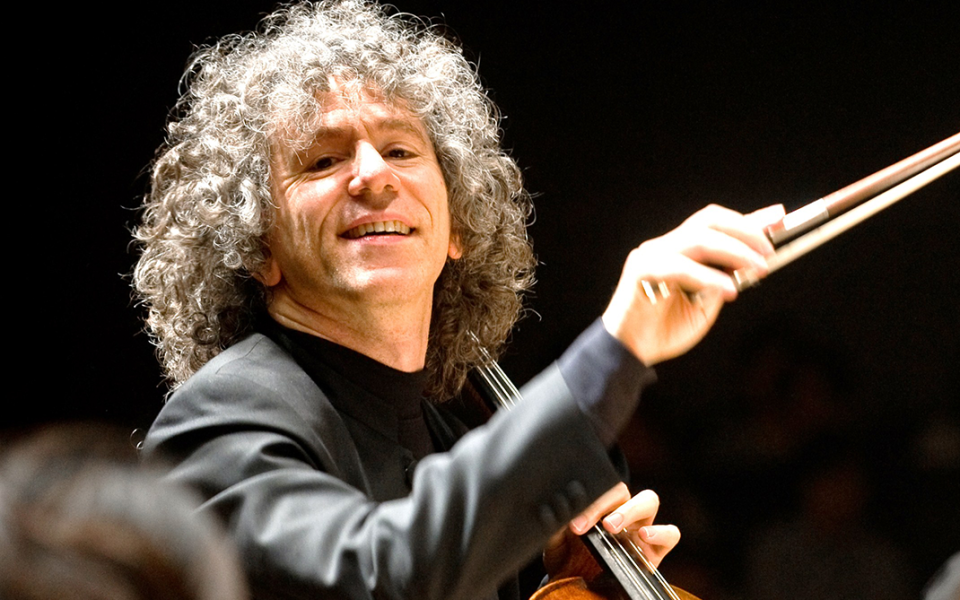
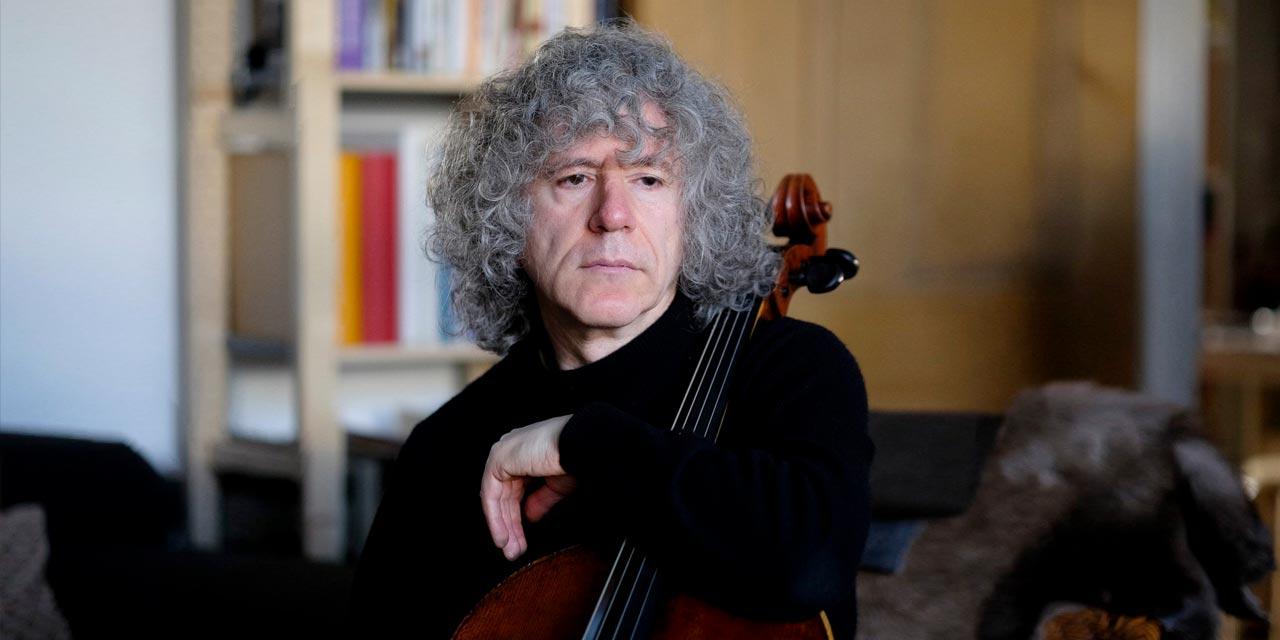
Steven Isserlis (cello) – with Joshua Bell, Irène Duval (violins), Blythe Teh Engstroem (viola), Jeremy Denk, Connie Shih (pianos)

Hahn Variations chantantes (1905)
Fauré Piano Quartet No. 2 in G minor, Op. 45 (1885-6)
Fauré Piano Quintet No. 1 in D minor, Op. 89 (1887-1905)

Wigmore Hall, London
Saturday 2 November 2024

Reviewed by Richard Whitehouse

If it did not get off to quite the start intended due to illness, this Wigmore series centred on Fauré’s chamber works certainly hit its stride with two such pieces from crucial junctures in their composer’s output.

Providing a degree of context was music by Reynaldo Hahn – remembered primarily for his operettas and songs, but whose chamber output is considerable. Hardly a defining statement, Variations chantantes sur un air ancien (its full title) draws on the aria ‘Beato chi può’ from Cavalli’s 1655 opera Xerses for what feels less a set of variations than a sequence of variants of unwavering restraint amply reflecting that blithe detachment of its theme. Steven Isserlis conveyed this in full measure, heard alongside some ingratiating pianism from Connie Shih.

Having achieved a successful balance between formal density and expressive eloquence in its predecessor, his Second Piano Quartet has Fauré laying even greater emphasis on the cyclical transformation of motifs which, hitherto associated with Liszt and Frank, is here imbued with a new cohesion. This is evident from an opening movement whose sonata design unfolds in a constant yet methodical state of change, Isserlis and Joshua Bell restlessly trading exchanges with Blythe Teh Engstroem a lyrical counter-balance and Jeremy Denk the deft anchor-point.

This approach served no less well the ensuing scherzo, with its engaging alternation between pizzicato and bowed playing as well as a tangible mordancy that never quite surfaces. Nor is it entirely absent from a slow movement whose vernal eloquence is informed by more than a little equivocation, and which only waylays continued motivic evolution in the finale. Here the music’s striving towards a decisive while hardly affirmative resolution seemed palpably in evidence, confirming this work to be a triumph of human resilience over existential odds.
If this work marks the culmination of Fauré’s earlier creative maturity, his First Piano Quintet effectively straddles its central phase given the near-on two decades between conception and completion. What had started out for four instruments in four movements ended up as five in three, yet there is nothing tentative about an initial movement whose pervasive introspection belies an emotional eddying no less subtle than the motivic intricacy these players uncovered, and in which the expressively effulgent playing of Irène Duval was an undoubted enrichment.

Less formally involved, the central Adagio prefigures the introspection of its composer’s last years – not least through a seamlessness of texture which, as here, never precludes variety of nuance. After this, the finale can seem less remarkable merely by fulfil its function within the overall scheme, but those thematic elements (of which one the songwriter Bart Howard was evidently aware) that evolve from the previous movements are assuredly realized on route to an apotheosis no less affecting for having delayed its resolution almost until the last moment.

Never neglected but rarely received with more than guarded admiration, Fauré’s late chamber works rely on an advocacy central to such music-making as was heard tonight. Hopefully this will prove no less evident throughout the remaining three programmes in this important series.

You can watch the concert below, thanks to the Wigmore Hall YouTube channel:

For more information on the Fauré series, visit the Wigmore Hall website – while you can also read Arcana’s interview with Steven Isserlis about the French composer

Published post no.2,352 – Monday 4 November 2024
In concert – Kirill Gerstein, BBCSO / Sakari Oramo: Bacewicz & Busoni @ Barbican Hall

Kirill Gerstein (piano), BBC Symphony Chorus (lower voices), BBC Symphony Orchestra / Sakari Oramo

Bacewicz Symphony no.2 (1951)
Busoni Piano Concerto in C major Op. 39 (1901-04)

Barbican Hall, London
Friday 1 November 2024

Reviewed by Richard Whitehouse Pictures (c) BBC / Sarah-Louise Bennett

Wait years for a performance of Busoni’s Piano Concerto then (at least) two come (almost) at once. As 2024 sees the centenary of the composer’s death and it is much his largest work for the concert hall, this was doubtless to be expected though a welcome occurrence all the same.

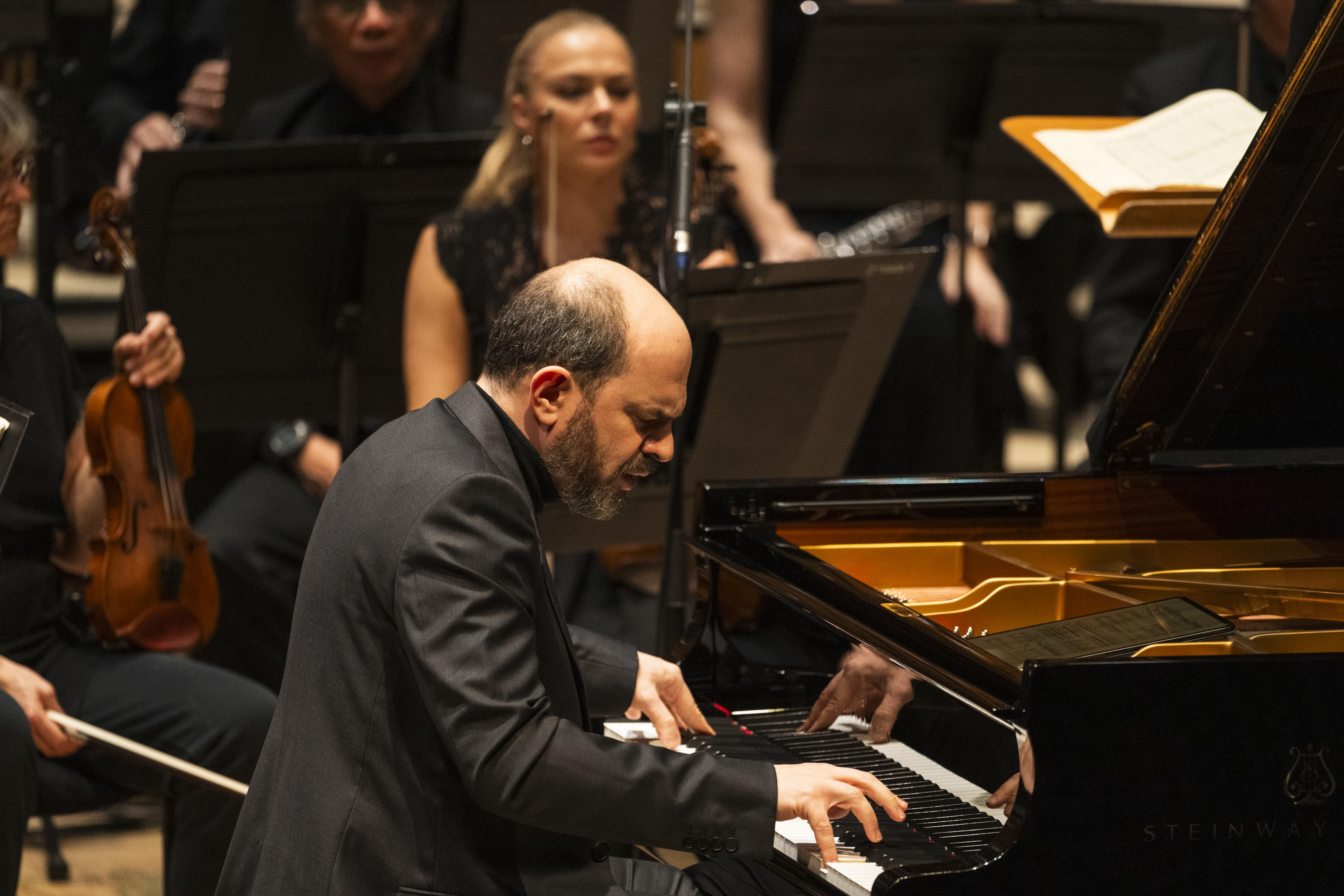
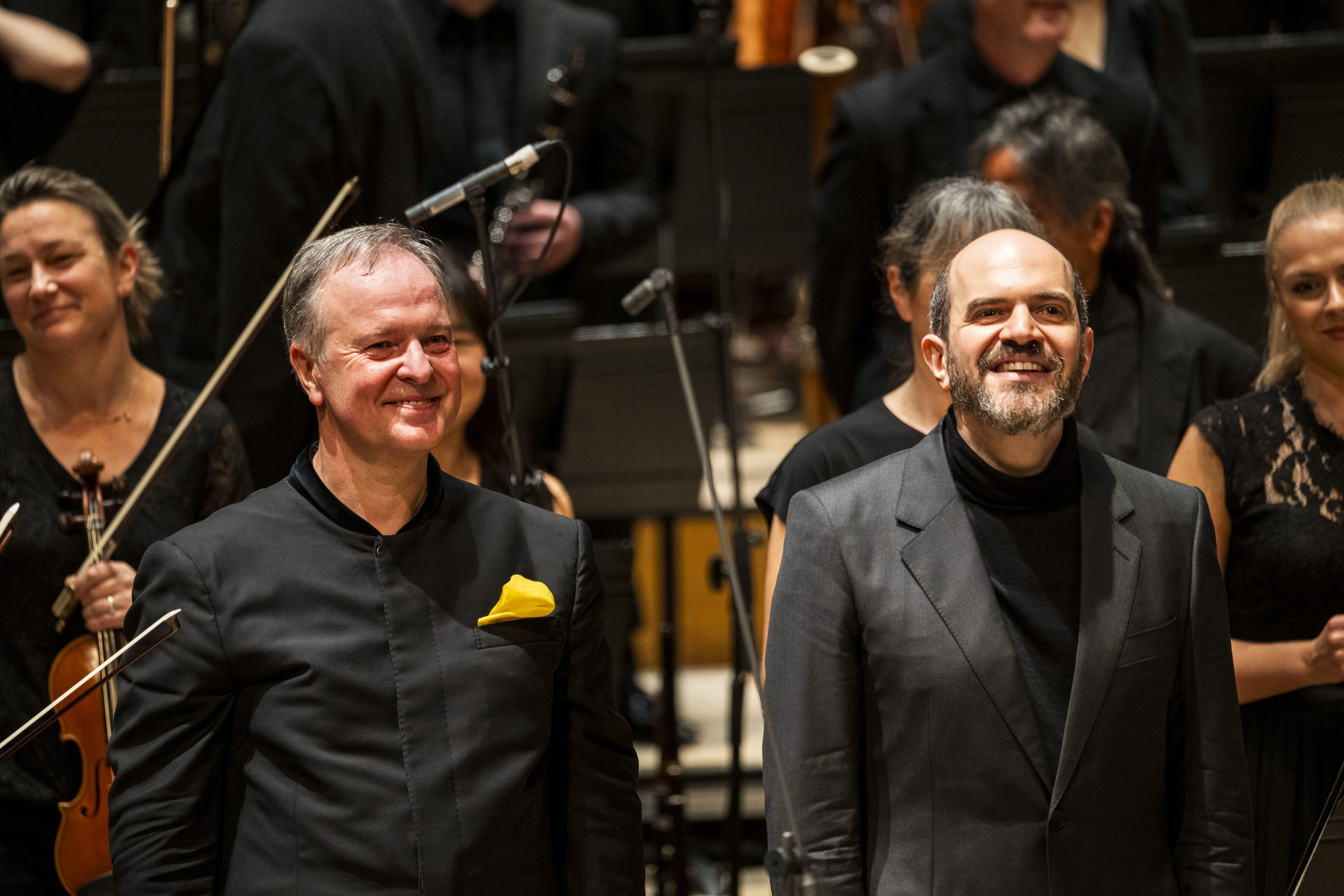
Having first played it in Boston seven years ago (later released on Myrios), Kirill Gerstein (below) and Sakari Oramo were intent on utilizing an experience unusual in the context of this work. This was evident at the outset of its Prologo e introito – the long orchestral introduction having a cumulative impetus that carried into the soloist’s imposing entry, with this physicality finding contrast in the delicacy of passagework and the sensitivity of dialogue later in this movement. Nor was there any lack of capriciousness in a Pezzo giocoso whose more ambivalent asides pointedly underlined, and its more populist elements always integrated into the ongoing flow.

Centrepiece in every respect, Pezzo serioso made a memorable impression. The sombreness of its introduction complemented by the undulating poise of Gerstein’s playing in the ensuing barcarolle section, before a remorseless build up of intensity towards its central climax found piano and orchestra in true accord; the re-emergence of earlier themes of a pathos abetted by a conclusion whose gently insistent rhythmic undertow led to an ending of exquisite finesse.

Rarely can the All’italiana have conveyed such scintillating appeal at this headlong a tempo, making for a tarantella of infectious wit but one whose ever more daring flights of fancy never threatened to lose focus – the BBC Symphony Orchestra responded with unfailing conviction, while the climactic cadenza made for a seamless link into the Cantico. Here male voices, placed at the rear of the platform instead of offstage, assumed the musical foreground as this finale built in a rising arc of tension to an apotheosis of a triumph the more cathartic for its sense of release.

How Busoni’s epic work comes over in performance is in part determined by what has been heard earlier in the programme. Tonight’s concert got it just right with a rare hearing (at least in the UK) for the Second Symphony from Polish composer and violinist Grażyna Bacewicz.

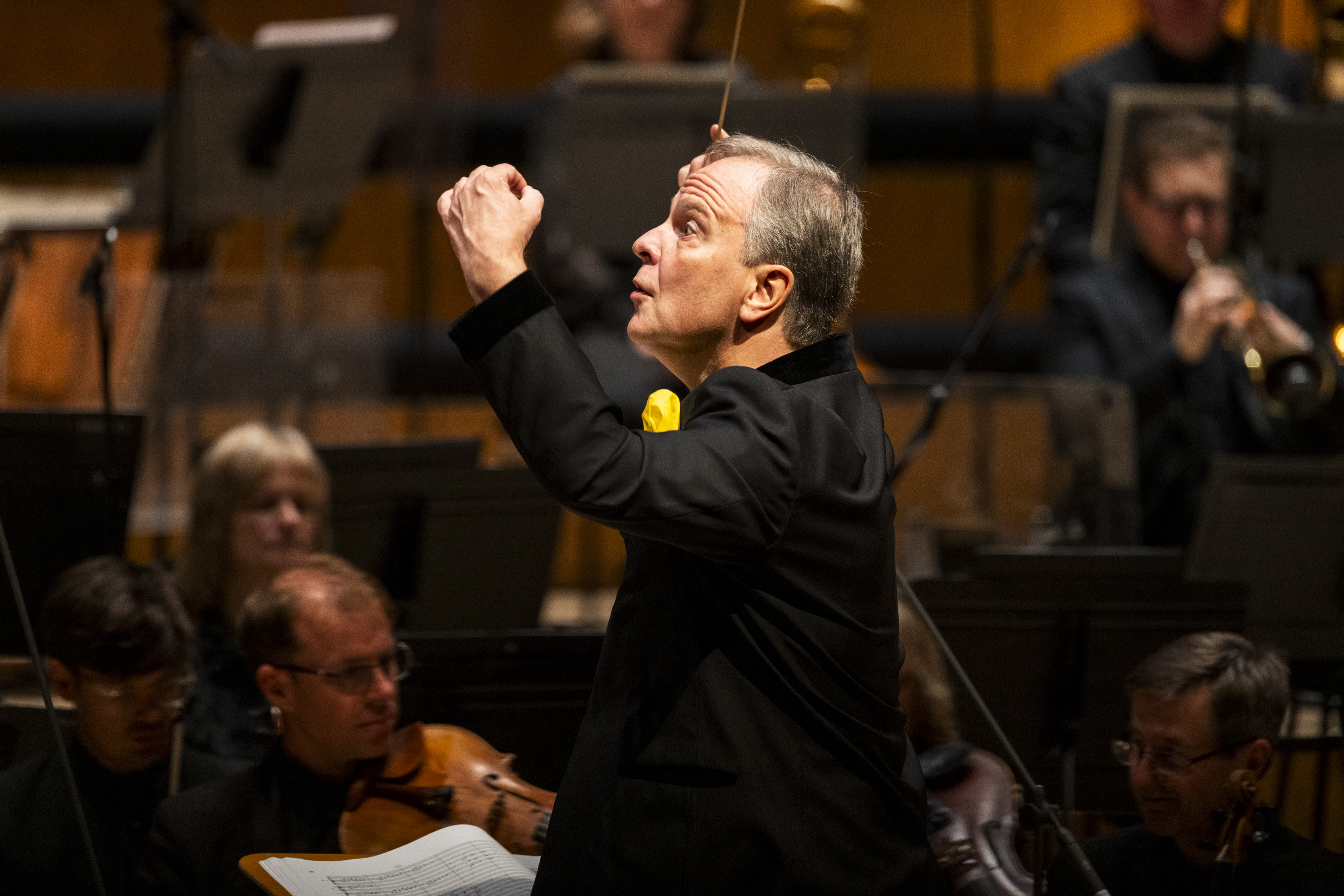
Oramo (above) had previously given notice of his sympathy for her music via recordings of the Third and Fourth Symphonies (Chandos), and this performance did not disappoint. Playing for just over 20 minutes, the Second has a variety of incident and overall impact out of all proportion to its length – whether in the opening movement as this alternates between equivocation and resolve, the eloquence of a Lento in which Bacewicz’s orchestration is at its most resourceful, a Scherzo whose poetic asides never threatened to offset its prevailing vivacity, then a Finale that (as with Roussel’s Fourth Symphony which may have provided the model) ended almost too soon yet whose incisiveness always felt apposite to the whole. Throughout, Bacewicz was conscious of the implications of Socialist Realism while steering clear decisively of its values.

Hopefully this and Bacewicz’s First Symphony will be appearing in due course as a follow-up volume. For now, it gave ready enhancement to a concert whose enterprise and conviction are further proof, is such were needed, of that continued rapport between Oramo and the BBCSO.

For details on their 2024-25 season, head to the BBC Symphony Orchestra website. Click on the names to read more about pianist Kirill Gerstein, conductor Sakari Oramo and composer Grażyna Bacewicz

Published post no.2,351 – Sunday 3 November 2024

In concert – Steven Isserlis and Friends – Fauré at the Wigmore Hall (1)

Steven Isserlis (cello), Joshua Bell, Irène Duval (violins), Blythe Teh Engstroem (viola), Jeremy Denk, Connie Shih (pianos)

Fauré Violin Sonata no.2 in E minor Op.108 (1916-7)
Saint-Saëns Piano Trio no.1 in F major Op.18 (1863)
Nadia Boulanger 3 pièces for cello and piano (1914)
Fauré Piano Quartet no.1 in C minor Op.15 (1876-9, rev. 1883)

Wigmore Hall, London
Friday 1 November 2024

Reviewed from the online stream by Ben Hogwood Photo (c) Satoshi Aoyagi

As the saying goes, the best laid plans of mice and men often go awry. And so it was that this five-part festival at the Wigmore Hall, two years in the planning to mark 100 years since the death of Gabriel Fauré, was compromised by bad fortune that had violinist Joshua Bell suffering from sickness, unable to perform the first work on the programme.

Yet, as cellist and curator Steven Isserlis announced from the platform, there was a silver lining, thanks to Irène Duval – who stepped in to head the Violin Sonata no.2, programmed instead of its predecessor. Thus we heard the first chamber work of the French composer’s celebrated late period, dating from the middle of the First World War, when Fauré had lost his hearing and his son Philippe had been sent to the frontline. Not surprisingly the sonata is invested with concentrated feeling, brought straight to the surface by Duval’s searching tone and Connie Shih’s assertive piano, both fully inside the music. The first movement found brief consolation in its third principal theme, though this was a brief respite in music of passionate and occasionally fraught discourse. The second movement was initially bittersweet in these hands but more obvious serenity was achieved in the long melody of the second theme, beautifully phrased by Duval. The finale, where Fauré finds positivity in the face of his troubles, was sunlit in these hands, with a thoroughly convincing surge to the finish.

Rewinding just over 50 years, we heard music from Fauré’s teacher and long time friend Saint-Saëns – his first major chamber work. The Piano Trio no.1 is full of charm and good humour, and the trio of Shih, Duval and Isserlis enjoyed the cross rhythms of the first movement. Shih met the demands of the composer’s inevitably tricky piano part head on, with some sparkling passages in the right hand. The captivating second movement took us outside, evoking the French mountain regions with a memorable folk-derived theme, recounted by the strings in a solemn unison. Contrasting with this was the light-footed Scherzo, the players enjoying Saint-Saëns’ playful syncopations, and the confident finale, surging forward with a conviction confirming the composer would have many more such moments in his compositional career. The players’ enjoyment was abundantly clear.

After the interval came music from Fauré’s pupil Nadia Boulanger, usually renowned as a teacher but increasingly recognised as an accomplished composer. The 3 Pièces for cello and piano fully deserve their more frequent airings in concert halls today, for they are brilliantly written and full of originality. Isserlis enjoyed the singing high register of the Modéré, its melody gradually descending to ground like a butterfly. The two players enjoyed the canon of the second piece before the bold outlines of the quickstep third, a little prophetic of Debussy’s Cello Sonata a year later. Isserlis and Shih were brilliant throughout.

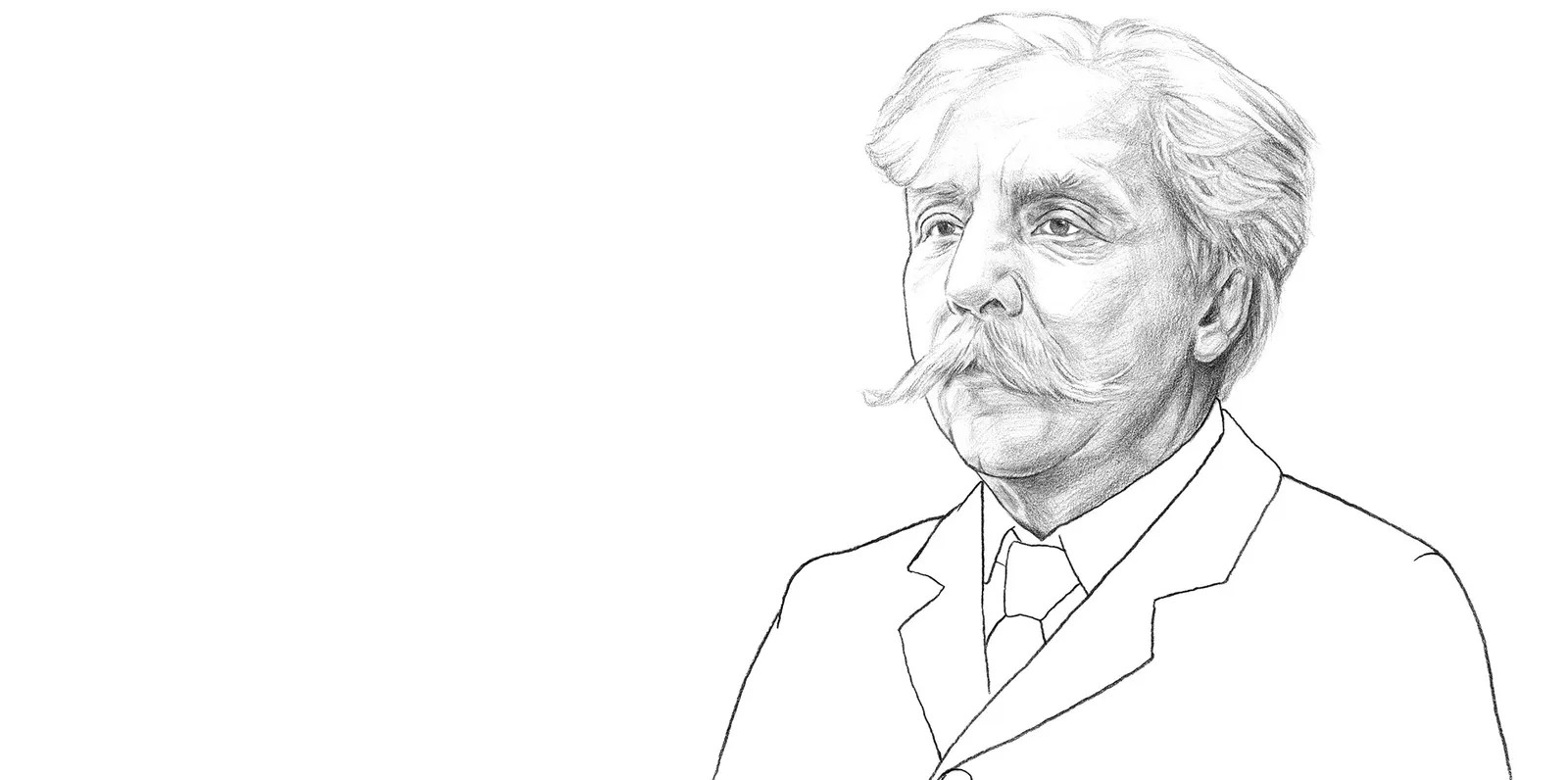
The Piano Quartet no.1 in C minor is one of Fauré’s (above) best-loved works, though it experienced a turbulent composition period in the wake of the dissolution of the composer’s engagement. This is however rarely evident in the music, constructed with elegance and control – though there is plenty of room for expression, as the four players found here.

The first principles of chamber music were on show from the start – for this quartet were playing as one, very much a team rather than a collection of soloists. Such a quality is of great importance in Fauré, his music often containing long and thrilling melodies such as that found at the outset, beautifully played.

Joshua Bell showed commendable energy in spite of his ill health, his sweeter violin tone complemented by Jeremy Denk’s authoritative piano playing, the burnished tone of Blythe Teh Engstroem’s viola and Isserlis’ cello, with lovingly phrased melodies as part of the all-important counterpoint. The syncopations of the second movement, one of Fauré’s calling cards, were deftly handled by the trio and brilliantly led by Denk, the players watching each other closely. Meanwhile the Adagio found time for contemplation, laden with sadness but with an enduring brightness led by Bell’s brighter tone.

The finale found renewed strength in its assertive unison themes, winning through to a thrilling and jubilant finish in spite of the occasional shadow cast in the quieter passages. The closing flourish put the seal on a wonderful first concert which bodes well for the series, providing – as Isserlis said – that the players stay in good health. Should they do so a whole series of treats await.

For more information on the Fauré series, visit the Wigmore Hall website – while you can also read Arcana’s interview with Steven Isserlis about the French composer

Published post no.2,350 – Saturday 2 November 2024

On Record – Bruce Brubaker – Eno Piano 2.0 (InFiné)

by Ben Hogwood

What’s the story?

Building on the success of his first album of Brian Eno reinterpretations, pianist Bruce Brubaker goes deeper into the ambient master’s output.

In his explorations, Brubaker continues to use a Steinway concert grand piano with electromagnetic bows that help him create sustained drone textures.

Here he takes two sections from the 1978 ambient classic Music For Airports album alongside three others, using advanced IRCAM spatialization tools to create an “immersive acoustic experience, turning the piano into a supernatural synthesizer.”

What’s the music like?

The Music For Airports excerpts, not surprisingly, are incredibly calming – and beautifully played. The second version of 1/2 uses the electromagnetic bows to create a sound almost like the clarinet in timbre. Brubaker judges the critical elements like attack and sustain just right, a faithful recreation of the original Eno work but one that gives him plenty of room and space around in the acoustic.

The slow tracks work beautifully, especially Failing Light from Eno’s Ambient 2: The Plateaux Of Mirror, the collaboration with Harold Budd, which is lovingly shaded here. The big surprise, however, is The Big Ship, where he recreates everything by hand, including the shift of rhythmic emphasis that Eno originally performed with an organ drum machine. Here it is commanding and delivered with impressive poise.

Does it all work?

Very much so. Brubaker’s eye for detail and virtuosity work hand in hand.

Is it recommended?

Enthusiastically. Eno Piano 2.0 is an obvious complement to the first instalment but shows Eno’s music in a new and enchanting light. Ambient music has lasted a lot longer than we dared imagine, and reinterpretations like this will only prolong its appeal further.

For fans of… Brian Eno, Harold Budd, Philip Glass, Michael Nyman

You can read an extensive interview with Bruce on Arcana, where he talks about interpreting Eno’s work for piano.

Listen and Buy

Published post no.2,349 – Friday 1 November 2024

Switched On – Ocoeur: Breath (n5MD)

by Ben Hogwood

What’s the story?

Breath is the ambitious new album from Ocoeur, aka Franck Zaragoza, the Bordeaux-based producer. On this record Zaragoza looks to reawaken an appreciation for the world around us, and connect with the landscapes that are for most of us within easy reach.

As well as looking at elemental connections, Breath is a call for peace in troubled times.

What’s the music like?

This is an album that works on two levels. On one hand there is a blissful ambience running throughout Breath, meaning it is easy to connect with especially at either end of the day. Yet listening closely is even more rewarding, with Zaragoza’s clever internal workings revealed as tightly knit melodic loops spread their wonders far and wide.

The album grows from small beginnings to reach an early apex with Life, which has real gravitas and orchestral dimensions. The music repairs for the softer piano musings of To Love, Ocoeur exploring deep and primitive emotions, before Calling For Peace makes an understated impact. Here a steady drum tread proves immediately reassuring, pairing up with a rather beautiful chime-like figure.

Everything Moves, as its title suggests, is more active, the music dancing like ripples on a lake, before the coda Our Home finds a softly-voiced calm.

Does it all work?

It does, beautifully. Best heard in one sitting, Breath is a work that may be mostly electronic but could easily transpose for full orchestra.

Is it recommended?

Very much so. This is an album of poise and presence, one of a minimalist beauty but with emotional heft, too. With his Ocoeur pseudonym, Franck Zaragoza is creating a deeply impressive body of work.

For fans of… Harold Budd, Gas, Howard Skempton, Biosphere

Listen & Buy

Published post no.2,348 – Thursday 31 October 2024