
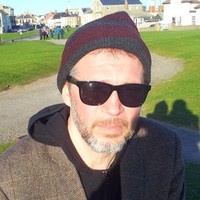
Today I want to use Arcana to pay tribute to a great friend, who very sadly passed away recently at the age of 63.
I first met Matthias Siefert in the year 2000. We were working at an Internet startup company, Muze UK, whose function was to supply data on music and film to the likes of Amazon and BOL. Matthias was brought in to head up the German department – and later, after the company was absorbed into what was then RED, we ended up working together at PPL for a while.
We formed a firm friendship based on humour (or lack of!), sport and music. Matthias was incredibly well connected and our musical tastes frequently coincided, him approaching from a punk direction and me as a late pop music developer in the 1990s.
Matthias’s connections came through his own love of music and his career as a manager, looking after a host of up-and-coming bands while forming connections to the well-known ones. I have put together some videos of songs we heard at Matthias’s funeral on Friday, along with choice cuts from musical people he knew and who we interacted with. The first is from a gig we went to in 2003, to celebrate the impending release of a new album from Goldfrapp, some of whom he knew well. This was when they were about to go stellar:
Matthias’s funeral began with music from The Coral Sea, the California band he managed headed by Rey Villalobos:
A particularly beautiful moment in the ceremony combined a meaningful montage of photographs and this beautiful early Elton John song, previously unknown to me:
Matthias was good friends with Roland Orzabal and Curt Smith from Tears For Fears – and it was wholly apt that the shuffle function brought this song up to head the playlist in the pub where we had gathered to celebrate his life:
Another connection that Matthias had was with the duo Yello, with both Boris Blank and Dieter Meier. The obvious choice here is one of their stand-out tracks:
One of the many new bands Matthias introduced me to in the noughties was The Infadels, and to this day I am surprised they didn’t make it big, because the songs are brilliant! We went to an old-school, sweaty gig at the Water Rats, King’s Cross, where they dazzled with their special mix of electronic and pop. This song was a particular highlight for me!
There is only one place to finish, however…and it’s with the final song from the funeral ceremony, The Black Keys’ Little Black Submarine. Again this is a song I was not familiar with, but it struck deep with its deceptively pastoral opening and its uncanny resemblance to Led Zeppelin. Listen to the full song, though – especially if you don’t know it, and revel in the moment where the drums kick in!
Rest well, Matthias. We’ll miss you greatly, and our condolences go to your special family and friends in their shock and sadness. I will miss our chats about music and football, more recently from afar, but thanks so much for the music and the memories!
Ben Hogwood
Published post no.2,785 – Sunday 1 February 2026


 Arcana.fm