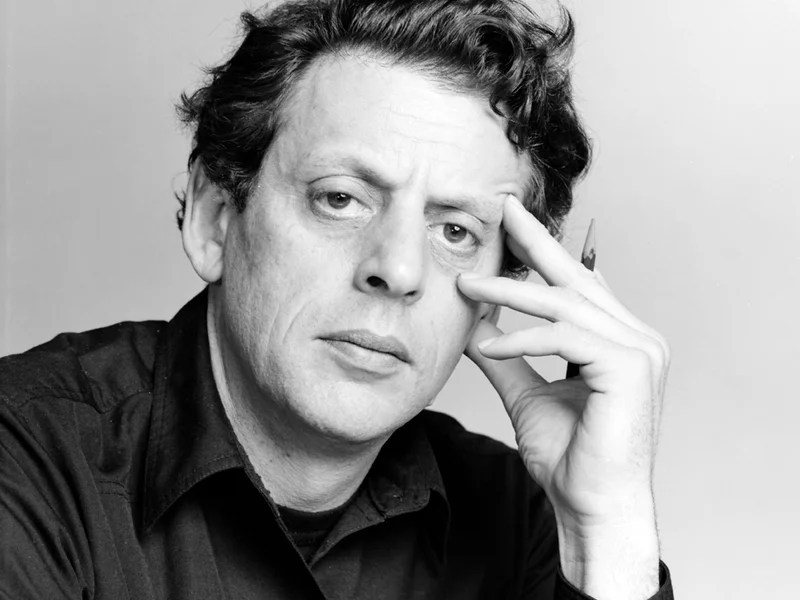
by Ben Hogwood picture (c) Jack Mitchell/Getty Images
On this day in 1987 the premiere of Philip Glass‘ Violin Concerto no.1 took place, played by Paul Zukofsky and with the American Composers Orchestra under Dennis Russell Davies.
The piece has established itself as one of Glass’s most popular works in concert, and can be heard below in its first recording, made by Gidon Kremer for Deutsche Grammophon:
Here is a chance to highlight a composer not often covered in these (or any) parts – for today marks 145 years since the death of Polish violinist and composer Henryk Wieniawski.
While not a prolific composer, Wieniawski was one of the first in his country to write substantial violin concertos, and the two he completed are both tuneful and characterful. You can listen below, in performances from Gil Shaham, with the London Symphony Orchestra conducted by Lawrence Foster:
Today marks 50 years since the passing of Sir Arthur Bliss, one of the most important composers in recent British musical history.
The Arthur Bliss Society sum up his contribution as “one of the most important figures in British musical life from the early 1920s (when he was regarded as an enfant terrible) through to his later years and his tenure of the office of Master of the Queen’s Music from 1953, following Sir Arnold Bax”.
If you are a regular Arcana reader you will have read about recent performances of A Colour Symphony, one of his most popular orchestral works, and also a revival for his masterful Temporal Variations, recorded by the BBC Philharmonic Orchestra and John Wilson for later this anniversary year.
For now, here is a Tidal playlist taking excerpts from some of Bliss’s most important works, as well as including the two orchestral works noted above:
To read about further concerts in Bliss’s anniversary year, you can visit the Arthur Bliss Society website – where you will find more information about the pieces above.
Today marks the centenary of the birth of composer and conductor Pierre Boulez, a towering figure in 20th century classical music.
There are so many recordings conducted by Boulez that I thought it best to share a playlist centred on memories of concerts I saw him conduct, largely from the 1990s and 2000s.
My first encounter with him was a rare appearance with the City of Birmingham Symphony Orchestra at the Royal Festival Hall. There he conducted Bartók’s Piano Concerto no.1 with customary clarity, soloist Krystian Zimerman delivering a memorable performance of percussive drive as he does here. On the second half of the concert was Stravinsky’s Petrushka, well-represented here by Boulez’s recording for DG in Cleveland.
Another South Bank visit in the 1990s brought an unusual appearance for Schoenberg’s monodrama Erwartung, sung memorably by soprano Jessye Norman. I remember vividly several visits to the Barbican to see Boulez conduct the London Symphony Orchestra in the 1990s, and one performance that particularly stands in the memory was that of Ravel’s Valses nobles et sentimentales, a colourful yet brisk performance that danced with a glint in its eye.
One other eyeopener, which I will never forget, was Boulez conducting Prokofiev’s Scythian Suite at the Barbican – a work he never recorded. Simultaneously on the bill was Szymanowski’s Violin Concerto no.1. Here was a composer Boulez seemingly re-evaluated later in his life, recording the concerto with violinist Christian Tetzlaff for DG.
From the recorded side I have included Maurizio Pollini’s pioneering account of Boulez’s own Piano Sonata no.2, a challenging piece that I must admit I have not yet conquered – but whose importance is clear.
To finish, my favourite Boulez recording, which finds him back in Cleveland conducting Debussy’s Nocturnes, a recording notable for its ideal pacing, beautiful colouring and immaculate rhythmic direction.
You can listen to this selection on Tidal by clicking on the playlist link below:
This day marks the anniversary of one of Tchaikovsky‘s biggest orchestral works, which over the last few decades has gained a foothold in the concert hall and the studio.
Tchaikovsky’s Manfed Symphony was written in between his Fourth and Fifth symphonies, and, at the suggestion of the composer Balakirev, was based on the poem of the same name by Lord Byron.
It is actually longer than any of Tchaikovsky’s numbered symphonies, and shows the influence of Berlioz – who, ironically, was given the opportunity to write Manfred but declined due to old age. Tchaikovsky too declined initially, but Balakirev, who had worked closely with him on the final revision to Romeo and Juliet, persuaded him otherwise.
Ultimately Tchaikovsky responded with a powerful work, whose impact on the listener is considerable. The composer summed it up as follows: “The symphony has turned out to be huge, serious, difficult, absorbing all my time, sometimes to utter exhaustion; but an inner voice tells me that my labour is not in vain and that this work will perhaps be the best of my symphonic works.”
Time has proved him right – and while the work, dedicated to Balakirev, was not universally praised on its premiere in Moscow, it has stood the test of time. Here it is in a 1986 performance with the Oslo Philharmonic Orchestra conducted by Tchaikovsky specialist Mariss Janssons:



 Arcana.fm