Here are four very contrasting first performances from 12 December across history for you to enjoy. In 1909, the first performance of Lyadov’s Kikimora in St Petersburg:
In 1920 the first performance of Ravel’s La Valse at a Lamoureux Concert in Paris…
…and on the same day the first performance of Korngold’s Die tote stadt, in Hamburg and Cologne. Here is Marietta’s Lied, sung by Renée Fleming:
…and finally, on the same day in 1932, Leon Goossens and the International String Quartet gave the first performance of the teenage Benjamin Britten’s Phantasy Quartet Op.2, in London:
Published post no.2,391 – Thursday 12 December 2024
On this day, 211 years ago, the premiere of Beethoven‘s Symphony no.7 in A major took place in Vienna, Austria.
Even within an output as consistently strong as Beethoven’s, the Seventh Symphony enjoys a special place. It is, quite simply, a wonderful piece – from the gravitas of its introduction to the release of purely positive energy once the first movement gets into its stride. The much-played second movement is a profound Allegretto with the implications of a funeral march – sentiments swept aside by the bubbling motifs of the scherzo. The finale is the crowning glory, a wholly affirmative statement that brings the symphony to a bracing conclusion.
And all this from a composer whose hearing was steadily worsening! Have a listen below and enjoy the power and poise of the Royal Concertgebouw Orchestra under Bernard Haitink:
On this day, 174 years ago, the premiere of Schubert’s String Quintet in C major took place in Vienna, Austria.
The string quintet was brought to prominence by Mozart’s masterpieces in the form, using the standard string quartet line-up of two violins, viola and cello with the addition of a second viola. Beethoven wrote an underrated quintet for the same instrumental combination, but Schubert chose to use a second cello. His much-loved quintet, completed three weeks before his death, is a desert island choice for many people on account of its heavenly Adagio. Here it is, played by the Borodin String Quartet and cellist Alexander Buzlov:
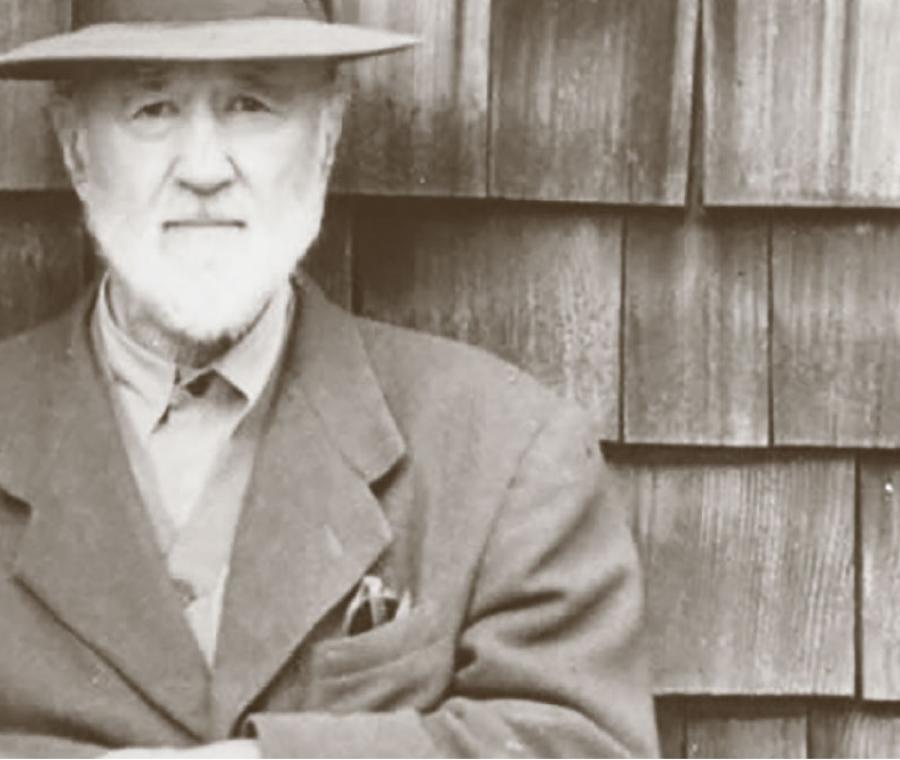
This month we mark 150 years since the birth of American composer Charles Ives in Connecticut, on 20 October 1874.
Ives is a fascinating and often divisive figure, revered by some yet derided by others. Perhaps because of that his music does not enjoy a great deal of concert hall exposure, but once you begin to explore his output a huge range of music awaits your ears.
No doubt, his music is not for anybody – but if you listen to the playlist below, you will see just what an imaginative composer he was, so much so that his music continues to inspire and even baffle to this day, in the best possible way!
My own Ives watershed came courtesy of the Variations on America, an often outrageous set of variations on the tune behind the British National Anthem, played by the impish organist Simon Preston. Ives said that playing the pedal part on the organ was “as much fun as playing baseball” – a quote that embodies his open and often humourous approach to music. I also had the honour of playing cello in a performance of General William Booth Enters Into Heaven, an eventful and ultimately touching scene for voice and orchestra.
Hymn tunes, folk sources, complex note systems, innovative textures – all these qualities and more are found in the Symphony no.4 alone, while shorter pieces such as The Unanswered Question and Central Park In The Dark show an uncanny ability for mind-opening scene setting.
The message is definitely that the more time you spend with Ives, the more his music reveals. Try it and see how you get on!
by Ben Hogwood. Portrait of Arnold Schoenberg by Richard Gerstl, circa June 1905
On this day in 1874, 150 years ago, one of the most revolutionary – and divisive – composers was born in Vienna. Arnold Schoenberg gained notoriety for his groundbreaking style of composition that took him first to the outer limits of tonality, and then beyond.
Today he remains a musical figure guaranteed to split opinion within a room of classical music fans, and well beyond – though as we have seen at the BBC Proms this season, his music is a lot more approachable than you might think.
There will be a fair bit more about him on these pages in the next couple of months, including an interview with leading British soprano Claire Booth, who has made a striking new recording of his melodrama Pierrot Lunaire. For now, though, I urge you to enjoy two very contrasting videos of Schoenberg’s music.
The first is a performance of his Sechs kleine Klavierstücke, published as Op.19 in 1913 – after his break with tonality. They show a remarkable, compressed intensity, creating vivid pictures and emotion flying in the face of music that, having left conventional working behind, is alleged to be devoid of feeling. This performance from legendary pianist Glenn Gould totally refutes that:
Following that, here is one of Schoenberg’s early masterpieces, the deeply atmospheric Verklarte Nacht (Transfigured Night), published as the composer’s Op.4 in 1899:
Published post no.2,300 – Friday 13 September 2024