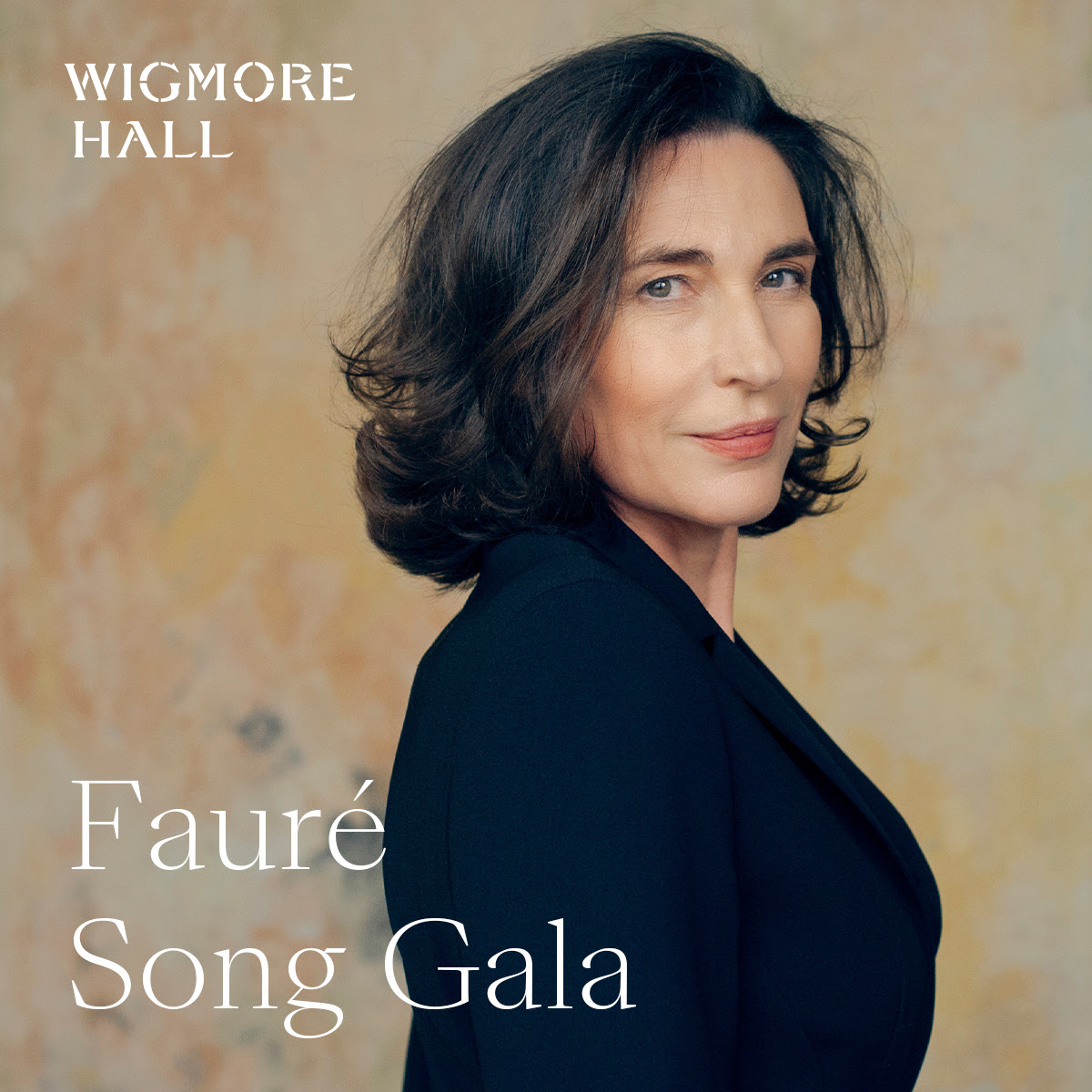
Véronique Gens (soprano), Fleur Barron (mezzo-soprano), Laurence Kilsby (tenor), Stéphane Degout (baritone), Susan Manoff (piano), Julius Drake (piano) – all performing on Friday 13 September 2024 at the Wigmore Hall
The Gabriel Fauré Centenary Celebrations open with a song gala involving some of Fauré’s finest contemporary interpreters, who explore the composer’s output at various stages, and all of whom share in the performance of his cycle La bonne chanson.
The concert will take place on Friday 13 Sep 2024, 7.30pm (click here for tickets) – and marks the start of a celebration which will cover the French composer’s celebrated chamber music.
You can read about the celebrations at the Wigmore Hall website, where you will find details of the five-day festival planned and curated by Steven Isserlis and friends, running from Friday 1 November to Tuesday 5 November. The programme will include all of Fauré’s chamber music, put in context of his friends and contemporaries. It will also give us the rare opportunity to hear both of the piano trios by his good friend Saint-Saëns.
Geneva Lewis (violin, above) and Georgijs Osokins (piano, below)
Brahms Violin Sonata no.2 in A major Op.100 (1886) Domenico Scarlatti Sonata in D minor Kk213 Elgar Violin Sonata in E minor Op.82 (1918)
Wigmore Hall, London Monday 20 May 2024 (1pm)
by Ben Hogwood
The Violin Sonata no.2 is one of Brahms‘s chamber music perennials, a popular recital fixture – but in this recital from BBC New Generation Artist Geneva Lewis and Latvian pianist Georgijs Osokins it was as though the work had received a fresh coat of paint.
The tempo marking Brahms applied to the first movement, Allegro amabile, is seldom found in classical music – ‘amabile’ meaning ‘lovely’. That was certainly the case in this performance, though Lewis and Osokins took a much slower tempo than is the norm. Their daring approach succeeded, however, for the melodic phrasing blossomed, the spring-like main tune given plenty of room to shine. The second theme was laid bare, but again the slow tempo allowed for greater insight, followed attentively by the Wigmore Hall audience.
The dynamic range of both players was also notable, Lewis very much aware of her surroundings in the quiet passages, the audience subconsciously leaning in to the music. At points the music was so quiet that Osokins’ pedalling could be heard…but conversely the pair were not afraid to put the pedal down and play out, as they did in the finale. In between came a tender and affectionate middle movement, its dreamy opening certainly tranquillo, before a most appealing central vivace section.
Elgar’s Violin Sonata was completed when the composer had just turned 60 – and although he would live for another 16 years, very few major works followed. To hear the sonata played by performers in their twenties was eye-opening indeed, with more youthful elements of the piece revealed and a different light shed on a work that often has autumnal reflections to cast.
The first movement was notable for its commanding first paragraph, Lewis setting the tone for the movement as she became immersed in Elgar’s broad phrasing. Osokins, for his part, mastered the full piano textures most impressively, before both performers drew back for a thoughtful second theme. The second movement became a fascinating mini-ballet between the two instruments, its shadowy colours a clue to the composer’s darker thoughts, though the bittersweet melodies were given extra charm by the dance-inflected rhythms.
The finale took flight immediately, the violin surging forward with penetrating melodies that led to a sense of sunlight breaking through the clouds in the closing phrases, Elgar allowing his thoughts to brighten as the music turned to the major key. The imaginatively chosen encore capitalised on this, Lewis and Osokins giving us the rustic finale of Busoni’s Violin Sonata no.2 in E minor, music which might have passed for one of Brahms’s Hungarian-influenced works were it not for some particularly scrunchy harmonies.
In between the two big sonatas, Osokins (above) had the chance to shine alone, one he took with a profound account of one of Domenico Scarlatti‘s many keyboard sonatas. The Sonata in D minor Kk213 is a bittersweet piece, a reminder of how forward looking this composer’s music can. Rooted in the 18th century it may be, but in reality we could have been listening to a Satie Gnossienne, especially with Osokins’ poetic licence drawing out the final harmonic resolution.
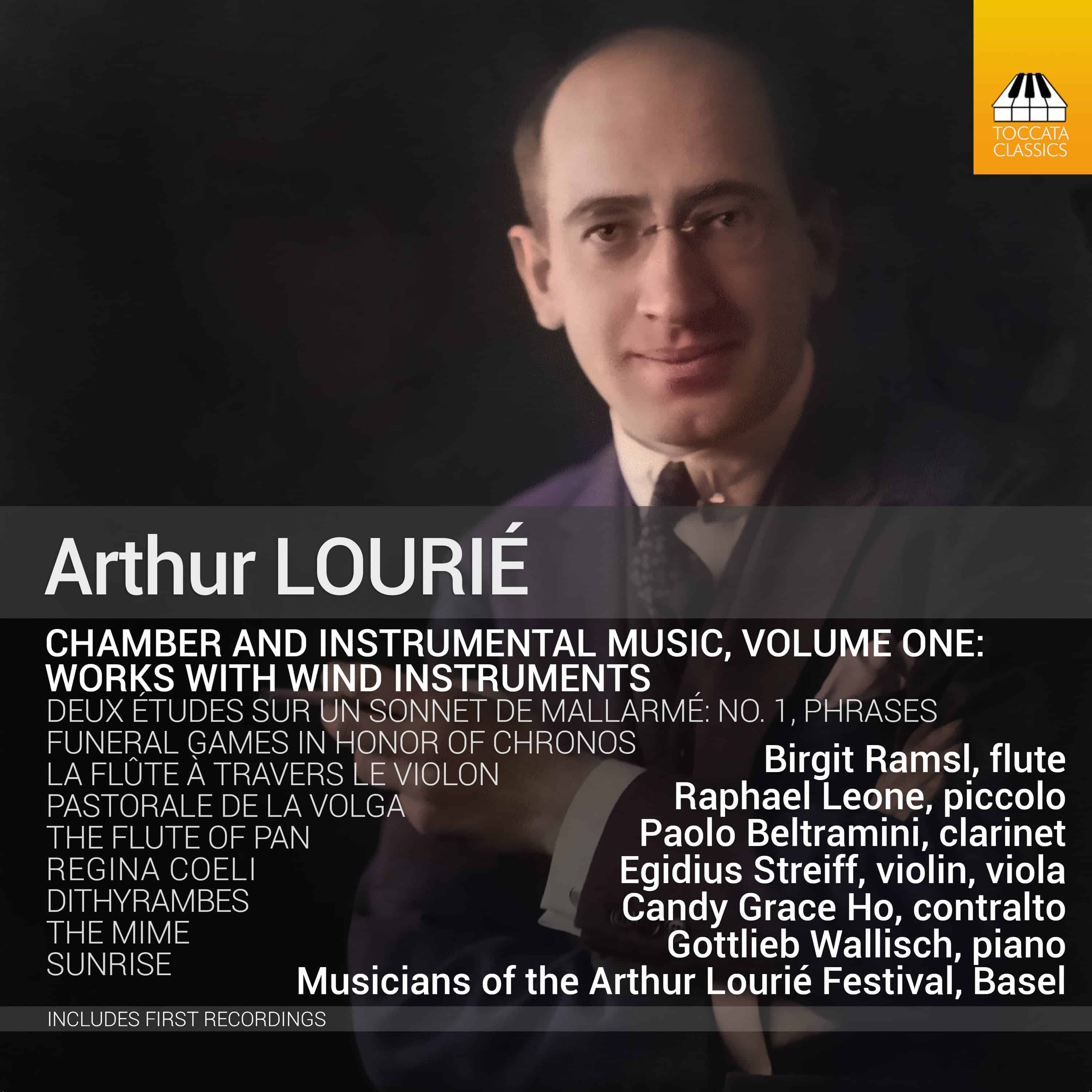
Lourié Sunrise (1957)a Pastorale de la Volga (1916)b Regina Coeli (1924)c La Flute à travers le Violon (1935)d Dithyrambes (1938)e Deux Études sur un sonnet de Mallarmé (1945/62)f The Mime (1956)g The Flute of Pan (1957)h Funeral Games in Honor of Chronos (1964)i
Toccata Classics TOCC0652 [70’05’’] Producer Mauro Piccinini Engineers Sergio Cossu & Riccardo Botta Recorded 26 November 2021 (g) and 25 February 2022 (adeh) at Sacro Cuore, Bellinzona; 20/24 February 2022 (bcfi) at Studio 1, Schweizer Radio und Fernsehen, Zurich
Reviewed by Richard Whitehouse
What’s the story?
Toccata Classics adds to the growing recorded representation of Arthur Lourié (1892-1966) with this first volume devoted to chamber and instrumental music, so extending appreciation of not only a culturally significant figure but a strikingly original composer in his own right.
What’s the music like?
Earliest here is Pastorale de la Volga – its pungent scoring for woodwind and strings, with its avowedly constructivist unfolding (what might be termed ‘additive form’), maintained across two continuous movements which do not develop linearly as evolve modularly; these motifs intensifying, as it were, through association and in a manner Stravinsky or Prokofiev drew on intensively around this time. Subsequently isolated in Wiesbaden, Lourié brought modernist and traditional facets into telling accord with his setting Regina Coeli; here, oboe and trumpet play off a vocal line that continues unaware of, or is indifferent to, their contrasting presence.
In essence a sonata ‘malgré-lui’, La Flûte à travers le Violon has its composer utilizing some of the more recondite aspects of Stravinskian neo-classicism – whether in the agile rhythmic displacement of its opening Allegretto, taciturn eloquence of its central Adagio or engaging repartee of the final Presto with its appealingly populist undertones. By contrast, the trilogy for solo flute Dithyrambes offers an avowedly Nietzschean take on the choral odes found in Greek antiquity – the graceful undulations of Le Sacrifice du miel duly complemented by the unfurling lament of Plainte d’Ariane, before the tonal and rhythmic intricacies of the relatively lengthy Labyrinthe make a potent corollary to that fabled if mythical construct.
Phrases, first of two études respectively commenting on and setting a sonnet by Mallarmé, finds this composer at his most unashamedly melodic – though there is nothing reactionary about its plaintive and at times capricious interplay between flute and piano. This is no less true of Mime, a study for clarinet which is dedicated to Charles Chaplin and which it is not unreasonable to think of as a portrait of this actor in his most enduring guise as the Tramp.
The programme had opened with the alluring strains of Sunrise, its (imagined?) evocation of the ‘dawn chorus’ just one of the aspects of this first cousin to pieces by Debussy and Varèse, and to which The Flute of Pan makes for a pointed contrast with its gradually but inexorably mounting activity to a febrile ending. From here to Funeral Games in Honor of Chronos is to encounter Lourié’s penultimate work, his latter preoccupation with ritual heard in a sequence of linked episodes conceptually of the ancient past yet aesthetically of the immediate present.
Does it all work?
Yes, notwithstanding that Lourié is a composer less occupied with any expressive or technical consistency than with imparting a ‘world view’ such as veers freely between past and present. These performances, recorded under the auspices of the Arthur Lourié Festival in Basel, are always attuned to his arresting idiom and have been recorded with the requisite spaciousness.
Is it recommended?
Indeed, and good to hear a follow-up volume from this source is forthcoming. In particular, Lourié’s music for string quartet would be necessary listening for anyone who has heard his epic first such work (recorded by the Asasello Quartett on Genuin GEN22745) in this genre.
Solarek Piano Trio [Marina Solarek (violin), Miriam Lowbury (cello), Andrew Bottrill (piano)
Henriëtte Bosmans Arietta (1917) Violin Sonata (1918) Piano Trio (1921)
Toccata Classics TOCC0654 [55’22’’] Producer Ian Dean Engineers Bárbara Santos & Carlos Jesús Recorded 6-7 April 2022 at Arda Studio A, Porto
Reviewed by Richard Whitehouse
What’s the story?
Toccata Classics continues its exploration of neglected and overlooked figures with a release of early pieces for chamber forces by Henriëtte Bosmans (1895-1952), Dutch composer and pianist whose eventful life drew attention away from her substantial and distinctive output.
What’s the music like?
Although her later music has latterly enjoyed performance and recording, that from Bosman’s formative years has had little exposure, making the pieces recorded here the more welcome – not least for underlining that her journey toward compositional maturity was a successful one.
The Violin Sonata is certainly a statement of intent. Its first of four movements is a substantial sonata design, the impulsive then ruminative main themes duly repeated prior to an extensive development (the transition into which derives from this latter theme rather than being a new idea as such); one whose understated resourcefulness continues throughout an altered reprise then suddenly decisive coda. The other movements (shorter even when combined) comprise a tensile and agitated scherzo, its absence of any trio section making contrast with the ethereal ‘song without words’ of the Adagio the more potent, then a finale that fails less by recycling themes previously encountered as by being too emotionally temperate to round off the whole with quite the resolution needed. This is an appealing and frequently prophetic piece, even so.
A few years later and the Piano Trio finds such promise being amply met. The initial Allegro maintains unflagging impetus that is by no means offset in the second theme, with its sultrily modal colouring, and abetted by the cello’s playing for much of the time in its higher register. After this, the central Andante ably fulfils its role within the overall scheme – the undulating moodiness of its main theme twice contrasted with livelier music, before finding repose at its bittersweet last hearing. It thus remains for the finale, prefaced by a cadenza-like passage, to restore the earlier energy with a dance-like theme which draws an almost orchestral sonority from the three instruments. A secondary idea elaborates on the material of that introduction, while the main theme returns to see this work through to its conclusion with some abandon.
Between these works comes the brief but enticing Ariëtta which is of interest for inhabiting the lower reaches of the violin’s compass (thereby making performances on viola the more common), and which adds to the solemn if not unduly earnest aura of its expressive profile.
Does it all work?
Not entirely, though such failings as there are constitute part of the interest here and the Piano Trio is evidently a minor masterpiece. Performances by the members of the Solarek Trio are never less than sympathetic, but would have benefited from a more sympathetic ambience, as that here has a narrow perspective such as robs them of any subtlety or finesse (those having spent numerous evenings at the British Music Information Centre in London will know what to expect). What is never in doubt is the dedication or the commitment of this music-making.
Is it recommended?
Yes, with reservations as outlined above. The two main works now have rival recordings by the Brundibar Ensemble (Fineline Classics FL72416) but this Toccata release is not thereby outclassed, while its annotations from violinist Marina Solarek are succinct and informative.
Brahms Violin Sonata no.2 in A major Op.100 (1886) Viola Sonata no.2 in E flat major Op.120/2 (1894) Piano Quartet no.3 in C minor Op.60 (1855-75)
Wigmore Hall, London Thursday 21 December 2023
Reviewed by Ben Hogwood. Photos of Janine Jansen & Timothy Ridout (c) Marco Borggreve
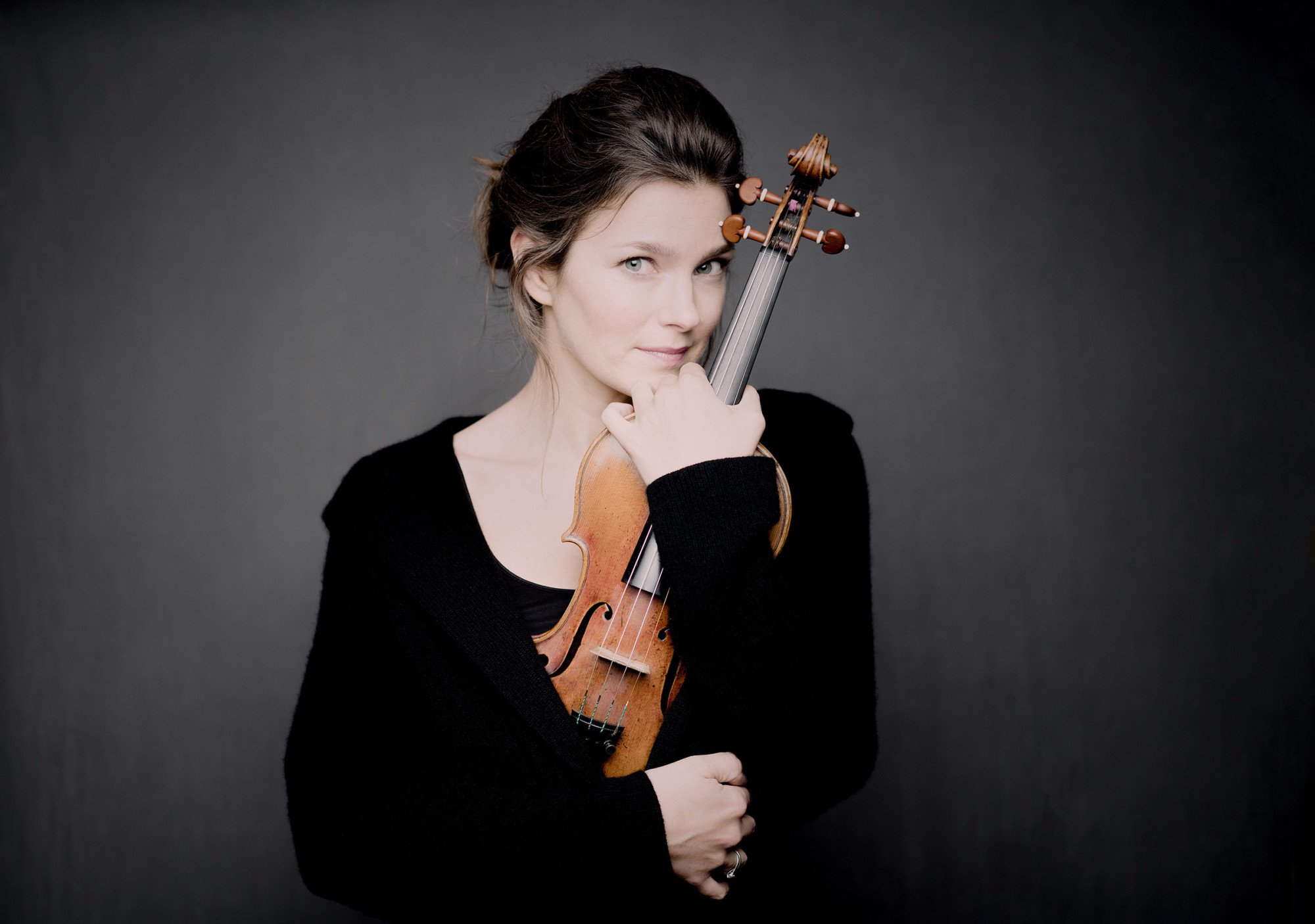
After the unfortunate cancellation of a concert in her series the previous week, violinist Janine Jansen and friends returned to health and to a Christmassy Wigmore Hall for another all-Brahms programme.
Jansen (above) and pianist Denis Kozhukhin (below) began with the Violin Sonata no.2, a late substitution for the first sonata but a breath of fresh air on a winter evening. One of Brahms’s best-loved chamber piece, its charming first theme has enough to weaken the hardest heart. So it was here, with Jansen’s affectionate playing. Her creamy tone was complemented by the incisive piano playing of Kozhukhin, who was deceptively relaxed in his body language but very much in tune with Brahms’s intricate rhythms and phrasing. The two excelled in the central section of the second movement, which tripped along with admirable definition of those rhythms, and in the finale, where the two enjoyed a more assertive musical dialogue.
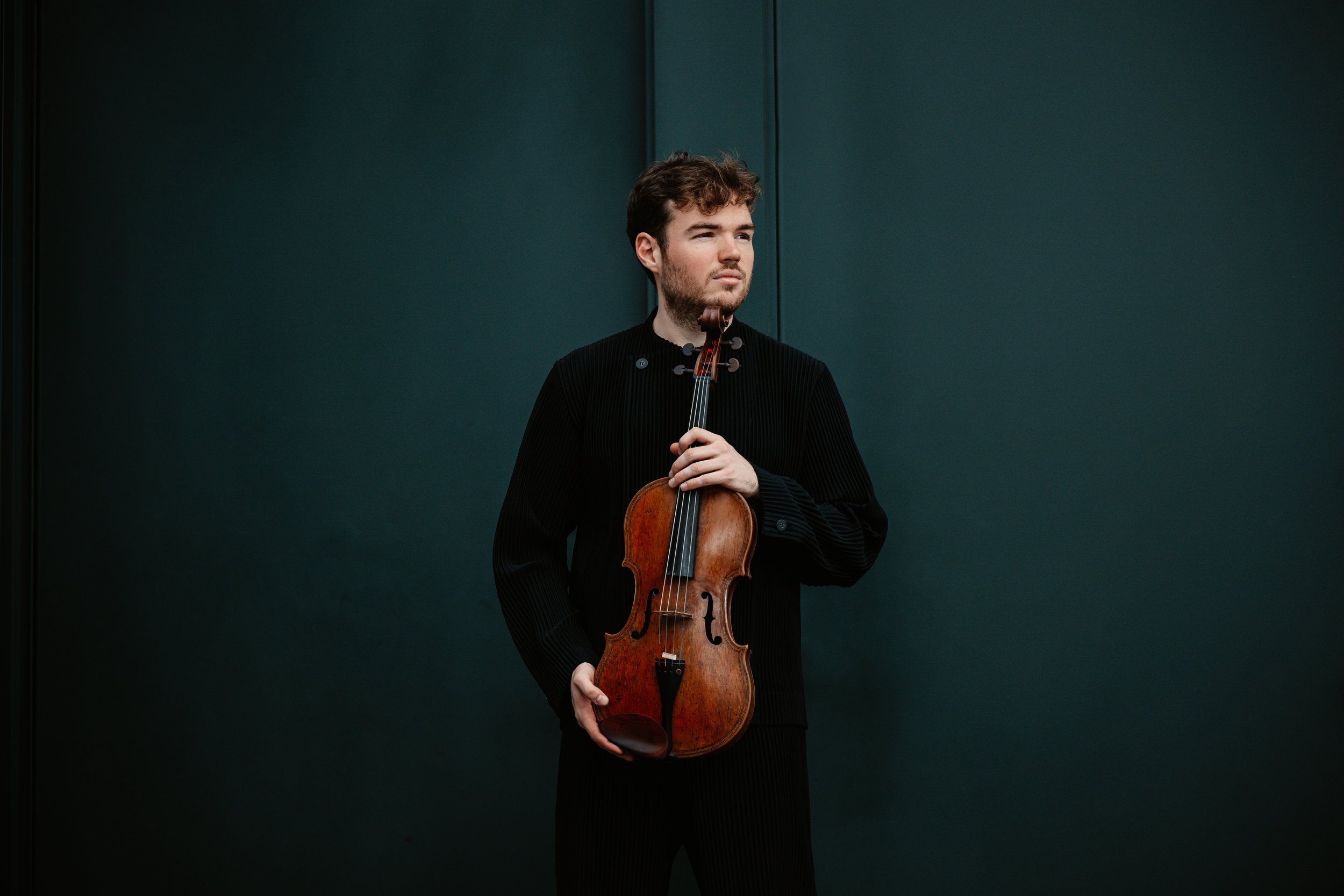
Brahms’s last completed chamber work followed, Kozhukhin joined by violist Timothy Ridout (below) for a performance of the Viola Sonata no.2, arranged by Brahms from the clarinet original. This account exhibited elegance, poise and no little power. Ridout’s burnished tone was ideal for the music, capturing the shadowy outlines of music from a composer in his twilight years, but putting down suitably firm markers in the second movement. Ridout’s high register playing was a treat throughout, his tuning exemplary, and as the two players navigated the theme and five variations of the finale there was an ideal give and take between the part-writing. Particularly memorable was the plaintive stillness of the fourth variation, its mystery dispelled by the affirmative ending.
After the interval we heard the Piano Quartet no.3, competed in 1875 when Brahms was working on the completion of his first symphony. The two works have a good deal in common, beyond sharing the same tonality, for Brahms brings an orchestral dimension to his writing for the four instruments. This grouping needed no invitation to take up the mantle, powering through the first movement with relish, their dramatic account notable for strength of tone and unity of ensemble playing. Jansen and Ridout in particular stood out, their unisons absolutely as one, yet the real hero of the performance was Kozhukhin, elevating the heroic elements of a score closely associated with Goethe’s Werther while keeping the nervousness emanating from Brahms’s syncopated rhythms.
Lest he be forgotten, cellist Daniel Blendulf (above) delivered an understated solo of considerable beauty to begin the Andante, providing respite from the high voltage drama elsewhere but getting to the heart of Brahms’s soulful writing for the instrument. The quartet regrouped for the finale, another show of breathtaking power but with room for reverence in the chorale themes and their development. For all the bravura the air of uneasiness remained as an undercurrent, Brahms never quite at rest even when the quartet reached its emphatic conclusion. This was a truly memorable performance, capping an outstanding evening of music making for which all involved should be immensely proud.





 Arcana.fm