
On Record: Sueye Park, Seoul Philharmonic Orchestra / Osmo Vänskä – Isang Yun: Violin Concerto III, Chamber Symphony I & Silla

Isang Yun
Silla (1992)
Violin Concerto III (1992)
Chamber Symphony I (1987)

Sueye Park (violin), Seoul Philharmonic Orchestra / Osmo Vänskä

BIS 2642SACD [67’13″]

Producer Robert Stiff Engineer Jin Choi

Recorded 30 August-3 September 2021, Lotte Concert Hall, Seoul, South Korea

Reviewed by Richard Whitehouse

What’s the story?

BIS makes a notable contribution to the growing Isang Yun discography with a judiciously chosen collection of orchestral pieces from his last years, performed with commitment and insight by the Seoul Philharmonic Orchestra under its recently departed music director Osmo Vänskä.

What’s the music like?

Most famous for his fractious relationship with the then military dictatorship of South Korea, Yun (1917-95) resided mainly in West Berlin from 1964 and built a sizable catalogue which effected a far-reaching synthesis of European modernist techniques with traditional Korean elements. At the forefront of the Western avant-garde during the 1960s, he latterly embraced more traditional genres – composing numerous symphonies, concertos and ensemble works such as extend and enrich this synthesis with engaging while frequently provocative results.

The First Chamber Symphony premiered in Güttersloh by the Deutsche Kammerphilharmonie Bremen and scored for early-Classical forces with pairs of oboes and horns alongside strings. Its three continuous sections outline an expected fast-slow-fast format – offset by the interplay of string groupings in the first section, then the emphasis on solo or chamber formations and contrasts of motion in those that follow. The final section moves towards a sustained passage of exquisite poise, before a sudden upsurge concludes the whole piece with terse decisiveness.

Premiered in Amsterdam by Vera Beths, the Third Violin Concerto follows a similar formal trajectory whose continuity is largely determined by greater or lesser contrasts in motion and emotion between its constituent episodes. Those of the opening section build to an intensive central climax, subsiding into a restive calm which takes on greater serenity in its successor; before the final section unfolds impulsively and with martial undertones towards the closing series of exchanges between violin and orchestra: the soloist has the conciliatory last word.

Subtitled ‘Legend for Orchestra’, Silla was Yun’s final such piece and premiered in Hanover by the Niedersächsisches Staatsorchester. Its title evokes connotations of home and origin – not least Korean court music from the earlier Medieval era, here alluded to within a context of nocturnal celebration. There are again three sections, though here the follow-through feels all but seamless while the orchestration enables a wide range of timbral and textural nuances – not least in a peroration as suggests an affirmation (understandably) rare in this composer.

Does it all work?

It does. Many of Yun’s latter works evince sufficient connections with the Western classical music of earlier eras to be accessible for mainstream audiences, with the pieces here being no exception. Sueye Park is assured and insightful in the concerto, while Vänskä secures playing that emphasizes the allure and iridescence of Yun’s orchestral writing. Over a quarter-century after the composer’s death and his music remains on the periphery of the modern repertoire, but releases such as this will secure it greater advocacy from younger musicians and listeners.

Is it recommended?

Very much so. The recording is as commendable in its clarity and definition as expected from BIS, as are Walter-Wolfgang Sparrer’s notes. One can only hope a follow-up release, perhaps featuring Konturen, the Oboe Concerto and the Second Chamber Symphony, is forthcoming.

Listen & Buy

For buying options, and to listen to clips from the album, visit the BIS website. For more information on Isang Yun, visit the Isang Yun International Society, and for more on the artists click on the names Sueye Park, Osmo Vänskä and the Seoul Philharmonic Orchestra.
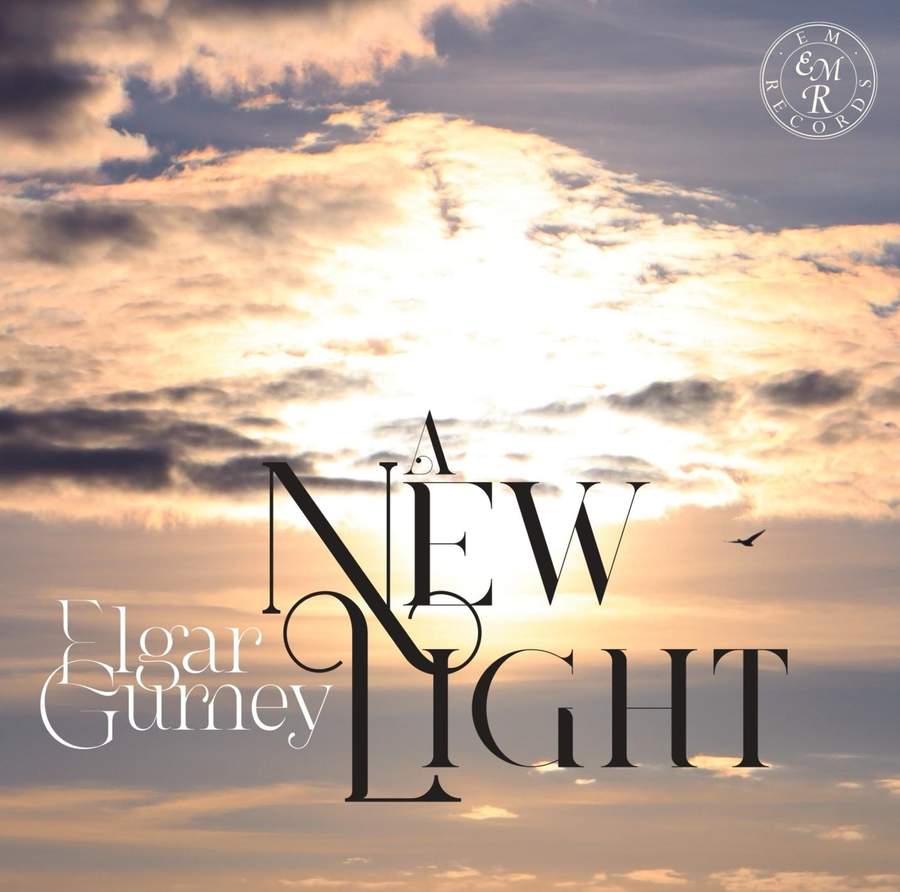
On Record: Rupert Marshall-Luck & Duncan Honeybourne – Elgar & Gurney: A New Light (EM Records)

Elgar
Violin Sonata in E minor Op.82 (1918)
Salut d’Amour Op.12 (1888)
Chanson de Nuit Op.15/1 (c1889)
Chanson de Matin Op.15/2 (c1890)
Gurney ed. Marshall Luck
Violin Sonata in D major (c1918-19)

Rupert Marshall-Luck (violin), Duncan Honeybourne (piano)

EM Records EMRCD075 [73’39″]

Producer Rupert Marshall-Luck Engineer Oscar Torres

Recorded 29-30 March 2021, Wyastone Concert Hall, Wyastone Leys, Monmouth

Reviewed by Richard Whitehouse

What’s the story?

Rupert Marshall-Luck here continues his exploration of British music for violin and piano with this coupling of sonatas by Elgar and Gurney, the former performed in a new critical edition as prepared by the violinist and the latter receiving its first commercial recording.

What’s the music like?

The Violin Sonata was the first of a series of ‘chamber’ pieces Elgar wrote near the close and in the aftermath of the First World War, distilling his musical language while accentuating a pathos seldom far beneath the surface during his maturity. Outwardly traditional in overall design, none of its three movements is yet beholden to formal precedent. Thus, the opening Allegro alternates its subtly differentiated themes to halting and even uncertain effect; the Romance contrasts the flowing eloquence of its middle section with the restrained poignancy of those either side, while the final Allegro centres on an ardently expressive melody as this unfolds with increasing purposefulness toward a tersely decisive close. Marshall-Luck’s edition was published by the Munich firm of Henle in 1919, a century after the work’s first performance.

His Violin Sonata in D marks another stage in the reclamation of Ivor Gurney’s voluminous output. Composed near the start of that period between his discharge from the army and his admittance to a psychiatric hospital, it is less overt in its emotional intensity than the later E flat Sonata but more cohesive formally – due, in part, to Gurney’s advocate Marion Scott in having preserved a near-complete score as has subsequently been realized by Ian Venables. Despite its Allegro marking, the first movement is often understated in its expressive range and motivated more by tonal fluidity than by its rhythmic animation. The Scherzo exudes a capering humour complemented by the winsome poise of its trio, then the largely literal ‘da capo’ ends in teasing ambivalence. The Lento builds from its initial reticence to a climax of acute plangency before subsiding into regretful calm; after which, the Finale sets out with a renewed determination, offset by its elegant second theme and energized by its development, on the way to a coda whose resolution is the greater for its almost offhand sense of closure.

Placed between these sonatas are several of Elgar’s duo miniatures – Salut d’Amour with its effortlessly ingratiating charm, then the Chansons which make for an ideal diptych in terms of their respective pathos and ardency. Marshall-Luck plays all three with unfailing artistry.

Does it all work?

Pretty much. Comparison with his earlier recording of the Elgar (EM Records EMRCD011) finds Marshall-Luck more expansive in each movement, notably a finale that now has greater depth and insight. Here and in the Gurney, Duncan Honeybourne (most recently heard in a deeply impressive account of Frank Bridge’s Sonata on EMRCD070-71) contributes pianism as sensitive yet impulsive as this music requires and which adds much to the persuasiveness of these accounts. Hopefully the Gurney will go on to receive the public hearings it deserves.

Is it recommended?

Yes. The sound has the focus and clarity needed for this difficult medium, while Marshall-Luck contributes detailed overviews on each piece within the extensive booklet notes. As a programme it adds considerably to one’s appreciation of the music – ‘A New Light’ indeed.

Listen & Buy

For buying options, and to listen to clips from the album, visit the EM Records website. For more information on the composers, click on the names Sir Edward Elgar and Ivor Gurney – and on the performers, Rupert Marshall-Luck and Duncan Honeybourne

On Record: Laurence Crane: Natural World (Another Timbre)

Juliet Fraser (voice and Casio keyboard), Mark Knoop (piano and electronics)

Another Timbre AT210 [55’15”]

Producer Mark Knoop Engineer Newton Armstrong

Recorded 17 December 2022 at City, University of London

Reviewed by Richard Whitehouse

What’s the story?

Another Timbre issues a follow-up to its two-volume overview of Laurence Crane Chamber Works 1992-2009 (AT74x2) with Natural World, his longest work to date, performed by the artists who commissioned it and making an essential addition to the composer’s discography.

What’s the music like?

Older readers may recall the children’s TV programme Mr Ben, where the shopkeeper appears from nowhere. Such is the impression made by Crane’s music, which exists as if awaiting the listener’s recognition. From his early pieces – often brief and frequently for piano – his output has gradually expanded to embrace larger concepts and ensembles, resulting in such works as Octet (2008) and the Second Chamber Symphony (2016). Natural World (2021) might seem a throwback in its intimacy and understatement, but its impact conveys a wholly different story.

This might appear a song-cycle for voice and piano, but their deployment is hardly beholden to precedent. Crane has spoken of his aversion to ‘setting’ poems such that their meaning is distorted, and Natural World uses texts whose neutrality ensures an objectivity of response.

Unfolding as an unbroken span, the work falls into three distinct and designated sections. The first of these, Field Guide, draws on various authors (not least Crane himself) along with marine biologist Rachel Carson in terms of her classifications and observations – proceeding from a lengthy introduction for piano to an increasingly intricate and nuanced interplay with the voice Field recordings of individual birds gradually interpose so that the closing phase is dominated by that of the Dawn Chorus, its complexity the more affecting for not being the outcome of any (self-)conscious creativity.

The second section, Chorus, is the shortest and effectively an interlude that continues with the above as context for a sequence of piano chords and a vocalise whose curving, glissando-like phrases engender an expressive response without this ever becoming explicit or emotive. Such a response is intensified in the third section, Seascape, that includes a further field recording of the ocean – the voice emerging with a text on the innate fragility of ecosystems. Underpinning this is a sustained electronic tone comparable to those on electronic keyboard to which Crane has often had recourse. Here, it serves to envelop the aural picture and so intensify the musical content without this becoming a ‘message’ in any cultural or political sense: listeners being left free to determine their responses to this music.

Does it all work?

Absolutely. Crane has long been a master of musical continuity, such that the extent of this piece is imbued with a tension sustained and unfaltering. It helps that the performers are so attuned to his creative wavelength – Juliet Fraser articulating the vocal part with unforced clarity and poise, complemented by Mark Knoop’s adroit handling of piano and electronics. As on that earlier release from Another Timbre, the close but never constricted sound is ideal in terms of the immediacy brought to Crane’s music which seems never less than absorbing.

Is it recommended?

Indeed. As is usual from this source, there are no booklet notes but a revealing interview with the composer can be accessed at AT’s website. Those who are new to Crane should also check out previous collections of his music issued on the Hubro, LAWO, Metier and Nimbus labels.

Listen & Buy

For buying options, and for more information on the album, visit the Another Timbre website. For more information click on the names Laurence Crane, Juliet Fraser and Mark Knoop

Online Concert: Nash Ensemble @ Wigmore Hall – Mozart & Fauré

Nash Ensemble [Alasdair Beatson (piano), Corey Cerovsek, Michael Gurevich (violins), Rachel Roberts (viola), Adrian Brendel (cello)]

Mozart Piano Concerto no.14 in E flat major K449 (1784)
Fauré Piano Quartet no.1 in C minor Op.15 (1876-9, rev. 1883)

Wigmore Hall, Monday 17 April 2023 1pm

by Ben Hogwood

Mozart and Fauré make a good concert match, and it was a nice touch by the Nash Ensemble to choose one of the piano concertos with which to start this BBC Radio 3 Lunchtime Concert

Although Mozart wrote two piano quartets, in 1785 and 1786, he was in the middle of a white-hot streak of creativity between where he wrote a dozen piano concertos in two years. This remarkable period of musical fluency began with the Piano Concerto no.14 in E flat major, which as it happens is highly suitable for the piano quartet combination of piano, violin, viola and cello. To this combination Mozart added one more violin, securing a highly successful domestic first performance in 1784.

The Nash Ensemble players clearly enjoyed this authentic showing. Alasdair Beatson took the solo role by balancing flair and sensitivity, while the strings ensured this attractive work was off to an airy start. That said, they weren’t afraid to dig in when the music turned towards the darker side, and the key of C minor, but E flat won out with its purely positive energy, especially when Mozart’s trill-like figure was introduced. Beatson’s cadenza was beautifully judged, virtuosic but lyrical too.

A softly rendered second movement brought through the piano’s florid figurations but also enjoyed the sweet, still motion of the strings. The Wigmore Hall seemed sunnier for the group’s approach, as it did in the bright and breezy third movement, with sparkling exchanges and a thoroughly enjoyable triple time section which the players clearly relished. This was a fine performance, fulfilling the first principles of chamber music.

Some of Fauré’s very best music can be found in his chamber works, a remarkably consistent body of work running through his career from the First Violin Sonata of 1876 to the String Quartet of 1924. The two piano quartets sit towards the top of this list, the first an outpouring of feeling in the wake of his broken engagement with Marianna Viardot.

The Nash Ensemble communicated this intensity from the passionate swell of the first melody, but there was resolve and determination too, even in Corey Cerovsek’s bittersweet violin solo during the flowing central section. This was where we felt the unique shafts of sunlight that Fauré throws into even the stormiest fast movements, and the harmonic sleight of hand that would be a standout feature of his music.

The second movement Scherzo showed off another of the composer’s traits, the ability to write light-hearted music with long phrases and unusual syncopations. The sleights of hand here were most enjoyable, with purity of tone from the strings and a dextrous piano part from Beatson.

Yet it was the slow movement that contained the emotional heart of the performance, Beatson listening attentively to the playing of his colleagues, Adrian Brendel‘s yearning cello phrase taken up in unison by the strings. Under the twinkling of Beatson’s right hand those strings spoke deeply and longingly.

Fauré had trouble with the finale, revising it after some less than positive feedback from his friends. This 1884 revision, however, turns its thoughts to the future with music of renewed resolve, another characteristically broad phrase looking outwards from the strings over typically tricky piano figures. Needless to say, the Nash Ensemble harnessed all these qualities, capping a memorable performance.

For more livestreamed concerts from the Wigmore Hall, click here

On Record: Don Banks: Vocal and Chamber Music (Toccata Classics)

Don Banks
Horn Trio (1962) a
Five North Country Folk Songs (1953) b
Prologue, Night Piece and Blues (1968) c
Three Studies (1954) d
Piano Sonatina in C sharp minor (1948) e
Violin Sonata (1953) f
Tirade (1968) g

(bg) Jenny Duck-Chong (mezzo-soprano), (c) Francesco Celata (clarinet), (a) Robert Johnson (horn), (af) Ole Böhn (violin), (d) Geoffrey Gartner (cello), (g): Rowan Phemister (harp), David Kim-Boyle (siren), Alison Pratt, Daryl Pratt, Joshua Hill (percussion), Daniel Herscovitch (piano)

Toccata Classics TOCC0591 [81’34″]

Producer David Kim-Boyle Engineer David Kinney

Recorded (cdf) 21 September (ag) 24 September and (be) 5 November 2020 at Recital Hall West, Conservatorium of Music, Sydney

Reviewed by Richard Whitehouse

What’s the story?

Toccata Classics provides a strong case for the greater recognition of Don Banks (1923-80) with this release of a representative cross-section of vocal and chamber works, performed by Australian and Australia-based musicians who are never less than empathetic with his music.

What’s the music like?

Wholly neglected following his untimely death, Banks was a senior figure in the generation of Australian composers – featuring such as Malcolm Williamson, David Lumsdaine and Nigel Butterley – who posited a decisive if hardly uniform course for the country’s music during the post-war era. Based in London for two decades, he made a living through teaching (notably at Goldsmith’s College) or writing music for horror films (notably Hammer productions), while evolving an increasingly personal language which can be heard in those works included here.

Earliest is the Piano Sonatina whose three movements – an agile Allegro, pensive Largo that nimbly amalgamates elements of fugue and chorale, then an impulsive Risoluto – constitute no mean statement of intent. It was the Violin Sonata which Banks considered his Op. 1, its pithy if contrasted ideas drawn into intensive development that effortlessly sustains a single movement whose 15 minutes seem never less than eventful. More unexpected is his identity with traditional sources in Five North Country Folk Songs (written for Sophie Wyss no less), whose piano accompaniments enhance the sentiment of each text with deadpan humour and audible affection. Reflecting his time spent with Dallapiccola (and, by extension, Webern), Three Studies for cello and piano applies its serial thinking both deftly and resourcefully.

By the 1960s, Banks had fashioned an idiom that was demonstrably but never slavishly of its time. One of the finest instances is the Horn Trio that, for all its inherent abstraction, pursues a tangible emotional trajectory from its forceful opening Allegro, via an Adagio of no mean eloquence, to a final Moderato in which the work’s arresting slow introduction is transformed through hunt-like gestures. Conversely, Prologue, Night Piece and Blues for Two underlines his love for jazz and its deployment within a ‘third stream’ context; here, the music’s restraint affords a sultriness alluring and ominous. Tirade could hardly be more different – its setting of Peter Porter’s impassioned poem on the increasing commercialization of Australian culture notable for a virtuoso vocal part and its imaginative writing for a sizable array of percussion.

Does it all work?

Almost always. Banks took a compositional path that assuredly takes no prisoners, yet which is rarely less than engrossing and, on occasion, affecting. Almost all these pieces would stand up well in recital today, not least for the opportunities they provide to enterprising performers. Other than the concertos for horn and violin (Lyrita), few of his major works are available in modern accounts, and if Toccata could undertake or even licence recordings of his orchestral Divisions or such cross-genre conceptions as Nexus and Meeting Place, so much the better.

Is it recommended?

Very much so. These performances, rarely less than authoritative, are heard to advantage in a spacious but never diffuse ambience. Daniel Herscovitch contributes detailed and informative annotations, and this release hopefully marks a first stage in the rediscovery of a major figure.

Listen & Buy

For buying options, and to listen to clips from the album, visit the Toccata Classics website. For more information on Don Banks, click here