In concert – Mao Fujita, Royal Philharmonic Orchestra / Vasily Petrenko – Dani Howard, Rachmaninov & Holst’s ‘The Planets’

mao-fujita

Howard Ellipsis (2021) [RPO Commission: World Premiere]
Rachmaninov Rhapsody on a Theme of Paganini, Op. 43 (1934)
Holst The Planets, Op. 32 (1914-17)

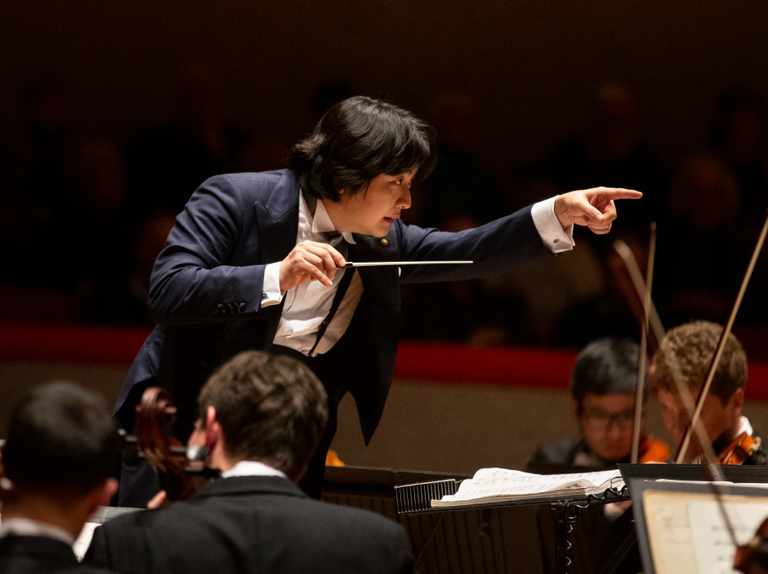
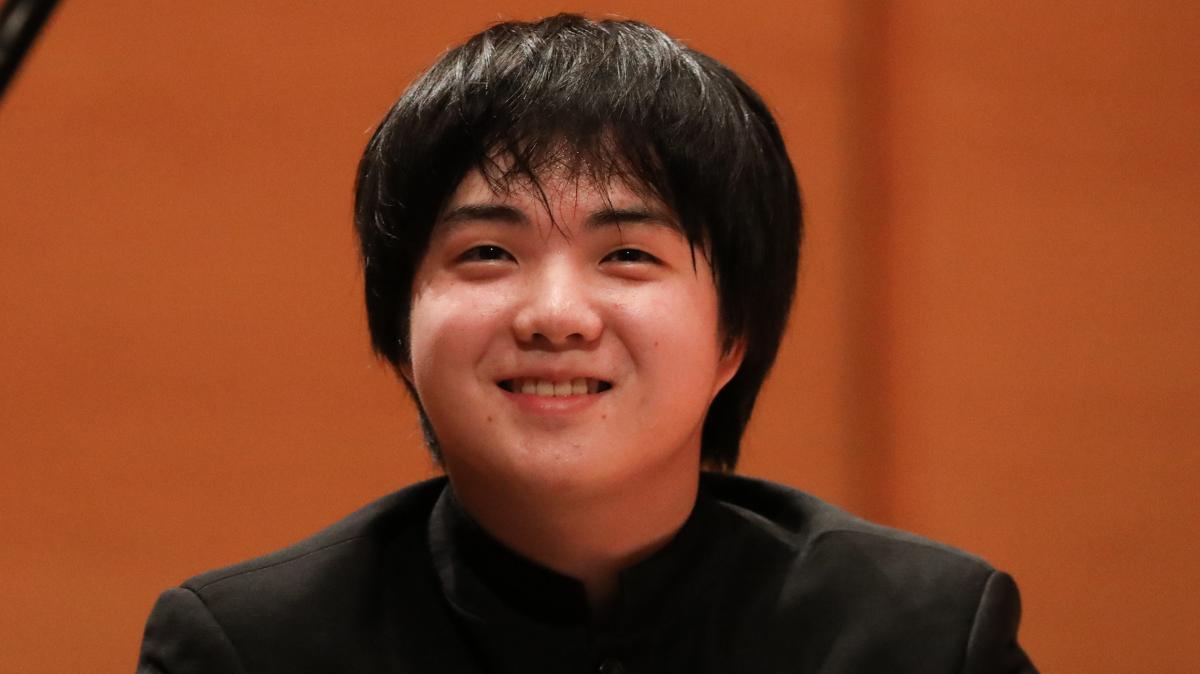
Mao Fujita (piano, above), Royal College of Music Chamber Choir, Royal Philharmonic Orchestra / Vasily Petrenko (below)

Royal Festival Hall, London
Thursday 3 February 2022

Written by Richard Whitehouse. Photo credit (Mao Fujita) Vyacheslav Prokofyev / Getty Images

Great British Music is the theme underlying the Royal Philharmonic Orchestra’s current series of concerts at Royal Festival Hall – a major work of the earlier 20th century complemented by music elsewhere in Europe and, in this instance, a commission from a young British composer.

Her output widely championed, not least by the RPO’s new music director Vasily Petrenko, Dani Howard is already master of the curtain-raiser. Hence the engaging yet never superficial effect of Ellipsis – her tribute to this orchestra in its 75th anniversary which alludes to various pieces and personages in its history, with a deftness that made for an appealing if not overly memorable listen. Not in doubt, though, was the keen motivic resource with which the piece unfolded from its fanfare-like opening bars towards the fervent apotheosis at its culmination.

Only caution through its origins in borrowed material can have prevented Rachmaninov from designating Rhapsody on a Theme of Paganini as his ‘Fifth Piano Concerto’. Certainly, those volatile mood-swings of its initial 15 variations, inward rapture of the next three then tensile incisiveness of the closing six variations constitute a three-movement design whose Classical proportions are informed by the developmental ingenuity of a later era. Qualities Mao Fujita brought out in notable measure during a performance which lacked little in technical finesse.

One of a handful of pieces whose all-round audacity was the incentive rather than deterrent   to its immediate acceptance, The Planets was destined to prove the defining work of Holst’s career whose sheer impact a century and more has not diminished. Petrenko was evidently keen to emphasize its symphonic dimension through allying its seven movements to a broad consistency of pulse – witness the follow-through from his remorseless while never unduly histrionic take on Mars to his sensuous if never cloying approach to Venus. The former saw a suitably galvanic response from the RPO brass, the latter an elegance and poise from its strings which was no less evident in Petrenko’s lithe Mercury, then a Jupiter whose impetuous outer sections framed an eloquent and unaffected handling of the indelible trio.

Even the (doubtless) spontaneous applause which greeted this most familiar section did not undermine contrast with the emotional starkness of Saturn as it headed towards a climax of wrenching plangency, before finding release in a final stage that was nothing if not cathartic. The only passing disappointment came with Petrenko’s skittish and over-hasty rendering of Uranus, such as forced the martial main theme into a rhythmic straitjacket (for all that the climactic organ glissando made its mark) then detracted from the emptiness of its final bars. Not that this prevented Neptune from casting an otherworldly spell – whether in the modal musing at its start, those ethereal textures near its centre, or the gentle evanescing into which orchestra and wordless voices (the laudable RCM Chamber Choir) withdraw toward its close. If not a revelatory account, this was nevertheless a committed and involving performance that renewed admiration for Holst’s magnum opus as well as reinforcing the overall excellence of the Royal Philharmonic in the early stages of what looks set to be an era of real achievement.

For more information on the Royal Philharmonic Orchestra’s 2021-22 season, visit their website. Meanwhile click on the links for information on the artists Mao Fujita and Vasily Petrenko.

In concert – Daniel Lozakovich, CBSO / Fabien Gabel – Beethoven Violin Concerto & Berlioz Symphonie fantastique

daniel-lozakovich

Beethoven Violin Concerto in D major Op. 61 (1806)
Berlioz
Symphonie fantastique Op. 14 (1829-30)

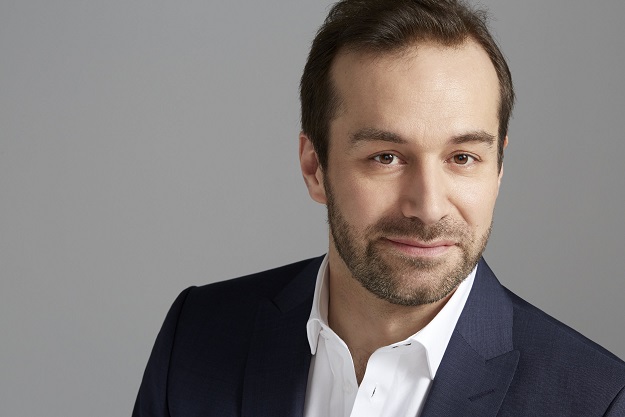
Daniel Lozakovich (violin, above), City of Birmingham Symphony Orchestra / Fabien Gabel

Symphony Hall, Birmingham
Wednesday 2 February 2022

Written by Richard Whitehouse. Photo credit (Lozkanovich) Maison Simons

Juxtaposing these works in a single concert made good sense such that one wonders why this coupling has not been played more often, not least when the City of Birmingham Symphony Orchestra sounded fully aware of the very different motivations which lay behind each piece.

One of several concertos in-itself a first half, Beethoven’s Violin Concerto was performed by Daniel Lozakovich – who, just into his 20s, already has a worldwide reputation. His finespun if never meagre tone proved eminently suited to this most inward of its composer’s orchestral works, as was his deftly inflected vibrato. The expansive first movement proceeded securely, Fabien Gabel galvanizing tuttis and preventing the development from losing momentum (due credit to Matthew Hardy’s immaculate timpani playing) before a heady surge into the reprise.

Any sense of Lozakovich – who gave the Kreisler cadenza with real fervour – eschewing ‘give and take’ with the orchestra had gone by the Larghetto, its variations unfolded eloquently and with no lack of expressive contrasts, abetted by felicitous playing from the CBSO woodwind. His impulsive approach to the linking passage into the ensuing Rondo then set the course for a finale which, though just a shade headlong compared with what went before, had a vitality and insouciance such as carried through to the close. The pathos that Lozakovich brought to its central episode and whimsy teased out of its coda (whose closing chords were a little too emphatic) were undoubted highpoints, and the soloist returned to acknowledge considerable applause with an artless reading of the Allemande that commences Bach’s Second Partita.

Whereas Beethoven’s concerto took over half a century to enjoy wider acceptance, Berlioz’s Symphonie fantastique was immediately recognized (however grudgingly) as a trailblazer in the emergent Romantic aesthetic. It was left to later generations to equal out its ‘symphonic’ undertow with its ‘fantastic’ overlay, Gabel’s astute handling of the prolix if never unwieldy structure making for the best of both worlds – not least his conveying the sonata design that focusses the alternate dejection and elation of Rêveries-Passions, or those ominous asides which offset the ingratiating charms of Un bal. The highlight, though, was an unfailingly cohesive Scène aux champs – its fraught culmination emerging inevitably from then back into the evocative outer sections with plangent cor anglais playing from Rachel Pankhurst.

Having (rightly) included the first movement’s repeat, Gabel did not take that in the Marche au supplice which consequently was over all too soon, though its high drama prepared well for a final Songe d’une nuit du Sabbat whose heightened flights of fancy were once again held in check by a sure sense of where this music was headed. Offstage contributions were convincingly drawn into the overall texture, and if the closing pages can yield even more of a ‘white-knuckle ride’, the visceral impact of Berlioz’s garish imaginings was never in doubt.

Nor, for that matter, was the sheer unanimity of the CBSO’s response across what is so much more than an extended showpiece. After next week’s Rush Hour Concert, the orchestra can be heard in a scarcely less virtuosic programme that concludes with Stravinsky’s Firebird suite.

For more information on the current CBSO season, visit their website. Meanwhile click on the links for information on the artists Daniel Lozakovich and Fabien Gabel.

Online concert – English String Orchestra / Kenneth Woods: Tchaikovsky: String Quartet no.3

eso-tchaikovsky

English String Orchestra / Kenneth Woods

Tchaikovsky arr. Woods String Quartet No. 3 in E flat minor, Op. 30 (1876)

Wyastone Concert Hall, Monmouth
12-13 July 2021

Written by Richard Whitehouse

The English String Orchestra launched its schedule for 2022 with another premiere – that of Tchaikovsky’s Third Quartet in an arrangement by Kenneth Woods, continuing a line of such rethinking which has previously included Brahms’s Second Piano Quartet (Nimbus NI6364).

Completed early in 1876, this work came about through the premature demise of Ferdinand Laub who led those premieres of Tchaikovsky’s previous quartets and whom the composer held in highest regard. Its tonic-key is unexpected yet influential (notably on Shostakovich), not least in an opening movement where the Andante introduction leads to an Allegro whose fervent striving never quite breaks free of the fatalism from which it emerges and to which it returns. Woods might have made more of that Allegro’s undulating emotions, but his take on its introduction and coda duly enhanced their sombre intensity. Nor was there any lack of wit or urbanity in the next movement, poised unerringly between scherzo and intermezzo, which could become almost as popular as the waltz of the Serenade for Strings in this incarnation.

Interesting that Tchaikovsky belatedly reversed the order of the middle movements, given the Andante funebre is the undoubted highpoint of this work and its impact would be diminished if heard earlier in the overall design. Moreover, Woods’ arrangement was at its finest here in terms of the interplay between solo and ensemble strings – those soliloquys for violin, viola and cello given added pathos by the greater textural depth; not least as the movement reaches its anguished climax then subsides into the chant-inflected elegy of its closing stages. Maybe the finale would have conveyed even more a sense of release at a swifter tempo, but Woods was scrupulous as regards its ‘non troppo’ marking; nor was there any lack of resolve as this movement headed on its impetuous course towards a decisive and life-affirming conclusion.

A convincing new guise, then, for arguably the finest of Tchaikovsky’s chamber works (not least compared to the over-inflated arrangements of Souvenir de Florence), and a welcome reminder of the ESO’s collective prowess whether heard in original pieces or transcriptions.

You can view this concert from 21-25 January at the ESO website, and thereafter for ESO digital supporters here. Meanwhile for information on the ESO’s latest release of the music of Steven R. Gerber, click here

In concert – Fatma Said, CBSO / Kazuki Yamada – Mozart, Mahler & Richard Strauss

fatma-said

Richard Strauss Don Juan, Op. 20 (1888)
Mozart
Vado, ma dove?, K583 (1789)
Mozart
La Clemenza di Tito, K621 (1791) – Non più di fiori
Mahler
Symphony No. 4 in G major (1899-1900)

Fatma Said (soprano), City of Birmingham Symphony Orchestra / Kazuki Yamada

Symphony Hall, Birmingham
Wednesday 19 January 2022

Written by Richard Whitehouse

It may still be over a year before Kazuki Yamada becomes chief conductor and artistic advisor of the City of Birmingham Symphony Orchestra, but concerts such as tonight’s afford ample indication of just what can be expected from this already engaged and productive partnership.

If there any ongoing theme to this programme, it was one of transcendence – admittedly, one of negation in Richard Strauss’s Don Juan, though Yamada relished those encounters chivalrous and amorous during its course. The ‘carnival’ episode drew some especially incisive playing from woodwind and brass, and while the climactic restatement of the horns’ aspiring theme lacked nothing in grandiloquence, it did not detract from the starkness of a coda whose fatalism was to be encountered within this composer’s tone poems more regularly than might be supposed.

Strauss’s lifelong devotion to Mozart made two of the latter’s arias an appealing complement. Written as a replacement number for a long-forgotten opera by Vicente Martín y Soler, Vado, me dove? enjoys frequent revival as a standalone aria and, when elegantly rendered by Fatma Said, it was not hard to hear why. One of the (relatively few) highpoints from Mozart’s final opera La Clemenza di Tito, Vitellia’s aria makes greater expressive challenges to which Said rose accordingly – the trajectory of its ‘Ecco il punto’ recitative subsiding from anguish into that resignation from where the aria itself proceeds unerringly to the resolve at its close. All of which was eloquently conveyed, and while a further aria – the mellifluous Nehmt meinen Dank? – would have been welcome, there was more to come from this impressive singer.

Namely the finale of Mahler’s Fourth Symphony – hardly the rarity it was when Adrian Boult introduced it to Birmingham audiences 95 years ago, but easy to underestimate in the context of this composer’s overall output. As ‘unhurried’ as its heading indicates, the first movement exuded no little ambiguity – Yamada pointing up those myriad timbral and textural shadings that permeate the development and so make possible the heightened equanimity of the reprise. Sardonic but not unduly malevolent, the scherzo was tangibly evocative (Eugene Tzkindelean switching adeptly from his violin to its retuned doppelganger) – with breath-taking change of tonal perspective at the arcadian vision near its end. Visionary was no less apt to describe the slow movement, its variations alternating between fervour and anguish with seamless accord.

Felicitous playing from CBSO woodwind informed its progress on the way to its climax, with ‘heaven’s door’ briefly yet thunderously ajar prior to the transfigured calm of the closing bars. Stealing in just before, Fatma Said was an appealing guide to the setting of ‘Das himmlische Leben’ with its not always blissful recounting of the joys awaiting those who arrive there. Of particular note was the easefulness that spread across the final pages, when the singing ceases and the orchestra withdraws stealthily while raptly to leave just the harp’s pulsing resonance.

A lucid, often captivating performance of a work whose enticements Yamada realized in full measure. Anyone who can make it along to Symphony Hall for tomorrow afternoon’s repeat should certainly do so, while Kazuki Yamada will be back with the CBSO during this spring.

For more information on this concert visit the CBSO website. Meanwhile click on the links for information on the artists Fatma Said and Kazuki Yamada.

In concert – Clara-Jumi Kang, CBSO / Ryan Bancroft – Coleridge-Taylor, Mendelssohn & Sibelius

clara-jumi-kang

Coleridge-Taylor Solemn Prelude in B minor, Op. 40 (1899)
Mendelssohn Violin Concerto in E minor, Op. 64 (1844)
Sibelius Symphony No. 2 in D, Op. 43 (1901-2)

Clara-Jumi Kang (violin), City of Birmingham Symphony Orchestra / Ryan Bancroft

Symphony Hall, Birmingham
Thursday 13 January 2022

Written by Richard Whitehouse Ryan Bancroft picture (c) Benjamin Ealovega

Having seen in the new year in customary Viennese-style, the City of Birmingham Symphony Orchestra continued its season with this programme of repertoire staples along with what was (probably) only the third performance of a relatively early orchestral work by Samuel Coleridge-Taylor.

The recent revival of interest in Coleridge-Taylor hopefully means such enticing pieces as his Violin Concerto and Clarinet Quintet will be heard more frequently at concert hall and recital rooms. If the Solemn Prelude is not quite on their level, it certainly deserved more than total neglect following its premiere at Worcester Cathedral in 1899; a further hearing last July only made possible after the manuscript was relocated at the British Library. Combining Elgarian nobility with Brucknerian grandeur, its outer sections exude a portentousness complemented by the expressive immediacy at its centre; abetted here by Ryan Bancroft’s flexible handling of tempo so a welcome melodic spontaneity came to the fore. No undiscovered masterpiece, but an appealing work that doubtless fulfilled its remit back then and could do so again today.

Mendelssohn’s Violin Concerto has never lacked for performances during the 177 years of its existence such that familiarity can breed, if not contempt, then at least a certain predictability. Credit to Clara-Jumi Kang for reminding one how (to quote David Kettle’s apt description in the programme) ‘‘quietly innovative’’ the piece is as to formal continuity and motivic fluidity. Not that this was a low-key or understated reading – Kang bringing out the combative side of the opening Allegro (‘appassionato’ it duly was), not least her impetuous take on the central cadenza whose developmental function was tellingly underlined. The Andante melded warm lyricism and plaintive regret to a bewitching effect then, after its teasing entrée, the animated repartee of the finale was deftly rendered through to a vivacious coda and decisive conclusion.

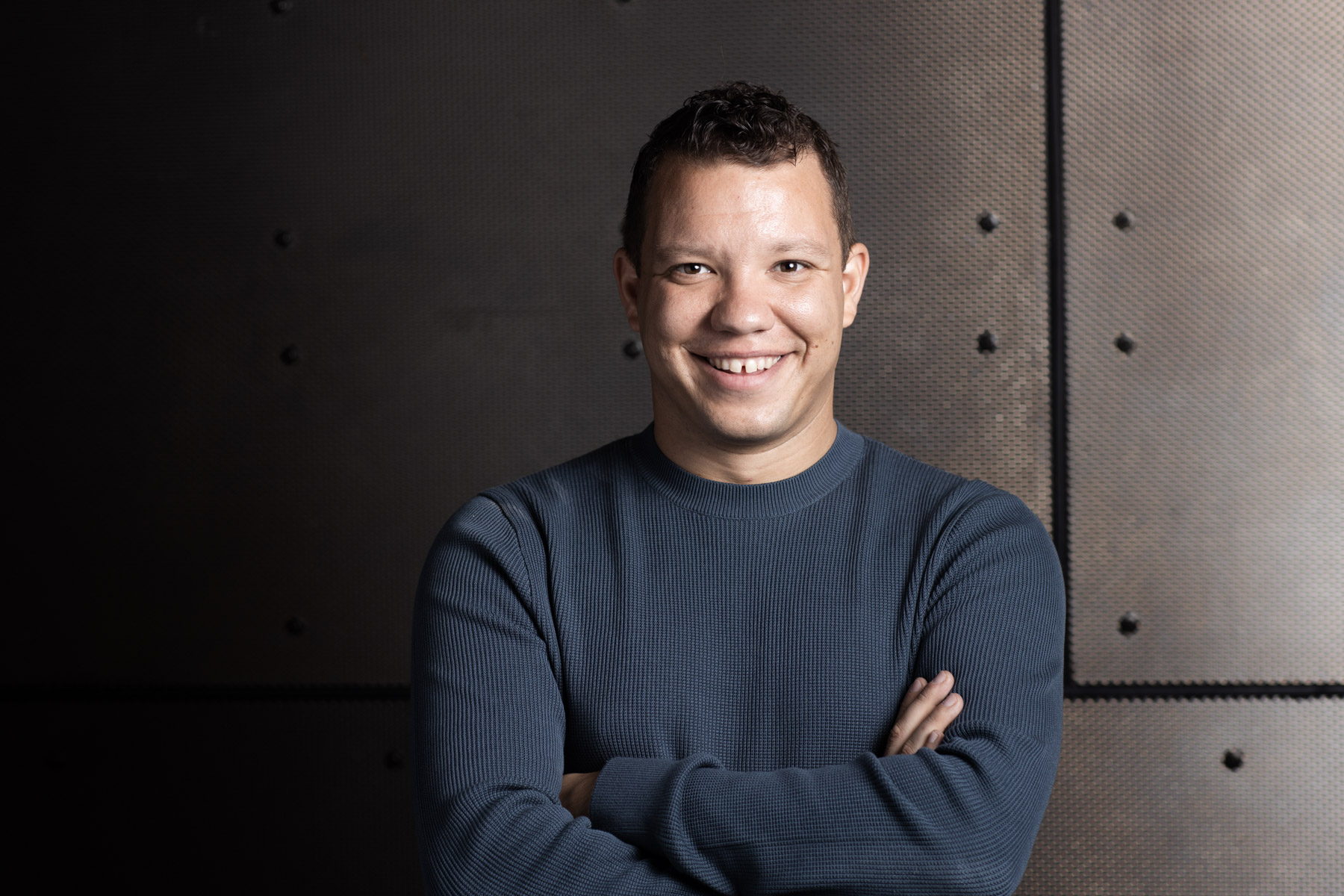
Now in his early thirties, Bancroft (above) is into his second season as principal conductor of the BBC National Orchestra of Wales and takes up a similar post with Royal Stockholm Philharmonic in 2023. This account of Sibelius’s Second Symphony left little doubt as to his interpretative credentials, not least with a finely proportioned yet impulsive reading of the initial Allegretto, then an Andante as lacked in little in that formal focus essential if its fervour is not to become histrionic. To which, an attacca from one movement to the other might have been beneficial.

The latter movements run continuously in any case – and, after a scherzo by turns tensile and tender, the transition was unerringly handled such that the finale hit the ground running. This can easily become discursive or even sprawl but, with its ‘big tune’ kept in check and starkly modal second theme keenly ominous, it built purposefully and with some inevitability to an apotheosis that, while it evinced more in the way of triumph than catharsis, none the less set the seal on an idiomatic performance with the CBSO woodwind and brass often at their best.

After an evening of Stephen Sondheim (now the more poignant following his death last November), then chief conductor designate Kazudi Yamada returns on Wednesday 19 and Thursday 20 January in a programme of Strauss, Mozart and Mahler.

For more information on the next concerts with Kazudi Yamada you can visit the orchestra’s website. Meanwhile click on the links for information on Clara Jumi-Kang and Ryan Bancroft.