In concert – Paul Lewis, CBSO / Chloé van Soeterstède: Mozart, Beethoven & Mendelssohn

chloe_conductor

Paul Lewis (piano), City of Birmingham Symphony Orchestra / Chloé van Soeterstède (above)

Mozart Don Giovanni K527: Overture (1787)
Beethoven Piano Concerto no.2 in B flat major Op.19 (1787-9, rev. 1795)
Mendelssohn Symphony no.5 in D minor Op.107 ‘Reformation’ (1830)

Symphony Hall, Birmingham
Wednesday 2 June 2pm

Written by Richard Whitehouse

Photos from Symphony Hall by Hannah Blake-Fathers

‘Heaven and Hell’ might have been too histrionic a title for this latest concert by the City of Birmingham Symphony Orchestra, yet it indicated the trajectory of a programme featuring Mozart at his most Romantic, Beethoven at his most Classical then Mendelssohn at his most Baroque.

Making her debut with this orchestra, French conductor Chloé van Soeterstède played down the rhetoric in those indelible opening chords of the overture to Mozart’s Don Giovanni but maintained impetus throughout the deftly modified sonata design as it sets out the tone if not content of what follows. In its theatrical context the music continues directly into the opening scene, but – despite (or even because?) of its emotional terseness – the ‘concert ending’ is by no means un-effective in its propelling the dramatic focus on towards a decisive conclusion.

Paul Lewis then joined the CBSO for Beethoven’s Second Piano Concerto – actually, the first in chronological terms and easy to underestimate in terms of its stylistic antecedents. Yet, as Lewis demonstrated in engaging terms, this is only incrementally less then characteristic and such as the close of the first movement’s initial tutti and transition into the reprise could only be by Beethoven. Lewis now feels the composer’s 1809 cadenza involves too great a stylistic disparity, and his own solution is formally and expressively consistent with what went before.

The highlight of this performance was nonetheless the Adagio (probably the earliest music in what was a lengthy gestation), limpid and poetic while never cloying – the closing interplay between soloist and orchestra unerringly well judged. Lewis then set a swift if not headlong tempo for the ensuing Rondo which gave full rein to the music’s bracing vigour but also its deftly ironic asides. Not least those tonal sideslips near the outset of the coda, with pianist and conductor at one in projecting an ebullience right through to the spirited final pay-off.
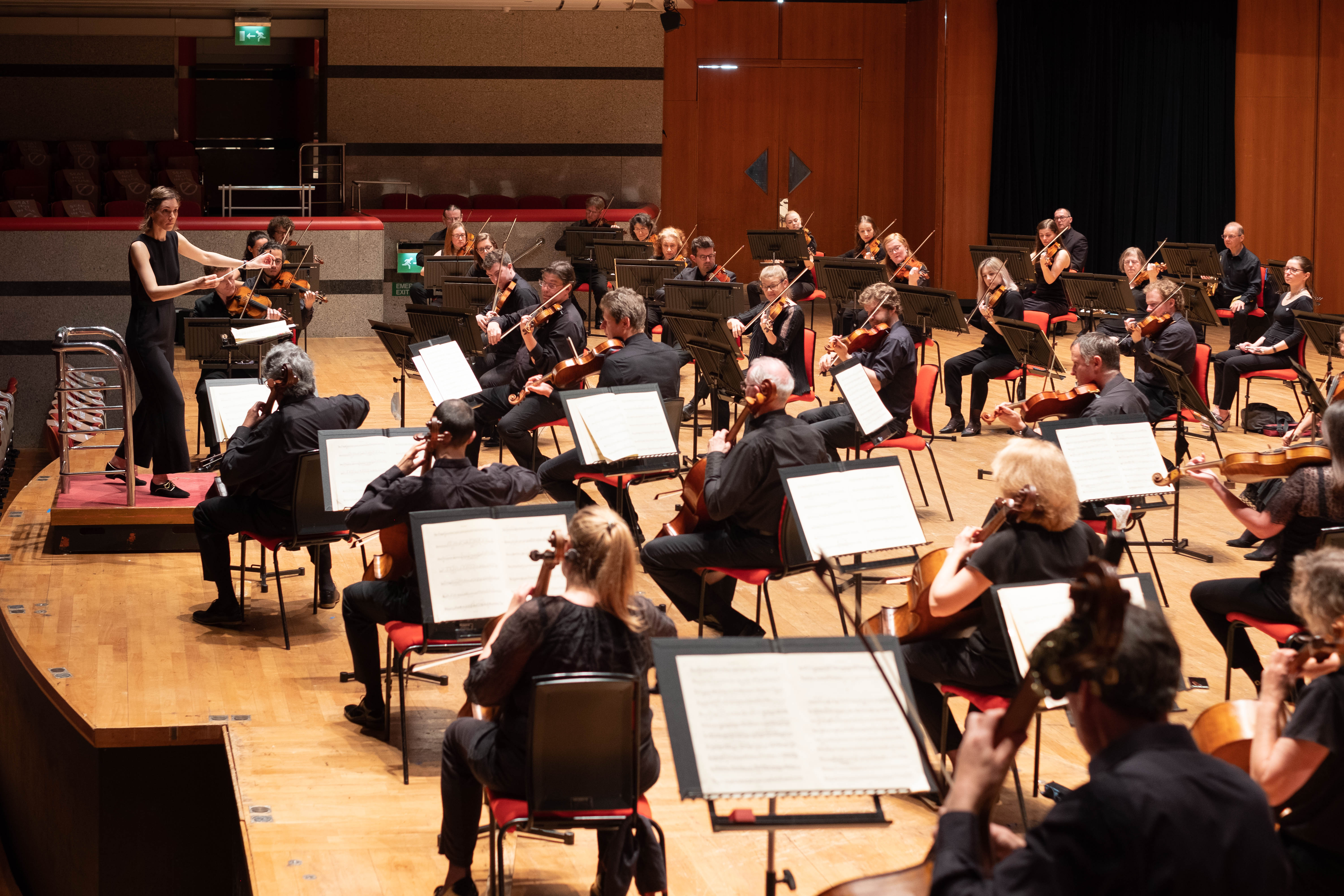
Good to see Mendelssohn’s Reformation reasserting its place in the repertoire after decades at the periphery. With controversies over a Jewish-born composer commemorating a Protestant anniversary (and quoting the ‘Dresden Amen’ of Catholic liturgy) now consigned to history, the innate power of the initial Allegro can readily be appreciated and not least in so assured a reading as this. Van Soeterstède brought out its inexorable onward motion in full measure, the scherzo providing an ideal foil in its infectious gaiety and the whimsical guile of its trio.

Eloquently rendered as a soulful ‘song without words’, the third movement thus balanced the work’s introduction as a searching contrast to what follows – here, a finale which unfolds as an extended paraphrase on the Lutheran chorale Ein’ feste Burg ist unser Gott, its heady if sometimes overbearing emotional force adroitly channelled toward a fervent apotheosis. The CBSO woodwind made a felicitous contribution, not least Marie-Christine Zupanic with the flute’s gentle intoning of that chorale – Mendelssohn’s devotion to Bach here made manifest.

An auspicious showing for Van Soeterstède, who will hopefully be returning in due course. Next week sees a very different programme of Britten’s Nocturne and Malcolm Arnold’s Fifth Symphony, doubly welcome in view of his centenary and its close association with the CBSO.

For further information about the CBSO’s current series of concerts, head to the orchestra’s website

For further information about the next concert on Wednesday 2 June, click here, and for more on conductor Chloé van Soeterstède you can visit her website

In concert – Lawrence Power, CBSO / Nicholas Collon: Stravinsky, Britten & Shostakovich

nicholas-collon

Lawrence Power (viola), City of Birmingham Symphony Orchestra / Nicholas Collon (above)

Stravinsky Symphonies of Wind Instruments (1920, revised 1947)
Britten Lachrymae Op.48a (1950, orch. 1976)
Shostakovich Symphony no.5 in D minor Op.47 (1937)

Symphony Hall, Birmingham
Wednesday 26 May 2pm

Written by Richard Whitehouse

This second in the City of Birmingham Symphony Orchestra’s live concerts, heading out of lockdown, featured works from the first half of the last century – focussing on wind then strings, before bringing the whole orchestra into play for one of the defining symphonies from this period.

It was an astute move to open with Stravinsky’s Symphonies of Wind Instruments as, 14 days short of the centenary of its premiere to a bemused London public, the extent of its innovation and influence was there for all to hear. The performance was attuned to its bracing alternation of diverse musical types, and while the elongated platform layout might have caused passing uncertainties, Nicholas Collon made a virtue of its fluid continuity right through to the final chorale which ‘remembers’ Debussy with an emotion the more acute for its hieratic restraint.

It may have entered the repertoire but slowly, Britten’s Lachrymae is now well to the fore of the viola’s still limited concertante output and Lawrence Power gave a potent rendering of a piece conceived for William Primrose then orchestrated for Cecil Aronowitz. The evocative if sparse writing for strings is a reminder this was Britten’s final creative act, bringing out the ambiguous shadings of these variations on Dowland’s Flow my tears (played and sung at the outset by Power) which culminate with a rendering of the full song in all its grave elegance.

Speaking beforehand, Collon (who gave a perceptive account of the Ninth Symphony with the CBSO some years back) spoke of his pleasure in utilizing the extent of Symphony Hall’s platform to programme a work on the scale of Shostakovich’s Fifth Symphony. Accordingly, this was a performance whose impact and intensity were evident from the outset; the opening movement unfolding gradually but with keen underlying intensity though its searching, then wistful main themes, to a surging development and climactic reprise before subsiding into a fateful coda. If the scherzo was less capricious than it often is, Collon’s trenchant handling   of its outer sections exuded an acerbic charm – offset by the trio’s deadpan humour (with an airily whimsical solo from leader Jonathan Martindale), before a pay-off of ominous import.

The ensuing Largo is the work’s emotional heart in every sense, and this afternoon’s reading made the most of its fraught eloquence with some limpidly unforced string playing then, in the mesmeric central episode, woodwind soliloquys of a spectral remoteness. Nor was there any lack of gravitas as the movement reached a baleful culmination, and from where Collon oversaw a faultless transition through to those consoling final bars. Always difficult to bring off, the finale had the virtue of almost seamless progression through its high-octane opening stages then the musing introspection at its centre – Collon making light of some tricky tempo changes on the way to an apotheosis of unremitting focus. The tonal ambivalence between triumph and tragedy might have been more acute, but its inevitability was never in doubt.

An impressive way to conclude what was almost a full-length concert (and one these players had to repeat just three hours later). The CBSO returns next Wednesday with a less strenuous programme which will include a welcome outing for Mendelssohn’s Reformation Symphony.

For further information about the CBSO’s current series of concerts, head to the orchestra’s website

For further information about the next concert on Wednesday 2 June, click here

In concert – Stephen Hough, CBSO / Edward Gardner: Saint-Saëns, Mazzoli & Debussy

hough-gardiner

Stephen Hough (piano), City of Birmingham Symphony Orchestra / Edward Gardner

Saint-Saëns Piano Concerto no.4 in C minor Op. 44 (1875)
Mazzoli Violent, Violent Sea (2011)
Debussy La Mer L109 (1903-05)

Symphony Hall, Birmingham
Wednesday 19 May 2pm

Written by Richard Whitehouse

It may have been almost six months since the City of Birmingham Symphony last played to live audiences, but the frisson of expectation was palpable as the orchestra gradually took the stage for this first of nine concerts that, at around an hour’s duration, are being heard at 2pm then again at 6.30. The design of Symphony Hall’s platform makes it possible, moreover, to take out the raised platforms and so accommodate a larger number of musicians than would otherwise be possible in what is (hopefully!) a transitional period out of lockdown. Current restrictions still entail the spreading out of listeners, a small price to pay given the quality of acoustic at almost any point in this auditorium, while the rapid entry and exit procedures also enabled punters to assess the remodelled catering areas in advance of their June reopening.

As conducted by Edward Gardner, this programme featured works by two French composers with more in common than either could have suspected. Saint-Saëns nearly always brings out the best in Stephen Hough, and so it proved in this regrettably rare revival of the Fourth Piano Concerto. Its four sections grouped into two movements (a design the composer returned to a decade on with greater panache if less subtlety in his Third Symphony), the piece touches on aspects of sonata, variation and rondo procedures while its plain-spun material is developed in various and intriguing ways. This plus the close integration of soloist and orchestra often makes for a sinfonia concertante than concerto per se, yet there is no lack of virtuosity such as Hough despatched with alacrity – not least the cascading passagework in the final Allegro.

Saint-Saëns and Debussy evinced no mutual esteem, but as the former integrated symphonic elements into his concerto, so did the latter in his ‘three symphonic sketches’ which comprise La Mer. Here the CBSO came into its own, not least in the purposefully contrasted sequence of From Dawn to Midday on the Sea with its crepuscular writing for solo wind and divided strings through to a climactic chorale of visceral immediacy. Perhaps interplay of timbre and texture in Games of the Waves could have been more deftly handled, but Gardner exerted a firm grip over its course then drew real pathos from the final bars. He also found a persuasive balance between the volatile and poetic aspects in Dialogue of the Wind and the Sea, while maintaining steady momentum as issued forth in the chorale on its proudly affirmative return.

Between these works, Violent, Violent Sea by the highly regarded American composer Missy Mazzoli elicited a wholly different response as to its marine concept. Here it is the constant yet rarely insistent melding of translucent harmonies and pulsating rhythms (stemming from marimba and vibraphone) as underpin this music; the sustaining of whose atmosphere is the keener for its succinct duration. The ranging of its relatively modest forces across the extent of the platform also made for rather greater impact than might otherwise have been the case. It certainly added to the attractions of a programme which launched this series of concerts in impressive fashion. The CBSO returns next Wednesday with Nicholas Collon at the helm for a sequence that ends with the uncompromising defiance of Shostakovich’s Fifth Symphony.

For further information about the CBSO’s current series of concerts, head to the orchestra’s website

For further information about Missy Mazzoli, click here

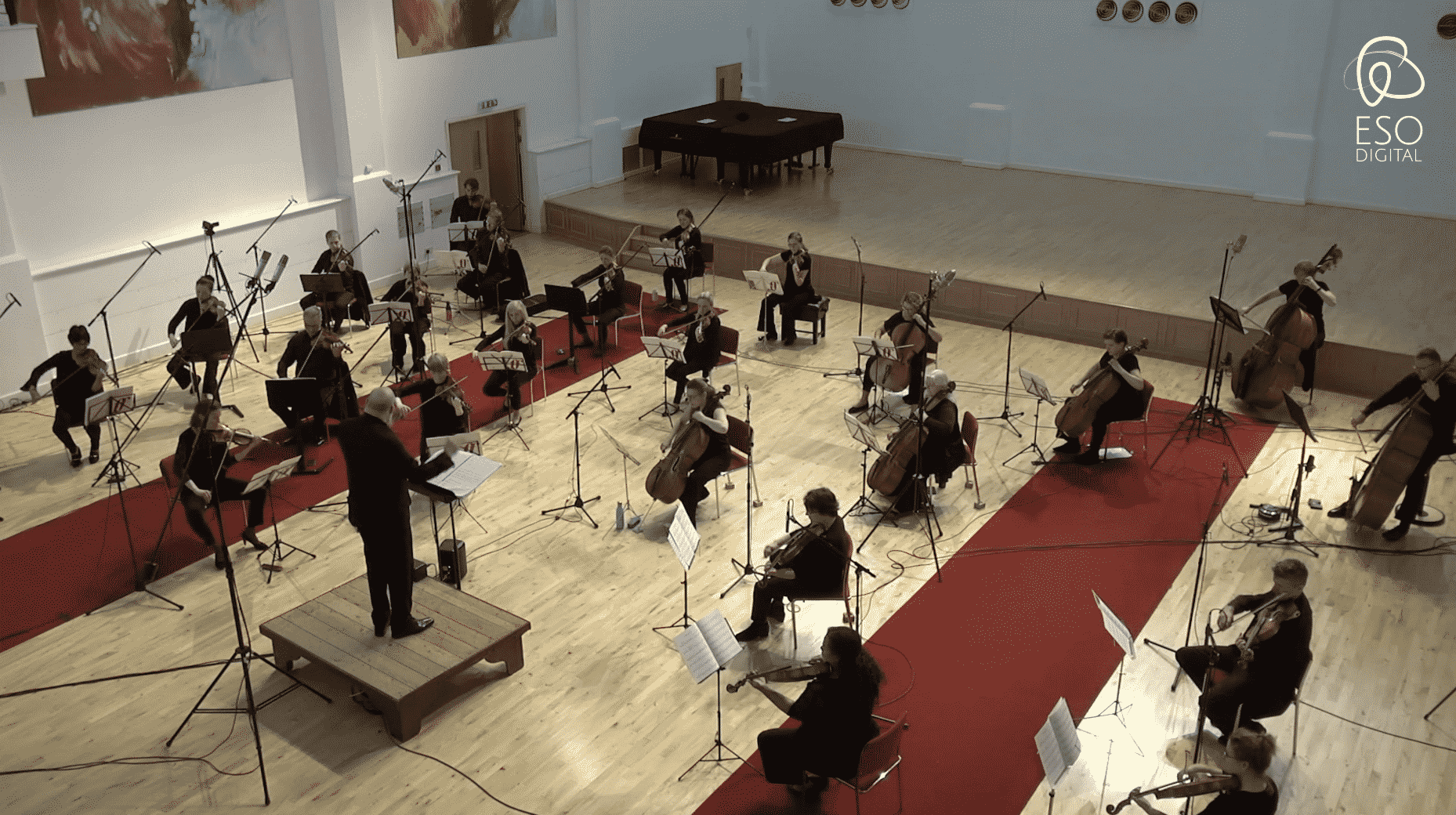
Live review – English Symphony Orchestra / Kenneth Woods: Elgar Reimagined Part 2

ElgarStringQuartet-Screenshot

English Symphony Orchestra / Kenneth Woods

Elgar, arr. David Matthews String Quartet in E minor Op.83 (1918)

Wyastone Concert Hall, Monmouth
Recorded September 22 2020 for online broadcast from Friday 14 May 2021

Written by Richard Whitehouse

Following its programme of miniatures – original and arrangements – for cello and strings in March, this latest online concert by the English Symphony Orchestra returned to Elgar for a reading of his String Quartet arranged by David Matthews for a full complement of strings.

This was the second in a triptych of chamber works composed in rural seclusion at Brinkwells in Sussex, Elgar having escaped the wartime disillusion of London for what was to be his last sustained period of creativity. Less introspective than the Violin Sonata that preceded it while less emotionally charged than the Piano Quintet that came after, the String Quartet is the most finely proportioned of the three – unfolding as a sustained sweep whose subtle transformation of thematic elements across and between its three movements make it among the finest of his later compositions. Heard in this guise, it follows on from the Serenade then Introduction and Allegro as the hitherto missing large-scale work for string orchestra of Elgar’s high maturity – which should hopefully commend it to an audience beyond that of the composer’s devotees.

Matthews has numerous arrangements to his credit (not least Schumann’s Piano Concerto as recast for marimba), and he has been mindful to balance the soloistic and ensemble potential of this music, so the result is neither straightforward transcription nor radical re-conception. The opening Allegro moderato discreetly emphasises an autumnal musing that sets the tone for much of what follows; even finer is the second movement – marked Piacevole – whose equability yields a main theme suffused with intensity, the extent of which is only revealed towards the close. If the emotional acuity of the final Allegro is marginally diffused when rendered for larger forces, there is no lack of rhythmic definition as the music proceeds to a coda whose terse decisiveness is far removed from the opulence of just a few years before.

Its idiomatic nature was enhanced by the ESO’s attentive playing under Kenneth Woods, a natural follow-on to their take on the Piano Quintet in Donald Fraser’s arrangement (Avie). Heard together, these two parts of Elgar Reimagined should make for a desirable recording.

You can watch the concert on the English Symphony Orchestra website here

For more information on the English Symphony Orchestra you can visit their website here

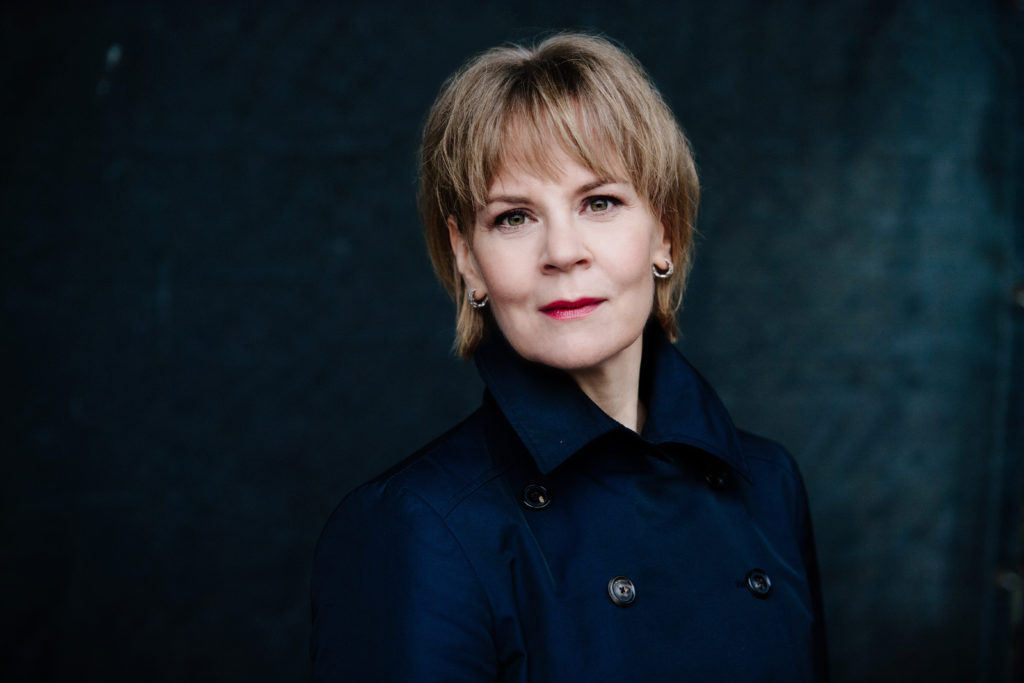
Live review – Kirill Gerstein, Helsinki Philharmonic Orchestra / Susanna Mälkki: World premiere of Saariaho’s ‘Vista’; Schumann & Debussy

susanna-malkki

Kirill Gerstein (piano), Helsinki Philharmonic Orchestra / Susanna Mälkki (above, photo (c) Jiyang Chen)

Helsinki Music Centre, Helsinki
Broadcast Wednesday 12 May 2021, available online

Schumann Piano Concerto in A minor Op.54 (1841)
Debussy Pièce pour Le Vêtement du blessé (unknown, publ. 1925); Berceuse héroïque (1914); Les soirs illumines par l’ardeur du charbon (unknown, publ. 2001); Élégie; Étude retrouvée (both 1915)
Saariaho Vista (2019, world premiere)

Written by Ben Hogwood

One of the very few advantages of being restricted to online concerts in the last year has been the chance to enjoy music making on an international scale. This happily gave the opportunity to hear a major world premiere, a new orchestral work from Finnish composer Kaija Saariaho.

A truly international piece, Vista was co-commissioned by the Helsinki Philharmonic Orchestra, the Berlin Philharmonic, the Oslo Philharmonic and the Los Angeles Philharmonic Association. Its title page has the inscription For Susanna – presumably a dedication to the night’s conductor, Susanna Mälkki.

Although scored for a large orchestra, Vista is economical in its use of the forces. Inspired by road signs the composer saw in California – all promising great ‘vistas’ – the work has something of the West Coast about it, a shimmering heat haze and dust on the horizon. In its darker moments the twinkling of the stars, and the metropolis, can be discerned.

Vista impressed from the outset. Its first section, Horizons, began with a high oboe solo, played with very impressive control in this performance. As always with Saariaho’s music, the vivid colours in the orchestra made themselves known early on and after the initial intimacy of the wind instruments the view panned out appreciably, to an expansive picture.

Microtones and almost imperceptible changes in pitch were part of the evocation, and when the music alighted on a particular pitch the effect was striking. Saariaho’s music continuously evolved – shimmering, glistening, darkening, lightening, or casting shadow, as it did in a particularly vivid section where the metallic percussion took centre stage. Here the twinkling of glockenspiel contrasted with the spidery flurries of the strings.

saariaho

Targets, the second section, began with a blast of sound, before brass and strings were involved in dialogue – and we heard a flurry of activity from the whole orchestra, after which all the forces reached the same pitch, the view panning out again. Now the vista was nocturnal, with a shiver in the air.

Saariaho (above) was present, and in a rather moving response to the piece the orchestra and conductor applauded the composer, rather than the other way around. It is always difficult to appraise a major orchestral piece on the basis of its premiere, but on this evidence Vista is a major achievement and a piece to return to as often, Thankfully Mälkki is conducting it with the Berliner Philharmoniker on 22 May, but this was a special performance from the composer’s ‘home’ orchestra.

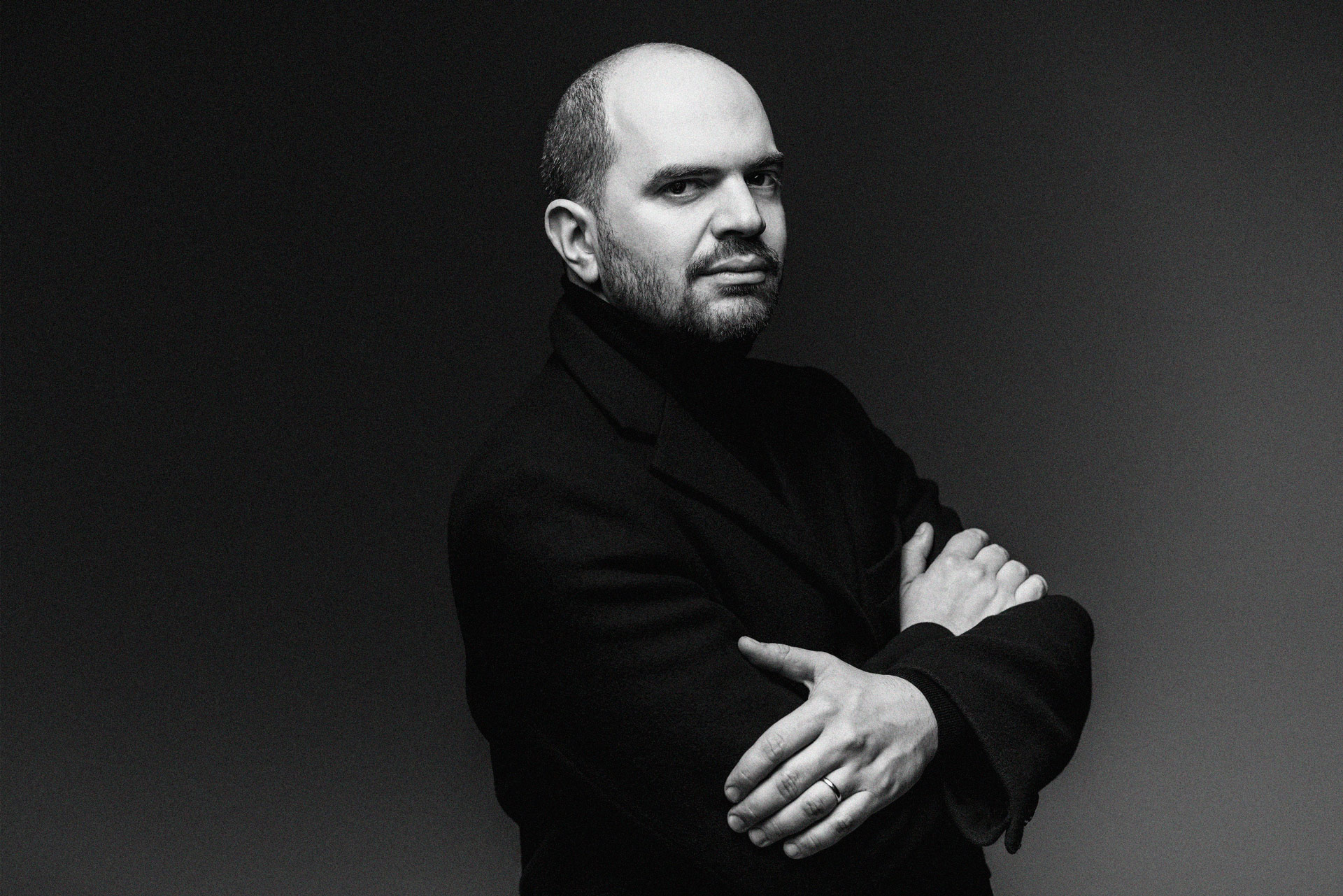
kirill_gerstein

Elsewhere on the program we enjoyed a fresh, vibrant performance of Schumann’s Piano Concerto in which the soloist was Kirill Gerstein (above). He clearly enjoys the piece, and the fast movements were notable for the clarity of their phrasing and lightness of touch. The first movement had an attractive lilt and some very appealing dialogue with the orchestra woodwind, oboe particularly. The slow movement gave plenty of room for Schumann’s softer sentiments, and the finale danced attractively.

The Schumann was complemented by some well-chosen solo Debussy, Gerstein opting for five lesser-known piano works. A palette-cleansing Pièce pour Le Vêtement du blesse, a posthumous publication, was followed by the steady tread of the Berceuse héroïque, given a solemn account. Les soirs illumines par l’ardeur du charbon was next, a piece unearthed in 2001 – sounding like a previously unreleased Prélude in these descriptive hands. The profound Élégie was next, then a rippling Étude retrouvée, a seldom-heard study written prior to the book of Études in 1915.

This was a fine concert, nicely structured and pointed towards the Saariaho – which fully lived up to its billing. Catch it if you can!

You can watch the concert on the Helsinki Philharmonic Orchestra website here

For more information on the Helsinki Philharmonic Orchestra digital season, you can visit their website here