

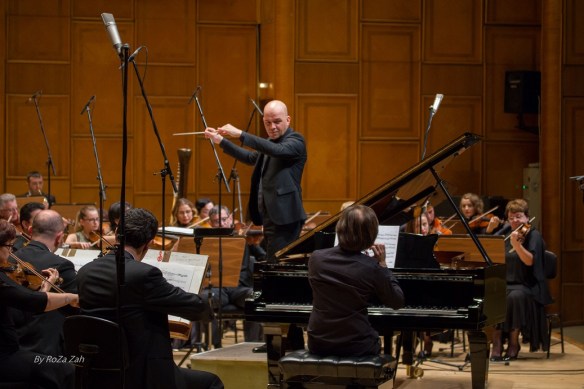
Jean-Efflam Bavouzet (piano), BBC Symphony Orchestra / Sakari Oramo (above)
Barbican Hall, London; Friday 27 October 2017
Schmitt Symphony No.2 in E flat major, Op.137 (1957)
Franck Variations symphoniques (1885)
Ravel Piano Concerto in D ‘for the Left Hand’ (1930)
Sibelius Symphony No. 3 in C major, Op.52 (1907)
You can listen to the broadcast on BBC Radio 3 by clicking here (available until 26 November)
Reviewed by Richard Whitehouse
Sakari Oramo‘s Sibelius cycle continued as part of a judiciously balanced programme which opened with a rare revival of the Second Symphony by Florent Schmitt. This continues the French symphonism of Roussel and Honegger; albeit with a quirkiness of melodic thought and virtuoso handling of sizable forces to confirm Schmitt as no mere epigone. Indeed, the angular wit of the first movement suggests his willingness to confront post-war modernism head on, and if the central Lent admits warmer and even tender emotion, the finale resumes the assaultive mood with an unremitting intent through to its scabrous close. Oramo and the BBC Symphony Orchestra had the measure of this unsettling piece throughout; their responsiveness underlining that Schmitt was not one to accept the passing of his own era with even a hint of good grace.
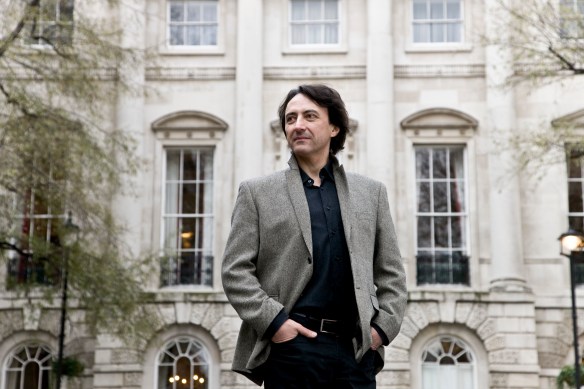
Jean-Efflam Bavouzet (below) then joined the orchestra for two staples from the French concertante repertoire, separated in time by almost half a century. Good to see that Franck‘s Variations symphoniques has now re-established itself in UK concert programmes, as this unlikely yet successful hybrid of elements from symphony and concerto, as drawn into the pithiest of its composer’s cyclical designs, has a substance more than equal to its entertainment. Bavouzet and Oramo were especially fine in the expressive contrasts of its opening minutes, and if the rhapsodic musing at its centre seemed a little inflexible, then the effervescence of its final section too forcefully projected, there was no doubting the coherence and the ingeniousness of its composer’s response to a piano-virtuoso tradition he spent much of his life despising.
 That the Franck outlines a ‘three movements in one’ formal design makes it a more than likely precursor to Ravel‘s Piano Concerto in D major, the most enduring of those left-hand works written for the redoubtable (if frequently wrong-headed) Paul Wittgenstein. Not the least attraction of tonight’s performance was its emphasizing the canniness of the balance between soloist and orchestra, such that the former was never less than audible in the context of what is the most overtly rhetorical and combative of all Ravel’s works. Add to this Bavouzet’s limpidity in the eloquent theme which returns intensified in the cadenza, not to mention Oramo’s control of momentum in the jazz-inflected animation of the scherzo, and what resulted was a reading attentive to every aspect of this masterpiece: one that justifiably brought the house down.
Sibelius’s Third Symphony is easy to underestimate as a transitional work poised between overt romanticism and renewed classicism. It was to Oramo’s credit that elements of both aesthetics were not only evident but also reconciled – not least in an opening Allegro which moved between fervency and incisiveness with no mean purpose. The highlight came with a central Andantino whose quasi allegretto marking may have been minimal, but whose opening-up of emotional space made for a riveting listen. The final movement was hardly less impressive in its purposeful equivocation between scherzo and finale, Oramo teasing resolve out of uncertainty so the hymn-like theme that eventually emerges built to a powerful apotheosis. A gripping performance, reinforced by the conviction of the BBCSO’s response.
For more concert information on the BBC Symphony Orchestra, head to their website
You can hear a recording of the Florent Schmitt made by Leif Segerstam on Spotify below:
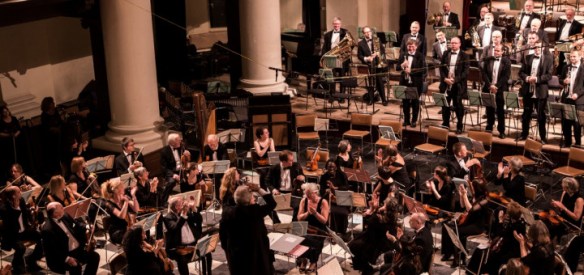

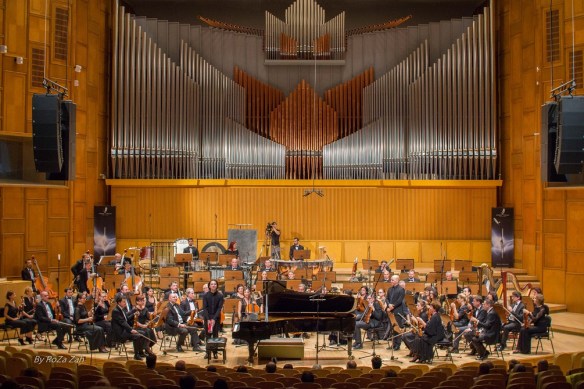
 More Romanian music followed the interval. With its several dynamic sections separated by interludes of relative stasis, Signals by Adrian Iorgulescu unfolded with those ‘signals’ of its title audible at every level; with an emerging sense of that ‘greater whole’ such as sustained the work through to a virtuosic conclusion. The Bacău orchestra met its numerous challenges head on, duly motivated by Lupeş’s disciplined as well as perceptive direction to result in a gripping account of a piece that more than held the attention and was certainly worth revival.

 The Germanic second half began in more restrained mood with Schumann’s Cello Concerto. Rarely performed for decades (and more often in the transcription for violin), this deceptively genial piece is among its composer’s most ingenious in terms of form and motivic continuity. Alban Gerhardt (above) maintained a determined while never merely inflexible course across its three continuous movements, the BBC Philharmonic providing support as attentive yet unobtrusive as the music required. Interesting to hear that the soloist thought the finale musically the least successful, as this emerged as arguably the most successful part – not least with its engaging dialogue kept on its toes and with no sense of dourness or grittiness as regarded the orchestral texture. Overall, a perceptive and convincing account of a work still too easily overlooked.
 Storgårds then rounded-off the programme with a taut and tensile reading of the symphony that Hindemith derived from his opera Mathis der Maler. This retelling of cultural meltdown and social antagonism during the Thirty Years War proved too ‘contemporary’ for the Nazi regime to stomach, and it was no surprise that the premiere of the complete opera took place in Zurich. Storgårds had the measure of the Angelic Concert with its austere chorales and angular though never impersonal polyphony. The Entombment of Christ was affecting for all its brevity, while the climactic Temptation of St Anthony built surely and impulsively from its stark introduction, through a central interlude of tangible pathos, to a culmination such as blazed forth in affirmation. All credit to Storgårds for ensuring so cathartic an impact.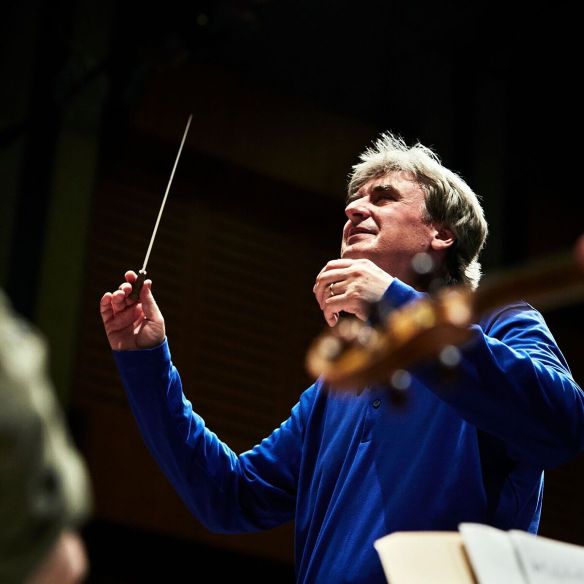

 Arcana.fm