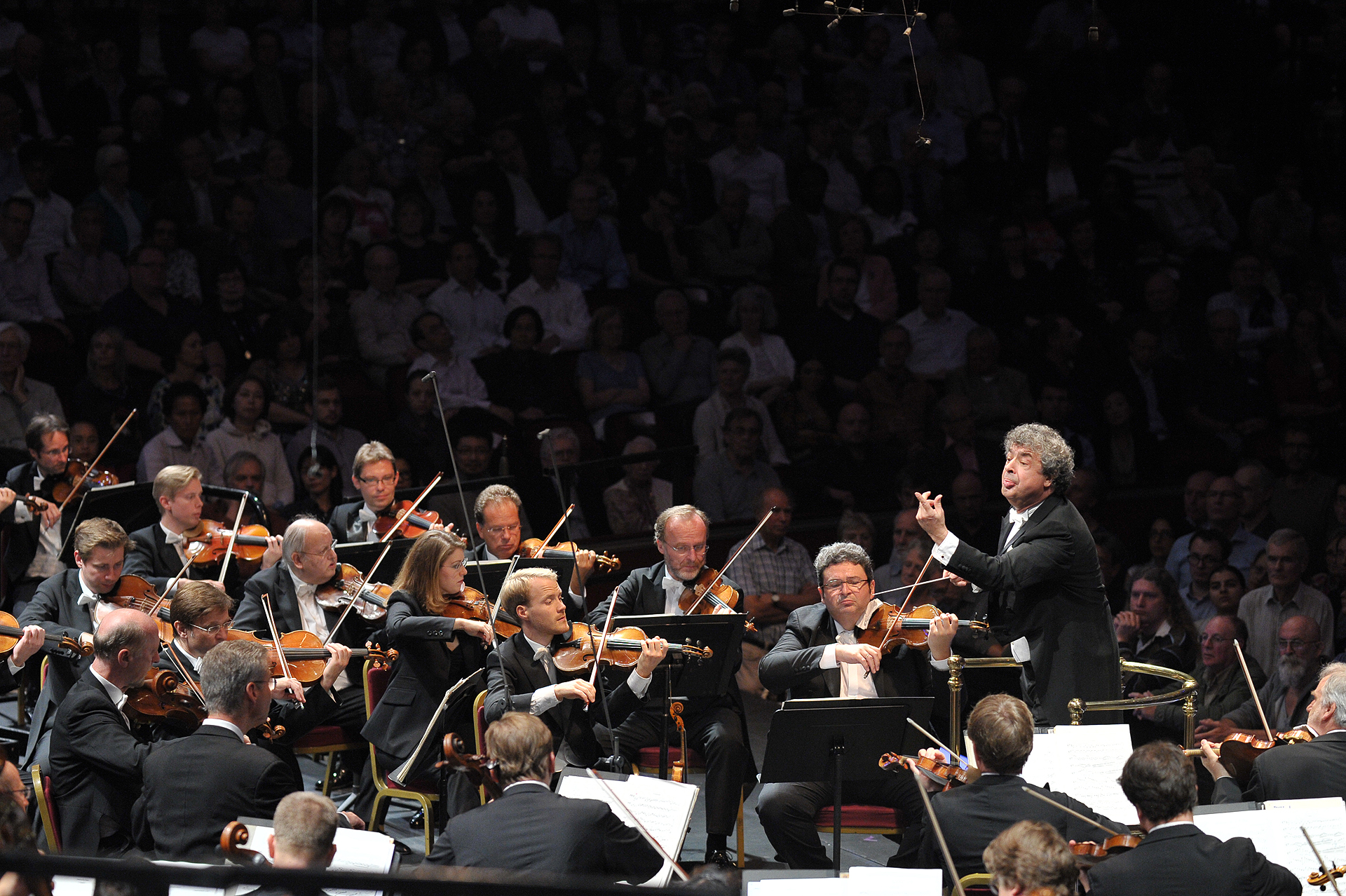
The Oberon Symphony Orchestra play Beethoven and Shostakovich

oberon-so
Picture (c) Alexander Robinson

Richard Whitehouse on the young, thriving Oberon Symphony Orchestra‘s latest concert, pairing Beethoven with Shostakovich at their home of St James’s, Sussex Gardens, London on Saturday 26 September

Beethoven: Piano Concerto no.4 (1806)

Shostakovich: Symphony no.5 (1937)

Jean Paul Ekins (piano), Oberon Symphony Orchestra / Samuel Draper

This evening’s concert given by the Oberon Symphony, the orchestra’s tenth such event since its inception, brought together a concerto which is poised expressively between Classical and Romantic eras, then a symphony bridging the divide between personal and public expression.

For all its popularity, Beethoven’s Piano Concerto no.4 remains a tough challenge in terms of its emotional understatement and often elusive interplay of soloist and orchestra. There was no denying Jean Paul Ekins’ technical adroitness, his crystalline tone and limpid passage work being rarely in doubt, but equally a lack of expressive variety and a degree of preciousness in terms of phrasing that gave the opening movement – steady if by no means stolid in its underlying tempo – a uniform and even unyielding profile; the highlight being a cadenza that dovetailed ideally into the surging coda. Not so a rather prosaic transition from slow movement into finale, yet the dialogue of the former was (rightly) one of stark contrast and the latter exuded ample impetus through to its rather awkwardly negotiated final chords.

Throughout this reading, Samuel Draper proved an astute and attentive accompanist – before he and the orchestra came into their own with Shostakovich’s Symphony no.5. Still the most often heard of what is now among the most familiar of symphonic cycles, its performance has grown more difficult over time given those extra-musical ‘interpretations’ to have been foisted on its musical content. Having steered an involving course between its yearning and plaintive main themes, Draper infused the first movement’s development with a purposeful momentum so that the climactic reprise unfolded as an arc of decreasing intensity towards a coda of aching suspense. Trenchant in forward motion, the scherzo was dispatched with a keen irony and, in its trio, appealingly deadpan playing from leader Richard Gratwick.

A degree of thinness in string tone was by no means to the disadvantage of a slow movement which eschewed widescreen emotional expression for intense inwardness, not least with the chorale-like transformation of its initial theme in a central passage of real eloquence. Nor was the ensuing climax found wanting, as Draper secured a searing clarity across the strings prior to a wistfully resigned close. Even finer was the finale: the hardest movement to bring off, its tempo changes worked ably in terms of a cumulative overall structure – making nonsense of any claim it lacks formal focus; with a palpable emergence from the restless searching at its centre towards an apotheosis which evinced the fraught inevitability that was surely intended. The closing bars then drove home the work’s defiantly individual stance with bracing resolve.

A gripping account of a piece which should never be taken for granted, not least in its knife-edge ambivalence, and that found the Oberon SO at its most committed. Draper had begun by noting the 75th anniversary on this day of the suicide of philosopher Walter Benjamin – the victim of a political and cultural intolerance that has by no means abated, and to whose memory this performance was dedicated. Such a procedure can risk indulgence, though here the sincerity of his remarks was more than matched by the conviction of the music-making.

The next Oberon concert takes place on 5th December 2015, where the orchestra will play Tchaikovsky’s Pathetique Symphony. Here they are in the composer’s Fifth:

Further information can be found at the orchestra’s website

Proms premiere – Tansy Davies – Re-greening

tansy davies composer

Tansy Davies

National Youth Orchestra of Great Britain – without a conductor (Prom 31)

Duration: 9 minutes

BBC iPlayer link

http://www.bbc.co.uk/events/e8r2mb

What’s the story behind the piece?

In an interview for Arcana, Tansy Davies detailed how Re-greening, written for all 164 players of the National Youth Orchestra without a conductor, is essentially an introduction to Mahler’s Symphony no.9, the piece they performed without a break afterwards.

In the interview, which can be read in full here , Davies explains how “the way the music is layered to me suggests a forest like quality; interweaving arpeggio-type figures bubbling or erupting up from the cold earth in winter, and scales or lines reaching up to the light”.

Did you know?

Before making her way as a composer, Davies sang and played guitar in a band. That was probably until she won the BBC Young Composers’ Competition in 1996!

Initial verdict

Re-greening begins with bright sounds like a forest coming to life – the opening percussion stroke, a bright, metallic sound, feels like the first sun of the day.

Then we hear the rustling of the orchestra, with harmonics from the stringed instruments and shrill woodwind that sound like the birds, sonorous brass. A song is sung by the orchestra, the popular and ancient song Sumer is icumen in, essentially a hymn that glorifies in the arrival of a new season or a new day. The chant continues, surrounded by a large orchestral sound that is used economically. The brass are prominent, Davies making great use of a big space with percussion and a huge string section.

Davies layers the sounds, so that it feels like several chords are piled up on top of each other in a full bodied texture. Then towards the end the orchestra sing again, this time a canon from English Renaissance composer Thomas Tallis, set like the earlier song in C major,. This proves an unusual and moving experience when set among the excited cacophony from the rest of the instruments.

Second hearing

tbc!

Where can I hear more?

There are a couple of excellent Tansy Davies discs in circulation, partly because her music seems to be very aware of its surroundings, i.e. it is aware of the culture – both popular and classical – in which it is written. So far she has tended towards chamber pieces that are of manageable length but considerable intensity. That much is very clear from her Troubairitz disc for Gabriel Prokofiev’s Nonclassical label, which includes the excellent Neon for chamber ensemble – and from the Spine disc for NMC, which includes the Saxophone Concerto with Simon Haram:

https://open.spotify.com/album/6RZsGqMpOm3D9Kgx3YH1l3

https://open.spotify.com/album/1lr0MOXLf5xc1nLmER9EGY

Under the Surface at the Proms – About Schmidt

Prom 73, 10 September 2015 – Vienna Philharmonic Orchestra / Semyon Bychkov at the Royal Albert Hall

schmidt
Semyon Bychkov conducts the Vienna Philharmonic Orchestra in Schmidt at the Royal Albert Hall. Photo (c) Chris Christodoulou

Symphony no.2 in E flat major
http://www.bbc.co.uk/events/ewbfxj#b068tnhg

‘Some music has to wait before it finds its place in the sun.’

This standout quote comes from an interview in the Proms program with conductor Semyon Bychkov, who conducted the Vienna Philharmonic Orchestra in this concert of two late Romantic symphonies. The work to which he referred was not BrahmsThird Symphony, which received an occasionally beautiful but ultimately rather lethargic performance in the first half, but the Second Symphony of Franz Schmidt, completed in 1913.

Schmidt’s music has only visited the Royal Albert Hall in full on two previous occasions. The Fourth Symphony, which experienced a revival when Frans Welser-Möst and the London Philharmonic Orchestra won a Gramophone Award for a recording of it in 1996, was heard at the festival in 1998. The relative success of this was followed by the massive sacred piece Das Buch mit Sieben Siegeln (The Book of the Seven Seals), which followed a similar path, recorded by Welser-Most in 1996 and performed by the same conductor in 2000.

Schmidt was a wholly suitable choice of composer for the Vienna Philharmonic, who have been revisiting important works in their history this year. Unlike the Brahms third they did not give the premiere of the Schmidt, but the connections with the composer are close. He became a member of the orchestra in 1896, where he played as a cellist – though he did not get on with Gustav Mahler, conductor at the time. Bychkov has championed the Second Symphony with other orchestras, so it made sense to finally bring it to the Vienna Philharmonic. From what I could tell this was their first season performing this or any of his symphonies. So what of the piece itself?

Written on a large scale, the Second clocks in at around 50 minutes. It is in three movements, the large second movement dominating at around half the length of the piece – and it was the centrepiece here. A colourful and richly layered set of variations on a theme, it delights in exploring a number of completely contrasting moods, drawing unusual textures from the orchestra that reveal Schmidt the organ composer. A few of the variations sound uncannily like right hand keyboard figures played at speed, with amazing clarity of colour.

There were clear influences from Bach, Beethoven, Mahler, Richard Strauss and Bruckner – yet the music was nothing like a copy of any of these composers. Instead Schmidt managed to stamp his own personality on the piece, shying away from obvious statements so that the mood was at times strangely elusive, on occasion reluctant to commit to emotion with obvious meaning.

It had operatic qualities, for sure, which could be felt in the ebb and flow of the drama and in the swell of the melodies – but the unusually luminous colours dominated, Schmidt using the orchestra in his own individual way. Here he wrote especially taxing parts for violins and violas, but the crowning glory was the massive brass chorale that appeared towards the end and was resolved without fuss.

Only the Proms could have presented this combination of orchestra and music, and should be congratulated for doing so. It was expertly performed and well received, and should go a long way to giving Schmidt’s music the chance of a revival it deserves. It will be interesting to come back in five years and see if anyone else has taken up the baton from Bychkov.

Want to hear more?

A playlist combining the Second and Fourth Symphonies can be heard here:

Meanwhile for the massive Das Buch mit Sieben Siegeln (The Book of the Seven Seals), in a recent recording made for Chandos under conductor Kristjan Jarvi, click on the link below:

This is the last Under the Surface feature of this year’s Proms. There will be more explorations of rare repertoire on Arcana in the coming months, both through recordings and concerts. Stay tuned!

Under the Surface at the Proms – Nielsen and The Four Temperaments

Prom 38, 13 August 2015 – London Symphony Chorus Womens’ Voices, BBC Philharmonic Orchestra / Juanjo Mena at the Royal Albert Hall


Fabio Luisi conducts the Danish National Symphony Orchestra in Nielsen at the Royal Albert Hall. Photo (c) Chris Christodoulou

Helios Overture
http://www.bbc.co.uk/events/e4nrzc#b065xhdn

3 Motets, Hymnus Amoris and Symphony no.2, ‘The Four Temperaments’
http://www.bbc.co.uk/events/e4nrzc#b065xhds

The Proms and one of this year’s anniversary composers, the Dane Carl Nielsen, are still relatively new friends.

This is because Henry Wood and subsequent directors of the festival did not consider his music worthy of inclusion until very recently – and indeed the Second Symphony, heard in this Prom, was only receiving its second ever Proms performance.

It was the culmination of a thoroughly enjoyable evening that showed Nielsen in several forms. We experienced religious contemplation towards the end of his life in the 3 Motets of 1931, the flowering of spring and love in the Hymnus Amoris of 1897 and then entered the symphonic boxing ring – or so it felt – for the taut arguments of the symphony, modelled on The Four Temperaments. These performances were all authentic, given by the Danish National Vocal Ensemble, Symphony Chorus and Symphony Orchestra.

The evening began with a sunrise – a magical evocation conjured from almost total stillness by conductor Fabio Luisi. As the Helios Overture took shape he kept a close ear to the orchestral colour, and the shafts of sunlight grew ever stronger thanks to wonderful horn playing.

The 3 Motets were cooler, partly because the choir singing them was relatively small, but if anything this enhanced their purity. In this late trio of works Nielsen pays homage to the Renaissance composer Palestrina in a series of carefully woven lines, though there is room for instinctive joy too – as there was in the final motet, Benedictus Dominus. Yet it was the words of an old man that stuck in the memory from the first motet, Afflictus sum, with its translated text “I am feeble and sore broken”.

We then heard Hymnus Amoris, an early work begun by the brightly voiced Boy and Girl Choristers of Winchester Cathedral before blooming through two additional choirs, soprano and baritone soloists (David Danholt and Anna Lucia Richter) and orchestra. Essentially a journey through life, the 25-minute cantata has a healthy glow and pulse, its treble rich sounds bringing forward the promise of new life and love, despite the onset of old age towards the end. Ultimately triumphant, the work finished in a blaze of colour, following excellent solos from Richter in particular.

If the musical language here carried the enthusiasm of youth, the mood darkened appreciably for the symphony – and Luisi noticeably stepped up a gear in his conducting. Using a subject that has often appealed to classical composers, the Four Temperaments, Nielsen takes us on a voyage of very differing emotions, and Luisi ensured these were clearly signposted but also keenly felt.

The turbulent first movement (the Choleric temperament) has a lot going on, moving restlessly from one cadence to another, but it packs a punch and is ultimately a tale of resolve. The middle two movements (Phlegmatic and Melancholic) reveal more obviously vulnerable sides, and in the third there are dark clouds over the soul as the music spends much of its time brooding in a minor key.

There are tunes to be enjoyed, though, especially a winsome number in the second movement, and Nielsen’s development of his material is notable for its speed of thought. Several listens to each movement are recommended to get a feel for his style, but in the Second Symphony Nielsen really convinces with his emotional arguments. The final movement, Sanguine, is the culmination, telling the tale of struggles won and demons vanquished. In a performance as convincing as this it was easy to be won around, a task made even simpler by a charming encore, the Dance of the Cockerels from Nielsen’s opera Maskarade.

Want to hear more?

The obvious next port of call for Nielsen is his Fourth Symphony, the Inextinguishable – a powerful and hugely affirmative piece. It can be heard on Spotify here, with the San Francisco Symphony conducted by Herbert Blomstedt:

For the charming, rustic side to Nielsen’s character, the Wind Quintet is a charming place to start. Here it is as part of an all-Nielsen album from the Athena Ensemble:


The concert also included Nikolaj Znaider playing BrahmsViolin Concerto. More of that in a future post!

There will be more Under the Surface features as the Proms progress, exploring lesser known pieces and composers at the festival

Under the Surface at the Proms – John Foulds’ Three Mantras

Prom 38, 13 August 2015 – London Symphony Chorus Womens’ Voices, BBC Philharmonic Orchestra / Juanjo Mena at the Royal Albert Hall

john-foulds

John Foulds Three Mantras (1919-1930)

http://www.bbc.co.uk/events/exq5v2#b064y5hj

We definitely undervalue the BBC orchestras when the Proms take centre stage. I say that because this was one of the most colourful orchestral Proms it has been my pleasure to witness, and much of the credit for that should go to the BBC Philharmonic Orchestra, a riot of bright shades under Juanjo Mena in Messiaen’s Turangalîla-Symphony. Yet while that performance will inevitably take centre stage, it was another work that stole the show.

John Foulds has spent a long time languishing in the musical wilderness, but in the last ten years he has begun to reach a bigger audience. A good deal of thanks for this should go to conductor of the BBC Symphony Orchestra, Sakari Oramo, who recorded two discs of his orchestral works with the City of Birmingham Symphony Orchestra. They enchanted us with Foulds’ inventiveness, and most importantly his eagerness to incorporate Eastern cultures within an extremely Western art form. In this respect he was in line with Gustav Holst.

One of the finest works in this respect is the 3 Mantras, thought to be part of a massive Sanskrit opera, Avatara. Very sadly that never came to be, and 300 pages are lost from the score, but the 3 Mantras survive and make a very accomplished and unusual orchestral piece. The colours are simply beautiful, achieved through a wide variety of percussion, harps and shimmering strings, all of which Mena marshalled to show the detail of Foulds’ inventive orchestration.

It is the second piece, the Mantra of Bliss (starting at 8:13 on the link above) that is the most striking, a meditation of radiant orchestral beauty, where Foulds uses a wordless female chorus to enchanting effect. Holst had done this before, in Neptune from The Planets, but rather than that cold emptiness Foulds creates exotic warmth.

The outer two mantras are very different; the first a bustle of activity that slows for a moving slower melody; the third an almost barbaric dance that wheels out of control and wields a fearsome set of percussion at the end. This was a terrific performance from the BBC Philharmonic, showing off Foulds’ gifts to a new audience that will hopefully look to discover more of the music of this remarkable composer.

Want to hear more

You can hear a playlist from BBC Radio 3’s CD Review, where Andrew McGregor explores recordings of John Foulds’ music, by clicking here

There will be more Under the Surface features as the Proms progress, exploring lesser known pieces and composers at the festival