In concert – Piotr Anderszewski, CBSO / Omer Meir Wellber: Bartók & Bruckner

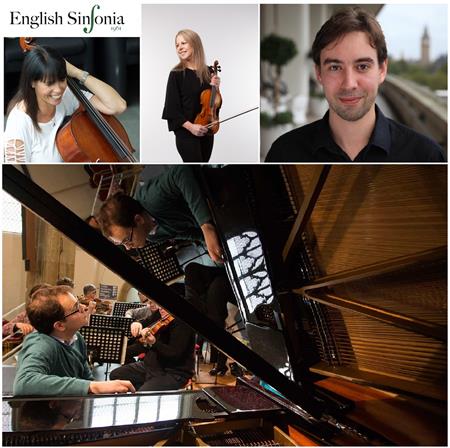
Piotr Anderszewski (piano), City of Birmingham Symphony Orchestra / Omer Meir Wellber (above)

Symphony Hall, Birmingham
Tuesday 10 March 2020

Bartók Piano Concerto no.3 (1945)
Bruckner Symphony no.6 in A major (1879-81)

Written by Richard Whitehouse

It is a measure of how far Bruckner’s Sixth Symphony has come from being one that even dedicated exponents avoided to one relative newcomers tackle as a way into this composer. The indisposition of Mirga Gražinytė-Tyla could have seen its removal from this evening’s programme, though Omer Meir Wellber (who for the past season has been chief conductor of the BBC Philharmonic, among his portfolio of notable positions) was clearly unfazed by this most technically exacting and emotionally unpredictable among Bruckner symphonies.

As was evident from the start of the Majestoso, the City of Birmingham Symphony’s violins rendering its indelible rhythm with real incisiveness and Wellber duly steering a purposeful course through this most animated of Bruckner’s symphonic movements, while never at the expense of those more lyrical and monumental themes to come. The climactic transition into the reprise was thrillingly done, and how persuasively Wellber pointed up the coda’s breath-taking modulations then its surging peroration whose sudden slowing-up was ideally judged. The Adagio was hardly less fine, with the CBSO strings securing burnished eloquence in its alternation between lament and rapture – underpinned by a majesty no less tangible than that in the following symphonies for all its restraint and, in the closing pages, gentle evanescence.

Other conductors might have found greater wit and insouciance in the Scherzo, but Wellber yielded to few in his delineating of its quizzical and propulsive gestures; nor did the trio want for elegance, for all its final phrase was ‘leant on’ a little too insistently. Notoriously difficult to make cohere, the Finale felt all of a piece with what went before – Wellber mindful that its ultimate affirmation is not without its quixotic or even ironic asides; moreover, that its formal divisions are secondary to its being in constant transition, on the way to an apotheosis where this movement audibly chases its tail as an unlikely and even uproarious means of bringing the work full circle. Quite a piece and quite a reading as set the seal on a performance that, if not the last word as interpretation, was never less than confident and assured in its traversal.

Coupling Bruckner with Bartók might seem a risky strategy but, in the event, the Austrian’s ‘cheekiest’ symphony followed-on ideally from the Hungarian’s deftest piano concerto. Piotr Anderszewski’s (above) take on the Third was one of judicious touches, not least an initial Allegretto tougher and more demonstrative than usual, without sacrificing this music’s innate sense of ingratiation. What followed was arguably too slow for an Andante, though how acutely the pianist brought out its ‘religioso’ marking in those poised exchanges of soloist and strings then woodwind – the brief central scherzo a ‘night music’ as delectable as it was evocative. Nor did Anderszewski under-characterize the final Allegro, its underlying vivacity accorded heft and not a little ambiguity on route to the most agile and uninhibited of Bartók’s codas.

A successful concert, then, which should certainly find favour on the (regrettably truncated) European tour the CBSO now undertakes. It is back in Symphony Hall for Verdi’s Requiem, then a varied programme that features the UK premiere of Julian Anderson’s Cello Concerto.

Further listening

Here is a Spotify playlist of music from the concert. The CBSO have not recorded the Bruckner before there is a recent version available from their former chief conductor, Sir Simon Rattle, and the London Symphony Orchestra. The playlist also includes the CBSO, Rattle and pianist Peter Donohoe in a 1992 recording of the Bartók:

For further information on the current season of CBSO concerts, visit the orchestra’s website

Wigmore Mondays – Ruby Hughes, Natalie Clein & Julius Drake: Works for soprano, cello & piano

Ruby Hughes (soprano, above), Natalie Clein (cello), Julius Drake (piano, both below)

Wigmore Hall, Monday 9 March 2020 (lunchtime)

You can listen to this concert on the BBC Sounds app here (opens in a new window)

Review and guide by Ben Hogwood

A fascinating hour of music for three instruments not often linked – soprano, cello and piano. Its imaginative programme comprised music by six composers from three different centuries using four languages! It made for a very satisfying whole.

Kodály’s single-movement Sonatina for cello and piano (1:41 on the radio broadcast) began the program. This is a work with which Natalie Clein and Julius Drake are very familiar, having recorded it for Hyperion in 2009, and they immediately found its expressive core. The Sonatina was initially intended for a Sonata the composer finished in 1909, but it happened to work particularly well on its own, and was completed later. Its colourful music – which has parallels to Debussy’s own Cello Sonata – is rich in melodic and harmonic content. Free in form, it speaks directly of the composer’s Hungarian heartlands. Clein’s tone was sumptuous in this performance and Drake’s piano exemplary, the two plotting a convincing course for the work.

This was followed without a break by three of John Tavener’s 6 Akhmatova Songs, written for soprano Patricia Rozario and cellist Steven Isserlis in 1993. In effect the cello is singing here too, its wordless line providing an otherworldly introduction for the third song of the six, Boris Pasternak (10:45). Clein’s rich sound was the ideal foil for the clarity of Ruby Hughes’ soprano. Couplet (12:48) was immediately more agitated, the gruff cello adopting a more questioning slant as it helped describe the poet’s suspicion about praise of her own work. Hughes, too, was more penetrating in her delivery. Finally Dante (14:23) grew outwards from the start, its expressive line shared between singer and instrumentalist.

Deborah Pritchard’s short but powerful Storm Song (16:46), a setting of text by Jeanette Winterson, was the last part of this unbroken first sequence. Premiered almost exactly three years ago, it was led by Hughes’ wide ranging but beautifully shaped melodic lines, soaring above the sinuous cello and piano as they descended into a powerful maelstrom at the song’s heart.

Debussy’s Chansons de Bilitis were next, three heady settings of words by Pierre Louÿs, initially claimed to be erotic works from Ancient Greece. They were in fact the poet’s own construction, a fact Debussy presumably knew. La flûte de Pan (23:02) immediately transported the listener to a sultry outdoor setting and a lovers’ tryst, given appropriately chromatic settings by the composer. Julius Drake provided a rich tapestry in Debussy’s piano writing, and the humid setting was enhanced by the slow, tolling bells of the introduction to La chevelure (25:50) Hughes, now lower in her range, cast the spell. Le tombeau des naïades (29:16) closed this deliberately elusive trio, and we were left feeling as though we were all in on a rendezvous that was not supposed to be happening!

On the palmy beach is a commission from Kings Place for Judith Weir, completed in 2019 for these three performers and watched here by the composer herself. A cycle of four themed songs, it takes encounters with the sea and its inhabitants as inspiration, setting four very different poems by Wallace Stevens, Kathleen Jamie, Norman McCaig and Emily Dickinson. Weir has blogged on how she initially intended to keep the two instruments in step with each other, but how it became ‘much more alluring to liberate the cello’. Presumably for copyright reasons, the text for only one of the four poems (the Dickinson) could be printed, which made the text more difficult to follow in spite of Hughes’ wonderful singing. Yet there was a great deal of communication through the music, for which Clein and Drake were equally responsible.

Clein soared towards the heights in the prologue to the setting of Stevens’ Fabliau of Florida (34:30), where foam and cloud are one, and gave a full-throated epilogue too. Weir’s use of the cello to depict a jellyfish in Jamie’s The Glass-hulled boat (38:23) was uncanny, humorous and strangely touching, the agile lines dovetailing with Hughes’ own words. Norman McCaig’s Basking Shark (42:08) was next, the broad cello line a counterpoint to Hughes’s vivid storytelling and only latterly joined by the piano. Finally the setting of Dickinson’s I started Early – Took my Dog – (656) (46:13) was compelling, the sea toying with the author before ultimately opting not to catch her up.

To conclude a unique concert we heard Schubert’s Auf dem Strom (50:57), written for Beethoven’s memorial a year after his death in 1828 and containing a quotation from the Eroica Symphony. Setting the poetry of Ludwig Rellstab, it was written for soprano with horn and piano accompaniment, the composer later adding an obbligato cello was just as valid instead of the horn. This was to our advantage, for it enabled Natalie Clein to project the phrases beautifully, setting the scene for Hughes’ subtly wrought grief. With eloquent playing from Drake, this felt rather like the slow movement of a Schubert piano trio, but with words – expressive and touching.

Repertoire

This concert contained the following music (with timings on the BBC Sounds broadcast in brackets):

Kodály Sonatina for cello and piano (1922, published 1969)
Tavener Akhmatova Songs (1993) (excerpts) (10:45)
Pritchard Storm Song (2017) (16:46)
Debussy Chansons de Bilitis (1897-8) (23:02)
Weir On The Palmy Beach (2019) (34:30)
Schubert Auf dem Strom D943 (1828) (50:57)

Further listening & viewing

The works by Deborah Pritchard and Judith Weir have not been recorded yet, but you can hear available recordings of the works by Kodály, Tavener, Debussy and Schubert on the following Spotify playlist:

References to Natalie Clein and Julius Drake’s Kodály recordings of 2009 were unfortunately missed from the Wigmore Hall program. You can hear preview clips of their collection, including the Sonatina on the Hyperion website

The most recent collection of music by Judith Weir comes highly recommended. Airs from Another Planet is a collection of songs and chamber music, released on the enterprising Delphian label:

Meanwhile the music of John Tavener continues to enchant in a lasting way. While awareness of the composer centres all too often around his piece for cello and orchestra, The Protecting Veil, this collection of works for cello from RCA – nominated for the Mercury Music Prize in 1997 – has aged very well. It includes all six of the Akhmatova Songs, performed by dedicatees Patricia Rozario and Steven Isserlis:

In concert – Kristine Balanas, Royal Philharmonic Orchestra / Andris Poga: Sibelius, Bruch & Rachmaninov

Kristine Balanas (violin), Royal Philharmonic Orchestra / Andris Poga

Cadogan Hall, London
Thursday 5 March 2020

Sibelius Karelia Suite Op.11 (1893)
Bruch Violin Concerto no.1 in G minor Op.26 (1866)
Rachmaninov Symphony no.3 in A minor Op.44 (1936)

Reviewed by Ben Hogwood
Photo credit (Andris Poga) Jean-Philippe Raibaud

This was a nicely balanced and uplifting concert that balanced the relative misery of the early March weather in London. With the rain hammering down outside the Cadogan Hall, the Royal Philharmonic Orchestra and Latvian conductor Andris Poga got on with ensuring there was plenty of warmth inside.

They began with Sibelius’s charming Karelia Suite, a work full of good tunes and typically attractive and imaginative scoring. It is an ideal ‘curtain up’ piece in the right performance, although this one took a little while to move up through the gears. The first movement Intermezzo felt a little stentorian, and could have had a lighter spring in its step, but the succeeding Ballade was nicely measured, the emotional heart of the performance and given affectionately by Poga. By the time the Alla Marcia third movement had arrived, so too had the bounce in the rhythms, and the deceptively simple string theme was given with a smile.

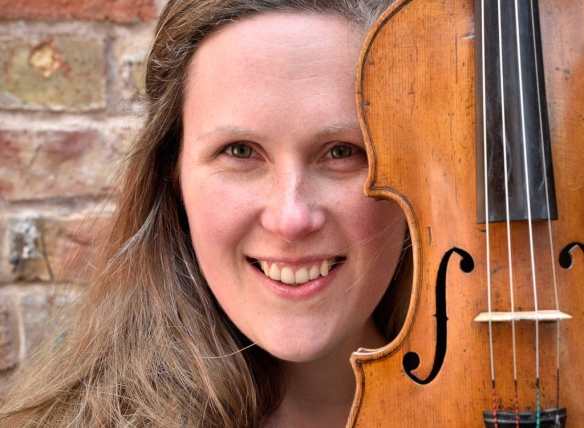
For Bruch’s Violin Concerto no.1 the orchestra were joined by Kristine Balanas (above), who led from the front in an account with passion and flair in strong supply. Yet there was an emotional distance between soloist and orchestra, who rarely interacted, and the opportunity for links through the sharing of Bruch’s wonderful melodies largely overlooked. Balanas played with a strong technical command of her Antonio Gragnani instrument, which made a wonderful sound, and the double stopping with which the finale begins was brilliantly done, the response from the orchestra appropriately breezy. Andris Poga clearly enjoyed the piece, but the distance remained throughout and hampered the work’s emotional impact.

There followed a hugely enjoyable account of Rachmaninov’s Symphony no.3, the first appearance of this work in a Royal Philharmonic Orchestra concert for a good while. Written in Lucerne but premiered by the Philadelphia Orchestra and Leopold Stokowski in 1936, the piece is unique for its successful blend of homesick melancholy and the suggestion of bright lights in America, written at a distance from both. Rachmaninov was effectively taking in the surroundings of both countries, but was ultimately thinking of home.

From the start it was clear the affection Andris Poga holds for the Third, with the carefully shaped and graceful chant theme contrasting with the upward sweep from the orchestra that followed. He was particularly impressive in managing the bracing syncopations in the finale, often tricky for orchestras to nail, and so too for the fugue that Rachmaninov tosses around the different sections towards the end. The slow movement was especially beautiful, with a solo from leader Sulki Yu that melted even the hardest heart. The same could be said for the warmly played slower theme in the first movement, beautifully floated by cellos with subtle prompting from woodwind.

What really impressed in this symphony was the orchestra’s overall sound, richly colourful and depicting vivid pictures of Rachmaninov’s surroundings. Visions of Hollywood could occasionally be discerned, the suitability of the composer’s music for the big screen uncannily made clear, but in the intimate slow movement a softer and more fragile heart was in evidence.

Unfortunately the players of the Royal Philharmonic Orchestra were not named in the programme, a shame as there were several new faces added to the fold this time around. They impressed greatly in a memorable account of a symphony finally getting its due rewards in the concert hall.

Further listening

You can listen to a playlist of the concert programme below – which includes the RPO in previous recordings of the Sibelius and Bruch, plus their conductor-elect Vasily Petrenko leading the Royal Liverpool Philharmonic Orchestra in a fine account of Rachmaninov’s Third Symphony.

Live review – CBSO Chorus and Orchestra / Mirga Gražinytė-Tyla: Brahms’ German Requiem & Mozart Serenade for wind

Camilla Tilling (soprano), Florian Boesch (baritone), CBSO Chorus, City of Birmingham Symphony Orchestra / Mirga Gražinytė-Tyla

Symphony Hall, Birmingham
Wednesday 4 March 2020

Mozart Serenade for wind in C minor K388 (1782-3)
Brahms Ein Deutsches Requiem Op.45 (1865-9)

Written by Richard Whitehouse

The City of Birmingham Symphony Orchestra’s current season features several major choral works that have long been central to this orchestra’s repertoire. While it has received numerous readings (most recently with Andrew Manze), Brahms‘s A German Requiem is not among these – so it was fascinating to hear what Mirga Gražinytė-Tyla might make of a piece that, though it has never fallen from favour since its premiere 152 years ago, remains a stern interpretive test in terms of projecting formal integration and an expressive essence more elusive for its restraint.

In the event the performance was a fine one – not least because this conductor found the right balance between flexibility of motion, without which the textures all too easily risk stolidity, and that seriousness of manner without which the music soon loses any sense of purpose. A balance as evident in the lengthy second movement, the inexorable tread of its outer sections framing an interlude of wistful grace then with the ensuing fugue building animatedly to its serene close, as in the brief fourth movement whose blithe exterior conceals music of artful dexterity. Camilla Tilling (above) summoned a winsome response in the fifth movement, a late but necessary addition in its opening-out the work’s emotional range, while Florian Boesch (below) was suitably if not unduly vehement in his initial contributions to the third and sixth; the former crowned by a fugue of visceral and unflagging energy, though that in the latter movement marginally lost focus as its grandly rhetorical gestures ran their (too?) predictable course.

It is in the first and seventh movements that Brahms’s highly personal concept of redemption through love is at its most explicit, MG-T duly having the measure of their calmly insistent searching towards eventual catharsis – even if the finale’s gradual winding-down resulted in less than the ideal repose. The CBSO Chorus was on fine form throughout – a tribute to the expertise of associate chorus director Julian Wilkins, who also made a pertinent contribution in an organ part no less crucial for its understatement; underpinning and often motivating an orchestration which adds in no small measure to the work’s humane and compassionate spirit.

A relatively short first half gave welcome opportunity for the CBSO’s woodwind to take the stage for an un-conducted reading of Mozart’s Serenade in C minor, last in his trilogy of such pieces which transcended an ostensibly lightweight genre and, in doing so, made possible the emotional substance of the symphonies that followed. Ensemble seemed a shade insecure in the opening Allegro, but its underlying intensity carried over to an Andante whose ineffable rapture was itself contrasted with the textural severity of the Menuetto. Best, though, was the final Allegro – a set of variation on an unassuming theme with the formal outline of a sonata-rondo made explicit with its major-key ending. Overall, a winning account of a piece whose scoring for wind octet has gained it less exposure than Mozart’s comparable orchestral works.

It also made for an unlikely while successful coupling and a similarly thought-provoking one is scheduled for next Tuesday, MG-T making her first foray into Bruckner with the erstwhile elusive Sixth Symphony alongside the deceptive simplicity of Bartók‘s Third Piano Concerto.

Further listening

Here is a Spotify playlist of music from the concert. The CBSO have not recorded either of these works before but these are fine alternatives:

For further information on the current season of CBSO concerts, visit the orchestra’s website

Wigmore Mondays – Lise Berthaud & David Saudubray: Schubert & Brahms sonatas

Lise Berthaud (viola), David Saudubray (piano)

Wigmore Hall, Monday 2 March 2020 (lunchtime)

You can listen to this concert on the BBC Sounds app here (opens in a new window)

Review and guide by Ben Hogwood

Neither of the two principal works in this BBC Radio 3 Lunchtime concert originated as viola pieces, but both have become repertoire staples for the instrument, the warmth of the Schubert Arpeggione Sonata and the sage experience of Brahms’s First Clarinet Sonata being ideal vehicles for its silvery tone.

The Schubert is an especially unusual case, being the only prominent piece written for the arpeggione. This was an instrument with six strings and frets like a guitar, which was bowed and held between the knees.

Though it did not catch on as an alternative to the cello or the viola, Schubert wrote a substantial piece for a friend of his who played it. Because of the practicality of performing the work it was not until 1867 that it was finally published, with the realisation that it transcribes ideally for either cello or viola with piano accompaniment, the melodies lying under the fingers with deceptive ease.

The Arpeggione Sonata is a largely happy work, though it begins lost in thought (from 2:42 on the broadcast link). This was a measured intro from David Saudubray but as the first movement progressed the songful tone of Lise Berthaud’s viola took over, the pair enjoying the spring in the step of the faster music as though they were venturing out to dance. There was a really nice passage around the 8:38 mark, the viola using pizzicato to accompany the piano.

The second movement Adagio (14:28) explored more tender thoughts, the piano’s rocking motion suggesting the profile of a lullaby, especially with Berthaud’s soft musings above. However it was not long before we were straight into the Allegretto finale (18:13), the players investing more urgency until we arrived back at the dance (19:31), Schubert unable to resist setting the players on the floor once again. This good humour continued until the bright ending.

Brahms’s first contribution to the viola and piano repertoire is a very different animal, being from late in his career. Having decided to finish as a composer in 1890 it was something of a surprise when Brahms, having rid himself of the pressure of a Fifth Symphony, found inspiration in the clarinet. He wrote a Trio, Quintet and two Sonatas for the clarinettist Richard Mühlfeld, but it was soon brought to his attention that the Trio and both Sonatas transcribed very easily for viola – and those arrangements were made with his blessing.

As Lise Berthaud showed, the profile of Brahms’ melodies in the Sonata in F minor Op.120/1 are ideal for the instrument, the wide range of the first movement (29:07) easily under her fingers. The sweep of this melody and its subsequent development was impressive, as was the graceful second theme, with just the occasional slip from Saudubray in Brahms’s more congested piano writing. The controlled but expressive Andante was delightfully played (37:14), its roots clearly in song. A lilting Intermezzo was third (42:10), both players finishing each other’s musical sentences as equals, the music itself like a breeze in the branches of an old tree. The fourth movement (46:07), marked Vivace, threw caution away, with a peal of bells from the piano leading to a flowing and good spirited exchange, prone to the odd outspoken burst from the piano. Here was proof that the older Brahms still had the enthusiasm and musical vitality of his youth.

Repertoire

This concert contained the following music (with timings on the BBC Sounds broadcast in brackets):

Schubert Arpeggione Sonata in A minor D821 (1824) (2:42)

Brahms Viola Sonata in F minor Op.120/1 (1894) (29:07)

As an encore we had a lovely piece from Frank Bridge, the Berceuse (52:40), whose rocking motion was evident in Saudubray’s sensitive piano playing, the ideal foil to Berthaud’s velvety tone.

Further listening & viewing

The music from this concert can be heard in the playlist below, with versions of the Schubert and Brahms recorded by Berthaud herself:

As alluded to in the review, late Brahms works particularly well for the viola, as this collection shows – with both sonatas and the trio for viola, cello and piano coupled together:

Frank Bridge wrote some winsome music for his first instrument, collected here by the viola player Louise Williams and pianist David Owen Norris, joined for three songs by mezzo-soprano Jean Rigby: