In concert – Max Cooper: Yearning for the Infinite

Max Cooper: Yearning for the Infinite

Part of the Barbican’s 2019 season, Life Rewired, which explores what it means to be human when technology is changing everything.

Barbican Hall, London, Saturday 28 September 2019

Written by Ben Hogwood
Images courtesy of the Barbican: Alex Kozobolis

How do you capture the infinite in music? Composers through the ages have come close – Bruckner, Mahler, Wagner and Messiaen come to mind, as does Morton Feldman and, more recently, the Indian classical music greats.

That may be a relatively casual list of ‘big dimension’ composers, but it gives an idea of the task facing Max Cooper, responding to the Barbican’s commission to ‘capture the overwhelming vastness of infinity within the spaces of the Barbican Hall’.

Incredibly, Cooper succeeded. His means were clever, too, exploring the infinite possibilities of data and science through tiny building blocks that combined to make cavernous structures to which we could easily have listened all night. For this he drew on his experience and knowledge of computational biology, for which he has a PhD, and made this potentially tricky area of science wholly approachable to the more casual Saturday night concert goer. To do this he added genuine emotion to the more calculated cells, drawing on historical religious traits which added even greater weight to the concept.

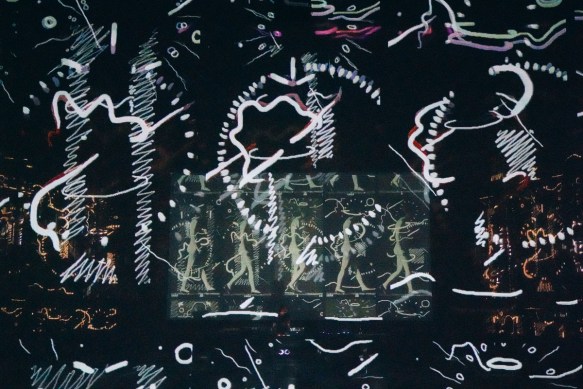
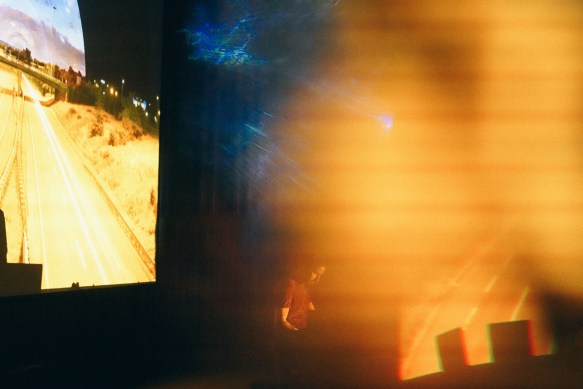
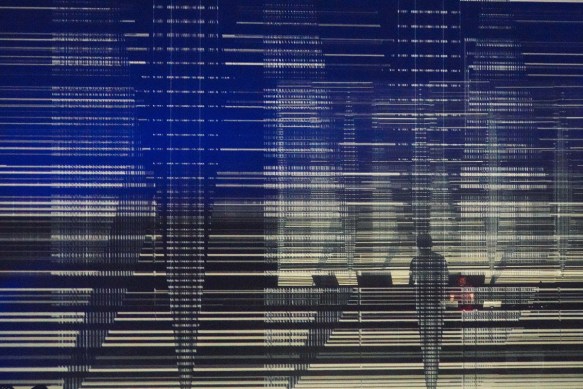
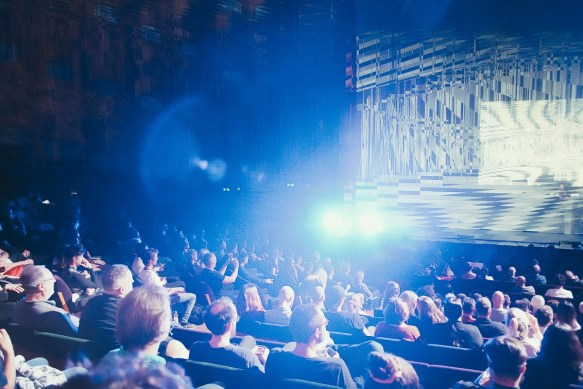
The music would not have made such an impact without the visual counterpoint, whose impact could not be overestimated. Jessica In (channeling Roger Penrose), Andy Lomas and Memo Atken all achieved the admirable balance of covering their brief, complementing the music and taking the breath away with the originality of their projections, which used two-thirds of the Barbican Hall walls and ceiling, creating a true 3D experience. Nor was the music lacking in emotional substance, Cooper having created a score of vast possibilities but also, in its quieter moments, of great intimacy.

This was borne partly of thick, semi-ambient chords with consonant harmonies but also melodic cells that grew outwards in tandem with the images, sweeping towards a conclusion where it felt as though all the positive energy in the hall was heading towards the feet. When the music did cut loose with powerful four to the floor rhythms it was all we could do not to get up and dance – a few did – though the complexity of the following breakbeat section would soon have placed us out of our collective depth!

It was that sort of evening, awe-inspiring, intimate, emotive and powerfully primal by turn. The modesty of Cooper’s bow at the end spoke volumes, showing that he sees himself as a channel through which this breathtaking art can flow. Yearning for the Infinite is due for an album release in November, and if it replicates this night then it will be essential listening. For now this evening was another feather in Cooper’s increasingly colourful cap.

In concert – Christian Tetzlaff, Philharmonia Orchestra / Esa-Pekka Salonen: Weimar Berlin – Angels and Demons

Christian Tetzlaff, Philharmonia Orchestra / Esa-Pekka Salonen (above)

Royal Festival Hall, Southbank Centre, London
Thursday 26 September 2019

Hindemith Rag Time (well-tempered) (1921)
J.S. Bach arr. Schoenberg Two Chorale Preludes: Schmücke dich, o liebe Seele BWV654; Komm, Gott Schöpfer, heiliger Geist BWV667 (1925)
Berg Violin Concerto (1935)
Hindemith Mathis der Maler Symphony (1934)

reviewed by Ben Hogwood

This year the Philharmonia Orchestra have been exploring the music of Weimar Berlin as it was in the 1920s and 1930s, with fascinating results. Their most recent concert, subtitled Dreams and Demons, may have been relatively short, but it gave plenty of food for thought and the musical rewards were considerable.

A rather older composer who worked in Weimar made himself known throughout the concert, for the music of Johann Sebastian Bach was quoted, refracted and alluded to in each of the four pieces on the programme. Firstly we heard the opening notes of the Prelude in C minor from The Well-Tempered Clavier, part of an affectionate and brilliantly ‘worded’ joke by Hindemith, whose Ragtime started the concert with a swagger. Esa-Pekka Salonen clearly enjoyed its gruff humour, but found the touches of elegance beneath the surface too.

The Ragtime’s surge to the close in E flat minor blossomed with a cleverly executed join into the first of two Bach chorale prelude arrangements by Schoenberg. Here we wondered at his audacious orchestration, taking on what he saw as ‘the first twelve tone music’ and sharing it around the orchestra with typically inventive pointing towards the melodies. Timothy Walden’s cello probed elegantly at the inner melodic lines of Schmücke dich, o liebe Seele, while the exuberant close of Komm, Gott Schöpfer, heiliger Geistdrew heralded the Hindemith work we were about to hear.

Berg’s Violin Concerto quotes from a Bach chorale, Es ist genug (It is enough) at the height of its remembrance of Manon Gropius, daughter of Alma Mahler. Subtitled To the Memory of An Angel, the work traverses a wide range of emotions in its thought processes, from brief oases of calm to fraught periods of activity. The clarinets of the Philharmonia, in all ranges, were superb, whether in the lighter Ländler theme of the first movement or the solemn chorale itself, their imitation of a pipe organ ghostly and – when the solo violinist’s harmonics were in play – ethereal. This was because soloist Christian Tetzlaff (above) also brought a wide range of sounds to the piece, from the fragility of the opening strings of the start to the surging faster music where he took the music by the scruff of the neck. His was a technically brilliant yet musically sensitive performance, closely joined to Salonen’s deft work with the orchestra.

All the while this wonderful piece was heading for the final bars and the ultimate rest, the sort of chord you would want to go on forever as Berg’s orchestral colours mingle with the highest note the violin reaches in the whole piece. Together Teztlaff and Salonen ensured the pacing was ideal, helped considerably by the light and shade of the Philharmonia’s contribution.

After the interval came a regrettably rare chance to hear some Hindemith in the concert hall in the shape of the Mathis der Maler Symphony, a three-movement work drawn from the opera of the same name. This oft-maligned composer exerts a good deal of influence on the tonal music of the second half of the 20th century, more than he is credited for, and his own works are instantly recognisable. Nor, as Salonen and the Philharmonia illustrated, is there a lack of colour or personality in his orchestral writing.

This was a superb performance of a piece Salonen clearly holds close to his heart, having conducted it at the Proms and recorded it for Sony in 2004. The expectant hush from the strings at the start was magical, the effect like walking into a sacred building, and this was reinforced by a solemn intonation of a chorale from the trombones, those Bach influences coming quickly to the surface. Salonen’s slower tempo here worked well.

The silvery strings enjoyed the moments of confluence in Hindemith’s writing, with the added note chords allowed to breathe, but Salonen was not above letting the grittier parts of the music off the leash, pushing forward through the faster phrases. The Philharmonia woodwind and brass were superb, the bell-like clarity of their playing bolstered by deeper shades. With all these qualities noted, Engelkonzert (Angelic Concert) unfolded beautifully, with a grand sense of ceremony at the end, while in response Grablegung (Entombment) was initially thoughtful, its ruminative woodwind then replaced by a brass-dominated climax which Salonen controlled immaculately.

Most dramatic of all was Versuchung des heiligen Antonius (The Temptation of Saint Anthony), with a ravishing tone from the Philharmonia strings at the outset. As it progressed the movement had a terrific cut and thrust, its tension released with impressive stature in the closing pages. Mathis der Maler is a wonderful score, one of Hindemith’s finest achievements – and by no means the only peak of his orchestral output. Here it put the seal on a fascinating and immensely rewarding concert, with superb musicianship throughout.

Further listening

You can hear the music played in this concert on the Spotify playlist below, including Salonen’s account of the Mathis der Maler symphony:

This playlist offers a broader view of Hindemith’s orchestral output, with the ballet suite Nobilissima Visione, the Concert Music for Strings and Brass and the vastly underrated piece for piano and orchestra The Four Temperaments:

Wigmore Mondays – Marnis Petersen & Camillo Radicke: Anderswelt (The Otherworld)

Marnis Petersen (soprano, above), Camillo Radicke (piano, below)

Wigmore Hall, Monday 23 September 2019 (lunchtime)

You can listen to this concert on the BBC Sounds app here

Review and guide by Ben Hogwood

A song recital that was truly out of this world.

German coloratura soprano Marnis Petersen and pianist Camillo Radicke brought the concept of their most recent recording, Dimensionen: Anderswelt, to the Wigmore Hall for an hour of 20 songs by no fewer than 18 composers.

The description ‘coloratura soprano’ depicts a singer that specialises in an operatic style, often high in the register – and that fits the music in this extraordinary collection. Most of the songs – and a couple of the composers – will surely have been new even to the most devoted Wigmore Hall attendee, and as Petersen and Radicke threaded the links cleverly through sections entitled The Otherworld, Elves, Mermaids and Mermen and Northern Lights, they plotted a course from deepest Germany to northern Iceland.

To begin Petersen read a short passage before the first group of five songs. Hans Pfitzner’s Lockung (Temptation) (2:25), with its twinkling piano and entreating mermaids, beckoned us in to the first of the Elves sections. Here we found Reger depicting a ‘pert and wanton’ elf, to a suitably heady vocal from Petersen, then the first of three settings of Eichendorff’s Elfe poem from Bruno Walter (7:28).

Camillo Radicke was superb here, with the insistent trills high up in the piano’s register, over which Petersen floated beautifully. Julius Weismann’s setting of the same text (9:43) again opted for the high register, this time in an attractive triple time dance. Though written in the same year as the Walter, it felt considerably older – and transitioned nicely to Brahms, setting Heine’s seductive water nymph in Sommerabend (Summer evening) (11:21), which found Petersen’s vocal control in very fine shape.
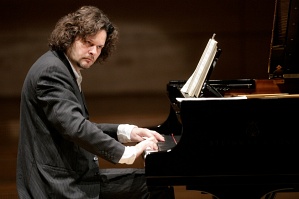
The Mermaids and Mermen section, again five songs in length, had an intriguing juxtaposition of composers. Hans Sommer’s Lore im Nachen (Lore in the skiff) found Radicke catching the ‘shimmer in the evening gold’ on a tranquil lake, as Petersen again soared high in the register. Grieg’s Med en Vandlilje (With a water lily) (18:09) introduced a wary atmosphere with the lurking water sprite (18:09) before Carl Loewe, heard to such great effect in Benjamin Appl and Kristian Bezuidenhout’s recital the previous week, was at it again with the boldly descriptive Der Nöck (The nix) (20:46). The nix (Petersen) and its harp (Radicke) were both strikingly portrayed, and Petersen’s vocal was superb. Sinding’s Ich fürcht’ nit Gespenster (I fear no ghosts) (29:18) was also a striking song, appropriately ghoulish in its coda from Radicke after Petersen had confidently confronted her spectres. Finally we heard a pupil of Hindemith, Harald Genzmer, and the agitated Stimmen im Strom (Voices in the river) (31:32)

To another quintet of songs on Elves, beginning with the cheeky Elfenlied, Wolf’s subject humourously caught by Petersen, who sang into the piano as her subject staggered about having banged his head. Friedrich Gulda’s setting of Elfe – the third of the concert – was a collector’s item (37:34), the 16-year old intriguingly matching the other two in the high treble area for an impish setting. Carl Loewe’s second appearance was with the operatic Die Sylphide (39:20), Petersen’s voice again reaching sparkling heights. Franz Schreker’s Spuk (Spook) (41:42) felt like some of the most modern music here, flitting about with uncertainty and tension, while in a rare outing for the music of conductor-composer Hermann Zumpe, Liederseelen (Song-Souls) (43:58) was affectionately sung.

Petersen and Radicke saved the most adventurous part of their concert until last, with four songs from Scandinavia and Iceland. Ariels Sang (48:06) was a rapturous contribution from Nielsen, boldly delivered, before Sinding reappeared with Majnat (May night) (50:26), a more thoughtful affair. Swedish composer Stenhammar’s Fylgia (53:25) was fulsome and florid in its praise of the spirit, but Sigvaldi KaldalónsHamraborgin (Castle crags) (55:46) painted its subject with uncanny atmosphere, depicting the rarefied atmosphere of the Northern Lights. Petersen capped her vocal performance here with a stunning top ‘B’ at the end.

It was a great way to finish – though after Radio 3 had departed there was another gem in store courtesy of the Finnish composer Yrjö Kilpinen, and an encore of his song Berggeist.

This was a recital of great imagination and technical brilliance. As an introduction to the classical song it would present some challenges to the casual listener, but with the enchantment offered by Petersen and Radicke’s partnership it would prove difficult to resist. Those familiar with the world – or otherworld in this case – should dive right in, as there will definitely be something new!

Repertoire

Marnis Petersen and Camillo Radicke performed the following songs (with timings on the BBC Sounds broadcast in brackets):

The Otherworld

Pfitzner Lockung Op.7/4 (1888-9) (2:25)

Elves I

Reger Maiennacht Op.76/15 (1903-4) (5:23)
Walter Elfe (1910) (7:28)
Weismann Elfe Op.43/4 (1909-10) (9:43)
Brahms Sommerabend Op.85/1 (1878) (11:21)

Mermaids and Mermen

Sommer Lore im Nachen Op.13/1 (publ. 1891) (15:25)
Grieg Med en Vandlilje Op.25/4 (1876) (18:09)
Loewe Der Nöck Op.129/2 (1857) (20:46)
Sinding Ich fürcht’ nit Gespenster (1885) (25:42)
Genzmer Stimmen im Strom (1941) (31:32)

Elves II

Wolf Elfenlied (1888) (35:24)
Gulda Elfe (1946) (37:34)
Loewe Die Sylphide Op.9 (1837) (39:20)
Schreker Spuk Op.7/4 (1898-1900) (41:42)
Zumpe Liederseelen (publ. 1895) (43:58)

Northern Lights

Nielsen Ariels Sang (1916) (48:06)
Sinding Majnat Op.22/3 (1893) (50:26)
Stenhammar Fylgia Op.16/4 (1893-7) (53:25)
Kaldalóns Hamraborgin (c. 1910) (55:46)

Encore – Kilpinen Berggeist Op.99/3

Further listening

All the songs in this concert can be heard from Petersen and Radicke’s recording on the Spotify playlist below:

One of many possible further steps is Wings In The Night, a collection of Swedish songs from mezzo-soprano Anne Sofie von Otter and pianist Bengt Forsberg:

There are so many songs by Carl Loewe that it is difficult to know where you could start. Given his artistry, tenor Christoph Prégardien would seem to be a good bet, this album of songs recorded with pianist Cord Graben:

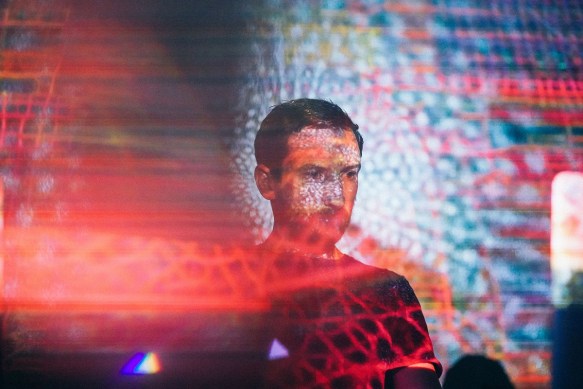
On record – Kronos Quartet & Terry Riley: Sun Rings (Nonesuch)

Written by Ben Hogwood

What’s the story?

The Kronos Quartet and Terry Riley have a rewarding history of collaboration covering more than 35 years. Sun Rings is surely one of the most emotive pieces in that history, and is certainly one of the most performed since its premiere in 2002. Here it receives a first full recording.

The work dates back to a commission from NASA, who were looking to mark the 25th anniversary of the launch of the Voyager 1 space probe. They specifically wanted to know if the Kronos could use the ‘space sounds’ collected from the Voyager crafts by physics professor Don Gurnett, who developed plasma wave instruments to receive them. On hearing the results Kronos leader David Harrington immediately contacted Terry Riley to get him on board.

While writing in New York, Riley was interrupted by the World Trade Center attacks of 11 September 2001. They inspired him to turn the focus of his work to peace.
This is the first recording of Sun Rings in its entirety, a chance for those in more than 50 countries who have already experienced it live to hear it in recorded form. Weighing in at nearly 80 minutes, it is a big work, expanding the quartet by adding San Francisco-based vocal ensemble Volti to two of the longest sections, Earth Whistlers and Prayer Central.

What’s the music like?

Fascinating, and timeless in a way that suggests the deep space into which the Voyagers continue to travel. There is a restless edge too, as it seeks the lasting peace Riley had in mind.

After the space sounds set the work in perspective, Hero Danger is a rewarding combination of the otherworldly electronics and the string quartet, with thoughtful lines suggesting a slightly worrisome contemplation. In response Bebopterismo carries urgent anxiety in its angular melody, the music put on edge.

Riley’s musical language is interesting, never purely ‘minimalist’ but repeating his more distinctive melodic ideas. There are rather beautiful dovetails between violin and viola halfway through Planet Elf Sindoori, but just when the ear thinks the sonorities of Sun Rings have been fully established, Earth Whistlers comes as quite a surprise.

It is here the choir are introduced, and this substantial movement makes much of their pure tones. It does perhaps distract from the subject at hand, replicating in a way the interruption of the September 11 attacks on Riley’s thoughts. When we train our gaze fully on Voyager again with The Electron Cyclotron Frequency Parlour there is an intriguing displacement between the close up quartet sound and atmospherics further away, but the focus has shifted.

Prayer Central, the most substantial movement, is soft and contemplative but becomes more animated and off the beat. Venus Upstream is full of anxiety, as though time is limited, its tension spiked by the alarm in the background. The spoken quote from Alice Walker to begin the last section is telling, asking, “Do you really know where you are at this point in time and space and in reality and existence?” It is just the right side of preaching, helped by some lovely cello playing from Sunny Yang.

Does it all work?

Most of the time, though with the caution that for maximum effect the piece is best heard in full and in a quieter place. Then the field recordings really come through to the front. Sun Rings is a substantial piece of work, though there are some natural dips in inspiration once the ideas of each section have been exposed. The use of the choir may split opinion too.

Is it recommended?

Yes. For those following the Kronos Quartet and Terry Riley it is an essential purchase, while providing further evidence of the positive effect astronomy can have as a creative stimulus, not to mention the endless drive for world peace. Between them Riley and the quartet have looked outside of the box to create something unique and, on this evidence, a major work that will last in spite of a few reservations.

Listen

Buy

You can get Sun Rings from the Nonesuch website

Enescu Festival 2019 – Peter Donohoe, Muntenia Philharmonic Orchestra Daniel Jinga: Bentoiu, Lipatti & Enescu Symphony no.5

Andrei Lazăr (tenor), Peter Donohoe (piano), Acoustic Chorus (women’s voices), Muntenia Philharmonic Orchestra / Daniel Jinga (above)

Trade Unions’ Cultural Centre, Târgoviște, Romania
Friday 13 September

Bentoiu Suite ‘Ardelenească’, Op.6 (1955)
Lipatti Concertino ‘en style classique’ Op.3 (1936)
Enescu (compl. Bentoiu) Symphony no.5 in D major (1941)

Review by Richard Whitehouse
Photo credit (Peter Donohoe) Sussie Ahlburg

A welcome facet of the Enescu Festival, the Concerts in Other Cities schedule could easily be overlooked owing to distances involved in this sizable country. That said, a day in Târgoviște is eminently feasible. Just 50 miles and a 90-minute train journey from Bucharest, it features several historic buildings (notably the Chindia Tower) that can be visited prior to an evening concert – on this occasion, by the Muntenia Philharmonic Orchestra with principal conductor Daniel Jinga. A quick online perusal suggests the majority of their concerts are of a popular or ‘crossover’ nature, making their playing in this programme of unfamiliar and technically demanding compositions the more impressive – not least in as unsparing an acoustic as the main hall of Trade Unions’ Cultural Centre (a scaled-down version of London’s Barbican).

It may be a relatively early work, but the Transylvanian Suite finds Pascal Bentoiu utilizing folk elements within the context of an already distinctive idiom. Each of its four movements draws on music from a region of Transylvania, and Jinga secured a lively but always flexible response from his musicians for a piece in the lineage of Bartók’s Dance Suite or Enescu’s Romanian Rhapsodies. Surely the most significant post-war Romanian symphonist, Bentoiu had from the start an innate command of the orchestra as was scintillatingly in evidence here.

Peter Donohoe (above) then took the stage for Dinu Lipatti’s Concertino in the Classical Style. Most of Lipatti’s larger-scale pieces are from the period before his playing career took precedence, with this Concertino typical in its synthesis of folk melodies with a neo-classical idiom closer to Hindemith or Ravel than Stravinsky. Modest in their dimensions these may be, Donohoe rendered its four movements with deft insouciance and poise, as heard to advantage against the modest instrumentation which abounds in contrapuntal ingenuity and harmonic finesse.

Impressed with the response of the players as of a near-capacity audience, Donohoe returned for substantial encores of Mozart’s Sonata in A minor then Ravel’s Alborada del grazioso – both of which feature in Lipatti’s select discography and given here with engaging vitality.

The second half brought a rare hearing for Enescu’s Fifth Symphony. Substantially drafted over summer 1941 but left in abeyance with its first movement largely orchestrated, it was Bentoiu who undertook a full realization during 1995-6 of what he considered the composer’s requiem for himself.

The first movement centres upon that endlessly evolving melody which was made possible by Enescu’s conception of heterophonic texture – the music afforded its momentum via acutely differentiated timbral layers that coalesce into an unlikely but audible sonata design. Its successor recalls the folk-inflected poignancy of the Suite Villageoise, now with a fatalistic undertow that comes to the fore in the ensuing Vivace which brings the only rapid music of the whole work. Essentially an adjunct to the finale, this culminates with the finale’s gaunt opening theme – the latter movement then unfolding as a funeral march whose valediction is transcended in the setting of Mihai Eminescu’s poem Mai am un singur dor -emerging not as a contrives apotheosis but an organic culmination of all that has gone before.

A combination of the dry ambience with acoustic enhancement meant that Andrei Lazăr was balanced too forwardly against the orchestra, yet he sang with great eloquence (not least his unaffected parlando in the closing lines) – the women’s voices of the Acoustic Chorus adding an ethereal halo to those closing stages. Jinga instilled real forward motion into the opening movement, then brought out the wistfulness and anguish of its two successors. Whether here or in the radiant aura of the finale, his instinctive feel for this piece could hardly be gainsaid.

Make no mistake, this was an enterprising programme in which the Muntenia players was on occasion hard-pressed but rose to its challenges with commitment and enthusiasm. Hopefully orchestra and conductor will secure themselves a concert in Bucharest at the 2021 edition of the Enescu Festival, yet anyone visiting the capital two years hence should certainly consider spending a day in Târgoviște – a compact and appealing city, while hardly an inappropriate place for a first live encounter with the last as well as most elusive of Enescu’s symphonies.

Further listening

You can listen to Pascal Bentoiu’s completion of Enescu’s Symphony no.5 in a CPO recording released in 2014. Marius Vlad is the tenor soloist, with the NDR Chor and Deutsche Radio Philharmonie Saarbrücken-Kaiserslautern conducted by Marius Vlad: