Enescu Festival 2019 – Michael Barenboim, Francesco Tristano, Sibiu Philharmonic Orchestra / Cristian Lupeş: Dediu, Basica, Widmann & Tristano

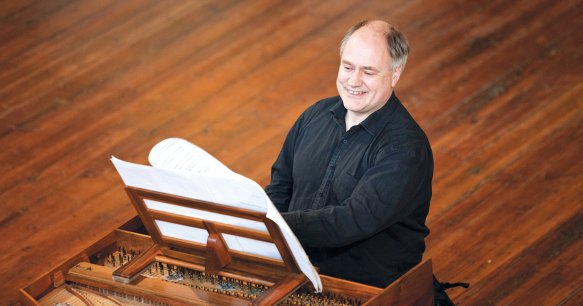
Michael Barenboim (violin), Francesco Tristano (piano), Sibiu Philharmonic Orchestra / Cristian Lupeş (above)

Radio Hall, Bucharest
Sunday 15th September 2019 (1pm)

Dediu Elegia minacciosa, Op.161 (2017)
Tristano Island Nation (2016)
Widmann Violin Concerto no.1 (2007)
Basica Concerto for Conductor and Orchestra (2019) [World premiere]

Review by Richard Whitehouse

Cristian Lupeş has enjoyed a long association with the Enescu Festival as both conductor and administrator, and now combines these roles in his activity with the Sibiu Philharmonic. This afternoon saw him directing the orchestra for a wide-ranging programme, given as part of the festival’s ‘Music of the 21st Century’ series, which demonstrated Lupeş’ ability to secure a committed response in music that makes few concessions either technically or interpretatively. The outcome was a programme which fascinated, provoked and frustrated to an equal extent.

Provocation was the watchword in Elegia minacciosa by Dan Dediu (b1967), the most prominent Romanian composer of his generation. Emerging almost imperceptibly, this short if eventful piece assumes an increasingly ominous demeanour – not least through allusions to Satie from solo piano (hence the subtitle con Gnossienne-Mandala), then the explosive interjections of bass drum heard from behind the auditorium. A piece whose poly-stylistic connotations could easily result in fragmentation and diffuseness here sustained powerful cumulative momentum through to its atmospheric yet unresolved conclusion. Lupeş evidently had the measure of this ‘threatening elegy’ as he secured playing of verve and commitment from his forces, leaving this listener keen to experience the piece again – albeit in an appreciably different context.

Not that hearing Island Nation was time wasted, though this concerto by Francesco Tristano (b1981) impressed more in the freely extemporised nature of its solo part and the composer’s magnetic realization of this than for intrinsic musical content. Most involving was its central movement The Islanders, with what sounded like an amplified metronome pulse providing the basis for an accumulation of orchestral activity – capped by piano playing channelled into a cadenza both pensive and, in its Parsifal allusion, equivocal. Otherwise, the energetic outer movements offered energy aplenty in their manufactured post-minimalist idiom, the orchestra matching the soloist (a distinctive exponent of Bach as of numerous 20th century composers) in immediacy of response. Great for first impressions, though not much of actual substance.

By comparison, what is now the First Violin Concerto by Jörg Widmann (b1973) is audibly within a lineage of mid-20th century European modernism – specifically that of Berg, whose own concerto proves a touchstone in many respects. Indeed, it seemed at times as though this latter work’s opening Andante had been extended into a whole work – such was the inward and self-communing nature of Widmann’s own piece, with its virtually continuous solo part heard against orchestral writing of exquisite textural nuance yet little rhythmic or expressive variety. The former had a formidable exponent in Michael Barenboim, playing with audible finesse and a frequently mesmeric concentration such as provided the ‘thread’ around which the orchestra wove a hardly less committed response – with Lupeş assured in his direction.

What to make of Concerto for Conductor and Orchestra by Constantin Basica (b1985)? This evidently arose from its composer’s investigating the interface of neurology and technology at Stanford University (and which interested readers can peruse at length on the composer’s website). The work, though, gave all the appearance of a spoof with its presentation of a lengthy film where composer and scientist discussed their researches, during which the orchestra was presided over by Lupeş – clad in an eco-friendly ‘Tarn-helm’ as his physical gestures were apparently transmuted into the real-time musical responses from his players. Trouble was, the sonic element was no more than a generalized backdrop that culminated rather too predictably with a brief burst of audience participation.

Whatever else, this was an entertaining way to round-off a demanding programme to which the audience responded with enthusiasm. Quite what it said about Basica’s music is another matter, but the composer played a central role in both performance and film while enacting the ‘mad scientist’ accordingly. Lupeş directed proceedings with aplomb: he clearly has an effective rapport with the Sibiu orchestra, and one looks forward to their appearance at this festival in 2021 – hopefully in an equally diverse though musically more consistent concert.

Further listening

You can hear more of the music of Jörg Widmann, including the Violin Concerto no.1, in first class performances on the disc below:

Meanwhile Francesco Tristano‘s most recent album Tokyo Stories can be heard here:
Wigmore Mondays – Benjamin Appl & Kristian Bezuidenhout: Schumann, Loewe, Mendelssohn & Zelter

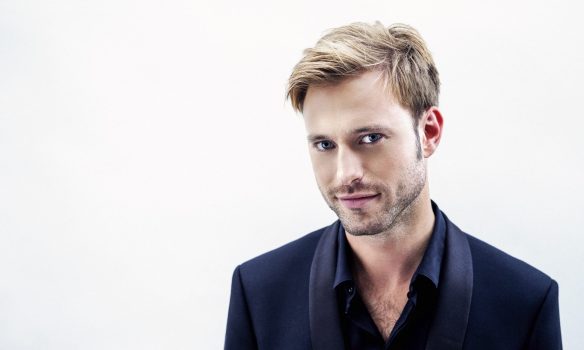
Benjamin Appl (baritone, above), Kristian Bezuidenhout (fortepiano, below)

Wigmore Hall, Monday 16 September 2019 (lunchtime)

You can listen to this concert on the BBC Sounds app here

Review and guide by Ben Hogwood

Lieder can be downright miserable sometimes, as Benjamin Appl acknowledged when thanking us for attending this recital of ‘jolly German music’, with which the Wigmore Hall opened their 2019-20 season of BBC Radio 3 Lunchtime Concerts.

Appl, a baritone of ever-growing reputation, was performing with Kristian Bezuidenhout, who played a Blüthner fortepiano dating back to Leipzig in 1856 – the year of Schumann’s death. The instrument, an attractive rosewood colour, proved the ideal foil for an interesting programme looking at the Lied in Germany around the first half of the 19th century. In an hour we covered some little known ground from the output of Schumann himself, complemented by settings by Mendelssohn, Zelter and Loewe.

The pairing began with three later Robert Schumann songs, all based around the character Harper, from Goethe’s novel Wilhelm Meister’s Apprenticeship. Schumann set the songs in 1849, the centenary of the poet’s birth. Appl stood tall and upright in front of the piano, communicating directly with the audience through his eyes as well as his voice. Wer nie sein Brot mit Tränen ass (Who never ate his bread in tears) was a sombre note on which to start, though the pain eased a little before the end, Bezuidenhout’s spread chords giving an indication of the fortepiano’s rounded sound. Wer sich der Einsamkeit ergibt (Who gives himself to loneliness) had a penetrating delivery from the singer, with a dark and unsettled postlude from the piano, while An die Türen will ich schleichen (From door to door will I steal) had a slightly lighter touch.

There followed three songs by Mendelssohn setting the poetry of Nikolaus Lenau. The short song An die Entfernte (To the distant beloved) danced lightly and was nicely phrased, before the nocturnal Schilflied (Reed song) was distracted and occasionally lost in thought. Frühlingslied (Spring song) emphatically blew away the cobwebs, the positive energy of the new season blowing the dark thoughts away.

The music of Carl Friedrich Zelter, a good friend of Goethe, is not often heard in the concert hall these days. He had his friend’s blessing however, the author approving of his direct methods of word setting, without too much in the way of musical dressing. His three Harfenspieler are bold settings and Appl sung them with clarity here, hitting the high notes of the second song with impressive intensity. Bezuidenhout was subtle in his complementary melodic lines on the fortepiano.

Contrasting with these were the dramatic songs of Carl Loewe. Herr Oluf is a self-contained Danish legend against the dangers of meeting Elves, and was performed with no quarter given, a terrific introduction from Bezuidenhout setting the energy level high. On occasion the singer has quite an unusual melodic profile, but this was straightforward for Appl’s vivid interpretation. The mischievous Hinkende Jamben was gone in an instant, with its mannerisms and lisps, before an expansive introduction to Tom der Reimer brought a grand tone from the singer. In a legend comparable in profile to Herr Oluf, it finished with brightly ringing bells, courtesy of Bezuidenhout’s picture painting.

When Schumann made his six settings of Lenau’s verse, he added a short Requiem in the mistaken knowledge that the poet had died. However when the day of the first performance arrived in 1850, news reached the gathering that Lenau had only just passed away, making the composer’s tribute strangely prophetic.

It is a dark cycle, reflecting perhaps the struggles of both men with mental illness – but illustrating at the same time the inner strength that music and poetry gave them. The steely Lied eines Schmiedes (Blacksmith’s Song) found Appl gathering himself with impressive projection, before the mood and heart softened a little for a languid account of Meine Rose (My Rose). Meanwhile Kommen und Scheiden (Meeting and Parting) had a devastating pay-off in the form of the emphasised last word, where the ‘last dream of my youth was taking leave of me’

Die Sennin (The Cowgirl) began with flowing piano, which led to Appl’s ringing delivery of ‘spring’s first song in the trees’, one of the recital’s most memorable moments. From there the cycle took a darker tone, Bezuidenhout breeding anxiety with the restless fortepiano line of Einsamkeit (Solitude), where Appl’s vocal was bold, and then to Der schwere Abend (The Sultry Evening) which was darker still, with a cold final line ‘to wish us both dead’. Thankfully the Requiem itself – a short Latin text – offered consolation and rest, as well as a rousing central section looking to the heavens.

This was a magnificent recital, with grace and power in equal measure from both performers, and the sound of the fortepiano a real treat in complement to Appl’s caramel tone. As a bonus we heard Mendelssohn’s Auf Flügeln des Gesanges (On Wings of Song), finishing in celebratory mood.

Repertoire

Benjamin Appl and Kristian Bezuidenhout performed the following songs (with timings on the BBC Sounds broadcast in brackets):

Schumann Wer sich der Einsamkeit ergibt Op.98a/6 (1:54); Wer nie sein Brot mit Tränen ass Op.98a/4 (4:55); An die Türen will ich schleichen Op.98a/8 (all 1849)
Mendelssohn An die Entfernte Op.71/3 (1842) (9:56); Schilflied Op.71/4 (1832 (11:17); Frühlingslied Op.47/3 (14:08) 1839)
Zelter Harfenspieler I-III (18:03)
Loewe Herr Oluf Op.2/2 (24:18) Hinkende Jamben (29:51); Tom der Reimer (30:35)
Schumann 6 Gedichte von Nikolaus Lenau & Requiem, Op.90 (37:53). Individual songs: Lied eines Schmiedes (37:53), Meine Rose (39:05), Kommen und Scheiden (42:52), Die Sennin Schöne (44:00), Einsamkeit (46:08), Der schwere Abend (49:11), Requiem (50:49)

Encore – Mendelssohn Auf Flügeln des Gesanges Op.34/2 (56:07)

Further listening

Benjamin Appl has not yet recorded any of the repertoire in this concert, save the encore, but suitable recorded versions can be heard on this Spotify playlist:

Ask the Audience at the BBC Proms – Chris Tams on the Aurora Orchestra’s performance of Berlioz’s Symphonie Fantastique

For another in Arcana’s Ask The Audience series we took Chris Tams (above) to see the Aurora Orchestra give a dramatized production of Symphonie Fantastique by Hector Berlioz. Chris talks though his musical experiences as a plugger before joining the BPI, where he works as Director of Independent Member Services and International.

Mathew Baynton (actor), Jane Mitchell (stage director / scriptwriter), James Bonas (stage director), Kate Wicks (production designer), Will Reynolds (consultant designer), Cydney Uffindell-Phillips (movement consultant)

Berlioz Symphonie fantastique Op.14 (1830)

Orchestral theatre staging; script by Jane Mitchell;
excerpts from Berlioz’s Mémoires translated by David Cairns

Royal Albert Hall, Thursday 12 September 2019 (first of two evening performances)

Chris, how would you describe your musical upbringing?

I had a family that weren’t particularly musical, but they were always encouraging. I grew up in a large family, with three sisters and a brother, and we were always encouraged to follow what we wanted to do. I remember my dad buying a record player when I was about nine, and buying an Elvis Presley album and a Spinners album. I remember pathologically hating them for ever and ever! I got quite in to electronic music very early on, I remember liking Vangelis when I was about 11 or 12 years old. I went to junior school and wasn’t musical at all, but when I went to grammar school they had a choir and I made the mistake of singing properly on the first music lesson so I got roped into the choir for two years! Then my voice broke and I went from a soprano right down to a double, double bass, so they didn’t have much say after that. I played the violin as a child and hated it, learned to play the cornet and got to hate that.

I quite liked music as a subject though, and I was one of the first people in the country to take GCSE Music, which seemed to move away from just learning composers’ birth dates and death dates, much to our music teacher’s disdain. Unfortunately I still had to play the cornet for a bit, which I still didn’t like, but I got a greater appreciation of music and the science behind it. When I got to 14 or 15 I suddenly discovered there was a world of gigs out there, and I started writing and talking about them. Getting into gigs for free was a big thing in the 1980s in Yorkshire. I used to frequent a pub called the Duchess of York in Leeds, and I used to write the most hamfisted fanzine you could ever imagine, using a Methodist church rotary printer to print out a single A4 sheet. No copies of that survive to this day but it mostly consisted of me rambling about how much I loved Simple Minds and hated U2. I went to university and discovered I could put on gigs and club nights, using other peoples’ money which was always a good thing!

I put on gigs in independent venues – I remember getting Radiohead a gig when they were supporting the Frank and Walters, I gave Oasis a gig, and a very early form of Blur. My biggest gig at university was Rolf Harris, and it was so big we had three people have to go to hospital with crush injuries! All of this set me up for working in the industry afterwards.

Could you name three musical acts you love, and why you love them?

Firstly I would say Simple Minds. I’ve been a fan since I was about ten years old I think. I fell in love with New Gold Dream when I was in my teens and have loved them ever since. I fell out with them a bit in the late 1990s but it’s all back again now and they are the best band I know.

There was also a record I remember called Perfume by a band called Paris Angels, and it was one of the first records I ever heard that was an Indie dance record. I hated dance music up to that point, and thought it was all rubbish. I sort of liked Steve ‘Silk’ Hurley’s ‘Jack Your Body’ when it came out but it got annoying after a while. Perfume really opened my mind to the idea of using music across genres, it really blew me away. I listen to it now and it’s still an amazing record, one of the first progressive house records. You can really see where that movement came from.

Thirdly I would say The Prodigy. I’m very lucky that early on in my career I worked with them, pretty much from the start of the second part of their career. They had already had a number one record with Charly, and I started with them around 1992-93. I got to work on The Prodigy Experience and Music For The Jilted Generation, and that was just mind blowing. Kids who were ravers loved it, and kids who were into Led Zeppelin liked it, the out and out rockers loved it too.

What has been your experience of classical music so far?

I’ve worked on classical music a lot. I used to work for a distribution company that did some classical music, and I was always very sheepish when they came across my desk. I was always aware that I knew very little about the music and about them, but I always found that the classical people I worked with were always really welcoming. I still claim to know nothing about classical music and have never pretended to, but I like good music and can appreciate all sorts of different types. My thoughts are that I’ve heard so many different types, it’s not just the same 10-15 composers, there is a lot more variety.

When you look at films, games and TV I’m amazed how much classical music is used there without us even noticing! The games especially use a huge amount of it, and there is not a film goes by without one or two bits showing up. There is some weird shit for sure – and my particular highlight was going to a classical event in Vienna some years ago and witnessing four women shrieking, that was a particular thing! I always remember meeting Gabriel Prokofiev, who who puts classical music in line with dance music and described his own music as ‘challenging’ once which I thought was interesting. I really liked what he did where he would take classical music and make dance music out of it, but without the use of computers, he would use the beats that are there. I thought that was really clever and it was really listenable and open. I thought it was amazing, and still do now!

How did you rate your first Proms experience?

I really enjoyed it! It helped that the conductor came out and explained a lot of what was going to happen, otherwise I would have been at sea trying to work out what was happening. I thought he made it really accessible. I didn’t get any sense of elitism or snobbery, and in fact the woman who was next to me pointed out to her partner that the last time she was at the Royal Albert Hall she saw Nine Inch Nails, which I thought was great. You couldn’t get two more different artists to watch in the same venue!

It helped that the concert was short, but I think it was really accessible and interesting. I quite liked the orchestra, they weren’t stuffy. They were quite young, and standing up which I thought was interesting. There was an audiovisual element that I really liked as well. In terms of popping my Proms cherry I thought it was a really good one to go to!

What might you improve about the experience?

I don’t think I’ve got enough experience to change anything about it! It is quite intimidating if you haven’t been there, because you make assumptions about it. None of those assumptions are correct in any way, shape or form. I went dressed in a shirt, jeans and trainers – and so did most of the other people there did too! I thought most people would be dressed in dinner suits, but not at all. It was quite a mixed age crowd, a lot of young and old there. The thing I loved too was that the people there were really experiencing it, they weren’t looking through a mobile phone at it. I couldn’t think of anything to change on that one experience.

Would you go again?

Definitely. I thought it was a really good introduction to a British institution and would definitely go again. The range of concerts is absolutely awesome, and I think it’s a jewel in London’s crown that a lot of people are missing out on!

For Arcana’s thoughts on the Aurora Orchestra Prom of Berlioz’s Symphonie Fantastique, click here

Arcana at the Proms – Prom 72: Aurora Orchestra & Nicholas Collon – Berlioz: Symphonie fantastique

Prom 72: Aurora Orchestra / Nicholas Collon

Mathew Baynton (actor), Jane Mitchell (stage director / scriptwriter), James Bonas (stage director), Kate Wicks (production designer), Will Reynolds (consultant designer), Cydney Uffindell-Phillips (movement consultant)

Berlioz Symphonie fantastique Op.14 (1830)

Orchestral theatre staging; script by Jane Mitchell;
excerpts from Berlioz’s Mémoires translated by David Cairns

Royal Albert Hall, Thursday 12 September 2019 (first of two evening performances)

Reviewed by Ben Hogwood
Photography credits Mark Allan

You can listen to this Prom on BBC Sounds here

One of the aims of the Proms must surely be to attract new audiences to classical music, while enhancing the experience of the existing crowd. Both those aims were met with room to spare by this educational and often dramatic ‘orchestral theatre staging’ of Hector Berlioz’s Symphonie Fantastique, given by Mathew Baynton, the Aurora Orchestra and conductor Nicholas Collon.

As in previous seasons the Aurora were playing from memory, a great achievement when you consider at least 70 performers had to memorize not just the notes but the directions on how to shape them. Given the composer’s scrupulous markings in this area it is up for debate as to how many of these the performers would have been able to commit to memory, but judging by their performance – and Collon’s conducting – the answer would seem to have been a great deal.

It is worth remembering that Berlioz – commemorated this year in the 150th anniversary of his death – wrote the Symphonie Fantastique in 1830. Coming just three years after the death of Beethoven and Schubert, that is a staggering achievement and shifting of musical parameters, even though Collon’s assertion that it was the first ‘programmatic’ symphony could be called into question alongside Beethoven’s sixth, the Pastoral.

That is a quibble for another day, however, for this was a brilliantly weighted blend of drama, history and music. Mathew Baynton played Hector Berlioz himself, communicating the story of the composer’s first encounter with Harriet Smithson, the woman who initially spurned his advances and was the muse for the Symphonie fantastique, but who eventually became his first wife. The story was told with an attractive arrangement by Iain Farrington of the composer’s La belle voyageuse from his Neuf Mélodies Op.2, played by soloists from the orchestra.

It helped that Baynton even resembled the composer slightly, and his dialogue with Collon examined the moods and innovations of Berlioz along with the trials and tribulations of his spurned love. With this background established they examined some of the main themes of the piece and its innovations with orchestration, the audience effectively eavesdropping on a conversation that revolved around Berlioz’s ‘Idée fixe’. This was the main theme of the symphony, its music helpfully projected onto behind the players, so while we heard it in example form from the violins we were able to witness the close attention the composer paid to its phrasing and shaping.

The performance itself was helpfully pointed and often dramatically lit. The innovative orchestration was also spotlit, the four harps placed front of stage for the second movement, Un Bal, in the way Berlioz suggested. This movement ended with a wonderful effect from three glitterballs, held by the percussionists, bringing a starry night to the Royal Albert Hall. The woodwind were also brought forward at opportune moments, with the bassoons a threatening presence at the start of the March to the Scaffold.

In a very striking third movement, Scène aux champs, Patrick Flanaghan projected the shepherd’s theme out over the arena from his cor anglais, the answering call from fellow oboist John Roberts coming back to him from the stalls. This proved incredibly effective; even more so when the theme recurred at the end of the movement. With no answer forthcoming from the oboe, there sounded ominous distant thunder from the timpani.

This led us into the March to the Scaffold, where the brass – with more than a nod to historically informed performances – were superb. Yet the keenest drama was saved for last of all, each player donning a mask for the Witches’ Sabbath.

This final denouement showed the composer at his darkest and most vulnerable, the bells delivering the telling Dies irae from the gallery in another masterstroke of placement. With everyone in masks and the lights a dull red the Tolkien parallels were irresistible, especially when the percussionists were striking their instruments like orcs going to war. It would have been scary for any kids in the audience, for sure!

The planning for this occasion was extremely effective, the experience breathing new life into the Symphonie Fantastique for those who have seen it on several occasions, but also enticing new concertgoers through a much more audience-friendly approach, as you will see in our own Ask The Audience feature to come on Arcana.

It was a fitting way to complete the Proms commemorations of the Berlioz anniversary, with one of his most revolutionary scores made to sound like the ink was still drying on his page.

Arcana at the Proms – Prom 71: Bach Night – Dunedin Consort & John Butt perform the four Orchestral Suites and commissioned ‘responses’

Prom 71: Dunedin Consort / John Butt (harpsichord)

J.S. Bach Orchestral Suite no.4 in D major BWV1069 (c1730) (from dfgd on the broadcast)
Nico Muhly Tambourin (2019) (22:14 – 25:28)
J.S. Bach Orchestral Suite no.1 in C major BWV1066 (c1725) (28:12)
Stevie Wishart The Last Dance? A Baroque Tango (2019) (49:28 – 52:37)
Ailie Robertson Chaconne (2019) (1:19:50)
J.S. Bach Orchestral Suite no.2 in B minor BWV1067 (c 1738-9) (1:23:38
Stuart MacRae Courante (2019)
J.S. Bach Orchestral Suite no.3 in D major BWV1068 (c1730)

Royal Albert Hall, Wednesday 11 September 2019

Reviewed by Ben Hogwood

You can listen to this Prom on BBC Sounds here

A joyous Prom.

One of Sir Henry Wood’s many inventions at the Proms was to instigate ‘composer nights’, where the programme revolved around the output of a composer such as Wagner, Beethoven, the Strauss family, or Johann Sebastian Bach.

This particular Bach night came with a neat twist – the four orchestral suites, grouped together, but each complemented with a new commission receiving its world premiere. The idea of composers writing new music for a group that plays on the instruments of Bach’s time is not necessarily new but it is an intriguing one, and led to four very varied responses. What these short asides ultimately did, however, was make the audience even more in thrall to the music of Johann Sebastian.

The four Orchestral Suites do not get as much air or auditorium time as the six Brandenburg Concertos, but there is nothing to mark them out as inferior works. They make a very satisfying whole, especially when programmed as here by John Butt and the Dunedin Consort – the fourth suite placed first, so that we went through a satisfying key cycle and heard the most affirmative music at the end.

Butt (above) is a Bach specialist, living and breathing the composer’s music. He has scholarly intellect on his side but balances that with enthusiasm in spades. For this concert his energy rubbed off on the audience, and in several faster numbers he literally could not wait to get his hands busy on the harpsichord. Like all bar the cellists and basses he stood to perform, the Dunedin Consort’s freedom of movement translating nicely into their interpretations of Bach’s dance movements, which had a spring in their step.

The last two numbered suites use brass and timpani, so we began with something approaching a fanfare. It took a couple of bars for the Dunedin Consort, numbering nearly 40, to hit their stride, but from then on their playing filled the Royal Albert Hall with the expanse of the fourth suite’s Ouverture, which had a ceremonial air before breaking into a bustling faster tempo. The four dances that followed were fleet of foot, Butt enjoying the humour of the perky Bourrée (10:40), then a stately Gavotte (13:25), Menuet (15:23) and Réjouissance (19:33), at which point brass and drums returned with a flourish.

Nico Muhly’s Tambourin followed without a break, utilising the same grand forces but expanding the harmonic world considerably. As a dance it was syncopated beyond danceable rhythms, starting powerfully but dissolving into D major at the end, dressed by flecks of Stephen Farr’s harpsichord.

The Orchestral Suite no.1 is a rich tapestry of dance movements prefaced by an expansive overture. The most expansive work of the four, its French ‘ouverture’ was elegantly played and dressed with expansive bass notes before moving to a lively fugue, oboes really coming into their own. The dances, again all of French derivation, were light on their feet, propelled by nifty harpsichord accompaniment from Farr and Butt centre stage. They were topped by a bustling Bourrée, its figures flying around the violin section before the complement, a darker, minor key central section for woodwind. With harpsichords silent, this was poignant and beautifully played.

Stevie Wishart complemented the first suite with a striking tribute to the endangered Argentine Hooded Grebe, whose call matched her music and could be heard over the Royal Albert Hall speakers during a witty and rather macabre tango. Once heard the call became ever more poignant, the instruments thrown off course and off pitch. It was effective, haunting and thought provoking.

Ailie Robertson’s Chaconne opened the second half, a reflection on Scottish dance music. A slow and atmospheric piece, it began with eerie held notes in the upper violins which really came into its own when the flutes joined, like Wishart evoking a bird in imagery, though this time a slower, bigger one like an albatross.

For the Orchestral Suite no.2 Butt used reduced string forces and three flutes, headed by the excellent Katy Bircher. The colours of this work are appreciably darker, and the leaner string sound complemented the consoling flutes. After a solemn start to the Ouverture came a lively fast section, then the flutes led us in a sprightly Rondeau, with a quicksilver account of the famous Badinerie to finish. In between there were solemn, more processional numbers – a mournful Sarabande picked up by a quick Bourrée, resolute Polonaise and gallant Menuet.

Stuart MacRae’s Courante was the final commission, an upbeat to the final suite that went off at quite a pace, Stephen Farr’s rattling harpsichord pursued by the orchestra and ultimately caught, before the violins became ‘it’ and took off again, the piece diminishing to a whisper at the end.

The Courante was a cheeky upbeat to a truly joyous performance of Bach’s Orchestral Suite no.3. Trumpets were bright and timpani on point, Stephen Burke tapering his strokes to use angle rather than force to create the sound. The celebrated Air ‘on the G String’ was light on its feet and affectionate without overindulging, while the Gavotte, Bourrée and Gigue had the biggest smile on their faces, Bach’s counterpoint as inevitable and toe tapping as ever. The Gigue was especially upbeat, with rolling timpani and celebratory trumpets.

It is incredible to think that only last year Creative Scotland were proposing to cease funding the Dunedin Consort, a decision that was thankfully overturned. This night at the Royal Albert Hall illustrated beyond doubt the collective, creative bloom the group are experiencing, and it was a privilege to be a part of their Bach night.

Further Listening

John Butt and the Dunedin Consort have not yet recorded the Bach suites, but they did recently release an account of the wonderful violin concertos which you can sample below:

Bach Violin concertos with Cecilia Bernardini from Dunedin Consort on Vimeo.

For a choice recording of the suites, a new disc from the Freiburger Barockorchester is recommended here: