Live review – English Symphony Orchestra / Kenneth Woods: Matthew Taylor Symphony no.5, Mendelssohn & Beethoven

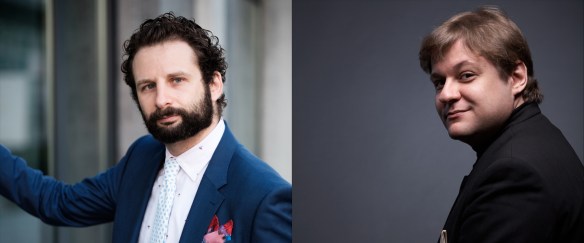
Pavel Šporcl (violin), English Symphony Orchestra / Kenneth Woods (above)

Cadogan Hall, London
Sunday 9 June 2019 (3pm)

Taylor Symphony no.5 Op.59 (2018)
Mendelssohn Violin Concerto in E minor Op.64 (1844)
Beethoven Symphony no.5 in C minor Op.67 (1808)

Written by Richard Whitehouse, who also introduced the concert with Matthew from the Cadogan Hall platform

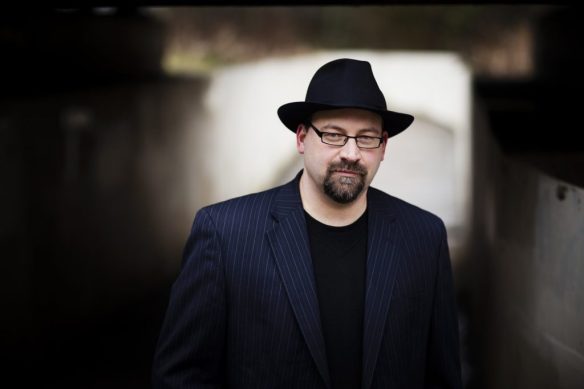
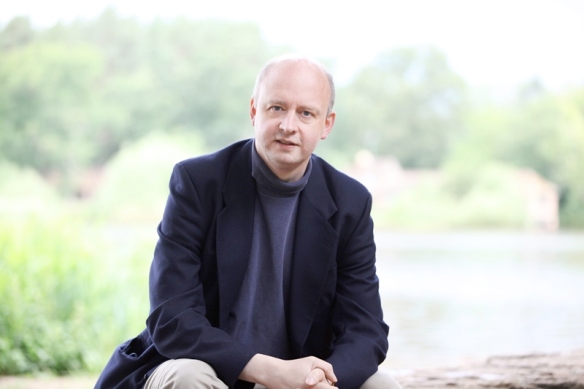
This debut at Cadogan Hall by the English Symphony Orchestra was also the third in its 21st Century Symphony Project, having previously included the Third by Philip Sawyers and the Ninth from David Matthews. This afternoon brought the Fifth Symphony of Matthew Taylor (below).
Symphonism goes back to the start of Taylor’s composing career, his Sinfonia Brevis having been completed at just 21. The present work is only his second such piece in four movements, but here the formal and expressive emphasis feels very different. Indeed, the opening Allegro is unprecedented in his output for its tensile volatility (not unlike that of Beethoven’s Serioso Quartet), its driving impetus and explosive culmination creating a momentum pointedly left unfulfilled by the ensuing intermezzi: the first (a tribute to composer and teacher Cy Lloyd) as terse and equivocal as the second (a tribute to Angela Simpson, wife of composer Robert Simpson) is poised and wistful. It remains for the final Adagio (a tribute to Taylor’s mother Brigid) to secure that eloquent apotheosis towards which the whole work had been headed.

The ESO responded with playing of sustained emotional power such as carried through this movement’s plangent twin climaxes and on to its resigned coda. Not that there was any lack of commitment earlier – Kenneth Woods having set a suitably headlong tempo for the first movement as left his players unfazed, then characterizing the central intermezzi with regard for their subtly different auras. A fine rendering of a piece which amply reinforces Taylor’s standing as a symphonist of stature. Hopefully further hearings will not be long in coming.
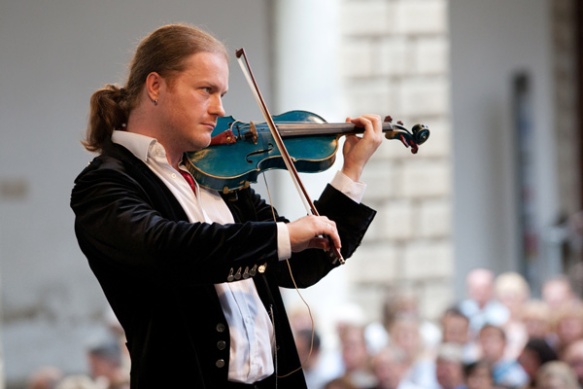
The rest of this concert consisted of standard repertoire, but there was nothing routine about the performances. Pavel Šporcl (above) was soloist in Mendelssohn’s Violin Concerto, notable for the trenchancy and forward impetus of its opening movement – not least the structurally crucial cadenza placed between development and reprise, then the alternately easeful and searching Andante. The finale had no lack of wit or insouciance – Šporcl duly returning for a dynamic account of the Fifth Caprice by Paganini, its coruscating passagework delivered with aplomb.

After the interval, Beethoven’s Fifth Symphony received a reading as attentive to the smaller detail as to its overall trajectory. The initial Allegro was incisive though never inflexible, not least in delineating the myriad variants on its indelible four-note ‘motto’, and if the Andante evinced a marginal lack of grandeur at its relatively swift tempo, those teasing asides which open-out its expressive course were deftly underlined.

Using the Clive Brown edition of this piece, Woods (rightly) opted to include the second-time repeat of scherzo and trio – giving it an enhanced presence as ideally complemented the finale’s ensuing majesty. There was little to fault in the latter’s uninhibited course: whether, or not, this edition places greater emphasis on the piccolo part, the clarity with which it emerged itself proved something of a revelation.

A memorable conclusion to a concert which also underlined the importance of this project in bringing together past and present of the symphony as a genre of ongoing and vital relevance. Next year sees a third instalment in the guise of the First Symphony by James Francis Brown.

Further listening

Toccata Classics have previously issued an album of Matthew Taylor orchestral music, recorded with the BBC Symphony Orchestra and Garry Walker. The composer’s Second Symphony and Viola Concerto can be heard here:

Pavel Šporcl can be heard in violin concertos by Richard Strauss and Korngold on the album below:

For more information on Matthew Taylor, visit the composer’s website Meanwhile Kenneth Woods has a detailed website of writing and engagements here, and you can read more about the English Symphony Orchestra here
Wigmore Mondays – Ilya Gringolts & Peter Laul: Stravinsky for violin and piano

Ilya Gringolts (violin), Peter Laul (piano)

Stravinsky
Suite italienne (1925) (1:17-16:57 on the broadcast link below)
Three movements from The Firebird (1926-32) (19:18-29:58)
Ballade from The Fairy’s Kiss (1947) (31:58-35:15)
Divertimento from The Fairy’s Kiss (1934) (35:22-55:21)

Wigmore Hall, London
Monday 3 June 2019

To hear the BBC broadcast through BBC Sounds, please follow this link

Commentary and Review by Ben Hogwood

Stravinsky had a chequered relationship with stringed instruments, once describing them as ‘much too evocative’ in tone, but ultimately writing for them with the same level of skill he applied to the rest of the orchestra. Most of his writing for the violin in a solo capacity had Samuel Dushkin in mind.

Dushkin was introduced to Stravinsky by his German publisher in 1930, and Stravinsky wrote a concerto for him, before turning to smaller scale works for the pair to tour together. Many of these are smaller pieces taking stage works as their inspiration – and this BBC Radio 3 Lunchtime Concert from the Wigmore Hall programmed music from three such works.

The Suite italienne actually predates the Dushkin collaborations. To give it its full title, the Suite d’apres des themes, fragments et morceaux de Giambatista Pergolesi, brings together an Introduction and four dance movements from the Pulcinella ballet, retaining their lyricism but adding a certain spikiness in the new format.

Ilya Gringolts and Peter Laul play them with great character here, from the breezy and catchy Introduzione (1:17), through the Serenata (3:26), to a Tarantella in a hurry (6:16). While the Introduzione sees Gringolts still finding his feet, the Gavotte con due variazioni (8:22) is really nicely done, as are the Scherzino () and Minetto e finale (12:28), where Stravinsky can’t resist the odd sardonic touch.

The three movements from The Firebird are more substantial, beginning with a Prélude et ronde des princesses (19:18) which has a cold shiver in tale. The Berceuse () has a thick, heady atmosphere, while the Scherzo (27:32) feels like it has to be somewhere in a hurry and is a thrilling chase between the two instruments, brilliantly played.

The Divertimento known as The Fairy’s Kiss was Stravinsky’s homage to his biggest Russian inspiration, Tchaikovsky. It is an exciting and winsome orchestral ballet, one of his more romantic creations based as it is on a selection of the senior composer’s songs and piano pieces. The arrangements here work well in the more intimate confines, and again Gringolts and Laul have their measure. The Ballade (31:58) is at times languid but then quite restless, while the Sinfonia (35:22) employs typical Stravinsky textures of bare octaves occasionally audible.

Otherwise the violin writing is perhaps surprisingly ardent, then we progress to a busy section of brusque statements before returning to the slower music. The Danse suisses have some fun figures and exchanges, Stravinsky unable to resist a toe-tapping march with a rustic feel (41:20) before the lively Scherzo (46:01). The searching melodies of the Pas de deux (48:57) lead to a feathery scherzo (52:08) then a brisk Coda, the rustic mood returning (53:19)

BBC Radio 3 went off air before there was a chance for listeners to hear the bracing encore from Gringolts and Laul. Their Danse russe, arranged from Petrushka, was a fitting end to a very well executed recital.

Further reading and listening

Ilya Gringolts and Peter Laul have completed two discs of the complete Stravinsky works for violin and piano. The selection making up this concert and its encore can be heard on this Spotify playlist:

Meanwhile the below collection brings together Stravinsky’s Violin Concerto and also the three ballets from which the music for this concert derives, The Firebird, Pulcinella and The Fairy’s Kiss:

Live review – CBSO / Mirga Gražinytė-Tyla: Honegger, Ravel & Brahms Second Symphony

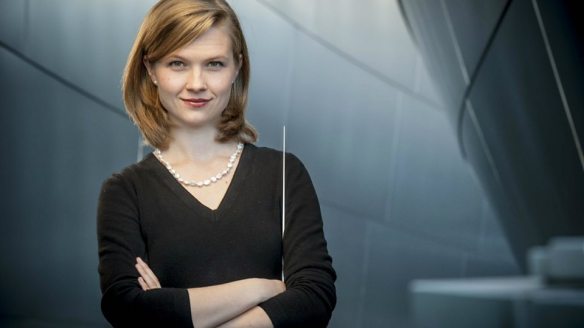
City of Birmingham Symphony OrchestraMirga Gražinytė-Tyla (above)

Symphony Hall, Birmingham
Friday 31 May 2019

Honegger Pastorale d’été (1920)
Ravel Introduction and Allegro (1905); Le tombeau de Couperin (1919)
Brahms Symphony no.2 in D major Op.73 (1877)

Written by Richard Whitehouse

Back from their extensive European tour, the City of Birmingham Symphony Orchestra and their music director Mirga Gražinytė-Tyla returned to home-base with this arresting programme of early 20th-century French music and a classic of the Austro-German symphonic repertoire.

Most understated among curtain-raisers, Honegger’s Pastorale d’été is always a pleasure to encounter and this account had its measure – whether in the evanescent outer sections with their intangible aura, or livelier central episode with its fleeting allusions to Swiss folksong. Gražinytė-Tyla has spoken of her desire to investigate composers ‘off the beaten track’ and Honegger would seem a plausible candidate; such works as the capricious Cello Concerto or anguished Fifth Symphony fairly crying out for reassessment and considered advocacy.

Ravel’s Introduction and Allegro enabled the conductor to take a break while a seven-strong ensemble from the CBSO gave this perfect marriage of formal lucidity and expressive poise; at its most perceptive in the wistful opening music that returns even more hauntingly towards mid-point, with a harp cadenza that Katherine Thomas rendered precisely while delicately. It duly prepared for Le tombeau de Couperin, Ravel’s highly oblique response to the enveloping tragedy of the First World War in an account that defined more fully than usual the character of its middle movements. The astringent irony of the Forlane became more so at Gražinytė-Tyla’s swift tempo, with the Menuet allowed space for its pathos and tenderness to register. If the Prélude and Rigaudon left less of an impression, there was little to fault with either.

After the interval, a performance of Brahms’s Second Symphony that went much of the way towards conveying those passing yet always tangible ambiguities which offset any general equanimity of mood. The opening movement felt not quite the sum of its parts – Gražinytė-Tyla tending to rush headlong into climaxes, and with a curiously indecisive transition into the development as suggested she might still be pondering over that repeat of the exposition. Yet such as the stark transition into the reprise (those granitic harmonies of trombones and tuba really hitting home) then the suffused eloquence of the coda were perfectly achieved, as was the slow movement which here emerged as a more complex amalgam of agitation and resignation than is often the case, not least in those fatalistic intimations towards the close.

Next came a winsome take on the Intermezzo, its pert alternations of elegance and animation deftly while never too knowingly rendered; after which, the finale had energy to spare, if not at the expense of that ambivalence as is made explicit with the mysterious transition into the reprise (a passage of which Mahler could hardly have been unaware). From here Gražinytė-Tyla steered a secure course through to the closing peroration, its exhilaration never risking bombast when emphatic brass chords drove home the prevailing tonality in bracing fashion.

An absorbing performance, then, bolstered by some consistently fine playing from the CBSO. Gražinytė-Tyla returns one final time this season when, in the middle of June, she tackles a piece that has become synonymous with this orchestra – Mahler’s Resurrection Symphony.

Further listening

You can hear a playlist of the pieces heard in this concert on Spotify below – none of which appear to be available in recordings made by the CBSO as yet:

Live review – English Music Festival opening night: BBC Concert Orchestra & Martin Yates play Robin Milford, Stanford, Vaughan Williams & Arnold

Sergey Livitin (violin), BBC Concert Orchestra / Martin Yates

Dorchester Abbey, Dorchester-on-Thames
Friday 24 May 2019

Berners Portsmouth Point (1918) [World premiere]
Arnold Serenade Op.26 (1950)
Stanford Violin Concerto in D major (1875) [First public performance]
Vaughan Williams orch. Yates The Blue Bird (1913) [First public performance]
Delius A Song before Sunrise (1918)
Milford Symphony no.2 Op.34 (1933) [World premiere]

Written by Richard Whitehouse
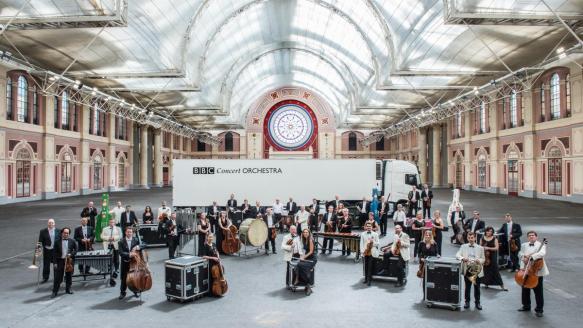
Picture of BBC Concert Orchestra (c) Sim Canetty-Clarke

The 13th English Music Festival got off to an impressive start this evening, with Martin Yates presiding over the BBC Concert Orchestra for a substantial and wide-ranging programme that brought together the hitherto unknown and the relatively familiar in appropriate EMF fashion.

Who else would provide a platform for a first public performance of the Violin Concerto in D major that Stanford wrote at Leipzig in his mid-20s but which, despite the seeming approval of Joachim, remained unheard before being recorded two years ago. Admittedly the first movement rather outstays its welcome, the themes lacking memorability and a solo part not ideally contrasted with the orchestra, but the slow Intermezzo has an appealing poise; its cadenza artfully made an extended transition into the final Rondo (a procedure likely taken over from Wieniawski’s Second Concerto – the model in several respects), its winsome second theme brought back as a lingering coda prior to the closing flourish. Sergey Levitin proved an able and sympathetic soloist in a piece which, whatever its stylistic limitations, was certainly worth rehabilitating.

As too was the incidental music Vaughan Williams devised for Maurice Maeterlinck’s play The Blue Bird, idiomatically orchestrated from the piano score by Yates. This is essentially a ballet (or rather mime) sequence for the end of the first act, its series of thematically related dances striking a fantastical note such as the composer tellingly (if unexpectedly?) conveys. It may well have proved too ambitious in its original context though makes for a lively and imaginative suite, into whose whimsical spirit the BBCCO entered with evident enjoyment.

Malcolm Arnold’s Serenade exemplifies this composer’s early maturity with its pert melodic writing, harmonic ambiguity and rhythmic impetus. A Song before Sunrise is less often heard than other Delius miniatures, but its ruminative mood – barely ruffled by passing shadows, is no less characteristic. It could not have been more different from Lord Berners’s Portsmouth Point, redolent of early Prokofiev in its mechanistic aggression that, if it lacks the ebullience of Walton’s later overture, still packs an uninhibited punch when presented as a curtain-raiser.

The concert ended with its most intriguing item. Long considered a miniaturist (at least in his expressive scope), Robin Milford was not lacking in ambition – as reinforced by his Second Symphony (so designated following the rediscovery of its predecessor from six years earlier), admired by Vaughan Williams but only now receiving its first complete performance. Its four movements ostensibly reflect classical archetypes, but the first of these modulates ever more stealthily as it unfolds, while the scherzo’s latter trio unexpectedly opens-out the expressive range. The highlight is undoubtedly a slow movement of sustained and cumulative emotional depth, closer to Nielsen than Sibelius in tonal follow-through; after which, the (intentionally?) concise finale barely manages to provide a decisive resolution without seeming perfunctory.

Not in doubt was the commitment of the BBCCO and Yates in realizing this dark horse among British inter-war symphonies. A fitting end to an absorbing event: good to hear that orchestra and conductor will be returning for the 14th EMF – scheduled for May 20th–22nd next year.

Further listening

This concert will be broadcast on BBC Radio 3 on a date as yet unknown. Much of the music is not currently available in recorded versions on Spotify. However EM Records, the label who run the festival, made this enterprising release of Stanford‘s Violin Concerto no.2, coupled with Robin Milford‘s Violin Concerto no.2, both with soloist Rupert Marshall-Luck:

For more Robin Milford this album on Toccata Classics provides great insight into his writing for chamber music forces:

Meanwhile the following playlist includes the Malcolm Arnold and Delius works, the more familiar version of Portsmouth Point by Sir William Walton, and Arnold’s Symphony no.1:

Wigmore Mondays – Gould Piano Trio play Kirchner & Brahms

Gould Piano Trio (Lucy Gould (violin), Richard Lester (cello), Benjamin Frith (piano)

Kirchner Excerpts from Bunte Blätter Op.83 (1888) (1:48-16:40 on the broadcast link below)
Brahms Piano Trio no.1 in B major Op.8 (1854, revised 1888) (18:53-54:50)

Wigmore Hall, London
Monday 13 May 2019

To hear the BBC broadcast through BBC Sounds, please follow this link

Commentary and Review by Ben Hogwood

It was refreshing to hear the music of Theodor Kirchner in this concert, especially in the context of his friendship with the infinitely better known Johannes Brahms. Kirchner was a friend not just of Brahms but of Robert and Clara Schumann. His relative lack of lasting success is regrettable, due in part it seems to an addiction to gambling, yet his output includes a large amount of piano music. He has notably arranged both Brahms String Sextets for the piano trio combination, which suits his music well.

The Bunte Blätter (Coloured Leaves) is a collection of attractive miniatures that work well in concert, and the Gould Piano Trio chose seven of the twelve available for this concert. The first, Zwiegesang (from 1:48 on the broadcast link), is notable for the sweetly romantic notions of its duet between violin and cello. A Novellette (no.5, 3:49) takes a more playful air, while Mädchenlied (no.10, 6:30) is graceful and open. The Humoreske (no.2, 9:30) is bright, especially from the piano, but the Barcarola (no.7, 10:10) is much less charming than a normal example in this form would be – a real straight-faced affair.

Finally the Scherzino (no.4, 13:15) is a charming affair and the last piece, Abendmusik (14:13) has more obvious, heart on sleeve passion to complete a lovely set of miniatures, beautifully performed.

The short forms contrasted nicely with Brahms’ Piano Trio no.1 in B major Op.8, a much more substantial affair. Lasting 36 minutes in this performance, with a judicious use of repeats in the score, it is one of several powerhouses the composer published early on in his life. He returned to it nearly 35 years after composition, applying some extensive editing to all the movements save the second.

The first few bars (from 18:53) give an immediate impression of Brahms’s scope and ambition – and it is worth bearing in mind that this version is still truncated from what he originally wrote. Richard Lester’s expressive cello melody is beautifully phrased, and the ardent writing is handled with an ideal balance of romance and poise. The aching second theme (21:23) offers a nice contrast, after which the music becomes fraught, before the trio’s entire first section is repeated. Elements of mystery come into the middle section, where Brahms develops his melodic ideas, before a return to the theme brings stability (29:25 onwards). Pianist Benjamin Frith should be praised here for his combination of technical control and full expression.

The second movement, a Scherzo, has a detached theme first heard low down in the register (33:48). Contrasting with this are sweeping contours for the flowing ‘trio’ section, its long phrases responding well to the strings’ unison (36:57), though the tuning is tricky here. There is a lovely blend of light and shade at the end, a respite from the heady music of the first movement.

The slow movement (40:44) is intimate and heartfelt, with some particularly touching moments from the strings, from the cello melody with which it begins. Set in the ‘home’ key of B major, it unfolds with a natural grace, but also hints at the romantic thoughts of the young composer. It is a movement in which to completely lose yourself before the drama of the finale begins at 48:25.

This movement is a little unconventional for its time, Brahms reverting to the minor key in music notable for its stormy passion. Despite the heaviness of texture at times, Frith’s lightness of touch again helps focus the phrasing of the melodies and the substantial counterpoint that underpins them. By the end there is a powerful feeling of a victory hard won, the emphatic closing chords sealing the deal.

Further reading and listening

The music in this concert can be heard here, in the available versions:

The full Kirchner collection of pieces can be heard here:

Meanwhile the original version of the Brahms Piano Trio no.1 can be heard on this album below from Trio Opus 8, seemingly named after the piece itself:

Early Brahms is notable for its stature and heroic passion – and the playlist below brings together some of the works falling into this category, including the Piano Sonatas nos.1 & 3, the String Sextet no.1 in B flat major & the wonderful Serenade no.1 in D major for orchestra: