Wigmore Mondays – Maxim Rysanov & Ashley Wass: Schubert plus

rysanov-wass

Maxim Rysanov (viola), Ashley Wass (piano)

Wigmore Hall, London, 14 March 2016

written by Ben Hogwood

Audio (open in a new window)

http://www.bbc.co.uk/programmes/b0739t8r

Available until 13 April

What’s the music?

Schubert – Sonatina for violin and piano in G minor (arr. Rysanov) (1816) (20 minutes)

Leonid Desyatnikov Wie der Alte Leiermann (1997) (14 minutes)

Sergey Akhunov – Erlkönig (2015) (5 minutes)

Dobrinka Tabakova – Suite in Jazz Style (2008) (15 minutes)

Spotify

Unfortunately most of the music in this concert is not available to stream…but there is a violin version of the Schubert that you can hear on the below playlist – which also contains some recommended listening and the originals of the Schubert songs inspiring the pieces by Desyatnikov and Akhunov:

About the music

This is a concert rather cleverly themed on the music of Schubert. Maxim Rysanov, though still a relatively new performer, has already contributed much to the available repertoire for the viola – and some of these contributions are in the forms of original compositions by Brahms and Schubert.

Schubert wrote three attractive Sonatinas for violin and piano, but their titles are misleading as they were applied posthumously. They are actually quite in depth pieces deserving of a bigger audience, and as Rysanov shows the G minor work transcribes nicely for viola and piano.

Russian composer Leonid Desyatnikov works predominantly in film, but wrote Wie der Alte Leiermann, his take on a song from Schubert’s song cycle Winterreise, for viola and piano. Likewise fellow Russian Sergey Akhunov expanded on Erlkönig, one of the composer’s darkest songs, to create a minimalist spectacular.

Finally Bulgarian composer Donbrinka Tabakova, with whom Rysanov has worked closely on an arrangement of a Schubert sonata for viola and orchestra, contributes a freely formed Suite in Jazz Style, where she looks to combine classical and jazz in a way successfully achieved by the likes of Stravinsky, Milhaud and Duke Ellington to name just a few.

Performance verdict

Maxim Rysanov is without doubt one of the finest viola players around, and he cemented that reputation with a series of powerful and passionate performances at the Wigmore Hall.

He has also gained a reputation for imaginative programming, and that was also in evidence, taking the music of Schubert and projecting it into much newer music and influences. This was a more guarded success, for the piece by Desyatnikov felt too long, despite its dramatic profile, and was rather relentless in its cold and downbeat mood. This does imply it was a successful recasting of the Winterreise song, which is hardly sweetness and light itself, but a little more light amongst the shade would have been welcome.

Akhunov’s Erlkönig was more effective as it had more momentum and rhythmic interest, though this too was starting to test the ear and run thinner on inspiration by the time its five minutes came to a close.

Far more involving was Bulgarian composer Dobrinka Tabakova’s Jazz Suite, for it was more obviously fun, as well as being more immediately emotional. There were some clever syncopations and use of the viola to get some truly unusual sounds, and Rysanov clearly warmed to this, in the company of Ashley Wass’s clear but nicely swung rhythms.

The Schubert with which the two began was very well played and carried an urgent dialogue throughout, reminding us that the three pieces in this form are not trifles, as the Sonatina name implies they should be – they are actually really substantial and memorable works.

What should I listen out for?

Schubert

1:28 – a call to arms to begin (marked Allegro giusto by the composer, which becomes a bit more furtive as the piano takes the lead. This is repeated (2:51) and then developed from 4:14 – before a reprise back in the ‘home’ key at 5:12. Mostly the two instruments are equal partners, though they both become obsessed with the three-note figure that dominates Schubert’s thinking. Rysanov’s arrangement for viola lies relatively comfortably under the fingers.

6:55 – a relaxed Andante forms the slow movement, with a nice and simple theme from the viola. Schubert gives it plenty of space, and the whole movement – though relatively short – has a nice airy profile.

12:57 – the influence of Mozart can be more clearly felt in this brisk Menuetto. You would have to look pretty lively if you were dancing three in a bar! The viola is effective when Rysanov drops down an octave to exploit the lower range (e.g.13:48). A trio section (from 13:59) is nicely poised, before the main theme comes back at 14:54.

15:42 – this sounds more like one of Schubert’s songs, with an offbeat piano accompaniment to the main viola tune. There is a lively secondary tune though, which comes through to dominate – especially when Schubert brings it back in the main key at 19:05, to close what had initially been an uncertain piece in emphatic fashion…or so we thought! He then swings back to the minor key, but ultimately this tune wins through.

Desyatnikov

The inspiration for Desyatnikov’s piece is Schubert’s Der Leiermann, which can be heard here:

23:02 – the harsh tones of the viola’s opening strings evoke the hurdy-gurdy in coarse style. In response the piano line feels very cold, and the two exchange their ideas. Then there is a slow statement from the viola using harmonics () before things get very fraught between the instruments. At 28:43 a new, faster section starts with urgent sounds and a swing to the melody that sounds almost American. In the long closing section, from 33:30, the music’s frosty tone becomes almost devoid of feeling, though some outbursts (34:08) draw vivid parallels with the music of Janáček.

Akhunov

Akhunov’s inspiration is Schubert’s Erlkönig, which can be heard here:

38:48 – a twisted introduction, with plenty of discords, gives way almost immediately to an intriguing development, a pulsating tonal base from the piano and a melodic cell that grows steadily from the viola.

Tabakov

45:35 – this first movement, marked ‘Confident’, starts out with a walking bass in the piano deliberately written to imitate the sound of a plucked bass instrument. Over the top is an airy, improvisatory piece of work from the piano. The pair spar playfully until the viola literally dies away.

49:54 – the second movement is marked ‘Nocturnal’, and treats the viola as though it were a solo jazz singer. After a sultry introduction from the piano the viola comes in with a bluesy tune, moving between the major and minor keys with ease. Tabakova uses some intriguing techniques to vary the sound of the instrument.

56:12 – the third movement has a simple marking – ‘Rhythmic’. It starts almost inaudibly, scratching on the viola, but then the two instruments start trading a syncopated figure. The music has a happy disposition, and both viola and piano dance around each other, the viola becoming ever more expansive in its language. The two are restless bodies right until the end.

Further listening

There is plenty of good music for viola and piano if you look hard enough. Maxim Rysanov has recorded a fair bit of it already – and in a link with the music of this concert, here is an album begun by the Arpeggione Sonata arranged by Dobrinka Tabakova for viola and string orchestra:

Meanwhile you can watch her Suite in Old Style – again with Rysanov – below:
Wigmore Mondays – Brentano String Quartet play Haydn and Britten

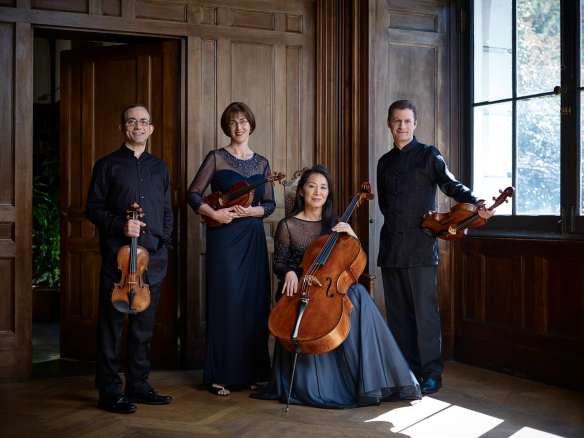
BRENTANO QUARTET - Misha Amory/ viola, Serena Canin/violin (glasses), Nina Lee/cello, Mark Steinberg/violin (glasses) www.http://brentanoquartet.com/

BRENTANO QUARTET – Misha Amory/ viola, Serena Canin/violin (glasses), Nina Lee/cello, Mark Steinberg/violin (glasses) www.http://brentanoquartet.com/

Wigmore Hall, London, 7 March 2016

written by Ben Hogwood

Audio (open in a new window)

http://www.bbc.co.uk/programmes/b072hw4q

Available until 6 April

What’s the music?

Haydn – String Quartet in F sharp minor, Op.50/4 (1787) (20 minutes)

Britten – String Quartet no.3, Op.94 (1975) (27 minutes)

Spotify

The Brentano String Quartet have not yet recorded this music, but other versions can be accessed via the playlist below, in case you can’t get to the broadcast:

About the music

Haydn wrote nearly 70 string quartets, but he was one of those composers incapable of writing the same thing twice. He also had a bit of a penchant for exploring relatively rare keys, and so this quartet, the only one he wrote in F sharp minor, occupies a special place.

It was part of a present for King Frederick William II of Prussia, to whom he had already sent his ‘Paris’ symphonies (nos.82-87) – receiving a ring in return. Haydn decided to send six string quartets, known as the ‘Prussian’ quartets – which continue to show his development as a composer in this relatively new form. The F sharp minor example is not as dark as some of the works in this key, though it does have some idiosyncratic moments described below.

Britten’s third numbered string quartet – his fifth and last to be published in the medium – is a direct product of the composer’s ailing health in 1975. With his capacity for work dwindling but not unbowed, it was suggested to him – in all seriousness by his friend Hans Keller – that if he wrote for less staves on the manuscript score he would be able to write more music.

He therefore completed a dedication for his friend, but as Keller recounts in his recent book, Britten: Essays, Letters and Opera Guides, the thought had been in his mind for some while. After a protracted discussion on form and sonata structure, Britten said to his friend, ‘One day, I’ll write a string quartet for you’. What he completed is something of a Divertimento – a wide ranging term that can apply from a short multi-movement piece to something as substantial as Mozart’s Divertimento for string trio, K563. The implication is that Britten wanted the freedom the form gave him.

With the Amadeus Quartet already enthusiastic exponents of his work, Britten took up the challenge with the help of the group and his assistant, composer Colin Matthews, who helped write much of the music from the piano. Although the Amadeus and Britten ran through the piece in private, he did not live to hear the public’s thoughts on the piece, for the premiere took place just over two weeks after his death.

The last movement of the quartet was written in its entirety in Venice, where Britten was still well enough to go on holiday, and perhaps inevitably it takes its lead from Death in Venice for its musical material. These are thought to be a present in musical form for Peter Pears. The final chord was a matter of some conjecture, and Britten changed it – for in the words of Colin Matthews, he wanted the work to ‘end on a question’.

For more thoughts on Britten’s last full work, visit the Good Morning Britten blog entry

Performance verdict

The Brentano Quartet were notable for their accuracy of tuning and ensemble in this concert but at times some of the raw emotional elements of the music were not necessarily close at hand.

The Haydn was extremely well played but did not have a freshness or spontaneity of the best Haydn performances. It was however impressive for the way they found the inherent darkness in the music, especially the finale, which had a grim determination. The slow theme and variations that make up the second movement could perhaps have enjoyed more variety between each one.

The Britten reached further emotionally, and the beautifully played last movement was a fitting finale. The Brentano were also very effective in the two faster movements, finding the right level of aggression. The rippling textures of the outer movements were beautiful too, recognising the very unusual colours Britten achieves in this music. Britten’s quartets travel internationally now – they were very much confined to this country for a while – and it is intriguing to hear them played from afar. This performance did the Third Quartet justice.

What should I listen out for?

Haydn

1:21 – the first four notes are key in the first movement of this quartet, for they form the basis of everything that follows – a bit like the repeated note motif in Beethoven’s Symphony no.5 but in a very different mood. Here the outlook is quite sombre, though the violin is positive. The first section is repeated (2:55), then at 4:25 the four note theme moves into development mode, before Haydn brings it back in original form at 5:37. Then he shifts the key to F sharp major at 6:22, and there is a notable upturn in mood.

7:31 – after the relative strife of the first movement the second begins in a pure and rather lovely form. A simple theme is presented before Haydn subjects it to several variations, but the peace doesn’t last and things take a darker turn at 9:30, the cello moving into its lowest register. At 10:55 the sunshine returns but is still affected by the music prior to it, and sure enough the minor key returns (12:34) – before Haydn moves once again to the major key for the next variation (13:16). The movement ends in a sudden full stop.

15:14 – the third movement, as is tradition, is a Minuet­ – but this one is a bit different as Haydn sets it in F sharp major, the most difficult of all keys for string players. It has a strange air about it, and some sudden loud bits do not help the mood of anxiety. At 16:45 a trio section starts, slipping into the minor key and feeling more vulnerable as a result. The Minuet music returns at 18:06, but doesn’t fully ease the tension.

19:10 – the mood of the quartet gets even darker for its finale, an austere fugue – which is where each part comes in at regular intervals playing slightly altered versions of the same tune. It makes a busy sounding texture, which Haydn works ingeniously until a sudden end, the finale only two minutes long.

Britten

23:54 – immediately in this work there is a sense of otherworldly mystery. In the third quartet Britten picks up where Death in Venice left off, the first violin using the same conversational style that Britten assigned to Aschenbach,(e.g. 25:14) the other instruments painting pictures of the undulating waters of the city’s canals. There is an intense period of contemplation that runs through this movement, subtitled Duets – because Britten tends to divide the quartet equally as the music unfolds

30:34 – the second movement (Ostinato) arrives with a jolt, and though its statements often end on a chord built on C – one of Britten’s favourite tonalities – it often sounds dissonant and unfeeling. There is a central section where brief respite is found, but it does not last long.

33:56 – when the violin takes the lead in this movement, marked Solo, it does so as a leader in prayer and meditation, and the other three instruments stand considerately in the sidelines. As the movement closes Britten reaches a radiant calm.

38:40 – either side of this moving section are two gruff, defiant scherzos, Britten writing closer to the style of Shostakovich but seeming also to shake his fist at the approach of Death. This second scherzo emphatically bursts the bubble created by the violin in the middle movement.

41:09 – the final movement – subtitled Recitative and Passacaglia – has perhaps the strongest sense of inevitability in late Britten. It begins with thoughts from the solo instruments, using the conversational style of the first movement. Then the Passacaglia takes hold (44:05). It is both sure footed and sublime, every repetition of the gently rising phrase feeling like a slow but sure step towards another world. That it ends on a question is something of a masterstroke, for after the serenity of the E major chord is realised in harmonics (50:33), Britten still has questions in his life and beliefs that remain unanswered. Ending on the ambiguous chord speaks volumes.

Encore

53:03 – a difficult call to make, doing an encore – but the Brentano chose nicely, opting for the first fugue from J.S.Bach’s The Art of Fugue (3 minutes). This is also reproduced on the Spotify playlist.

Further listening

Where to go after Britten’s final thoughts? It’s a very tricky question to answer, so how about some late or final thoughts from other composers? Included at the bottom of the playlist are Beethoven’s Piano Sonata no.32, Schubert’s last String Quartet and the Adagio from Mahler’s Symphony no.10:

Howard Shelley & London Mozart Players – Mozart Explored – Piano Concerto no.27

sjssHoward Shelley & London Mozart Players, St John’s Smith Square, 2 March 2016.

Mozart Explored: Piano Concerto no.27

For the latest in their Mozart Explored series at St John’s Smith Square, Howard Shelley and the London Mozart Players turned their attention to the composer’s final work in the form.

It is astonishing when you pause to think that Mozart had already completed 27 piano concertos by the age of 35, quite apart from everything else he did. Even after the composition of this piece, when he was under all sorts of personal and financial pressure, he managed to write such ‘trifles’ as The Magic Flute, the Clarinet Concerto and the Requiem. So although the music here was shown to be wonderfully positive there was a twinge of sadness at a career cut so short.

Howard Shelley was the ideal guide, affable yet knowledgeable, and although his keyboard was positioned so he faced the orchestra rather than the audience this was a good move, for everyone in St John’s could see his hands at the keyboard – and as a result the music physically being made.

St John’s is a lovely venue for this music, a world apart from the incessant clamour of Parliament Square just around the corner – an oasis by the Thames. Shelley’s demeanour only aided this hour of escape, talking through the circumstances around the composition of the concerto and also getting to the nub of the main themes of each of the three movements.

And then the performance itself, which was beautifully and stylishly given. With the orchestra ideally sized, Shelley conducted them through the opening bars of the first movement before his own graceful solo part asserted itself, stressing the vocal nature of much of this music.

There was lovely interplay particularly with the woodwind, who were also a prominent feature of the second movement, which felt like an aria in Shelley’s hands. The finale, written in celebration of the onset of Spring, could have been a little misplaced given the bitterly cold wind outside, but it became a light footed and quite graceful dance, Shelley again taking the lead.

The LMP return on Thursday March 16 to turn their attention to Beethoven’s Emperor Piano concerto – and if you can make it the rewards will surely be many!

Wigmore Mondays – Nicola Benedetti & Alexei Grynyuk in late sonatas by Beethoven & Brahms

nicola-benedetti
Nicola Benedetti (violin, above), Alexei Grynyuk (piano, below)

Wigmore Hall, London

Monday, 29 February 2016

Audio (open in a new window)

http://www.bbc.co.uk/programmes/b071cl1c

Available until 29 March

alexei-grynyuk

What’s the music?

Beethoven – Violin Sonata in G major, Op.96 (1812) (28 minutes)

Brahms – Violin Sonata no.2 in A major, Op.100 (1886) (23 minutes)

Spotify

Nicola Benedetti and Alexei Grynyuk have not yet recorded this music, but other versions can be accessed via the playlist below, in case you can’t get to the broadcast:

About the music

Beethoven’s tenth and last published violin sonata sits on its own in his output, a decade after than the composer’s previous work in the form. It is dedicated to the same ‘Archduke’ (Rudolph of Austria) for whom Beethoven wrote his famous B flat major piano trio, also published in 1812. Beethoven supposedly wrote it in a slightly easier style, as the violinist Pierre Rode – who was performing the piece with the Archduke playing piano – was not as skilful as he once was. The G major piece makes allowances, then – but not in a way that you would ever know from listening! It is unusually tranquil, and has instances of the timeless music Beethoven was to find in the slower movements of his late works.

There are no such concessions to technical ability from Brahms, who wrote the second of his three violin sonatas while on holiday by Lake Thun, Switzerland. This is however a relatively late work, and although Brahms has found and established his style the piece still carries some of the pressures of writing for Joseph Joachim. Its lyrical and tuneful nature have helped make it one of the composer’s most popular pieces of chamber music – and like the Beethoven it has a largely sunny outlook.

Performance verdict

A nice combination of two violin sonatas that seemed ideally suited to a bright Spring lunchtime – and how refreshing to hear young artists such as Benedetti and Grynyuk take on two later works like this.

The Beethoven was lovely, performed in a spirit of enjoyment where the violin and piano really were equals. Benedetti’s tone, slightly sweet, was ideal, while Grynyuk proved a very sensitive pianist, with some lightly brushed contributions that made sense of Beethoven’s unusual contentment.

The same mood infused the Brahms sonata, though here there was a greater sense of purpose, as the first movement, having begun relatively slowly, surged through to a much more animated development section. The finale was also notable for revealing some of the shadows that became a greater part of Brahms’s late works – but overall the feeling was one of positivity, celebrating the composer’s good spirits and warm lyricism in this work.

What should I listen out for?

Beethoven

1:58 – as the piece begins there is an immediate feeling of contentment, and although the opening idea is quite innocuous it is distinctive, with its use of the trill ornament. The piano introduces an airy second theme at 3:10, which the violin soon takes up. The mood is summery, and even a bit drowsy. The first section is repeated again at 4:40. Beethoven then develops his ideas fluently before we hear the main tune once again at 8:31, shared this time by the violin and piano. The balmy warmth continues until the end.

13:12 – the second movement is slow, marked Adagio espressivo, and has that kind of heavenly timelessness often found in later period Beethoven. It has a spacious introduction from the piano and is if anything even more relaxed than the first movement. It operates at a similar tempo and mood to the slow movement from the Emperor piano concerto. From around 14:35 the violin lines become quiet and bare, Benedetti using little vibrato, but the warmth does not take long to return.

19: 19 – the third movement, a Scherzo, is short, and if you blink you’ll miss it! Its first idea is once again light of touch, and though there is a heavier trio section it is not at all long before the minor key asserts itself again.

21:48 – the final movement also has a light touch, with a Haydn simplicity, and is particularly rich in the lower register and strong in the continuous, lower runs. The slower music is a delight, still airy and relatively carefree. There is then a quicker, invigorating run to the end.

Brahms

32:37 – one of Brahms’s most celebrated tunes opens this piece, a lovely outpouring of good feeling. It is quite slow and quiet to begin with but grows into a full blooded interpretation as the theme is developed further. There is greater affection here than in much of Brahms’s output.

42:07 – this is definitely the lighter side of Brahms, with a tender slow movement that segues into a more jaunty Scherzo section (43:32), marked by tumbling triplets in the piano part. The slow movement music follows again at a safe distance (44:38) – and then once again the scherzo music trips along (46:43), this time with plucking from the violin.

49:28 – in the last movement we get the warmth of the violin’s lower register, taking the ‘grazioso’ marking in to account. There are though some shadows that the listener might sense occasionally, the odd harmonic turn towards the dark side that never lasts too long but is there nonetheless.

Encore

54:35 – a substantial encore from Benedetti and Grynyuk, and a very different mood in the exotic and intense Myth no.3 by Polish composer Szymanowski.

Further listening

At the bottom of the playlist you will find some further suggestions for violin and piano in the form of sonatas by Schumann – Brahms’ friend, of course – with his Violin Sonata no.1 – and César Franck, whose own Violin Sonata shares the same key and mood as Brahms’s Second. Finally some shorter pieces by Schumann for solo instrument and piano – the joyous Adagio and Allegro and the 5 Pieces in Folk Style, arranged here for cello and piano. Each will put you in a good mood!

Meanwhile if the Szymanowski appeals, Nicola Benedetti has recorded his Violin Concerto no.1:

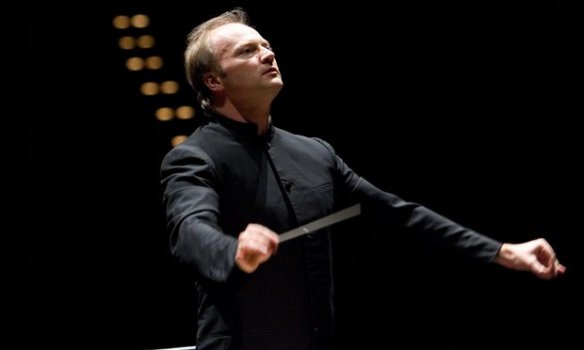
Friendly Fire – Shakespeare 400: London Symphony Orchestra / Gianandrea Noseda

gianandrea-nosedaFriendly Fire – Simon Trpčeski, London Symphony Orchestra / Gianandrea Noseda (above)
Barbican Hall, London; Thursday 25 February 2016

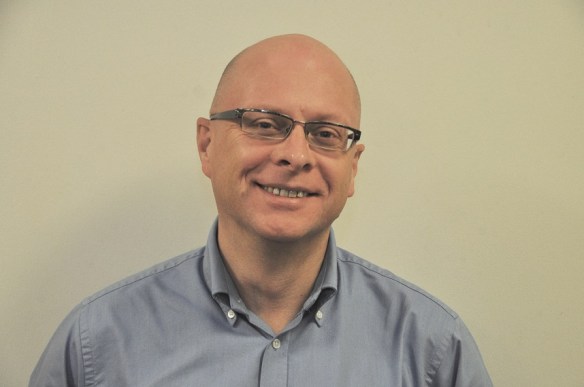
Welcome to Arcana’s new ‘alternative’ reviews slot! It is an ‘ask the audience’ feature – where I (Ben Hogwood) take a friend / colleague to a classical concert and get them to review it in the bar afterwards. Our second ‘reviewer’ in the series is John Earls, a family man from Harrow & Wealdstone who works as Head of Research at Unite. He shares his thoughts on a program of music inspired by ‘Shakespeare 400’ – with works by Smetana (Richard III), Tchaikovsky (Romeo and Juliet), Richard Strauss (Macbeth) and the seemingly unconnected Piano Concerto no.2 by Liszt. The artists are pianist Simon Trpceski and the London Symphony Orchestra under newly announced guest conductor Gianandrea Noseda.

john-earls

Arcana: How did you prepare for this concert?

John: I didn’t do that much in the way of preparation, other than see what the four pieces in the concert were, and whether I was familiar with them. At the time the only one I thought I was familiar with was the Tchaikovsky, but you reminded me I had heard the Liszt before.

What was your musical upbringing?

As a young child, pretty limited. Most of the music I heard from my parents would have been Irish music, then as I went through school I was more exposed to bits of classical music, as I learned the clarinet. In my teens I got more into contemporary music, rock music, new wave – I played in my own band – and became more interested in jazz and classical music as I got older and attended more concerts and read more about those particular types of music. Jazz and classical are the forms of music I listen to most now.

Name three musical acts you love and why:

(almost without hesitation): Miles Davis was a trailblazer and an innovator who has done some very different things throughout his career. He also struck me as a great leader of bands and ensembles, because he was a great talent spotter who pulled some phenomenal musicians together, and it always struck me that anybody who played with him was better for the experience. They tended to be either better musicians or composersafter having gone through the Miles Davis experience, and also his ensembles tended to be greater than the sum of their parts.

I would also go for Christy Moore, who in many ways would be the soundtrack to my development and my life. I think he has a huge amount of integrity, and if you listen to him sing he comes across as somebody who really means it. If you see him performing live you see a gifted songwriter but also somebody who has a mission to transmit the songs he knows. He has a great deal of songs he hasn’t written but he is able to communicate and pass them on.

I should pick a band really…Wire. I saw them last year for the first time in around 30 years, at the Lexington near Kings Cross. They were influential in my formative days in the late 1970s / early 1980s. They were innovative and straddled the artistic side with the punk sensibility, but had the credibility of doing what they wanted to do. To release an album like they did last year nearly 40 years after they first started, and to think they can still do it, was a phenomenal achievement. They are still great live and the songs incredibly well crafted.

Have you been to classical music concerts before, and if so what has been your experience?

I’m not sure I fit your criteria of ‘someone who doesn’t normally attend a classical concert’. I’m actually a regular classical concert goer – all forms and types. Living in London I’ve been able to see some of the finest musicians and orchestras in the world. Many of my most treasured musical moments have been at ‘classical music’ concerts – Mitsuko Uchida playing Schubert’s late piano sonatas, Rattle and the Berlin Phil doing Mahler’s Resurrection Symphony, Steve Reich’s Music for 18 Musicians with Reich himself playing. I also think some pieces are best experienced live – Messiaen’s Turangalila, for example. Had a few disappointments too! But live music is really important to me. 

What did you think of the Smetana?

I thought it was OK – I could see why they had used it as a piece with which to start. Would I have got the Shakespeare connection? Probably not, but having known it I could see there were bits that sounded regal. Some bits reminded me of a royal hunt, with lots of trumpet. Some of it was like a fanfare but there was solo trumpet that was quite ‘angsty’ and personal. I suppose the trumpet has royal connections. Those things came into my mind while I was listening but I’m not sure, as a piece of music, I would be in a huge hurry to listen to it again.

What about the Liszt?

I hadn’t remembered that I had heard it before. I quite enjoyed it, but there were parts where the pianist seemed a bit stroppy and belligerent, reminiscent of Jerry Lee Lewis! I enjoyed it a bit less than I thought I was going to but the thing that did stick out for me was the cello (Rebecca Gilliver’s solo in the third movement – ed). The sound was absolutely beautiful.

What about the Tchaikovsky?

I was more familiar and knew what to expect. I wasn’t used to being that close to the orchestra! If you heard those four pieces of music and was told there was a Shakespeare link to be honest I probably couldn’t have noticed it, but the one that would be most likely would be that one – and you would probably think Romeo and Juliet because of the tragedy, the romance and the action. You almost feel like you’re in a Bond movie! It’s got everything in it, around 16 minutes, it packs it all in, and it’s Tchaikovsky, who I love.

Finally, what about the Richard Strauss?

I thought that was a good piece to finish on. It had a range of things. I don’t think I would have thought Shakespeare but it was more personal in that it was not necessarily a narrative story – you’re inside somebody’s head. I’ve got ‘magisterial’ written down here, and I felt there was a real tension in it. The offstage snare drum was great, I always like that use of the space, and I’ve not heard the percussion played like that before (the tam tam I think! – ed)

It was more psychological I think, and it was only in that piece that I noticed Noseda’s score was tiny, I’ve never seen one so small! I enjoyed the music, and would go back to listen to it again. I didn’t realise Strauss was 24, that’s quite a phenomenal achievement – not only to put all the instrumentation together but to get the psychological elements at that stage, you would think only an older composer would manage that.

What about the environment and setting of the concert, and how it was promoted?

The only PR I’ve seen was the Shakespeare-related things, and I couldn’t see the link with the Liszt, but I like the idea of linking things in. Sometimes it can be a bit contrived but I think if it’s used as a technique to expose you to different bits of music then that’s fine – like Romeo and Juliet – and it worked for me in the case of the Strauss but not the Smetana.

I think they got the range and order of the pieces right. I’ve been to the Barbican as a venue, and I do like the way it works with an instrument offstage, like they did with the Strauss. I’ve seen that done with vocal and choral pieces and it can work. I think the conductor was quite energetic, not necessarily in a flowing way – quite staccato would be your terminology! There seemed a good rapport between him and the orchestra, the sense they really respect him.

If you could give it a mark out of 10 what would you give?

Probably a 7, but that would be an average. The Tchaikovsky and the Strauss would be an 8 or 9, and the Smetana would drag it down a bit. But it was certainly worth going to!

Arcana’s brief thoughts on the concert:

The connections between classical music and Shakespeare are many, but the London Symphony Orchestra did really well to present a variety of nineteenth century settings. All fall into the ‘Romantic’ period, where composers were getting to grips with the idea of the orchestra being a storyteller in what was known the ‘symphonic poem’.

Smetana’s Richard III was an ideal curtain opener, though like its subject it had an uneven walk – brilliantly portrayed but still with a sense of a portrait not quite fully fledged.

Tchaikovsky’s Romeo and Juliet was different. This was the London Symphony Orchestra on white hot form, Gianandrea Noseda conducting like a man wholly affected by the tragedy. This music surged forward with passion and drama in equal measure, and the hair stood up with the volley of brass and percussion, and the intensity of the love theme on the strings.

Richard Strauss’s Macbeth was equally intense, though even more effective in exploring the minds of the two main protagonists of the story. The lower strings had a steely effectiveness, the double basses brilliantly marshalled, while the drama above unfolded in compelling fashion.

Though Liszt’s Piano Concerto no.2 had no Shakespearian connection it was a relatively sound choice, for he is a composer unable to resist the temptation of telling a story! This one had its moments of drama, albeit fleeting in comparison to the warhorses of the second half.