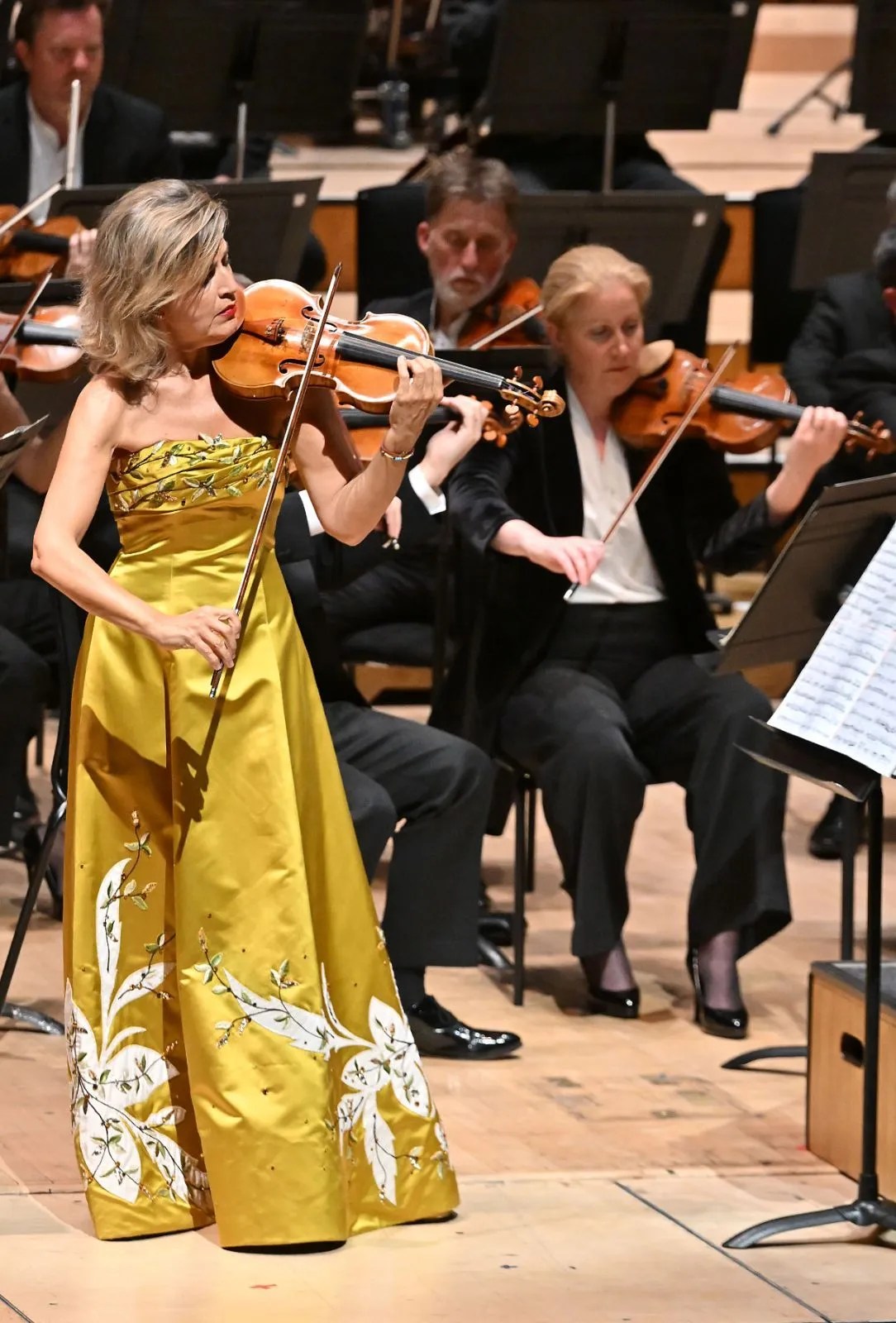
In concert – Michael Collins, BBC Concert Orchestra / Martin Yates – The 17th English Music Festival @ Dorchester Abbey

Michael Collins (clarinet), BBC Concert Orchestra / Martin Yates

Carwithen Suffolk Suite (1964)
Delius Idyll de Printemps, RTVI/5 (1889)
Stanford Clarinet Concerto in A minor Op.80 (1902)
Vaughan Williams Richard II: A Concert Fantasy (1944) [World Premiere Performance]
Holst Symphony in F major H47 ‘The Cotswolds’ (1899-1900)

The Abbey, Dorchester-on-Thames
Friday 25 May 2024

Reviewed by Richard Whitehouse

This latest edition of the English Music Festival, also the first to take place entirely within the spacious ambience of the Abbey at Dorchester-on-Thames, began with the customary concert from the BBC Concert Orchestra and Martin Yates. As conceived for amateur players, Suffolk Suite by Doreen Carwithen feels nothing if not resourceful – whether in the regal opulence of Prelude, evocative poise of Orford Ness then the alternately rumbustious or genial humour of Suffolk Morris; the martial tread of Framlingham Castle bringing about a resolute close.

Recent years have seen renewed interest in Delius’ early orchestral work, Idylle de Primtemps an appealing instance of the composer harnessing Nordic influences to the impressionist style then emerging in his adopted home of Paris – resulting in this short yet atmospheric tone poem.

It was enticingly given by the BBCCO, which then partnered Michael Collins (above) for a revival of the Clarinet Concerto by Stanford. As with numerous concertante works from the period, this is a three-movements-in-one design. The preludial Allegro introduces two main themes, their development continued (albeit understatedly) in a central Andante that unfolds with mounting eloquence, before the final Allegro brings a transformed reprise of the initial themes on route to its decisive ending. As with the First Cello Concerto of Saint-Saëns or the Violin Concerto of Glazunov, this is a piece the accessibility of whose idiom belies the ingenuity of its formal thinking or appeal of its ideas, and Collins (who evidently last played the piece four decades ago) brought subtlety and insight to music which ultimately delivers more than it promises.

These EMF opening concerts regularly feature first performances, and this evening brought that of the ‘Concert Fantasy’ as adapted by Yates (above) from Vaughan Williams’ incidental music to a production of Richard II for a BBC radio production and subsequently shelved. As might be expected, this abounds in allusions to earlier VW works from the period (notably Job and the Fifth Symphony), but the skill by which the composer reflects salient events in Shakespeare’s play and ease with which these fuse into a relatively continuous whole is its own justification.

It made sense to feature a major work by Holst in this, the 150th anniversary-year of his birth as well as the 90th of his death, with his Cotswolds Symphony certainly a welcome inclusion. If the weight and intensity of its second movement, Elegy (In Memoriam William Morris), rather dwarfs those other three, this is less an issue when the overall sequence was as astutely balanced as here. Yates secured a keen response in the opening Allegro, the personality of its ideas here outweighing any short-windedness, while there was no lack of verve and grace in the Scherzo or of animation in the Finale. That Elegy, though, is the real highpoint and the BBCCO did not disappoint with the sustained plangency of its playing. Numerous of Holst’s early pieces qualify as his primary achievement pre-Planets and this is arguably the greatest.

It duly rounded-off a fine opening to this year’s EMF. Maybe a future such occasion could see the revival of Stanford’s once popular Third ‘Irish’ Symphony or, even more pressingly, the first hearing for over a century of Holst’s doubtless unfairly derided suite Phantastes?

Click to read more about the English Music Festival 2024 – and on the names for more on the artists Michael Collins, Martin Yates and the BBC Concert Orchestra. For more detail on the composers, click on the names to read more about Carwithen, Delius, Stanford, Vaughan Williams and Holst

Published post no.2,186 – Wednesday 22 May 2024

In concert – Mark Bebbington, Czech National Symphony Orchestra / Steven Mercurio: Delius, Beethoven, Smetana & Dvořák @ Symphony Hall, Birmingham

Mark Bebbington (piano, below), Czech National Symphony Orchestra / Steven Mercurio

Delius The Walk to the Paradise Garden (1906)
Beethoven Piano Concerto no.5 in E flat Op.73 ‘Emperor’ (1809)
Smetana Má vlast – Vltava (1874)
Dvořák Symphony no.8 in G major Op.88 (1889)

Symphony Hall, Birmingham
Tuesday 21 May 2024

Reviewed by Richard Whitehouse

Although it might not see the number of visiting orchestras that it once did, Symphony Hall still hosts a number of such concerts and the season’s representation ended tonight with this welcome appearance by the Czech National Symphony Orchestra and music director Steven Mercurio.

Opening with DeliusThe Walk to the Paradise Garden (from his opera A Village Romeo and Juliet) found these players evincing real affinity with its powerful if elusive idiom, Mercurio securing a poetic response from the woodwind and no mean ardour during its climactic stages.

Despite coming from and being based in or around Birmingham for most of his career, Mark Bebbington (above) is less known locally than he might be and his account of Beethoven’s Emperor Concerto confirmed a sure grasp of its expansive formal structure, with his secure and never inflexible technique more than equal to its pianistic demands. After those commanding initial exchanges, the initial Allegro felt just a little under-characterized until hitting its stride in the development; from where this reading proceeded with tangible conviction through to an agile ‘anti-cadenza’ then combative coda. The Adagio’s winsome variations could have had greater inner rapture, yet the eloquence of Bebbington’s response was not in doubt while the hushed transition into the Rondo produced an emotional frisson as carried through this finale overall.

Throughout the movement, Bebbington’s scintillating pianism duly galvanized the CNSO into a forthright response right up to the life-affirming close – after which, he acknowledged the enthusiastic applause with his limpid take on Chopin’s Nocturne (no.20) in C sharp minor.

Following the interval, Czech music not unreasonably took centre-stage. The players might have been surprised by reference to the ‘Moldau’, but Mercurio directed a fluent Vltava with such passages as its wedding dance or traversal of St John’s Rapids nothing if not evocative.

Having been at the helm of the CNSO since March 2019 (in succession to the much-missed Libor Pešek), Mercurio has certainly put his own stamp on its repertoire and presentation. He gave an account of Dvořák’s Eighth Symphony (sometimes referred to as the ‘English’ due to being published by Novello, but actually the most Czech-sounding of his mature symphonies) that, if affording few revelations, underlined its structural innovations as surely as its melodic immediacy. The opening Allegro made a virtue out of eliding the customary formal divisions on route to a resounding peroration, then the Adagio was even finer for the way that its pathos and grandeur were melded into a seamless and methodical yet cumulative design; one where the composer’s Romantic instincts and his Classical inclinations find especially potent accord.

The lilting Allegretto sees Dvořák at its most felicitous – Mercurio aptly taking its boisterous pay-off as a lead-in to the final Allegro, with its variations on an easeful theme for the strings that ingeniously shadow the outline of a sonata design prior to a coda of headlong brilliance.

Conductor and orchestra duly responded with two encores – a rhythmically incisive piece by Iranian-Canadian composer Iman Habibi, then a bossa nova as gave first trumpet and CSNO co-founder Jan Hasenöhrl the spotlight and brought the whole evening gently down to earth.

Click on the names to read more about the Czech National Symphony Orchestra, conductor Steven Mercurio, pianist Mark Bebbington and composer / pianist Iman Habibi

Published post no.2,186 – Wednesday 22 May 2024

In concert – Geneva Lewis & Georgijs Osokins @ Wigmore Hall: Brahms, Scarlatti & Elgar

Geneva Lewis (violin, above) and Georgijs Osokins (piano, below)

Brahms Violin Sonata no.2 in A major Op.100 (1886)
Domenico Scarlatti Sonata in D minor Kk213
Elgar Violin Sonata in E minor Op.82 (1918)

Wigmore Hall, London
Monday 20 May 2024 (1pm)

by Ben Hogwood

The Violin Sonata no.2 is one of Brahms‘s chamber music perennials, a popular recital fixture – but in this recital from BBC New Generation Artist Geneva Lewis and Latvian pianist Georgijs Osokins it was as though the work had received a fresh coat of paint.

The tempo marking Brahms applied to the first movement, Allegro amabile, is seldom found in classical music – ‘amabile’ meaning ‘lovely’. That was certainly the case in this performance, though Lewis and Osokins took a much slower tempo than is the norm. Their daring approach succeeded, however, for the melodic phrasing blossomed, the spring-like main tune given plenty of room to shine. The second theme was laid bare, but again the slow tempo allowed for greater insight, followed attentively by the Wigmore Hall audience.

The dynamic range of both players was also notable, Lewis very much aware of her surroundings in the quiet passages, the audience subconsciously leaning in to the music. At points the music was so quiet that Osokins’ pedalling could be heard…but conversely the pair were not afraid to put the pedal down and play out, as they did in the finale. In between came a tender and affectionate middle movement, its dreamy opening certainly tranquillo, before a most appealing central vivace section.

Elgar’s Violin Sonata was completed when the composer had just turned 60 – and although he would live for another 16 years, very few major works followed. To hear the sonata played by performers in their twenties was eye-opening indeed, with more youthful elements of the piece revealed and a different light shed on a work that often has autumnal reflections to cast.

The first movement was notable for its commanding first paragraph, Lewis setting the tone for the movement as she became immersed in Elgar’s broad phrasing. Osokins, for his part, mastered the full piano textures most impressively, before both performers drew back for a thoughtful second theme. The second movement became a fascinating mini-ballet between the two instruments, its shadowy colours a clue to the composer’s darker thoughts, though the bittersweet melodies were given extra charm by the dance-inflected rhythms.

The finale took flight immediately, the violin surging forward with penetrating melodies that led to a sense of sunlight breaking through the clouds in the closing phrases, Elgar allowing his thoughts to brighten as the music turned to the major key. The imaginatively chosen encore capitalised on this, Lewis and Osokins giving us the rustic finale of Busoni’s Violin Sonata no.2 in E minor, music which might have passed for one of Brahms’s Hungarian-influenced works were it not for some particularly scrunchy harmonies.

In between the two big sonatas, Osokins (above) had the chance to shine alone, one he took with a profound account of one of Domenico Scarlatti‘s many keyboard sonatas. The Sonata in D minor Kk213 is a bittersweet piece, a reminder of how forward looking this composer’s music can. Rooted in the 18th century it may be, but in reality we could have been listening to a Satie Gnossienne, especially with Osokins’ poetic licence drawing out the final harmonic resolution.

Published post no.2,184 – Monday 20 May 2024

In concert – CBSO Chorus & Orchestra / Joshua Weilerstein: Haas, Bernstein, Shaw & Dvořak

Michael Mulroy (treble), CBSO Chorus, City of Birmingham Symphony Orchestra / Joshua Weilerstein

Haas Study for Strings (1943)
Bernstein Chichester Psalms (1965)
Shaw Music in Common Time (2014)
Dvořak Symphony no.9 in E minor Op.95 ‘From the New World’ (1893)

Symphony Hall, Birmingham
Wednesday 15 May 2024

Reviewed by Richard Whitehouse Picture (c) Yuri Pires Tavares

In recent seasons, Joshua Weilerstein has presided over several of the City of Birmingham Symphony Orchestra’s most thought-provoking concerts and tonight’s programme was no exception in its potent mix of the recent and unfamiliar, alongside a symphonic evergreen.

It was thanks to the conductor and Auschwitz survivor Karel Ančerl that Study for Strings by Pavel Haas survived its immediate context, as propaganda for a Nazi documentary on cultural activity at the Theresienstadt transit-camp, to become one of this composer’s defining works. Felicitously combining Czech folk music with traditional Jewish inflections and (in its central section) more expressionist undertones, alongside a compact and quasi-symphonic design, it is a potent indication as to where post-war Czech music might conceivably have been headed.

It duly brought a vivid and energetic response from the CBSO strings, who were then joined by brass and percussion in Bernstein’s Chichester Psalms. Commissioned by the Dean of the city’s cathedral, it enabled the composer to pull together a number of earlier or aborted ideas in three Psalm-settings given focus by being heard in Hebrew translation with an authentic (if impractical as regards the percussion) scoring. Weilerstein drew the requisite verve from its initial setting, and if Michael Mulroy seemed tentative in its successor (discreet amplification might have helped), the contrast between his plaintiveness and edginess of the male-chorus interludes was pertinently drawn. Its anguished prelude for strings powerfully rendered, the final setting had an affecting eloquence through to the serene unaccompanied closing chorus.

After the interval, the CBSO Chorus was heard in rather more restrained guise with Music in Common Time by Caroline Shaw. Its brief and oblique text might have come from a late song by Talk Talk, but it yet provides the framework for a cannily unfolding fantasia in which the eddying textures of John Adams frame a speculative section with its string writing more than a little redolent of early Penderecki. Throughout, voices and instruments were finely melded in a composition that certainly suggests a plausible way out of any post-minimalist impasse.

What to say about the New World Symphony? Firstly, that it fitted judiciously into the overall programme as to conception; secondly, that it brought out the best in this partnership. Right from its evocative introduction, Weilerstein was alive to those many expressive ambiguities in the initial Allegro (a pity, though, that he omitted the exposition repeat as this undermines the formal balance overall), then drew a rapt and often searching response from the CBSO in the Largo – Rachel Pankhurst making the most of its indelible cor anglais melody. Nor was there any lack of bite or (in its trio section) gracefulness in the scherzo; such incisiveness of ensemble consistent throughout the finale, whose rhythmic impetus ensured the coda was not merely decisive but crowned the whole work in an apotheosis as conclusive as it was joyous. In his thoughtful initial remarks, Weilerstein spoke of this programme as being defined by its complexity, nuance and confrontation: qualities not always evident in present-day music, or in present-day discourse, but whose absence is our loss – as this concert eloquently confirmed.

Click on the link to read more on the current CBSO concert season, and on this link to read about the CBSO’s 2024/25 season. Click on the names for more on conductor Joshua Weilerstein, the CBSO Chorus and composer Caroline Shaw

Published post no.2,181 – Friday 17 May 2024

In concert – Elizabeth Llewellyn, CBSO Youth Chorus & Orchestra / Jérémie Rhorer: Debussy, Ravel & Stravinsky

Elizabeth Llewellyn (soprano, below), CBSO Youth Chorus (chorus-master, Julian Wilkins), City of Birmingham Symphony Orchestra / Jérémie Rhorer

Debussy Nocturnes L98 (1899)
Ravel Shéhêrazade M41 (1903)
Debussy Prélude à l’après-midi d’un faune L86 (1894)
Stravinsky Symphony in Three Movements (1945)

Symphony Hall, Birmingham
Thursday 9 May 2024

Reviewed by Richard Whitehouse Picture of Jérémie Rhorer (c) Caroline Doutre, Elizabeth Llewellyn (c) Frances Marshall

Programmes featuring no Austro-German content are rarer than might be thought these days, so making this evening’s concert from the City of Birmingham Symphony Orchestra with the highly regarded conductor Jérémie Rhorer not only more unexpected but also more welcome.

There could be few more understated openings to such a programme than the Nocturnes that Debussy completed near the start of the 20th century, when the ‘impressionist’ tag randomly applied to his music was at its most relevant. Without denying its essentially rarified quality, Rhorer brought out the ominous undercurrents in Nuages, its emotional eddying abetted by Rachel Pankhurst’s soulful cor anglais while duly complemented by those fervid imaginings of Fêtes, where the central processional felt tangible in its implacability. Nor was there any undue reticence in Sirènes, the CBSO Youth Chorus here repeating its contribution from a couple of seasons ago with a response whose androgynous sound-world did not preclude an expressive poise coming to the fore through the remote ecstasy of this piece’s closing pages.

Among the most potent expressions from its composer’s early maturity, Ravel’s Shéhêrazade made for a natural follow-on. Less a cycle than a sequence of songs, it tends to be dominated by its initial Asie, which made Elizabeth Llewellyn’s performance the more admirable. Not that she ever under-characterized the images of wonder and terror such as pervade the poem’s ‘‘outdated language and cultural depictions’’ (to quote the rider in tonight’s programme), but these were harnessed to a cumulative build-up of intensity that held good over the capricious elegance of La Flûte enchantée, as enhanced by the artful finesse of flautist Marie-Christine Zupancic, then on to the sensuous ambiguity of L’Indifférent with its predictably equivocal close. Rhorer secured playing of subtlety and refinement throughout this memorable reading.

A suitably enervated if never flaccid account of Debussy’s Prélude à l’après-midi d’un faune launched the second half. Distinguished once more by Zupancic’s playing as well as an airily euphonious response by CBSO woodwind, Rhorer teased out the purpose behind any inertia.

Although it could not have made other than a jarring impression in this context, Stravinsky’s Symphony in Three Movements provided an instructive contrast (Roussel’s Third Symphony would have been more apposite – maybe another time?) in its presaging of rhythmic tensility over harmonic langour. Rhorer had the measure of the opening’s movement’s animation, for the most part simmering rather than overt (and some not quite spot-on entries a reminder that this music remains a stern test of technical accuracy), but the highlight was a central Andante whose alternating between the whimsical and beatific confirmed the film-world’s loss as the concert-hall’s gain. The transition into the finale saw a frisson of expectancy, duly confirmed by its remorseless progress toward what is the most visceral outcome in latter-day Stravinsky.

A fine showing, then, from the CBSO and a notable appearance by Rhorer who will hopefully return soon. Next week sees a welcome reappearance by Joshua Weilerstein, major works by Bernstein and Dvořák being set in relief with shorter pieces by Pavel Haas and Caroline Shaw.

Click on the link to read more on the current CBSO concert season, and on the names for more on soprano Elizabeth Llewellyn, conductor Jérémie Rhorer and the CBSO Youth Chorus

Published post no.2,177 – Monday 13 May 2024