In concert – Jeremy Denk, CBSO / Kazuki Yamada: Gershwin, Clyne, Ravel & Mussorgsky / Wood

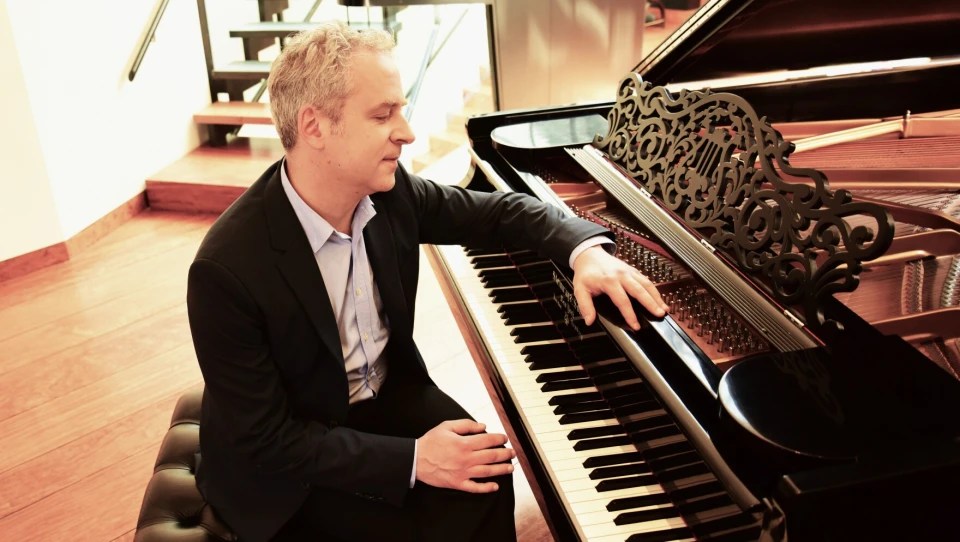
Jeremy Denk (piano, above), City of Birmingham Symphony Orchestra / Kazuki Yamada

Gershwin An American in Paris (1928)
Clyne ATLAS (2023) [CBSO Co-Commission: UK Premiere]
Ravel Pavane pour une infante défunte (1899, orch. 1910)
Mussorgsky orch. Wood Pictures at an Exhibition (1874, orch. 1915)

Symphony Hall, Birmingham
Wednesday 1 May 2024

Reviewed by Richard Whitehouse

This evening’s concert by the City of Birmingham Symphony Orchestra may have taken its overall title from the final work, but ‘pictures’ were everywhere in evidence and not merely those ‘at an exhibition’ – not least with Kazuki Yamada as enthusiastic as ever at the helm.

While it loses out to his Rhapsody in Blue in the popularity stakes, Gershwin’s An American in Paris is surely the most successful of his orchestral pieces for matching its immediacy of imagery to a resourceful structure. Encouraging the CBSO to a bracing response in the outer sections, and with Jason Lewis’s nostalgic trumpet initiating that pathos-laden central phase, Yamada secured a response whose full-on expression was offset by too sectional an approach – the music proceeding in a stop-start fashion rather than unfolding organically as it should.

Over recent years, the New York-based Anna Clyne has emerged among the leading British composers of her generation, with this first UK hearing for her piano concerto ATLAS keenly anticipated. Inspired by the eponymous and epic collection of the artist Gerhard Richter, this likewise falls into four ‘volumes’ rather than movements, which also underlines their relative formal freedom. Certainly, the ingenious interplay between soloist and orchestra is a tough challenge which Jeremy Denk met head-on – whether in the coursing energy then yielding eloquence of the opening Fierce, alluring textural overlaps of Freely, intimate, the lilting nonchalance of Driving or cumulative activity of the final Transparent with its surge to an emphatic close that (as with this work overall) was capricious and allusive in equal measure.

Doubtless motivated by Denk’s coruscating virtuosity, the CBSO gave its collective all in a work which (rightly) appealed to those present – the pianist responding with his deft take on the Heliotrope Rag co-written by Scott Joplin and the tragically short-lived Louis Chauvin.

After the interval, a rare moment of calm – Ravel’s Pavane for a Dead Princess given with a studied if never stolid grace, Elspeth Dutch’s horn and Katherine Thomas’ harp enhancing its appeal. As with Fauré’s Pavane, this is ideal music for opening the second half of a concert.

And so, to Mussorgsky’s Pictures at an Exhibition – heard here in the orchestration by Henry Wood which preceded and was duly superseded by Ravel’s. Wood is more interventionist, not least by reducing the recurrent ‘Promenade’ to a stealthy introduction, but not necessarily less faithful to the piano work’s spirit – hence the scabrous immediacy of Gnomus, sombre aura of The Old Castle (Andrew McDade’s tuba balefully intoning on high above stage-right), or fatalistic tread of Bydlo with its evocative percussion. Respighi was probably taken by this glowering depiction of Catacombs with a ghostly recollection of the promenade hardly less effective, and if Baba Yaga gets summarily curtailed here, the crescendo of bells launching The Great Gate[s] of Kiev set the tone for a treatment whose opulence borders on overkill.

Not that this inhibited the CBSO from projecting Wood’s organ-clad texture to the maximum, to the enthusiasm of an audience that erupted in the lingering resonances at its close. Quite a way to end an impressive performance, and a memorable concert, on a day that saw Yamada become this orchestra’s Music Director and the CBSO launch ‘A Season of Joy’ for 2024/25.

Click on the link to read more on the current CBSO concert season, and also to read about the recently announced 2024/25 programme. Click on the names for more on pianist Jeremy Denk, conductor Kazuki Yamada, and composer Anna Clyne

Published post no.2,168 – Saturday 4 May 2024

In concert – Quatuor Danel: Shostakovich & Weinberg #4 @ Wigmore Hall

Quatuor Danel [Marc Danel & Gilles Millet (violins), Vlad Bogdanas (viola), Yovan Markovitch (cello)]

Weinberg String Quartet no.5 in B flat major Op.27 (1945)
Shostakovich String Quartet no.6 in G major Op.101 (1956)
Weinberg String Quartet no.6 in E minor Op.35 (1946)

Wigmore Hall, London
Monday 29 April 2024

by Richard Whitehouse Photo (c) Marco Borggreve

Quatuor Danel’s ongoing cycle devoted to the string quartets of Shostakovich and Weinberg reached its fourth instalment this evening with a programme in which two of the latter’s most characteristic such pieces framed what is among the most ambivalent of the former’s works.

Composed in the aftermath of the Second World War, Weinberg’s Fifth Quartet emerges as a divertimento in concept but hardly in substance. The opening Melodia underlines this with its brooding theme on violin that intensifies expressively as the movement expands texturally, while the ensuing Humoreska has a dance-like insouciance that takes on ominous overtones as it unfolds. This accrued tension bursts forth in the central Scherzo with its violent motivic and gestural exchanges between the players, then the Improvisation revisits earlier material from an inevitably more troubled perspective. It only remains for the final Serenata to bring closure via its familiar gambit of summing-up the whole from a likely emotional remove, only to take on greater immediacy on the way to a musing close: something ideally conveyed here.

The mid-1950s was a difficult time for Shostakovich, recently widowed and unsure as to his future direction. Dedicated to his second wife, the Sixth Quartet can seem as tentative as this marriage proved short-lived – the genial quality of the opening Allegretto’s themes assuming much more combative guise as the movement evolves, with the Moderato that follows poised uncertainly between scherzo and intermezzo but without committing either way. The second of its composer’s passacaglias in a quartet context, the Lento unfolds as a processional both fatalistic and doubtful before heading into a final Allegretto whose inherent nostalgia exudes a sepia-tinted regret at its core. As previously, the Danel was mindful to vary the expressive intent of that recurrent closing cadence – one whose finality is ultimately borne of resignation.

The last work proved to be a culmination in all senses. Over six decades might have elapsed between its composition and its premiere (by this ensemble), but Weinberg’s Sixth Quartet is one of his finest and a highpoint of quartet-writing in the twentieth century. Although it runs to six movements, there is never risk of diffusiveness or loss of focus – witness the deceptive equability of its initial Allegro, such equivocation decisively countered by the violent Presto whose unbridled energy has barely been dispelled across the brief and recitative-like Allegro.

Despite its fugal mobility, the ensuing Adagio emerges as a slow movement frozen in intent – something the Danel brought out as acutely as it did that bittersweet anxiety of the Moderato which follows. More than in any of Weinberg’s earlier quartets, the final Andante maestoso is a fitting destination – its almost monumental power fashioning elements previously heard into a cumulative structure whose outcome is one of desperation mingled with defiance. Not hard to fathom why the Soviet authorities should have prohibited even a private performance.

Whether or not it has become a ‘signature work’ for the Danel, the sheer emotional input of this reading assuredly took no hostages. Shostakovich’s 1931 arrangement of Katerina’s aria from the third scene of his opera Lady Macbeth of Mtsensk duly made for an eloquent envoi.

You can hear the music from the concert below, in recordings made by Quatuor Danel:

For more information on the next concert in the series, visit the Wigmore Hall website. You can click on the names for more on composer Mieczysław Weinberg and Quatuor Danel themselves.

Published post no.2,167 – Friday 3 May 2024

In concert – James Ehnes, CBSO / Markus Stenz: Schumann Violin Concerto & Bruckner Symphony no.7

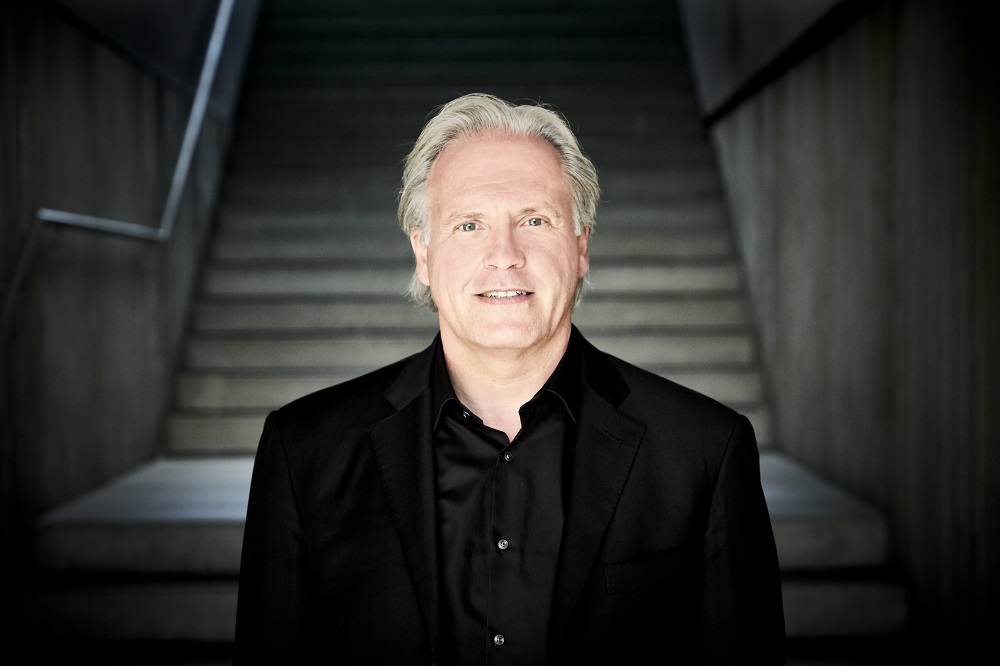
James Ehnes (violin, above), City of Birmingham Symphony Orchestra / Markus Stenz (below)

Schumann Violin Concerto in D minor WoO23 (1853)
Bruckner Symphony no.7 in E major WAB107 (1881-83, ed. Nowak)

Symphony Hall, Birmingham
Thursday 25 April 2024

Reviewed by Richard Whitehouse Picture of James Ehnes (c) Benjamin Ealovega, Markus Stenz (c) Kaupo Kikkas

His appearance here for performances of Mahler’s Second Symphony two years ago had made one hope that Markus Stenz might soon be invited back to the City of Birmingham Symphony Orchestra – such being so tonight for this outstanding programme of Schumann and Bruckner.

Although it now enjoys frequent hearing, Schumann’s Violin Concerto yet remains under the shadow of its eight-decade limbo after the composer’s mental breakdown then decision by its intended soloist Joseph Joachim to withhold performance. Only in 1937 was it given in public, since when it has gradually come to be regarded (as Yehudi Menuhin believed it would be) as the missing link between Beethoven and Brahms. Certainly, there was nothing tentative about James Ehnes’ advocacy, which proved as interpretively acute as it was technically immaculate.

Pacing the initial movement so that its earnest character never becomes unduly sombre is not easy, but Ehnes ensured its halting progress never felt effortful and Stenz drew textures of no mean luminosity from these modest forces. The slow movement seemed more eloquent for its listless pathos, with its terse transition into the finale astutely judged. Its underlying polonaise rhythm deftly inflected, this rather gauche rondo yielded an easy-going momentum in the call and response between soloist and orchestra, through to a conclusion both genial and resolute.

A memorable performance which reinforced Ehnes as among the most consistent (as well as undemonstrative) of present-day virtuosi – something that was no less evident in his account of the Third Sonata (‘Ballade’) by Eugène Ysaÿe which here made for a scintillating encore.

The UK has seen little of Stenz since his tenure with the London Sinfonietta during the mid-1990s, a pity given he has few peers among conductors of his generation in terms of Austro-German repertoire. Such was borne out by Bruckner’s Seventh Symphony – Classical in its lucidity of motion, Romantic in its frequently impulsive emotion. Not least an initial Allegro moderato that elided between its contrasting themes with unforced rightness, the abruptness of certain tempo changes (accentuated by his rare recourse these days to the Nowak edition) channelled into a coda of surging sublimity. Even finer was the Adagio for the inevitability with which this drew respectively elegiac and lyrical themes into a sustained traversal, via an exultant peroration (cymbal and triangle duly outdone by timpani), to a nobly resigned close.

The latter two movements can easily seem anti-climactic, but there was nothing understated about the Scherzo as Stenz heard this – the impetus and acerbity of its outer sections finding accord with a trio whose lilting poise was delectably pointed. As for the Finale, most succinct of Bruckner’s maturity, Stenz emphasized its expressive contrast between themes through his choice of tempi – while managing to mould these into a convincing unity before heading into a coda which revisits that of the first movement with blazing affirmation in the here and now.

The performance would not have made the impact it did without the CBSO playing at or near its best throughout – such Bruckner interpretation having few, if any, equals when it comes to live music-making. One can only hope conductor and orchestra will work together again soon.

Click on the link to read more on the current CBSO concert season, and on the names for more on violinist James Ehnes and conductor Markus Stenz

Published post no.2,161 – Saturday 26 April 2024

In concert – Binker Golding @ Ronnie Scott’s

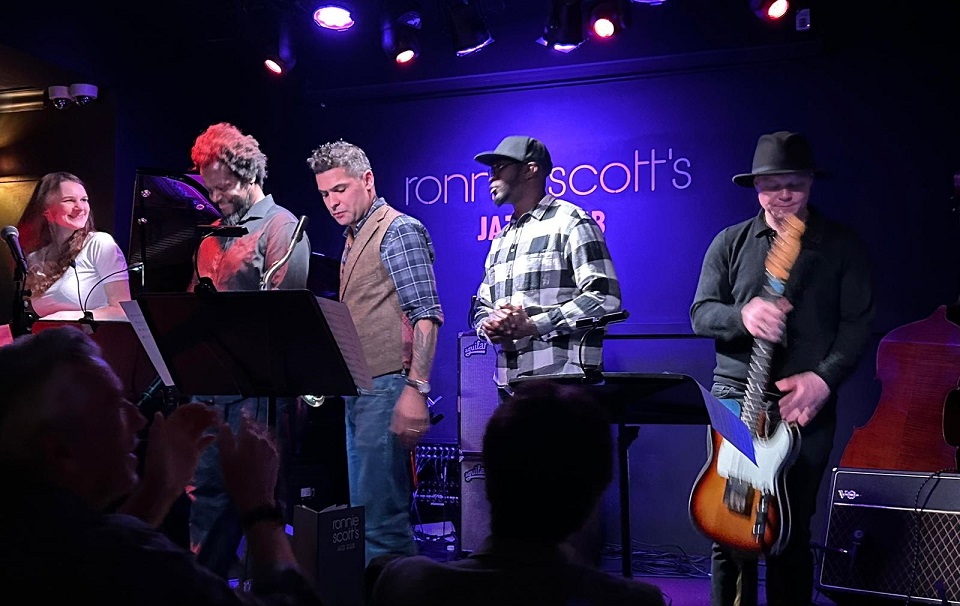
Binker Golding (tenor saxophone), Philip Achille (harmonica), Artie Zaitz (guitar), Sarah Tandy (piano), Dan Casimir (double bass), Jamie Murray (drums)

Ronnie Scott’s, London, 19 April 2024

by John Earls. Photo credits (c) John Earls

The last time I saw Binker Golding at Ronnie Scott’s (June 2021) he and his quintet were performing new material in advance of what was to become the wonderful (and superbly titled) album Dream Like a Dogwood Wild Boy, a collection of tunes traversing across jazz, Americana, country and blues.

Last Friday’s (second house) concert at Ronnie Scott’s was also a showcase for new material, albeit interspersed with a couple of numbers from Dogwood. The new material, played here by a superb sextet, develops the trajectory of Dogwood in innovative and pleasing ways.

Not least is the addition of harmonica player Philip Achille who I’ve previously described as someone “taking his instrument to places you didn’t know it could go”. He did it again here throughout the evening including opening the set with soft, inquisitive and inviting tones. I don’t know if Achille features on the new album (he doesn’t play on Dogwood) but I sincerely hope so.

Of the line-up performing tonight, Sarah Tandy (piano and organ) and recent Arts Foundation Futures Award winner Daniel Casimir (double bass) did play on Dogwood. Artie Zaitz (guitar) and Jamie Murray (drums) completed the sextet. All were excellent, Tandy combining her lyrical piano playing with the organ (sometimes at the same time), Casimir solid and expressive on bass, Zaitz giving an effective guitar edge and Murray particularly impressive with his delicate stick and finger taps (although he can thump too). The Dogwood tracks played were a smoky Love Me Like a Woman and an absolutely captivating version of My Two Dads which saw Golding and Achille engage in a touching call and response of the opening refrain, featuring stunning solos from Casimir, Golding and Tandy. 

The new material is a promising progression and evolution of Golding’s outstanding composing, playing and bandleading qualities. Great tunes with moments of grace and beauty, the last number of the set being a case in point. You don’t always have to finish with an up-tempo banger. Tune titles included I Know I Can Change (whose origin comes from a misconstrued lyric) and Where the Heart Meets the Sky (which might also end up being the title of the new album).

Vocalist Maxine Scott joined Golding (playing piano) and Achille (harmonica) to sing Bob Dylan’s I Shall Be Released for an encore, but it was the sextet’s performance and the prospect of the forthcoming album that truly captured the night.

John Earls is Director of Research at Unite the Union and tweets / updates his ‘X’ content at @john_earls

Published post no.2,155 – Sunday 21 April 2024

In concert – Ian Bostridge, CBSO / Gergely Madaras: Thorvaldsdottir, Britten & Tchaikovsky

Ian Bostridge (tenor), City of Birmingham Symphony Orchestra / Gergely Madaras (above)

Thorvaldsdottir Dreaming (2008)
Britten Les Illuminations Op.18 (1939)
Tchaikovsky Symphony no.1 in G minor Op.13 ‘Winter Daydreams’ (1866, rev. 1883)

Symphony Hall, Birmingham
Wednesday 17 April 2024

Reviewed by Richard Whitehouse Picture of Gergely Madaras (c) Hannah Fathers

This evening’s concert with the City of Birmingham Symphony Orchestra comprised what was an unusually cohesive programme centred on the concept of ‘dreams’, assembled and directed with consistent empathy and insight by the Hungarian conductor Gergely Madaras.

Dreaming was the title as well as the watchword of the piece by Anna Thorvaldsdottir which opened proceedings. Her first major work for orchestra is already characteristic in its eliding between evocations arcadian and desolate, with an undeniable sense of the ominous coming through as the final stages take on an extemporized quality; musicians gradually exiting the sonic frame with just the capricious asides of a cellist remaining. Eduardo Vassallo made the most of this brief spotlight, and the CBSO made its collective presence felt to striking effect.

Arthur Rimbaud’s brief but meteoric spell as a poet in the early 1870s had belated if decisive impact on numerous composers and none more than Britten, his song-cycle Les Illuminations among his finest achievements in any medium. Having sung it many times, Ian Bostridge (above) still manages to point up the growing anticipation of ‘Fanfare’ or breathless excitement of Villes; his wide-eyed wonder in Phrase then graceful musing in Antique matched by the resolute irony of Marine or glancing wit of Royauté. Madaras drew languorous playing from the CBSO strings in Interlude and brought out the ecstatic longing of Being Beauteous, before the fervid imagining of Parade brought this sequence full circle. It remained for Départ to offer a fulfilled exit as poet – and composer – resignedly bids farewell to the realm of dreams.

This gripping account should not have needed Bostridge to address members of the audience after the fourth song, asking they refrain taking pictures on their mobiles while the music was in progress. An overhaul of the management’s current laissez-faire approach might be in order.

After the interval, a comparatively rare outing for Tchaikovsky’s First Symphony. The ‘Winter Daydreams’ of its subtitle implies an unforced though rarely contrary take on formal precepts, as in an opening movement (oddly marked Allegro tranquillo) whose often portentous pauses were well integrated by Madaras into the cumulative symphonic flow. The CBSO woodwind came into own with the Adagio – its oboe melody among its composer’s most affecting, and not least when it returns at the movement’s climax in a mood of expansive if fateful grandeur.

Partly drawn from an earlier piano sonata, the Scherzo exudes a pert animation that Madaras judged to a nicety, as he did the wistful ruminations of its trio. Much the hardest movement to make cohere, the Finale unfolded persuasively from its sombre introduction to a celebratory Allegro replete with fugal episodes; the ensuing build-up (its effect not lost on Shostakovich) to the resounding restatement of its main theme duly capped by an apotheosis whose overkill was (rightly) kept well within limits, thereby setting the seal on this persuasive performance. For imaginative programming and convincing execution, Madaras is at the forefront among conductors of his generation – his rapport with the CBSO evident throughout. This should be equally true when Markus Stenz returns next week for a pairing of Schumann and Bruckner.

Click on the link to read more on the current CBSO concert season, and on the names for more on tenor Ian Bostridge and conductor Gergely Madaras. Click here for an interview Arcana conducted with composer Anna Thorvaldsdottir in 2023

Published post no.2,153 – Friday 19 April 2024