In concert – Quatuor Danel: Shostakovich & Weinberg #3 @ Wigmore Hall

Quatuor Danel [Marc Danel & Gilles Millet (violins), Vlad Bogdanas (viola), Yovan Markovitch (cello)]

Shostakovich String Quartet no.4 in D major Op.83 (1949)
Weinberg String Quartet no.4 in E flat major Op.20 (1945)
Shostakovich String Quartet no.5 in B flat major Op.92 (1952)

Wigmore Hall, London
Tuesday 19 January 2024

by Richard Whitehouse Photo (c) Marco Borggreve

Having got past its second instalment this time around, the Quatuor Danel’s cycle of string quartets by Shostakovich and Weinberg tonight encountered its most impressive programme thus far; the latter’s Fourth Quartet being framed by the former’s Fourth and Fifth Quartets.

Given its public premiere over four years after completion (it seems likely there were private hearings in the interim), Shostakovich’s Fourth Quartet is one among several of his pieces in which Jewish melody and inflection predominates. The key surely lies in emphasizing these as a structural as much as, if not more than, an emotional facet – as the Danel demonstrated with a take on the preludial Allegretto whose fervour never seemed anecdotal. The ensuing Andantino’s heightened pathos becomes anguished at its climax, while the scherzo is one of those speculative movements whose intimations the Danel projects so convincingly. With its implacable heading to an impulsive culmination then its allusive subsiding into an equivocal half-close, the final Allegretto conveys a tangibly but by no means concretely human drama.

Arguably his first masterpiece in the genre, Weinberg’s Fourth Quartet finds this composer tackling the Beethovenian model head-on – albeit with an opening Allegro whose unhurried manner and burnished textures only takes on greater urgency in its latter stages. The Danel brought this out accordingly, then pointed up the expressive contrast with a scherzo whose driving and ingratiating main themes alternate without hope of resolution. No less potently realized was the interplay between strident rhetoric and halting processional in the ensuing Largo, its unrelieved sombreness tentatively countered by a final Allegro which hints at an affirmative end, only to dismiss such possibility with its desperate closing crescendo. Well- received at its premiere, this quartet should have secured Weinberg’s reputation forthwith.

Other than his Twelfth, the Fifth Quartet is Shostakovich’s finest such achievement – directly preceding his Tenth Symphony with which it shares a comparable formal as well as expressive inclusivity. The Danel launched its opening Allegro with ample resolve, as if to underline the cumulative momentum of an outwardly Classical sonata form whose strenuous development carries over into a heightened reprise, then on to a coda whose pizzicato undertow establishes an emotional distance that connects seamlessly with what follows in this continuous design.

What follows is the most inwardly profound of Shostakovich’s slow movements – its overall remoteness tempered by allusion to his recent works then embargoed, with a passing raptness that might or might not be inherently personal in import. The Danel maintained concentration unerringly here, then headed straight into a finale whose initial geniality duly gives way to an explosive central climax and, in turn, tentative retracing of earlier ideas before a coda whose fatalistic radiance yields the most affecting end to any of its composer’s large-scale statements.

It certainly brought out the best interpretively from the Danel, who still found energy for an encore in the guise of a Capriccio that Weinberg wrote in the wake of his First Symphony in 1943: its amiable if sometimes barbed playfulness an ideal way to conclude a superb recital.

You can hear the music from the concert below, in recordings made by Quatuor Danel:

For more information on the next concert in the series, visit the Wigmore Hall website. You can click on the names for more on composer Mieczysław Weinberg and Quatuor Danel themselves.

Published post no.2,125 – Friday 22 March 2024

In concert – Frank Dupree, Philharmonia Orchestra / Santtu-Matias Rouvali: Kapustin, Glinka, Borodin & Rimsky-Korsakov

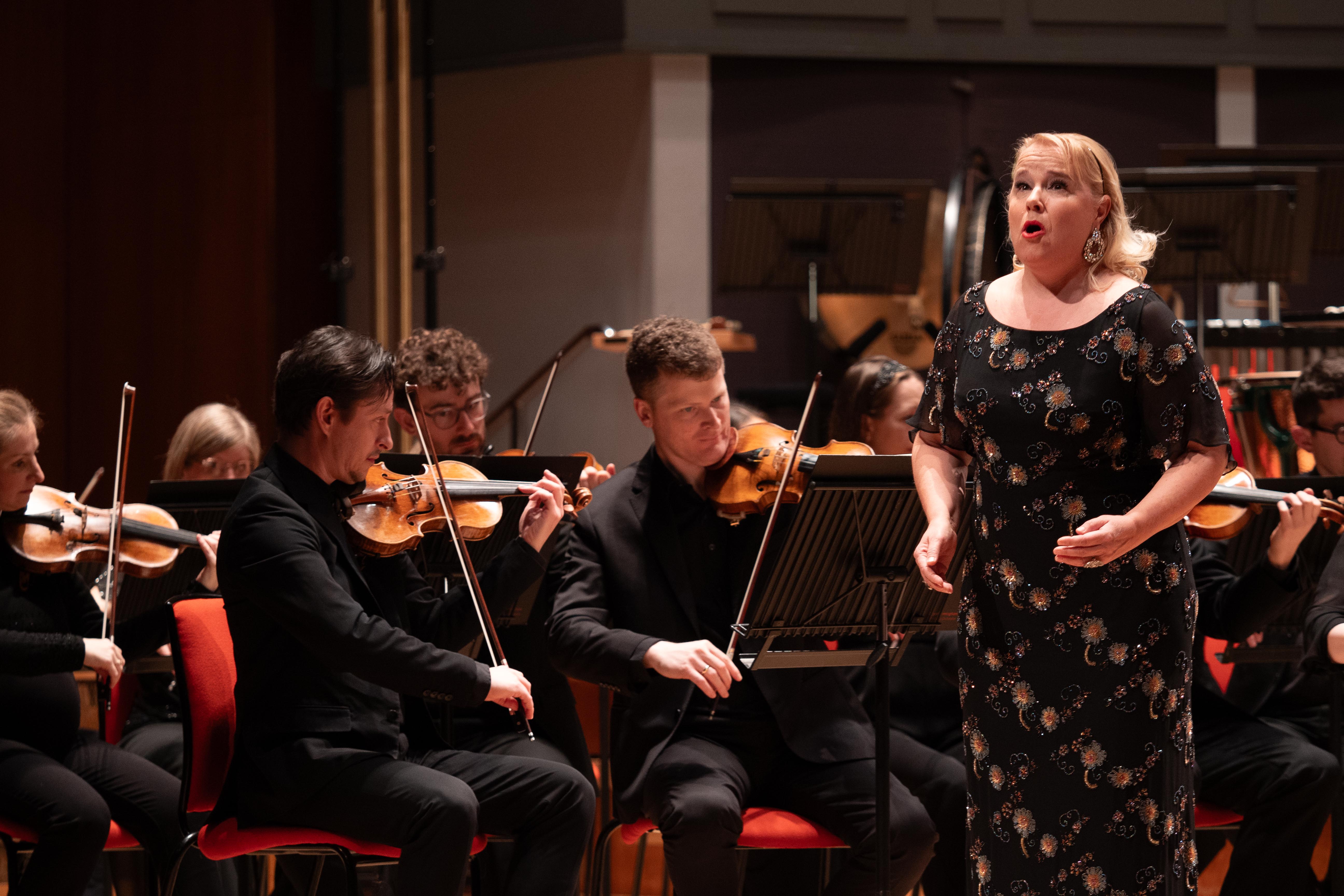
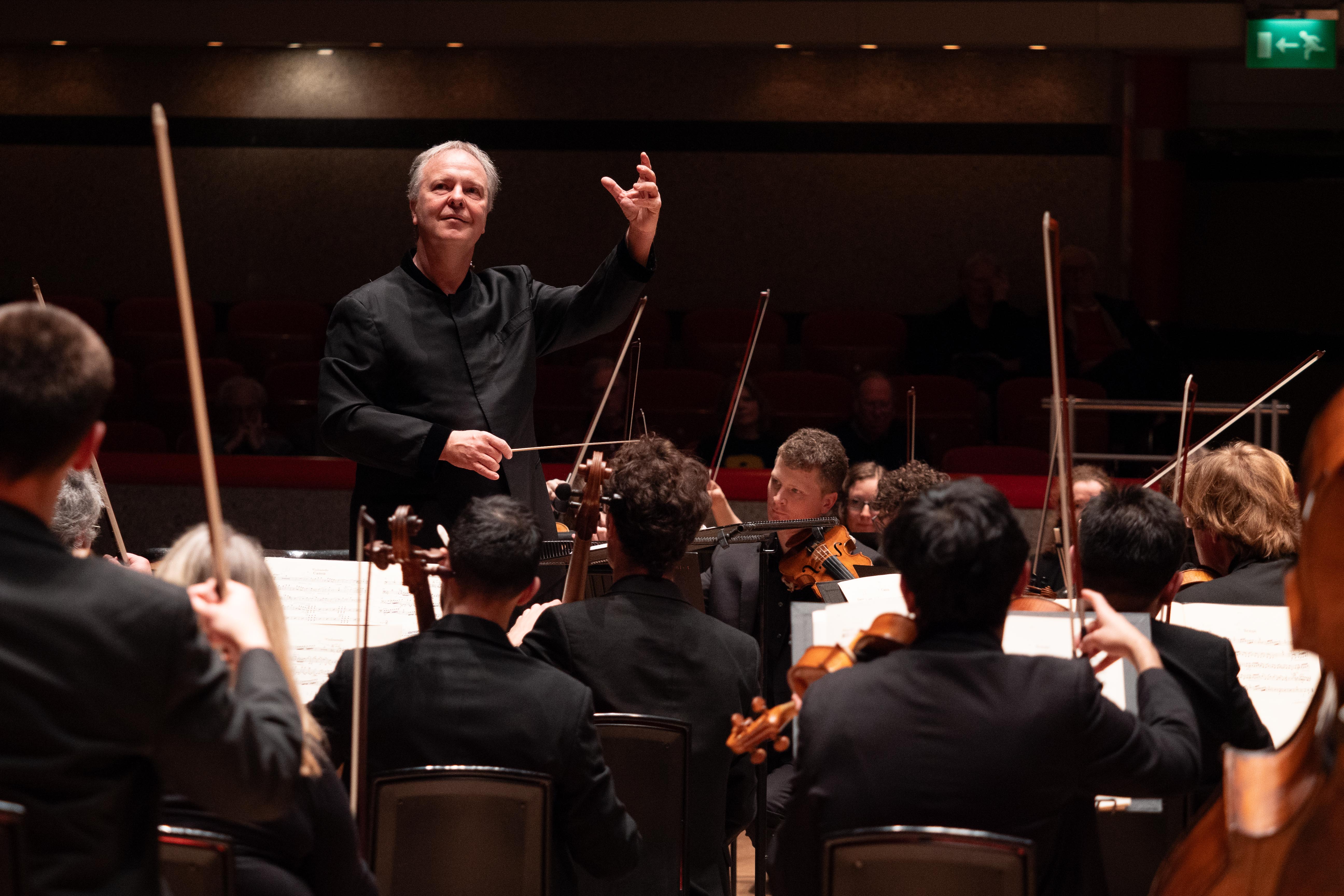
Frank Dupree (piano, above), Philharmonia Orchestra / Santtu-Matias Rouvali (below)

Glinka Capriccio brillante (Spanish Overture no.1 ‘Jota Aragonese’) (1845)
Kapustin Piano Concerto no.5 Op.72 (1993)
Borodin Symphony no.2 in B minor (1869 – 1876)
Rimsky-Korsakov Capriccio Espagnol Op.34 (1887)

Royal Festival Hall, London
Thursday 7 March 2024 (7.30pm)

Reviewed by Ben Hogwood Pictures (c) Raphael Steckelbach (Frank Dupree), Sisi Burn (Santtu-Matias Rouvali)

After this orchestral spectacular, I can confidently say that the Royal Festival Hall is free of cobwebs!

This most appealing program from the Philharmonia Orchestra was a cosmopolitan collection of works with roots in Russia, in the symphonic tradition (Borodin), delivering postcards from Spain (Glinka and Rimsky-Korsakov) or bringing in music from even further across the Atlantic (Kapustin).

The work with the farthest reach took top billing, thanks to the advocacy and breathtaking pianism of Frank Dupree. Making his debut with the Philharmonia, the soloist seized the opportunity to share his love of the music of Nikolai Kapustin, a composer he has championed on record in the past three years.

To call Kapustin ‘eclectic’ would be an understatement, but the label fits his unusual gift for looking outwards from classical music to jazz, boogie-woogie, Latin and even rock. To his credit none of those stylistic references sound hackneyed, and although the single-movement Piano Concerto no.5 is written out on paper it has a fresh, improvisatory quality that Dupree and the Philharmonia fair lifted off the page.

There were fun and games in this performance, harnessing elements of Gershwin, Milhaud and Shostakovich’s jazz writing, but ultimately channelling a style all of Kapustin’s own. Dupree shared the many musical jokes with the audience, while the Philharmonia percussion section – drum kit, bongos, castanets, everything but the kitchen sink! – was on hot form, Santtu-Matias Rouvali conducting with relish. The slow music explored more tender asides, evoking Harlem nights or even poolside in a hotter climate, while the fast music found Dupree exhibiting deceptive virtuosity as he navigated riffs and syncopations aplenty.

Even this wasn’t quite the highpoint, for there followed a high-spirited encore, Dupree leaning into the piano to thrum the strings in an atmospheric introduction to rhythmic high jinks, the percussion section – including Rouvali – out front to joust playfully with the soloist. It brought the house down.

With such a crowd-pleasing concerto, it was to the Philharmonia and Rouvali’s enormous credit that the rest of the program did not suffer, thanks to sparkling performances of music by three of the ‘mighty handful’ from late 19th century Russia.

Glinka’s clever interpolation of Spanish themes into his own Romantic language was brilliantly conveyed, a colourful account where Rouvali’s tempo had just the right ebb and flow. It is easy to forget this music is as old as 1845, and while the influences of Berlioz and Mendelssohn were still relatively fresh there was plenty of swagger in the dancing rhythms, the percussion again enhancing the brassy swagger of the closing pages.

Rimsky-Korsakov’s Capriccio Espagnol was even more successful, a treasure chest of melodies opened with evident enthusiasm by Rouvali, whose rapid tempo changes did occasionally leave the string section needing to make up ground. Cadenzas for violin (orchestra leader Zsolt-Tihamér Visontay), flute (Samuel Coles), clarinet (Mark van de Wiel) and harp (Heidi Krutzen) were superbly executed, Rimsky’s mini ‘concerto for orchestra’ revealed in glorious technicolour.

Rimsky wrote the Capriccio while orchestrating his friend Borodin’s opera Prince Igor – and it was his own Symphony no.2 that was in theory the most ‘sober’ of the night’s four works. We reckoned without a powerful performance from Rouvali and his charges, however, making the most of a work bursting with melodic ideas that should be heard much more often in the concert hall. The first of these ideas sets the tone for the symphony, a stern utterance with strings digging in and brass solemnly intoning their thoughts. Once heard the melody sticks in the listener’s mind, dominating the first movement where symphonic arguments were tautly exchanged.

There was room for lightness, however, in the quickfire scherzo and jubilant finale. These movements were bisected by an emotive third movement of deeper Russian origin, its theme lovingly delivered by cellos but finding plangent brass (the wonderful horn section led by Ben Hulme) and superb woodwind solos to complement. Rouvali relished the chance to dust off this relative symphonic outcast as part of a thrilling, memorable concert. The smiles on the faces of the Royal Festival Hall concertgoers as they filed into the open air said it all.

You can find more information on further concerts at the Philharmonia website

Published post no.2,112 – Saturday 8 March 2024

In concert – Philharmonia Orchestra Music of Today: Messiaen’s Quartet for the End of Time

Mark van de Wiel (clarinet, above), Zsolt-Tihamér Visontay (violin), Karen Stephenson (cello), Tom Poster (piano)

Messiaen Quatuor pour le fin du temps (Quartet for the End of Time) (1941)

Royal Festival Hall, London
Thursday 7 March 2024 (6pm)

Reviewed by Ben Hogwood Pictures (c) Guy Wigmore (Mark van de Wiel, Zsolt-Tihamér Visontay), Marina Vidor (Karen Stephenson), Elena Urioste (Tom Poster)

The Philharmonia Orchestra’s long-running Music of Today series continued with an opportunity to experience Olivier Messiaen’s 1941 masterpiece. Given its first performance in a German prisoner-of-war camp (in what is now Zgorzelec, Poland), the Quatuor pour la fin du tempsQuartet for the End of Time – was very much a product of circumstances.

The composer, in one of his rare forays into chamber music, had just three instruments available to him, plus himself at the piano. He thrived on the restrictions, using the New Testament book of Revelation as his stimulus to create an eight-movement piece that if anything has grown in stature and relevance with every passing year.

Tonight’s venue may have been a great deal more spacious than the cramped conditions of the premiere, but the quartet here lacked nothing in close-up intimacy, the sizeable audience leaning forward in their seats to engage with the music. Initially it was the piano of Tom Poster (below) that provided a strong foundation, his spacious chords catching the chill of the dawn air in Liturgie de cristal as the other three instruments circled with attractive birdsong, the music awakening softly.

The Vocalise, pour l’Ange qui annonce la fin du temps (Vocalise, for the Angel who announces the end of time) provided a firm reality check, though here too its dramatic lines were clear and spacious rather than combative, the players continuing to find an inner serenity through Messiaen’s writing. Violinist Zsolt-Tihamér Visontay and cellist Karen Stephenson thrived on these long melodic phrases, derived from plainchant.

The emotive centre of this performance was undoubtedly the solo for clarinet, Abîme des oiseaux (Abyss of birds), an incredibly moving soliloquy played with exceptional technique by Mark van de Wiel. Some of the notes started with barely audible attack while others were at the outer limits of his volume in a performance of incredible poise and control. Standing while the other musicians sat, he also let the silences between notes speak as loudly as the phrases themselves, so that even the persistent coughing of the audience was rendered into silence.

The delicate Intermède broughout out the dance elements of Messiaen’s writing, before Stephenson (above) and Poster gave a thoughtful, meditative Louange à l’Éternité de Jésus (Praise to the eternity of Jesus), beautifully played and appropriately reverent. This ensured a vivid contrast with the following Danse de la fureur, pour les sept trompettes (Dance of fury, for the seven trumpets), where the four instruments played their angular melodies with commendable precision.

Fouillis d’arcs-en-ciel, pour l’Ange qui annonce la fin du temps (Tangle of rainbows, for the Angel who announces the end of time) found Visontay (below) to the fore in the audio balance, van de Wiel slightly backward in the mix, before Visontay and Poster led us to the end itself with a radiant Louange à l’Immortalité de Jésus (Praise to the immortality of Jesus). This remarkable piece of music continues to carry a strong impact, and as the two instruments strained at the edge of audibility, Visontay reaching the highest pitch, the sense of arrival was all-consuming.

They put the seal on a memorable performance, one of the more emotive ‘rush hour’ concerts you could wish to hear, and one whose impact was felt far beyond that evening’s orchestral concert.

You can listen to a recording of Quatuor pour le fin du temps below, with Mark van de Wiel and Zsolt-Tihamér Visontay joined by cellist Mats Lidström and pianist Min-Jung Kym on the Psalmus label:

Meanwhile you can find more information on further concerts at the Philharmonia website

Published post no.2,111 – Friday 8 March 2024

In concert – Anu Komsi, CBSO / Sakari Oramo: Sibelius Tempest Suite & Sypmhony no.7; Richard Strauss & Merikanto

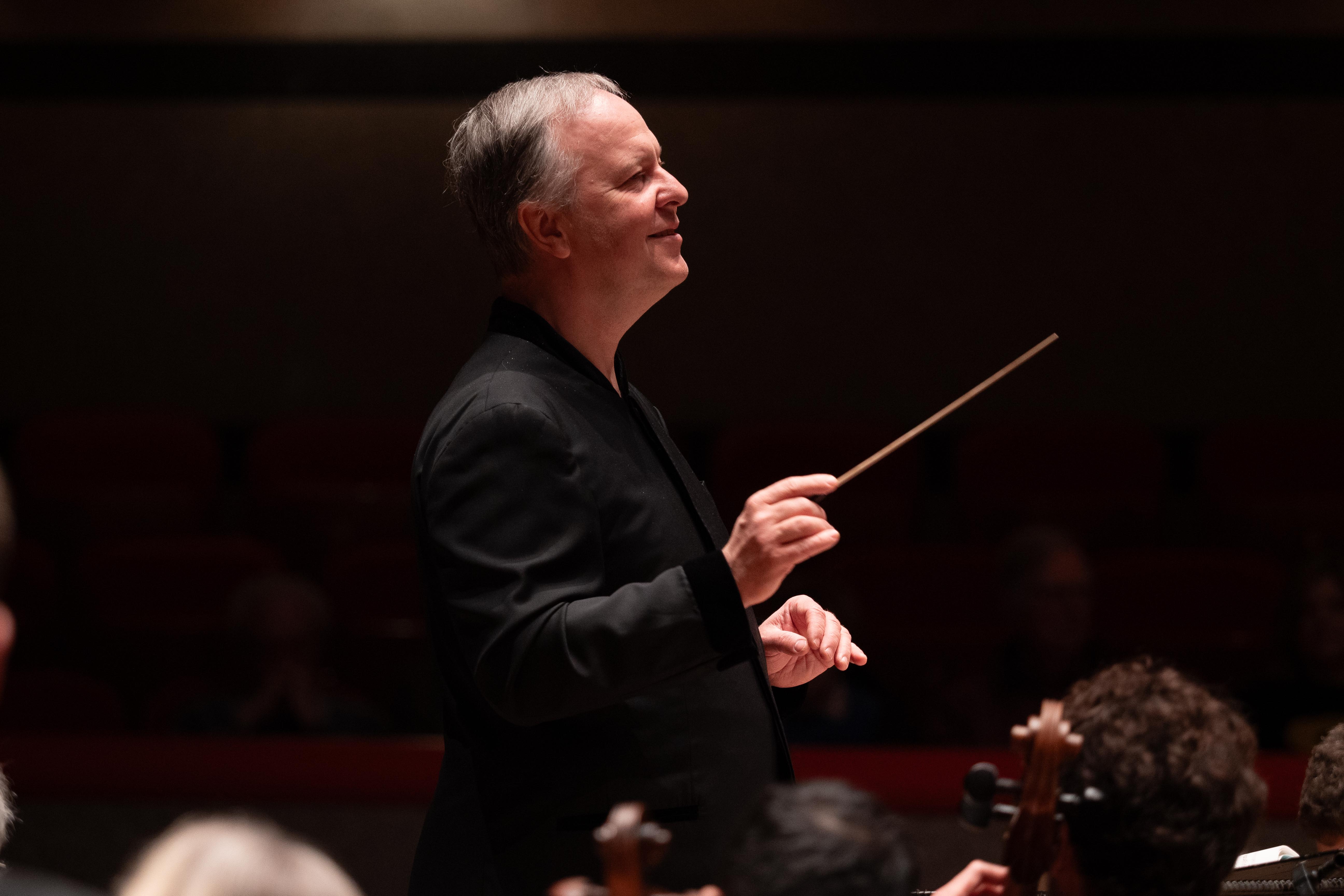
Anu Komsi (soprano), City of Birmingham Symphony Orchestra / Sakari Oramo (above)

Sibelius The Tempest (1925-6) – Suite no.1 Op.109/ 2
Richard Strauss Vier letzte Lieder, AV150 (1948)
Merikanto Ekho (1922)
Sibelius Symphony no.7 in C major Op. 105 (1923-4)

Symphony Hall, Birmingham
Wednesday 28 February 2024

Reviewed by Richard Whitehouse Pictures (c) Hannah Blake-Fathers

Could it really be 15 years since Sakari Oramo last conducted the orchestra of which he was music director for a decade? Time has passed, but his rapport with the City of Birmingham Symphony Orchestra was evident throughout what proved a well-planned and finely executed concert.

Sibelius featured prominently during Oramo’s tenure, with recorded and live cycles of the symphonies, so it was natural his music frame this programme. His music for The Tempest is the most diverse of his theatre works – the First Suite drawn from this lavish score opening with a searing evocation of The Oak Tree, before heading into a characterful Humoreske then Caliban’s Song with its telling bizarrerie. The Harvesters reminded of Sibelius’s gift for ‘light music’, as too the animated Canon and insinuating Scene, to which the plangent Berceuse then ominous Interlude made for startling contrast. A truncated version of The Tempest music that provided the prelude followed on with due seamlessness – its teetering on the metaphorical edge brought up abruptly if convincingly in this gripping performance.

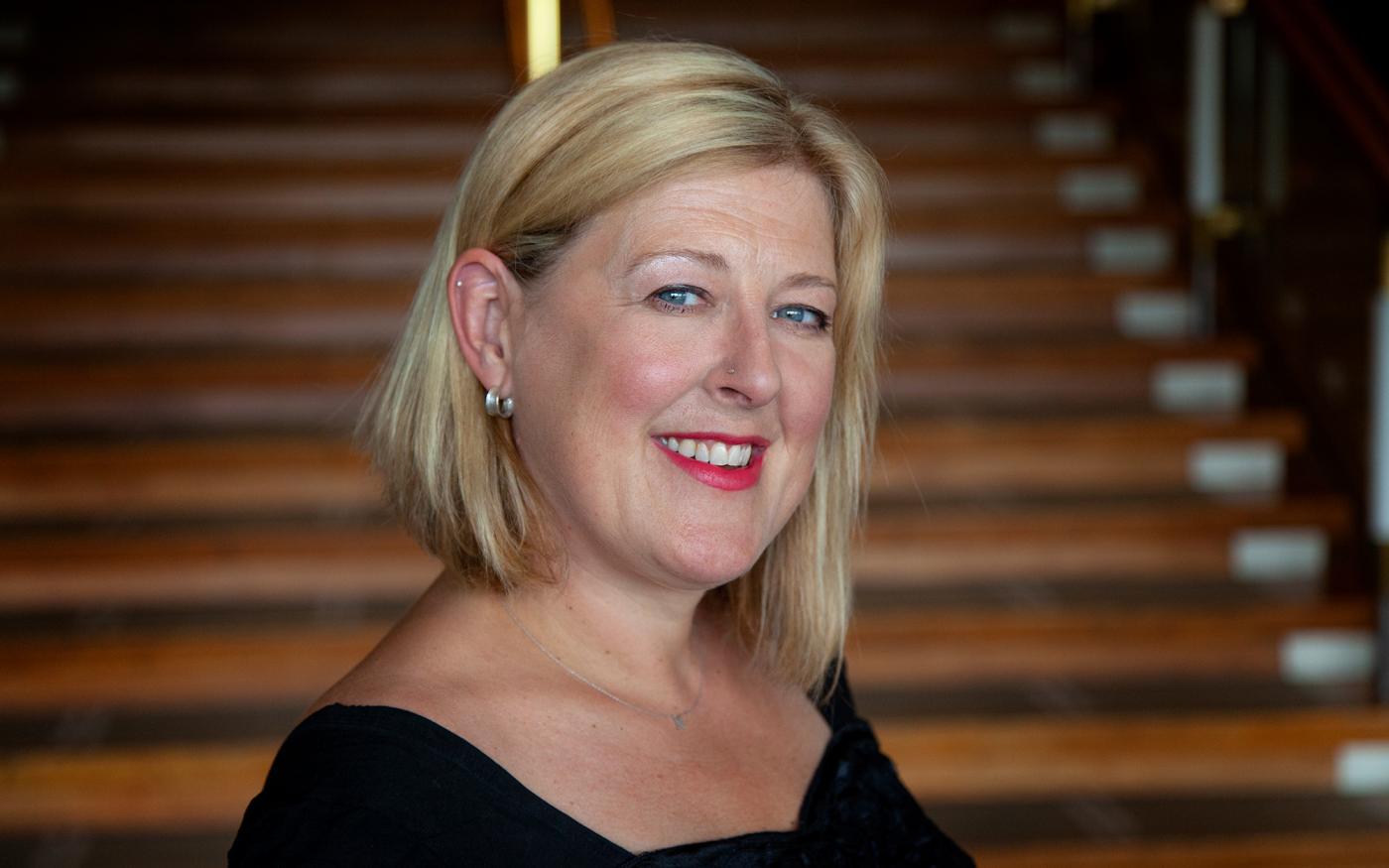
Anu Komsi (above) then joined the orchestra for Richard Strauss’s Four Last Songs – a sequence which often gains emotional gravitas as it proceeds, though a slight edginess in Frühling gave it greater expressive ambivalence prior to the fatalism of September – the most perfectly realized of these songs. The growing rapture of Beim Schlafengehen featured a poised violin solo from Eugene Tzikindelean, then Komsi gave of her eloquent best in Im Abendrot – its euphonious postlude accorded suitably spacious treatment by Oramo as this evanesces towards eternity.

Komsi returned after the interval with what must have been a first hearing in Birmingham for Ekho, a short but arresting scena by Finnish composer Aarre Merikanto. Written just after his opera Juha, at the start of his most innovative period, this draws on the example of Sibelius’s Luonnotar along with the post-Impressionism of Koechlin and Roussel. Its intricately detailed textures complement a vocal line as virtuosic technically as it is audacious expressively, one with which Komsi was in her element as this music heads almost intuitively to a furtive close.

Fascinating to recall while Merikanto was pursuing so fractured a musical discourse, Sibelius was working towards his most integrated statement. Oramo has given many performances of the Seventh Symphony, but the present one felt exceptional in the ease and inevitability of its formal follow-through. The eliding from one section to the next was realized with a rightness which, as with the motivic constituents from which this work emerges, never drew attention to itself other than during moments of greatest expressive focus – notably those appearances of the trombone theme which ensure unity, even when the music retreats from its emotional apex into a coda not so much final as immovable. Nor was this achieved through conscious interpretation, Oramo setting a course that allowed the musicians simply to play the music.

This impressive performance rounded off a no less impressive evening. Before the last work, Oramo spoke about the significance his CBSO tenure had for his conducting and his regret this ‘reunion’ had taken so long. Hopefully his next appearance will not be so long in coming.

Click on the link to read more on the current CBSO concert season, and on the names for more on soprano Anu Komsi and conductor Sakari Oramo.

Published post no.2,106 – Sunday 3 March 2024

In concert – Maria Dueñas, CBSO / Kazuki Yamada: Beethoven Violin Concerto & Elgar ‘Enigma’ Variations

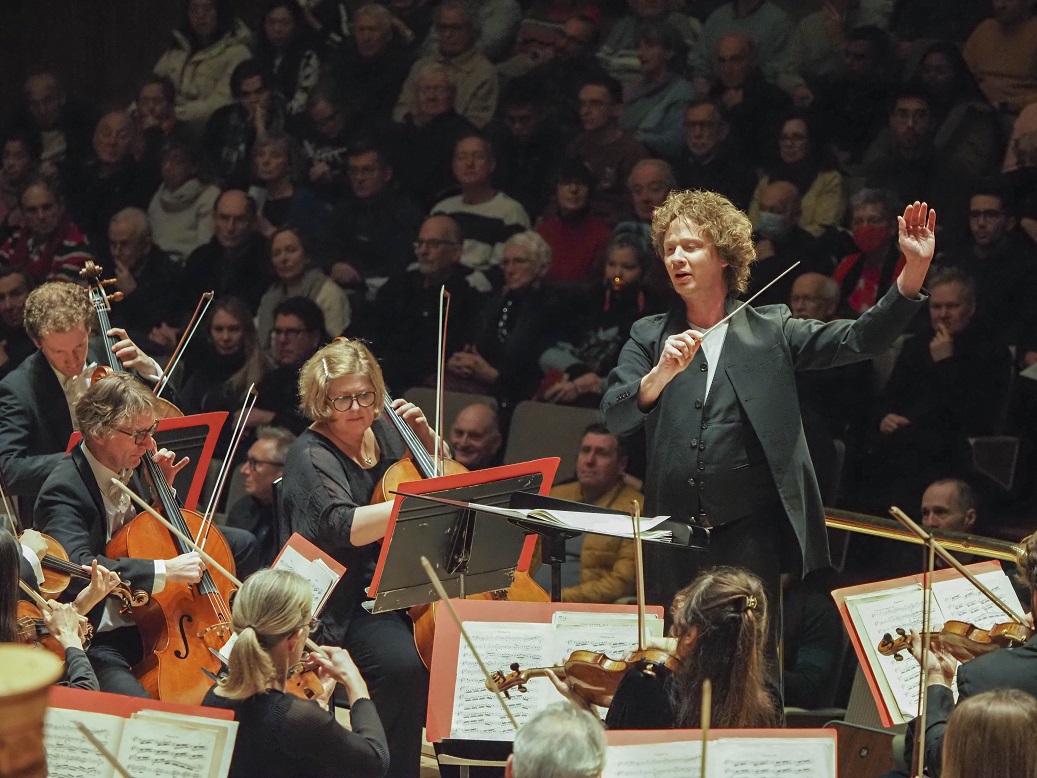
Maria Dueñas (violin, above), City of Birmingham Symphony Orchestra / Kazuki Yamada (below)

Beethoven Violin Concerto in D major Op. 61 (1806)
Elgar Variations on an Original Theme, ‘Enigma’, Op. 36 (1898-9)

Symphony Hall, Birmingham
Thursday 22 February 2024

Reviewed by Richard Whitehouse Picture (c) Tam Lan Truong

Having given its ‘first part’ yesterday evening, Kazuki Yamada and the City of Birmingham Symphony Orchestra moved on to ‘Elgar & Beethoven: Part 2’ this evening, with an astute coupling of the latter’s Violin Concerto being followed by the former’s ‘Enigma’ Variations.

Anyone having heard Maria Dueñas in Lalo’s Symphonie espagnole at last year’s Proms will know she is a violinist destined for great things, as was reinforced her take on the Beethoven. Admittedly she and Yamada were not consistently as one in its lengthy first movement – the soloist’s tendency to rhapsodize and to tease out expressive nuance jarring, however slightly, with the conductor’s forthright assertiveness in tuttis. Yet there was no absence of insight on either part, such undeniable eloquence continuing through a central Larghetto that was more adagio as Dueñas conceived it, though which still conveyed a rapt inwardness. The ensuing Rondo lifted this mood appreciably, its impulsive main theme and whimsical episodes deftly eliding into a purposeful traversal of a finale whose conclusion was nothing if not decisive.

As with her recent recording of this concerto, Dueñas played her own cadenzas. That for the first movement had Bach-like deliberation and a harmonic astringency which readily held the attention; if that connecting the latter two movements seemed a little too protracted, and that towards the close of the finale rather offset its overall momentum, there could be no doubting her underlying conviction. She duly acknowledged the considerable applause with a suitably serene, never cloying arrangement for violin and strings of Fauré’s early song Après un rêve.

In his initial remarks, Yamada recalled conducting a Japanese brass band in the First Pomp and Circumstance March as his first experience with Elgar, and this account of the ‘Enigma Variations amply reaffirmed his identity with the composer. Not that this was an integrated or seamless account – Yamada’s halting, even ambivalent take on the Theme intensified in the first variation and, while the swifter variations had no lack of character or impetus, it was in such as the fifth variation’s suffused earnestness with whimsy that this reading left its mark.

On one level the Enigma is a forerunner of the ‘concerto for orchestra’ with its emphasizing various soloists – not least viola in the sixth variation, dextrously negotiated by Adam Römer, or cello in the 12th where Eduardo Vassallo was at his ruminative best. Initially a little stolid, Nimrod built to a culmination of real pathos, and even finer was Yamada’s take on the 10th variation for an intermezzo of unfailing poise and deftness. A tangible atmosphere pervaded the 13th variation – uncertainty as to its dedicatee just part of its fascination, with those veiled allusions to Mendelssohn elegantly rendered by Oliver Janes. From here to the final variation in all its confidence and anticipation was to be recall the impact this music made at the end of the 19th century, Yamada steering it with unforced rightness towards a resounding peroration. Overall, a performance full of insight and one hopes that Yamada will be continuing his Elgar exploration in future seasons. Next week, though, brings two concerts for which former music director Sakari Oramo will be returning to this orchestra for the first time in some 15 years.

Click on the link to read more on the current CBSO concert season, and on the names for more on violinist Maria Dueñas and conductor Kazuki Yamada. Arcana’s Listening to Beethoven series will reach the Violin Concerto soon!

Published post no.2,101 – Tuesday 27 February 2024