In concert – BBC Singers / Martyn Brabbins @ St Paul’s Knightsbridge – Holst, Britten, Garrard, Elgar & Pickard

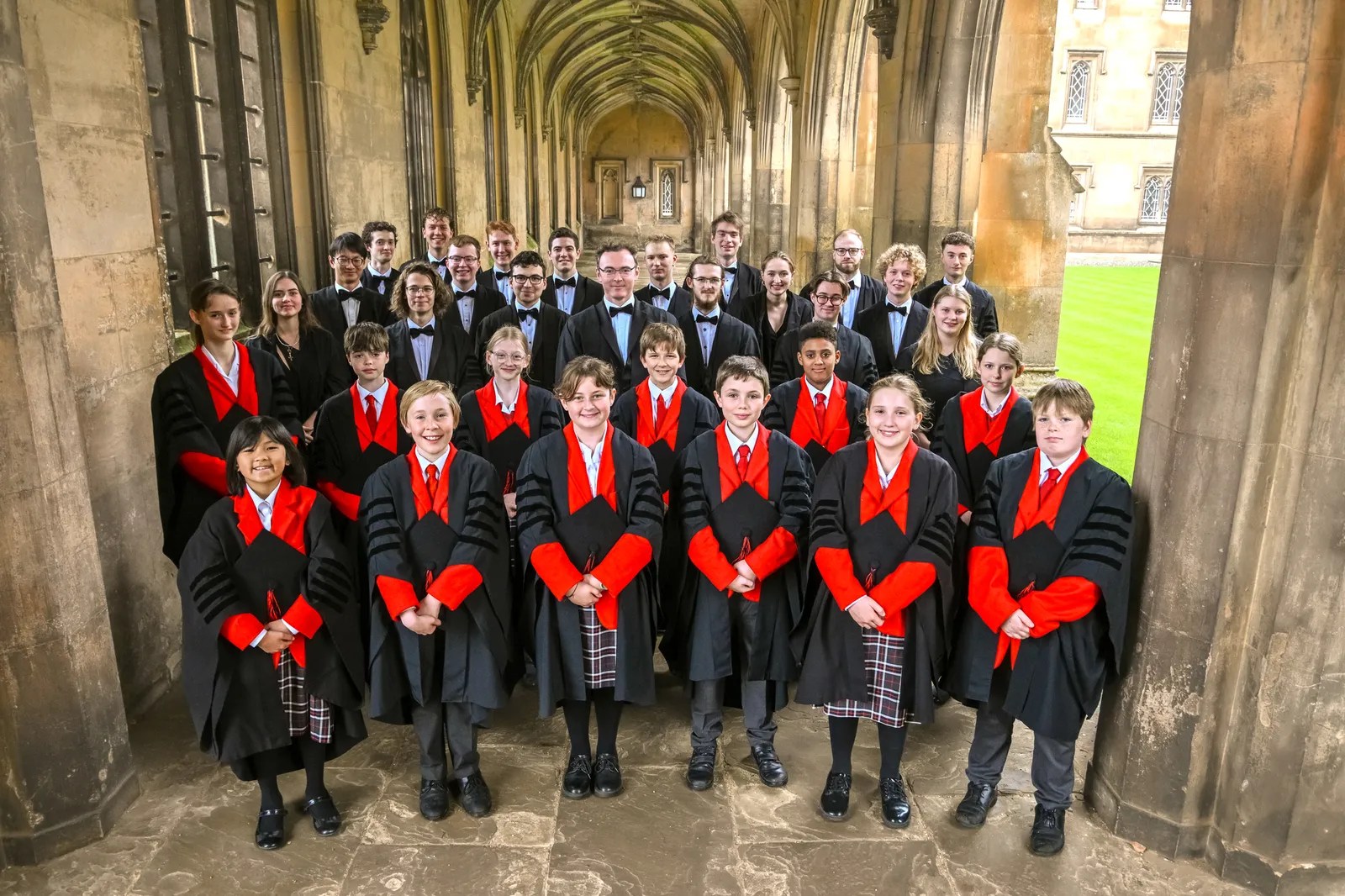
BBC Singers, Elizabeth Bass (harp), Richard Pearce (piano), Andrew Barclay (percussion) / Martyn Brabbins

Holst Choral Hymns from the Rig Veda – Group 3, H90 (1910)
Britten The Ballad of Little Musgrave and Lady Barnard (1943)
Garrard Missa Brevis (2017-18)
Elgar Five Part-Songs from the Greek Anthology Op.45 (1902)
Pickard Elemental (2024-25) (BBC commission: World premiere)

St Paul’s, Knightsbridge, London
Friday 19 September 2025

Reviewed by Richard Whitehouse

The upsurge of interest in and performances by the BBC Singers in the wake of its intended demise shows little sign of abating, and there could be few vocal ensembles able to put on a programme as stylistically inclusive or as technically demanding as that heard this afternoon.

Nowhere more so than Elemental by John Pickard, its first performance occupying the second half. Never absent from the composer’s output, choral music came into own with the powerful Mass in Troubles Times (premiered nearby at St Peter’s, Eaton Square in 2019) and the present work can be heard as a continuation in terms of its underlying concept. A further collaboration with author and theologian Gavin D’Costa, its form is of a journey through the elements such as Pickard had favoured earlier in his output but here with its emphasis firmly on the spiritual arising out of human concerns. Whether individually or collectively, the writing for 18 voices could hardly be more varied and imaginative, while the obbligato roles for harp plus a single percussionist playing across the spectrum of instruments enhances these settings accordingly.

After the evocative Prologue with its Paracelsian take on living matter, Earth draws on the recollections of those in the Tham Luang Cave Rescue – notably teenagers of the Wild Boars football team – in music whose initial bravado gradually assumes a near metaphysical import. Fire integrates its Shakespeare quotations into consideration of this most transformative and cathartic of elements. Air centres on Bessie Coleman with her ambition, racially rather than personally motivated, to become the first professional pilot from African-American ancestry – her combative and ultimately ill-fated career depicted with often graphic immediacy. Water then illustrates the Biblical flood narrative from an oblique and even ambivalent perspective, before Epilogue returns to evocation of the numinous as it builds with a frisson of emotion.

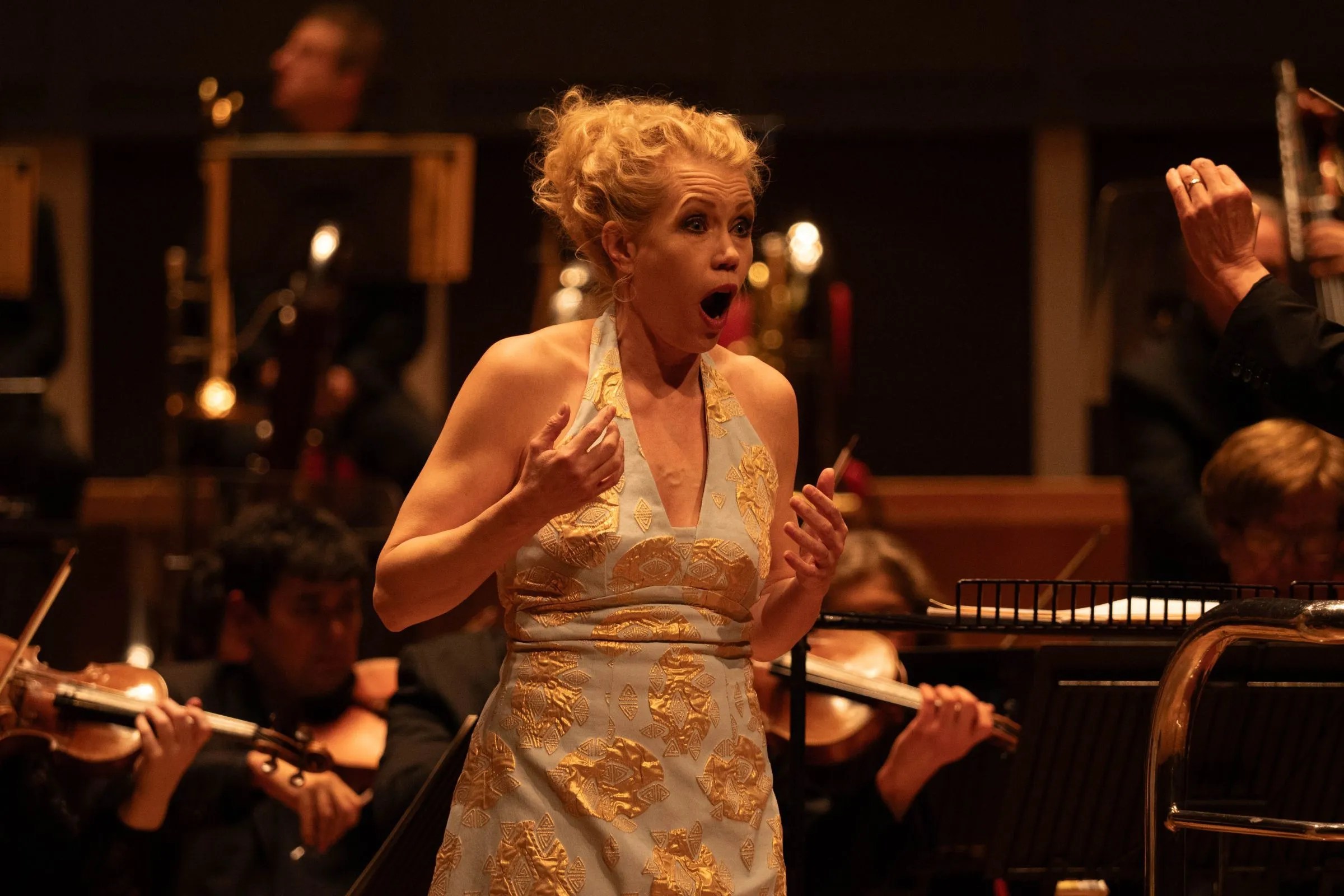
Not that the first half was any mere preparation. Most intimate and alluring of four such sets, the third group of Holst’s Choral Hymns from the Rig Veda traverses the ethereal, the limpid, the hieratic then the questing in the company of female voices and harp. The former were no less attuned to the greater astringency of Sara Garrard’s Missa Brevis – its bracing inclusion of traditional Estonian music offset by the greater introspection elsewhere; these contrasted aspects finding at least a degree of release with the emotional immediacy of the Agnus Dei.

Heard in alternation, the male voices duly came into their own with Britten’s The Ballad of Little Musgrave and Lady Barnard – its folk melody (Matty Groves) stretched through this plangent wartime setting with piano of illicit love, innocent betrayal, desperate revenge and stark lament. Facets that barely feature in Elgar’s Five Part-Songs from the Greek Anthology yet these brief if characterful treatments of translations by Alma Strettell, no less typical than his major choral and orchestral works from this period, were dispatched here with due relish.

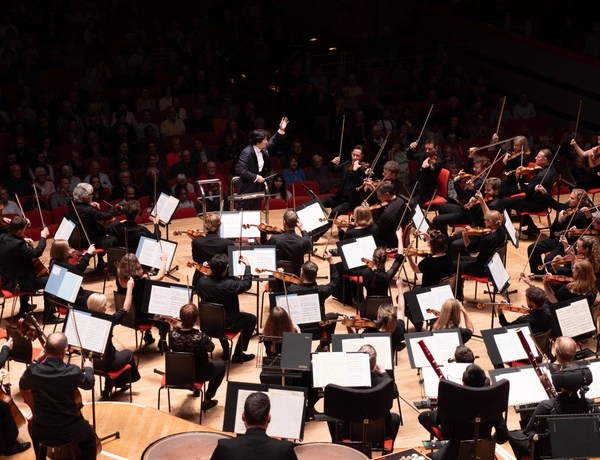
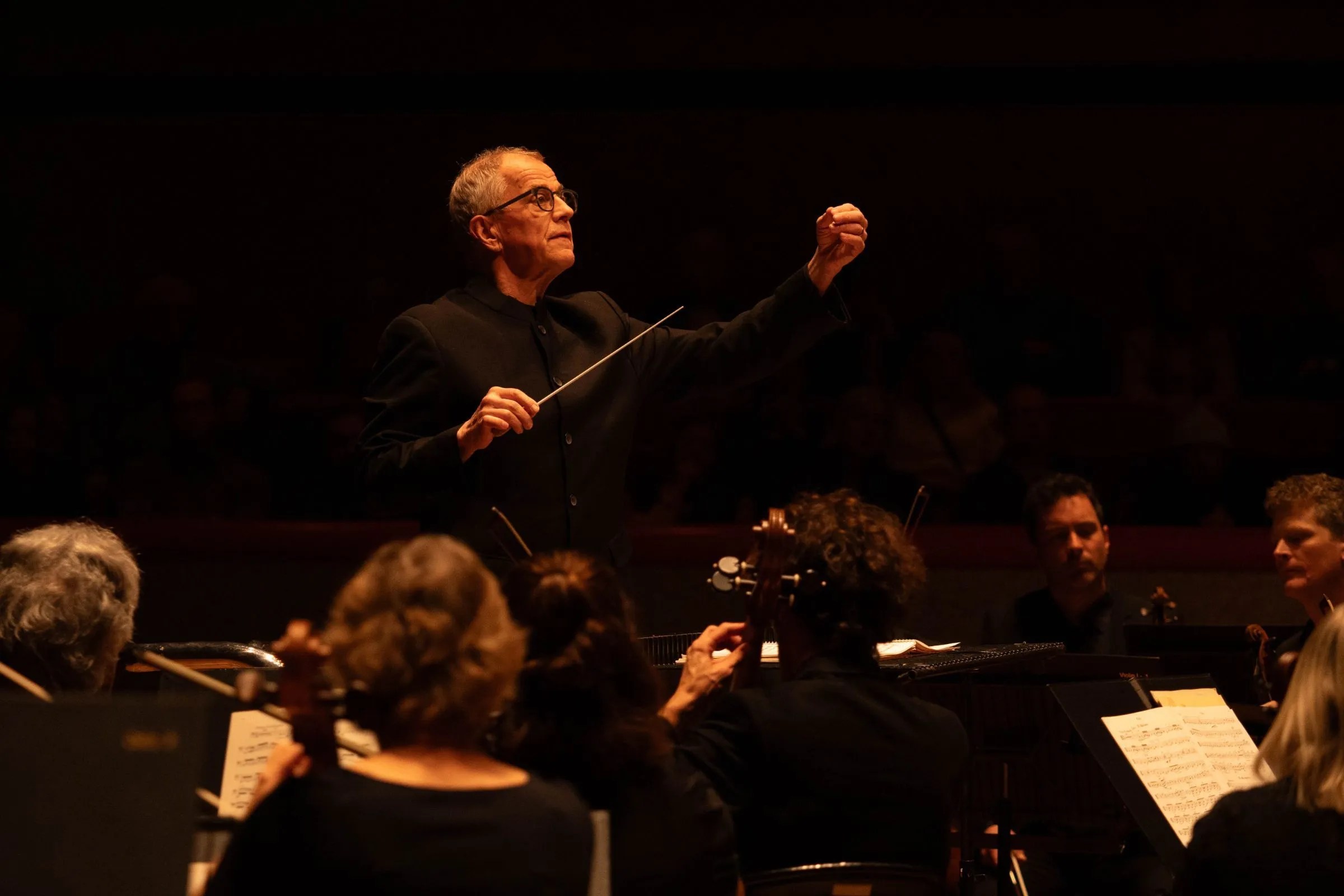
Whatever else, this showcase with substance was conducted with unfailing insight by Martyn Brabbins, whose prowess in choral repertoire needs hardly more reiterating than his advocacy of Pickard, and is absolutely worth hearing when broadcast by BBC Radio 3 this Wednesday.

You can hear the BBC Radio 3 broadcast on Wednesday 24 September by clicking here

For more information on the artists, click on the names: BBC Singers, Martyn Brabbins, Elizabeth Bass, Richard Pearce and Andrew Barclay, and composers John Pickard and Sara Garrard

Published post no.2,664 – Sunday 21 September 2025

In Appreciation – Christoph von Dohnányi

by Ben Hogwood Picture by Clive Barda

In the last week we learned of the sad news of the death of conductor Christoph von Dohnányi, at the age of 95.

You can read an obituary for him on the Guardian website, and tributes from each of the orchestras with which he had a special relationship – the Cleveland Orchestra, where he was chief conductor from 1984 until 2002, the Philharmonia Orchestra, where he was principal guest conductor, then principal conductor from 1997 to 2008, then honorary conductor for life – and the Vienna Philharmonic Orchestra, with whom he worked from 1966 to 2019.

Dohnányi’s prodigious discography, mostly recorded on the Decca Classics, Telarc and Signum Classics labels, is rich in opera and symphonic repertoire, but he also had a reputation for fine recordings of modern music, including colourful examinations of the worlds of Webern, Carl Ruggles and Lutosławski. These recordings, together with a special Cleveland account of Dvořák’s Symphony no.6, make up the playlist below:

https://tidal.com/playlist/ae221923-6f02-4402-8d59-932b6a79c265

Published post no.2,656 – Saturday 13 September 2025

In Appreciation – Arvo Pärt at 90

by Ben Hogwood Picture by Kauppo Kikkas, used from the ECM Records website

Today marks the birthday of one of our most important and best-loved composers, the Estonian Arvo Pärt.

Pärt is best known as a composer with the ability to write music with a deep, spiritual connection, that often has a haunting and meditative quality. Yet a listen to a range of his works confirms that he is – and has been – so much more than that, with an early body of work that is uncompromising and challenging, to be heard alongside the deceptively simple, child-like pieces that make such an easy transition to relaxing playlists.

Pärt is most definitely a ‘playlist composer’, as short pieces such as Fur alina, Fratres and Cantus in memoriam Benjamin Britten confirm…but the playlist below brings these together with some of the earlier pieces, where a rebellious, pre-punk approach brought startling and compelling results. Try listening without skipping, so that you include the fascinating Symphony no.2 and the Credo. In context, the remarkable qualities of the shorter pieces take on new meaning.

You can listen to the playlist on Tidal below:

https://tidal.com/playlist/a304b83f-388f-4fc3-acd2-b4e7c3134b05

You can also listen to Warner’s excellent compilation The Sound of Arvo Pärt below:

Published post no.2,646 – Wednesday 3 September 2025

In concert – Vienna Philharmonic Orchestra / Franz Welser-Möst @ BBC Proms: Mozart & Tchaikovsky

Vienna Philharmonic Orchestra / Franz Welser-Möst (above)

Mozart Symphony no.38 in D major K504 ‘Prague’ (1786)
Tchaikovsky Symphony no.6 in B minor Op.74 ‘Pathétique’ (1893)

Royal Albert Hall, London
Tuesday 9 September 2025

Reviewed by Ben Hogwood Photos (c) BBC / Chris Christodoulou

The music of Mozart is the lifeblood of the Vienna Philharmonic Orchestra, so to describe their performance of the composer’s Prague symphony as routine is to say that everything was present and completely idiomatic.

Completed in Vienna, the Prague deserves to be mentioned with the last three symphonies as among Mozart’s greatest. In the hands of guest conductor Franz Welser-Möst, its phrases were stylishly turned, violins silky-smooth but keeping clear of full fat over-indulgence. This performance drew the audience in, with a chamber orchestra sound that acquired more beef when needed in the first movement, which had appropriate drama, or the boisterous passages of the finale. The woodwind were superb throughout.

Most intriguing was the Andante, a thoughtful repose whose chromatic melodies were lovingly shaped, while the central section was notable for its autumnal frissons whenever the music headed for a minor key. Meanwhile the faster music was imbued with the spirit of the dance, a performance carefully considered but let off the leash when appropriate.

Tchaikovsky’s Pathétique symphony took a while to get going, revealing the composer’s own Mozartian influence in the process. Initially the first movement felt underpowered, its sense of dread kept to a minimum and the second theme kept within itself – though that did mean a particularly beautiful clarinet solo from Matthias Schorn. This turned out to be an effective interpretative ploy on the part of Welser-Möst, for the impact of the stormy section was heightened, the orchestra suddenly playing hell for leather.

The 5/4 metre of the second movement was persuasively realised, the lilt of its dance compromised by unexpected syncopations, alternating between charming and disturbing. By this point the Proms audience notably rapt in their attention, and still between movements.

The scherzo felt Viennese yet acquired a manic need to please more in keeping with Mahler – not encouraged as much by Welser-Möst as previous Vienna Philharmonic incumbents (Herbert von Karajan, for example) but effective, nonetheless. It all set up the devastating pathos of the finale, taken relatively smooth and never lingering, but still uncommonly moving. Double basses were appropriately knotty, while the effect of the stopped horns, playing low and loud, was genuinely chilling. The fabled gong stroke, on the light side, was still a telling moment in the hall, as was the silence following the last note, Welser-Möst giving us over a minute to consider the masterpiece we had just heard. After that, there could be no encore.

Franz Welser-Möst is a subtle conductor who over the years has developed a close relationship with his charges in Cleveland and Vienna particularly. His poised approach brings optimum virtuosity and watertight ensemble, to which can be added artistic approaches with a great deal to commend them. In this case both Mozart and Tchaikovsky were the beneficiaries.

You can listen back to this Prom concert on BBC Sounds until Sunday 12 October.

Click to read more about the BBC Proms

Published post no.2,653 – Wednesday 10 September 2025

In concert – Lukas Sternath, BBC Singers, Symphony Chorus & Orchestra / Sakari Oramo @ BBC Proms: Bliss ‘The Beatitudes’, Grieg & Gipps

Lukas Sternath (piano), Elizabeth Watts (soprano), Laurence Kilsby (tenor), BBC Singers, BBC Symphony Chorus, BBC Symphony Orchestra / Sakari Oramo

Gipps Death on the Pale Horse Op.25 (1943) [Proms premiere]
Grieg Piano Concerto in A minor Op.16 (1868 rev.1907)
Bliss The Beatitudes F28 (1961)

Royal Albert Hall, London
Sunday 7 September 2025

Reviewed by Richard Whitehouse Photos (c) BBC / Chris Christodoulou

This evening’s Prom – launching the final week of the present season – was billed as ‘Grieg’s Piano Concerto’, no doubt the reason why many in the audience were attending while hardly being the most interesting aspect of a typically adventurous programme from Sakari Oramo.

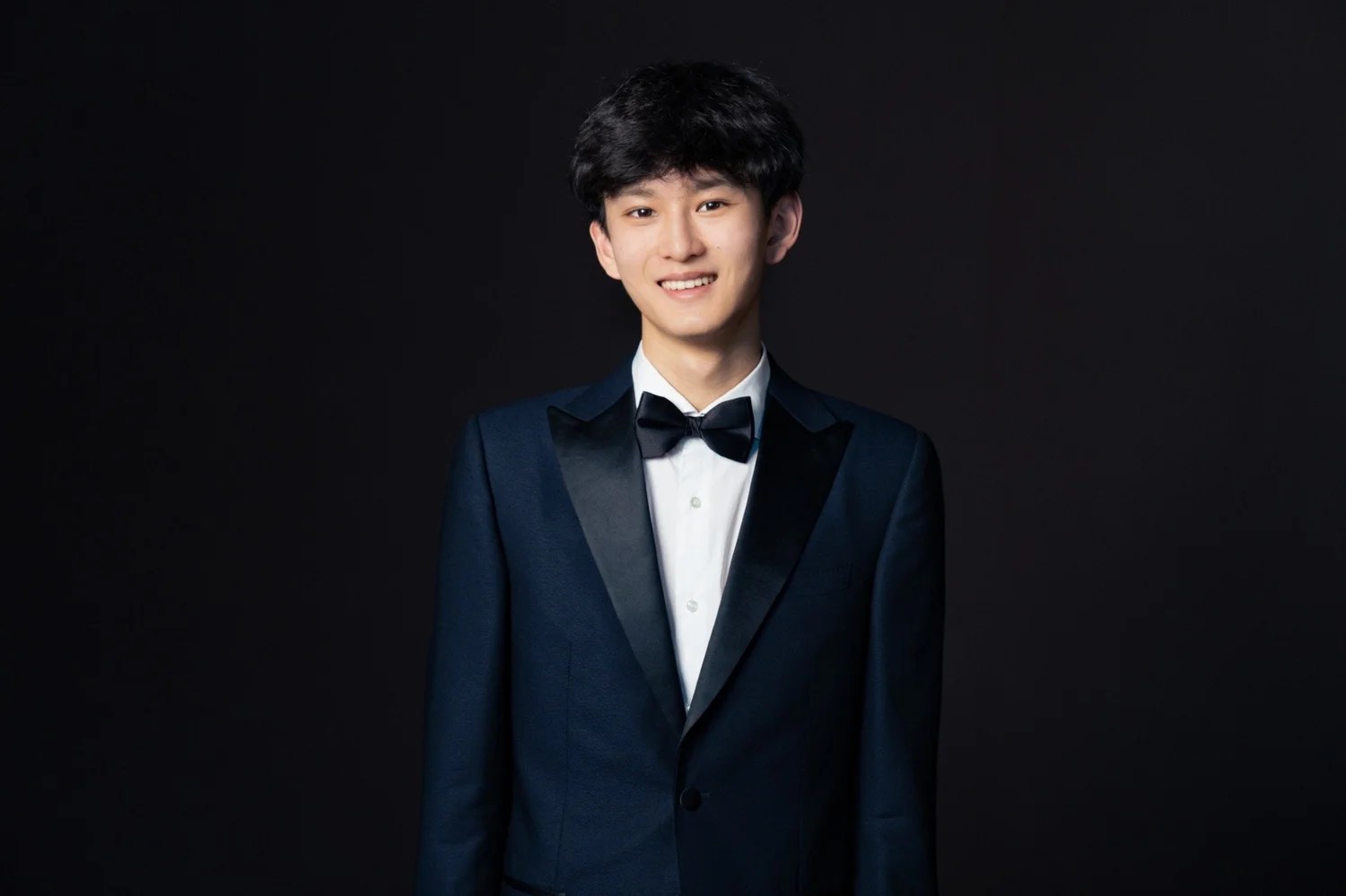
In the event the Grieg received a responsive reading from Lukas Sternath (below, with Oramo), the Viennese pianist who, still in his mid-20s, was most at home in more inward passages. The second theme of the initial Allegro was enticingly taken up after a heartfelt rendering by cellos, as was the Adagio’s eloquent melody and that first emerging in the finale on flute, where it was soulfully rendered by Daniel Pailthorpe. Nor were the more demonstrative aspects underplayed – Sternath having the measure of a cadenza whose mounting rhetoric was pointedly reined-in, while the finale’s outer sections were incisively inflected prior to an apotheosis which felt the more exhilarating through its absence of bathos. A melting take on Richard Strauss’ early song Morgen!, transcribed with enviable poise by Max Reger, served to reinforce Sternath’s formidable pianistic credentials.

The 50th anniversary year of Sir Arthur Bliss’s death has seen a gratifying number of revivals, few more significant than that of The Beatitudes. The misfortune of its premiere having been moved from Coventry’s new Cathedral to its Belgrade Theatre, thus freeing up rehearsal time for Britten’s War Requiem, rather condemned it as an also-ran from the outset. Yet Bliss had created a piece unerringly suited for the consecration in what, in itself, remains an impressive conception. Unfolding as 14 short sections which can be grouped into six larger movements, this is less a cantata than a choral symphony. Setting all nine Beatitudes, Bliss none the less merged several of these and interspersed them with settings from three 17th-century and one 20th-century ‘metaphysical’ poets to commemorate the past from the vantage of the present.

The texts, drawn from Henry Vaughan, George Herbert and Jeremy Taylor, anticipate a future redemption – as, more ambivalently, does Dylan Thomas in And death shall have dominion which builds implacably to the climactic Ninth Beatitude and Voices of the Mob prior to the hard-won serenity of the Epilogue. That The Beatitudes has enjoyed relatively few revivals is less to do with its intrinsic quality than the demands of its choral writing, to which the BBC Symphony Chorus and BBC Singers did notable justice. Elizabeth Watts responded with real sensitivity and perception to some radiant soprano writing and while Laurence Kilsby was a little effortful in the more demonstrative passages, he brought conviction to a tenor role both fervent and compassionate. Nor did Richard Pearce disappoint with his extensive organ part.

Oramo paced the 50-minute entity superbly as to make one hope he will tackle more works by Bliss – not least the masterly Meditations on a Theme by John Blow, which has inexplicably fallen through the net this year. He had started tonight’s concert with a most welcome revival for Death on the Pale Horse – the succinctly eventful tone poem by Ruth Gipps which, while it might not capture the visceral drama of Blake’s eponymous engraving, distils an evocative atmosphere from pithy initial ideas that audibly reflects the circumstances of its composition.

Click on the artist names to read more about soloists Elizabeth Watts, Laurence Kilsby and Lukas Sternath, the BBC Singers, BBC Symphony Chorus and BBC Symphony Orchestra, and their conductor Sakari Oramo. You can also click to read more about composers Arthur Bliss, Ruth Gipps and the BBC Proms

Published post no.2,652 – Tuesday 9 September 2025