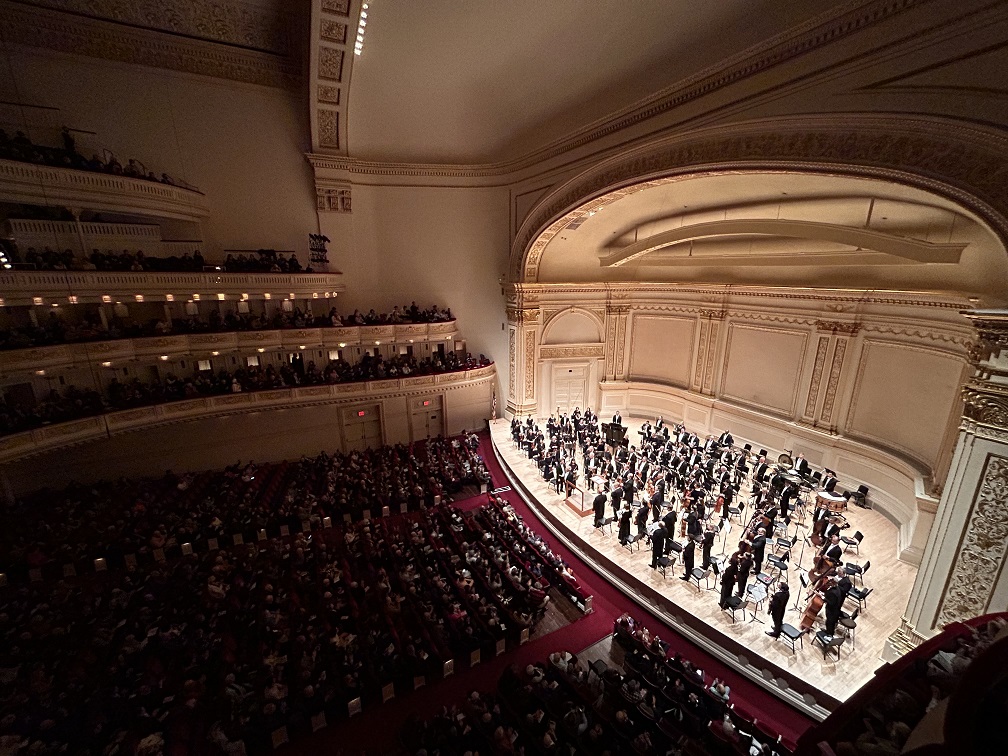
BBC Proms 2023 – Jon Hopkins with the BBC Symphony Orchestra and Jules Buckley

Prom 58

Hopkins
ATHOS (arr. Jules Buckley) (BBC Commission, world premiere)
Feel First Life (arr. Peter Riley & Leo Abrahams)
The Wider Sun (arr. Sam Gale)
Singularity (arr. Simon Dobson)
Music for Psychedelic Therapy – excerpt (arr. Peter Riley)
Form by Firelight (arr. Peter Riley)
Luna Moth (arr. Sam Gale)
Collider (arr. Simon Dobson)
Abandon Window (arr. Tom Trapp)
Recovery

Jon Hopkins (piano, programming), Leo Abrahams (guitar), BBC Singers, BBC Symphony Chorus (chorus master David Young), BBC Symphony Orchestra / Jules Buckley

Royal Albert Hall, London
Tuesday 29 August 2023

by Ben Hogwood photos by Mark Allan / BBC

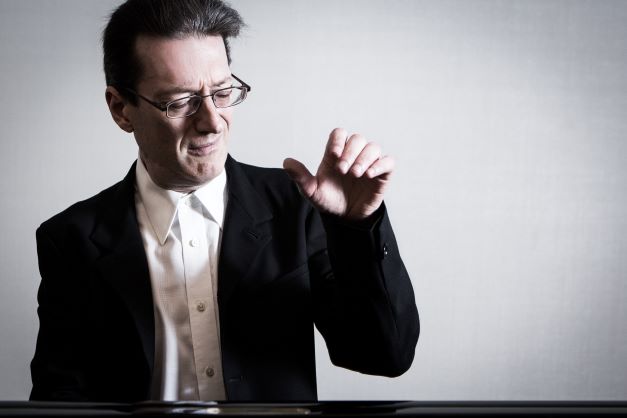
Electronic and orchestral music are more closely related than you might think, with Jon Hopkins a classic case in point. For 15 years, the pianist and producer has been carefully sculpting his music either as a contributor for other artists (King Creosote, Coldplay and Brian Eno to name just three) or making his own, weather-beaten albums. Starting with Opalescent and Insides, these have developed into immersive meditations (Singularity and the most recent long player Music for Psychedelic Therapy) by way of more full-bodied rave music (2013’s Immunity). How, then, does this music hold up in a packed and expectant Royal Albert Hall?

Extremely well as it turns out. In order to achieve what he described beforehand as ‘a meditation for 5,000 people’, Hopkins has to temporarily turn his back on beat-driven, post-rave landmarks such as Collider or Form By Firelight. When such material appears, its percussive impact is modified so that the main job is done by the timeless, meditative chorale echoing around the hall.

Hopkins’ music is repetitive, but as with the best exponents of minimalism – Steve Reich, Philip Glass and John Adams, for instance – the material under repetition rewards the investment made. The mind is eased, enjoying the upfront melodies but also taking up the option of picking out new threads beneath the surface, like examining a tartan pattern under a magnifying glass.

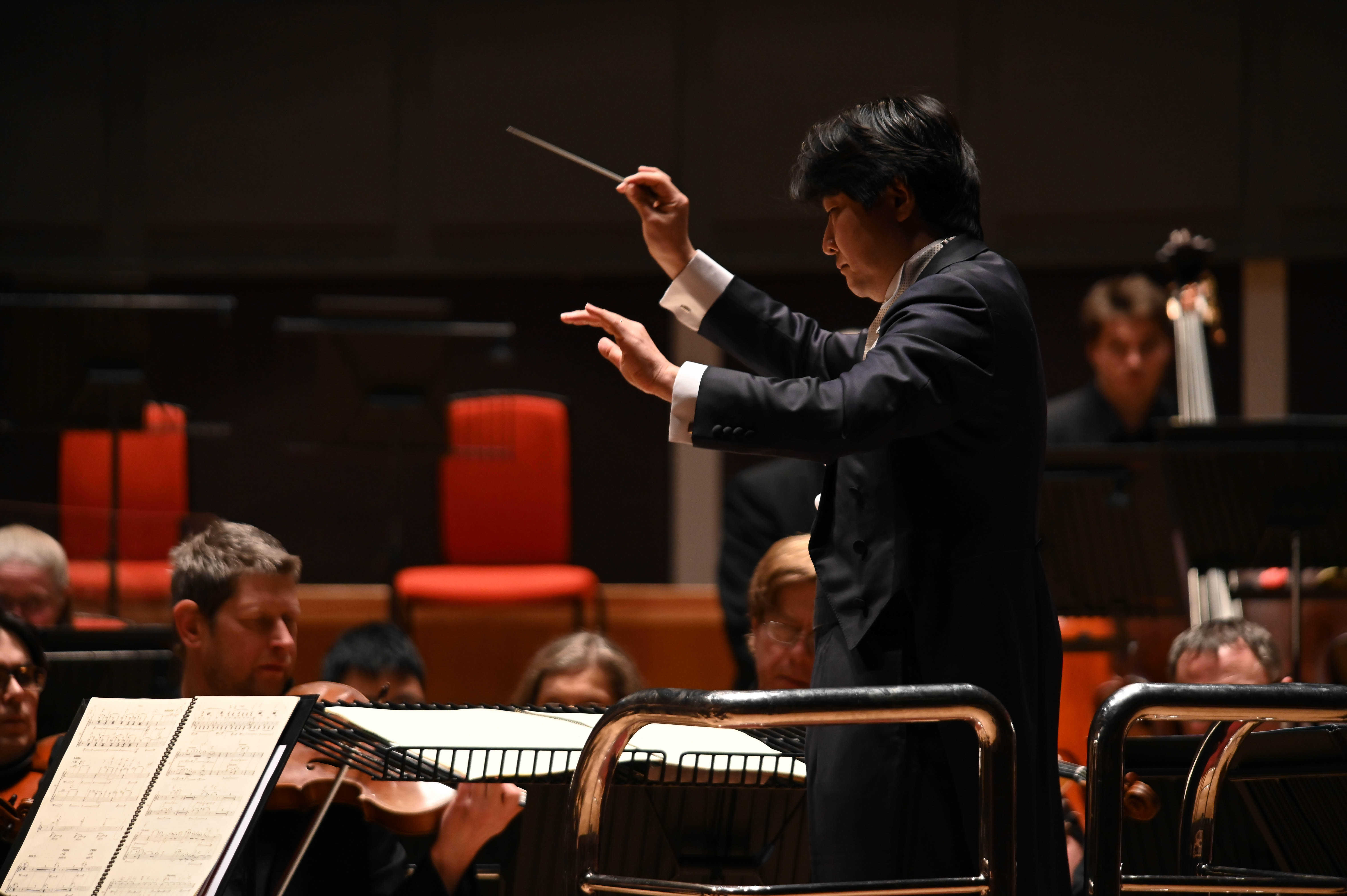
The tartan analogy is purposeful, for Hopkins’ earlier music has a distinctive Celtic edge furthered by his work with King Creosote. The Wider Sun, from 2009 album Insides, has an authentic left of centre tuning, is slow but packs emotional heft, beautifully arranged by Sam Gale and masterfully weighted by Jules Buckley and the BBC Symphony Orchestra strings.

Before that we hear a new piece, the 25-minute ATHOS demonstrating Hopkins’ control of larger structures. This is a natural direction for his music to be taking after Music for Psychedelic Therapy, for it is effectively an album ‘A’ side of several interwoven tracks. The profile and material of ATHOS sits closely to composers such as Arvo Pärt, and in particular his Credo, but Hopkins has up his sleeve a number of heart-shifting modulations. Accentuated by the Royal Albert Hall organ, these are once heard, never forgotten moments.

So, too, are the choral passages, thanks to pinpoint interpretations from the BBC Singers and BBC Symphony Chorus, whose lines float effortlessly above the orchestral forces. Their vocal control is masterful and effortless, ensuring the sustained notes keep their emotional impact without wavering. Lesser singers would have tailed off long before these ones even think of blinking!

The sequence of music, running for approximately 75 minutes, is well chosen. Only on occasion does the source material become oversimplified, and as it turns out these moments serve as natural pauses for breath in the musical tapestry.

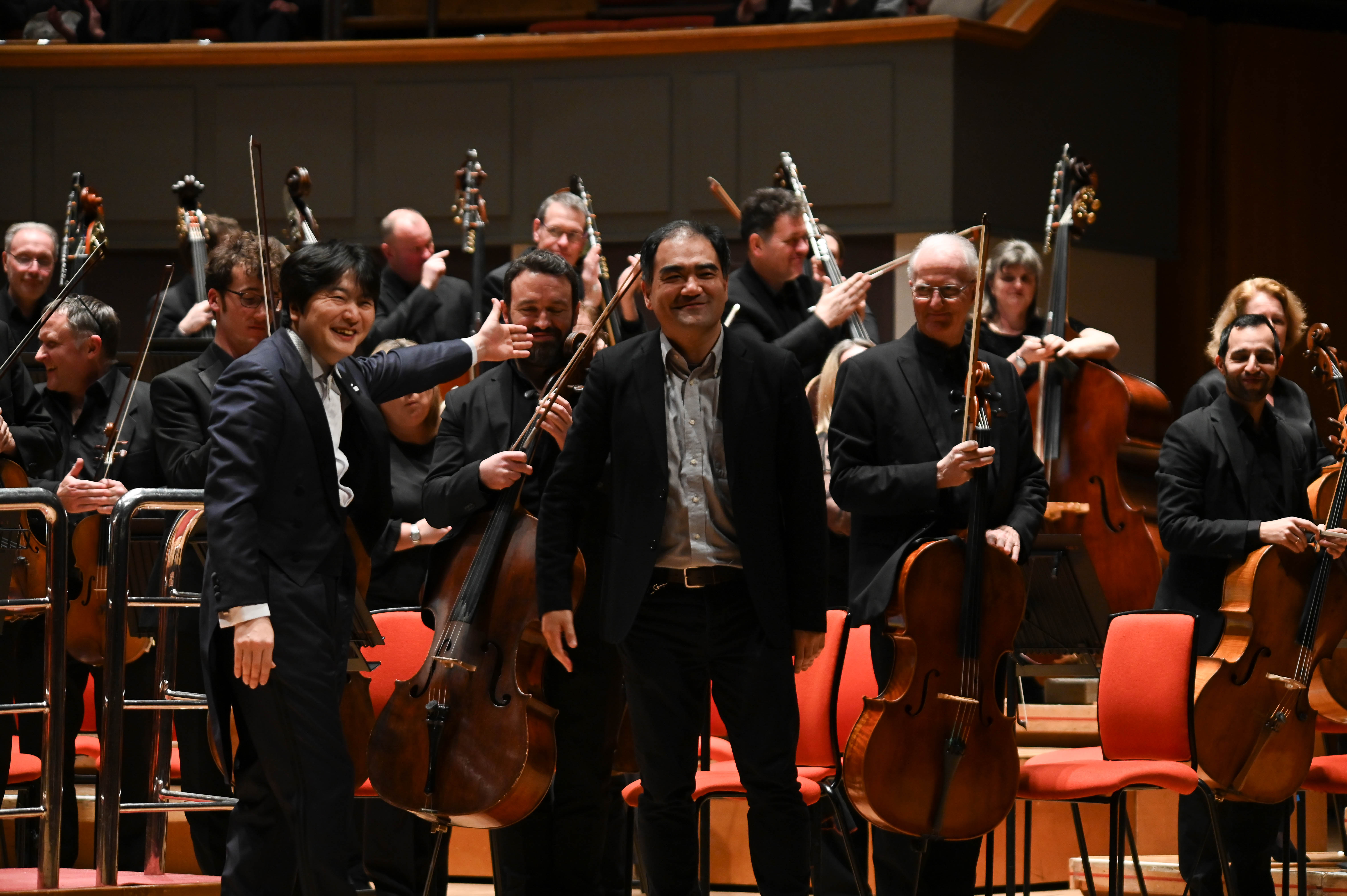
Guitarist Leo Abrahams, appearing for the last two numbers, makes a critical contribution (above). A good friend and established collaborator with Hopkins and Eno, he brings a sharper timbre to the shredded distortion of Recovery, which is – as throughout – complemented by imaginative and sympathetic lighting.

This was a multisensory Prom, containing a different sort of symphony to which the Royal Albert Hall is normally accustomed. Hopkins has proved his credentials in mastering larger structures, and his development in this field will be worth watching for sure. For now, the afterglow remains.

For more on the 2023 BBC Proms, visit the festival’s website at the BBC. For more on the artists, click here to read about Jon Hopkins, Leo Abrahams, Jules Buckley and the BBC Symphony Orchestra

BBC Proms 2023 – Christian Tetzlaff, BBC Symphony Orchestra / Sakari Oramo – Weir, Schumann & Elgar

Prom 51 – Christian Tetzlaff (violin), BBC Symphony Orchestra / Sakari Oramo

Weir Begin Afresh (BBC commission, world premiere) (2022-3)
Schumann Symphony no.1 in B flat major Op.38 ‘Spring’ (1841)
Elgar Violin Concerto in B minor Op.61 (1907-10)

Royal Albert Hall, London
Thursday 24 August 2023

by Ben Hogwood photos by Andy Paradise / BBC

The BBC Symphony Orchestra and their chief conductor Sakari Oramo have been on fine form this Proms season, and for their fourth outing together chose a concert whose first half celebrated the vibrancy of spring.

Judith Weir (below) has already written about green matter for orchestra, with her tone poem Forest premiered in 1995 and appearing at the Proms in 2019. Begin Afresh, its title inspired by Philip Larkin verse, takes a more forensic approach, looking at the wonder of trees in an urban setting. Effectively a musical diary, it begins in April, where we found orchestra leader Igor Yuzefovich teaming up with the woodwind section to lead an awakening from months of darkness. Fresh textures and opulent harmonies promised much, but October assumed a heavier tread, trees struggling to produce leaves with the onset of colder weather. Darker colours, including the sharper tone of the piano, came to the fore, but there was strong resolve reminiscent of Sibelius in the colours and phrasing, tonal but restless. True darkness set in among the lean lines of February, where roots fought against the frost, their sinewy profiles etched by the lower strings. Begin Afresh found its victory to be hard-won, but proved to be an attractive and pictorial piece deserving of more outings in the future.

Schumann’s Spring symphony, written in 1841 in the heady aftermath of his marriage to Clara, occupied an odd place in the program but benefited from a freshly minted performance. The initial fanfare set the tone for an interpretation of clarity and poise, the burbling woodwind on fine form. The ensuing Allegro molto vivace was bracing, and was complemented by a softly voiced second movement Larghetto. Here the softer shades were ideally weighted, the strings’ intimate thoughts conveyed with deep feeling. The Scherzo found the violins applying extra force, the theme balanced by two light-footed trio sections that danced happily. Oramo’s fluent reading of this wonderful symphony ended with a convincing last movement affirmation.

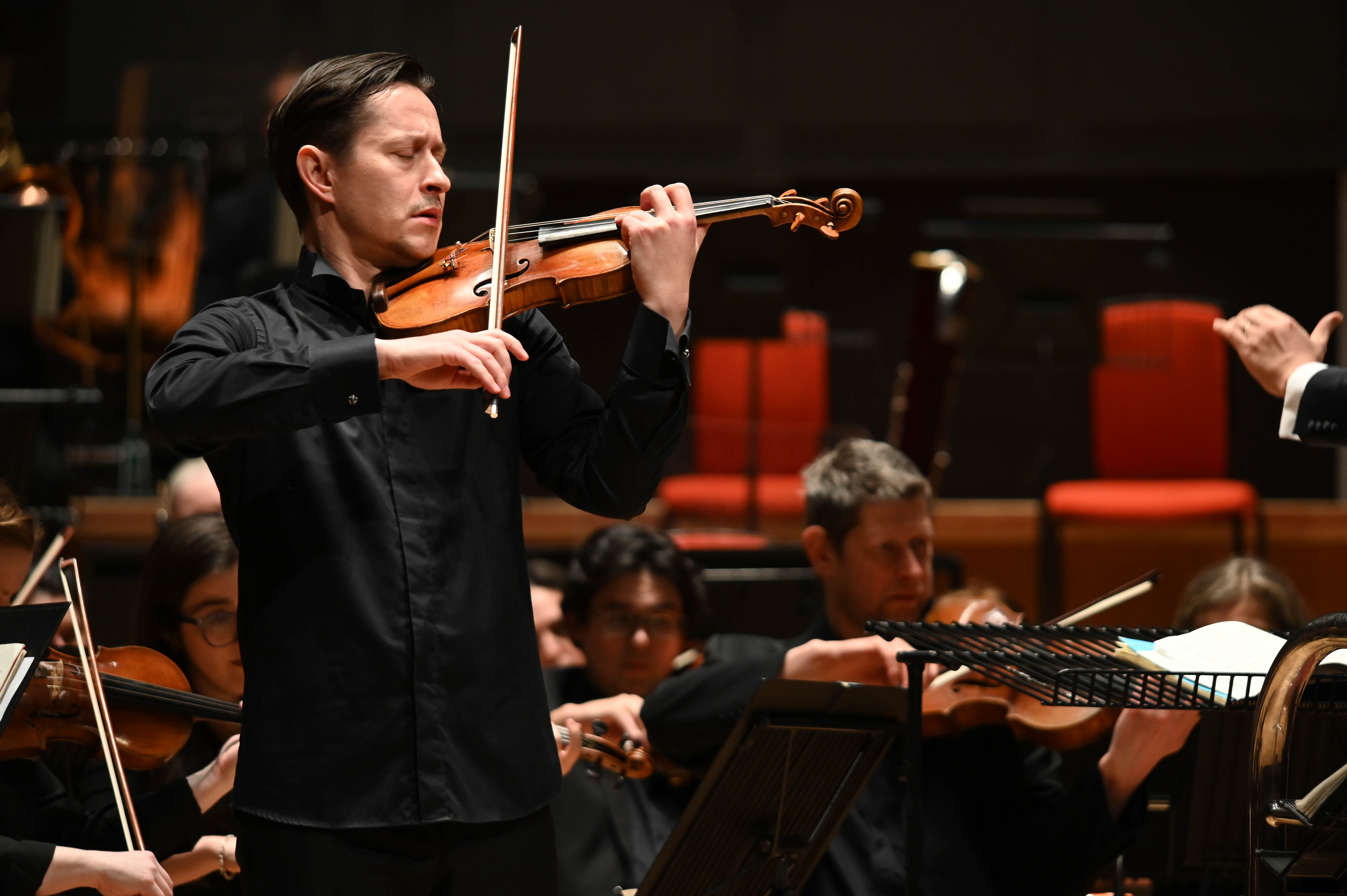
If spring was the main focus of the first half, Elgar’s Violin Concerto was ideally suited to late summer. There are many violin concertos in this year’s season – 13 at last count – and although this is the longest work by some distance, it did not tarry here. This was thanks in part to relatively quick tempo choices but mostly due to wholehearted investment from Oramo and soloist Christian Tetzlaff, who clearly loves the piece. From his first statement the violinist was in full, assertive control yet his most meaningful contributions were also the quietest, beckoning the audience in to Elgar’s most intimate thoughts and emotions.

The orchestral counterpoint was clearly and carefully managed by Oramo, himself a dignified Elgarian, with opportunity given for the strings to release ardent feelings in the climax points. The main themes were lovingly delivered, especially in the rapt slow movement Andante, the audience largely silent as the compelling dialogue took hold. While Tetzlaff took every opportunity for virtuoso display, reminding us that no less a violinist than Fritz Kreisler commissioned this work in 1904, none of the acrobatics were for personal gain. Instead they were at the service of Elgar’s expression, which made the final pages all the more telling. As the quiet music took hold a chill spread through the music, a sombre realisation that love – in this case – might not prevail. This realisation unwittingly found a parallel, a musical realisation of the temperatures dropping and the nights drawing in as they do in late August.

The concerto may have had an affirmative finish but these thoughts remained, reinforced by a tastefully restrained encore of the Andante from Bach’s Solo Violin Sonata no.2 in A minor BWV1003. As with the performance before, it was beautifully judged.

For more on the 2023 BBC Proms, visit the festival’s website at the BBC. Meanwhile click on the artist names for more on Christian Tetzlaff, Sakari Oramo and the BBC Symphony Orchestra.

BBC Proms 2023 – Stevie Wonder’s ‘Innervisions’ with Jules Buckley and guests

Prom 48 – Stevie Wonder‘s Innervisions (1973)

Too High (arr. Rob Taggart)
Visions (arr. Callum Au)
Living for the City (arr. Jochen Neuffer)
Golden Lady (arr. Neuffer )
All in Love is Fair (arr. Tommy Laurence)
Superwoman (Where Were You When I Needed You) (Music of my Mind, arr. Neuffer)
They Won’t Go When I Go (arr. Tim Davies)a
Jesus Children of America (arr. Davies)
He’s Misstra Know-It-Allb
Creepin’ (Fulfillingness’ First Finale, arr. Taggart)c
Something Out of Blue (Where I’m Coming From, arr. Davies)c
Higher Ground (arr. Neuffer)
Never Dreamed You’d Leave in Summer (Where I’m Coming From, arr. Davies)d
Don’t You Worry ’bout a Thing (arr. Tom Richards)d
Superstition (Talking Book)
If It’s Magic (Songs in the Key of Life)

Cory Henry (vocals / keyboards), aLaura Mvula, bLianne Le Havas, cVula Malinga, dSheléa (vocals), Vula’s Chorale, Jules Buckley Orchestra / Jules Buckley

Royal Albert Hall, London
Monday 21 August 2023

by Richard Whitehouse photos by Andy Paradise / BBC

From Nina Simone then Aretha Franklin to Stevie Wonder – these ‘tributes’ masterminded by Jules Buckley have become as much a Proms staple as were John Wilson’s stage-and-screen projects, with the 50th anniversary of Innervisions too notable an occasion to be passed over.

Now routinely hailed as one of the greatest albums, Innervisions was not always held in such esteem – being considered strong in atmosphere if short on hooks, which is rather to miss the point of its nine numbers merging into a seamless continuity broken only with the side-break of the LP. It duly elides between songs of love, self-awareness and social commentary with a mastery abetted by Wonder’s ingenuity as a musician and his skill as a producer; indeed, few albums, from what was to be the heyday for production, can rival its tangible space or depth.

Wonder’s distinctive if by no means inimitable voice makes his songs ideal for covering and, in Cory Henry, have a consummate keyboardist and eloquent singer able to encompass their conceptual and emotional range. Hence the dextrous organ intro’ then big-band stylings that underpinned the breezy ambivalence of Too High, or soulful communing of Visions with its textural enhancements from flute and electric guitar. It may have lacked the original’s urban ambience, but Living for the City emerged as an anthemic parable of racial injustice; then the amorous overtones of Golden Lady were enhanced by its shimmering slow shuffle.

An edgy vocal complemented the insistent groove of Higher Ground with its electronic and synthesized sounds which are no less intriguing today, while the Christian confessional that is Jesus Christ of America exuded piety but no undue emoting. The moodily reflective aura of All in Love is Fair benefitted from that deft backdrop of strings, as did the Latino-inflected jive of Don’t You Worry ’bout a Thing as here made for an irresistibly upbeat ending to the album itself. Typical of Wonder, though, that he should have concluded the original’s playing order with the snide political diatribe of He’s Misstra Know-It-All and which can still punch like a velveted fist when rendered, as here, with the allure of guest vocalist Lianne La Havas.

This begs the question as to whether such a classic album is best heard as an integral unity or interspersed, as was its second side, with other items – which latter course enabled a capacity house to sample each of those albums from Wonder’s ‘golden age’. Thus, the composite that is Superwoman (Where Were You When I Needed You), its interplay of easy grooves with fatalistic thoughts ably rendered by Henry, but the pensively resigned They Won’t Go When I Go felt coarsened and sentimentalized by histrionics from guest vocalist Laura Mvula. Not so the darkly insinuating Creepin’ with superb lead from backing vocalist Vula Malinga, who duetted with Henry on the burnished Something out of the Blue. A star of last year’s Aretha tribute, Sheléa handled the soaring pathos of Never Dreamed You’d Leave in Summer with aplomb, then all reassembled for a rousing send-off in the inevitable guise of Superstition.

It could have ended there, but Henry returned for a rendition of If It’s Magic in its original (and superior) version – confirmation that Stevie’s output will long remain a thing of Wonder.

For more on the 2023 BBC Proms, visit the festival’s website at the BBC. Click on the names for more information on Cory Henry, Laura Mvula, Lianne La Havas, Vula Malinga, Sheléa, Vula’s Chorale, Jules Buckley and Stevie Wonder himself

BBC Proms 2023 – Isabelle Faust, Alexander Melnikov, Les Siècles / François-Xavier Roth – Ligeti & Mozart

Prom 47 – Isabelle Faust (violin), Alexander Melnikov (fortepiano), Les Siècles / François-Xavier Roth

Ligeti Concert Românesc (1951)
Ligeti Violin Concerto (1989-93)
Mozart Piano Concerto No. 23 in A, K488 (1786)
Mozart Symphony No. 41 in C, K551, ‘Jupiter (1788)

Royal Albert Hall, London
Sunday 20 August 2023

by Richard Whitehouse photos by Sisi Burn / BBC

A major step in the evolution of musical ‘authenticity’ or vanity project of its artistic director? Celebrating its 20th anniversary, the Paris-based Les Siècles and François-Xavier Roth tonight made their third appearance at the Proms in a programme divided between Ligeti and Mozart.

Long in limbo as with most works of Ligeti’s early years, Concert Românesc now ranks as its composer’s primary crowd-pleaser – a ‘concerto for orchestra’ compact yet entertaining. Roth drew winsome charm from its initial Andantino and no mean impetus from its scherzo, before an Adagio whose dialogue of two horns (one high in the gallery) prefigures those intonational experiments three decades on. The finale did not lack verve, but anyone having heard Jonathan Nott give this piece for a Proms encore will recall just how much more scintillating it can be.

It may have had a long gestation, but Ligeti’s Violin Concerto is now established as the most recent such piece to have entered the repertoire. Technically assured but never merely showy, Isabelle Faust is a fine exponent, and it was not her fault if a lengthy platform reset made for a restive audience response in the teasingly understated Praeludium or plangent fervency of Aria, Hoquetus, Chorale which is one of the composer’s most potent inspirations. Diversely yet modestly scored, this work needs to be projected for its emotional impact to be felt and a certain bemusement met its coruscating Intermezzo and anguished Passacaglia, but not its engaging Appassionato in which Faust’s methodical cadenza fitted seamlessly into context. As, also, did the sparse Andante of Erwin Schulhoff’s Solo Violin Sonata given as an encore.

There was a similar sense of ends not always equating with means in Mozart’s Twenty-Third Piano Concerto after the interval. Playing a (Graf?) fortepiano from deep within the orchestra, Alexander Melnikov summoned playing of admirable dynamic subtlety and emotional poise – notably an Adagio whose bittersweet fatalism was consummately rendered. Just how much detail and articulation could be heard in the farther reaches of this acoustic was uncertain, but the rapport between soloist and orchestra in a sparkling final Allegro could hardly be gainsaid.

Playing to period-pitch in the second half (just occasionally offset by vagaries of intonation), Les Siècles came into its collective own with an engrossing account of Mozart’s Forty-First Symphony, its Jupiterian connotations evident from the outset of an opening Allegro whose distinction between (relative) dynamism and stasis was thrown into relief with Roth’s use of pause for expressive punctuation. Best here were an Andante whose muted while often dense textures were precisely articulated, then a Menuetto whose sweeping gait found contrast in a quizzical trio whose closing phrase was pointedly curtailed. Not that Roth had other than the measure of the finale, fully integrating its thematic unity into a powerfully controlled overall structure, but its underlying progress felt just a shade dogged in the light of what preceded it. That said, there was no lack of impetus when, after the longest of those pauses, Roth led his forces through the magisterial coda; duly setting the seal on a programme that played to this orchestra’s strengths if not always having been designed with the Royal Albert Hall in mind.

For more on the 2023 BBC Proms, visit the festival’s website at the BBC. Meanwhile click on the names for more information on artists Les Siècles, conductor François-Xavier Roth, violinist Isabelle Faust and pianist Alexander Melnikov. You can discover more about Ligeti at this dedicated website

BBC Proms 2023 – Soloists, BBC Scottish Symphony Orchestra / Ryan Wigglesworth – György Kurtág’s ‘Endgame’

Prom 43

Endgame (2011-18) [UK Premiere]

Scenes and monologues; opera in one act by György Kurtág; Libretto by the composer after Samuel Beckett’s Fin de partie

Semi-staged performance; sung in French with English surtitles

Hamm – Fred Olsen (bass), Clov – Morgan Moody (bass-baritone), Nell – Hilary Summers (contralto), Nagg – Leonardo Cortellazzi (tenor), Victoria Newlyn (stage director)

BBC Scottish Symphony Orchestra / Ryan Wigglesworth

Royal Albert Hall, London

Thursday 17th August 2023

Royal Albert Hall, London
Friday 11 August 2023

by Richard Whitehouse photos by Sisi Burn / BBC

It may have had to wait three years since being postponed from the 2020 season, but tonight’s Prom brought a first hearing in this country for György Kurtág’s opera Endgame after Samuel Beckett and a performance such as, in the event, delivered at least as much as it had promised.

Although seeing Fin de partie on his first visit to Paris in 1957, it took several decades before Kurtág felt able to tackle a full-length opera and only in 2010 was a formal commission made by La Scala – presaging seven years of sustained (and evidently torturous) activity prior to its Milan premiere in November 2018. The subtitle is ‘Scenes and monologues; opera in one act’ and, having set 60% of the original French text, Kurtág still intends to add further scenes but, now in his 98th year, it would not be surprising were this opera to remain in its present form.

Unfolding continuously (and with no interval) across almost two hours, Endgame consists of 14 scenes which hone Beckett’s already sparse drama down to an unremitting focus on its four characters in their undoubted hopelessness and seeming helplessness. Vocally the predominant idiom is a speech-inflected arioso conveying its text with acute clarity against the backdrop of an orchestra which, despite – perhaps because of – its size and diversity, is almost always used sparingly. Stylistically the music invokes those traits familiar from its composer’s work across six decades which are not diluted as rendered in new and unlikely contexts; one notable aspect is the oblique while always audible allusion to those earlier composers who have accompanied Kurtág over his life’s work, and that here emerge as ‘figures’ all but tangible in their presence.

Utilizing three of the four singers from the Milan production, the cast could hardly have been stronger in commitment or insight. His being even more the defining role than with Beckett’s play, Frode Olsen here conveyed the predicament of Hamm with an authority the greater for its restrained vulnerability. He was abetted in this by Morgan Moody, whose Clov was poised between servant and protégé for a portrayal always empathetic however great its exasperation. Leonardo Cortellazzi summoned deftly whimsical humour as Nagg, reconciled to his dustbin-clad fate in contrast to the bittersweet recollections of Nell as taken by Hilary Summers – her eloquence extended by a later Beckett poem in a touching prologue. Victoria Newlyn brought the stark stasis of the drama and expanse of the Albert Hall’s acoustic into persuasive accord.

A versatile and perceptive conductor (and no mean opera composer, witness his ENO drama The Winter’s Tale six years previously), Ryan Wigglesworth duly had the measure of Kurtág’s elusive if inimitable idiom and drew a fastidious response from the BBC Scottish Symphony Orchestra; its playing as attentive to the score’s many subtleties as to its emotional highpoints – not least the closing bars, whose wrenching dissonance speaks of catharsis at least as much as of tragedy. The composer will hopefully have had an opportunity to hear this performance.

One looks forward to an eventual staging of this opera in the UK (following those subsequent productions in Amsterdam and Paris). Whatever else, Endgame is the summative work which Kurtág had to write and as confirmed tonight, the effort in its realization has not been in vain.

For more on the 2023 BBC Proms, visit the festival’s website at the BBC. Meanwhile click on the names for resources relating to György Kurtág and Samuel Beckett – and on the artist names Ryan Wigglesworth, Frode Olsen, Morgan Moody, Hilary Summers, Leonardo Cortellazzi, Victoria Newlyn and the BBC Scottish Symphony Orchestra