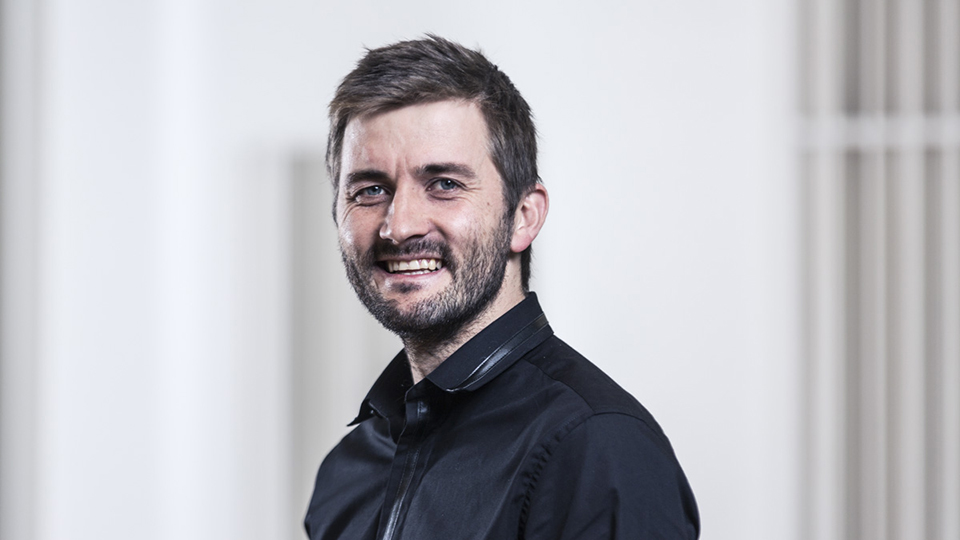
In concert – April Fredrick, English Symphony Orchestra / Kenneth Woods – The Journey Home: Haydn, David Matthews, Barber & Mozart

Haydn Symphony No. 45 in F sharp minor, Hob.I:45 ‘Farewell’ (1772)
David Matthews Le Lac Op.146 (2018)
Barber Knoxville: Summer of 1915 Op.24 (1947)
Mozart Symphony no.36 in C major K425 ‘Linz’

April Fredrick (soprano), English Symphony Orchestra / Kenneth Woods

Great Malvern Priory, Malvern
Wednesday 23 November 2022

Reviewed by Richard Whitehouse

The English Symphony Orchestra’s season really hit its stride this evening with a programme featuring two major vocal works of the 20th and 21st centuries, heard alongside two notable while very different symphonies from near the start and towards the end of the Classical era.

As Kenneth Woods indicated, Haydn’s ‘Farewell’ Symphony would have been determinedly avant-garde to early listeners, and much of that innovative quality came over here. Not least in the initial Allegro, its jagged course and disjunctive tonal shifts only nominally countered by the Adagio’s increasingly fraught introspection. With its stark alternations in motion and phrasing, the Menuetto proved a telling foil to a finale where a turbulent Presto precedes an Adagio whose eloquence was sustained as the music subsides and musicians vacate the stage.

Whether or not this symphony would have been better placed at the end of this concert, it set up productive contrast with David Matthews’s Le Lac. Remembered more as statesman than poet, Alphonse de Lamartine was a crucial figure in French literature of the early Romantic period – his lengthy 1820 poem a remembrance of lost love comparable to verse by Shelley and Heine, and one whose slowly intensifying rapture is to the fore in this evocative scena. Two orchestral interludes aside, its formal and emotional progress is essentially determined by the vocal line; with which April Fredrick was at one in conveying the wistfulness but also anguish inherent of this music. The fastidious textures were no less finely delineated by the ESO, Woods sustaining a cohesive overall trajectory from earlier promise to ultimate loss.

Evidently it was Fredrick who had suggested juxtaposing this piece with Barber’s Knoxville: Summer of 1915, which pairing succeeded admirably in terms of underlining conceptual and expressive links between them. Its sense of loss may be psychological rather than personal, but an emotional force comes over tangibly for all this music’s overt restraint: James Agee’s poetic reportage summoning a response the more affecting for its restraint and in whose vocal part Fredrick was never less than attuned. Woods brought no mean sensitivity or character to orchestral writing such as eschews the rhetoric found in many of Barber’s earlier scores and so foreshadows the subtlety of those two decades hence. This is a work with few significant precursors or successors, and the present reading made the most of its singular atmosphere.

The evening concluded with the relative extroversion of Mozart’s ‘Linz’ Symphony – a piece whose having been written in four days doubtless occasioned its technical brilliance, yet also a formulaic quality to its actual substance. Not, however, in an Andante whose gentle pathos was to the fore, or a Menuetto whose brevity belies its resourceful use of woodwind. Woods found a winning effervescence in the initial Allegro, and if the second-half repeat in the final Presto may be one such too far, this music’s Haydnesque wit was never less than appealing.

It set the seal on a well-conceived and finely executed concert that, in pivoting between the established and unfamiliar (not only between but also within works) typifies thr resourceful approach to programming with which Woods and the ESO have now become synonymous.

For more information on the artists in this concert, click on the links to read about April Fredrick, Kenneth Woods and the English Symphony Orchestra. For more on composer David Matthews, click here
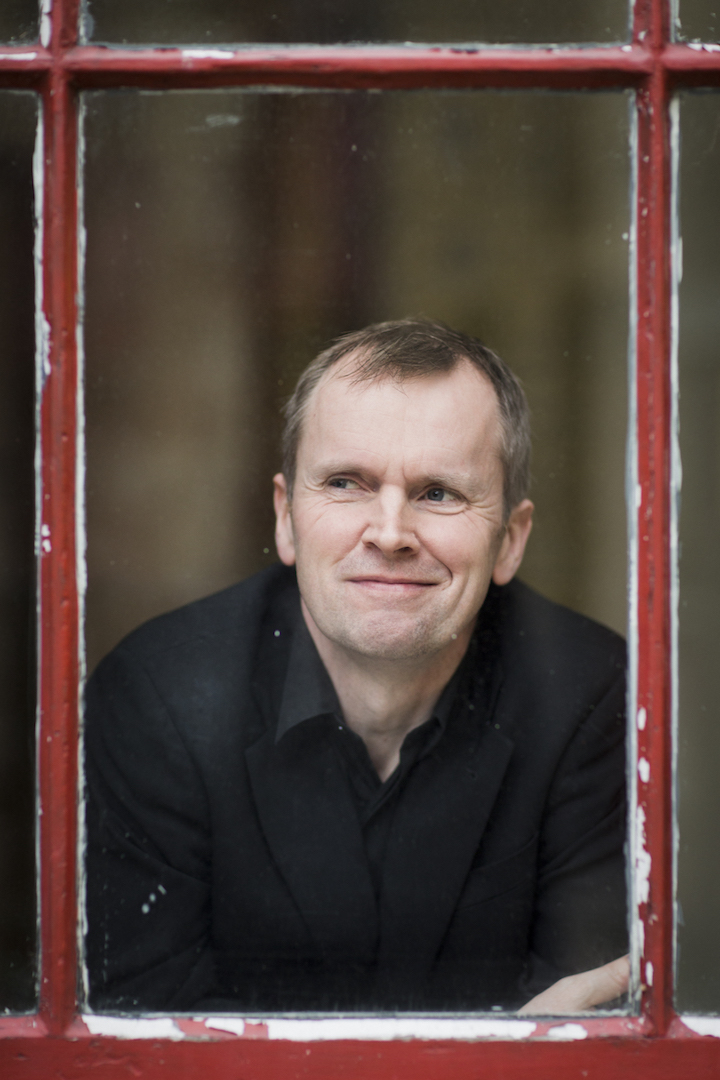
In Concert – Steven Osborne plays Debussy Études @ Wigmore Hall

Steven Osborne (piano)

Debussy
Études Book 1 (1915)
Berceuse héroïque (1914)
Étude retrouvée (1915)
Études Book 2 (1915)

Wigmore Hall, London
Monday 6 December 2022 (BBC Radio 3 Lunchtime Concert)

Reviewed by Ben Hogwood Photo (c) Ben Ealovega

Steven Osborne is in a ‘Debussy phase’. The renowned pianist has recently released an album of Early and late piano pieces for Hyperion, and commendably this concert added a further string to his bow with a collection of late works, principally the two books of Études. These substantial collections represented the end of a year of compositional famine for Debussy, his creativity reignited for the piano and as he began his late trio of published sonatas. Blighted by illness, he nonetheless found the focus to write increasingly economical but outwardly expressive music.

Typically Debussy did not write these pieces as downtrodden exercises for the classroom. Instead, as a recent biography by Stephen Walsh point out, he wrote ‘tests of the pianist’s ability to climb technical mountains while engaging with the musical scenery’. Osborne certainly achieved both objectives in this BBC Radio 3 lunchtime concert. His technical control was well-nigh flawless but at times daring, pushing these pieces to the limit while remaining sensitive to the natural phrasing of the cells of melody with which Debussy works.

He executed each piece with a compelling characterisation, allowing us to admire Debussy’s craft and texture but also creating remarkable images in spite of the discipline required within each study. Each of the two books of Études contains six pieces, and Osborne began with Book 1 in its entirety. The restless Pour les ‘cinq doigts’ (d’après Monsieur Czerny) began, immediately showing off the pianist’s control and natural affinity with Debussy’s melodic writing. Ending with a flourish, he moved to a picturesque Pour les tierces, portraying in aural terms the equivalent of focussing in on a particular part of a fast flowing stream. Pour les quartes moves the musical language in an Eastern direction, moving between evocative scenes, while Osborne enjoyed linking the character episodes of Pour les sixtes with fearsome playing. Pour les octaves was notable for its clarity and power, while the final Pour les huit doigts hurried forward, changing shape continuously like the centre of a lava lamp.

Book 2 was similarly impressive. The right hand in Pour les degrés chromatiques was like a strong wind, with room retained for its recurring melody, while the open textures of Pour les agréments reminded us just how forward looking these pieces are, Osborne giving the music plenty of room for expression. The circus was memorably evoked in the chase sequences of Pour les notes répétées, before Pour les sonorités opposes became a compelling study in musical perspective, its happenings near and far giving an exquisite sense of distance. The rippling figures of Pour les arpèges composes contrasted with trippy, playful syncopations, before finally we heard contrasts between the assertive and the deeply mysterious in a fully voiced account of Pour les accords.

Between Books 1 and 2 of the Études, Osborne found time for two more late pieces, beginning with the curious Berceuse héroïque, where a solemn left-hand figure grew into an imposing presence, then following with the Étude retrouvée from a year later. Here the suggestive chromatic intervals were persuasive, complemented by a ticklish figure in the right hand.

Completing this memorable concert was an encore of the early Rêverie, written in 1890. By showing us how far the composer had advanced in his musical style, Osborne also illustrated the seeds that were there at the beginning, in a piece whose sustaining calm cast a spell on audience and pianist alike.

In concert – Simon Höfele, CBSO / Kevin John Edusei: Street Music – Stravinsky, Ellington, Zimmermann & Rota

Rota La Strada – Suite (1954, rev. 1966)
Zimmermann Trumpet Concerto ‘Nobody Knows de Trouble I See’ (1954)
Ellington (orch. Henderson) Harlem (1950-51)
Stravinsky Petrushka (1910-11, rev. 1947)

Simon Höfele (trumpet), City of Birmingham Symphony Orchestra / Kevin John Edusei

Symphony Hall, Birmingham
Thursday 1 December 2022

Reviewed by Richard Whitehouse

Tonight’s concert by the City of Birmingham Symphony Orchestra was one with a difference, Kevin John Edusei directing a programme which avoided the Austro-German mainstream with a vengeance as it surveyed music with a distinctly ‘alternative’ outlook.

Federico Fellini’s La Strada accords with the realism of post-war Italian film, yet its acutely emotional undertow makes it equally prophetic and Nino Rota’s score embodies both aspects with its heady dance-music but also a plangent inwardness in those passages for solo violin (eloquently rendered here by Philip Brett) where the tragic relationship between Gelsomina and Zampanò is made explicit. The suite Rota subsequently derived from the music’s later incarnation as a ballet remains among the most significant of his output for the concert hall.

While Rota looks to popular idioms, Bernd Alois Zimmermann utilizes jazz in his Trumpet Concerto, its (later appended) subtitle denoting the spiritual as underpins much of its content and comes to the fore at crucial junctures. The subtly varied orchestration – with saxophones, Hammond organ and ‘rhythm section’ featuring electric guitar – is complemented by that for the soloist with its range of mutes and a virtuosity new to the classical domain which Simon Höfele despatched with alacrity born of conviction. The respectively brooding and headlong initial sections created an expectancy fulfilled by a climactic episode which was taken a little too fast for its layering of jazz rhythms to come through unimpeded, though the final section lacked nothing in evocative power as it subsided edgily towards a close of muted anguish.

Duke Ellington’s Harlem may now have become relatively familiar in concert, but few such performances can have conveyed the sheer panache as was evident here. Edusei traversed the numerous brief sections of this ‘Tone Parallel’ (commissioned but never conducted by Arturo Toscanini) with innate appreciation of their musical as well as scenic potency that culminates with a rhythmic energy whose effect was undeniably visceral. A little audience participation, moreover, did not go amiss in the final pages where the orchestra duly gave its collective all.

From social, via racial and cultural to psychological alienation. Stravinsky may have intended Petrushka as a vehicle primarily for balletic or orchestral display, but the inner two of its four tableaux, defining the contrasting psyches of Petrushka and the Moor as they compete for the attentions of the Ballerina, provide acute character portraits delineated here with needle-sharp clarity (not least by pianist James Keefe – his crucial obligato contribution vividly embedded within the orchestral texture). Nor did the outer tableaux lack for atmosphere – the sights and sounds of St Petersburg’s Shrovetide Fair palpably in evidence, Edusei securing more poise and pathos than was usual from the relatively utilitarian orchestration as Stravinsky revised it. The closing stages of Petrushka’s death and apparition felt spine-tingling in their immediacy.

This resourceful reading concluded what is sure to prove a highlight of the orchestra’s current season. Other concerts might attract larger attendances, but the attentiveness of those younger listeners present confirmed this as precisely the kind of event the CBSO should be presenting.

You can read all about the 2022/23 season and book tickets at the CBSO website. Click on the artist names for more on Simon Höfele and Kevin John Edusei

In Concert – Pavel Haas Quartet @ Wigmore Hall: Haydn, Prokofiev & Haas

Pavel Haas Quartet [Veronika Jarůšková, Marek Zwiebel (violins), Karel Untermüller (viola), Peter Jarůšek (cello)

Haydn String Quartet in G major Op.76/1 (1979)
Prokofiev String Quartet no.2 in F major Op.92 (1941)
Haas String Quartet no.2 Op.7 ‘From The Monkey Mountains’ (1925)

Wigmore Hall, London
Thursday 24 November 2022

Reviewed by Ben Hogwood

The Pavel Haas Quartet often cause a stir on their visits to the Wigmore Hall, and this concert was no exception for the Czech ensemble.

Many of Haydn’s mature string quartets begin with a trio of chords effectively designed to hush the audience and guide their ears towards the performance getting underway. The first in his crowning set of six quartets published as Op.76 is no exception, though in this red blooded account the Pavel Haas Quartet pinned the audience back in their seats, such was the vigour with which this performance began.

There were some ragged edges to their interpretation, and less evidence of the genial Haydn that makes himself known with the conversational melody of the first movement. We did however get more exposure to his experimental side, through an interpretation pointing the music forward towards middle period Beethoven. The quickstep third movement, very much a scherzo rather than a minuet, pointed up Haydn’s daring harmonic excursions and dalliances, as did the finale, based mostly in the minor key and featuring a number of brisk about-turns. Stemming the tide was the second movement Adagio, a reverent account with a solemn air to its central section in particular.

There followed a superbly played account of Prokofiev’s String Quartet no.2. This attractive work is not often heard in concert, which is a shame for it has a good deal of spice and charm through its investment in folk tunes from the Northern Caucausian region, where the composer was evacuated in 1941. Encouraged by his new neighbours, Prokofiev achieved a very satisfying blend of the original tunes with spiky good humour and scrunched up harmonic dissonances, always in thrall to the highly melodic content.

The first movement revelled in the abundance of good tunes, bringing the Pavel Haas Quartet’s Slavonic instincts into play. The mood softened for a heartfelt cello solo from Peter Jarůšek, setting a thoughtful and delicately nostalgic tone for the Adagio. Here more time was taken for reflection, with a noticeable chill running through Prokofiev’s writing.

Within the folk references it is possible to discern the worrisome mood of the time, with World War Two underway. The third movement however felt like a show of resolution in the face of this threat, laced with humour that in this performance could have been exploited to greater effect. It was however a fine performance, with terrific ensemble playing.

The main event of the concert was undoubtedly a performance of music from the quartet’s namesake. Pavel Haas, born in Moravia, studied with Janáček between 1920 and 1922, completing his String Quartet no.2 three years later. Tragically in 1941 he was deported to the Theresienstadt concentration camp, and died in Auschwitz three years later. Much of his work lay in neglect but has in the last thirty years enjoyed an extremely welcome renaissance, led by a number of enterprising recordings made in the 1990s, not least that of this work for Decca’s Entartete Musik imprint in the 1990s by the Hawthorne String Quartet. Since then the second quartet has gone on to gain a welcome foothold in the concert hall.

It would be difficult to contemplate a better performance than this one from the Pavel Haas Quartet. Led assertively by Veronika Jarůšková, they showed what an assured and imaginative piece it is, a travelogue giving the listener a tour of the sights and sounds of the famous Monkey Mountain range in Moravia.

The musical language is a curious but highly engaging hybrid of influences, drawing on the music of Dvořák and Smetana but in compressed melodic pockets of heightened intensity. Janáček, too, is an influential voice, but Haas’s unusual phrasing and distinctive rhythms make for a unique and enjoyable style.

The Pavel Haas Quartet enjoyed it greatly, the first two movements (Landscape and Coach, Coachman and Horse) enjoying the rarefied outdoor air and some crisply secured dance rhythms. The third movement, subtitled The Moon and I, was much colder to the touch, the muted strings taking time for introspection and creating some striking colours along the way. Their beautifully poised playing set up a riotous Wild Night finale where they were joined by percussionist Owen Gunnell (above), whose battery of instruments were expertly marshalled to bring the sounds of 1920s jazz into the fray.

The riotous closing pages brought the swaying Moravian dances and jazz rhythms to the foundations of the Wigmore Hall, brilliantly played and ideally balanced. So good was this section that the five performers gave us a quick reprisal as an encore, reminding us in the process of the fiercely original writing from a composer whose resurgence is to be greatly welcomed.  

In concert – Music For Youth Proms 2022 @ Royal Albert Hall

Review and photos by Ben Hogwood

There is a justified amount of doom and gloom in the arts at present, with organisations striving for increases in attendance figures while clinging to the hope that their funding will not fall through the trapdoor, as it effectively has done in the recent Arts Council England announcements for English National Opera, Britten Sinfonia and London Sinfonietta, to name just a few.

Art forms are nothing if not resilient though, especially when powered by raw talent, enthusiasm and hard work – as this night of Music For Youth Proms clearly was. How inspiring it was to see hundreds of young performers create their own bookmark experiences at the Royal Albert Hall, delivering performances of power, confidence and poise, fuelled by a clear and sheer enjoyment of music.

There was no evidence of stage nerves as performers ranging from aged six to 25, from Gwent to Ukraine (via London) united together in music, each and every one of them doing themselves proud under the Music For Youth umbrella. The registered charity works, in its own words, ‘to provide young people aged 21 and under across the UK with free, life-changing performance and progression opportunities, regardless of background or musical style’.

The range of musical styles here was testament to this approach, creating an environment where genres can be celebrated rather than restrictive. The word ‘Proms’ may still conjure images of seated classical concerts, with a smattering of world music maybe, but here it stood for hip hop, soul, brass band, solo vocals, choir, classical for small and large orchestras and even jazz fusion bands.

To pick out a single performer would be unfair, as each one was fully deserving of their moment in the spotlight. For raw, upfront sass, the Sedgehill Academy Rap Collective from Lewisham excelled, especially when three soloists came forward to take the game to the audience, their sparky wordplay in original compositions making the Girls Rap Collective a thrilling live experience.

Illustrating the breadth of this country’s music, an affecting performance of Vaughan WilliamsFantasia on a theme of Thomas Tallis followed from Musica Youth Strings, the Huddersfield-based ensemble giving true depth of feeling in their cleverly abridged account.

Cantilena from the Abbey Junior School in Reading were next, utterly charming as they sang The Puzzle and Silver Moon. They were complemented in the second half by the remarkably accomplished singing of the Northamptonshire County Youth Choir, whose accounts of music by Bob Chilcott (The Isle is Full of Noises) and Ola Gjeilo (Northern Lights) were breathtaking in both accuracy and emotion.

The brass players excelled, too – Gwent Youth Brass Ensemble in 3 Brass Dances by Ryan Linham, and the Mountbatten Big Band bringing exuberant lines to their Brooklyn medley. That the ensemble made such a big impression after No Trixx, a London fusion band of formidable musical capability, said much for their spirit.

The lasting image of the first half was provided by Ukrainian students from LPMAM (The London Performing Academy of Music, above), cleverly working Queen’s The Show Must Go On into the torch song Melody, from Ukrainian composer Skoryk. The students are on permanent placements at LPMAM, thanks to an initiative headed by conductor Stefania Passamonte, whose initiative and drive continues to bring more funding to enable more students to come over and base themselves in London. Judging by this performance they are revelling in the experience – typified by oboist Lola Marchenko, whose solos in both songs stayed long in the memory.

The second half of the Proms was similarly spectacular, with hundreds of singers and orchestral players forming the Lincolnshire Massed Ensemble (above). They delivered a Beyoncé medley of eye-opening power and positivity, headed by a group of girls whose vocals and dance moves showed just what a positive influence the former Destiny’s Child singer has exerted on them. As a celebration of 30 years of the Boston Music Centre, this took some beating.

From hundreds to just two, and the Emeli Sandé-influenced duo Chris and Baaba, whose intimate odes to friendship struck a very different but equally affecting chord, drawing the audience in closer to the round of the Albert Hall. We then heard remarkably assured solos from the York Music Forum Youth Jazz Ensemble, their Blue Matter a collection of cultured solos. A bracing account of the Overture to Hérold’s opera Zampa followed, given an excellent account by the City of Belfast Youth Orchestra. Finally, The Spy Game brought us full circle back to rap with Wag1Fam, a Stormzy-esque anthem to which the group bounced across the stage, never missing a note or a word.

The finale, a specially composed song Back Together, united all artists in a celebratory mood, a show of resolve and unexpected defiance.

Clearly this country – in the face of apparent efforts from on high to downplay the importance of music education – continues to nurture music making of astounding ability and refreshing confidence. Music For Youth is the ideal platform from which these artists can grow – but what needs to happen now is for them to get the ongoing support their talent craves and deserves. Politicians take note – music is a force for so much good and should be treated as such.