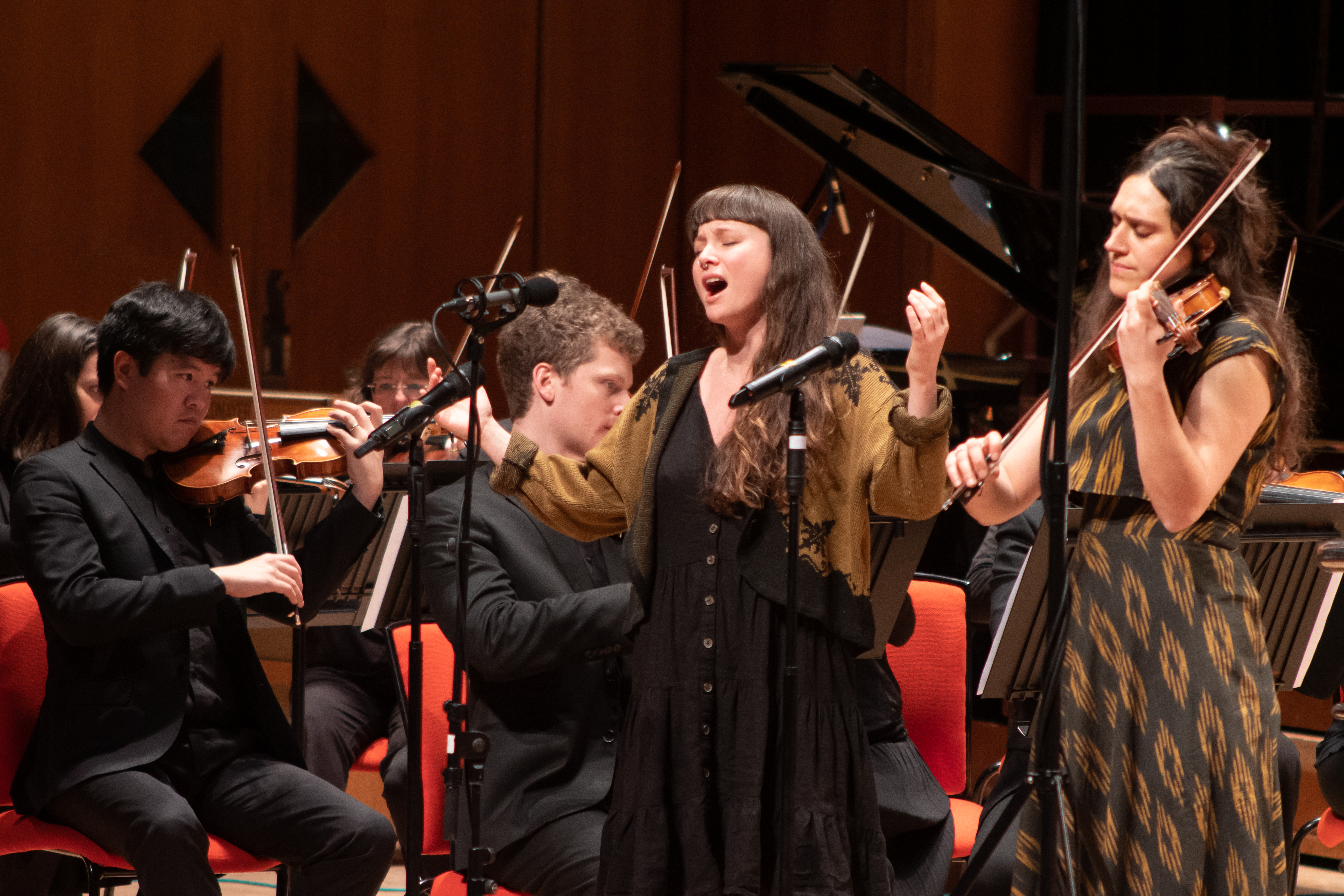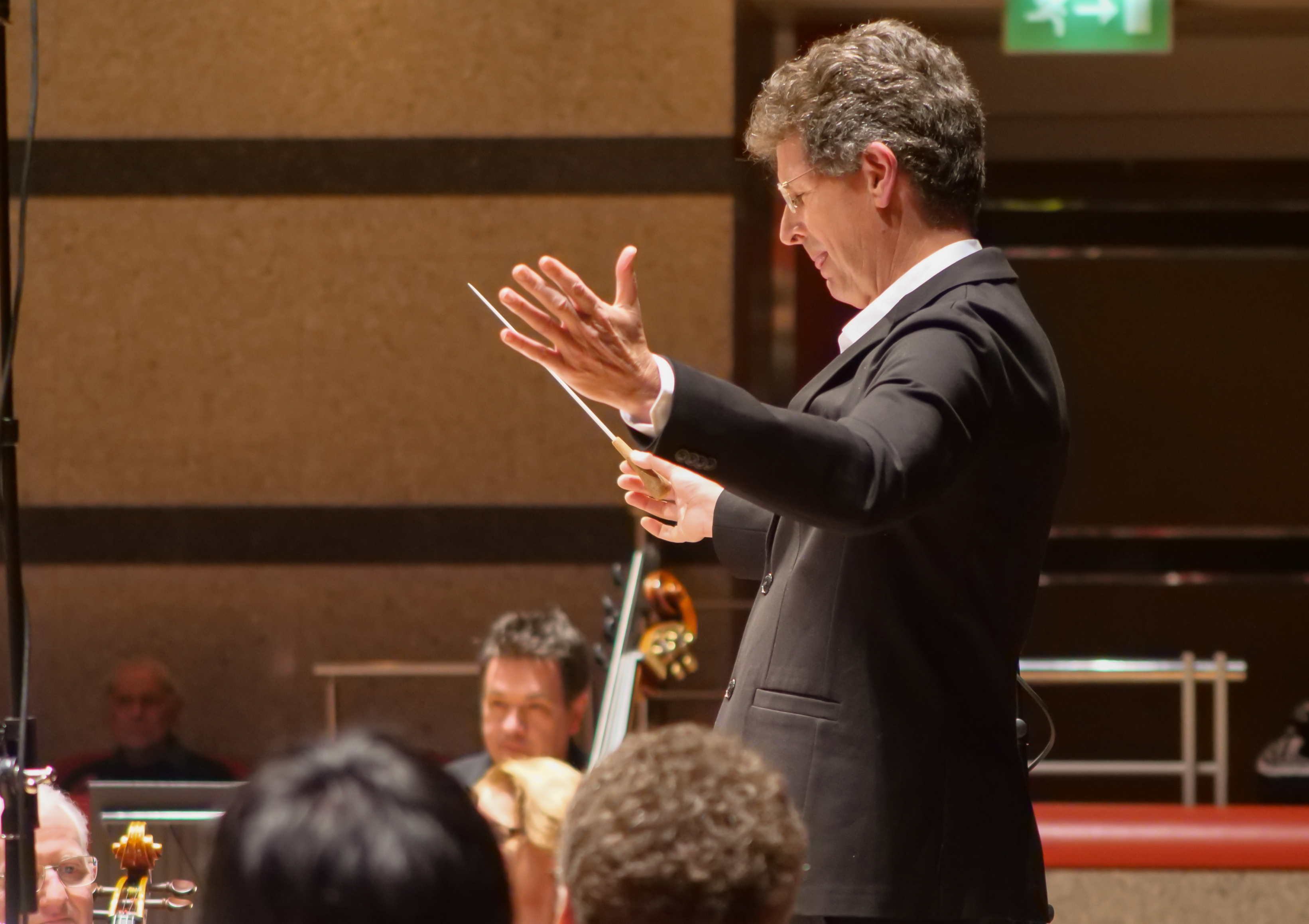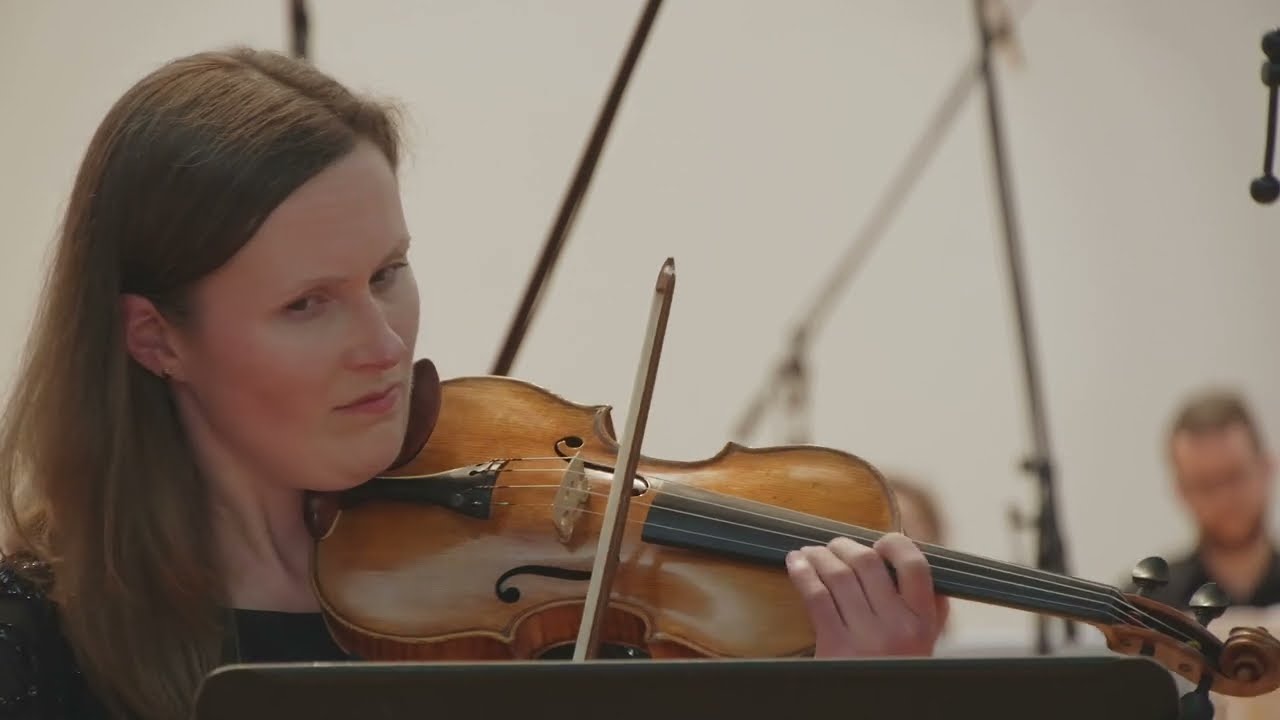
This week, Arcana will be visiting the Wigmore Hall to hear the complete piano sonatas of Prokofiev, played over two nights by Olli Mustonen.
The Finnish pianist is a specialist in the Ukrainian-born composer’s music, and it looks set to be a fascinating pair of concerts, offering a rare chance to appraise the complete works in this area of Prokofiev’s output. As a taster to illustrate his natural rapport with Prokofiev’s writing for the keyboard, here is Mustonen performing the Piano Concerto no.2 in G minor with the Singapore Symphony Orchestra and Hannu Lintu:
Olli Mustonen plays the complete sonatas at the Wigmore Hall, over two nights – for information click on the links for Monday 31 October and Tuesday 1 November:
Mustonen has also recorded the five piano concertos for Ondine, with Lintu and the Finnish Radio Symphony Orchestra. You can hear these dynamic accounts below:
Two years ago, in the midst of the pandemic, I wrote a piece for Arcana FM on ‘Mahler’s Eighth and coming out of COVID-19’. I concluded by saying that I wouldn’t get to see a performance of this epic ‘Symphony of a Thousand’ – and complete my personal Mahler live symphony cycle – any time soon, but that when I did it would have a very particular significance.
I certainly didn’t know that the performance would be by the Royal Philharmonic Orchestra conducted by Vasily Petrenko at the Royal Albert Hall on a Sunday afternoon in late October 2022, a concert that was itself rescheduled due to the pandemic.
And what a performance it was. The Royal Albert Hall could be said to be purpose built for this work, accommodating not just an expanded orchestra (including seven off-stage brass players in the gods) but three choirs, two boys’ choirs, eight soloists and a huge concert organ (the Royal Albert Hall’s was once the largest instrument in the world).
You get the full blast of the organ from the off with the tumultuous opening of Part 1’s Veni Creator Spiritus. It’s quite a ride from there on in, and Petrenko and the RPO handled it superbly all the way through to the powerful finale of Part 2’s setting of the end of Goethe’s Faust. This was not just about the big sections, the delicate moments were deftly done too.
But this work is really all about the singing, and the assembled choirs of the Philharmonia and Bournemouth Symphony Choruses and City of London Choir, as well as the Tiffin Boys’ Choir and Schola Cantorum of the Cardinal Vaughan Memorial School were magnificent.
And it wasn’t just the massed voices, as glorious as they were. The soloists – and let’s name them (above): Sarah Wegener (Magna Peccatrix), Jacquelyn Wagner (Gretchen), Regula Mühlemann (Mater Gloriosa), Jennifer Johnston (Mulier Samaritana), Claudia Huckle (Mary of Egypt), Vincent Wolfsteiner (Doctor Marianus), Benedict Nelson (Pater Ecstaticus) and James Platt (Pater Profundus) – were excellent too.
I made the point in my earlier piece that there is something about the combination of the mass assembled forces performing together and being joined by an audience in an even bigger collective. I think the standing ovation from the near sell-out crowd at the end was testimony to this.
Mahler’s Eighth is definitely one of those pieces that you need to see performed live. I’m so glad that I finally did.
John Earls is Director of Research at Unite the Union and tweets at @john_earls
Vaughan Williams Fantasia on a Theme by Thomas Tallis (1910) Tom Coult Pleasure Garden: Concerto for Violin and Orchestra (2020) (London premiere) Vaughan Williams The Lark Ascending (1914-20); Symphony no.9 in E minor (1956-57)
Daniel Pioro (violin), London Philharmonic Orchestra / Andrew Manze
Royal Festival Hall, London Wednesday 26 October 2022
Reviewed by Ben Hogwood. Concert pictures with thanks to the London Philharmonic Orchestra; picture of Andrew Manze (c) Benjamin Ealovega
Subtitled Visions of England, this concert from the London Philharmonic Orchestra and Andrew Manze was a celebration of Vaughan Williams, marking 150 years since the composer’s birth. As part of an extremely full conducting CV, Manze has a recently recorded cycle of the composer’s nine symphonies under his belt with the Royal Liverpool Philharmonic Orchestra, and clearly holds a special affection for his music.
Two of RVW’s most popular pieces began each half of the concert, but the main act was a relatively rare encounter with composer’s final symphony, completed a year before his death. The Ninth Symphony is a work needing repeated listening before its treasures can be fully revealed, but more recently it has started to get the performances it needs to make an impact. As Manze himself told us from the platform, it also has a deep resonance for the London Philharmonic Orchestra themselves. On the morning of 26 August 1958 they were rehearsing with the composer’s friend and advocate, Sir Adrian Boult, when news came through that Vaughan Williams had died.
This performance delved into the spidery textures that seem to provide a link to the afterlife itself, rather like one of Holst’s later Planets. Also evident were a series of cloudy, watery vistas, such as those found in Debussy’s Nocturnes. Manze probed deeply into the first movement, helped by the baleful colouring of three saxophones, beautifully managed by Martin Robertson, Tim Holmes and Shaun Thompson to enhance the unusual orchestral textures. The tension between the ‘home’ note of E and its immediate neighbour F was ideally weighted, the thoughtful mood tinged with a sense of foreboding.
These emotions underpinned a convincing performance, with references to earlier, angrier music from the Sixth symphony sharply noted and delivered. There were also moments of calm acceptance, as though the composer was reappraising his life with some satisfaction, the darkness held at bay by silvery strings and consoling woodwind.
The second movement, with its curious rhythmic profile, had nicely balanced syncopations, while the scherzo danced as though in an empty room, the music never quite leaving the leash on which it was held. Segueing directly to the finale, Manze’s control and passion could be felt in equal measure, a sense of resolution hard to come by but ultimately found as the music headed for its final three chords, the ‘E’ and ‘F’ finally resolving their dispute. This beautiful symphonic ending offered genuine light in the darkness, a similar sensation to Shostakovich’s final symphonic statement if seen through very different eyes.
The concert opened with the ubiquitous Fantasia on a Theme by Thomas Tallis, less elusive music perhaps but equally profound when casting its eyes back over time. This ideal concert opener speaks as loudly as it surely did in 1910, providing consolation for the fevered brow through subtle but far-reaching statements. On this occasion the performance did not quite have the ‘tingle’ factor, but it did feature beautiful string playing and finely wrought balance between the ‘choir’ of ten instruments, elevated a little at the back of the stage. Meanwhile the main orchestra could boast excellent contributions from four section principals, Pieter Schoeman and Tania Mazzetti (violins), Richard Waters (viola) and Pei-Jee Ng (cello).
The Lark Ascending holds a similarly treasured status among lovers of Vaughan Williams, remaining one of the calling cards of 20th century English music. In the right performance it creates a magical evocation of George Meredith’s lark, as it ‘drops the silver chain of sound’. Daniel Pioro played the solo part with great sensitivity and more than a little panache, choosing not to overindulge in a relatively straightforward opening sequence, but appearing to add a few extra ‘blue’ notes as the violin warmed to its characterisation, ‘lost on his aerial wings’. Manze’s pacing, initially quite fast, settled to a satisfying pace, with ideal balance between soloist and orchestra. The hall responded with commendable silence to the absolute quiet at the end.
A busy evening for Pioro included a role as soloist in the first London performance of Tom Coult’s Pleasure Garden. A four-movement concerto for violin and carefully chosen orchestra, it is effectively a compilation of four very distinct tableaus, taking its lead from constructed ‘natural spaces’ in and around congested living areas.
The first movement, Starting to rain – Zennyo Ryuo appears, found as vivid a portrayal of rain as you could wish to hear – in my mind I was checking the roof for a leak! Throughout the concerto Coult’s keen ear for orchestral colour was evident at every turn, as was his assured writing for violin, brilliantly played by Pioro. The coloristic effects were enjoyable and easy on the ear, harmonies largely consonant but never over-simplified, and the description of events in Dyeing the lake blue for Queen Victoria, Francesco Landini serenades the birds and The art of setting stones was easy to follow. The birds in particular were vividly portrayed by the soloist.
There was however a fragmented feel to the green spaces, as though they had not fully germinated, and this was exaggerated by the stopping of each movement to pause the descriptive process. When the piece did finally finish there was still an element of unfinished business, in spite of its 27-minute length. Repeated hearing would be welcome to give a more thorough appraisal and understanding, as the warm reception would suggest Coult hit the mark for the vast majority of listeners. His music has many attractive traits and he is a gifted orchestrator, so his is most definitely a space to keep under watch.
The Dream Syndicate Plays The Days of Wine and Roses and more
The Dream Syndicate [Steve Wynn (guitar / vocals), Jason Victor (guitar), Mark Walton (bass guitar), Dennis Duck (drums)]
Lafayette, Kings Cross, London; 18 October 2022
Reviewed by Richard Whitehouse
Can it really be 40 years since The Dream Syndicate launched The Days of Wine and Roses on an unsuspecting public beholden to the false promise of the New Romantics or wanton hubris of Hair Metal? Judging by the effusive reception from this capacity ‘we were there’ house (by no means restricted to males edging towards their seventh decade) at Lafayette, those first impressions of its Velvets-meets-Stooges amalgam have not worn thin – nor has this band’s penchant for unleashing visceral alt-rock with an ease born of intuition.
Taking the stage with unstudied casualness, DS needed no warm-up as it launched a suitably blistering take on Bullet Holes – Steve Wynn duly acknowledging those present before the mock-hedonism of Out Of My Head, then a driving account of Put Some Miles On. If the band’s reformation in 2012 after a 23-year sabbatical was unexpected, the consistency of its four-album run this past decade has been heartening. The spiralling enticement of 2017’s How Did I Find Myself Here, pulsating song-set of 2019’s These Times, daring leap into the dark of 2020’s The Universe Inside and now the heady synthesis of European with American traits of just-released Ultraviolet Battle Hymns and True Confessions between them confirm an outfit which has never yet repeated itself whether four, eight or (why not?) 12 albums in.
This latest offering was next up in the moody soulfulness of Damian, then an incendiary take on Burn underlined just why it remains a candidate for the greatest-ever DS song – and one to whose deep-cutting groove the engaging catchiness of Every Time You Come Around made a perfect foil. Hard To Say Goodbye exuded a pathos not without regret, and the engaging irony of Trying To Get Over rounded off a judiciously chosen trio from the new album. DS was never averse to taking risks frowned upon by its hide-bound peers, the disciplined riffing of How Did I Find Myself Here a riposte to those unable to grow old creatively while still rocking-out as instinctively as their younger selves. A ‘half of life’ classic to rank with the finest, Glide brought this first set towards its ecstatic touchdown.
A decade on, the current line-up gratifies with its stability and impresses with its flexibility – Wynn’s resourceful rhythm playing a sure incitement to Jason Victor’s combustible flights of fancy, with Mark Walton as unobtrusive or as playful as the song required, and Dennis Duck a model of proactive time keeping (no place this time for Chris Cacavas’s multi-layered keys – hopefully next tour). All of which were honed to perfection for a complete traversal of DS’s debut album that, as Frank Sinatra’s mellow tones faded out, took up most of the second set.
Its initial rimshot riveting attention, Tell Me When It’s Over compelled in its overlapping guitars and sneering vocal, as did Definitely Clean with its new-wave abrasiveness. It may have resorted to something like its initial arrangement, but the vamping riff of That’s What You Always Say assuredly took no prisoners, while Then She Remembers took on Iggy and the Asheton’s at their own game to secure at least a ‘score-draw’. Hallowe’en proved intriguing as ever with its inscrutable provocation then, after a brief pause for ‘turning over’, When You Smile cast a hypnotic spell via its glancing feedback and baleful power-chords. Wynn may no longer indulge in those verbal volleys that once articulated the latter stages of Until Lately but this fable of disillusion still packs its punch, while Too Little Too Late brought Linda Pitmon to front of stage for this insinuating take on a number once graced by Kendra Smith. Its dark humour unleashed, The Days of Wine and Roses surged forth on a twin-guitar rave of epic proportions thrown into relief only when brought to a shuddering halt.
What it showed, apart from the intrinsic excellence of DS, was the relevance of this album to the musical present – its ‘way of doing things’ formidably conveyed through the ambience of Lafayette, well on its way to becoming a mid-sized venue of choice for such gigs. The band returned for an inexorable take on Donovan’s Season of the Witch, before it tore into the inevitable curtain-closer of John Coltrane Stereo Blues with a vengeance. Is a 2024 tour featuring a 40th-anniversary rendition The Medicine Show on the cards? We can only hope.
You can read more about The Dream Syndicate attheir website – while for more on Steve Wynn click here For information on Lafayette, head to the venue website
Wojciech Świtała (piano, below), Silesian Quartet [Szymon Krzeszowiec and Arkadiusz Kubica (violins), Łukasz Syrnicki (viola), Piotr Janosik (cello)]
Bacewicz String Quartet No. 4 (1951) Weinberg String Quartet No. 3 in D minor, Op. 14 (1944) Zarębski Piano Quintet in G minor, Op. 34 (1885)
Wigmore Hall, London Monday 17 October 2022
Reviewed by Richard Whitehouse
In existence now for 44 years and with only a change of leader during that time, the Silesian Quartet has amassed a broad repertoire taking in the extent of the Austro-German tradition along with that of its Polish heritage – as was evident from this latest Wigmore Hall recital.
The rapid upsurge of interest in women composers has been of real benefit to those such as Grażyna Bacewicz, whose sizable output of essentially abstract music went too long under the radar and not least a minor masterpiece as her Fourth Quartet – its first prize at the Liège Competition in 1951 vindicated. Its three movements are dominated by the first of these – a sombre Adagio introduction as variously infiltrates the lively ensuing Allegro, such that the coda essentially becomes a stretto between such contrasted expression. The central Andante finds this composer at her most lyrical, with the ‘giocoso’ marking of the final Allegro not necessarily implying any lessening of formal and emotional focus, as this builds toward an impetuous conclusion that clinches the unorthodox if methodical design of the whole work.
The Silesian gave a superb account of a piece it knows well – having recorded all Bacewicz’s quartets – as it did of Mieczysław Weinberg’s Third Quartet. On a similar scale, this also has a similarly overarching intensity – not least when attacca markings between movements were scrupulously observed as to give the overall design its unity within diversity. The unchecked energy of the initial Presto is by no means offset by the bittersweet poise of the Andante – its taciturn unease continued in an Allegretto affording only the most tenuous, even provisional closure. One reason, surely, why the composer restructured this piece when recasting it more than three decades later as his Second Chamber Symphony, which is hardly to deny the sheer fascination of the music at a crucial stage on the way to Weinberg’s mastery of this medium.
Had he died before writing his last work, Juliusz Zarębski would barely have been a footnote in musical history. His Piano Quintet confirms an acute feeling for Lisztian harmony, allied to a commanding formal sense as should have been the springboard into an eventful maturity and is not so far behind those by Brahms, Dvořák and Franck in being a major contribution to its medium. The Silesian had the measure of the first movement’s quirky take on sonata form – its vividly contrasted ideas merged in a tensile development then varied reprise and dynamic coda. The Adagio frames its lilting central section with a melody of rapt fervency, as is itself framed by music of ‘Forest murmurs’ aura, while the Scherzo likewise frames its wistful trio with music of an intently rhythmic propulsion. The final Presto is essentially a cyclical reprise of earlier ideas as this picks up where its predecessor left off, before pursuing a sonata-rondo trajectory such as culminates in a fervent recollection of the work’s opening theme. That this piece remains the summa of Zarębski’s creativity does not lessen the extent of its attainment.
The Silesian and Wojciech Świtała had prepared no encore, instead reprising the final pages of the Zarębski to close this programme in fine style. It is part-way through a recorded cycle of Weinberg’s quartets, another of which will hopefully feature in a future Wigmore recital.