Recorded at Wyastone Concert Hall, Monmouth, 2 December 2021
by Richard Whitehouse
The English Symphony Orchestra has been assiduous in promoting Steven R. Gerber (below), not least with a release of string-orchestra arrangements of his chamber music from Darron Hagen and Adrian Williams (Nimbus NI6423), and now this online performance of Music in Dark Times.
Written to a commission by Vladimir Ashkenazy and the San Francisco Symphony Orchestra, who gave the first performance in March 2009, this is very much a synthesis of traits from its composer’s maturity and, in contrast to the largely interiorized world of his chamber output at this time, a demonstrably public statement with resonances beyond its immediately American context. Opening with an expanded version of the Fanfare for the Voice of America, written in the aftermath of those events of 9/11, it continues with a Pavane featuring the diaphanous interplay of brass and strings, then by a Dance of Death whose tarantella-like underpinning adds greatly to its malevolence. This, in turn, finds contrast in a Dead March which builds in a steady crescendo towards a climax left ominously unresolved. It remains for an Elegy, scored only for strings, to provide a measure of solace in music that reaches back to pieces by composers such as Piston, Carter and Barber; after which – a full orchestral Fanfare brings this sequence to a close which, while far from affirmative, offers at least a glimmer of hope.
Although scored for sizable forces – including triple woodwind, five horns and four trumpets – Music in Dark Times is resourcefully as well as atmospherically orchestrated so that salient details are always heard to register. The ESO players are audibly at home in this piece, while Kenneth Woods directs with assurance music he clearly – and rightly – believes in. Hopefully it will be issued on a future release of Gerber’s orchestral work (including the still unrecorded Second Symphony), but for now this latest ESO online offering can be well recommended.
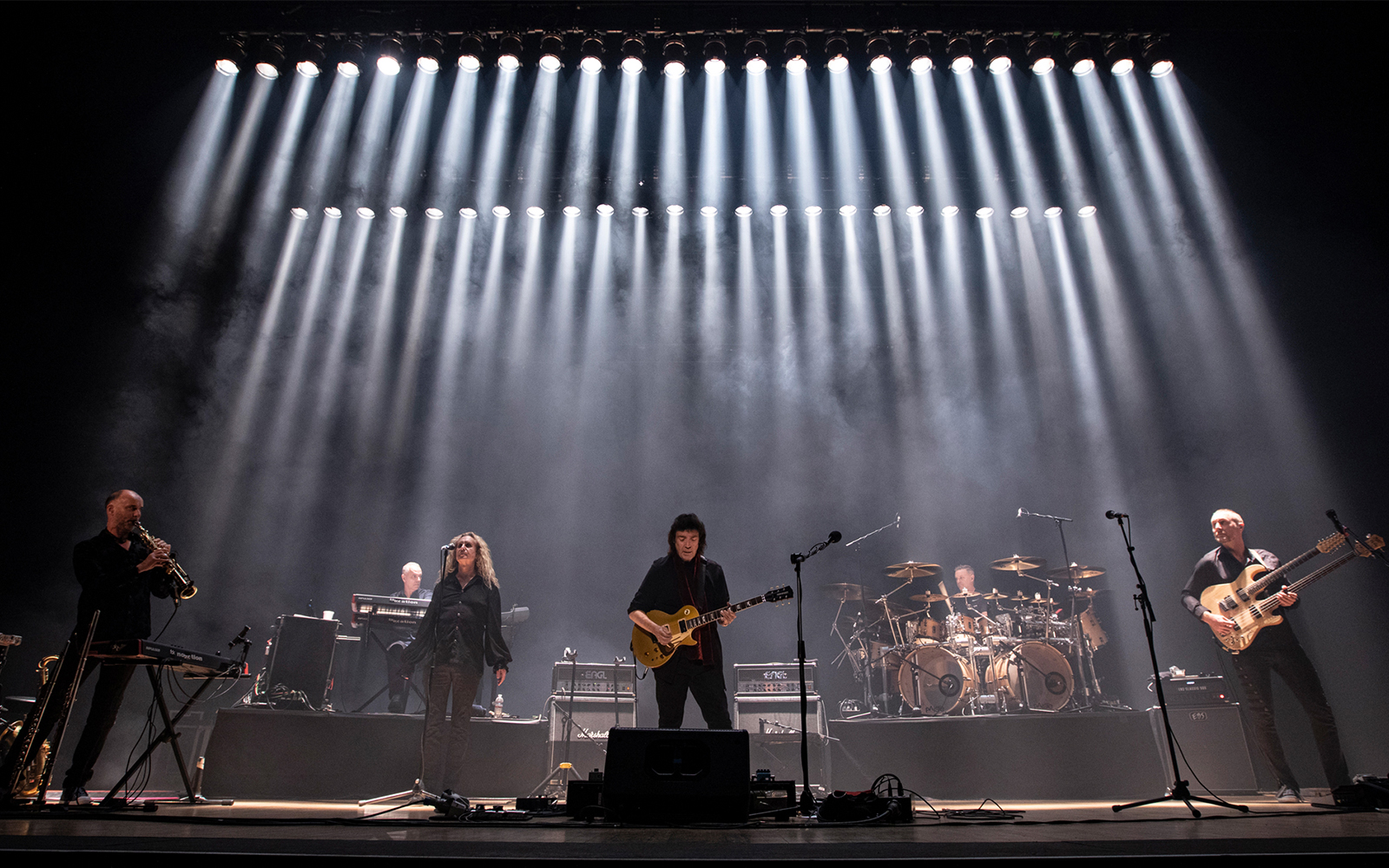
Steve Hackett (vocals, guitar), Nad Sylvan (vocals), Roger King (keyboards, vocals) Rob Townsend (saxophone, flute, keyboards, percussion, vocals, Jonas Reingold (bass guitar, vocals), Craig Blundell (drums), Amanda Lehmann (additional guitar, vocals)
Reviewed by Ben Hogwood
Nearly 50 years to the day after it was released, Genesis‘ album Foxtrot is back for another turn. With Peter Gabriel as lead vocalist, it proved one of many peaks from the group’s defining line-up on its release, and to this day retains an air of exploration – both musically and lyrically – and a sense of peculiarly English mystery.
Steve Hackett was an integral part of the group when it was recorded, his role as principal lead guitarist a key driver for the music’s melodic content, sonorous acoustics and semi-classical demeanour. Since he left Genesis in 1977, Hackett has maintained a richly productive solo career notable for its consistency and elegance. We heard a number of excellent examples in the first half of this concert, some of them springing from the sessions for the Foxtrot album itself.
Nowadays, Hackett’s live band speak as he does, with little fuss made during their virtuosic contributions – save perhaps for multi-instrumentalist Rob Townsend, prodigiously talented through turns on saxophone, flute, keyboard, vocals and percussion – and the first to get the audience on side as part of the theatre. Behind him sat Roger King, an authoritative presence on keyboards who brought new orchestral elements to A Tower Struck Down along with the deep-throated roar of the organ sound on a thrilling performance of The Devil’s Cathedral.
Bassist Jonas Reingold was part of a solid foundation with the fluid drumming of Craig Blundell, and both were afforded lengthy solos in the concert which, while impressive, didn’t always complement the material. Less was definitely more here, as we found out even when Amanda Lehmann joined as an extra guitarist and vocalist. As a seven piece the band delivered one of Hackett’s calling cards, Spectral Mornings, with a mixture of mystery and grace. This segued nicely into the bright pop of Every Day, its five-part vocal harmonies dressing a tune with more than a passing resemblance to Beethoven’s Ode to Joy.
The first hour made a strong impression, Hackett’s solo material unquestionably up to the task, though many of the audience sat up noticeably after the interval for a second half account of Foxtrot. Now it was vocalist Nad Sylvan’s turn to take the lead, which he did impressively, his voice intriguingly balanced between early Phil Collins and Peter Gabriel – a nice fluke, since he sang naturally throughout. There was some theatre, too – a telescope pointed emphatically to the heavens at the end of a powerful Watcher Of The Skies, where laser eyes were also in play. His attention to detail was commendable, while never trying to imitate his predecessors.
The band allowed plenty of room for the weird and wonderful lyrical content of Foxtrot to come through, still drawing sharp parallels to the current situation in the UK, where little about human nature has changed in 50 years. Get ‘em Out by Friday was sharply observed, with its references to the new town of Harlow and property evictions around. The more reserved Time Table, found King’s piano ideally weighted, Sylvan’s voice emotive in response. The singer also held Can-utility And The Coastliners in his grasp, initially wistful but handling the song’s unusual melody with commendable control. The guitar sound, spearheaded by the modest Hackett from centre stage, was a constant joy, a lovely blend of acoustic and electric with intricate detail to bring out the album’s slightly pastoral leanings. The syncopations and changes of time signature were expertly handled by the band, to whom this album is now second nature.
The album’s key track, Supper’s Ready, was a fitting summit the band scaled with poise and intensity. A firm fan favourite after all this time, its ebb and flow was compelling, Hackett clearly enjoying himself with a wry smile now and then. The blistering finale turned everything up to eleven, Sylvan nailing the high notes if slightly backward in the audio mix.
A Genesis encore double included Firth Of Fifth, where King excelled on electric piano once again, and Los Endos / Slogans / Los Endos, starting languorously but growing to a flurry of colourful activity, and showing in the process how adventurous this music still sounds, five decades on.
Hearing the whole of Foxtrot without a break was a thrill, like sitting through an orchestral symphony, and witnessing Steve Hackett’s satisfaction was a considerable boon too. With his 25-date tour now complete, he continues as one of the hardest working man in progressive rock. This particular instalment showed him to be a modest and deeply caring musician, at his happiest when playing guitar centre-stage. That kind of thrill looks set to stay with him for a long while yet.
Vaughan Williams Fantasia on a Theme of Thomas Tallis (1910) Haydn Cello Concerto no.1 in C major Hob.VIIb/1 (c1761) Elgar Sospiri Op.70 (1914) Weinberg Flute Concerto no.1 Op.75 (1961) Britten The Young Person’s Guide to the Orchestra Op.34 (1945)
Sheku Kanneh-Mason (cello), Marie-Christine Zupancic (flute), City of Birmingham Symphony Orchestra / Mirga Gražinytė-Tyla
Symphony Hall, Birmingham Wednesday 6 October 2022
Reviewed by Richard Whitehouse
Shortly to embark on its first tour of the United States in almost a quarter-century, the City of Birmingham Symphony Orchestra tonight played some of the pieces to be included there – a diverse selection that amounted to a cohesive and well-balanced programme on its own terms.
Opening the concert was one of those pieces heard on the CBSO’s album The British Project, and while this orchestra has performed Vaughan Williams’s Fantasia on a Theme of Thomas Tallis often, Mirga Gražinyte-Tyla relatively swift traversal compelled attention. The opening stages felt a little detached – the offstage ‘orchestra’, placed offstage-left, more a background presence than active participant – but the string quartet contribution was eloquently rendered while the approach to the main climax was as unerringly judged as that resonant final chord.
Sheku Kanneh-Mason has been playing Haydn’s cello concertos extensively, so there was no doubting the control and insight brought to the C major work – earliest of the pair and poised between the Baroque and Classical eras in its combining formal lucidity with melodic poise. Kanneh-Mason was mindful of the opening movement’s Moderato indication, maintaining a steady and never headlong tempo that allowed his tonal finesse and elegance of phrasing full rein. The Adagio could have had greater inward intensity, but not that stealthy transition into the return of the main theme, and the final Allegro had wit and incisiveness aplenty. A much-reduced CBSO was responsive in support – Kanneh-Mason offering an unlikely yet appealing pizzicato take on Bacharach’s I Say a Little Prayer (found on his new album Song) as encore.
There cannot have been many times when Elgar’s Sospiri began the second half, but it did so this evening to enticing effect. MG-T drew out its pathos without no trace of affectation, and if the organ part was missing, the strings’ burnished eloquence was more than compensation.
After last week’s public premiere of his Jewish Rhapsody, MG-T turned to (relatively) more familiar Weinberg with his First Flute Concerto. It also proved an ideal showcase for Marie-Christine Zupancic, longstanding section-leader of the CBSO, to demonstrate her prowess as soloist – whether in the energetic interplay of the initial Allegro, deftly understated threnody of the Adagio, or whimsical humour of an Allegro that anticipates Weinberg finales to come. The strings responded with alacrity to a piece now taking its place in a still-limited repertoire.
Britten‘s The Young Person’s Guide to the Orchestra has not been out of the repertoire in 77 years and it remains not just the finest educational work of its kind but an impressive showpiece in its own right. With the CBSO heard at full strength for the only time tonight, MG-T directed a performance which only fell short in the rather stolid rendering of the theme at the start. The traversal through the four orchestral sections threw up various distinctive cameos, while the closing fugue duly put the orchestra back together for what was an exhilarating apotheosis.
This was not quite the end, MG-T introducing the encore to feature on tour – Thomas Adès’s O Albion (from his quartet Arcadiana), here suitably evocative even if the irony of playing so -named a piece to a Birmingham audience can hardly have been lost on most of those present.
Britten Four Sea Interludes from Peter Grimes, Op. 33a (1945) Adès The Exterminating Angel Symphony (2020) Weinberg Jewish Rhapsody, Op. 36 No. 2 (1947) [First public performance] Debussy La mer (1905)
City of Birmingham Symphony Orchestra / Mirga Gražinytė-Tyla
Symphony Hall, Birmingham Wednesday 28 September 2022
Reviewed by Richard Whitehouse
This afternoon concert by the City of Birmingham Symphony Orchestra found Mirga Gražinytė-Tyla at the helm for her first concert as the orchestra’s principal guest conductor in what was a varied programme featuring music of (more or less) Jewish emphasis framed by evocations of the sea.
The Four Sea Interludes that Britten extracted from his opera Peter Grimes invariably makes a worthwhile concert-opener, not least with Dawn as hauntingly poised as this. MG-T drove Sunday Morning hard, so that the cross-rhythmic interplay between wind and strings came close to decoupling, but there was no lack of atmosphere either here or in Moonlight where a sense of emotional disintegration was almost tangible. Storm was as relentless and, in its latter stages, imploring as the music requires – hurtling forth toward a close of brutal finality.
Next, a revival of The Exterminating Angel Symphony as derived from the eponymous opera by Thomas Adès, commissioned and premiered by the CBSO last August. As previously, its four sections feel more a symphonic suite than symphony per se – the whole still amounting to more than the sum of its constituent parts. MG-T secured a virtuoso response – whether in the encroaching expressive ambivalence of Entrances, or relentless build-up and malevolent aura of March. Berceuse remains uninvolving in emotional content despite the allure of its scoring, while Waltzes provides a suavely ingenious finale in its inexorable motion towards catastrophe. It would be hard to imagine a more committed or convincing account, such that the composer – making one of his rare appearances as a non-performer – looked well pleased.
After the interval, MG-T continued her advocacy of Mieczysław Weinberg in what was billed as a ‘first public performance’ for his Jewish Rhapsody. One of various pieces at a time when Soviet composers attempted (inevitably unsuccessfully) to placate officialdom with music of an outwardly populist nature, it forms the middle part of a Festive Scenes trilogy only recently located in its entirety. Beginning with an affecting melody for flutes it proceeds, via solos for clarinet and violin, to sombrely eloquent music (a little akin to that of Kodály’s folk-inspired works from the 1930s) which gains in energy until breaking out in dance-music of decidedly manic cast – a recall of the initial melody on flute then oboe leading to the headlong pay-off. Superbly rendered by the CBSO, this is no mean discovery and warrants repeated hearings.
Finally, to La mer – a piece of which this orchestra has given many memorable performances over the decades, and which did not disappoint here. If the opening stages of From Dawn to Midday on the Sea were a little tentative, the theme for divided cellos was finely articulated and the apotheosis powerfully wrought. Play of the Waves had no lack of capriciousness or delicacy, while Dialogue of the Wind and the Sea duly contrasted those visceral and poetic elements towards a peroration that never lost sight of the essential pathos within its triumph. An impressive close, then, to a concert such as gave notice of the continued rapport between orchestra and conductor. MG-T returns next week for an equally diverse selection with Sheku Kanneh-Mason in Haydn and the CBSO’s own Marie-Christine Zupancic in more Weinberg.
You can read all about the 2022/23 season and book tickets at the CBSO website. You can visit Mirga Gražinyte-Tyla‘s website here – and for further information on Weinberg or Adès, click on the composer names
Dvořák Carnival Overture, Op. 92 (1892) Mendelssohn Violin Concerto in E minor, Op. 64 (1844) Grigorjeva In Paradisum (2012) Dvořák Symphony no.9 in E minor Op.95 ‘From the New World’ (1893)
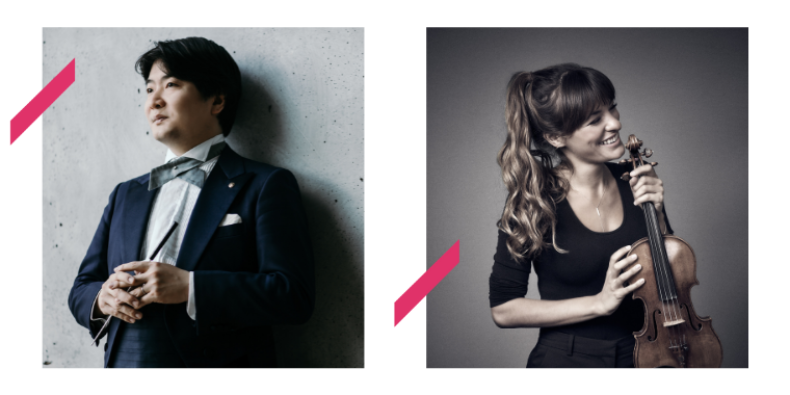
Nicola Benedetti (violin), CBSO Chorus, City of Birmingham Symphony Orchestra / Kazuki Yamada
Symphony Hall, Birmingham Tuesday 20 September 2022
Reviewed by Richard Whitehouse
It may have been a largely mainstream programme, but tonight’s concert by the City of Birmingham Symphony Orchestra drew a capacity house at the beginning of a season in which Kazuki Yamada takes on the reins for what looks an eventful new era near the start of the orchestra’s second century. The CBSO’s response in Dvořák’s Carnival Overture more than confirmed it was ready for the challenge – Yamada ensuring the nocturnal evocation at its centre worked its evocative spell, then building an irresistible momentum going into the thrilling final bars.
Mendelsohn’s Violin Concerto cannot have been absent from many of the CBSO’s previous 102 seasons and made its appearance this evening, Nicola Benedetti tackling a piece she must herself have played on many occasions. Not that there was anything routine about a reading such as abounded in subtle touches – especially the opening Allegro’s cadenza, which more than usually fulfilled its role as this movement’s structural fulcrum. In the Andante, Benedetti pointed up the expressive contrast between its main themes; the second of which was notable for a tonal astringency that brought out its plangency in full measure. If there was nothing so arresting in the finale, the interplay of soloist and orchestra was astutely judged through to the effervescence of the closing bars. Certainly, a performance to make one enjoy the piece anew.
Introducing the second half, Yamada requested the audience remain silent during the pause between pieces – the first a setting of In Paradisum by Ukrainian-born Galina Grigorjeva (b 1962), its lucid harmonies and heady culmination bringing the best out of the CBSO Chorus.
From here to the New World Symphony was no great step. Once again, a work rarely absent from the CBSO’s schedule seemed largely revitalized. Not that all of Yamada’s interpretative decisions came off – after an introduction of no mean gravitas the opening Allegro unfolded a little fitfully, though so interventionist an approach might have gained from the exposition repeat to place these in greater context. There were similar touches in the Largo, yet here the focus of Yamada’s conception and the raptness of the player’s concentration were their own justification – not least towards the close, with the front desks combining to poignant effect. Without being driven as ruthlessly as is often the case, the Scherzo has the requisite impetus and, throughout its trio, a whimsical elegance which proved as engaging as the charged coda.
Heading into the final Allegro with minimal pause, Yamada brought out its inherent force but also the ruminative eloquence of its second theme; the transition to which, in the reprise, was ideally judged. Nor did the apotheosis lack for drama as those closing bars melted into silence.
Prior to the start of this concert, a minute’s silence was observed then (most of) the audience joined in possibly its first rendering of God Save the King. A more localized farewell was paid later in the evening to Colin Twigg, first violinist for over 31 years and whose retirement will hopefully see more of his own compositions as have featured in Centre Stage recitals over the years. A miscellany is featured on a Toccata Classics release and worth anyone’s investment. The CBSO will be back in action on Saturday with a major new commission from Brett Dean.





 Arcana.fm