In concert – English Symphony Orchestra / Kenneth Woods – Sibelius: Symphony no.7

english-symphony-orchestra-sib

English Symphony Orchestra / Kenneth Woods

Sibelius Symphony no.7 in C major Op.105 (1924)

Recorded at Wyastone Concert Hall, Monmouth on 2 May 2021

Written by Richard Whitehouse

It is good to see that, despite resuming its live schedule this autumn, the English Symphony Orchestra has continued the Music from Wyastone online series as was such a boon over 18 months of lockdown. Moreover, this latest instalment begins the ESO’s most ambitious such project – the seven symphonies (with Tapiola) by Sibelius to run across the 65th anniversary of his death next year. Starting with the Seventh Symphony is certainly a provocative gambit, and it remains to be seen whether this cycle unfolds in strictly backward chronological order.

A decisive (but not simple) test in a performance of this work is how the overall trajectory is perceived. In almost all the most successful readings, the music evolves as if intuitively – the end being implicit in the beginning more than with any symphony before or since. This was certainly true of the ESO’s account, in which the formal constituents were hardly tangible as such until after the event. Sibelius may have distilled the thematic aspect to its essentials, yet in so fusing form and content he endowed this piece with an inevitability always evident here.

Following an expectant if not unduly tense introduction, Kenneth Woods built the first main section with unforced eloquence to a first statement of the trombone chorale as provides the formal backbone. His transition into the ‘scherzo’ was less abrupt than many, while picking up energy such that the chorale’s reappearance generated the requisite momentum to sustain the relatively extended ‘intermezzo’ with its felicitous interplay of woodwind and strings. If his approach to the chorale’s last emergence seemed a fraction cautious, the latter’s intensity carried over into the searing string threnody (much emulated but not equalled by generations since) that subsided into pensive uncertainty – from where the music gathered itself one last time for a magisterial crescendo which, rightly, did not so much end as merely cease to be.

A deeply thoughtful and superbly realized performance which launches the ESO’s Sibelius cycle in impressive fashion. A pity, though, that the end-credits should be accompanied with a repeat of music heard earlier. At the close of such a piece, the rest really should be silence.

Further information on the ESO’s current season can be found at their website

In concert – Soloists, CBSO Chorus & City of Birmingham Symphony Orchestra: Mirga conducts The Cunning Little Vixen

mirga-cunning-vixen

The Cunning Little Vixen

Opera in Three Acts
Music and Libretto by Leoš Janáček (revised edition by Jiří Zahrádka)
Sung in Czech (English surtitles by Paula Kennedy)

Elena Tsallagova, soprano – Vixen Sharp Ears
Roland Wood, baritone – The Forester
Angela Brower, mezzo – The Fox
Robert Murray, tenor – Schoolmaster / Mosquito / Pásek
Kitty Whately, mezzo – Dog / Forester’s Wife / Woodpecker / Owl
Elizabeth Cragg, soprano – Chief Hen / Jay
William Thomas, bass – Badger / Parson / Harašta
Ella Taylor, soprano – Mrs Pesak / Cock

Thomas Henderson, stage director
Laura Pearse, designer
Jonathan Burton, surtitle operator
Sarah Playfair, casting

Children from Trinity Boys Choir and Old Palace School, CBSO Chorus, City of Birmingham Symphony Orchestra / Mirga Gražinytė-Tyla

Symphony Hall, Birmingham
Tuesday 16 November 2021

Written by Richard Whitehouse

There could have been no more appropriate an opera for performing at the end of a year like this than Janáček’s The Cunning Little Vixen, given its acutely life-affirming message in the wake of that apathy which threatens to overrun society during a time of continued uncertainty.

Although his Glagolitic Mass was a decisive marker in its early association with Sir Simon Rattle, the City of Birmingham Symphony Orchestra has given relatively little Janáček such that this account of his most approachable stage-work was timely in any event. Despite the early start, there was no interval to interrupt the course of its 95-minute trajectory, with those illustrative elements of Thomas Henderson’s stage direction largely restricted to the menagerie gathering around the Forester at his first and last appearances. Here, some deft acting from the children involved and Laura Pearse’s piquant stage-design created an enticingly whimsical basis from which to project those often equivocal and increasingly raw emotions that give this opera its unwavering provocation and, as a consequence, the profundity arising out of its very naivety.

The cast was a strong one and fronted, as it needed to be, by Elena Tsallagova’s rendering of Vixen Sharp Ears – as witty, sensual and as galvanizing a presence as any in recent memory. Not least her interplay with The Fox – to which role Angela Brower brought warmth and not a little empathy, even if her vocal timbre was not ideally contrasted with that of the Vixen. In the role of The Forester, Roland Wood took a secure course from angry cynicism to wisdom born of maturity – exactly the kind of persona Janáček himself would love to have embodied.

The remaining singers all brought a variety of virtues to their multiple roles – not least Kitty Whatley, her put-upon Dog and irascible Forester’s Wife conveyed with precision as well as elegance. Robert Murray was astute casting as the hapless and lovelorn Schoolmaster, while Elizabeth Cragg gave a winning cameo as the feckless Chief Hen – not least in her fractious confrontation with Ella Taylor’s vainglorious Cock. Credit, also, to William Thomas for his poignant world weariness as the Parson or studied incomprehension as the poacher Harašta.

The CBSO Chorus and children’s voices acquitted themselves ably during their limited but pertinent contributions, while the CBSO gave of something approaching its collective best over the course of a score that abounds in the quirks and deceptive non-sequiturs typical of Janáček’s maturity. No other opera of his evinces such characterful or felicitous writing for woodwind, the sheer dexterity of these musicians enhanced by their being on the platform rather than in the pit. Nor were the strings, notably violins, at all fazed by the often cruelly exposed passagework. Mirga Gražinytė-Tyla conducted with a sure sense of where each of the three acts was headed, and if the final scene felt initially a little temperate, the tangible fervour and all-enveloping eloquence generated towards its apotheosis was never in doubt.

Lucky audiences in Dortmund, Hamburg and Paris who will hear this performance when the CBSO takes it on tour during the next week. Hopefully further Janáček operas will feature in MGT’s ongoing association with this orchestra – the omens could hardly be more favourable.

Further information on European performances can be found here. The CBSO’s January to July 2022 season can be found at the orchestra’s website

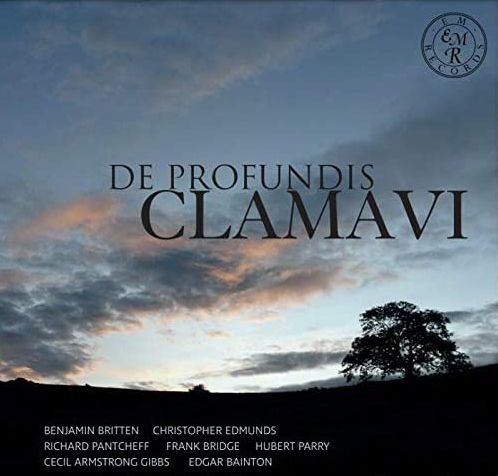
On record – Duncan Honeybourne: De Profundis Clamavi (EM Records)

de-profundis-clamavi

Armstrong Gibbs An Essex Rhapsody Op.36 (1921); Ballade in D flat (1940)
Bainton Variations and Fugue in B minor Op.1 (1898); The Making of the Nightingale (1921); Willows (1927)
Bridge Piano Sonata H160 (1921-4)
Britten Night Piece ‘Notturno’ (1963)
Edmunds Piano Sonata in B minor (1938)
Pantscheff Nocturnus V: Wing oor die Branders (2015); Piano Sonata (2017)
Parry Shulbrede Tunes (1914)

Duncan Honeybourne (piano)

EM Records EMRCD070-71 [two discs, 156’46”]

Producer Oscar Torres & Richard Pantcheff
Engineer Oscar Torres

Recorded 20 & 21 August 2020 at Potton Hall, Westleton, Suffolk

Written by Richard Whitehouse

What’s the story?

Never a pianist to pull his punches, Duncan Honeybourne adds to his expanding discography with this extensive survey of British piano music which, written across almost 120 years and evincing a range of styles, more than reinforces the descriptive heading of the overall project.

What’s the music like?

The first disc begins with the Piano Sonata by Christopher Edmunds. Birmingham-born and long active at the School of Music there, he left a sizable output from which the present work impresses through its wide expressive range within modest formal dimensions. The opening Allegro recalls Medtner in its pivoting between fervency and repose, then the Lento strikes a note of heartfelt emotion underlined by its ‘mesto’ marking. Utilizing aspects of scherzo and finale, the closing Allegro returns to more extrovert concerns as it arrives at a virtuosic close.

Edgar Bainton was still in his teens when composing the Variations and Fugue which became his first acknowledged work. Brahms is a key influence, but the music’s motivic and textural discipline ensures a formal focus throughout the nine deftly contrasted variations then into a tensile and vividly cumulative fugue. Remembered primarily for his songs, Cecil Armstrong Gibbs wrote idiomatically for the piano as is demonstrated by the intricate passagework and often bravura writing of An Essex Rhapsody, while the later Ballade exudes deeper emotion – not least an ominous central section with undeniable overtones of war. Part of a compendious sequence exploring different aspects of night, Richard Pantcheff’s Nocturnus V: Wind on the Waves follows a trajectory of impending marine turbulence that duly regains its earlier calm.

Written at the home of his daughter’s family, Shulbrede Tunes finds Hubert Parry reflecting on domestic environs in a methodically constructed cycle – the 10 pieces taking in evocations of the priory and people within. A lively humour informs Bogies and Sprites that Gambol by Nights, with a ruminative pathos to the fore in Prior’s Chamber by Firelight. Here, as in the exuberant Father Playmate, the aging composer’s devotion to Austro-German romanticism results in music which is as affecting as Parry’s orchestral and choral works from this period.

The second disc opens with two further pieces by Bainton. From among his many miniatures, Willow is a limpidly impressionist album-leaf of no mean poignancy, then The Making of the Nightingale evokes this bird’s creation in imaginative terms that are appealingly realized here. Written for the first Leeds International Piano Competition, Benjamin Britten’s Night Piece is the only acknowledged piano work from his maturity – a study in dynamic and timbral nuance of a finesse as to make one regret his stated antipathy for the modern piano on its own terms.

It is the Piano Sonata by Frank Bridge (placed before the Britten) which inevitably dominates this collection, not least as this recording is among the finest from recent years. Testimony to the composer’s response to the carnage of war as well as its impact on his evolving idiom, the three movements unfold as a single cumulative entity – the sizable opening Allegro preceded by a slow introduction whose main motivic elements are gradually elaborated for the ensuing opposition between anguish and eloquence. The savage rhetoric of its close makes the contrast with the Andante’s consoling rumination more acute, the music as if surveying a landscape of memories which elides straight into the final Allegro with its renewed confrontation of earlier motifs – on the way to a stark denouement then a resigned and almost confessional epilogue.

Pantcheff’s almost contemporary Piano Sonata rounds off this collection. Its three movements each carries an inscription from the epic poem The Axion Esti by Odysseus Elytis that sets the tone for a restive and increasingly tumultuous Inquieto, followed by an Elegia whose sombre imagery might feel almost nihilistic were it not for the plaintive expression that emerges in its latter stages, then a finale whose Alla Vortice marking aptly indicates the gradual intensifying of mood which carries this movement – and the work as a whole – towards its explosive close.

Does it all work?

Undoubtedly, when heard as a collection. Honeybourne has been astute in his planning so that each disc can be appreciated as a stand-alone recital in its own right, or as independent halves of an ‘uber-recital’ which even he would be unlikely to undertake in a live context. All except the Bridge, Britten and Parry are receiving their first recordings, and it would be surprising if some pieces did not enjoy greater exposure in future. For his dedication in championing them, and for putting together such an ambitious anthology, Honeybourne can only be commended.

Is it recommended?

Very much so. The piano sound is a shade hard at climaxes, while spacious and wide-ranging elsewhere, with detailed notes on each work and composer from various sources including the pianist. It adds up to an impressive release and a highlight of the EM Records catalogue so far.

Listen & Buy

You can discover more about this release and listen to clips at the EM Records website, where you can also purchase the recording. For more on Duncan Honeybourne, visit his website – and for more on Richard Pantcheff click here

On record – Peter Fisher & Margaret Fingerhut: Malcolm Arnold – A Centenary Celebration (Somm Recordings)

arnold-centenary

Malcolm Arnold
Violin Sonata no.1 Op.15 (1947)
Violin Sonata no.2 Op.43 (1953)
English Dances (arr. Harris) – Set 1 Op.27 (1950): nos.1 & 3; Set 2 Op.33 (1951): nos.1-3
4 Scottish Dances (arr. Gedge) Op.57 (1957)
5 Pieces Op.84 (1965)
Miscellaneous Pieces (all arr. Poulton): Hobson’s Choice – Suite (1954); Solitaire – Sarabande (1956); Trapeze – Lola’s Theme (1956); The Chalk Garden – Madrigal (1964); Thème pour mon Amis (1965, rev 1985)

Peter Fisher (violin), Margaret Fingerhut (piano)

SOMM Recordings SOMMCD0640 [69’03”]

Producer / Engineer Michael Ponder

Recorded 21 November and 4 December 2020 at Henry Wood Hall, London

Written by Richard Whitehouse

What’s the story?

SOMM Recordings marks the centenary of the birth of Malcolm Arnold with this collection of his music for violin and piano, including a number of arrangements as are here receiving their first recordings, in what is an (unexpectedly?) wide-ranging overview of his creativity.

What’s the music like?

The three original pieces find Arnold gradually evolving a distinctive personality. If his First Sonata is indebted in many aspects to Bartók or Shostakovich, the tensile expressive contrasts of its opening Allegretto then the plaintive melancholy giving rise to wrenching anguish of its central Andante posits an emotional disjunction that the final Allegro’s stealthy tarantella can only waylay prior to a scabrous close. Its tensile single movement unique in Arnold’s output, the Second Sonata unfolds as oblique variations on a pensive theme whose speculative final guise implies much more than is being said. Playable separately, the Five Pieces (for Yehudi Menuhin) is a cannily integrated sequence that moves from an acerbic Prelude, via an edgy Aubade and a bittersweet Waltz, to an impassioned Ballad then a jazzy Moto perpetuo.

The arrangements from Arnold’s sets of dances provide ready-made encores. David Gedge’s take on the Scottish Dances is wholly idiomatic – hence the strutting gait of the Pesante with its ‘Scotch snap’, careering toward inebriation of the Vivace, wistful naivety of the Allegretto and whirling energy of the final Con brio. The English Dances selected by Paul Harris makes for a viable collection as it moves from the insouciant Op.33/2 and wistful Op.27/1, via the melancholic Op.27/3 and ruminative Op. 33/2, to the resolute Op.33/1.

The miscellaneous arrangements were all done by Alan Poulton – who, as Arnold’s manager during the 1980s, played a vital role in his rehabilitation as a composer. One of two specially written additions for Kenneth MacMillan’s ballet Solitaire, Sarabande is a mellifluous gem – as, in its rather more sensuous way, is Lola’s Theme from Carol Reed’s film Trapeze. Nor is a ‘Suite’ derived from David Lean’s Hobson’s Choice found wanting as a breviary of this inimitable film (Arnold’s favourite from his more than 120 scores), and the suave Madrigal from Ronald Neame’s The Chalk Garden gives no hint of that film’s ominous subject-matter. Conceived as a jingle for Player’s cigarettes then refitted for BBC2’s My Music series, Thème pour mon Amis is a delightful jeu d’esprit with which to recall this much-missed personality.

Does it all work?

Yes – given that Arnold, a professional trumpeter and skilled composer for brass, had ‘across the board’ mastery of instruments such that his writing for strings is hardly less idiomatic, as is witnessed by the original pieces. The arrangements should not be regarded as mere pièces d’occasion, given that these include several of Arnold’s most appealing melodic ideas and are worthwhile recital additions. The performances by Peter Fisher and Margaret Fingerhut, both long-time advocates of British music, could hardly be improved on for sensitivity and insight.

Is it recommended?

Indeed. The recording is well-nigh ideal in terms of the balance between these instruments, with Alan Poulton’s booklet notes highly readable and informative, though note the correct running-order of the English Dances as discussed above. Great booklet-cover artwork too!

Listen & Buy

You can discover more about this release and listen to clips at the SOMM Recordings website, where you can also purchase the recording. For more information on the Malcolm Arnold society, click here – and for more on the artists, click here for Peter Fisher and here for Margaret Fingerhut.

On record – Aurora Trio: Crépuscule (EM Records)

crepuscule

Alwyn Two Folk Tunes (1936). Crépuscule (1955). Naïades (1971)
Bax Elegiac Trio (1916)
Lewis Divertimento (1982)
Lipkin Trio (1982)
Patterson Canonic Lullaby (2016)
Rawsthorne Suite (1968)

Aurora Trio [Emma Halnan (flute), Jordan Sian (viola), Heather Wrighton (harp)]

EM Records EMRCD069 [76’52”]

Producer Tom Hammond
Engineer John Croft

Recorded 15-16 February, 13 August 2020 at St John the Evangelist, Oxford

Written by Richard Whitehouse

What’s the story?

The Aurora Trio makes its debut for EM Records in a collection of British music featuring flute, viola and harp that spans exactly 100 years and encompasses a variety of approaches with regards to the combining of these distinct yet undeniably complementary instruments.

What’s the music like?

If not the most elaborate of his numerous works for ensemble, Arnold Bax’s Elegiac Trio is among his most affecting as an in-memoriam for those friends who died in the course of the Easter Uprising in Ireland. Although the overall mood rarely moves far from that implied by the title, the undulating emotion filtering through the textural ‘weave’ proves as subtle as it is elusive. Scored for just flute and harp, William Alwyn’s Naïades unfolds on a larger scale and inhabits a wider range of expression as it evokes both the eponymous spirits of antiquity and the environs of the Suffolk village of Blythburgh where it was written, while also being    a ‘fantasy sonata’ whose instruments interact with more than a little improvisatory freedom.

By contrast, the Suite that Alan Rawsthorne wrote for the Robles Trio is typical of his later music in its harmonic astringency and oblique while never abstruse tonal follow-through. A highly personal use of serial elements underpins the elegant opening Andantino as surely as it does a graceful, intermezzo-like Allegretto then the more demonstrative Allegro vigoroso. All these other works are here receiving their first recordings. Alwyn’s Crépuscule for harp offers a foretaste of that masterly concerto Lyra Angelica in its ethereal poise, whereas his Two Folk Tunes emerges as an appealingly contrasted duo – viola and harp as ruminatively combined in Meditation as they are animatedly juxtaposed in Who’ll buy my besoms?

The highlight is undoubtedly the Trio by Malcolm Lipkin, a composer yet to receive his due and who, as the present work affirms, was unafraid to elide between tradition and innovation with strikingly personal results – whether in the terse emotional contrasts of its Variations, tense and increasingly soulful inwardness of its Intermezzo or purposeful onward progress of a Finale whose impetus subsides towards the pensively fatalistic coda. Canonic Lullaby has Paul Patterson bring flute and harp into limpid accord, while Paul Lewis’s Divertimento puts all three instruments through their paces in a lively March, before embracing them in the lyrical Love Song then cordially sending them on their way in the nonchalant Waltz.

Does it all work?

Yes, given the relative stylistic range of the music featured and, moreover the quality of these performances. Care has evidently been taken to assemble the eight works into a cohesive and satisfying sequence such as this ensemble might tackle at one of its recitals, and which flows well as an overall programme. The playing leaves nothing to be desired in terms of accuracy, while the relative personality of each composer cannot be gainsaid. Ideally the release would encourage composers from the middle and younger generations to write for this combination.

Is it recommended?

Indeed. The recording is excellent, with the frequently awkward balance between instruments expertly judged, and there are detailed annotations on both the works and their composers. It all adds up to a worthwhile release which deserves to be followed up, hopefully on this label.

Listen & Buy

You can discover more about this release and listen to clips at the EM Records website, where you can also purchase the recording. For more on the Aurora trio, you can visit their website