In concert – Jonathan Martindale, CBSO / Michael Seal: Summer Classics

michael-seal

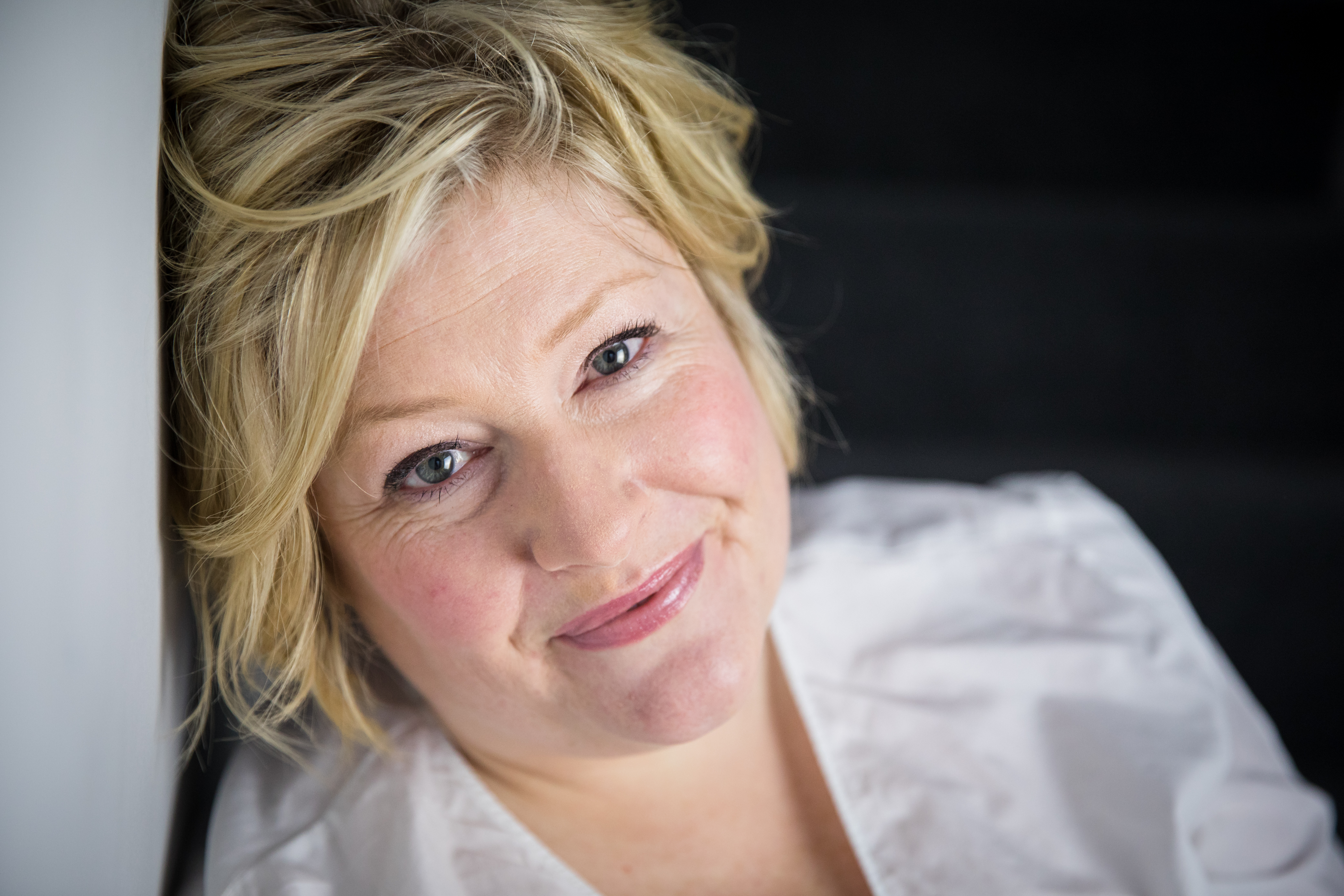
Jonathan Martindale (violin, below), City of Birmingham Symphony Orchestra / Michael Seal (above)

Dvořák Carnival Op.92 (1891)
Vaughan Williams
The Lark Ascending (1914/20)
Elgar
Chanson de matin Op.15/2 (1889)
Grieg
Peer Gynt Suite no.1 Op.46 (1875/88) – no.1, Morning; no.4, In the Hall of the Mountain King
Mendelssohn
A Midsummer Night’s Dream Op.21 (1826)
Vivaldi
The Four Seasons Op.8 (1718/20) – no.2 in G minor RV315 ‘Summer’
Price
Symphony no.1 in E minor (1931-2) – Juba Dance
Tchaikovsky
The Nutcracker Op.71 (1892) – Waltz of the Flowers

Symphony Hall, Birmingham
Friday 2 July 2021 (2pm)

Written by Richard Whitehouse Photo of Jonathan Martindale courtesy of Upstream Photography

The penultimate event in the City of Birmingham Symphony Orchestra’s current season, this afternoon’s Summer Classics featured a wide-ranging selection of pieces that between them spanned over two centuries, and whose ‘feel good’ factor at no time precluded stylish or committed playing.

With longstanding associate director Michael Seal at the helm, the orchestra made the most of Dvořák’s effervescent Carnival overture; the alluring pathos of its central interlude accorded due emphasis, and with some eloquent woodwind solos. Its popularity during recent years has made Vaughan Williams’s The Lark Ascending a regular inclusion in such programmes, and Jonathan Martindale (below, who also led the concert) gave a thoughtful while never flaccid reading – most perceptive in the middle section with its folk-like whimsy and fanciful evocations of birdsong. The CBSO responded with limpid dexterity, the whole performance a reminder that this work is best tackled as a concertante piece and by a player (recalling such as Hugh Bean, Iona Brown and, more recently, Richard Tognetti) who knows the orchestra from the inside.

Next came an ingratiating take on Elgar evergreen Chanson de matin, then excerpts from the First Suite of Grieg’s incidental music to Peer Gynt – a rapturous Morning and stealthy In the Hall of the Mountain King skirting headlong terror at the close. Mendelssohn’s overture to A Midsummer Night’s Dream made for an unlikely but effective centrepiece – the highlight being those fugitive imaginings towards its centre, along with the disarming eloquence of its final bars where the teenage composer conjures a fulfilment he was only rarely to recapture.

The Summer concerto from Vivaldi’s The Four Seasons again saw Martindale as soloist in an account that lacked little of that rhythmic vitality his contemporaries (notably Bach) seized on with alacrity; nor was there any absence of poise in its atmospheric second movement. One who has come in from the cold partly through the recovery of her manuscripts, Chicago-based Florence Price broke with convention by introducing the Juba Dance into her symphonies in lieu of a scherzo; the CBSO responding in full measure to its rhythmic verve. A winning harp solo from Katherine Thomas launched Waltz of the Flowers from Tchaikovsky’s ballet The Nutcracker and ended the main programme in fine style – Seal and the CBSO acknowledging the applause with the final ‘galop’ from Rossini’s William Tell overture as a dashing encore.

Throughout the concert, film expert Andrew Collins interspersed proceedings with his remarks and recollections (not least on that seminal 1970s supergroup The Wombles). The music itself was accompanied by varying shades and colours of lighting, but these rarely seemed intrusive – not least compared to the garish ‘Moulin Rouge’ effects routinely encountered nowadays at the Proms. Certainly, anyone in the process of getting the know just what classical music was all about, and those merely in search of a pleasurable afternoon’s listening, were well served.

Next Wednesday brings the last in this current series of concerts, the CBSO being conducted by Joshua Weilerstein (who is replacing an ‘unable to travel’ Edward Gardner) in an enticing programme of Judith Weir, Prokofiev (with the violinist Alina Ibragimova) and Beethoven.

You can find information on the final concert in the CBSO’s season at their website. For more information on composer Florence Price, click here

In concert – Alban Gerhardt, CBSO / Kazuki Yamada: Straight from the Heart

kazuki-yamada

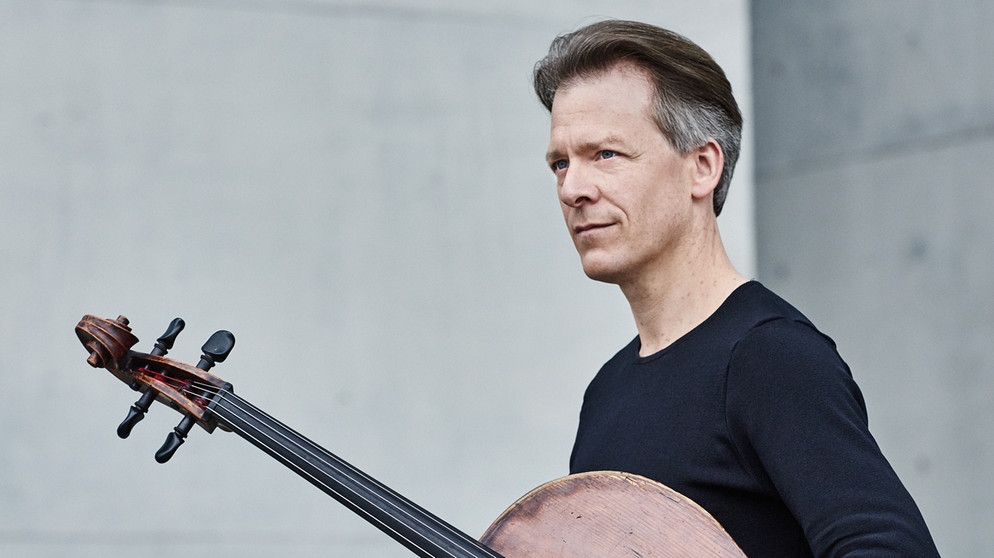
Alban Gerhardt (cello, below), City of Birmingham Symphony Orchestra / Kazuki Yamada (above)

Anderson Litanies (2018-19) [CBSO Centenary Commission: UK premiere]
Dvořák Symphony no.7 in D minor Op.70 (1884-5)

Symphony Hall, Birmingham
Wednesday 30 June 2021 (6.30pm)

Written by Richard Whitehouse Photo of Alban Gerhardt courtesy of Kaupo Kikkias

Losing the greater part of the City of Birmingham Symphony Orchestra’s schedule across the past two seasons has meant postponing many of its ‘Centenary Commissions’, but of those which have been rescheduled, none was more keenly anticipated than that of Julian Anderson’s Litanies.

Anderson produced four works during his tenure as the CBSO’s Composer-in-Residence over 2001-5, this new piece renewing its formal and expressive archetypes by fresh and intriguing means. The first of three continuous sections presents cello and orchestra – its modest forces including double wind, harp and piano, their pitches modified by a quarter-tone – as sparring partners in propulsive, toccata-like music. This gradually mutates into a central slow section, whose fraught lyricism intensifies (with unexpected if effective assistance from the orchestra) towards a chorale in memory of Oliver Knussen. From here an increasingly animated cadenza leads to a capricious, dance-like final section that culminates in a splenetic orchestral outburst; the soloist then resuming for a soulful postlude which brings about a calmly equivocal close.

Alban Gerhardt (below) made the most of some finely gauged technical challenges, as he overcame passing vagaries of sound-balance (and what appeared to be a leg injury) to give a confident realization of a piece already heard in Paris, Örebro and Lausanne. The CBSO was no less assured under Kazuki Yamada; if balance between strings and wind occasionally lost focus (second violins placed further to the rear of the platform than would normally be the case), this did little to offset the attractions of a notable addition to the contemporary repertoire.

During a break for platform rearrangement, the CBSO’s Principal Guest Conductor spoke of his gratitude that audiences were again able to attend live concerts. Something of this evident pleasure came through the ensuing performance of Dvořák’s Seventh Symphony – not least an opening Allegro that, despite a few tentative string entries, undoubtedly had the measure of its stoic defiance and underlying seriousness of purpose. Best was a coda whose dramatic initial stages subsided effortlessly and inevitably into sombre rumination towards the close.

The highlight, however, was a slow movement whose Poco adagio marking was studiously observed – Yamada infusing the emotional ebb and flow of a movement whose formal follow -through can seem fitful with unfailing poise, the CBSO wind eloquent in their contribution. Nor was anything amiss in the Scherzo, its ‘furiant’ rhythm audible not just in the trenchant outer sections but also the trio where its simmering presence ensured no let-up in tension on route to a subtly modified reprise then explosive coda. The final Allegro capped the reading accordingly – Yamada never rushing its stealthy alternation between starkness and lyricism, while ably negotiating several testing changes in tempo as the composer ratchets up tension going into an apotheosis whose inherent fatalism was enhanced by the resplendent playing.

A gripping performance, then, as was met with a suitably enthusiastic response. The CBSO is back this Friday with altogether lighter fare for a programme of Summer Classics (including The Lark Ascending), which is conducted by Michael Seal and presented by Andrew Collins.

You can find information on the CBSO’s Summer Classics concert at their website. For more information on composer Julian Anderson, click here – and for more on cellist Alban Gerhardt, visit his website here

In concert – Karen Cargill, CBSO / Mirga Gražinytė-Tyla: Mirga conducts Weinberg

Mirga

Karen Cargill (mezzo-soprano, below), City of Birmingham Symphony Orchestra / Mirga Gražinytė-Tyla (above)

Weinberg Rhapsody on Moldavian Themes Op.47/1 (1949)
Mahler Rückert-Lieder (1901-02)
Weinberg Symphony no.3 in B minor Op.45 (1949-50, rev. 1960)

Symphony Hall, Birmingham
Wednesday 23 June 2021 (6.30pm)

Written by Richard Whitehouse Photo of Karen Cargill courtesy of Nadine Boyd Photography

The music of Mieczysław Weinberg has been a prominent feature in the City of Birmingham Symphony Orchestra’s programmes with its music director Mirga Gražinytė-Tyla, and the Rhapsody on Moldavian Themes duly started this latest of the orchestra’s concerts in impressive fashion.

Written when Soviet composers were under intense pressure to create music of a populist – or rather, nationalistic – nature, its recourse to melodies emanating from the region of Bessarabia (from where the composer’s parents hailed) draws directly on a lineage from Liszt to Bartók and Kodály. Weinberg’s handling of these, in its subtle take on a slow-fast trajectory, is never less than assured. MGT undoubtedly had its measure, whether in the ruminative opening with its plangent woodwind or the boisterous later stages when brass comes irresistibly to the fore.

Itself a revival (having been played at Symphony Hall in 2019 then at that year’s Proms), the Third Symphony is a more considered response to the anti-formalist campaign spearheaded by Andrei Zhdanov with the intention of making Soviet music more accountable to its public. Hence the inclusion of Belorussian and Polish folksong, though Weinberg is mindful to offset these with a formal rigour as, in the initial Allegro, ensures an emotionally restless unfolding to a coda shot-through with foreboding – one of several passages likely made more explicit in the subsequent revision. Here, as in the wistful second theme (akin to what Malcolm Arnold was writing around this time) then a climactic transition heading into the reprise, the CBSO’s playing underlined its ongoing affinity with this music which held good through to the close.

Hardly less idiomatic was the scherzo’s interplay of capricious with a more sardonic humour, then the Adagio’s sustained yet cumulative progress towards a climax of stark tragedy – only slightly pacified in the inward closing phase. If the animated finale strives to secure an overly affirmative ending, it was a measure of this account that any such optimism was held in check until the peremptory last bars. Weinberg could scarcely have hoped to hear a more perceptive performance: good to hear both this and the Rhapsody were being recorded for future release.

Between these pieces, Karen Cargill joined the CBSO for Mahler’s Rückert-Lieder (evidently the first time the orchestra has given them since baritone Olaf Bär with Simon Rattle in 1992). She drew a keen irony from Blicke mir nicht in die Lieder, then rendered Ich atmet’ einen linden Duft with appealing deftness. With its fugitive writing for woodwind and brass, and a fervent climax capped by garish arabesques from piano, Um Mitternacht is a difficult song to bring off but was notably effective, and the only disappointment was a rather inert take on Liebst du um Schönheit – Max Puttmann’s sub-Léhar orchestration at least partly to blame. Nor was Ich bin der Welt abhanden gekommen ideally transcendent, yet the eloquence of Cargill’s response left no doubt concerning its status as arguably the greatest orchestral Lied.

A judiciously planned concert, then, in which the rapport between orchestra and conductor came through these past 15 months unscathed. The CBSO returns next Wednesday with its principal guest conductor Kazuki Yamada in a programme of Julian Anderson and Dvorák.

You can find information on the CBSO’s next concert at their website

In concert – NEXT and Birmingham Contemporary Music Group: Past the Stars

bcmg-past-the-stars

NEXT [Joe Howson & Mikaela Livadiotis (pianos), Gavin Stewart (bass flute), Olivia Jago (violin)

Adams Hallelujah Junction (1996)
Saunders Bite (2016)
Mason When Joy Became Mixed with Grief (2007)

Patricia Auchterlonie (soprano), Ulrich Heinen (cello), Birmingham Contemporary Music Group / Geoffrey Paterson

Birtwistle Cantus Iambeus (2004)
Vir Wheeling Past the Stars (2007) – Songs 3 and 4; Hayagriva (2005) [UK premiere]

Town Hall, Birmingham
Sunday 20 June 2021

Written by Richard Whitehouse

It might have taken 15 months plus a couple of false alarms, but Birmingham Contemporary Music Group (above) finally resumed live performances en masse this afternoon and with this wide-raging concert typical of its programming across more than three decades of music-making.

Not least with its throwing the spotlight onto players of the next generation, the opening half featuring NEXT musicians as mentored by their senior colleagues. Things got underway with Hallelujah Junction, John Adams’ alternately incisive and soulful evoking of a truck-stop on the California-Nevada border; along with a tribute to orchestra manager Ernest Fleischmann, which doubtless explains its heightened peroration. Nor, despite some occasional vagaries of coordination, was there any doubting the conviction of Joe Howson and Mikaela Livadiotis.

From two pianists situated amid tables in the stalls to a bass flautist just in front of the organ console: Gavin Stewart made the most of this unlikely context with a committed reading of Rebecca SaundersBite, less a setting than paraphrase of the thirteenth from Samuel Beckett’s Texts for Nothing in which words or syllables are variously sounded in anticipation, or as consequence of the flute’s contribution. It certainly left a fragmented, even rebarbative impression compared to the seamlessness of When Joy Became Mixed with GriefChristian Mason’s contemplation of a sixth-century Jainist account over several ages of declining natural and human wonder; in which violinist Olivia Jago rendered the music’s gently enveloping pathos with unfailing poise, as well as a sure sense of where this deceptively understated music might be headed.

BCMG accordingly took to the stage for Cantus Iambeus, among the more recent of Harrison Birtwistle’s curtain-raisers for ensemble and arguably his most approachable in the unfolding of expressive contours and its frequently diaphanous textures; all underpinned by the role of iambic rhythm in promoting continuity through to an almost inviting final cadence. Nor was there a lack of that intensive interplay as has been a hallmark of this composer’s music from the outset, and to which these musicians responded with their customary precision and verve.

The other pieces (both included on a new NMC release) were by Param Vir, whose music has been a welcome if undervalued presence over four decades. Firstly, the latter two items from his song-cycle Wheeling Past the Stars after Rabindranath Tagore – the charm and vivacity of Grandfather’s Holiday then musing inwardness of New Birth, both eloquently rendered by Patricia Auchterlonie with Ulrich Heinen. Finally, to Hayagriva – the horse-headed being and mythological archetype behind a work whose headlong rhythmic energy suddenly moves, via an intricately detailed transition, to a final section whose subdued manner does not preclude music of fastidious textural variety emerging. The analogous sequence ‘red-green-blue’ was reinforced by overhead lighting, even if Vir’s musical trajectory is appreciably more subtle.

BCMG responded to Geoffrey Paterson’s direction with alacrity, not unreasonably pleased to be back performing for a live audience in an impressive indication of what can be expected from this ensemble during the 2021-22 season and barring, one hopes, no more false alarms!

You can find information on further BCMG activities here, while further information on Wheeling Past the Stars by Param Vir can be found at the NMC website

In concert – Members of Birmingham Contemporary Music Group: Soliloquies & Dialogues – Music made in Lockdown

bcmg-soliloquies

Members of Birmingham Contemporary Music Group [Oliver Janes (clarinet), Ryan Linham (trumpet), Colette Overdijk (violin), Julian Warburton (percussion), Amelie Thomas (trumpet)]

Oram Counting Steps – first version (2020)*
Murail Les Ruines circulaires (2006)
Ma Xiao-Qing Back to the Beginning (2020)*
del Avellanal Carreño speak, sing… (2020)*
Donghoon Shin Couplet (2020)*
Howard R (2021)*
Reich New York Counterpoint (1985)
Birtwistle The Message (2008)
Oram Counting Steps – second version (2020)*

[Works indicated * received their live premieres]

CBSO Centre, Birmingham
Tuesday 15 June 2021

Written by Richard Whitehouse

It may have been unable to present live events during the past 15 months, but Birmingham Contemporary Music Group has not been inactive – commissioning a series of pieces from composers around the world for performance online as part of its Soliloquies & Dialogues project. Having been performed at Bristol’s Arnolfini Gallery last Friday, a representative selection of these was this evening presented at CBSO Centre – in the process, confirming that ‘‘while we were all unified by lockdown, our reactions were still highly individual’’.

Tristan Murail’s Les Ruines circulaires was written well before the pandemic, but it vividly encapsulates the ‘dialogues’ aspect – clarinet and violin in confrontation, before opening out into a melodic discourse in a two-way process that might always be the same, only different.

It was vividly realized tonight, violinist Colette Overdijk then having two solo pieces – the first a live hearing for Ma Xiao-Quing’s evocative Back to the Beginning which, while less demonstrative than the online premiere, integrated elements of music and speech with greater subtlety and finesse. Donghoon Shin’s Couplet placed its expressive contrasts in stark relief – thus, an ‘aria and toccata’ in which long-breathed lyricism was succeeded by music whose gestural force and its rapidly accumulating energy were rendered with no mean virtuosity.

Between these works, clarinettist Oliver Janes gave the premiere of speak, sing…, where José Del Avellanal Carreño took advantage of new developments in Machine Learning technology – recorded improvisations by the soloist forming a basis for the interaction between ‘human’ responses as written by the composer with ‘artificial’ responses as generated by the prism-samplernn programme. The outcome was an eventful and unpredictable dialogue, though the subfusc quality of the electronic element rather stood in the way of more engaging synthesis.

Steve Reich’s New York Counterpoint was no less radical in its interplay between clarinet and tape four decades ago, Janes (understandably) sounding more at ease in the dialogue with his pre-recorded self in this performance of appealing deftness and not a little quizzical humour. Beforehand, percussionist Julian Warburton took the stage for the live premiere of R, where Emily Howard explores geometrical concepts as well as the possibilities of sonic growth and decay in a piece whose variety is more immediate given its concision and sense of purpose. Afterwards, Harrison Birtwistle’s The Message provided a telling foil in its halting dialogue between clarinet and trumpet – tersely curtailed by the arrival of military drum; a piece that commemorates the fortieth anniversary of the London Sinfonietta in the pithiest of terms.

Framing the whole, two versions of Celeste Oram’s Counting Steps anticipated then reflected on what was heard. Taking its cue from Fux’s treatise Gradus ad Parnassum, specifically two aphorisms with their expressing strength through courage in the face of weakness and decay, its methodically elaborating trumpet part against a graphic video projection was confidently rendered by Ryan Linham – with, in the second version, Amelie Thomas hardly less assured in support. An arresting framework in which to present this always enterprising programme.

You can find information on the next BCMG live performance here, while Colette Overdijk gives the online premiere of Back to the Beginning here